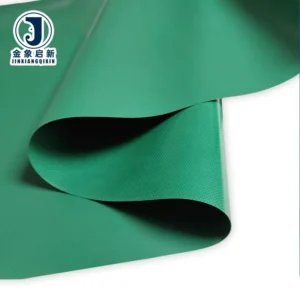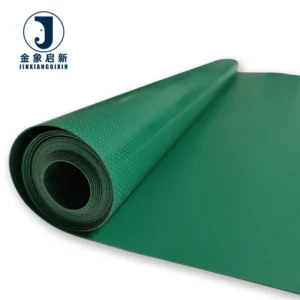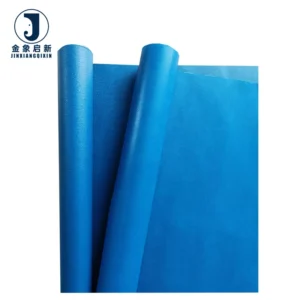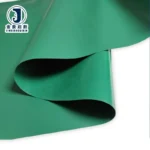
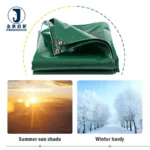
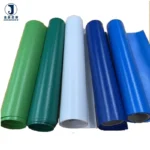
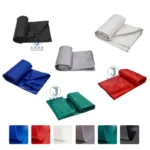
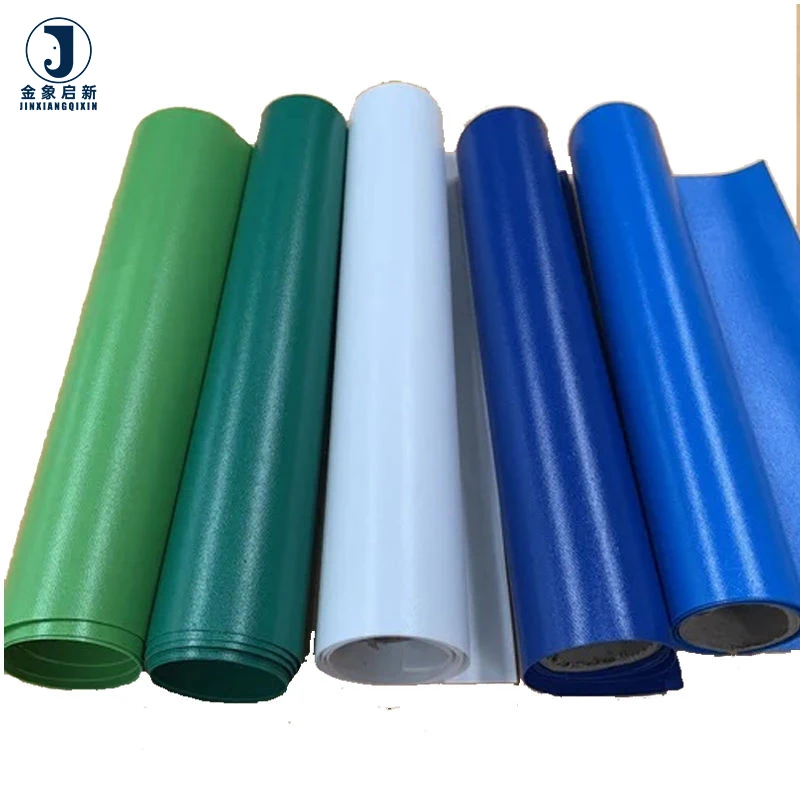
Coating Weight Control — three full production lines maintain consistent GSM across every roll of PVC coated tarpaulin, ensuring the ventilation duct or membrane structure fabric you specify is the material you receive on site.
Technical Specifications
| Parameter | Value |
|---|---|
| Product Type | PVC Coated Tarpaulin Roll |
| Base Fabric | High-strength polyester mesh |
| Coating Material | PVC |
| Coating Technology | Laminated & Hot-melt coating |
| Weight Options | 350gsm / 420gsm / 500gsm / 550gsm / 600gsm / 750gsm |
| Thickness Range | 0.32mm / 0.35mm / 0.4mm / 0.45mm / 0.5mm / 0.65mm |
| Roll Width | 2m / 2.1m |
| Roll Length | 75m (2m width) / 50m (2.1m width) |
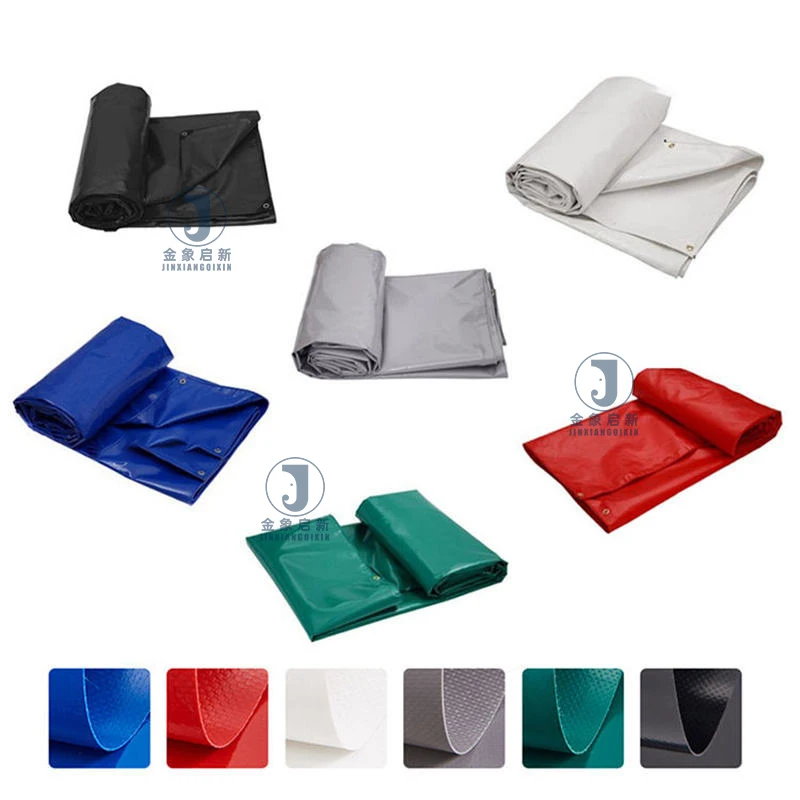
| Color Options | Blue / Red / Yellow / Light blue / Grey (custom colors available) |
| Flame Retardant | Available — confirm the grade required for your market |
| Anti-Static | Available — confirm surface resistance standard required |
| Key Features | Waterproof, anti-mildew, cold crack resistance, color fastness, outstanding tearing strength for welding |
| Service Life | 3–7 years under normal circumstances |
| Certifications | ISO, CE |
Application Suitability
| Application | Exposure & Requirement |
|---|---|
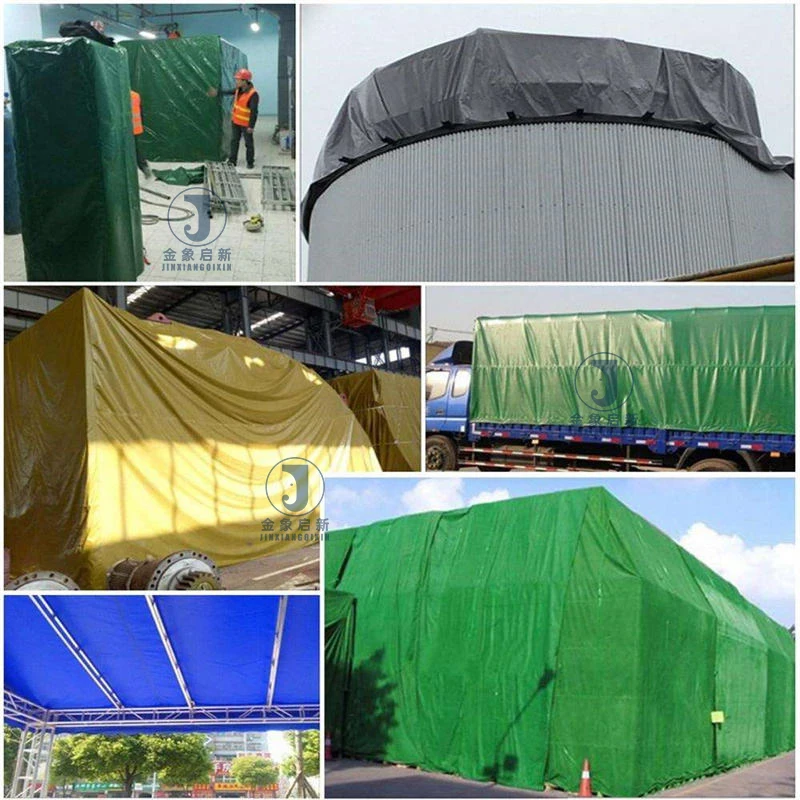
| Mining & tunnelling ventilation duct | Continuous airflow pressure, abrasive dust, mandatory fire-retardant and anti-static compliance underground |
| Aviation ground support ducting | Fuel-adjacent environments, static discharge risk, strict safety authority inspection |
| Inflatable & membrane structures | Constant tensile load, UV exposure, wind-driven rain, aesthetic surface consistency |
| Construction site enclosure | Weather exposure, scaffolding abrasion, flame-retardant requirement for occupied zones |
| Temporary industrial covers | Equipment protection, chemical splash proximity, frequent handling and folding |
Why Certification Documentation Matters More Than the Label on the Roll
A PVC Coated Tarpaulin Roll fire retardant anti-static certified claim on a quotation means nothing on site without the matching test report in hand.
Specify the standard first, then source the fabric that carries it — not the other way around.
Ventilation duct installed in underground mining or aviation maintenance zones must pass inspection against locally enforced fire and static safety codes. Fabric that arrives labelled "flame retardant" without a verifiable grade creates a compliance gap that halts the project. Buyers who accepted supplier assurances without requesting the underlying test documentation have faced rejected installations and full material replacement at their own cost [NEED_CITE: fire safety compliance standards for underground ventilation fabric].
Matching Coating Technology to Duct Fabrication Demands
Laminated and hot-melt coating methods each produce a distinct bond between the PVC layer and the polyester mesh base. Hot-melt coating drives the PVC into the weave under heat and pressure, creating a deeper penetration that supports high-frequency welding during duct fabrication. Laminated construction bonds pre-formed PVC films to the mesh, offering a smoother surface finish that suits membrane and inflatable structure applications where visual consistency matters. Selecting the PVC Coated Tarpaulin Roll fire retardant anti-static certified option with the right coating method reduces weld rejection rates and keeps seam strength aligned with the fabric body.
Static Discharge Control in Hazardous Environments
Anti-static treatment in ventilation duct fabric is not a single specification — it covers a range of surface resistance values tied to the environment where the duct operates. Mining shafts with combustible dust, aviation fuel-handling zones, and grain processing facilities each reference different thresholds. When requesting a PVC Coated Tarpaulin Roll fire retardant anti-static certified for these settings, state the surface resistance range or the standard your site safety plan references. This allows the production team to match the treatment chemistry to the requirement and issue a test report that the safety auditor will accept [NEED_CITE: anti-static surface resistance testing for coated industrial fabrics].
Reading GSM, Thickness, and Base Fabric Together
GSM alone does not define how a coated fabric performs under load. A 550gsm roll built on a loosely woven base may tear more easily than a 500gsm roll on a tighter mesh with higher denier yarns. Thickness readings reflect total caliper including coating, so a thicker measurement does not automatically mean a stronger base cloth. The hot-melt coating process tends to produce stronger adhesion between PVC and polyester, which directly affects tearing strength at welded seams — the point where duct fabric flexes most under airflow pulsation. Roll width selection between 2m and 2.1m determines how many longitudinal welds a duct fabricator must make, influencing both labour cost and the total length of welded seam in the finished product.
The Cost of Overlooking Treatment Verification
Accepting flame-retardant fabric without a grade-specific test report risks failing the site safety audit after the duct is already hung. Anti-static treatment applied at a level below what the local standard demands leaves the installation non-compliant even though the supplier invoice states "anti-static." Colour variation between rolls in a single membrane structure order becomes visible only after panels are installed side by side, forcing selective replacement that delays handover. Weld failures at flex points often trace back to coating adhesion that was never verified by peel testing before fabrication began [NEED_CITE: weld adhesion and peel strength testing methods for PVC coated polyester].
What Production Capability Means for Your Order
Three full production lines and 36 sets of professional equipment give the facility the capacity to run multiple GSM grades concurrently without cross-contamination between batches. A 10-person R&D team develops custom colour matches and treatment formulations, producing samples within days so you can verify fire-retardant and anti-static performance before committing to a full roll order. Dedicated QA/QC runs at every production stage — coating weight check, adhesion peel test, colour comparison against reference — with 100% inspection before any roll ships. ISO and CE certification frameworks govern the documentation chain from raw material traceability through to the pre-shipment inspection record accompanying your consignment.
Documentation & Verification
- Material specification sheet listing GSM, base fabric denier, coating method, and treatment options per roll batch
- Flame-retardant test report issued against the specific standard referenced in your project specification
- Anti-static surface resistance measurement recorded with test method and conditions stated
- ISO and CE certificates available with each shipment for compliance filing
- Pre-shipment inspection record confirming weight, colour, and dimensions against your purchase order
- Certificate of origin and customs documentation for cross-border shipment clearance
Fabrication, Handling & Storage
- High-frequency welding suits hot-melt coated grades; adjust power settings to coating thickness and GSM
- Store rolls horizontally on padded racks to prevent permanent creasing across the 2m or 2.1m width
- Allow cold-stored rolls to reach workshop temperature before unrolling to avoid coating micro-cracking
- Use PVC-compatible solvent cleaners on anti-static treated surfaces to preserve surface resistance properties
- Plan duct panel cutting layout around roll length to minimise transverse welds in high-flex zones
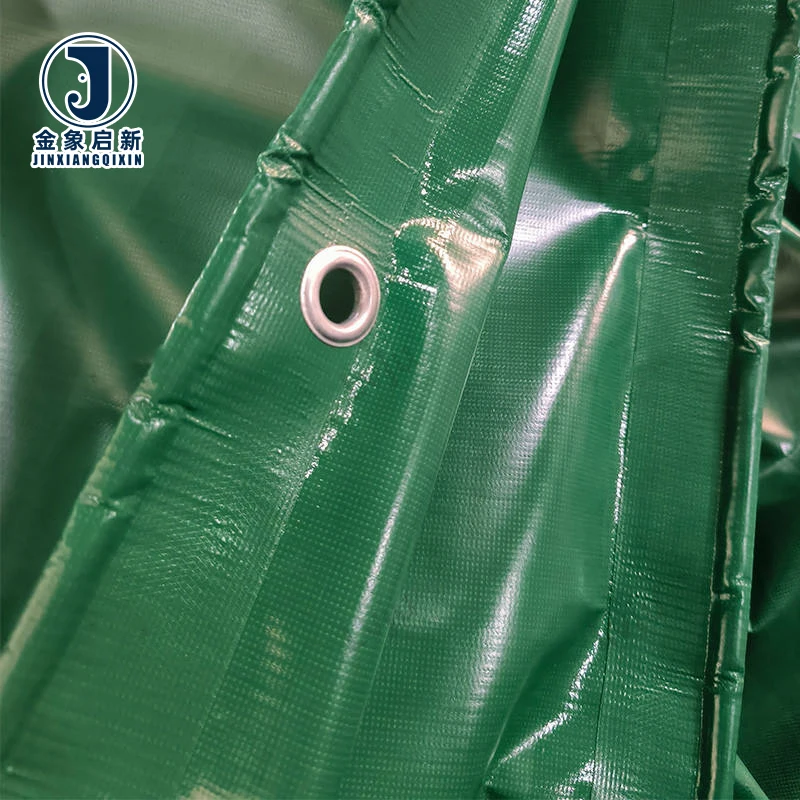
- Reinforce eyelet and tie-down points with additional PVC patches welded over the base fabric mesh
Before You Request a Quote
Provide the ventilation duct diameter, total run length, and the fire-retardant or anti-static standard your site authority enforces. State the operating temperature range and whether the duct will be permanently installed or moved between locations. Confirm whether you need rolls in stock widths or if a custom width would reduce your fabrication waste. If membrane or inflatable structure fabric is the application, share the panel dimensions and any colour consistency requirement across the full order.
Frequently Asked Questions
Q: What fire-retardant grade does this PVC tarpaulin carry, and does it meet my local mining or aviation safety standard?
A: Flame-retardant treatment is available as a special option, and the specific grade is matched to your project requirement. Share the standard your site safety authority references — such as your national mining code or aviation ground support specification — and the production team will confirm the achievable grade and issue the corresponding test report with your shipment documentation.
Q: Is anti-static treatment certified with a surface resistance test report?
A: Anti-static treatment is available, and a surface resistance measurement is recorded during quality control. The test method and result are documented on a report that accompanies the roll. Specify the resistance range or standard your project demands so the treatment formulation is set to match before production begins.
Q: How do I verify the GSM on arrival matches the quoted specification?
A: Every roll undergoes weight verification during pre-shipment inspection, and the result is recorded on the inspection report included with your documentation. You can perform a sample cut-and-weigh check on arrival using the GSM stated on the material specification sheet as your reference baseline for comparison.
Q: What roll widths and lengths are available, and can custom widths be produced for duct fabrication?
A: Standard rolls ship at 2m width by 75m length or 2.1m width by 50m length. Custom widths are available subject to production line setup and minimum order quantity. Provide your target width and the duct diameter you are fabricating so the team can advise on feasibility and any effect on lead time.
Q: How are welded seams tested to ensure they hold under flex and airflow pressure?
A: Welded seam strength depends on coating adhesion to the base mesh, which is controlled through the hot-melt or laminated coating process and verified by peel testing during production. The tearing strength at the weld line is assessed during quality control, and inspection records are available with your shipment to confirm the fabric meets the specification agreed at order stage.