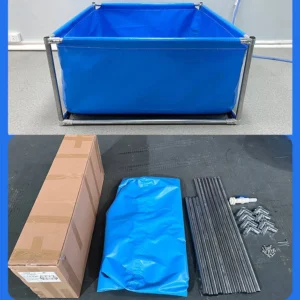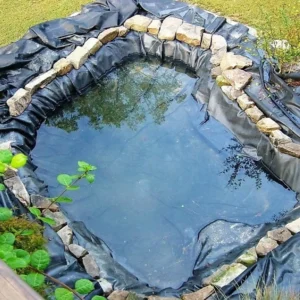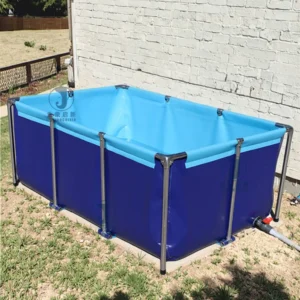
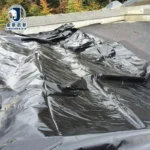
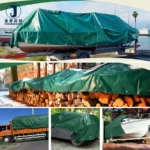
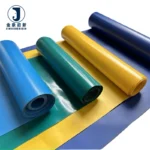

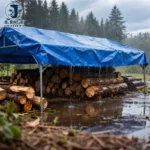
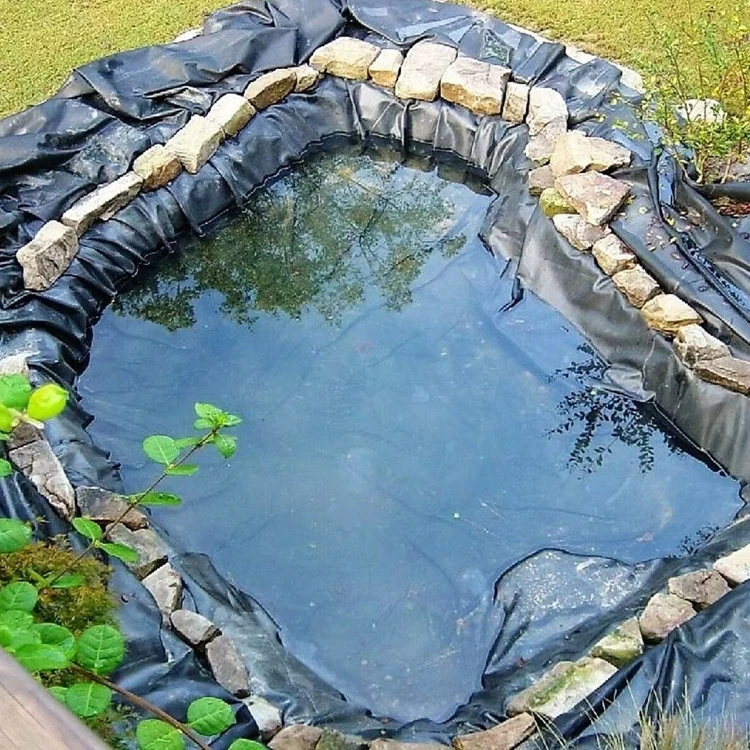
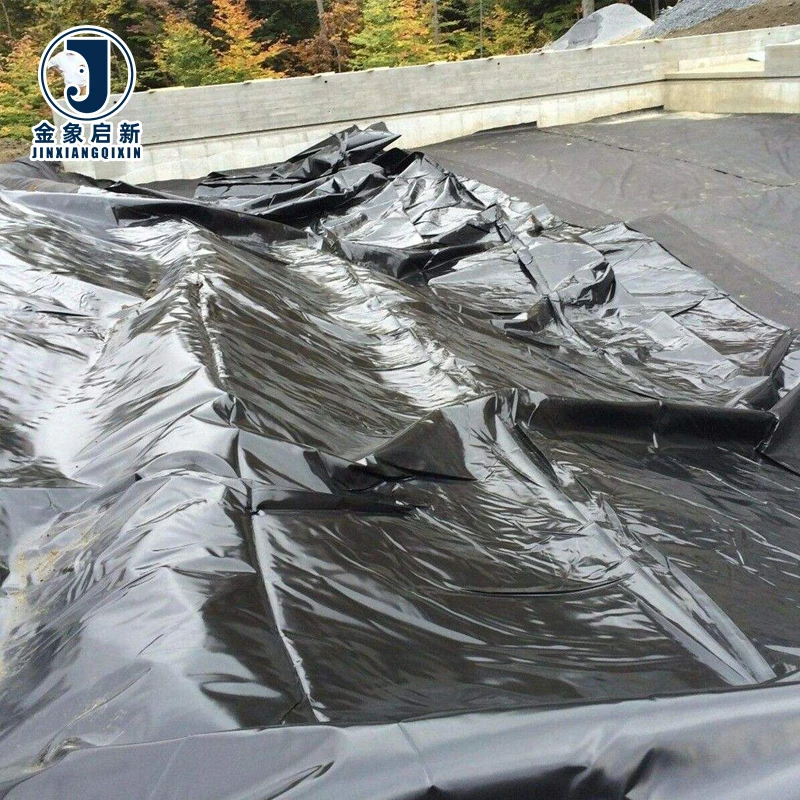
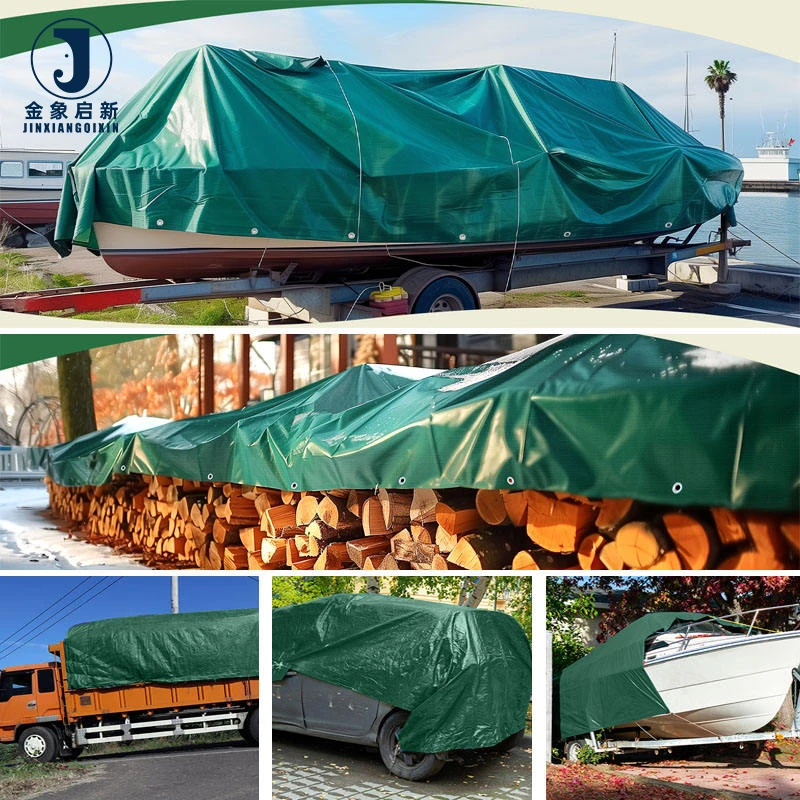
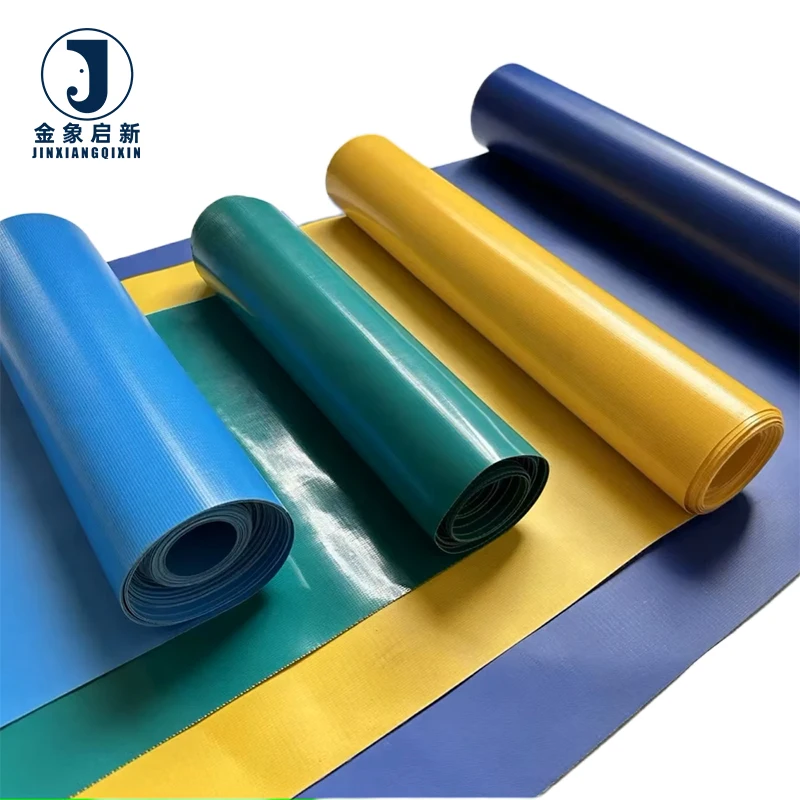
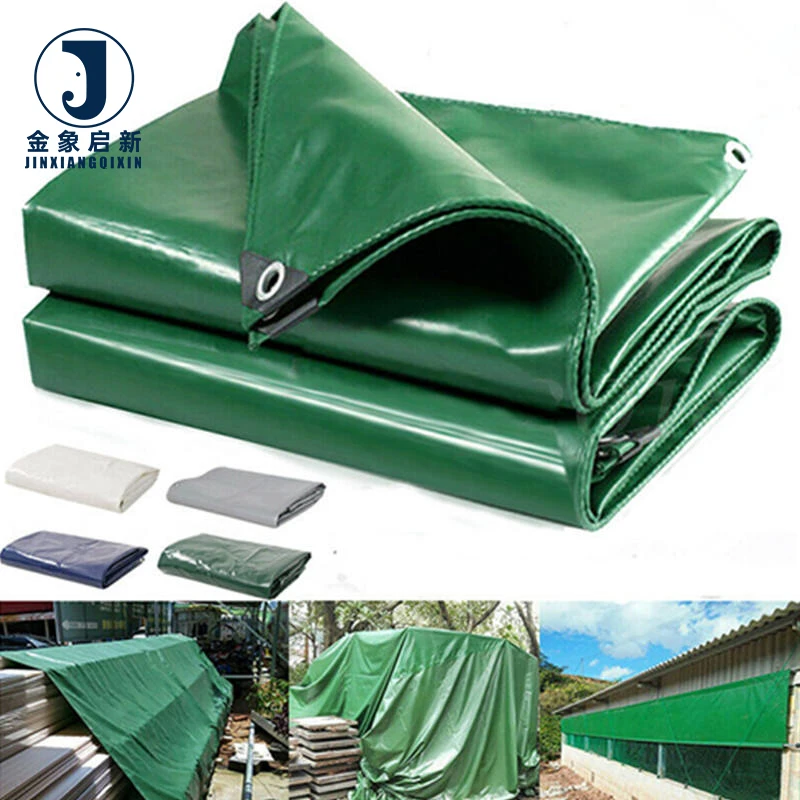
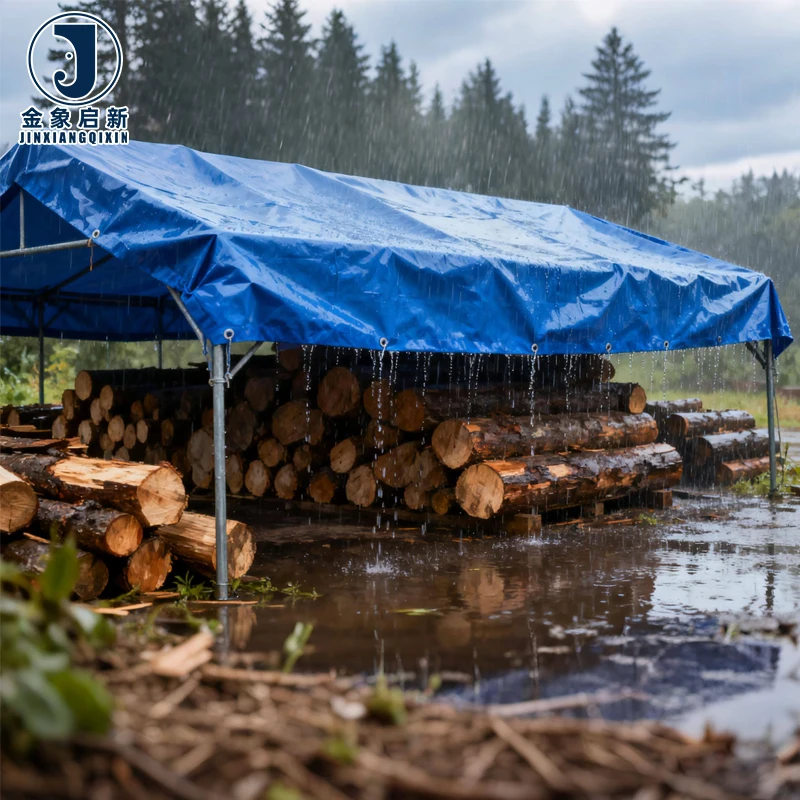
Coating Precision — Hot-melt and laminated coating lines deliver pond liner fabric with verified GSM and reliable adhesion, matched to your containment specification.
Technical Specifications
| Parameter | Value |
|---|---|
| Product Type | PVC Fish Pond Liner |
| Material | PVC + High-strength polyester mesh fabric |
| Coating Method | Laminated technology & Hot-melt coating technology |
| Weight (GSM) | 350gsm / 420gsm / 500gsm / 550gsm / 600gsm / 750gsm |
| Total Thickness | 0.32mm / 0.35mm / 0.4mm / 0.45mm / 0.5mm / 0.65mm |
| Roll Width | 2m / 2.1m |
| Roll Length | 75m (2m width) / 50m (2.1m width) |
| Color | Blue / Red / Yellow / Light blue / Grey (Customized) |
| Key Features | Cold crack resistance, anti-mildew, waterproof, sunproof, high color fastness |
| Special Treatments | Flame retardant (grade to be confirmed), anti-static (test basis to be confirmed) |
| Standards | ISO, CE |
Application Suitability
| Application | Exposure & Requirement |
|---|---|
| Aquaculture fish and shrimp ponds | Permanent water immersion, biological load, UV exposure, liner puncture risk from substrate |
| Agricultural and municipal water reservoirs | Long-term water containment, soil chemistry contact, wind load on exposed edges |
| Mining and industrial containment | Anti-static or fire-retardant compliance requirements, chemical exposure, heavy-duty abrasion |
| Hatchery tanks and nursery pools | Frequent filling and draining, cleaning chemical exposure, biosecurity liner integrity |
Why a "Waterproof" Label Is Not Enough for Pond Containment
True waterproof performance depends on coating adhesion and seam integrity, not just the material claim.
A PVC fish pond liner can be fully waterproof when it leaves the factory yet fail within months if the coating delaminates under hydrostatic pressure or if welded seams split at stress points. Buyers often receive material that passes a basic water column test but lacks the peel strength needed for long-term pond installations [NEED_CITE: peel strength test methods for coated fabrics per ISO 2411]. The gap between a waterproof claim and field performance is where most containment failures originate, especially in large aquaculture operations where liner replacement means draining entire ponds and disrupting production cycles.
Coating Technology and Adhesion Reliability
This PVC fish pond liner is produced using both laminated and hot-melt coating technology, bonding PVC layers to a high-strength polyester mesh base. Hot-melt coating drives the PVC compound into the mesh structure under heat and pressure, creating a mechanical and chemical bond that resists delamination even when the liner is subjected to constant water pressure and substrate movement. Laminated construction offers a cost-effective alternative for less demanding containment applications where extreme peel strength is not the primary concern.
Seam Welding and Structural Integrity
The outstanding tearing strength of the polyester mesh base is engineered to support reliable heat-welded seams, which is critical for pond liner fabrication. When panels are joined on-site or in the workshop, the weld zone must resist the same flexing and stress that the body of the fabric endures. A seam that fails before the fabric itself is a common failure mode in pond installations [NEED_CITE: weld strength testing for PVC coated fabrics]. This material’s tear characteristics at the weld line are a key factor in long-term containment performance.
Understanding GSM, Thickness, and Base Fabric Interaction
Weight in GSM and total thickness provide a baseline, but the base fabric denier and weave density determine how the PVC fish pond liner actually performs under load. A 550gsm liner with a tight, high-denier polyester mesh will resist puncture and tear propagation far better than a 550gsm liner built on a loose, low-denier base. The coating method further influences the outcome: hot-melt coated fabric typically achieves higher adhesion values than laminated alternatives, meaning the PVC layers are less likely to separate from the mesh under sustained hydrostatic stress or during welding operations.
The Cost of Specifying on Price Per Square Metre Alone
Choosing a pond liner grade based primarily on cost often leads to field consequences that outweigh the initial savings. Material that arrives lighter than the quoted GSM will have less coating protection and reduced abrasion resistance against rocky or uneven pond substrates. Colour inconsistency between rolls in the same shipment becomes visible once panels are welded side by side in the pond, creating an unprofessional appearance for commercial aquaculture facilities. Anti-static or flame retardant treatments claimed without supporting test reports can result in failed site inspections [NEED_CITE: compliance requirements for industrial containment liners], forcing costly replacement before the pond is ever filled.
Sourcing Backed by Process Control
Deep process control over coating weight and adhesion has been refined over nearly 30 years of focused coated fabric production, ensuring that every roll of PVC fish pond liner meets the specification quoted. Three full production lines with 36 sets of professional equipment provide the capacity to fulfil bulk aquaculture orders with consistent lead times. A dedicated 10-person R&D team handles custom sizing, colour matching and sample development for projects with specific containment requirements. Every production run undergoes 100% pre-shipment inspection, verifying weight, thickness, colour consistency and coating adhesion before dispatch.
Documentation & Verification
- Material specification sheet confirming exact GSM, base fabric construction, and coating method for the grade ordered
- Test reports for fire-retardant and anti-static grades matched to the compliance standard required on your site
- Pre-shipment inspection record covering coating adhesion, seam weld strength, and roll-to-roll colour consistency
- Roll packing list and certificate of origin included for international customs clearance
Fabrication, Handling & Storage
- Heat-weld seams at temperatures suited to hot-melt and laminated PVC coatings to achieve full bond strength
- Store rolls on flat, dry surfaces to prevent permanent creasing in the polyester mesh base fabric
- Allow cold-stored rolls to acclimatise before unrolling to avoid coating micro-cracks at low temperatures
- Use compatible PVC adhesive patches for field repairs on punctured pond liner sections
- Cut panels with overlap allowance to ensure full weld contact across all pond liner joints
Preparing Your Specification for Quotation
To receive an accurate material recommendation, share your pond dimensions, substrate conditions, and whether the installation requires fire-retardant or anti-static compliance for your market. Specify the target GSM or thickness range, preferred colour, and whether you need roll stock or custom cut-to-size panels. Sample development is available to confirm colour, weight, and welding compatibility before committing to a full production order.
Frequently Asked Questions
Q: What GSM grade is appropriate for a commercial fish pond versus a small hatchery tank?
A: Heavier grades with thicker coatings generally suit large commercial ponds where substrate abrasion and hydrostatic pressure are significant. Hatchery tanks with controlled environments may perform well at lighter grades. Share your pond dimensions and substrate type so we can recommend the correct weight from our available range.
Q: How is the fire-retardant grade verified, and which standards can be met?
A: Fire-retardant treatment is available as a special option for this pond liner fabric. The specific grade and test standard depend on the compliance requirements of your market and site. Request a test report matched to your local regulation when placing your inquiry so the correct treatment is applied.
Q: Will the colour remain consistent if I order multiple rolls for a large pond installation?
A: Roll-to-roll colour consistency is maintained through controlled coating batches and 100% pre-shipment inspection. For large projects requiring panels welded side by side, we verify colour matching across all rolls in the order before dispatch to prevent visible variation once installed.
Q: Can I receive this liner as custom cut-to-size panels, or only as roll stock?
A: Both options are available. Finished panels can be fabricated to your pond dimensions with welded seams, or you can order roll stock for on-site cutting and welding. Specify your preference during inquiry, including any reinforcement or hemming requirements for the edges.
Q: What welding method is recommended for joining pond liner panels?
A: Hot-air welding and wedge welding are standard methods for PVC coated polyester pond liner fabric. The hot-melt and laminated coating on this material supports strong weld adhesion when correct temperature and pressure settings are applied. We can provide welding guidance matched to the specific GSM grade you select.