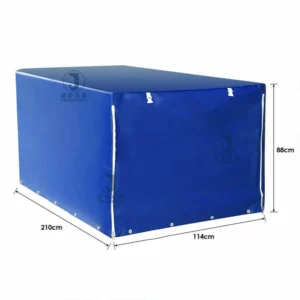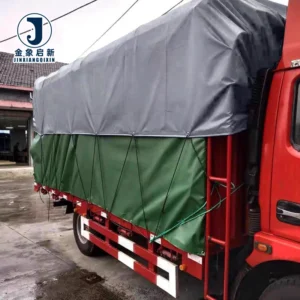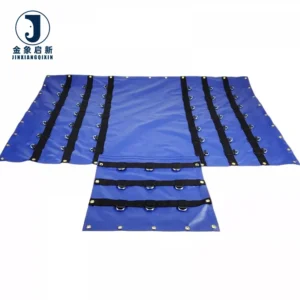
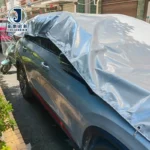
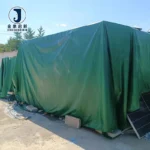
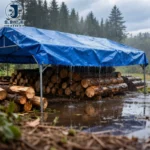
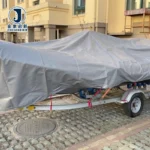
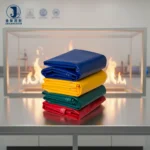
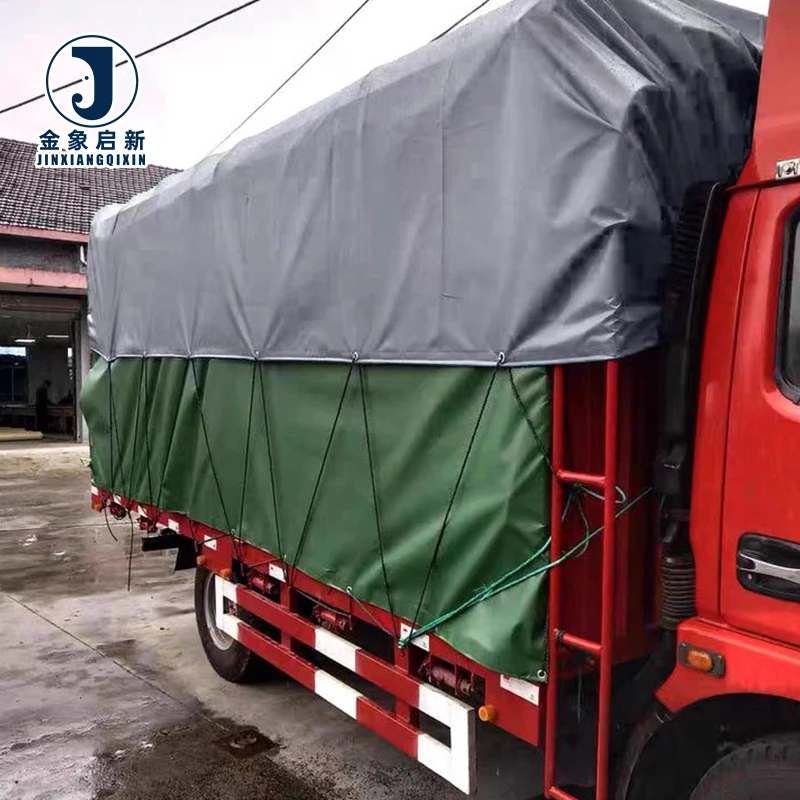
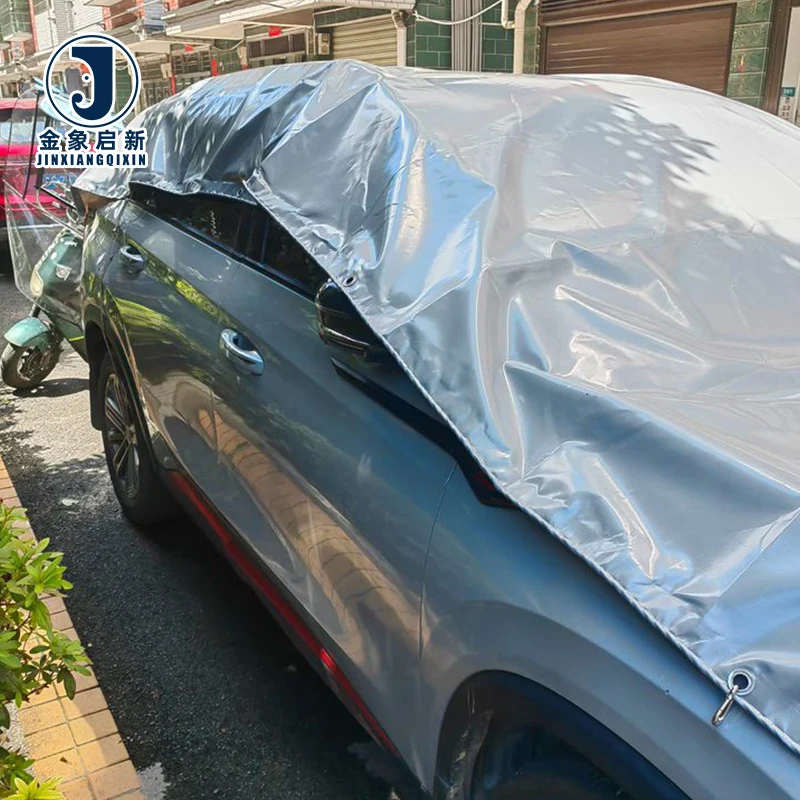
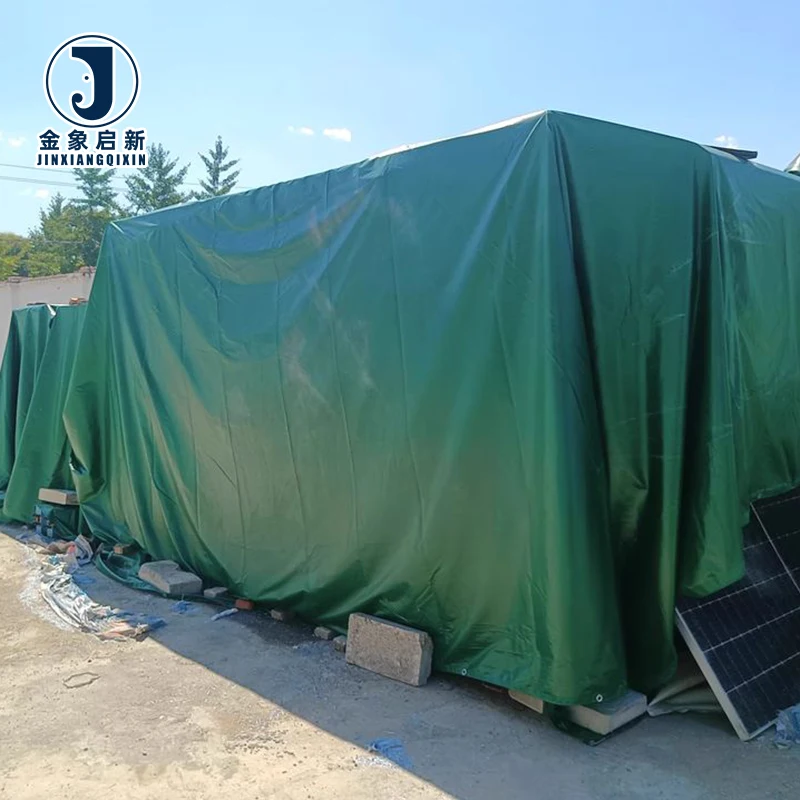
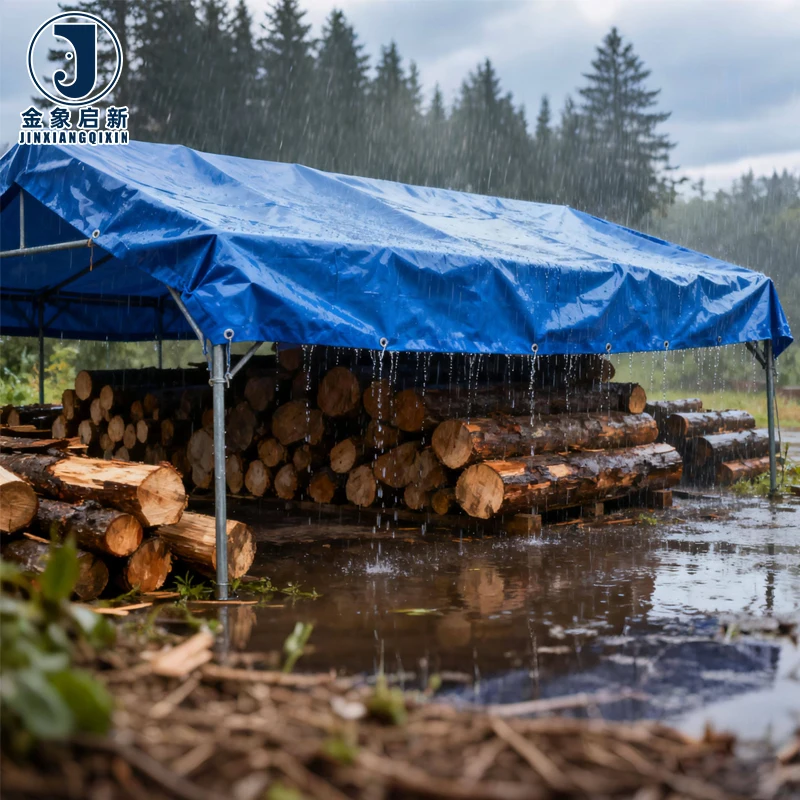
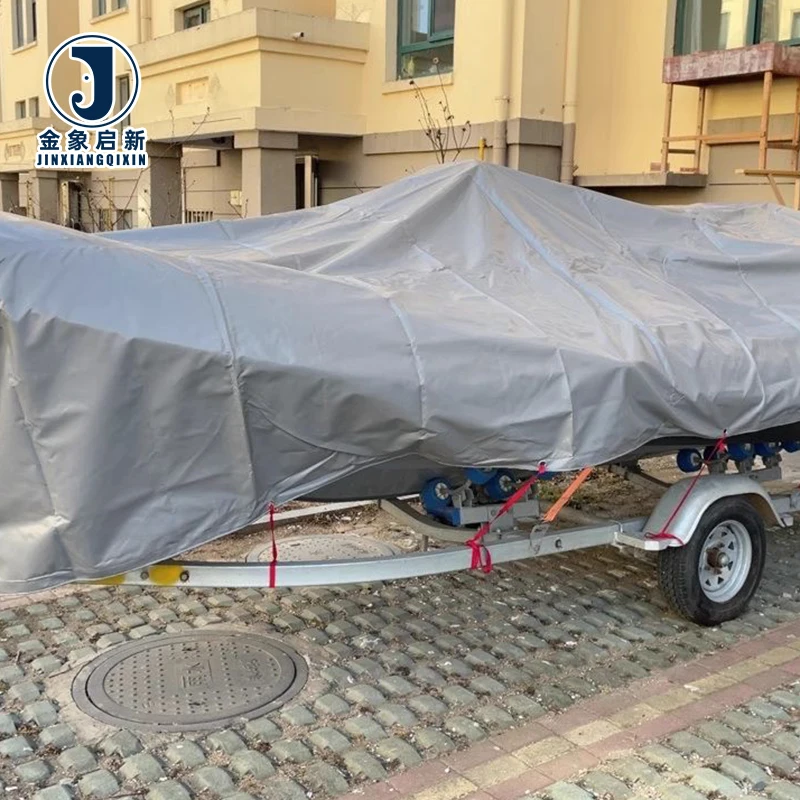
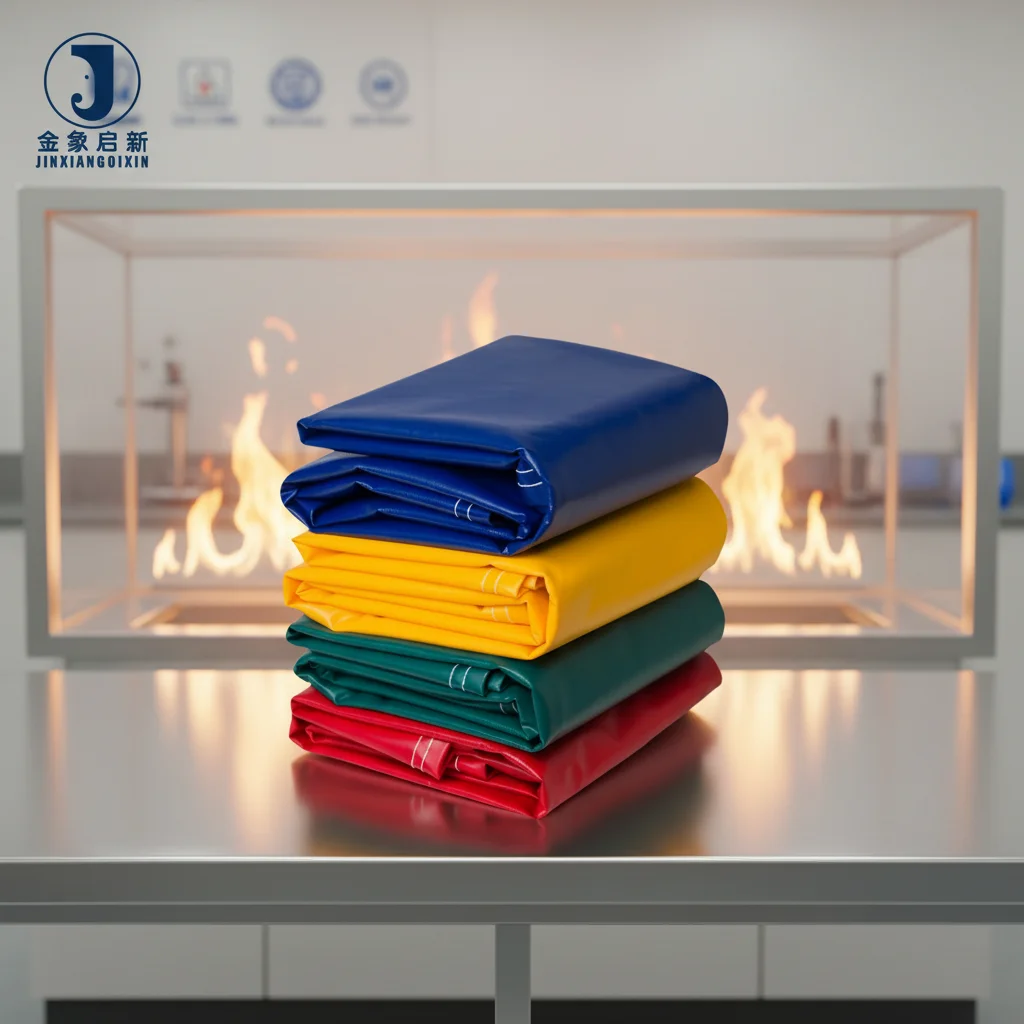
Coated Fabric Process Control — Every roll of PVC coated tarpaulin undergoes lamination and hot melt coating under monitored adhesion parameters, ensuring weld tear strength matches the fabric’s structural load requirements.
Technical Specifications
| Parameter | Value |
|---|---|
| Product Type | PVC Coated Tarpaulin |
| Base Fabric Denier (Medium) | 500D |
| Base Fabric Denier (Heavy-duty) | 1000D |
| Base Fabric Denier (Super Heavy) | 500D–2000D |
| Coating Material | PVC |
| Coating Method | Lamination technology and hot melt coating technology |
| Weight Range (Medium) | 400–500 g/m² |
| Weight Range (Heavy-duty) | 700–1000 g/m² |
| Weight Range (Super Heavy) | 1100–1500 g/m² |
| Total Thickness (Medium) | 0.35–0.45 mm |
| Total Thickness (Heavy-duty) | 0.70–1.0 mm |
| Total Thickness (Super Heavy) | 1.2–1.5 mm |
| Tensile Strength (Medium) | Warp 1500–2000 / Weft 1200–1800 N/5cm |
| Tensile Strength (Heavy-duty) | Warp 2000–2500 / Weft 1800–2200 N/5cm |
| Tensile Strength (Super Heavy) | Warp 2500–3000 / Weft 2200–2800 N/5cm |
| Flame Retardant | Available in flame retardant grades — confirm the grade required for your market |
| Anti-Static | Anti-static treatment available — surface resistance value and test standard to be confirmed at inquiry |
| Anti-Mildew | Mold proof |
| Cold Resistance | Cold resistant to cracking |
| Waterproof | Fully waterproof coated construction |
| Color Options | Blue, Blue/Orange, Green, Grey, Black, Clear, Grey/Green, Orange, custom colors available |
| Certifications | ISO, CE |
Application Suitability
| Application | Exposure & Requirement |
|---|---|
| Heavy truck tarpaulin and trailer side curtains | Constant flexing at load points, road debris abrasion, sustained weather exposure |
| Industrial pipe canopy and tensioned structures | Long-term wind load, tensile stress across welded seams, dimensional stability required |
| Mining and tunnelling site covers | Underground fire safety compliance, anti-static mandates, mechanical damage risk |
| Construction equipment protection | UV exposure, moisture ingress, dust containment over extended idle periods |
| Agricultural and farm machinery covers | Seasonal outdoor storage, chemical contact from fertiliser residue, puncture from sharp edges |
Why a Fire-Retardant Claim Without a Test Report Is a Liability
Always request the test standard and grade before specifying PVC coated tarpaulin roll fire retardant anti-static certified fabric for any compliance-driven project.
Ventilation ducts and truck covers arrive on sites where fire marshals and safety officers demand documentation. When the fabric carries a flame retardant claim but no DIN, NFPA or local classification behind it, the entire installation can be rejected at inspection [NEED_CITE: fire classification standards for coated fabrics in underground and transport applications]. This is not a paperwork issue — it halts commissioning, triggers replacement orders, and exposes the contractor to contract penalties. Anti-static performance works the same way: without a stated surface resistance value tied to a recognised test method, the claim holds no weight in a mining or aviation hangar environment. A PVC Truck Cover for industrial use must carry verifiable grades, not marketing language.
Coating Adhesion and Weld Integrity Under Load
Hot melt coating and lamination technology produce a bond between the PVC layer and the polyester base fabric that resists delamination when the material flexes repeatedly. This is critical for truck side curtains and tensioned structures where the fabric bends around load profiles or frame geometry. When adhesion is weak, the coating peels at weld lines long before the base fabric reaches its tensile limit. The PVC Truck Cover for industrial use relies on this coating-to-substrate bond to maintain waterproof integrity across the full service life of the cover.
Tensile Performance Across Weight Grades
The three weight tiers — medium, heavy-duty and super heavy — each pair a specific base fabric denier with a corresponding PVC coating weight. The 1000D base in the heavy-duty range delivers warp tensile strength in the 2000–2500 N/5cm range, while the super heavy tier pushes to 2500–3000 N/5cm warp on a 500D–2000D construction [NEED_CITE: tensile and tear test methods for coated fabrics per ISO 1421]. These figures determine how the fabric behaves under tie-down tension, wind uplift on canopies, and the point loads created by snow accumulation on flat covers.
Reading GSM, Denier and Coating Weight Together
A 950 g/m² roll tells you the total mass per square metre, but not how that mass is distributed. Two rolls at the same GSM can have very different tear resistance depending on whether the weight sits in a dense base fabric or a thick coating layer. High denier yarn (1000D or 2000D) provides the tear propagation resistance that prevents a small puncture from becoming a full panel failure. Coating weight governs waterproofing, chemical resistance and the surface available for welding. Lamination technology tends to produce a more uniform coating-to-fabric bond compared to simple knife-over-edge methods, which affects how reliably the material heat-seals during fabrication [NEED_CITE: coating technology comparison for PVC tarpaulin adhesion performance]. When specifying, request a breakdown of base fabric weight versus coating weight rather than relying on total GSM alone.
The Hidden Cost of Specifying on Price per Kilogram
When procurement evaluates PVC coated tarpaulin roll fire retardant anti-static certified material on cost per kilogram alone, lighter-than-quoted rolls arrive on site and the shortfall only becomes visible during installation. Panels cut to pattern come up short, eyelet spacing no longer aligns with the frame, and the welding parameters set for the specified thickness produce burn-through on thinner material. Colour variation between rolls from different production batches compounds the problem — two panels hung side by side on a trailer or canopy show a visible shade mismatch that the end client rejects. Batch-to-batch colour consistency and verified GSM per roll are not optional extras; they are the difference between a cover that passes first inspection and one that triggers a full rework cycle [NEED_CITE: batch colour consistency standards in coated fabric production].
Why Source This PVC Truck Cover Here
Three full production lines and 36 sets of professional equipment run dedicated PVC coating processes, meaning capacity is allocated without switching between unrelated product families mid-run. A 10-person R&D team handles material selection, pattern printing, custom sizing and sample development — samples for custom widths or colours are developed within days, not weeks. QA and QC checkpoints operate at every production stage with 100% inspection before shipment, so GSM verification and colour matching are confirmed before the roll leaves the facility. Nearly 30 years focused exclusively on coated fabric has built process control over coating weight and adhesion that newer suppliers cannot replicate from equipment manuals alone.
Documentation & Verification
- Material specification sheet stating exact GSM, base fabric denier and coating weight per roll
- Test reports for flame retardant grade and anti-static surface resistance where specified in the purchase order
- Pre-shipment inspection record confirming GSM verification and batch colour consistency
- ISO and CE certificates current and matched to the production facility
- Roll packing list with individual roll weights and dimensions for receiving verification
- Certificate of origin and customs documentation prepared per destination country requirements
Fabrication, Handling & Storage
- Heat-seal temperature must be matched to the specific coating thickness — super heavy grades require higher dwell times than medium-weight rolls
- Store rolls upright on pallets to prevent permanent creasing in the PVC coating layer
- Allow cold-weather rolls to reach ambient temperature before unrolling to avoid coating crack at the core
- Use compatible PVC welding tape for seam repair; adhesive patches will not bond to the coated surface long-term
- Plan panel cutting layout to minimise offcut waste on custom-width rolls, especially for tensioned structure panels
- Clean with mild detergent only — solvent-based cleaners degrade the PVC surface and affect subsequent weld adhesion
What to Include in Your Enquiry
Provide the specific application and the exposure conditions the cover will face — underground compliance requirements, transport fleet route climates, or structural load calculations. State whether you need rolls at standard width or custom-cut panels with finished edges. If your market mandates a particular fire classification or anti-static surface resistance value, include the exact standard in your enquiry so the correct treatment and test report can be matched to your order.
Frequently Asked Questions
Q: What fire retardant grade does the PVC tarpaulin achieve, and which test standard applies?
A: Flame retardant treatment is available across the weight range, but the specific grade depends on your market requirement. We supply the test report matched to the standard you specify — confirm whether your project requires DIN, NFPA, M2, B1 or another classification before placing the order so the correct formulation is applied.
Q: How is anti-static performance measured, and what surface resistance value is guaranteed?
A: Anti-static treatment is applied upon request, and the guaranteed surface resistance value is stated on the test report that ships with the order. Provide your site compliance standard at enquiry stage so the treatment is formulated and verified against the correct measurement method and acceptance threshold.
Q: How is GSM verified on arrival, and what is the re-inspection procedure?
A: Every roll is weighed and recorded during pre-shipment inspection, and the inspection report ships with the consignment. On arrival, you can cross-check individual roll weights against the packing list. Any discrepancy triggers a documented review with replacement or credit processed according to the inspection record.
Q: What welding and seam methods are recommended for this PVC coated fabric in structural applications?
A: Hot air welding and high-frequency welding both work well with the lamination and hot melt coating construction. Welding parameters must be adjusted to the specific coating thickness of your selected weight grade — we provide recommended temperature and speed settings with each material specification sheet.
Q: What documentation is provided for customs and site compliance?
A: Each shipment includes a material specification sheet, relevant test reports for flame retardant and anti-static properties where specified, ISO and CE certificates, a pre-shipment inspection record, roll packing list and certificate of origin. Additional customs documentation is prepared based on destination country requirements.