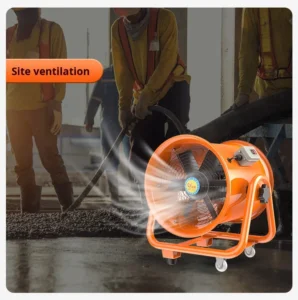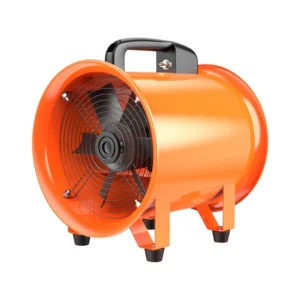
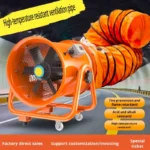



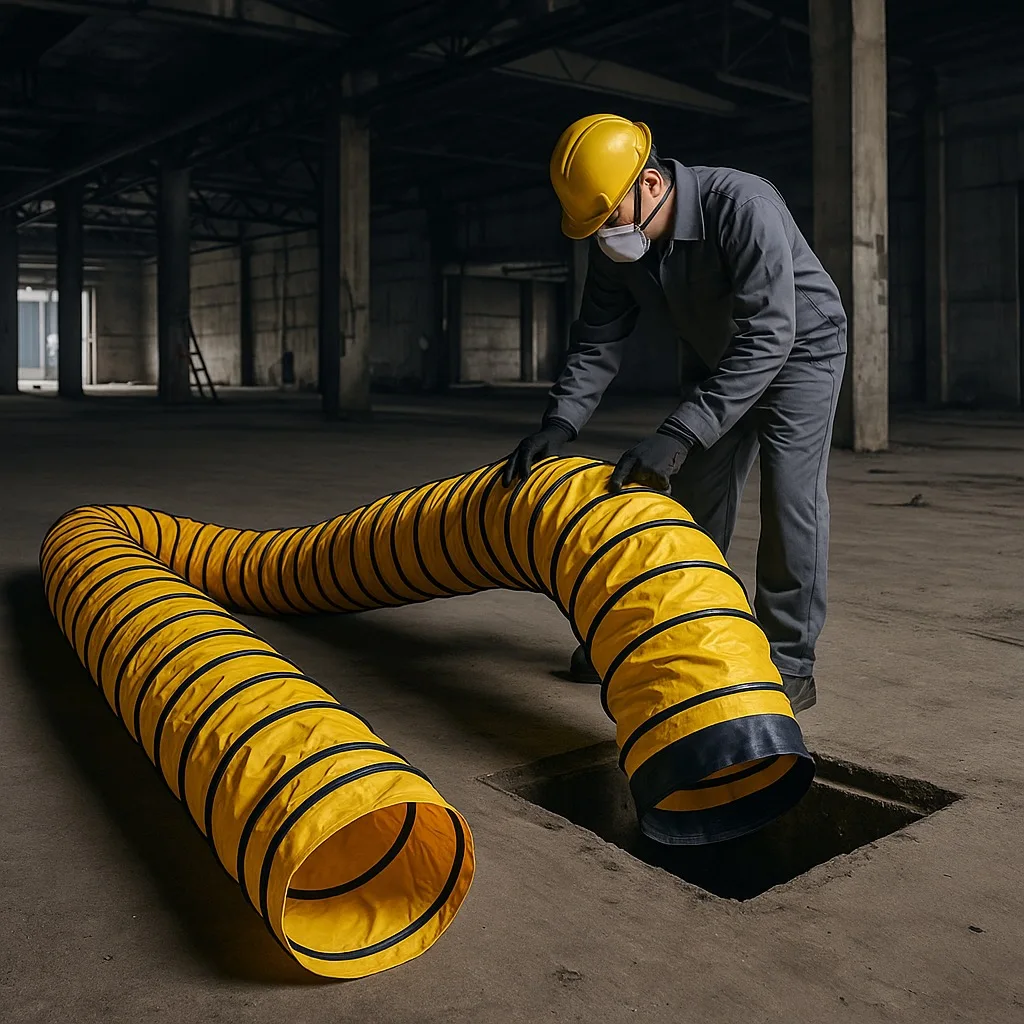

Precision Airflow Delivery — matching certified blower output to fire-retardant and anti-static flexible duct runs ensures confined-space ventilation systems pass site inspection from fan to face.
Technical Specifications
| Parameter | Value |
|---|---|
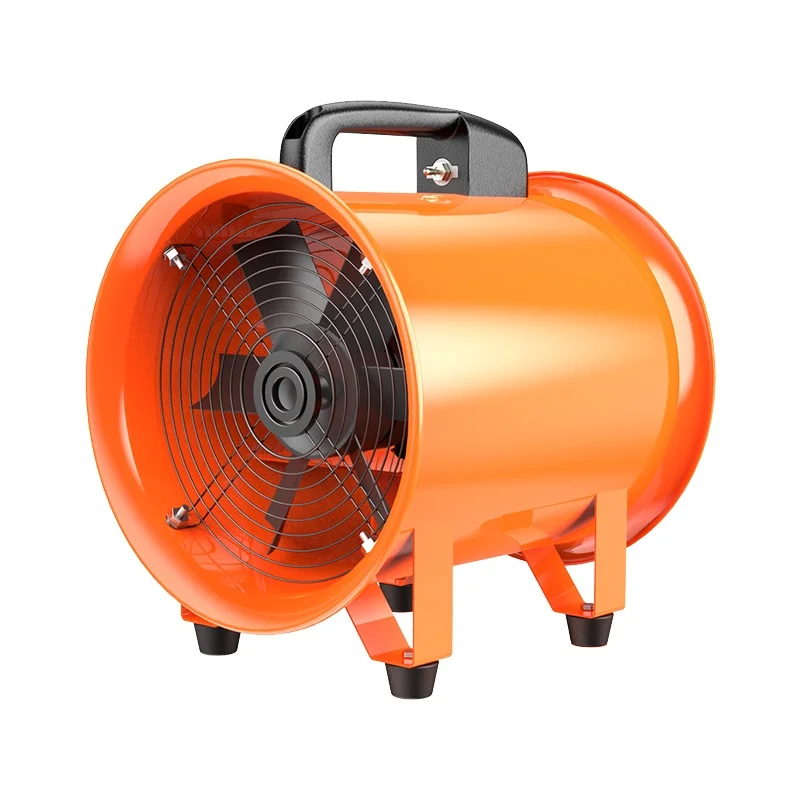
| Product Type | Portable Axial Flow Ventilation Blower |
| Size Options | 200mm / 250mm / 300mm / 350mm / 400mm / 450mm / 550mm / 650mm / 750mm / 850mm / 900mm |
| Power Range | 250W (200mm) to 5500W (900mm) |
| Air Volume Range | 1300 m³/h (200mm) to 28000 m³/h (850mm) |
| Total Pressure Range | 140 Pa (200mm) to 320 Pa (400mm) |
| Voltage | 220V / 380V |
| Noise Level | 57–88 dB(A) depending on diameter |
| Housing Material | Cast Iron |
| Bearing Type | Ball Bearing |
| Type | Axial Flow, Portable |
| ODM | Available |
Application Suitability
| Application | Exposure & Requirement |
|---|---|
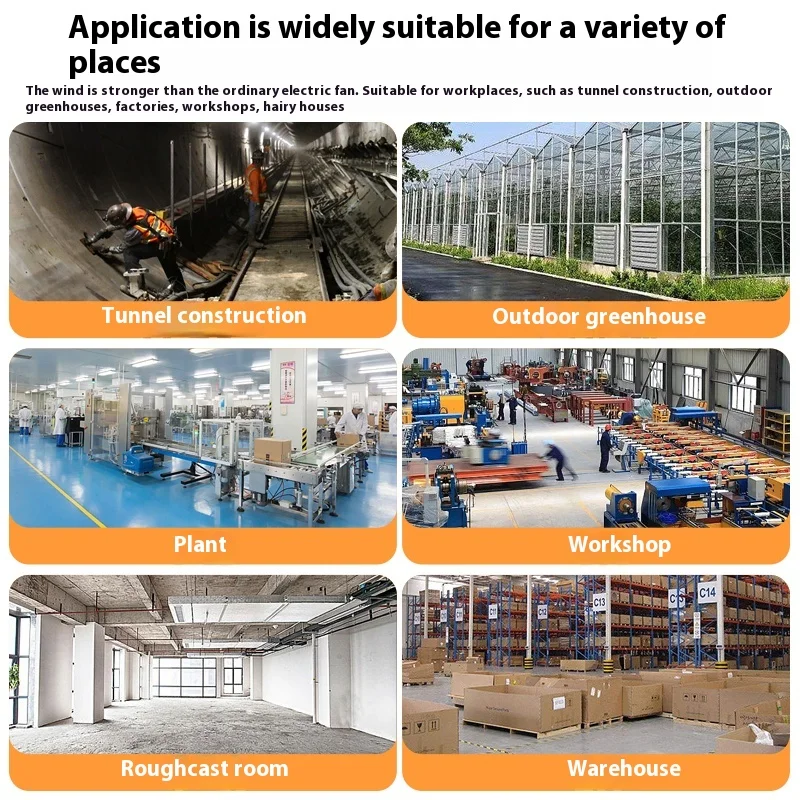
| Underground mining and tunnelling face ventilation | Continuous duty, abrasive dust ingress, fire-retardant duct compliance over extended runs |
| Aviation ground support and hangar confined-space air exchange | Anti-static duct fabric requirement, fuel-adjacent atmosphere, intermittent to continuous cycling |
| Construction shaft and basement fit-out exhaust | Moisture-laden air, particulate load, temporary power supply variability |
| Industrial workshop local spot extraction | Heat and fume load, vibration from adjacent machinery, shift-based duty cycles |
| Temporary event and site ventilation | Rapid deployment, noise restriction near occupied zones, short-run duct flexibility |
What Happens When the Blower and the Duct Fabric Are Not Aligned
A certified blower connected to non-compliant duct fabric still fails the site ventilation inspection.
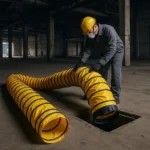
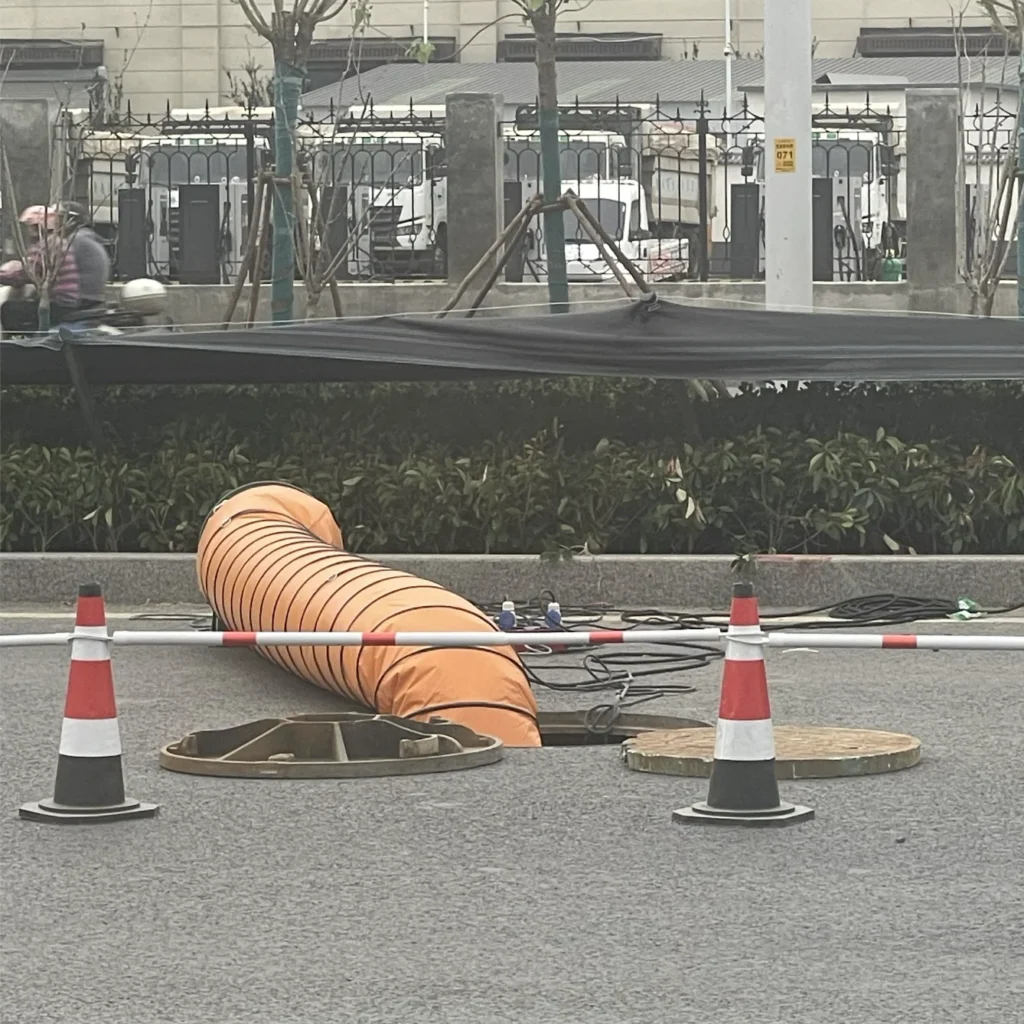
Mining and tunnelling contractors frequently specify a portable axial flow ventilation blower for mining and tunnelling based on air volume alone, then discover that the flexible duct attached to it lacks the fire-retardant or anti-static certification the regulatory authority demands. The entire ventilation system is rejected at the point where duct meets fan — not because the blower under-performs, but because the fabric certificate does not match the site’s hazard classification. [NEED_CITE: fire-retardant and anti-static classification requirements for underground ventilation ductwork]
Matching Fan Diameter to Duct Run Length and Pressure Drop
Selecting the correct diameter from the eleven available sizes depends on the total pressure the system must overcome across the full duct run. A 400mm unit delivers 11000 m³/h at 320 Pa — sufficient for moderate-length runs with standard flexible duct. Longer tunnel drives or multi-branch layouts demand larger diameters such as the 650mm or 750mm models, where higher air volume compensates for friction losses across each duct joint. Portable axial flow ventilation blower for mining and tunnelling sizing must account for every coupling, bend and reducer in the layout, not just the straight-run distance.
Cast Iron Housing and Ball Bearing Under Site Conditions
The cast iron housing provides the mass and rigidity needed to resist vibration transfer when the blower runs on uneven tunnel floors or scaffolding platforms. Ball bearing construction supports sustained rotational loads without the axial play that sleeve bearings develop after continuous operation in dusty atmospheres. On high-dust mining faces, abrasive particulate accelerates bearing wear — the sealed ball bearing design extends service intervals between inspections. [NEED_CITE: bearing life comparison under abrasive particulate exposure in industrial ventilation fans]
Reading the Fan Curve Against Your Ventilation Layout
Air volume ratings are measured at zero static pressure, but real installations operate against duct friction, bends and altitude effects. The total pressure column in the specification table shows the working point each model is designed around. A 350mm fan producing 4500 m³/h at 260 Pa will deliver less volume once connected to thirty metres of flexible duct with two elbows. Requesting the full fan curve allows your ventilation engineer to plot the operating point against the system resistance curve and confirm adequate face velocity before equipment is dispatched.
The Cost of Undersizing the Blower or Ignoring Duct Certification
When a blower is selected only on purchase cost rather than system pressure requirement, the result is inadequate face velocity at the working end of the tunnel. Crews experience heat build-up, dust recirculation and delayed blasting fume clearance. Equally, sourcing ventilation duct fabric without confirming its fire-retardant or anti-static test reports means the full system can be shut down during a regulatory audit — regardless of how well the blower itself performs. [NEED_CITE: consequences of ventilation system non-compliance in underground mining operations]
Why Procurement Verification Matters Here
Every unit undergoes 100% pre-shipment inspection covering electrical safety, bearing play and vibration baseline before packing. Fire-retardant and anti-static test reports for the duct fabric that connects to this blower are matched to the regulatory framework your site operates under. The ten-person R&D team handles ODM requests including custom inlet and outlet flange configurations, cable entry positions and mounting frames to integrate with existing duct layouts. Production runs on three full lines with 36 sets of equipment, supporting consistent build quality across bulk orders.
Documentation & Verification
- Fan performance curve showing air volume against total pressure for the selected diameter
- Fire-retardant and anti-static test reports for paired duct fabric matched to site hazard class
- Pre-shipment inspection record covering electrical safety, bearing play and vibration baseline
- Product specification sheet stating voltage, power rating, noise level and housing material
- Certificate of origin and packing list prepared for customs clearance at destination port
Fabrication, Handling & Storage
- Custom inlet and outlet flanges configured under ODM to match existing duct coupling sizes
- Ball bearing assembly inspected for axial play before dispatch to prevent early-stage vibration issues
- Cast iron housing protected with anti-corrosion coating for storage in humid staging yards
- Dual voltage 220V/380V wiring verified against site power supply before commissioning
- Noise levels from 57 dB(A) on the 200mm model allow deployment near occupied zones during fit-out works
- Larger models (750mm and above) require mechanical lifting due to cast iron housing weight
Starting Your Specification
Provide the duct run length, number of bends and required face velocity so the correct diameter and power rating can be confirmed. State the fire-retardant or anti-static classification your site authority demands for the connected duct fabric. Indicate whether standard or ODM-configured flange sizing is needed and confirm voltage availability at the deployment point.
Frequently Asked Questions
Q: Which fire-retardant or anti-static certification does my mining or tunnelling site require for the duct fabric connected to this blower?
A: Requirements vary by jurisdiction and hazard classification. Underground coal operations typically demand anti-static duct fabric meeting specific surface resistivity thresholds, while hard-rock tunnelling may require fire-retardant grades aligned with national mining safety standards. Confirm the classification with your site safety officer or regulatory authority before ordering duct fabric to pair with the blower.
Q: How do I size the fan diameter and select the voltage for a given duct run length and total pressure requirement?
A: Start with the required air volume at the working face, then calculate system pressure loss across the full duct run including couplings and bends. Match this against the fan curve for each diameter option. Voltage selection depends on site supply — 220V suits smaller portable deployments while 380V supports the larger models drawing higher power.
Q: Can the blower be supplied with custom flange sizes or inlet guards to match existing duct fittings?
A: Yes. ODM configuration covers custom inlet and outlet flange diameters, bolt patterns, cable entry positions and inlet guard mesh specifications. Provide drawings or sample fittings so the fabrication team can confirm dimensional compatibility with your existing duct system before production begins.
Q: What is the lead time and minimum order for ODM-configured portable blowers?
A: Lead time depends on the extent of customisation and current production scheduling. Standard diameter models with no modification are typically available faster than ODM units requiring bespoke flange or mounting configurations. Confirm your required quantity and specification to receive a confirmed schedule before committing to order.
Q: How should the blower be maintained and the bearings inspected between shifts on a high-dust site?
A: Inspect ball bearing assemblies for axial play and abnormal noise at intervals determined by dust concentration and duty hours. Clean the cast iron housing exterior to prevent dust accumulation around ventilation openings. Check electrical connections for vibration-induced loosening. Record vibration readings against the baseline established at commissioning to detect early bearing wear.