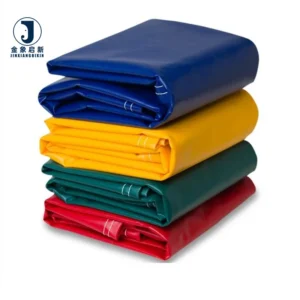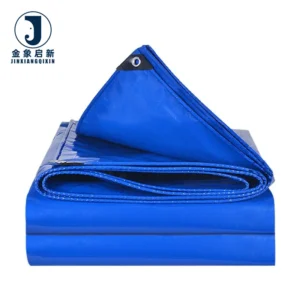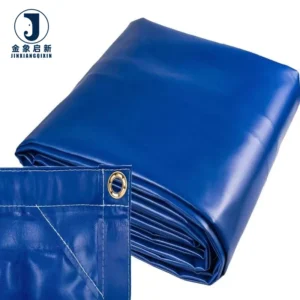
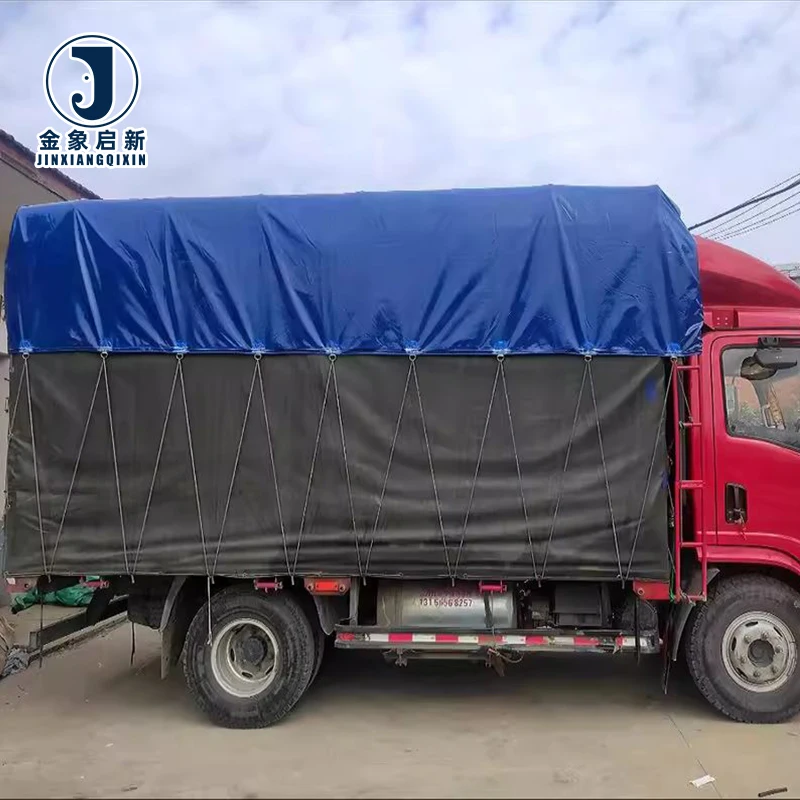
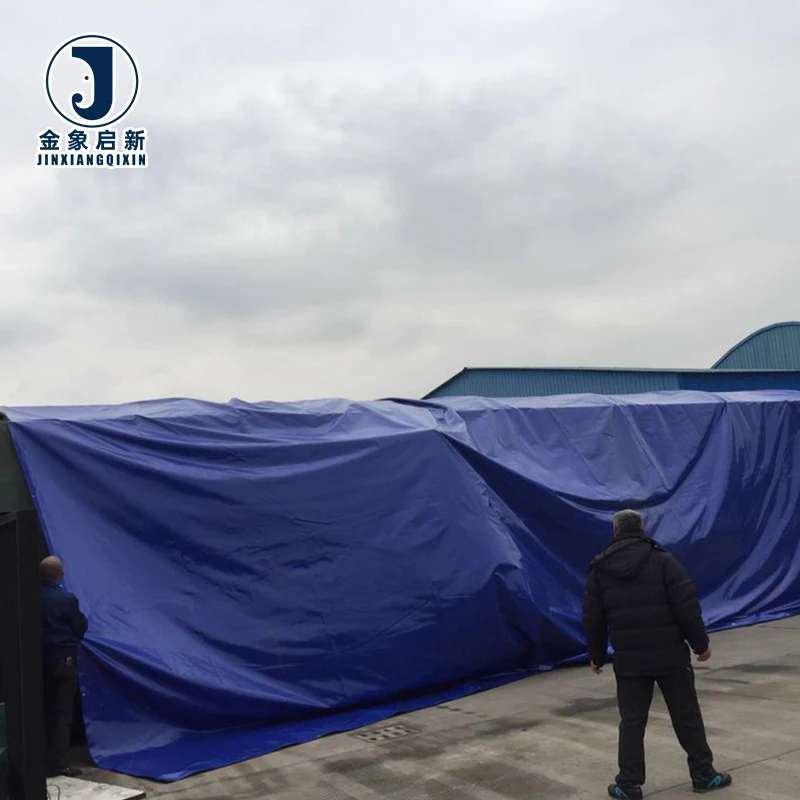
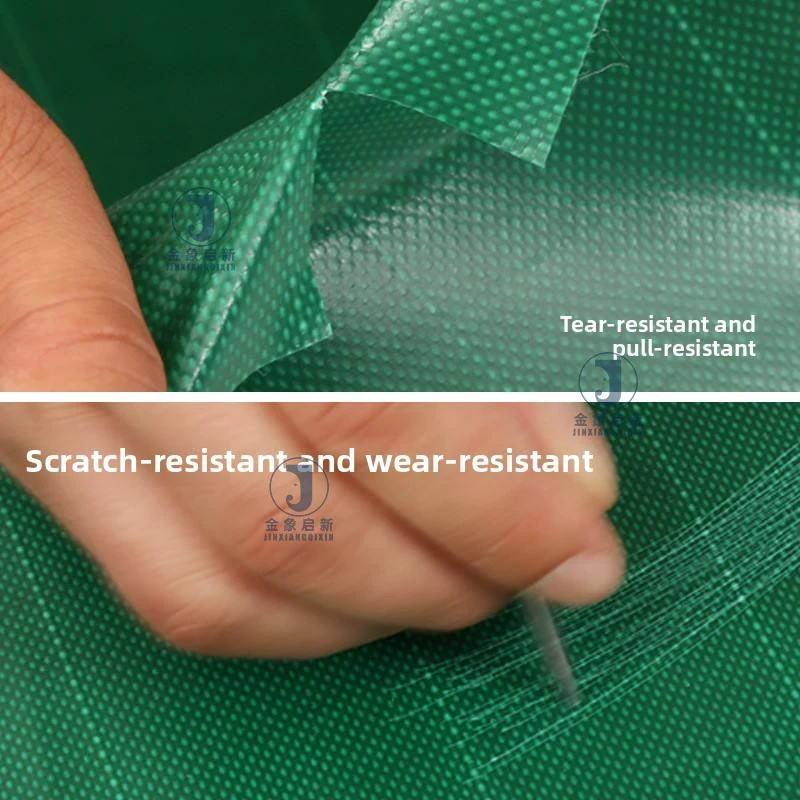
Process-Controlled Coating — deep control over PVC adhesion and GSM consistency across super-heavy grades, with three full production lines dedicated to specialist technical fabrics for membrane and ventilation applications.
Technical Specifications
| Parameter | Value |
|---|---|
| Product Type | PVC Coated Tarpaulin Fabric |
| Material | PVC coated polyester (100% PES dipping coating process) |
| Construction Types | Knitting and plain weave |
| Base Fabric Denier (medium-duty) | 500D |
| Base Fabric Denier (heavy-duty) | 1000D |
| Base Fabric Denier (super heavy-duty) | 500D–2000D |
| Total Thickness (medium-duty) | 0.35–0.45 mm |
| Total Thickness (heavy-duty) | 0.70–1.0 mm |
| Total Thickness (super heavy-duty) | 1.2–1.5 mm |
| Weight (medium-duty) | 400–500 g/m² |
| Weight (heavy-duty) | 700–1000 g/m² |
| Weight (super heavy-duty) | 1100–1500 g/m² |
| Tensile Strength (medium-duty) | Warp 1500–2000 / Weft 1200–1800 N/5cm (test basis not stated in source) |
| Tensile Strength (heavy-duty) | Warp 2000–2500 / Weft 1800–2200 N/5cm (test basis not stated in source) |
| Tensile Strength (super heavy-duty) | Warp 2500–3000 / Weft 2200–2800 N/5cm (test basis not stated in source) |
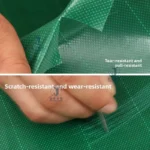
| Key Features | Waterproof, washable, tear resistant, mildew proof, anti-aging |
| UV Treatment | Available — confirm the UV test standard required for your application |
| Flame Retardant | Available in flame retardant grades — confirm the grade required for your market (e.g. M2 / B1 / NFPA 701 / DIN 4102) |
| Anti-Static | Available — confirm surface resistance values and certification required for your site |
| Roll Width Options | 6ft, 8ft, 10ft, 12ft / 2m, 4m, 6m |
| Roll Length Options | 100 yards, 100 meters, or custom |
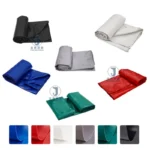
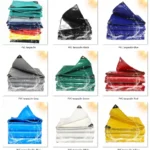
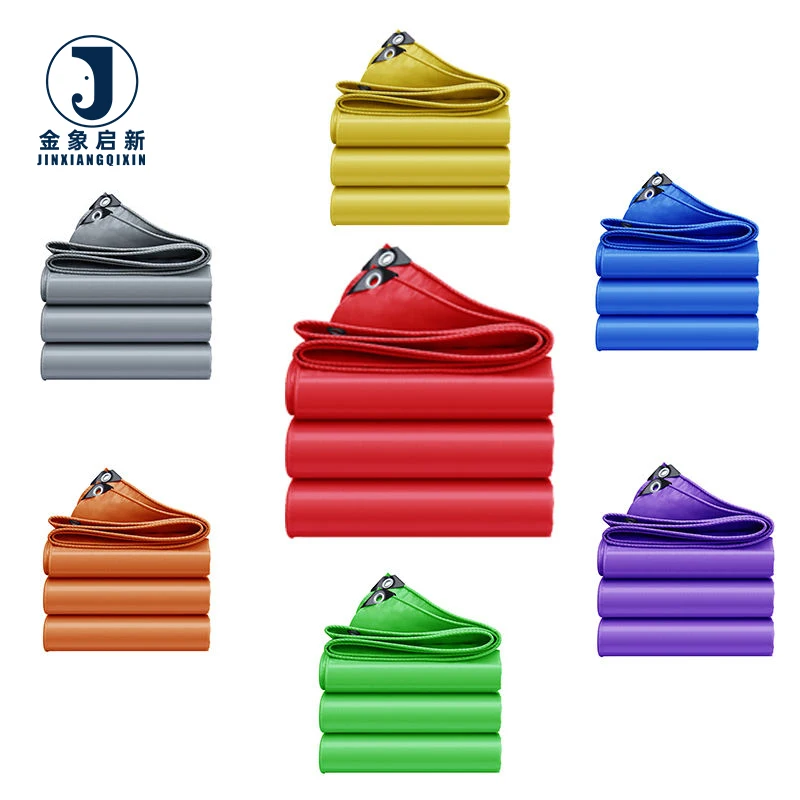
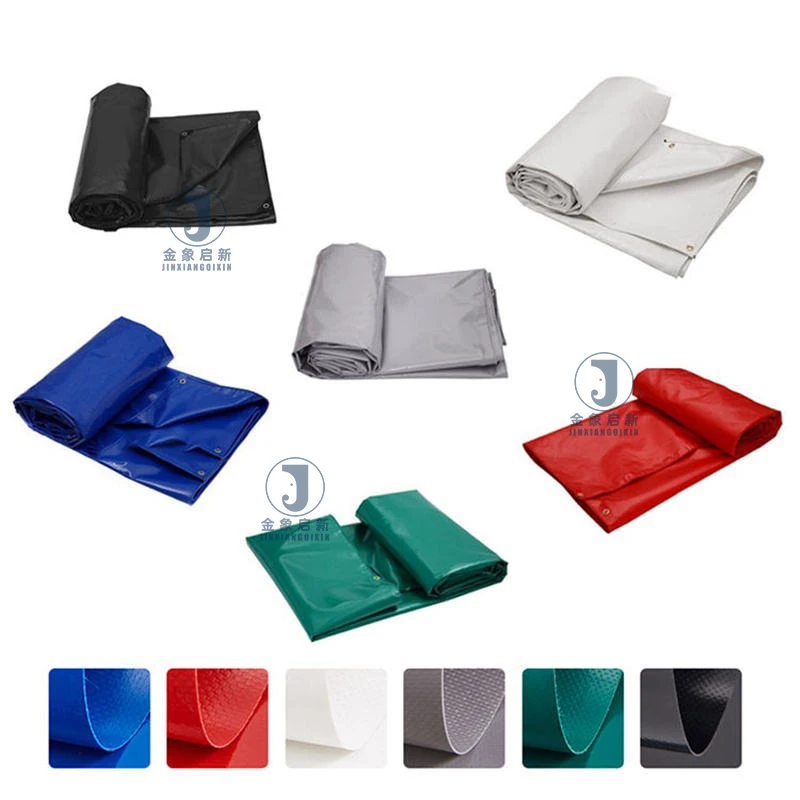
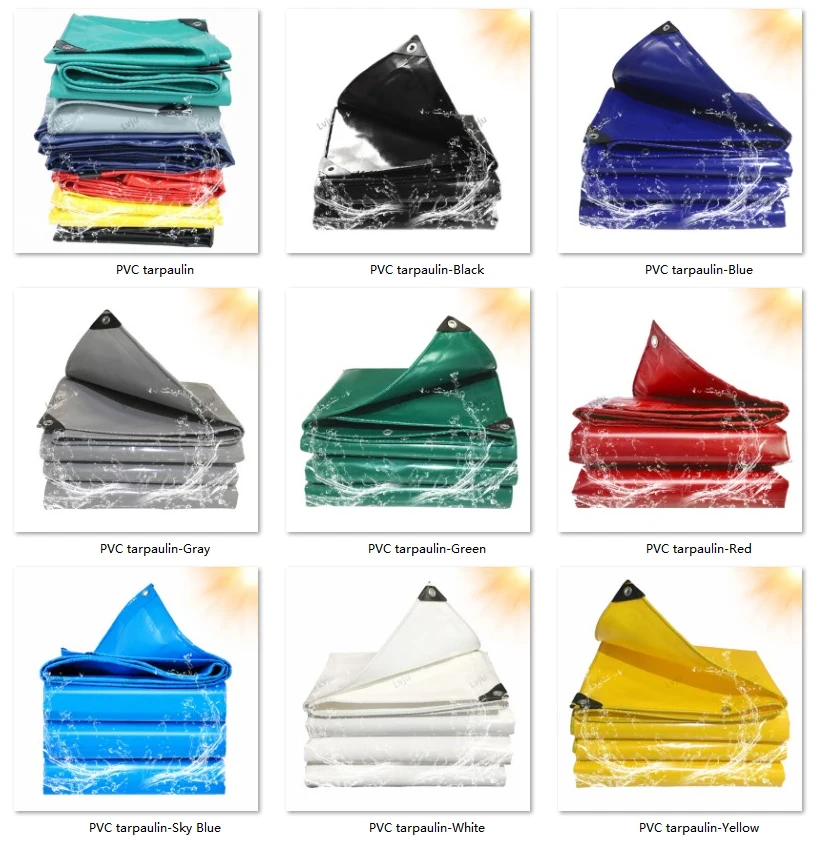
| Colour Options | Blue, Blue/Orange, Green, Grey, Black, Clear, Grey/Green, Orange, or custom |
| Custom Printing | Brand and pattern printing available |
| Certifications | ISO, CE (specific standard numbers to be confirmed per order) |
Application Suitability
| Application | Exposure & Requirement |
|---|---|
| Mining & tunnelling ventilation duct | Continuous airflow pressure, abrasive particulate, fire-retardant and anti-static compliance mandatory on site |
| Tensioned membrane structures | Sustained biaxial load, UV exposure, welded seam integrity at stress points |
| Inflatable industrial enclosures | Repeated inflation cycles, flex fatigue at fold lines, airtight seam performance |
| Industrial pipe canopy covers | Mechanical impact, weather exposure, chemical-laden atmosphere near processing plants |
| Aviation maintenance shelters | Fire-retardant fabric required by hangar regulations, frequent assembly and teardown |
| Construction site protective covers | Wind load, UV degradation, puncture risk from scaffolding contact |
Why "Fire Retardant" on a Data Sheet Means Nothing Without the Test Standard Behind It
A flame retardant claim is only as useful as the specific test standard it references — M2, B1, NFPA 701 or DIN 4102 — matched to your jurisdiction’s enforcement authority.
I have reviewed ventilation duct specifications where the material certificate simply stated "flame retardant" with no underlying test method. When the mining safety inspector arrived, the duct was rejected because the site required DIN 4102 B1 classification and the documentation could not demonstrate it. The contractor had to replace the entire run. PVC coated tarpaulin fire retardant specifications must name the exact standard before the fabric enters production, not after it arrives on site. This is especially critical for underground and enclosed-space applications where regulatory oversight is strict. [NEED_CITE: DIN 4102 fire classification for building materials and textile products]
Coating Adhesion and Welded Seam Behaviour in Technical Fabric
When PVC coated polyester fabric is joined by high-frequency or hot-air welding, the failure point often falls at the seam rather than the body of the material. The 100% PES dipping coating process used in this PVC coated tarpaulin fabric range is designed to build adhesion between the PVC layer and the polyester base, so that weld strength tracks closer to the fabric’s own tensile rating. For tensioned membrane and inflatable structures, this matters because the seams carry concentrated load during inflation and wind events. A seam that peels before the fabric reaches its rated warp strength is a design liability, not a material one.
Dimensional Stability Under Sustained Biaxial Load
Membrane structures and industrial canopies impose tension in both warp and weft directions simultaneously. The knitting and plain weave construction options available in this PVC coated tarpaulin fabric family address different load profiles — plain weave provides balanced strength in both directions, while knitting construction can offer greater flexibility for complex curved forms. When specifying for a tensioned structure, the base fabric denier and weave type should be selected together with the target GSM, because denier alone does not predict how the fabric will behave under sustained load. [NEED_CITE: tensile and tear test methods for coated fabrics per ISO 1421]
Reading the Weight-Denier-Strength Relationship Correctly
A common error in membrane and duct fabric specification is treating GSM as a standalone indicator of performance. In this PVC coated tarpaulin fabric range, the super heavy-duty grade spans 1100–1500 g/m² with base denier from 500D to 2000D — meaning two fabrics at the same weight can have very different tensile and tear profiles depending on how that weight is distributed between base yarn and coating mass. The medium-duty grade at 400–500 g/m² with 500D base may suit temporary enclosures, while the super heavy-duty at 1.2–1.5 mm total thickness is positioned for permanent installations where abrasion and mechanical impact are constant. Tensile strength values across the range run from 1500 N/5cm warp on medium-duty up to 2500–3000 N/5cm on super heavy-duty, but these figures must be confirmed against the specific grade selected. Coating weight versus base fabric weight determines whether a heavy GSM translates to genuine structural strength or merely a thick surface layer that adds stiffness without proportional tear resistance. Buyers specifying for ventilation duct or membrane applications should request the base fabric and coating weight breakdown, not just total GSM, to make informed comparisons.
The Real Cost of Under-Specifying Ventilation and Membrane Fabric
Ventilation duct fabric supplied without the fire-retardant or anti-static certification a site requires does not just cause a paperwork delay — it can shut down a tunnel or mine section until compliant material is installed. Similarly, membrane structure fabric that arrives under-GSM may pass visual inspection but fail at the weld line during tensioning, because the coating thickness is insufficient to support a reliable weld bead. Batch-to-batch colour variation across rolls in the same order becomes visible once panels are installed side by side on an architectural canopy, forcing a full replacement to meet the client’s aesthetic standard. [NEED_CITE: common failure modes in coated fabric membrane structures] These outcomes are not rare edge cases; they are recurring patterns in technical fabric procurement where specification is based on quotation claims rather than verified documentation.
What Process Control Means for Technical Fabric Buyers
Nearly 30 years of focused coated fabric production translates into process control over coating weight, adhesion and colour consistency — the three variables that most directly affect field performance in ventilation and membrane applications. Three full production lines and 36 sets of professional equipment support bulk roll output while maintaining the batch traceability that specialist contractors require. A 10-person R&D team handles material selection for specific site compliance requirements, from flame-retardant grade matching to anti-static surface resistance targets. Dedicated QA/QC at every production stage with 100% inspection before shipment means roll-by-roll GSM verification, not just sample-level checks. Samples for custom widths, colours and treatments are developed within days, allowing buyers to validate weld parameters and handling characteristics before committing to production volume.
Documentation & Verification
- Material specification sheet stating exact GSM, base fabric denier and coating method for each roll
- Test report for flame-retardant grade matched to M2, B1, NFPA 701 or DIN 4102 as specified
- Anti-static surface resistance test data for mining and tunnelling duct compliance
- Pre-shipment inspection record with roll-by-roll weight and colour verification
- ISO and CE certificates with specific standard numbers confirmed per order
- Roll packing list enabling full batch traceability on site
Fabrication, Handling & Storage
- High-frequency welding parameters should be tested on sample before full production, particularly on super heavy-duty grades at 1.2–1.5 mm thickness
- Roll storage must be upright and climate-controlled to prevent compression marks on the PVC coating surface
- Cold-temperature handling requires gradual unrolling to avoid creasing in heavy-duty grades above 700 g/m²
- Seam allowance planning should account for roll widths up to 6m to minimise longitudinal welds on large membrane panels
- Galvanized eyelet placement at 1m or 3ft intervals requires reinforced hem allowance on all four edges
- Cleaning with mild detergent only — solvents can degrade the PVC coating and compromise flame-retardant treatment
Requesting a Specification Match
To receive an accurate material recommendation, provide the end-use application and the specific fire-retardant or anti-static standard your site or jurisdiction enforces. Confirm the required roll width, colour reference and whether you need raw rolls or fabricated panels with welded seams and edge finishing. If the PVC coated tarpaulin fabric will be used in a tensioned membrane or inflatable structure, share the design load data so the appropriate denier and weave construction can be selected.
Frequently Asked Questions
Q: Which flame-retardant test standards can this PVC coated tarpaulin fabric be supplied against?
A: Flame-retardant grades are available and can be matched to standards including M2, B1, NFPA 701 and DIN 4102. The specific standard must be confirmed at inquiry stage so that production is set up with the correct treatment chemistry and a matching test report is issued with the shipment. Always verify which standard your local authority or site operator requires before ordering.
Q: How is GSM verified on arrival and what documentation supports the quoted weight?
A: Every roll undergoes weight verification during the pre-shipment inspection, and the inspection record is included with the dispatch documentation. The material specification sheet states the exact GSM, base fabric denier and coating weight for each grade. If your project requires independent third-party weight verification, this can be arranged before the container is sealed.
Q: What anti-static certification is available for mining ventilation duct applications?
A: Anti-static treatment is available for this PVC coated tarpaulin fabric range, targeting the surface resistance values required for underground mining and tunnelling ventilation ducts. The specific surface resistance range and test method must be confirmed against your site’s compliance framework at the specification stage to ensure the test report matches the inspector’s requirements.
Q: How does coating adhesion affect welded seam strength in membrane structures?
A: In tensioned membrane and inflatable applications, the weld must approach the base fabric’s tensile rating to avoid seam-first failure. The 100% PES dipping coating process builds adhesion between the PVC layer and the polyester base. Weld parameters should be validated on sample material at the thickness and GSM of the selected grade before full fabrication proceeds.
Q: What custom options are available for specialist membrane and duct projects?
A: Roll widths up to 6m, custom roll lengths, and a range of colour options are available. Brand and pattern printing can be applied for visible membrane structures. The 10-person R&D team develops samples within days for custom specifications, allowing buyers to test handling, welding and compliance before committing to production volume.