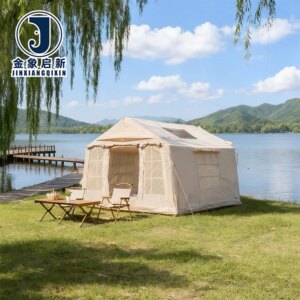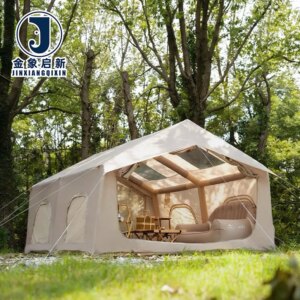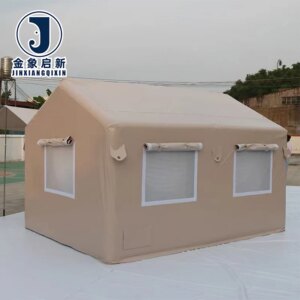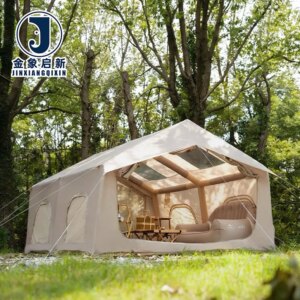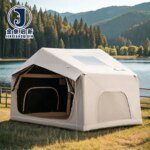
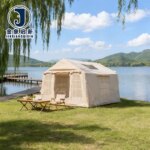

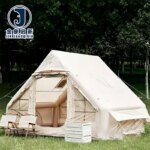
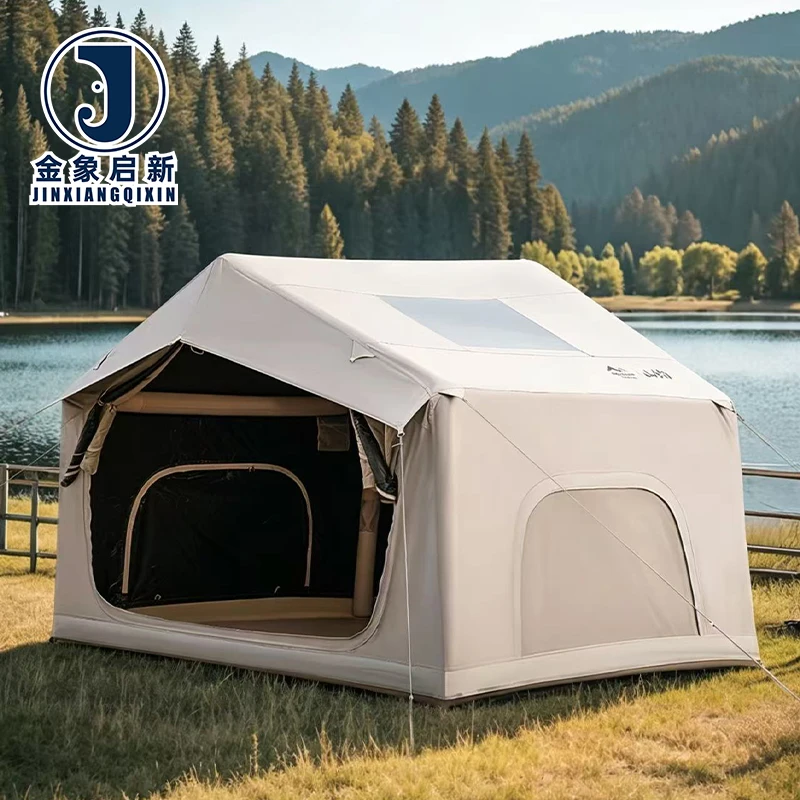
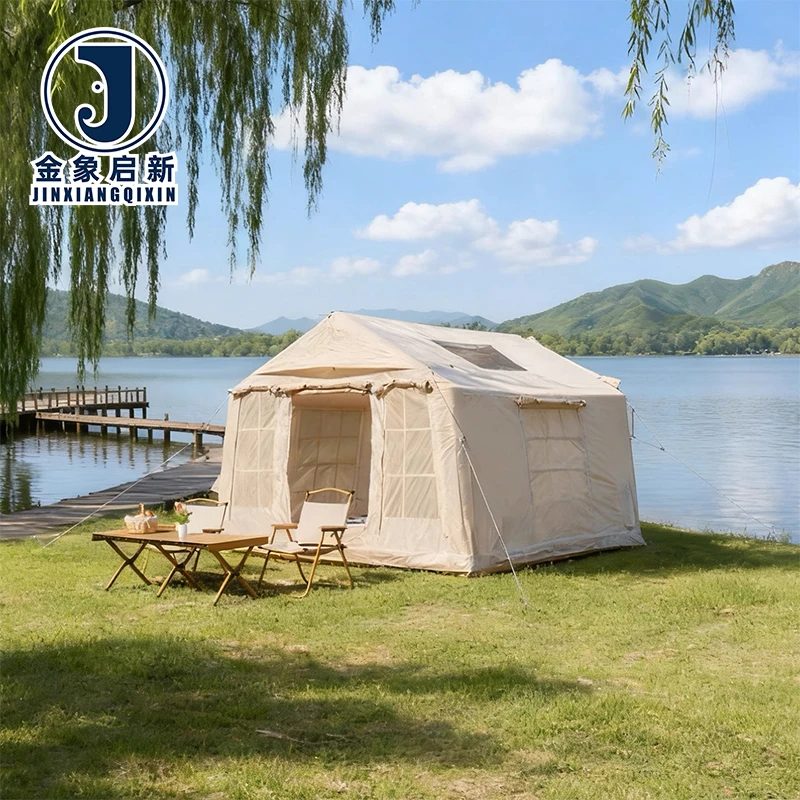
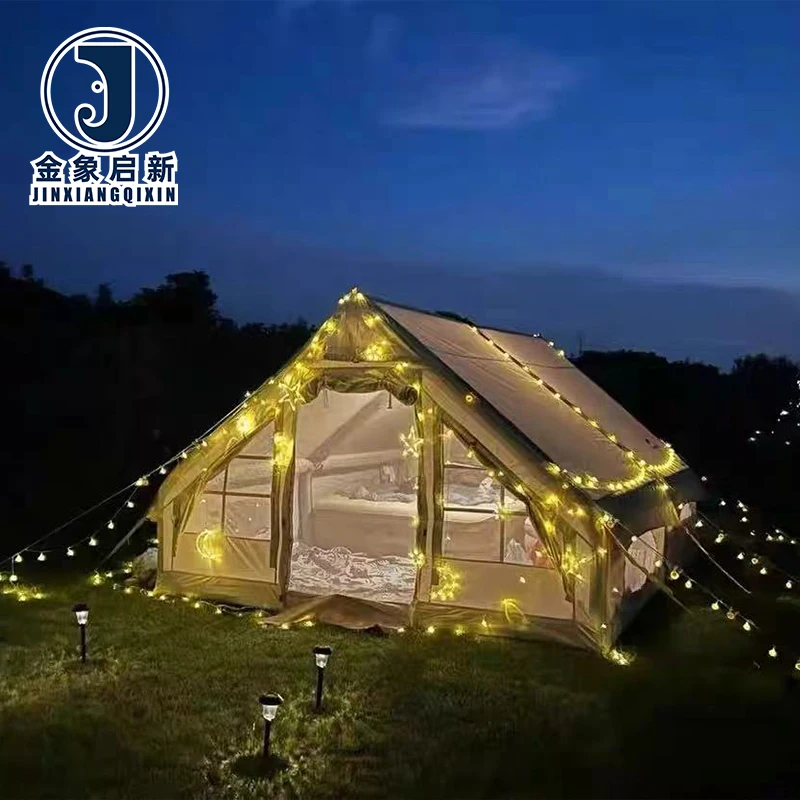
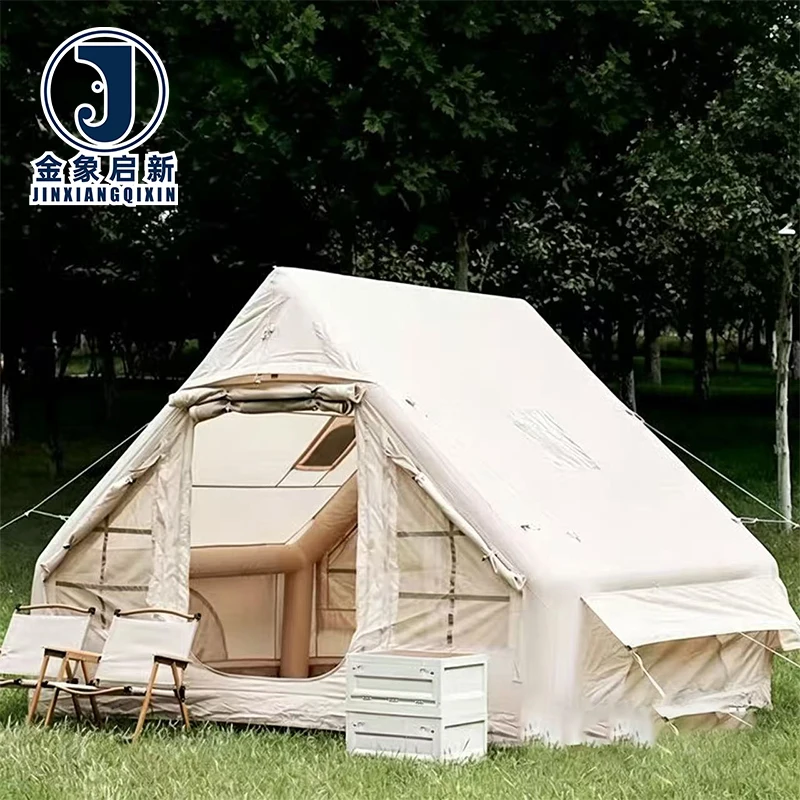
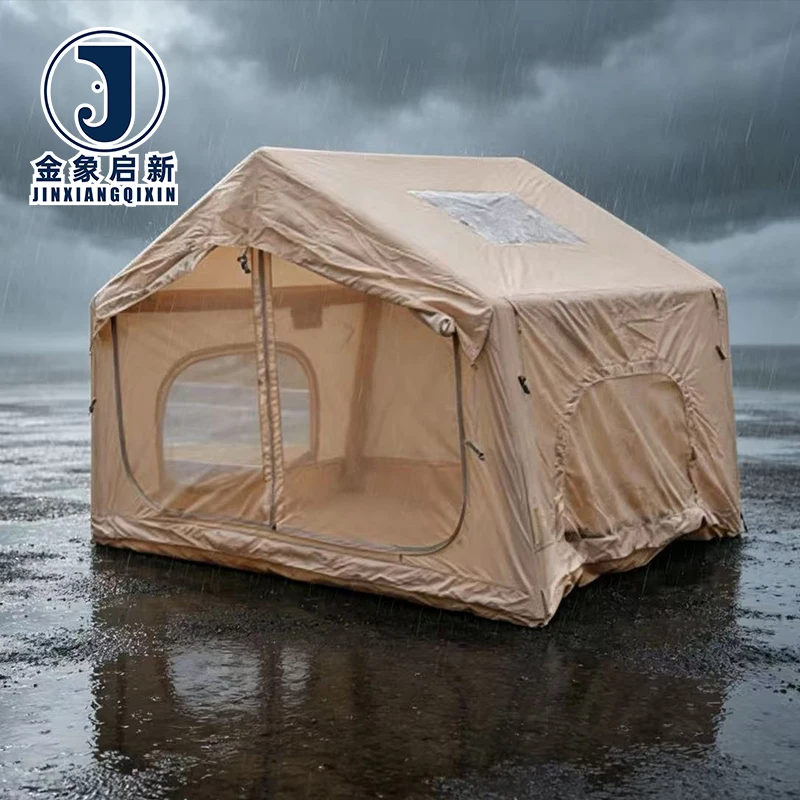
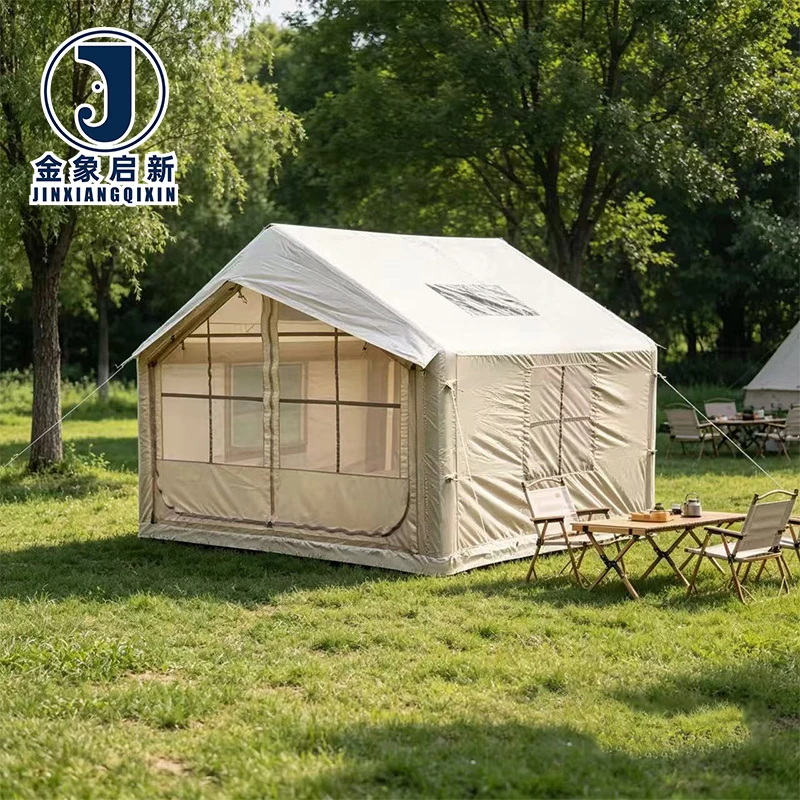
Coating Adhesion Mastery — Nearly three decades of PVC coating process control ensures weld seams on inflatable structures hold as long as the fabric itself, eliminating the most common failure point in air-beam tent construction.
Technical Specifications
| Parameter | Value |
|---|---|
| Product Type | PVC Tent |
| Core Material | PVC tarpaulin |
| Waterproof Rating | Waterproof (rating value not stated in source) |
| UV Treatment | UV-resistant (test basis not stated in source) |
| Tear Resistance | Tear-resistant (standard not stated in source) |
| Flame Retardant Grade | Available in flame retardant grades — confirm the grade required for your market |
| Anti-Static | Available with anti-static treatment — confirm surface resistance requirement |
| Capacity | 6-8 person |
| Key Feature | Quick automatic opening |
| Customization | OEM & ODM (sample customization, pattern printing, thickness adjustment) |
| Production Facility | 9,180 m² with 3 full production lines |
| Processing Equipment | 36 sets |
| R&D Team | 10 technicians |
| Quality Control | Full-process inspection with dedicated QA & QC staff |
| Standards | ISO 9001, ISO 14001, ISO 45001, CE |
Application Suitability
| Application | Exposure & Requirement |
|---|---|
| Commercial glamping equipment | Repeated inflation/deflation cycles, prolonged outdoor UV and rain exposure, guest safety compliance |
| Event temporary shelters | Rapid deployment, wind load on inflated panels, high-visibility branding and colour consistency |
| Construction site storage structures | Abrasion from tools and materials, dust and moisture ingress prevention, fire safety on regulated sites |
| Mining and tunnelling inflatable enclosures | Underground ventilation compliance, anti-static and flame retardant requirements, low-light visibility |
Why Inflatable Tent Fabric Fails at the Weld Before the Fabric Does
Seam failure on inflatable structures is almost always a coating adhesion problem, not a base fabric problem.
When an inflatable tent pressurises, every welded joint carries concentrated stress at the exact point where the air beam bends. I have seen heavy-grade coated rolls fail at the weld line while the surrounding fabric remained intact — the coating simply delaminated under cyclic loading. For inflatable tent fabric, the bond between PVC coating and polyester base determines whether a hot-air weld produces a joint that outlasts the panel or peels apart during the first season. [NEED_CITE: tensile and tear test methods for coated fabrics per ISO 1421]
What Makes Inflatable Tent Fabric Different from Standard Tarpaulin
Standard tarpaulin is designed to lie flat under tension. Inflatable tent fabric must endure continuous pressurisation cycles that flex the material at every welded seam and bonded joint. The base fabric denier and weave pattern must be selected to support hot-air welding without compromising the structural integrity of the air beam. This Inflatable Tent Fabric is engineered specifically for those cyclic stress conditions, with coating formulations optimised for consistent weld temperatures across the full roll width.
Coating Weight, Adhesion, and the Weld Integrity Chain
The relationship between coating weight and weld strength is not linear. Too little coating leaves insufficient PVC material for the weld to fuse properly; too much adds dead weight without improving seam holding power. Our 10-person R&D team works with fabricators to dial in the coating formulation that matches their specific hot-air welding equipment and air-beam geometry. Every production run goes through in-process adhesion checks so the Inflatable Tent Fabric you receive welds predictably from the first panel to the last. [NEED_CITE: DIN 4102 fire classification for building materials]
Reading the Specifications That Actually Matter
Waterproof performance on inflatable structures depends as much on seam construction as on the coating itself. A fully waterproof PVC coating only protects the field of the fabric — water will find every pinhole, poorly fused overlap, and under-welded corner. UV-resistant treatment slows degradation of the coating surface, but the test basis should be confirmed against the climate zone where the structure will operate. Tear resistance in the base fabric governs how a small puncture propagates: a higher denier base with tighter weave limits tear spread, keeping a field repair manageable rather than catastrophic. Flame retardant grades and anti-static treatment are available — specify the standard your site or market requires before order confirmation.
The Hidden Cost of Specifying on Price Per Kilogram Alone
Buying inflatable tent fabric on unit cost alone invites problems that surface after fabrication. Coating weight quoted on the invoice but not verified on arrival means the material is lighter than agreed, and welds that held on the sample batch fail in production. Colour variation between rolls in the same order becomes visible only after panels are welded side by side on the finished tent. Anti-static or flame retardant claims without supporting test reports leave the structure stranded at site inspection. [NEED_CITE: fire safety compliance for temporary structures on construction sites]
Why Fabricators Source This Fabric Here
Three full production lines and 36 sets of processing equipment provide the capacity for bulk roll orders without sacrificing batch-to-batch consistency — critical when a single glamping site installation requires multiple matched rolls. Dedicated QA and QC checkpoints at every production stage catch coating adhesion deviations before they reach the shipping dock, not after. The 10-person R&D team develops samples within days for custom thickness, colour, and pattern requirements, letting fabricators validate weld parameters before committing to a production run. ISO 9001, ISO 14001, ISO 45001, and CE certification provide the documentation framework that site auditors and compliance officers require.
Documentation & Verification
- Material specification sheet stating coating weight, base fabric denier, and treatment references per roll
- Fire retardant test report citing the specific grade achieved — request before order confirmation
- Anti-static surface resistance certificate where site safety regulations require it
- Pre-shipment inspection record with batch-specific quality data
- UV resistance test report confirming treatment performance per agreed standard
- Certificate of origin and customs documentation for international shipments
Fabrication, Handling & Storage
- Hot-air weld temperature and speed must be calibrated to the specific PVC coating thickness of this fabric
- Overlap width on air-beam seams should be validated through peel testing before full production begins
- Store rolls upright on pallets to prevent flat-spot creasing that affects weld quality downstream
- Allow cold-stored rolls to acclimatise to workshop temperature before unrolling and cutting
- Use PVC-compatible cleaners only — solvent-based products can degrade the coating surface adhesion
- Pattern printing registration should be confirmed on a sample panel before full-roll production
Before You Request a Quote
Tell us the end-use environment and the compliance standards your market or site demands — fire classification, anti-static thresholds, or specific tensile requirements. Confirm whether you need rolls in standard widths or custom dimensions, and whether OEM sample development is required before bulk commitment. Share your annual volume estimate and colour or branding requirements so we can align production scheduling and batch consistency planning.
Frequently Asked Questions
Q: Which fire-retardant grade does my inflatable structure project require?
A: Requirements vary by jurisdiction and application. Mining and underground applications often reference specific anti-static and flame retardant standards, while commercial event structures may follow local building codes for temporary installations. We supply Inflatable Tent Fabric in multiple flame retardant grades — confirm the standard your site inspector or regulatory body requires, and we will match it with supporting test documentation.
Q: How is anti-static performance tested and certified for mine and aviation inflatable applications?
A: Anti-static performance is measured by surface resistance, and different industries specify different thresholds. For mining and aviation inflatable shelters, the required resistance value is typically defined by site safety regulations. We provide test certificates stating the measured surface resistance — share your required standard so we can confirm compliance before production.
Q: What weld and seam behaviour should fabricators expect with this PVC inflatable fabric?
A: Weld strength depends on coating formulation, thickness, and the hot-air parameters used. Our Inflatable Tent Fabric is engineered for predictable weld performance across standard hot-air and high-frequency welding equipment. We recommend running peel tests on sample panels to dial in temperature and speed settings before committing to full production panels.
Q: How are batch-to-batch colour and coating consistency controlled across bulk roll orders?
A: Every production run goes through dedicated QA checkpoints covering coating weight, colour reference, and surface finish. For multi-roll orders destined for a single installation, we track batch references to ensure panels cut from different rolls match when welded side by side on the finished structure.
Q: What compliance documentation ships with each order for site audit purposes?
A: Each shipment includes a material specification sheet, applicable test reports for flame retardant grade or anti-static treatment, pre-shipment inspection records, and ISO/CE certificates. Additional documentation such as certificates of origin is provided based on destination country requirements.