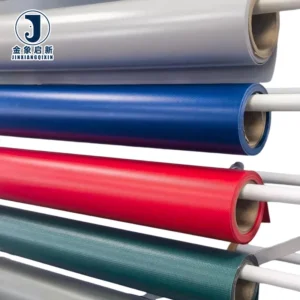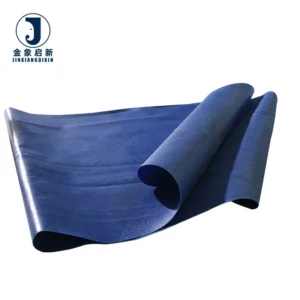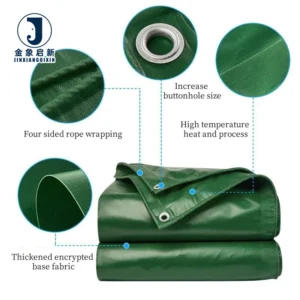
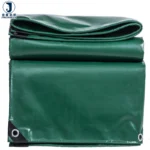
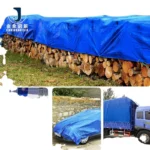
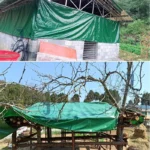
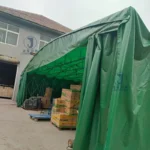
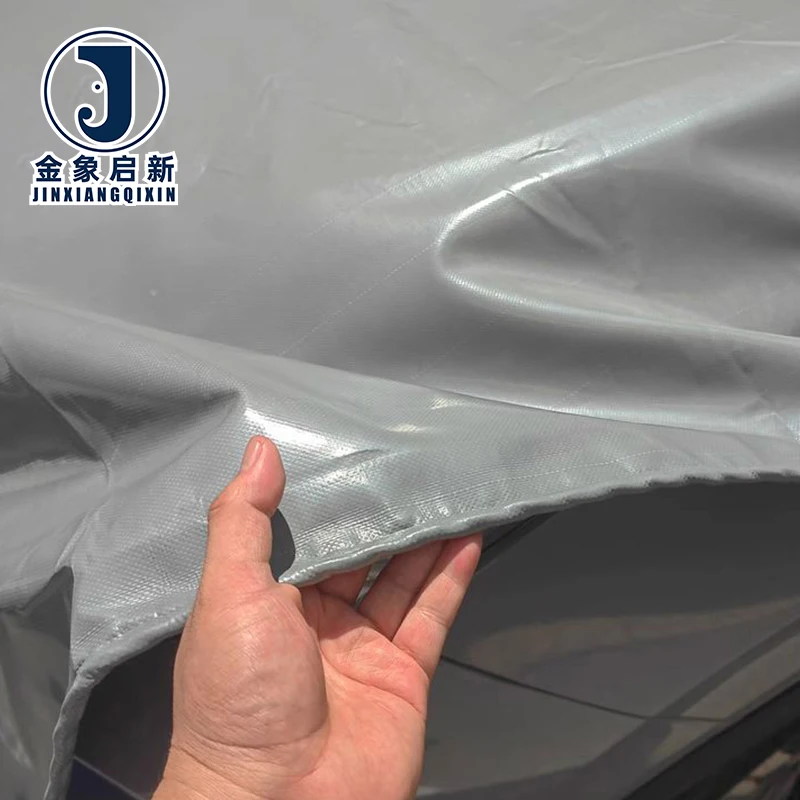
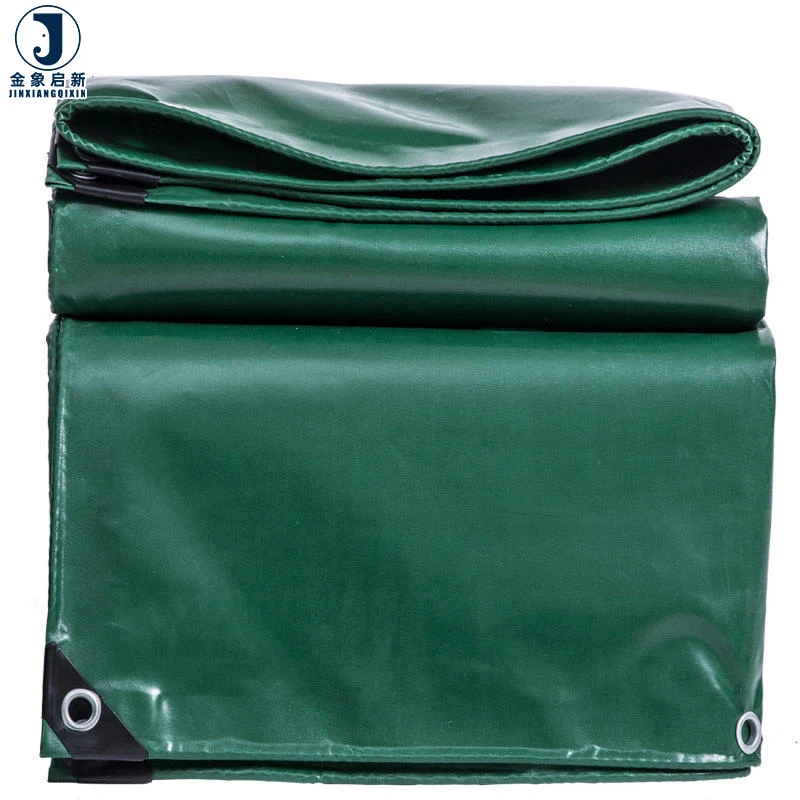
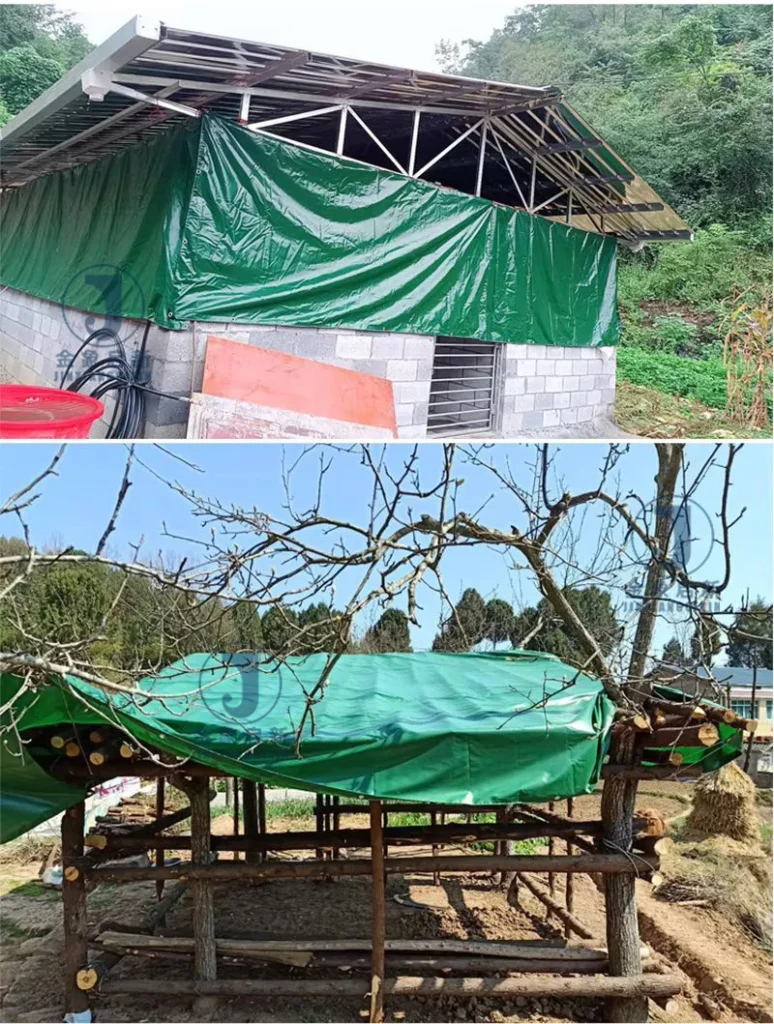
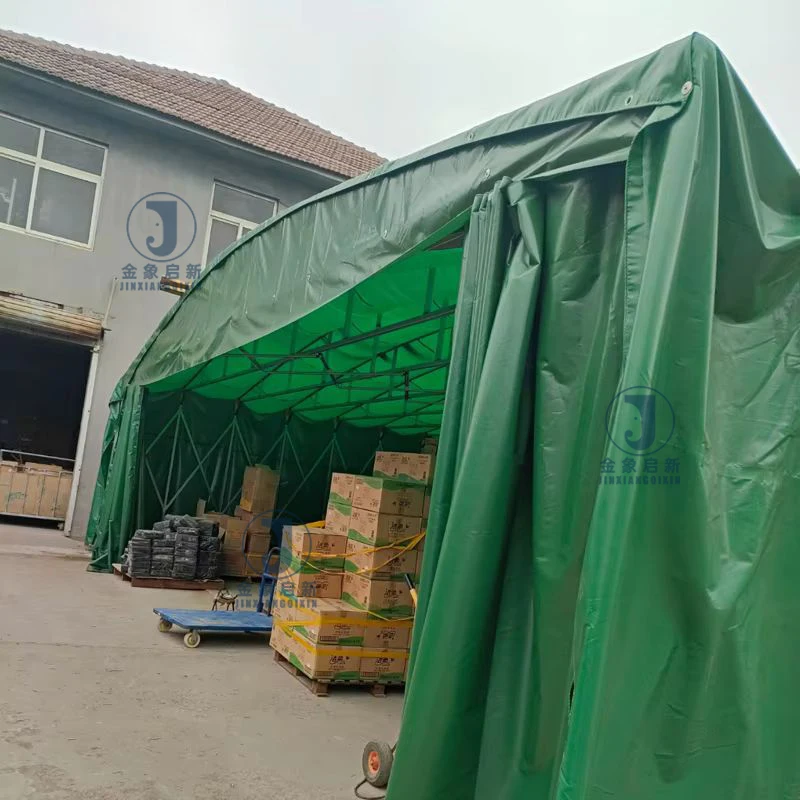
Coating Weight Control — Every roll of PVC coated tarpaulin undergoes in-process coating weight verification, ensuring the GSM stated on your specification sheet matches what arrives at your facility.
Technical Specifications
| Parameter | Value |
|---|---|
| Product Type | PVC Coated Tarpaulin |
| Coating Material | PVC |
| Base Fabric | Warp knitted |
| Weave Style | Plain |
| Waterproof | Yes |
| Anti-Static | Claimed (test standard not stated in source) |
| Tear Resistance | Claimed durable (test basis not stated) |
| Color | Customizable |
| Finish | Plain style |
| Application Grade | Industrial / Agricultural Heavy-Duty |
| Standards | ISO, CE (manufacturing quality system) |
Application Suitability
| Application | Exposure & Requirement |
|---|---|
| Poultry and broiler house covers | Continuous moisture exposure, ammonia atmosphere, static build-up from dust and ventilation airflow |
| Pig and sheep farm tent structures | Wind loading, rain ingress, mechanical abrasion from livestock contact and tie-down hardware |
| Agricultural ventilation ducting | Internal airflow pressure, dust accumulation, anti-static compliance for enclosed livestock facilities |
| Outdoor livestock shelter enclosures | UV exposure, temperature fluctuation, repeated installation and removal cycles |
Why Anti-Static Certification Matters More Than the Label on the Roll
An anti-static claim without a measured surface resistance value is a compliance gap waiting to surface at your site audit.
When ventilation ducting or farm covers are specified for enclosed livestock facilities, buyers often receive fabric labelled "anti-static" with no accompanying test report referencing a recognised standard such as EN 13463 or IEC 61340. The fabric passes visual inspection but fails the compliance check the moment a site safety officer asks for documentation [NEED_CITE: anti-static test standards for agricultural ventilation fabrics]. In controlled poultry environments, static discharge can disturb bird behaviour and attract dust to duct interiors, accelerating blockage and reducing airflow efficiency. The PVC coated tarpaulin supplied for these applications must carry a verifiable surface resistance reading, not just a marketing claim.
Ventilation Duct Fabric for Controlled Livestock Environments
Agricultural ventilation ducts operate under continuous internal pressure, flexing with every fan cycle. The warp knitted base fabric provides dimensional stability that prevents the duct from stretching or distorting at the seams. PVC coated tarpaulin used in this role must maintain its anti-static properties throughout the service life of the installation, not just on delivery.
Waterproof Integrity Across Farm Tent Panels
Livestock tent structures span large areas with multiple panels joined by welded seams. Waterproof performance depends as much on seam integrity as on the coated fabric itself. When rain hits a pitched farm cover, water tracks toward the lowest point and concentrates at every seam and tie-down — the locations where coating adhesion and weld strength are tested most severely [NEED_CITE: welded seam strength testing for PVC coated fabrics].
Reading the Specification Sheet Beyond GSM
Coating weight and base fabric denier work together to determine how the material behaves under load. A heavier PVC coating on a low-denier warp knitted base may show a high GSM figure but deliver poor tear propagation resistance because the yarn structure cannot arrest a tear once initiated. Conversely, a tighter base weave with moderate coating weight often outperforms a heavier but loosely constructed alternative in real-world farm cover applications. The plain weave style in this fabric provides a balanced yarn interlock that supports consistent coating adhesion across the full width of the roll. Surface finish affects how the material handles in fabrication — a plain style finish offers predictable friction behaviour during welding, reducing the risk of slippage at the heat bar [NEED_CITE: relationship between base fabric denier and tear resistance in coated textiles].
The Cost of Batch-to-Batch Colour Variation in Farm Installations
When multiple rolls are installed side by side on a large poultry house or livestock shelter, even slight colour drift between batches becomes immediately visible. This is not a cosmetic complaint — it signals inconsistent coating formulation that may extend to functional properties like UV stabiliser loading or anti-static treatment concentration. Buyers who accept delivery without verifying roll-to-roll colour consistency often discover the variation only after panels are hung and the structure is commissioned, making replacement far more disruptive than a pre-shipment inspection would have been.
Why Procurement Teams Specify This Fabric Here
Three full production lines with dedicated coating stations allow coating weight to be monitored at each stage rather than sampled only at the end of the run. The 10-person R&D team develops custom width and colour samples within days, so farm cover specifications can be validated before bulk production begins. Every roll receives 100% pre-shipment inspection against the material specification sheet, catching GSM deviations and colour drift before dispatch. Fire-retardant and anti-static treatments are documented with test reports where applicable, so compliance paperwork arrives with the fabric rather than weeks after. Custom widths are produced to the exact roll dimensions needed for your farm tent panel layout, reducing on-site waste and weld seams.
Documentation & Verification
- Material specification sheet confirming PVC coating weight, warp knitted base fabric denier, and plain weave construction
- Anti-static test report with surface resistance value referenced to applicable standard where treatment is specified
- Pre-shipment inspection record verifying waterproof integrity and coating adhesion per roll
- ISO and CE certificates confirming manufacturing quality system compliance
- Roll packing list with individual roll weight and dimensions for container loading verification
- Certificate of origin and customs documentation for international agricultural fabric shipments
Fabrication, Handling & Storage
- Heat-weld at temperatures matched to the PVC coating thickness to prevent delamination at farm cover seams
- Store rolls upright on pallets to avoid flat-spot deformation of the warp knitted base fabric
- Use compatible PVC welding tape for field repairs on livestock shelter panels to maintain waterproof continuity
- Avoid dragging rolls across abrasive surfaces during farm site installation to protect the coating face
- Cut panels with a slight oversize allowance to accommodate weld seam take-up on large tent structures
- Clean with mild detergent only — solvent-based cleaners may degrade the anti-static surface treatment
What to Include in Your Enquiry
Specify the livestock facility type, the ventilation or covering function the fabric will serve, and whether anti-static or fire-retardant certification is required by your local regulations. Confirm the roll width and linear meterage needed per installation, along with colour requirements if multiple rolls will be joined in visible positions. Indicate whether you require finished cut panels or roll stock for in-house fabrication.
Frequently Asked Questions
Q: What anti-static test standard should the fabric meet for poultry farm ventilation?
A: The applicable standard depends on your market and facility classification. Common references include EN 13463 for explosive atmosphere equipment and IEC 61340 for electrostatic control. We supply anti-static test reports with surface resistance values — confirm which standard your site safety officer requires before ordering.
Q: How is waterproof performance verified before the rolls ship?
A: Each roll undergoes pre-shipment inspection that includes coating adhesion checks and visual examination for pinholes or coating voids. The waterproof construction relies on continuous PVC coating across the warp knitted base fabric, and inspection records document that no breaches were detected before dispatch.
Q: Can anti-static and fire-retardant treatments be combined on the same roll?
A: Both treatments are available, but combining them requires confirmation of the specific grades needed for your application. Fire-retardant certification must match the compliance requirements of enclosed livestock structures in your jurisdiction. Request test documentation for both properties when placing your enquiry.
Q: How do you control colour consistency across multiple rolls for one farm project?
A: Colour is matched against a confirmed reference sample before production begins, and in-process checks monitor shade consistency across the production run. Pre-shipment inspection verifies roll-to-roll colour alignment, and inspection records are included with the dispatch documentation.
Q: What is the minimum order for custom width or colour in this fabric?
A: Custom widths and colours are produced to order with minimums that depend on the specific width and coating weight requested. Samples are developed within days for approval before bulk production proceeds. Contact us with your required dimensions and annual volume for a specific quotation.