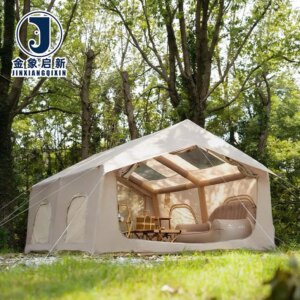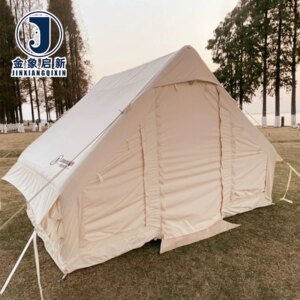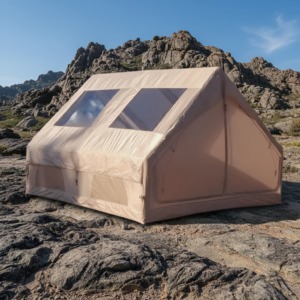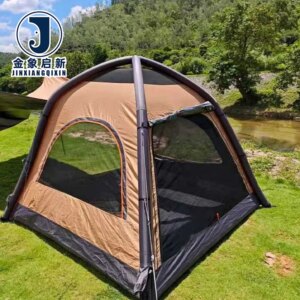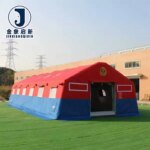
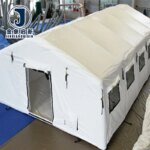
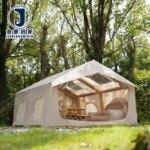
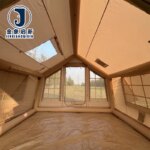

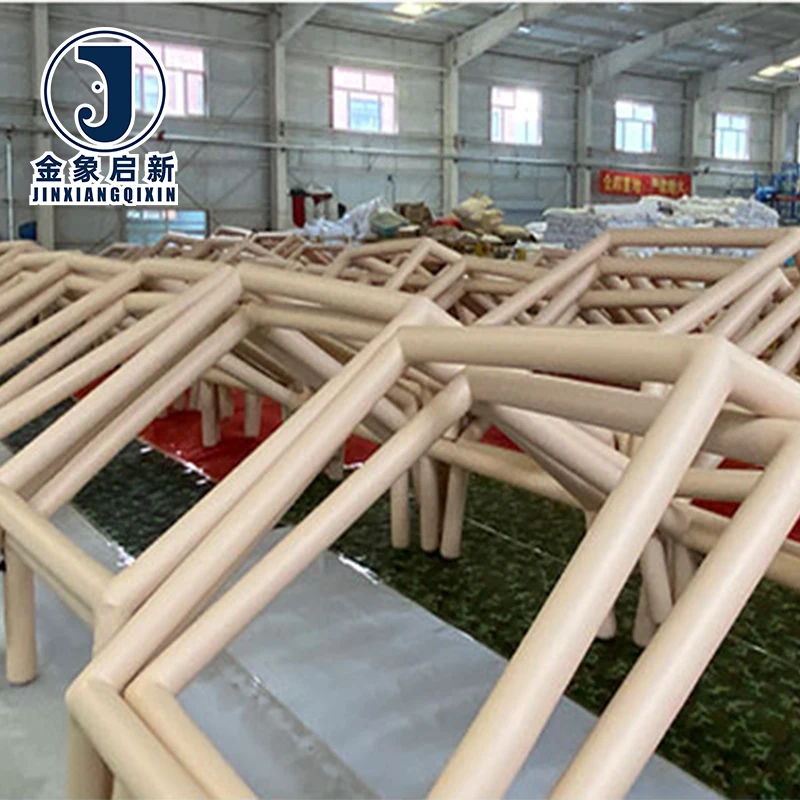
Coated Fabric Expertise — nearly 30 years of process control over PVC coating weight and adhesion, applied to every inflatable tent fabric roll leaving our production lines.
Technical Specifications
| Parameter | Value |
|---|---|
| Product Type | Inflatable PVC Tent |
| Core Material | PVC Tarpaulin |
| Waterproof Rating | 3000mm |
| Construction | Single Layer |
| Design Configuration | Four-Season, Extended Type |
| Opening Mechanism | Quick Automatic Opening |
| Customization Service | OEM & ODM |
| Pressure Retention Test | 24-hour pressure retention test before shipment |
| Flame Retardant | Available in flame retardant grades — confirm the grade required for your market |
| Anti-Static | Availability to be confirmed based on site compliance requirements |
| UV Treatment | UV treatment applied — confirm test basis for your regional standards |
| Certification | CE |
| Standards Compliance | ISO9001, ISO14001, ISO45001 |
Application Suitability
| Application | Exposure & Requirement |
|---|---|
| Disaster relief shelters | Prolonged weather exposure, rapid deployment under pressure, occupant safety compliance |
| Emergency medical facilities | Sanitation-critical interior, waterproof integrity, frequent relocation and repacking |
| Temporary industrial storage | Equipment protection from moisture ingress, wind load on membrane surfaces, site audit compliance |
| Mobile command centers | Extended outdoor stationing, internal climate management, communications equipment shelter |
| Utility maintenance operations | Remote terrain deployment, repeated inflation cycles, transport abrasion during mobilization |
Why Certification Documentation Matters More Than Claims on Inflatable Tent Fire Retardant Certified Products
A fire retardant label without a test certificate is a liability on any regulated job site.
Mining and tunnelling contractors routinely specify inflatable tent fire retardant certified products for underground and surface operations, yet shipments regularly arrive without the supporting documentation the safety auditor demands. The tent may perform adequately in the field, but the missing certificate halts the entire site approval process. We have seen projects delayed because the supplier quoted "flame retardant" without attaching a grade-specific test report recognised by the local authority [NEED_CITE: fire classification standards for temporary structures in mining environments]. The Inflatable PVC Tent we supply ships with CE certification and a full ISO compliance record so that site audits proceed without documentation gaps.
Rapid Deployment Engineered into the Membrane Structure
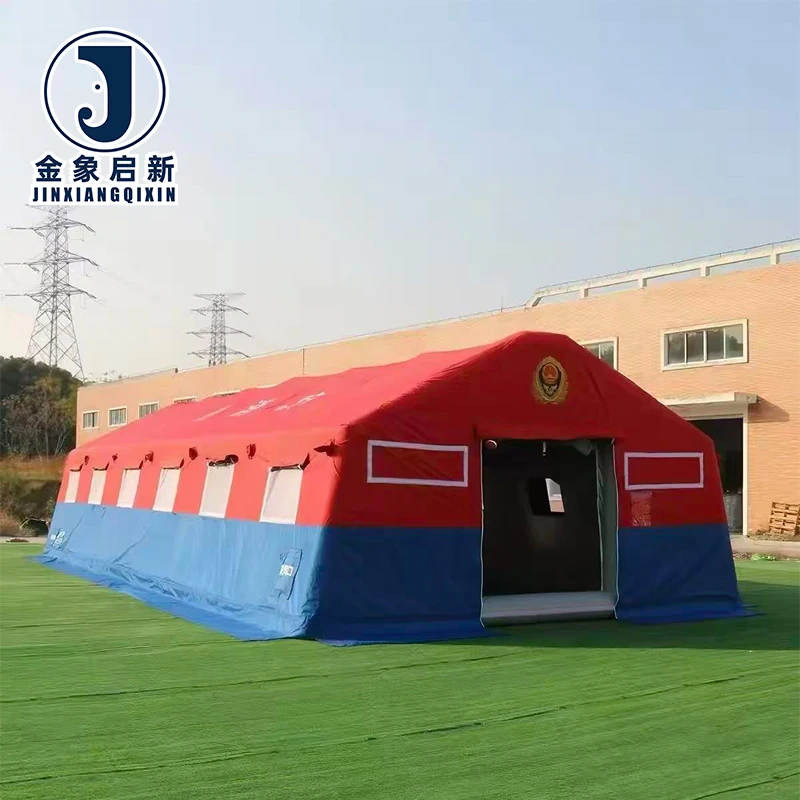
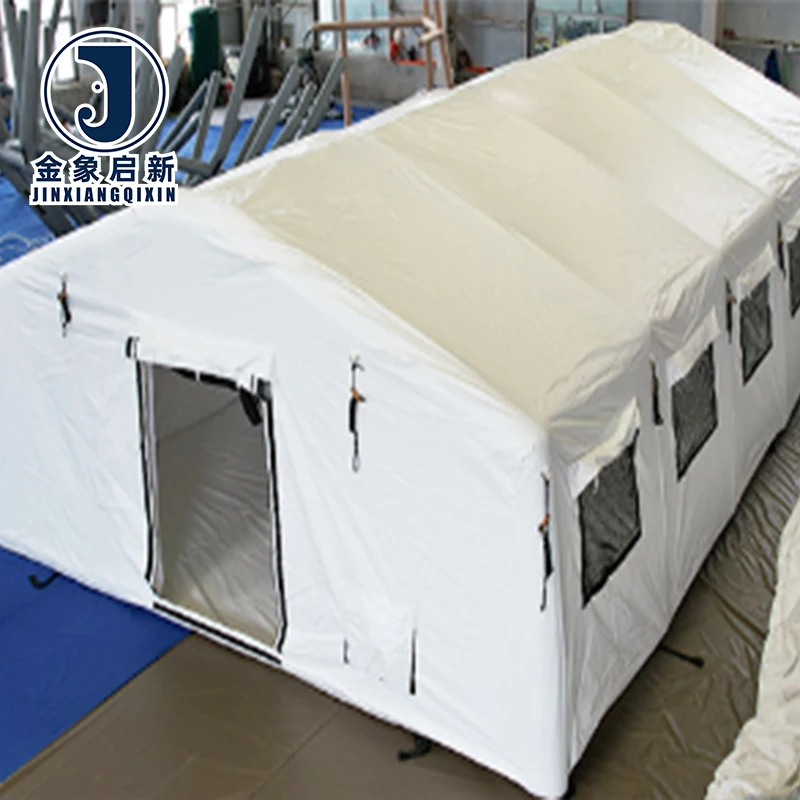
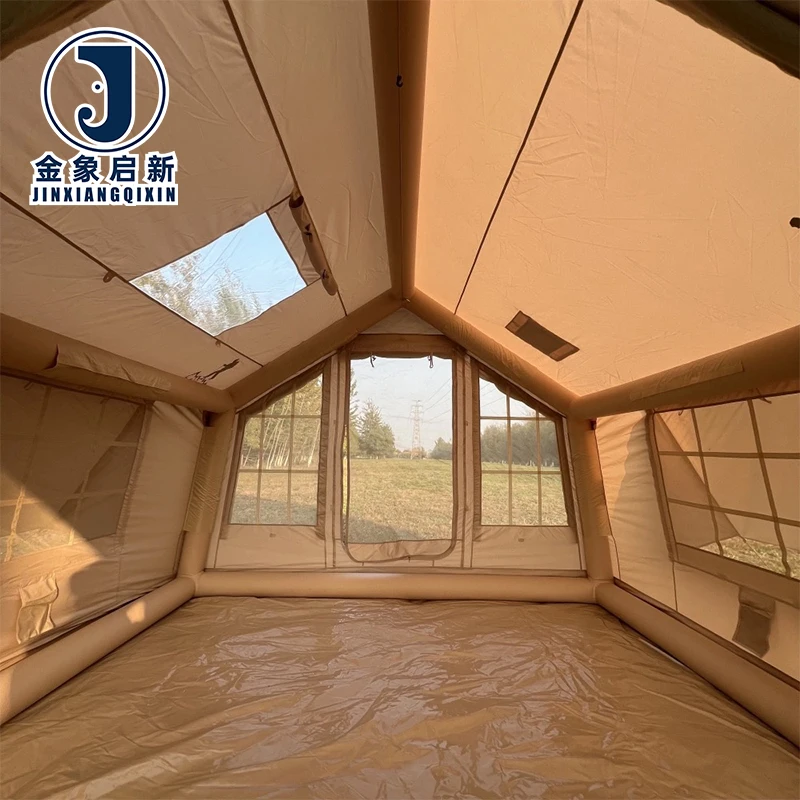
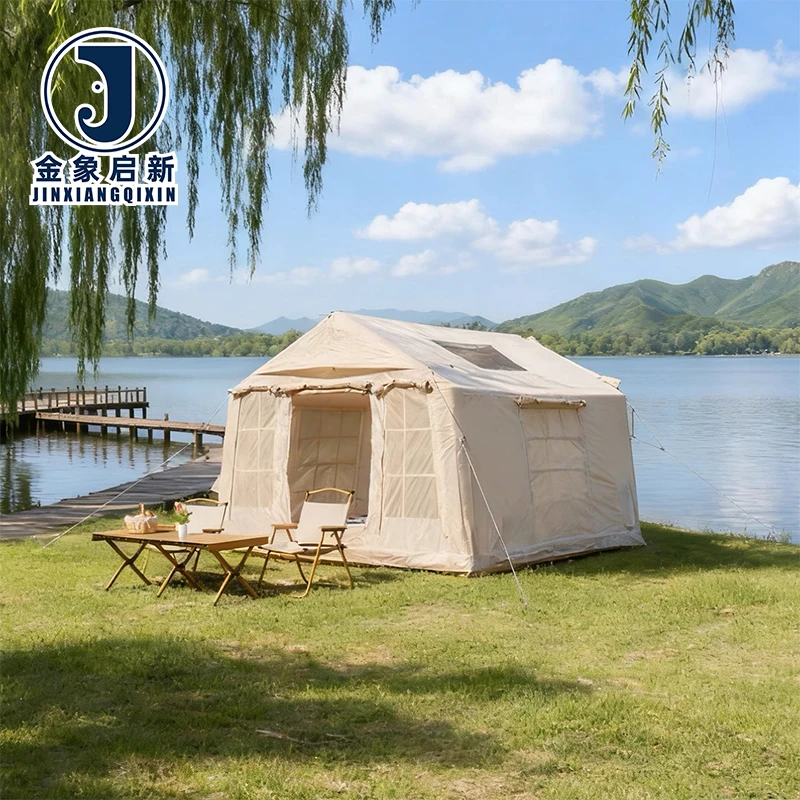
The quick automatic opening mechanism reduces deployment from hours to minutes, a critical advantage when disaster relief teams face incoming weather or casualty intake deadlines. Each Inflatable PVC Tent is pressure-tested for 24 hours before dispatch to confirm that air beams hold their shape under sustained load. The four-season design accounts for thermal expansion and contraction of the PVC membrane across temperature swings encountered in field operations.
Waterproof Integrity Beyond the Spec Sheet
A 3000mm waterproof rating means little if the seam construction allows ingress at the beam-to-canopy junction. Our single-layer construction is inspected at every welded seam for adhesion continuity before the tent leaves the production floor. Batch-level inspection records document the waterproof performance of each unit, retrievable by order reference for post-deployment audits. This traceability matters when inflatable tent fire retardant certified products must also satisfy dual waterproof and fire compliance checks [NEED_CITE: combined waterproof and flame retardant testing protocols for temporary shelters].
Reading the Specifications That Actually Determine Field Performance
Waterproof rating and construction type interact directly with deployment conditions. A 3000mm hydrostatic head is sufficient for sustained rainfall on a single-layer membrane, provided the PVC coating maintains uniform thickness across the entire panel. Coating weight distribution affects both waterproof integrity and the flexibility needed for repeated inflation cycles — a heavier coat may resist water penetration more effectively but can stiffen the membrane in cold conditions, making packing and redeployment harder. The four-season extended design must therefore balance coating adhesion against low-temperature pliability. Quick automatic opening depends on air beam geometry and PVC tensile response; if the base fabric lacks adequate tear strength at the beam anchor points, repeated pressurisation cycles initiate micro-tears that propagate under wind load. Understanding these interactions prevents specification mismatches that only surface once the inflatable tent fire retardant certified product is deployed in the field.
The Hidden Cost of Undocumented Material Properties
When flame retardant treatment is claimed without a grade-specific test result, the tent may pass initial acceptance but fail a surprise site audit weeks later, forcing emergency replacement under operational pressure. Colour variation between batches is another recurring problem — two tents erected side by side at a disaster relief staging area show visible mismatch, undermining the professional appearance the procuring agency requires. Welded seams that fail before the fabric itself indicate inconsistent heat-seal parameters during production, a defect that typically surfaces at the point of maximum membrane flexure during wind events [NEED_CITE: weld seam failure analysis in coated fabric structures]. These issues are preventable with full-process QA/QC and batch-level documentation tied to each order.
Why Procurement Teams Source Inflatable Structures Here
Three full production lines and 36 sets of professional equipment support bulk order volumes required for large-scale disaster relief tenders without sacrificing lead time reliability. A dedicated 10-technician R&D team handles OEM and ODM modifications, producing detailed engineering drawings and material specifications before production begins. Full-process inspection with dedicated QA and QC staff means every Inflatable PVC Tent undergoes a 24-hour pressure retention test and waterproof integrity check before packing. CE and ISO9001, ISO14001, and ISO45001 certifications are held at facility level and documentation is supplied with each shipment. Custom sizing and treatment specifications are developed within days for sample approval, reducing the procurement cycle for project-specific shelter requirements.
Documentation & Verification
- CE certificate copy and ISO compliance records included with each Inflatable PVC Tent shipment
- Batch-specific quality inspection report detailing waterproof performance and structural integrity test results
- Material specification sheet stating PVC coating type, base fabric reference, and colour specification
- 24-hour pressure retention test record attached to pre-shipment inspection documentation
- Test data for flame retardant and anti-static grades supplied when confirmed at order stage
- Order reference number enables retrieval of all test parameters for post-delivery audit traceability
Fabrication, Handling & Storage
- Hot-air welding parameters must match PVC tarpaulin coating weight to prevent seam delamination under beam pressure
- Single-layer construction requires careful folding technique to avoid permanent crease marks on the membrane surface
- Store packed Inflatable PVC Tent units in dry, ventilated conditions away from direct sunlight before deployment
- Avoid dragging membrane across abrasive ground surfaces during quick automatic opening sequence
- Clean PVC surfaces with mild detergent only — solvent-based cleaners degrade coating adhesion over time
- Field repair of minor punctures requires compatible PVC adhesive and patch material matched to coating type
Specifying the Right Inflatable Shelter for Your Operation
Provide the deployment environment details including expected weather exposure, temperature range, and duration of stationing so we can confirm material suitability. Specify any fire retardant or anti-static certification grades required by your local regulatory authority or site safety protocol. Indicate preferred dimensions, colour requirements, and whether OEM branding or custom printing is needed on the membrane surface. Confirm order volume and required delivery timeline so production scheduling aligns with your project mobilisation date.
Frequently Asked Questions
Q: What fire retardant certification is available for inflatable tents used in mining or tunnelling?
A: Flame retardant grades are available and must be confirmed based on your site’s specific safety standards. We supply the corresponding test documentation with each shipment so that site auditors can verify compliance. Confirm the exact grade and test method required by your local authority before ordering.
Q: How is the 3000mm waterproof rating verified before shipment?
A: Every Inflatable PVC Tent undergoes a waterproof integrity check as part of our full-process inspection protocol. The batch-level quality inspection report documents the results and is included with shipping documentation. Additional test data can be retrieved using the order reference number.
Q: Can custom dimensions and OEM configurations be produced for project-specific shelter needs?
A: Our 10-technician R&D team supports full OEM and ODM customization, providing engineering drawings and material specifications for approval before production. Sample development for custom sizing is typically completed within days, allowing rapid confirmation and production scheduling.
Q: Are anti-static treatment options available for hazardous environment deployment?
A: Anti-static treatment availability depends on the specific compliance requirements of your operational environment. Confirm the applicable standard with our technical team at the inquiry stage so the correct treatment and certification documentation can be prepared for your order.
Q: What production capacity supports large-scale disaster relief procurement orders?
A: Three full production lines with 36 sets of professional equipment provide the bulk capacity needed for large emergency procurement tenders. Lead times are confirmed at the quotation stage based on order volume, customization complexity, and current production scheduling.