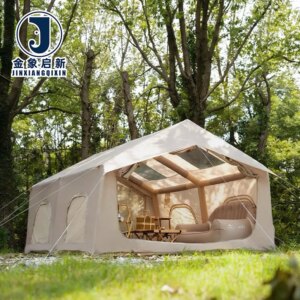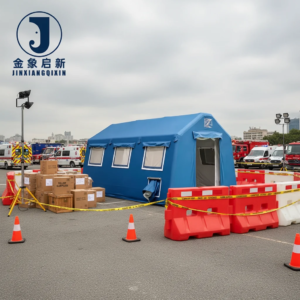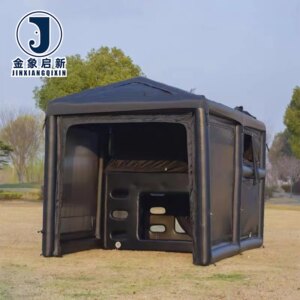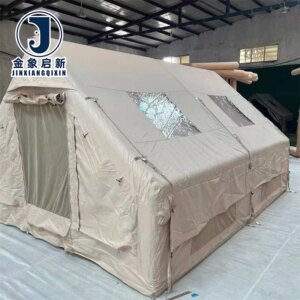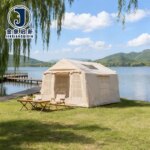
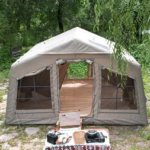

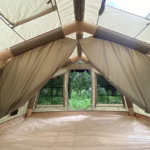
Dedicated QA at Every Stage — 100% pre-shipment inspection with batch-level traceability ensures every roll of inflatable tent fabric leaves the facility verified against the stated material specification sheet.
Technical Specifications
| Parameter | Value |
|---|---|
| Product Type | Inflatable Tent |
| Core Material | Waterproof PVC Fabric |
| Flame Retardant | Fire-retardant (grade not stated in source) |
| Anti-Static | Anti-static (surface resistance / standard not stated in source) |
| UV Treatment | UV-resistant (test basis not stated in source) |
| Waterproof | Waterproof (rating not stated in source) |
| Tear Resistance | Tear-resistant (test standard not stated in source) |
| Customization | OEM & ODM — sample customization, pattern printing, material selection, product design |
| R&D Team | 10 technicians |
| Production Lines | 3 full production lines |
| Processing Equipment | 36 sets |
| Quality Control | Full-process inspection with dedicated QA & QC staff |
| Standards | ISO 9001, ISO 14001, ISO 45001, CE |
| Pump | Included |
Application Suitability
| Application | Exposure & Requirement |
|---|---|
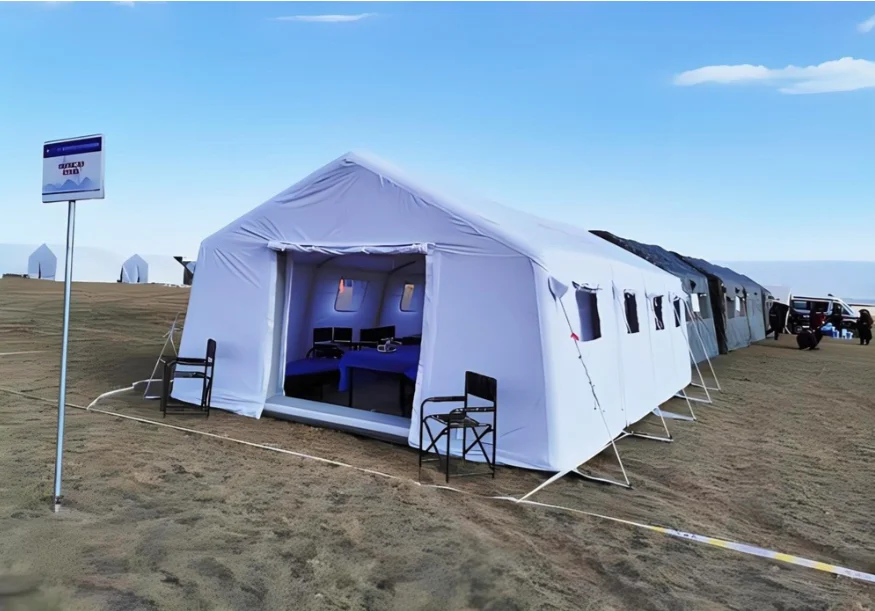
| Mining and tunnelling inflatable ventilation structures | Continuous air pressure cycling, underground moisture, fire-retardant compliance mandatory on site |
| Aviation ground support inflatable shelters | Static discharge hazard, fuel vapour proximity, anti-static surface resistance documentation required |
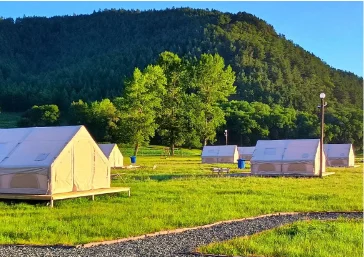
| Commercial glamping and hospitality tent structures | Extended UV and rain exposure, guest comfort, rapid deployment and seasonal teardown |
| Temporary event and exhibition enclosures | High foot traffic, frequent inflate-deflate cycles, visual appearance and print quality |
| Construction site welfare inflatable facilities | Abrasive ground contact, wind loading on membrane surfaces, worker safety compliance |
| Membrane and inflatable architectural forms | Long-term structural air retention, weld integrity under internal pressure, design-specific curvature |
What "Certified" Inflatable Tent Fabric Actually Means on a Job Site
Inflatable tent fabric supplied without a verifiable fire-retardant grade or anti-static test report is a compliance liability the moment an inspector walks onto the site — our material ships with documentation matched to your project specification.
Procurement teams sourcing inflatable structures for mining, aviation or event deployments frequently discover that the fire-retardant claim on a quotation does not correspond to a recognised test standard. The fabric arrives, the structure is erected, and then the site safety officer asks for the test certificate — which either does not exist or references a standard irrelevant to the local jurisdiction. [NEED_CITE: fire classification standards for temporary membrane structures by region]
When an inflatable tent is deployed in a fuel-handling zone or underground mine, anti-static performance is not optional. Yet many suppliers describe fabric as "anti-static" without providing a measured surface resistance value or identifying the test method used. The Inflatable Tent Fabric fire retardant certified you specify must carry documentation that satisfies the regulatory body governing your site, not just a marketing claim on a data sheet.
Air Retention and Structural Rigidity Under Pressure Cycling
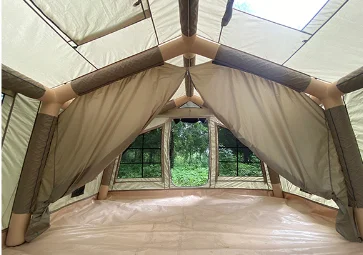
An inflatable tent lives and dies by its ability to hold internal pressure across thousands of inflate-deflate cycles. The base fabric denier, weave density and coating weight together determine whether the membrane stays dimensionally stable or begins to sag between air beams. A higher denier base fabric with adequate coating adhesion resists the micro-creep that causes gradual pressure loss, particularly in larger-span structures used for commercial glamping or event spaces. Specifying the right Inflatable Tent Fabric fire retardant certified for the intended air pressure range is critical to maintaining structural form over the deployment period.
Fire-Retardant and Anti-Static Treatment in Regulated Environments
In mining ventilation applications and aviation ground support zones, the inflatable fabric must satisfy fire-retardant requirements that go beyond general-purpose tent standards. Available in flame retardant grades — confirm the grade required for your market and site regulation before placing an order. Anti-static treatment is equally critical where combustible dust or vapour is present, and the surface resistance value must be documented on a test report traceable to the batch supplied. [NEED_CITE: anti-static surface resistance measurement methods for coated technical fabrics] Our 10-technician R&D team works with buyers to align the fabric formulation with the specific compliance framework governing the installation site, from pre-production sampling through to final documentation.
Coating Adhesion, Weld Behaviour and Membrane Longevity
The coating method and weight directly influence how the fabric behaves at welded seams — the point where most inflatable structures fail first. When internal pressure flexes the membrane, the weld line experiences repeated stress concentration; if coating adhesion to the base fabric is weak, delamination begins at the seam edge before the body of the fabric shows any wear. Knife-over-roll coated PVC generally achieves higher peel strength than laminated alternatives, which matters when the inflatable tent is subjected to wind loading or uneven ground settlement. The relationship between base fabric denier, coating weight and seam integrity should be evaluated as a system rather than as individual parameters. Glossy surfaces accept heat-weld energy differently than matte finishes, and weld temperature profiles must be adjusted accordingly — a detail that fabricators learn during pre-production sample approval.
The Cost of Specifying on Marketing Claims Alone
When inflatable tent fabric is selected based on a supplier’s general description rather than a verified specification sheet, the consequences compound through the supply chain. A batch of fabric arrives without consistent coating weight across rolls, causing some panels to hold air while adjacent panels weep pressure at the seams. Fire-retardant treatment applied unevenly means one section of the structure passes a site flame test while another fails — forcing partial teardown and replacement on a live project. [NEED_CITE: common causes of inflatable membrane structure failure in field deployment]
Colour variation between rolls becomes visible once panels are welded side by side on a commercial glamping installation, triggering a cosmetic rejection that delays guest season opening. Anti-static properties claimed without a measured value leave the buyer unable to demonstrate compliance during a regulatory audit, potentially shutting down operations in a hazardous zone until replacement material is sourced and installed.
Why Technical Buyers Source Inflatable Fabric Through This Facility
Three full production lines and 36 sets of processing equipment provide the capacity to supply multiple rolls with consistent coating weight and colour across a single order — critical when an inflatable structure requires matched panels. The 10-technician R&D team handles material selection, custom sizing, pattern printing and valve configuration, developing pre-production samples within days so buyers can verify weld behaviour and air retention before committing to bulk. Full-process quality inspection with dedicated QA and QC staff means every roll is checked against the specification sheet before dispatch, not spot-sampled after packing. ISO 9001, ISO 14001, ISO 45001 and CE certification underpins the quality management framework, and documentation is structured to satisfy regulatory compliance officers on mining, aviation and construction sites. OEM and ODM capability covers the complete range from raw roll stock for membrane structure fabricators to finished inflatable tent units with pump included.
Documentation & Verification
- Material specification sheet stating base fabric type, coating method and fire-retardant or anti-static grade for each roll
- Independent third-party test reports for flame retardancy and anti-static surface resistance matched to batch number
- Pre-shipment inspection record confirming coating weight and colour consistency across all rolls in the order
- Certificate of origin and customs documentation supporting international shipment of inflatable tent fabric
- Pre-production sample approval form with signed technical parameters before bulk production begins
Fabrication, Handling & Storage
- Heat-weld temperature and dwell time must be calibrated to the specific PVC coating formulation and surface finish of this fabric
- Seam allowance and weld overlap width should account for the internal pressure rating of the inflatable structure design
- Store rolls horizontally on padded racks to prevent compression marks that distort the coating surface and affect weld quality
- Allow cold-transported rolls to acclimatise to workshop temperature before unrolling to avoid coating micro-cracking
- Clean with mild pH-neutral detergent only — solvent-based cleaners can degrade the fire-retardant and anti-static surface treatment
- Field repairs on PVC inflatable fabric require compatible patch material and hot-air welding at matching temperature profiles
Requesting a Quotation for Your Inflatable Structure Project
Provide the intended application environment, including any fire-retardant or anti-static regulatory standards your site must satisfy, along with the required dimensions, colour references and whether you need roll stock or finished fabricated panels. If pattern printing or custom valve configuration is part of the design, share the artwork files and structural drawings so the R&D team can assess feasibility and prepare a pre-production sample. Specify the volume and timeline to allow production scheduling across the available lines and confirm documentation requirements for your local compliance authority.
Frequently Asked Questions
Q: What fire-retardant grade does the inflatable tent fabric carry, and does it meet my site’s regulatory standard?
A: The fabric is available in fire-retardant grades suited to various regulatory frameworks. Because standards differ by country and application — mining, aviation, events — we ask buyers to specify the exact standard their site requires. Our R&D team then confirms whether the available grade satisfies that requirement and provides the corresponding third-party test report with each shipment.
Q: How is anti-static performance verified and what surface resistance value is documented?
A: Anti-static treatment is applied to the PVC coating formulation and measured using recognised surface resistance test methods. The measured value is recorded on the batch test report. Buyers operating in hazardous environments should share their required resistance range at inquiry stage so we can confirm the fabric meets the project specification before production begins.
Q: Can the inflatable tent fabric be custom-sized and printed for specific structure designs?
A: Yes. The 10-technician R&D team handles custom width, length, pattern printing and valve configuration as part of the OEM and ODM service. Pre-production samples are developed within days, allowing buyers to verify colour accuracy, weld behaviour and air-holding performance before authorising the full production run.
Q: What certification and test documentation ships with each order?
A: Every order includes a material specification sheet, ISO 9001, ISO 14001 and ISO 45001 certificates, CE documentation, batch-level inspection records and third-party test reports for fire-retardant and anti-static properties where applicable. Certificate of origin and customs support documents are provided for international shipments.