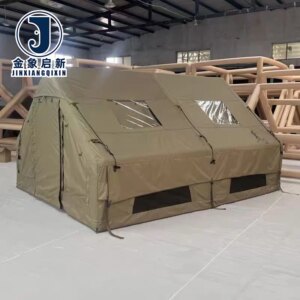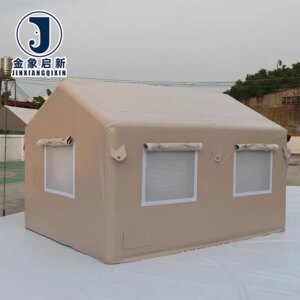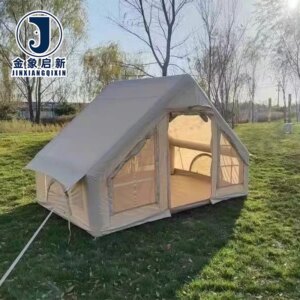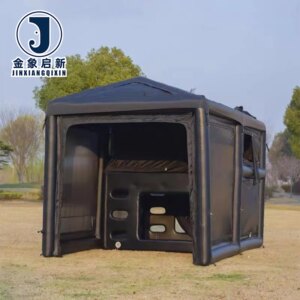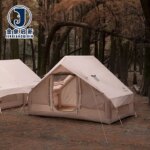
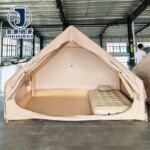
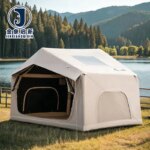
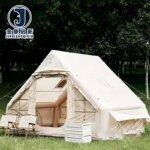
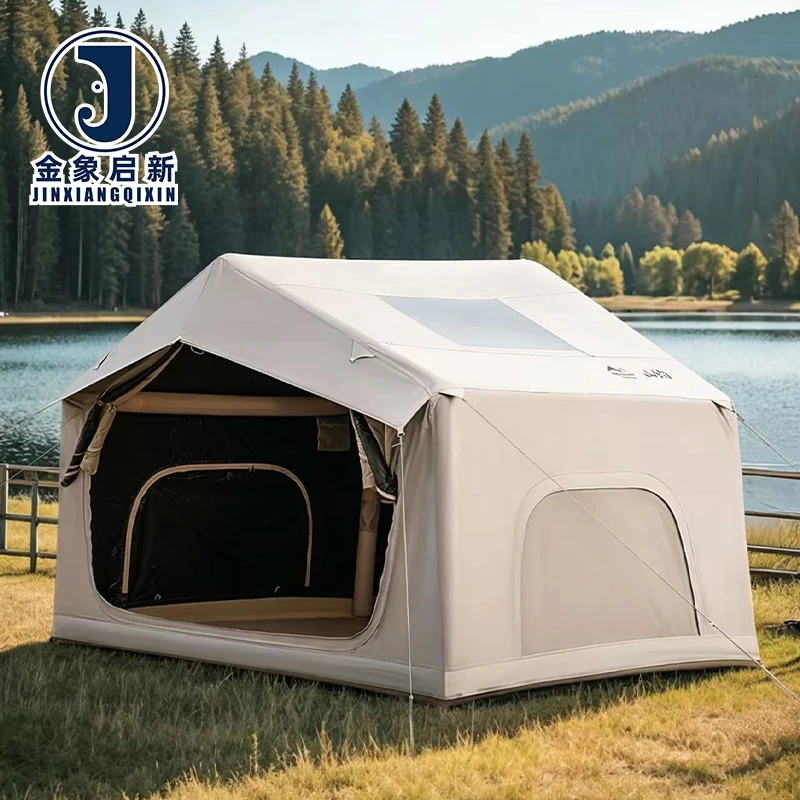
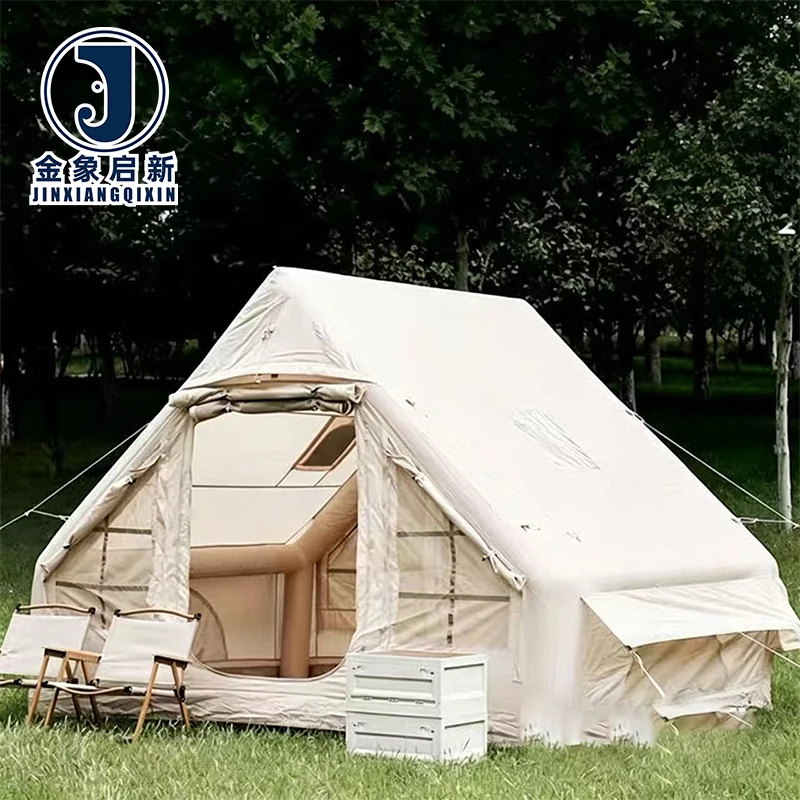
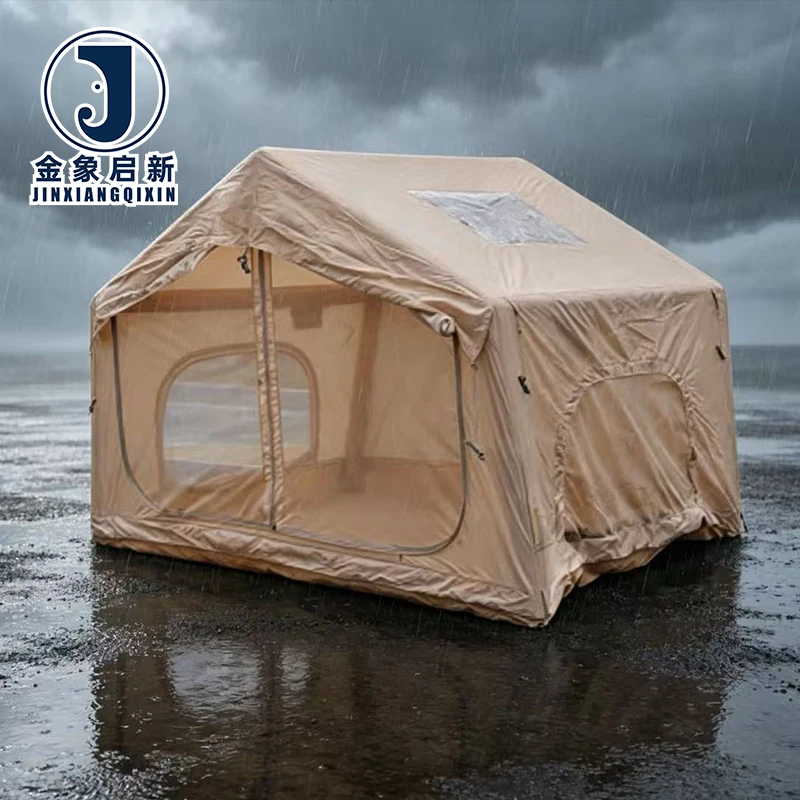
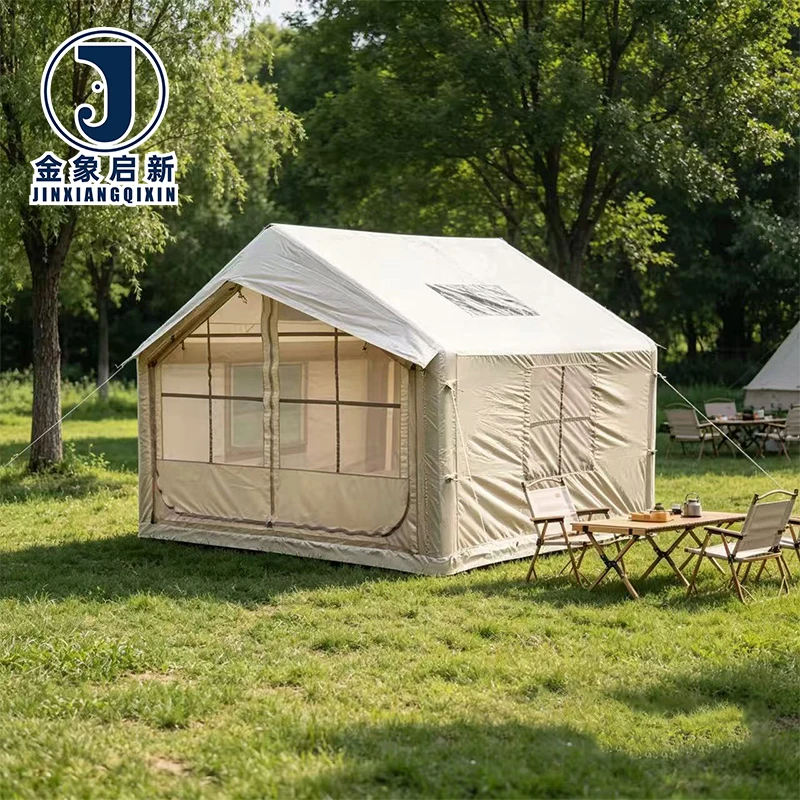
Specialist Coating Control — Every roll of PVC tarpaulin produced for inflatable structures passes through dedicated QA stages, ensuring coating weight and material consistency match the stated specification before it reaches your fabrication floor.
Technical Specifications
| Parameter | Value |
|---|---|
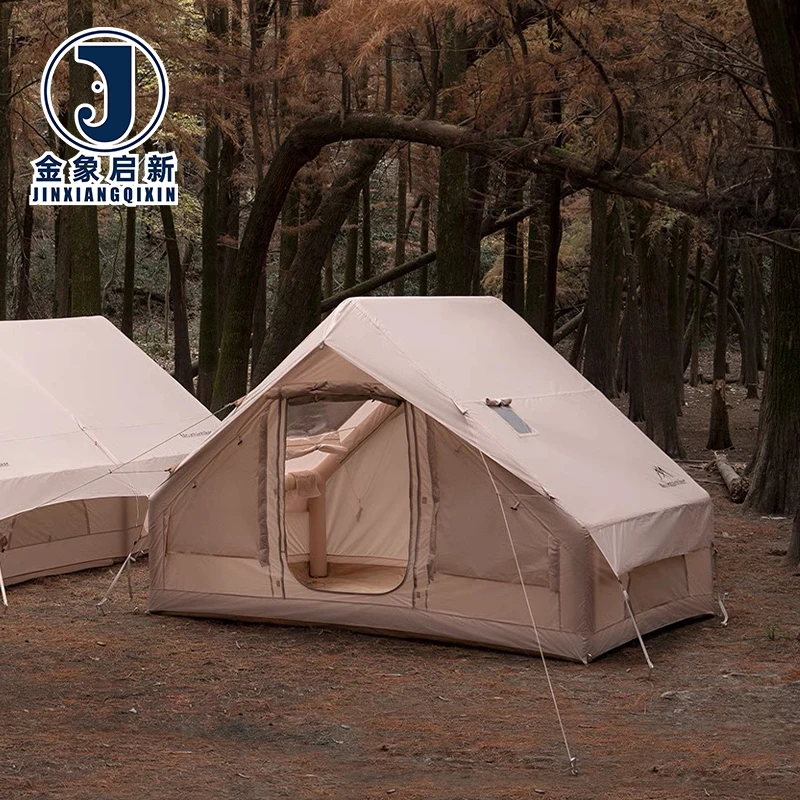
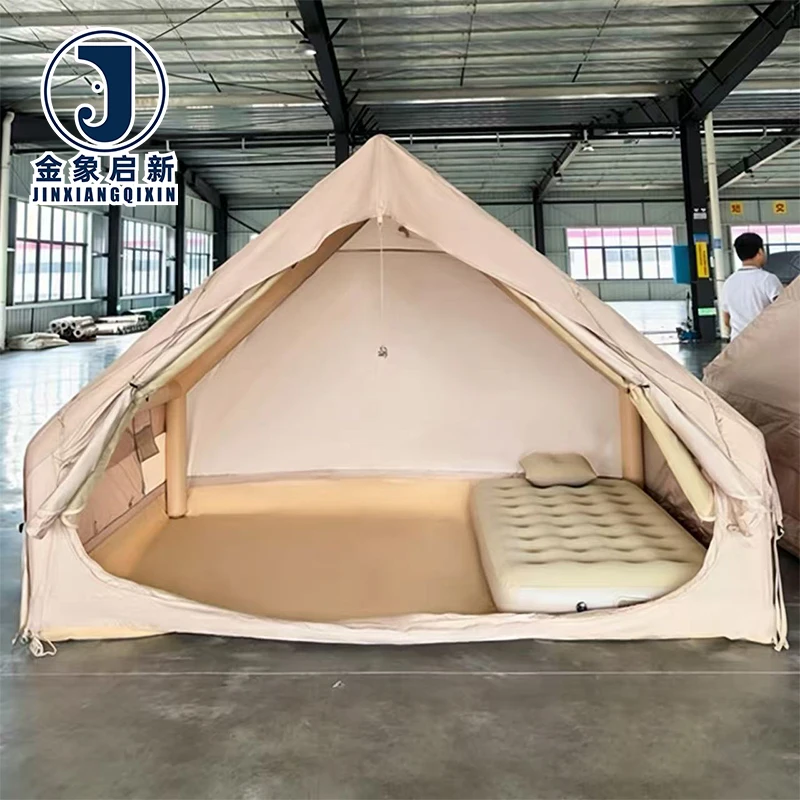
| Product Type | Inflatable Tent |
| Core Material | PVC tarpaulin |
| Key Performance | Waterproof, UV-resistant (test basis not stated), tear-resistant, fire-retardant (grade not stated), anti-static (standard not stated) |
| Capacity Range | 1–12 person |
| Season Rating | Four-season |
| Opening Mechanism | Quick automatic opening (inflatable) |
| Customization | OEM & ODM — size, material thickness, pattern printing, design modifications |
| Certifications | ISO9001, ISO14001, ISO45001, CE |
Application Suitability
| Application | Exposure & Requirement |
|---|---|
| Temporary workforce accommodations at mining sites | Continuous outdoor deployment, wind loading, fire-retardant compliance, rapid inflation and deflation cycles |
| Mobile field stations for construction projects | UV exposure, dust ingress, repeated transport and setup, structural air-hold integrity |
| Emergency response shelters for industrial operations | Immediate deployment requirement, all-weather resistance, multi-occupant capacity |
| Outdoor event facilities and commercial installations | Branding and visual consistency, high foot traffic, seasonal weather variation |
What "Fire-Retardant" Means Without a Certified Grade Behind It
A fire-retardant claim only protects your project if it references a test standard that your site inspector actually recognises.
Inflatable tent fabric ordered with a generic "fire-retardant" label often fails the compliance check at a mine site or tunnelling operation because the receiving safety officer needs a specific classification — not a marketing term. When the Inflatable Tent fabric certified manufacturer supplies material without a batch-level test report tied to a known standard, the entire structure may be rejected at the gate. This is not a hypothetical scenario. Across industrial procurement, documentation gaps cause more project delays than material defects do [NEED_CITE: fire safety classification requirements for temporary structures in mining and tunnelling]. The consequence is not a return shipment — it is idle crews, extended mobilisation costs, and a procurement team scrambling for a replacement supplier on a compressed timeline.
Coating Formulation for Air-Holding Structures
Inflatable membrane structures place a unique demand on coated fabric: the material must hold internal pressure continuously while flexing under wind load and temperature change. The PVC tarpaulin used here is formulated to maintain air-tight integrity at the seam and across the body of the structure. As an Inflatable Tent fabric certified manufacturer operating three dedicated production lines, the facility controls coating weight at every stage — from base fabric preparation through final surface treatment — to produce a material that performs under sustained pneumatic load.
Batch Consistency Across Multi-Unit Deployments
When a mining contractor orders six inflatable shelters for a remote site, every unit must match in colour, weld behaviour, and inflation characteristics. Batch-to-batch variation in coating thickness or plasticiser content can cause one tent to inflate differently from the next, or show visible colour mismatch once they stand side by side. The production process here runs 36 sets of professional processing equipment with in-line quality checks, reducing the variance that leads to on-site rejection [NEED_CITE: coating weight consistency standards for technical PVC fabrics].
Reading Beyond the Specification Sheet
The relationship between base fabric construction and final performance is not always obvious from a single-line spec. Denier count and weave density of the base polyester determine how the fabric resists tear propagation — critical for inflatable structures where a puncture can compromise the entire air beam. Coating method, whether knife-over-roll or calendered, affects peel strength and therefore how well the material holds a heat-welded seam. Fire-retardant and anti-static treatments are available in multiple grades, and the correct one depends entirely on the regulatory environment at the deployment site. Buyers should confirm the fire-retardant grade required for their market and request the corresponding batch test report before placing a production order. Waterproof performance derives from the coating continuity and seam sealing method, both of which are controlled at the factory level rather than determined by material selection alone.
The Hidden Cost of Skipping Pre-Production Samples
Fabric that looks right on a data sheet can behave differently once it is cut, welded, and inflated. Coating adhesion may prove insufficient at the seam allowance, causing the weld line to peel under air pressure before the fabric body shows any sign of failure. Colour that appears consistent in a small swatch can drift across a full production run, especially when the Inflatable Tent fabric certified manufacturer produces large-volume orders across separate batches. Anti-static treatment, if specified, must be verified against the target environment’s discharge requirements — a generic treatment may not satisfy a mine safety officer who expects a documented surface resistivity value [NEED_CITE: anti-static fabric test methods for mining ventilation and shelter applications]. The cost of discovering these issues after shipment is not limited to the material itself; it extends to project remobilisation and contractual penalties.
Why Procurement Teams Source From This Facility
Process control begins with raw material selection and continues through coating, finishing, and pre-shipment inspection. The 10-person R&D team handles material selection, pattern printing, and sample development, giving buyers a direct technical contact during specification rather than routing questions through a sales intermediary. Three full production lines provide capacity for project-scale inflatable structure orders without sacrificing the quality checkpoints that prevent batch inconsistency. Dedicated QA/QC operates at every production stage, and every roll undergoes 100% inspection before dispatch — not a statistical sample, but a full review. Sample development runs within days for custom sizing, thickness, and print requirements, allowing buyers to validate material behaviour on their own welding equipment before committing to a full order.
Documentation & Verification
- Material specification sheet stating PVC coating type, base fabric construction, and treatment options
- Fire-retardant and anti-static test reports aligned to the grade confirmed at order stage
- ISO9001, ISO14001, ISO45001, and CE certificates included in procurement documentation package
- Pre-shipment inspection record covering visual check, coating weight verification, and dimensional accuracy
- Roll packing list with batch traceability for multi-unit inflatable structure orders
Fabrication, Handling & Storage
- Heat-weld parameters should be tested on a sample swatch of this PVC tarpaulin before full production to set optimal temperature and dwell time
- Store rolls upright on a flat surface to prevent permanent creasing in the coating layer
- Avoid dragging cut panels across abrasive surfaces during tent assembly to protect the PVC surface finish
- Clean with mild detergent only — solvent-based cleaners may degrade the fire-retardant or anti-static treatment
- Repair minor punctures using compatible PVC adhesive patches applied to a clean, dry surface
- Allow cold-stored rolls to reach ambient temperature before unrolling to prevent coating crack
How to Structure Your Enquiry
Provide the deployment environment — mining, construction, event, or emergency response — along with the fire-retardant or anti-static classification your site requires. Specify the capacity per unit, the number of units in the order, and whether you need finished tents or raw fabric for your own fabrication line. If colour matching across multiple units or custom pattern printing is required, include your reference colour and artwork so the sample stage can confirm consistency before production begins.
Frequently Asked Questions
Q: What fire-retardant and anti-static certifications are available for this inflatable tent fabric?
A: The facility produces PVC tarpaulin in fire-retardant and anti-static formulations and can supply batch-level test reports. The specific grade must be confirmed against your site’s safety code before production. Buyers should provide the target standard — such as a regional mining regulation or building fire classification — so the correct treatment is applied and documented.
Q: Can the fabric be customised for specific tent dimensions and printed with branding?
A: Yes. OEM and ODM services cover custom sizing, material thickness adjustment, and pattern printing. The R&D team develops samples within days so buyers can verify weld behaviour and visual consistency on their own equipment. Colour matching across large-volume orders is controlled through in-line production checks.
Q: What inspection is performed before inflatable tent fabric leaves the factory?
A: Every roll undergoes full pre-shipment inspection — not a sample draw. Checks include coating weight verification, visual surface review, and dimensional accuracy against the order specification. A detailed inspection record accompanies the shipment, along with all applicable test reports and compliance certificates.
Q: How is batch consistency maintained across large inflatable structure orders?
A: Three dedicated production lines with 36 sets of processing equipment and in-line QA checkpoints control coating weight, colour, and treatment application throughout the run. Buyers ordering multiple units receive material from a single controlled batch where possible, with traceability documentation linking each roll to its production parameters.