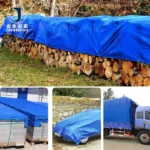
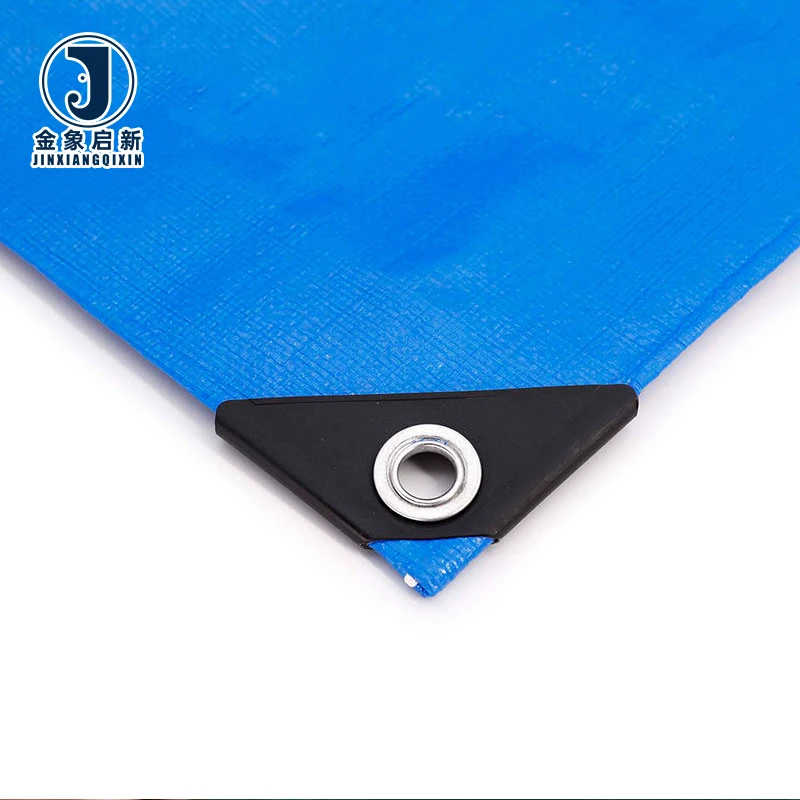
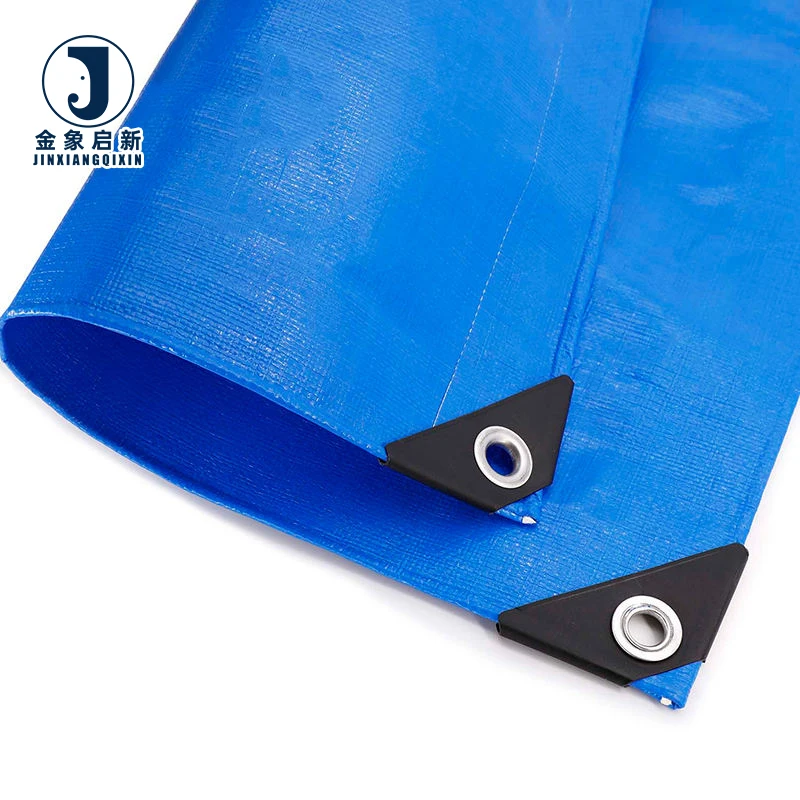
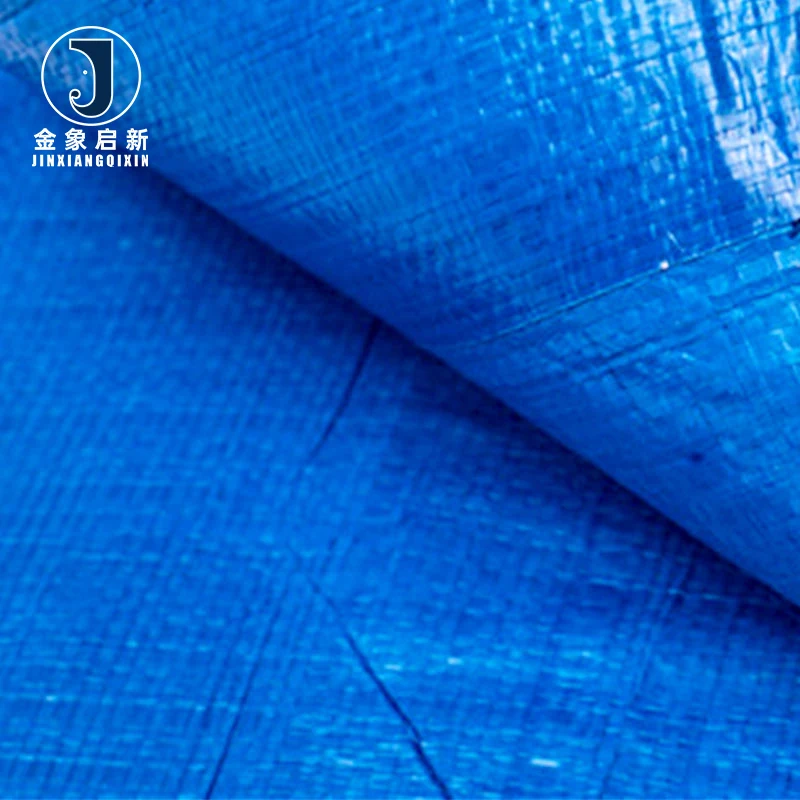
Deep Process Control Over Coating — Every roll of specialist PE tarpaulin undergoes coating weight verification at multiple production stages, ensuring the delivered material matches the specification required for mining, aviation, or technical structure applications.
Technical Specifications
| Parameter | Value |
|---|---|
| Product Type | PE Tarpaulin |
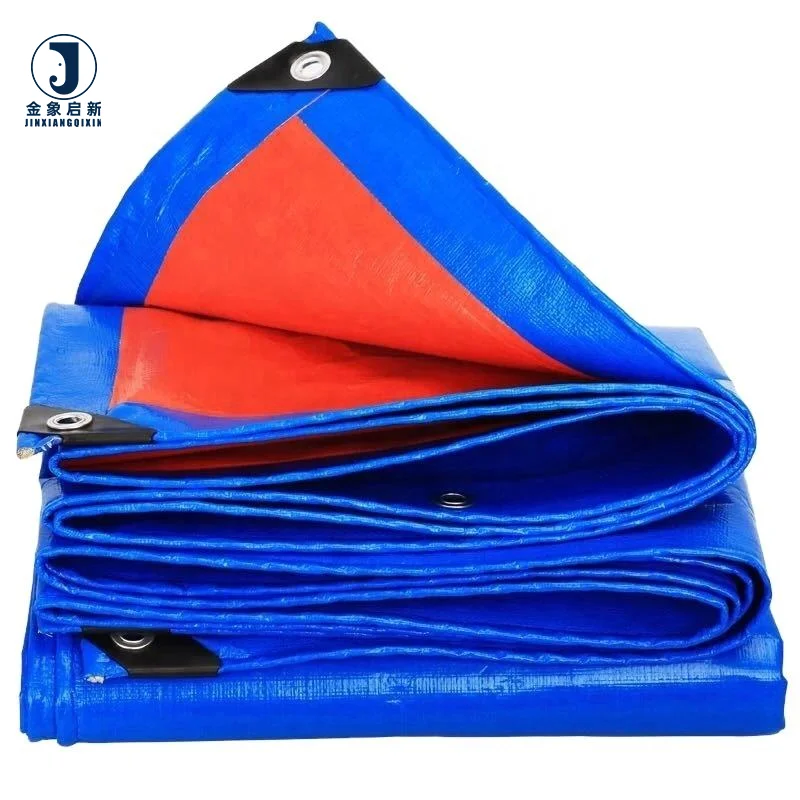
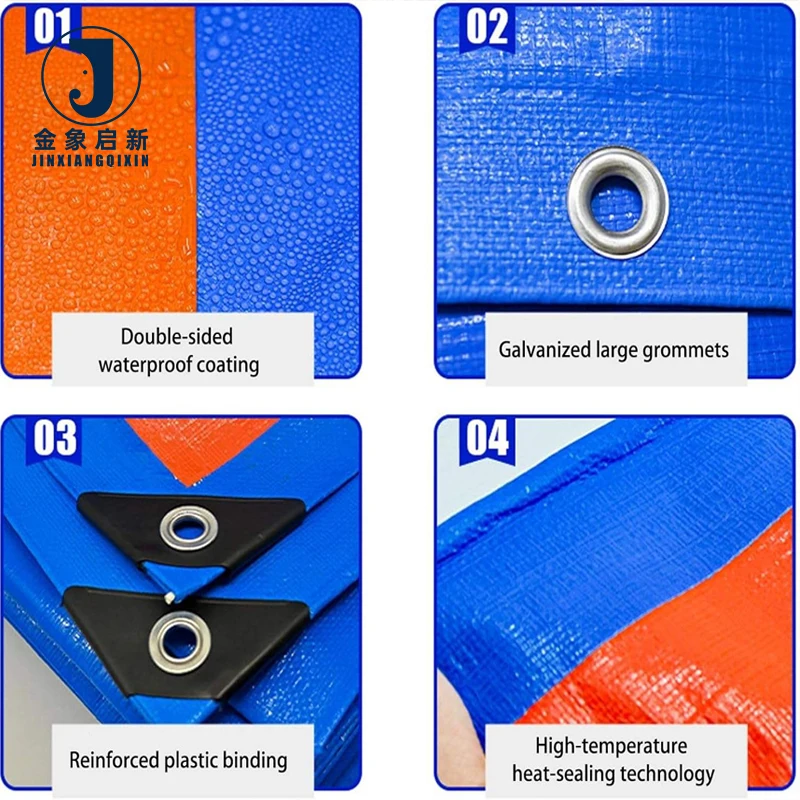
| Materials | HDPE weaving with LDPE lamination on both sides |
| Weight (GSM) | 50gr/m2 ~ 220gr/m2 available (range covers product family — confirm the grade for this item) |
| Thickness | 0.2-0.4mm / 8 mil-16 mil / Custom |
| Roll Width | 6ft, 8ft, 10ft, 12ft or 2m, 4m, 6m |
| Roll Length | 100 yards, 100 meters, or as per buyer’s wish |
| Finished Tarpaulin Sizes | 2x2m, 3x3m, 3x5m, 4x4m, 4x5m, 4x6m, 4x8m, 4x10m, 5x5m, 5x6m, 5x8m, 5x10m, 6x6m, 6x8m, 6x10m, 8x10m, etc. |
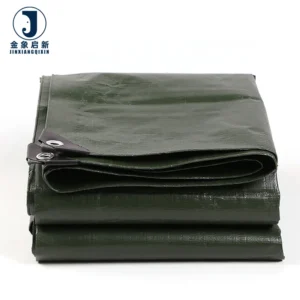
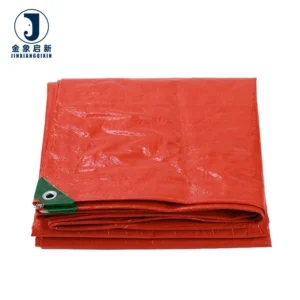
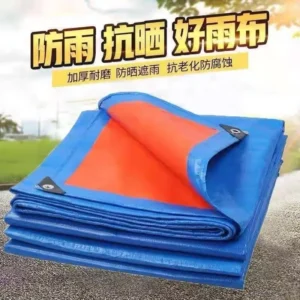
| Color | Blue, Blue/Orange, Green, Grey, Black, Clear, Grey/Green, Orange, or custom |
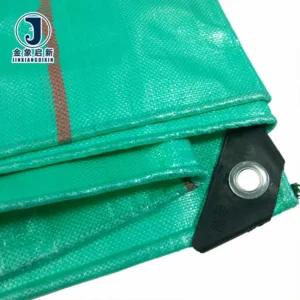
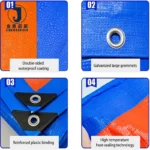
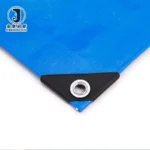
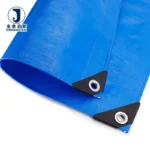
| Edge & Eyelet Options | All four edges reinforced with PP rope in hem; galvanized eyelets every 3ft or 1 meter interval; reinforced plastic corners |
| UV Treatment | Available (test basis not stated in source) |
| Anti-Aging | Anti-oxidants added (grade not stated in source) |
| Corrosion Resistance | Acid and alkali resistance claimed (test basis not stated in source) |
| Waterproof | Yes |
| Mildew Proof | Claimed (test basis not stated in source) |
| Printing Option | Custom printing of brand available |
| Standards | ISO and CE certified |
Application Suitability
| Application | Exposure & Requirement |
|---|---|
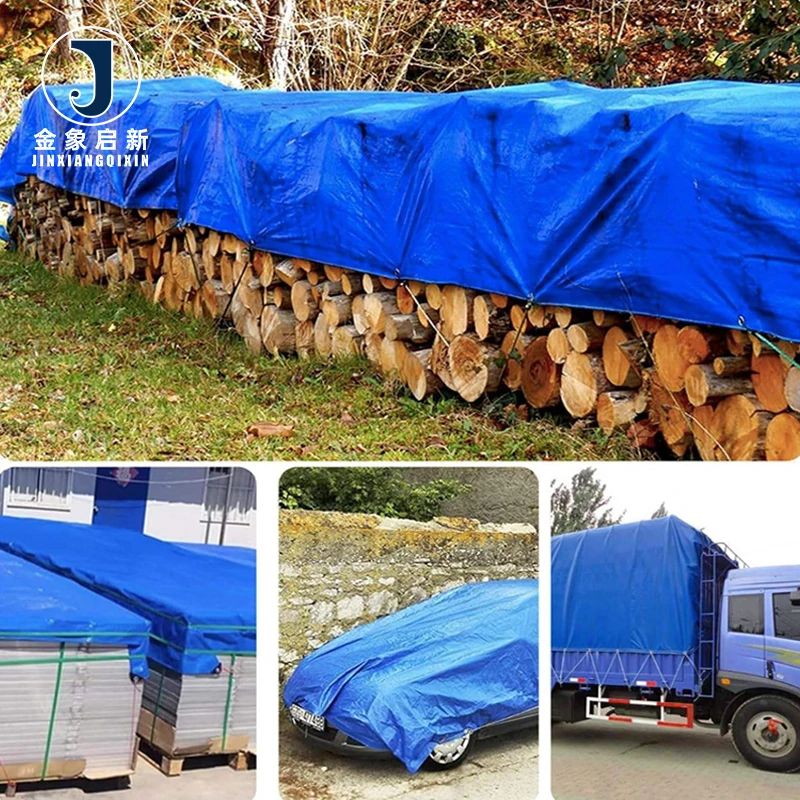
| Mining and tunnelling ventilation ducts | Continuous airflow stress, underground moisture, mandatory fire-retardant or anti-static certification for site compliance |
| Aviation ground support enclosures | Fuel spill exposure, strict fire safety codes, need for documented material certification |
| Temporary membrane and inflatable structures | Wind loading and membrane tension, UV exposure, requirement for consistent roll-to-roll material properties |
| Scaffolding and construction site covers | Weather exposure, mechanical abrasion from site activity, need for reliable waterproofing and tie-down security |
| Specialist technical structure fabric | Long-term tension and flex cycles, environmental stress, requirement for verifiable material specification |
What "Certified Compliance" Means When the Documentation Never Arrives
Fire retardant and anti-static PE tarpaulin for industrial ventilation and specialist applications must ship with verifiable test reports — not just a claim on the quotation.
Contractors working on mining sites, aviation facilities, or large infrastructure projects specify material grades that meet strict regulatory requirements. When the PE tarpaulin roll arrives without the accompanying test certificate, the entire installation can be halted by a site inspector. Sourcing teams are then forced to scramble for documentation or, worse, replace material already deployed in the field. [NEED_CITE: industrial site fire safety compliance requirements for temporary fabric structures]
Engineering Material Integrity for Technical Environments
The HDPE woven base fabric provides the structural skeleton of the Fire Retardant and Anti-Static PE Tarpaulin for Industrial Ventilation and Specialist Applications, while the dual-side LDPE lamination seals the weave and delivers waterproof protection. This construction approach balances tensile strength with the flexibility needed for duct fabrication and membrane tensioning.
When ventilation ducts are fabricated from this material, the laminated surfaces must hold heat-welded seams under continuous positive or negative air pressure. The coating formulation and lamination quality directly determine whether those seams remain intact over extended operational cycles or begin to delaminate at the joint.
Compliance Documentation as a Procurement Requirement
Specialist applications demand more than a product data sheet. Mining ventilation authorities, aviation safety officers, and structural engineers require documented proof that the Fire Retardant and Anti-Static PE Tarpaulin for Industrial Ventilation and Specialist Applications meets the specific standard referenced in the project specification. [NEED_CITE: mining ventilation duct fire safety standards and material requirements]
Supplying material without the corresponding test report or certification creates a compliance gap that delays project handover. Every shipment from our facility includes the documentation package matched to the grade ordered, so site inspectors receive what they need without follow-up requests.
Reading Beyond the GSM Number
Weight per square metre is often the first specification buyers check, but it tells only part of the story. The HDPE base fabric denier and weave density determine how the material distributes load across its surface and resists tear propagation once a puncture occurs. A lighter fabric with a tight, high-denier weave can outperform a heavier fabric with an open, low-denier construction in tensile and tear tests.
The LDPE lamination thickness on each side contributes to waterproof integrity, abrasion resistance, and the quality of heat-welded seams. When lamination is uneven or too thin, the fabric may meet the stated GSM but fail at the seam under flex stress. The 0.2–0.4mm total thickness range available across this product family allows selection of a grade matched to the mechanical demands of the application. Roll widths up to 6m reduce the number of field seams needed for large enclosures, minimising potential failure points.
The Real Cost of Undocumented Material Grades
When PE tarpaulin is specified for a mining ventilation system or an aviation enclosure, the fire-retardant or anti-static grade must match the standard enforced at the site. Material that arrives without supporting test documentation forces contractors to commission independent lab testing or face rejection at inspection — both outcomes carry significant schedule and cost consequences. [NEED_CITE: consequences of non-compliant fabric in mining and aviation temporary structures]
Batch colour variation across rolls ordered for the same installation creates visible inconsistency once the material is deployed side by side on scaffolding or membrane structures. This aesthetic failure often triggers rejection even when the material is technically compliant, requiring full replacement of the affected panels.
Why Specialist Contractors Source Here
Our production process includes dedicated QA/QC checks at every stage, with 100% inspection before any roll is cleared for dispatch. Coating weight and GSM are verified against the material specification sheet, closing the gap between what was quoted and what arrives on site.
The 10-person R&D team handles material selection and sample development for specialist requirements, developing samples within days so buyers can evaluate and approve before committing to full production. Custom widths, colours, and cut sizes are produced on three full lines with 36 sets of professional equipment, supporting both bulk roll orders and finished tarpaulin sheets.
ISO and CE certified processes underpin every production run, and the documentation package ships with the order — not as an afterthought. Pre-shipment inspection records confirm roll-to-roll consistency, eyelet placement accuracy, and hem reinforcement quality before the container is sealed.
Documentation & Verification
- Material specification sheet stating GSM, HDPE base fabric weave, and LDPE lamination weight for each roll
- Test reports for fire-retardant or anti-static grades where applicable — matched to the standard required
- ISO and CE certificates included with every shipment documentation package
- Pre-shipment inspection record confirming GSM, colour consistency, eyelet spacing, and hem quality
- Roll packing list with individual roll identification for traceability
Fabrication, Handling & Storage
- Heat-weld LDPE laminated surfaces using temperature and dwell time settings matched to the selected thickness grade
- Position galvanized eyelets within the PP rope reinforced hem to distribute tie-down load across the edge
- Store rolls horizontally on a flat surface to prevent permanent creasing in the HDPE woven structure
- Allow folded finished tarpaulins to acclimatise before unfolding in cold conditions to avoid coating crack risk
- Clean laminated PE surfaces with mild detergent only — solvent-based cleaners can degrade the LDPE layer
- Plan cut patterns around available roll widths to minimise waste and reduce the number of welded seams
Requesting a Technical Quotation
To receive an accurate specification and lead time, share the application environment, the fire-retardant or anti-static standard required by your site authority, and the roll width or finished sheet dimensions needed for your project. If custom colour or brand printing is required, provide the reference codes and annual volume estimate. We will return a matched specification with supporting documentation scope and sample availability.
Frequently Asked Questions
Q: Which fire-retardant standard does your PE tarpaulin meet for site compliance?
A: Fire-retardant grades are available for this PE tarpaulin range. The specific standard met depends on the grade selected and your market requirements. Share the standard referenced in your project specification, and we will confirm the matching grade with supporting test documentation included in the shipment.
Q: Is anti-static surface resistance tested and documented for mining or aviation use?
A: Anti-static treatment is available on specialist grades of this PE tarpaulin. Surface resistance values and the test method used are documented in the test report that ships with the applicable grade. Provide your site compliance requirement so we can match the correct product variant.
Q: How do you ensure the delivered GSM matches what was quoted?
A: GSM is verified during production and again at the pre-shipment inspection stage. Each roll is weighed and measured, and the result is recorded on the inspection report that accompanies the shipment. This eliminates the discrepancy between quoted weight and delivered material.
Q: What are the minimums and lead times for custom widths, colours, or cut sizes?
A: Minimum order quantities and lead times depend on the specific customisation requested — whether it is a non-standard roll width, a custom colour match, or finished sheet sizing. Provide your requirements and we will return a quotation with confirmed lead time and minimum order detail.
Q: How do heat-welded PE seams perform under flex and load stress?
A: The LDPE lamination on both sides of the HDPE woven base supports heat welding. Seam integrity depends on correct welding temperature and the selected material thickness. We recommend testing weld parameters on a sample piece of the exact grade ordered before proceeding with full fabrication.