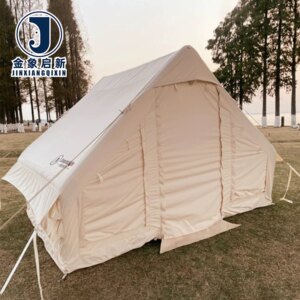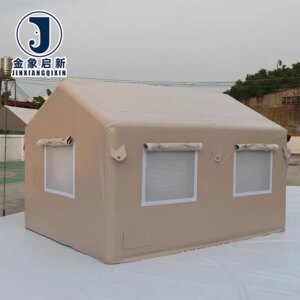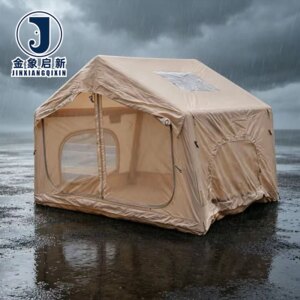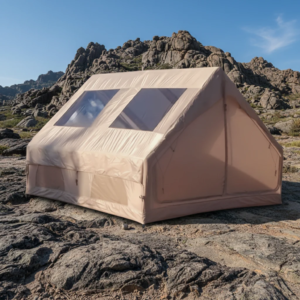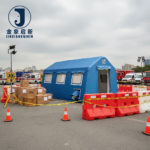
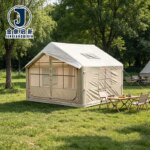
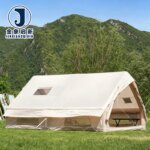
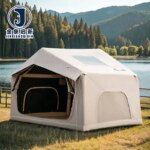
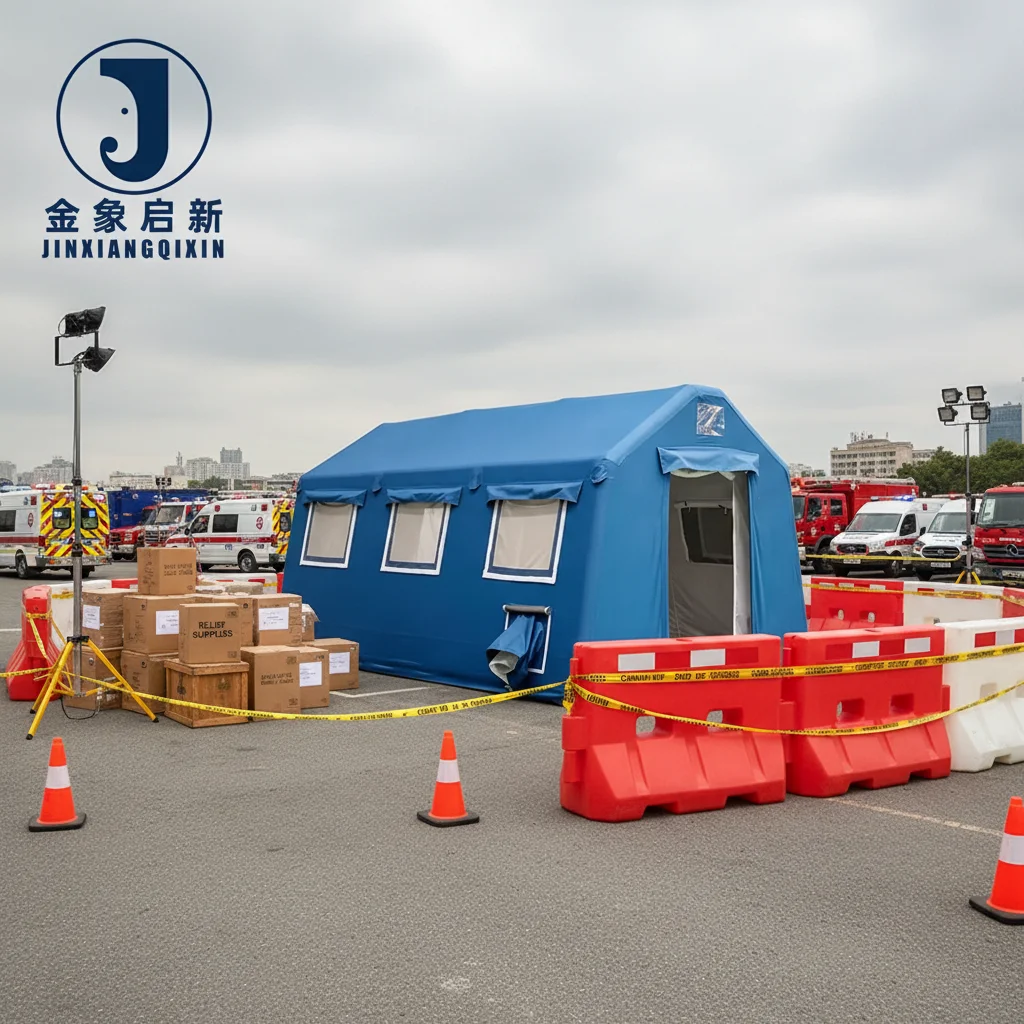
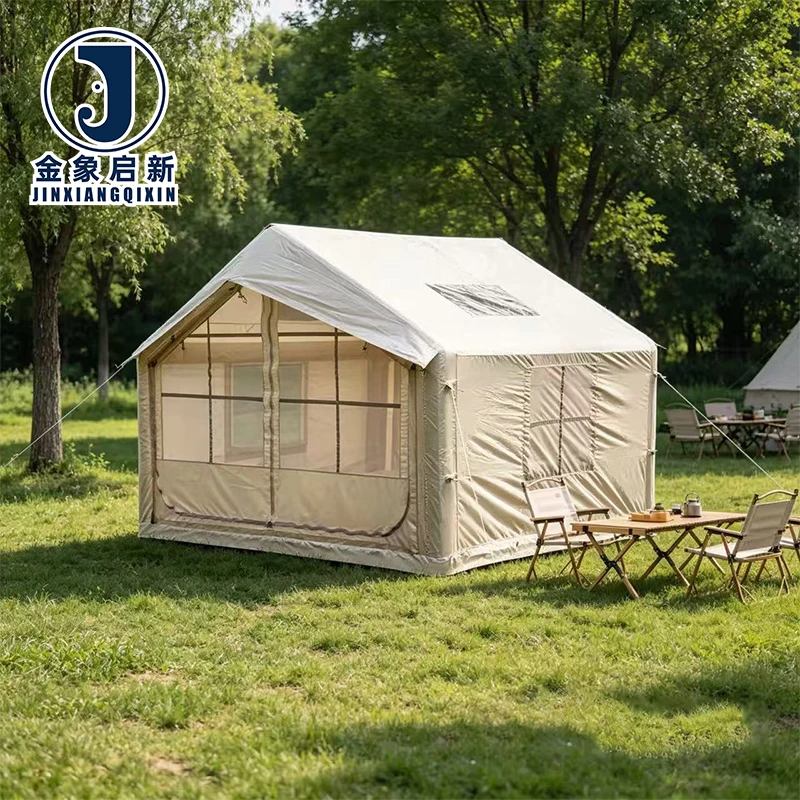
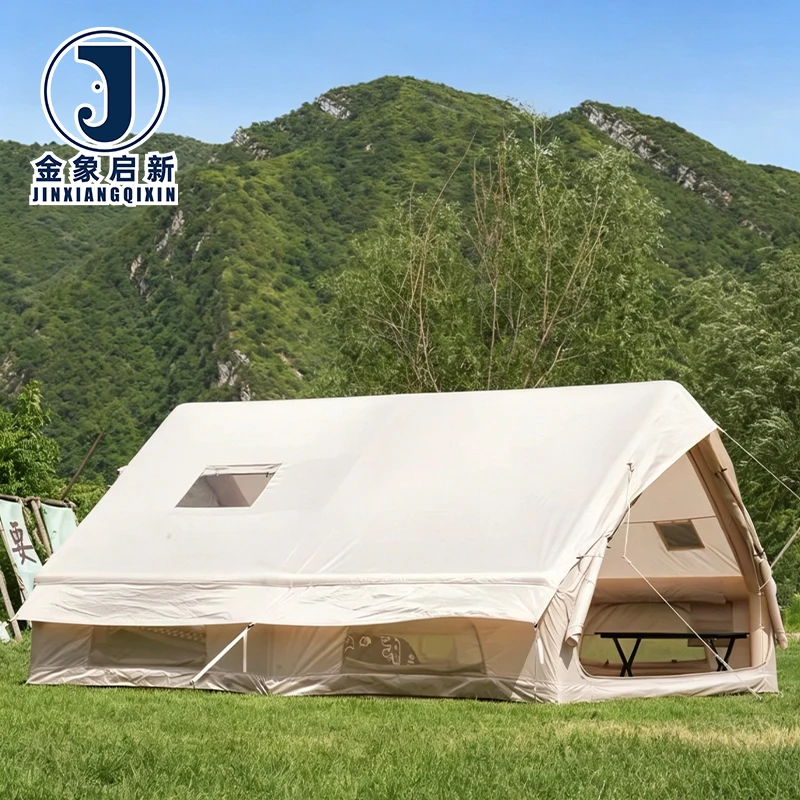
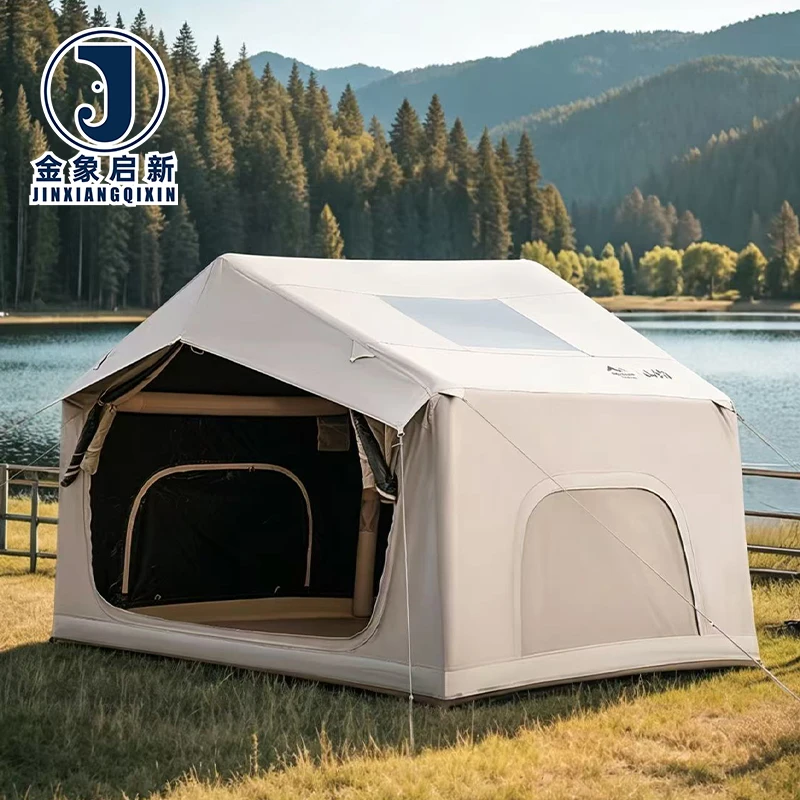
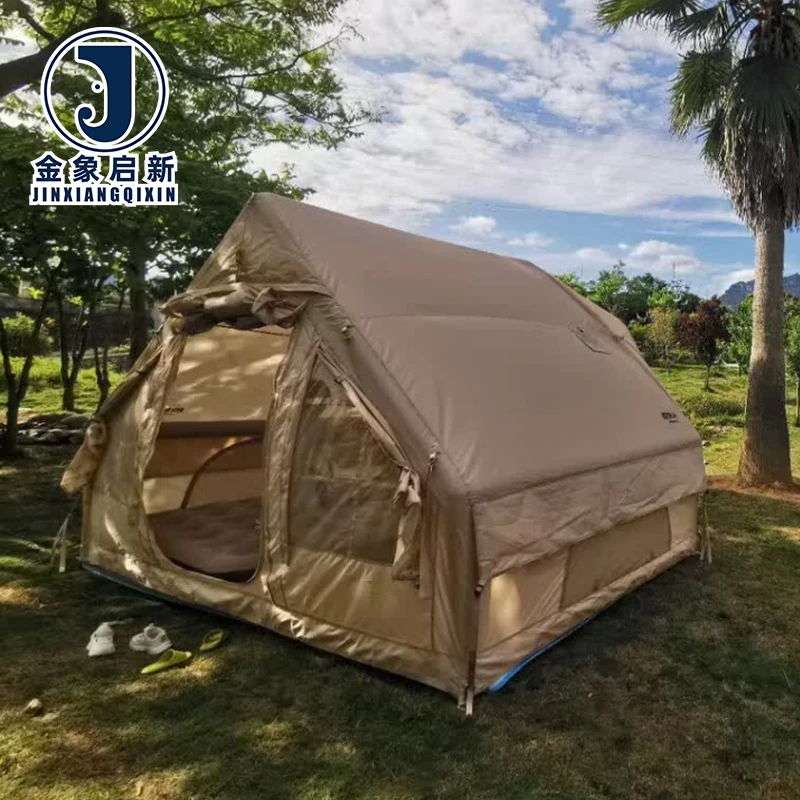
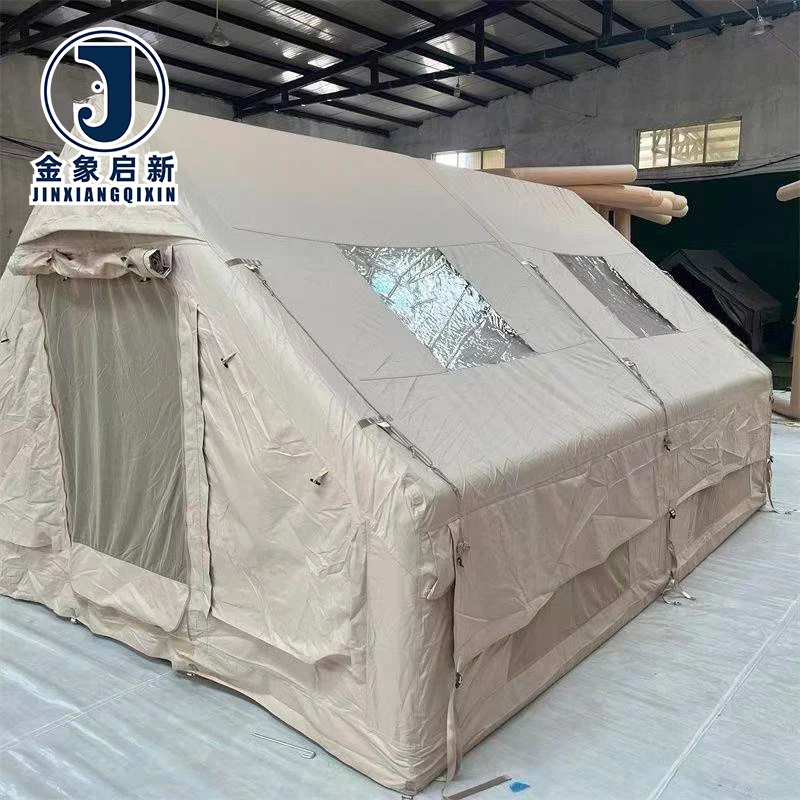
Production Depth on Coated Fabric — nearly 30 years of PVC coating process control applied to inflatable structure fabric, with batch-specific test records accompanying every commercial shipment.
Technical Specifications
| Parameter | Value |
|---|---|
| Product Type | Inflatable Tent Fabric |
| Core Material | PVC tarpaulin |
| Waterproof Rating | >3000mm water column |
| Construction | Single layer |
| Deployment | Quick automatic opening (inflatable) |
| Season Design | 4-season |
| UV Treatment | Stated (grade not stated) |
| Temperature Range | High and low temperature resistant (grade not stated) |
| Customization | OEM & ODM, size adjustment, color customization, pattern printing, logo application |
| Production Facility | 9,180 m² with 3 full production lines |
| Processing Equipment | 36 sets of professional equipment |
| R&D Team | 10 technicians |
| Sample Lead Time | 7–10 business days |
| Production Lead Time | 15–20 business days |
| Standards | ISO 9001, ISO 14001, ISO 45001, CE |
Application Suitability
| Application | Exposure & Requirement |
|---|---|
| Mining and tunnelling site offices | Continuous inflation pressure, abrasive dust, temperature swings, fire compliance on site |
| Aviation ground support structures | Certified fabric documentation for airside audit, wind load on membrane surface |
| Construction rapid-deployment storage | Weather exposure, equipment movement inside, repeated inflation and deflation cycles |
| Outdoor commercial event shelters | UV exposure, crowd safety compliance, quick setup and teardown between venues |
What Happens When Inflatable Structure Fabric Lacks Certification Paperwork
Certified inflatable structure fabric is only as credible as the test report that travels with it.
Inflatable shelters deployed on mining, aviation, or construction sites must satisfy fire and safety audits before they are inflated for the first time. When the fabric arrives without batch-specific fire-retardant or anti-static certification, the entire structure sits idle while the site safety officer requests documentation that the supplier cannot produce. The delay cost on a stalled project far exceeds the fabric price difference between a documented and an undocumented source. Sourcing PVC Inflatable Tent Fabric fire retardant grades without a verifiable test basis is a compliance risk, not a material saving [NEED_CITE: fire classification standards for temporary membrane structures on industrial sites].
Airtightness and Pressure Retention Under Continuous Inflation
An inflatable structure holds its shape only when the fabric and its welded seams retain air under sustained internal pressure. Single-layer PVC tarpaulin construction keeps transport weight manageable while the coated surface provides the airtight barrier that inflatable beams and walls depend on. Every roll of certified inflatable structure fabric undergoes inflation testing before dispatch, with batch-specific pressure retention records documenting the result. This testing protocol catches seam porosity and coating micro-cracks that visual inspection alone cannot reveal.
Temperature Extremes and Membrane Behaviour in the Field
A 4-season design means the PVC compound must resist embrittlement in freezing conditions and softening under high ambient heat. Inflatable structures on mining sites may face sub-zero nights and direct sun exposure within the same 24-hour cycle. The material maintains structural integrity across these industrial climate extremes, preventing the beam sag that occurs when PVC softens or the cracking that occurs when it loses plasticiser flexibility at low temperature. Site operators specify the temperature range relevant to their location, and the formulation is matched accordingly [NEED_CITE: PVC plasticiser migration and low-temperature embrittlement thresholds in coated fabrics].
Reading the Specification Sheet Beyond the Waterproof Number
The >3000mm water column rating confirms that the PVC coating forms a continuous barrier against liquid water penetration, which matters for structures exposed to driving rain or snowmelt. However, waterproof rating alone does not describe how the fabric behaves under mechanical stress. Tensile strength and tear resistance depend on the base fabric denier and weave density working together with the coating weight. A heavier coating on a loosely woven base may score well on water column but split at the weld line when the inflatable beam flexes under wind load. Buyers specifying PVC Inflatable Tent Fabric fire retardant grades should request the full parameter set — base fabric construction, coating weight, and test method references — rather than evaluating a single headline figure. Coating adhesion to the base fabric, measured as peel strength, determines whether the PVC layer delaminates after repeated inflation cycles [NEED_CITE: ISO 1421 test methods for tensile and tear properties of coated fabrics].
The Hidden Cost of Specification Mismatches on Site
When inflatable structure fabric is ordered without matching the fire-retardant grade to the site’s regulatory requirement, the structure may pass visual inspection but fail the safety audit. Batch colour variation across a multi-unit order becomes visible once several shelters are erected side by side at a commercial event, undermining the professional appearance the client paid for. Welded seams that fail before the fabric itself does create emergency deflation scenarios that endanger occupants and equipment inside. These failures trace back to incomplete specification at the enquiry stage, not to material defect [NEED_CITE: common failure modes in welded seams of inflatable membrane structures].
Why Buyers Source Inflatable Structure Fabric Here
Deep process control over PVC coating weight and adhesion, built across nearly 30 years of focused coated fabric production, means the material arriving on site matches the specification agreed at the enquiry stage. Three full production lines and 36 sets of professional processing equipment support bulk orders without splitting production across subcontracted facilities. A 10-person R&D team handles material selection, custom sizing, pattern printing, and sample development in-house, shortening the feedback loop between design and production. Dedicated QA and QC at every production stage with 100 percent pre-shipment inspection ensures that airtightness, seam integrity, and colour consistency are verified before rolls leave the facility. ISO 9001, ISO 14001, ISO 45001, and CE documentation accompanies every commercial order for site-audit readiness.
Documentation & Verification
- Material specification sheet stating coating weight, base fabric construction, and colour reference per roll
- Test report for UV and fire-retardant grades where applicable, matched to batch number
- ISO 9001, ISO 14001, ISO 45001, and CE certificates included with each shipment
- Pre-shipment inflation testing record documenting airtightness and pressure retention results
- Certificate of origin and customs documentation for cross-border delivery
Fabrication, Handling & Storage
- Heat-weld seams at manufacturer-recommended temperature to maintain single-layer PVC tarpaulin coating adhesion
- Store rolls vertically on pallets to prevent creasing that weakens the coated surface before inflation
- Use compatible PVC adhesive for field repairs on the single-layer construction to restore airtightness
- Avoid dragging rolls across abrasive ground to protect the outer coating finish before fabrication
- Allow cold-stored rolls to reach ambient temperature before unrolling to prevent coating micro-cracking
What to Include in Your Enquiry
Provide the intended application environment — mining site, aviation ground support, commercial event — along with the fire-retardant or anti-static grade your site safety regulations require. Specify the number of units, individual dimensions, and whether pattern printing or logo application is needed for branded shelters. Indicate your annual volume so production scheduling and batch colour consistency can be planned across multiple orders. Request a sample if custom colour or sizing falls outside standard stock grades.
Frequently Asked Questions
Q: What fire-retardant and anti-static certifications are available for inflatable structure fabric?
A: The fabric is available in fire-retardant grades — confirm the specific classification your site or market requires, such as B1, M2, or NFPA 701. Anti-static treatment is available for environments where spark risk must be controlled. Each certification is documented with a batch-specific test report that accompanies the shipment for site-audit purposes.
Q: How is airtightness verified before inflatable tent fabric leaves the factory?
A: Every production batch undergoes inflation testing that measures pressure retention over a defined period. The results are recorded in a batch-specific inspection report covering seam integrity and coating continuity. Rolls that do not meet the airtightness threshold are rejected before packing, so the material you receive has documented performance evidence.
Q: Can custom sizing and branded printing be applied to commercial inflatable shelters?
A: OEM and ODM customization covers size adjustment, colour selection, pattern printing, and logo application. A 10-person R&D team develops samples within 7 to 10 business days for approval before bulk production begins. This sample-first process ensures the finished shelters match the visual and dimensional specification agreed at the enquiry stage.
Q: How is colour consistency maintained across a multi-unit inflatable structure order?
A: Batch colour control is managed through dedicated QA and QC checkpoints at each production stage. Rolls destined for the same project are produced in a single run where possible, and pre-shipment inspection includes side-by-side colour comparison. The inspection record travels with the shipment so you can verify consistency on arrival.