

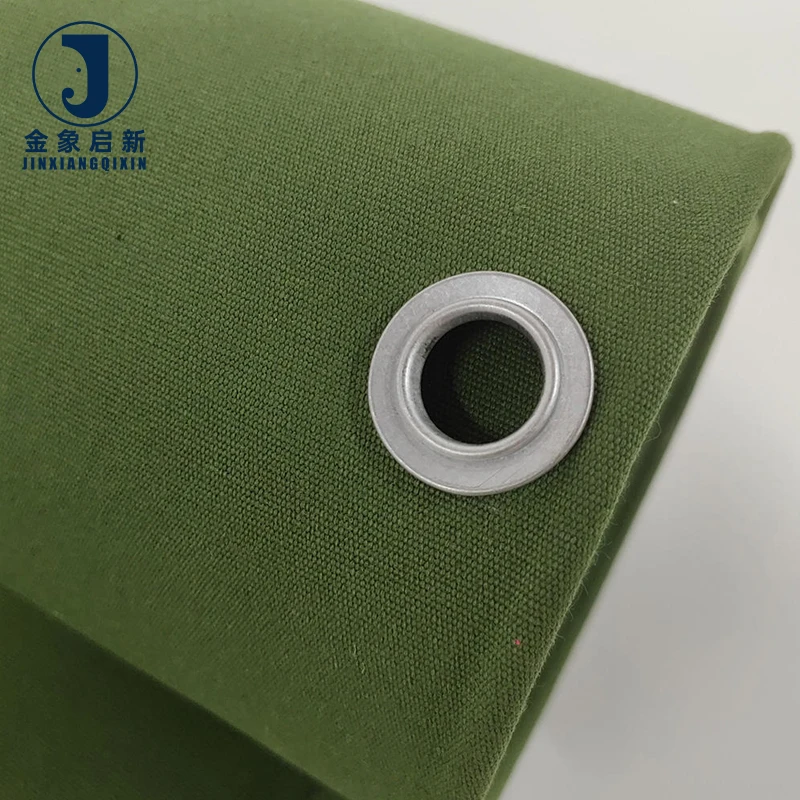
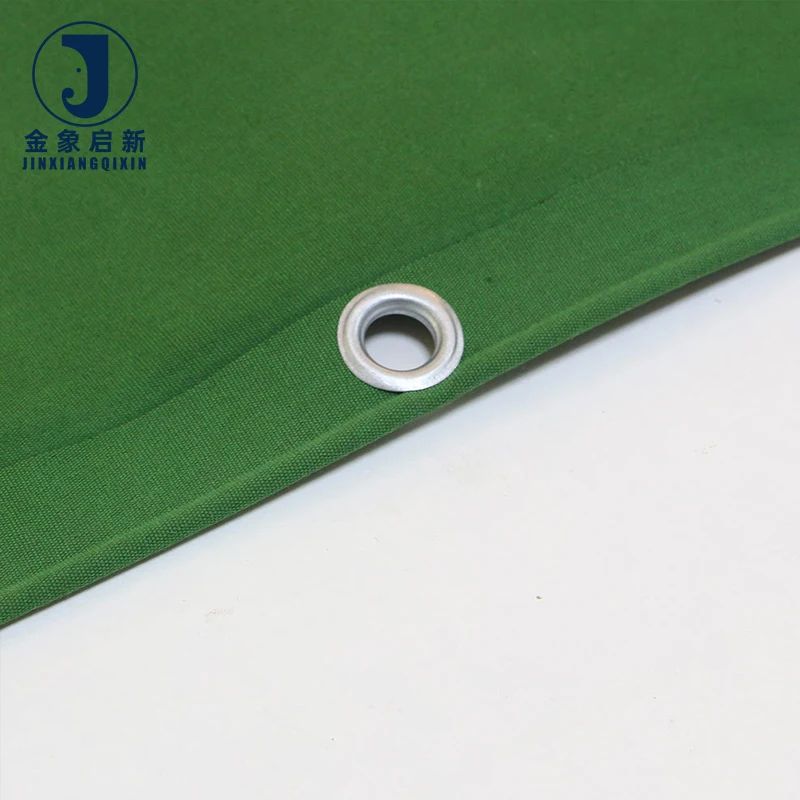
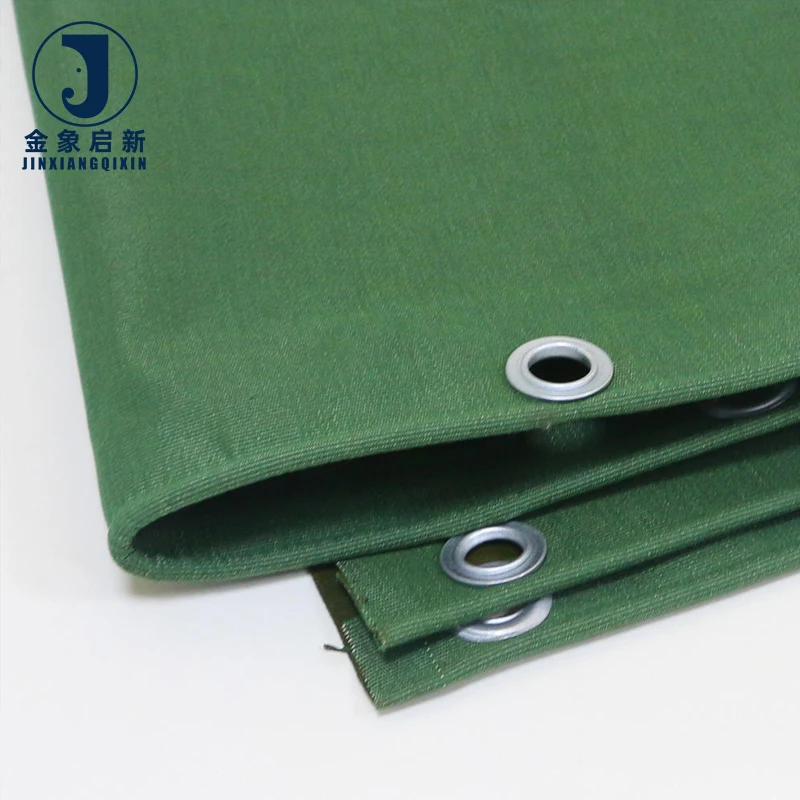
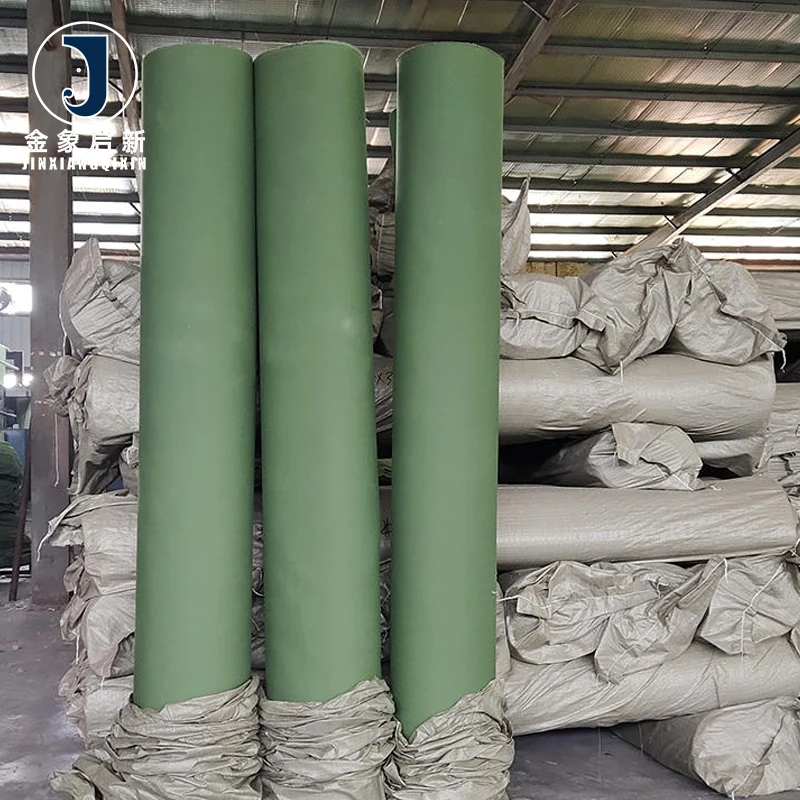
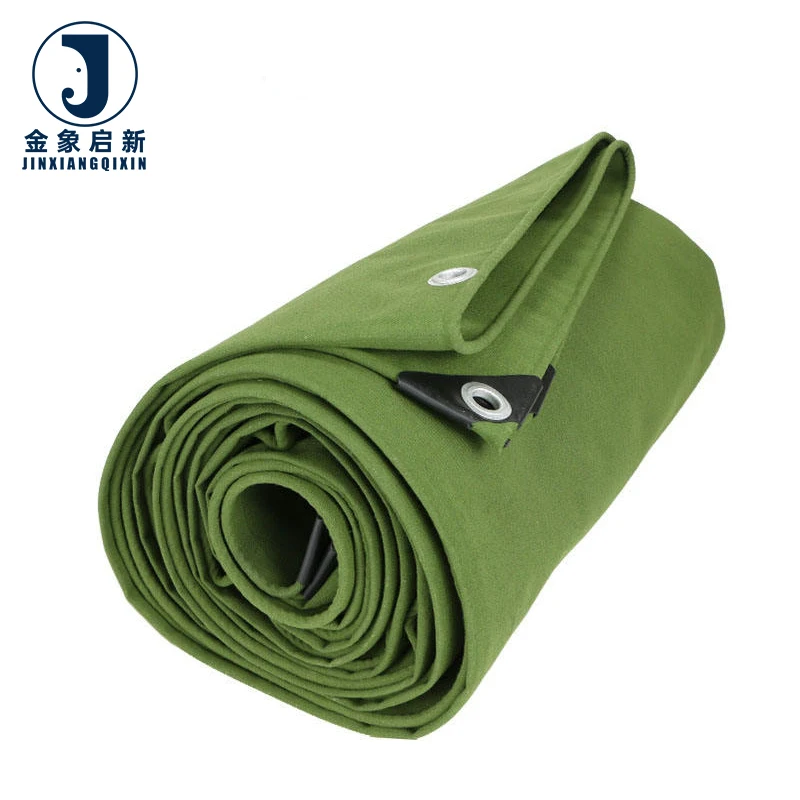
Coating Weight Control — Deep process mastery over canvas coating weight and adhesion, verified per roll with material specification sheets before dispatch.
Technical Specifications
| Parameter | Value |
|---|---|
| Product Type | Canvas Tarps |
| Base Material | Polyester cotton industrial textile with 8-12 strands of fine cotton yarn |
| Weight | 600gsm |
| Total Thickness | 0.5mm / 0.6mm / 0.7mm |
| Coating Material | Silicone canvas treatment |
| Roll Width | 2m |
| Roll Length | 100m |
| Waterproof | Yes |
| UV Resistance | UV resistant (test basis not stated in source — confirm grade required for your market) |
| Flame Retardant | Available in flame retardant grades — confirm the grade required for your market |
| Mold Resistance | Yes |
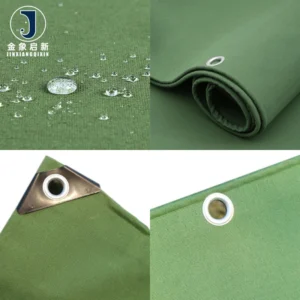
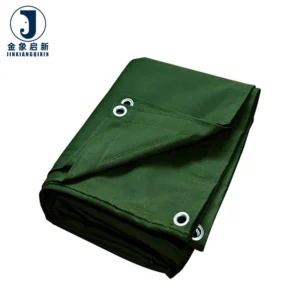
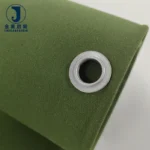
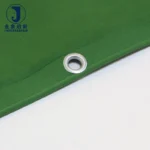
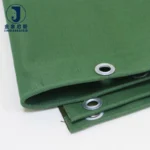
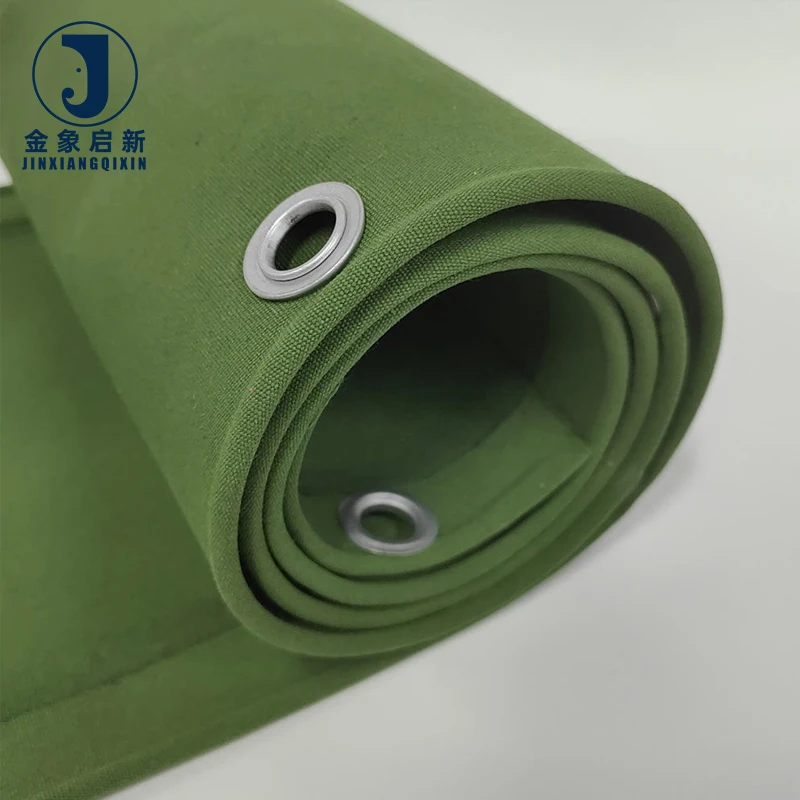
| Edge & Fixing | Rust-proof aluminum eyelets every 1 meter at corners and hem; folding and seams welded and sewn with poly ropes |
| Color | Army Green Camouflage / Custom |
| Key Features | Wear-resistant, corrosion-resistant, tensile-resistant, high- and low-temperature resistant |
| Standards | CE, ISO (specific standards not stated in source) |
Application Suitability
| Application | Exposure & Requirement |
|---|---|
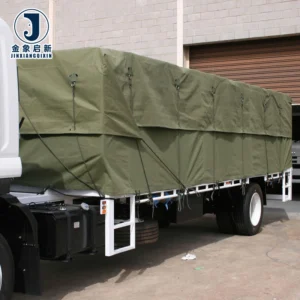
| Truck and trailer load cover | Road abrasion, high-speed wind flex, tie-down stress at eyelets, weather exposure |
| Construction site and equipment cover | Prolonged sun and rain exposure, contact with alkaline dust, mechanical abrasion |
| Tent and awning structure | Repeated folding and unfolding, tensile load at pole contact points, UV exposure |
| Asphalt and hot material cover | High-temperature contact, chemical fumes, heavy physical load |
| Outdoor and camping gear | Ground moisture, variable temperature swings, compact folding requirement |
Why 600gsm Canvas Tarps Fail When the Weight Does Not Match the Weave
A stated weight means nothing if the base fabric density is too low to carry the coating.
Buyers frequently specify a heavy-duty polyester canvas tarpaulin by weight alone, only to find that the material tears at the hem or eyelet under actual tie-down load. The problem is rarely the coating itself; it is the woven base. When 8-12 strands of fine cotton yarn are woven loosely, the 600gsm figure can be achieved by applying a heavier coating rather than using a denser weave. The result is a stiff, heavy fabric that cracks along the warp threads where it flexes most. [NEED_CITE: tensile and tear test methods for coated fabrics per ISO 1421]
Ventilation Duct and Specialist Fabric Construction
Heavy duty canvas tarps intended for technical or industrial ventilation applications must balance airflow requirements with the structural integrity of the coated surface. The polyester cotton industrial textile base in this 600gsm canvas provides a dense woven grid that holds its shape under negative pressure, while the silicone canvas treatment maintains flexibility across temperature variations. For mining or tunnelling ventilation ducts, the fabric must also resist particulate abrasion from suspended dust in the airstream, making the corrosion-resistant and wear-resistant properties of the coating critical to long-term performance.
Reinforcement at High-Stress Junctions
The failure point on any heavy duty polyester canvas tarpaulin is almost always the edge or the eyelet, not the field of the fabric. Rust-proof aluminum holes spaced every 1 meter at corners and along the hem distribute tie-down forces across a wider area of the woven base. Seams that are both welded and sewn with poly ropes create a double-lock construction: the weld seals against water ingress while the sewn rope carries the mechanical load. This combination is essential for truck covers and construction site tarps where the load shifts during transit or wind gusts apply sudden peak forces. [NEED_CITE: weld seam strength testing for coated textile assemblies]
Reading the Spec Sheet: What 600gsm Actually Tells You
The 600gsm weight of this heavy duty canvas tarp is a combination of the base fabric and the silicone coating. The polyester cotton blend with 8-12 strands of fine cotton yarn creates a high-density woven foundation that contributes substantially to tensile and tear strength independently of the coating weight. Coating thickness options of 0.5mm, 0.6mm and 0.7mm allow buyers to select the right balance between abrasion resistance and foldability — a thicker coating resists surface wear on truck covers but adds stiffness, while a thinner coating suits tent and awning fabric that must be repeatedly packed and deployed. The silicone treatment provides the waterproof, corrosion-resistant and high/low-temperature resistant barrier that protects the woven base from moisture and chemical exposure.
The Cost of Specifying Canvas by Weight Alone
When a construction contractor orders canvas tarps based solely on 600gsm without verifying base fabric density, the material may pass the incoming weight check but fail within months at the weld line or eyelet. A loosely woven base coated to reach the target weight produces a material that feels heavy in hand but lacks the tear propagation resistance needed for applications where the fabric flexes or is subjected to point loads. [NEED_CITE: field failure analysis of coated fabric at flex points] The financial consequence is not just the replacement cost of the canvas — it is the cargo damage from a failed truck cover, the project delay from a torn construction tarp, or the safety incident from a ventilation duct that splits at the seam.
Why Source This Heavy Duty Canvas Tarpaulin Here
Nearly 30 years of focused production on coated fabric means process control over coating adhesion is built into every roll. Three full production lines and 36 sets of professional equipment handle bulk roll orders in 2m × 100m format with consistent output. A 10-person R&D team develops custom sizing, coating treatment and finishing samples within days, not weeks. Dedicated QA/QC at every production stage includes weight verification against the stated 600gsm before any roll leaves the facility. Full documentation accompanies every shipment, giving your receiving team the data they need to confirm the material matches the quotation.
Documentation & Verification
- Material specification sheet stating 600gsm, polyester cotton base fabric and silicone coating type
- Test report for UV and flame retardant grades where applicable to your market requirement
- ISO and CE certificates covering production quality management
- Pre-shipment inspection record with weight verification per roll
- Roll packing list with dimensions, colour reference and roll count
- Certificate of origin and customs documentation for international dispatch
Fabrication, Handling & Storage
- Weld silicone-coated seams at temperature settings matched to the 0.5-0.7mm coating thickness
- Install rust-proof aluminum eyelets with backing plates to spread load on 600gsm base
- Store 2m rolls horizontally on pallets to prevent edge creasing and coating cracks
- Clean silicone-treated surface with mild detergent to preserve corrosion-resistant finish
- Allow cold-stored rolls to reach ambient temperature before unrolling to avoid coating damage
- Lay out 2m × 100m rolls flat and cut with sharp blade to prevent fraying of 8-12 strand yarn
Requesting a Quotation for Heavy Duty Canvas Tarps
Provide your target application, exposure conditions and any fire-retardant or compliance grades required by your local regulations. Specify whether you need 2m × 100m rolls or custom cut-to-size finished tarps with eyelet spacing and hem reinforcement details. Include your colour preference and annual volume so the production team can advise on lead time and batch consistency options. Sample development for custom silicone coating weights or finished sizes can be arranged before full production.
Frequently Asked Questions
Q: How can I verify the 600gsm weight on arrival and what documentation supports it?
A: Each roll is accompanied by a material specification sheet stating the target GSM, base fabric type and coating weight. A 100% pre-shipment inspection record is included, showing weight verification per roll. On arrival, you can cut a measured sample from the roll edge and weigh it on a calibrated scale to confirm the stated 600gsm matches the physical material received.
Q: When should I specify woven polyester canvas instead of PVC-coated tarpaulin?
A: Woven polyester canvas with silicone treatment is preferred where breathability, high-temperature contact or repeated folding is required — such as asphalt covers, tent fabric or engine hoods. PVC-coated tarpaulin is better suited to applications demanding a fully sealed, waterproof surface with heat-welded seams, such as truck side curtains or pond liners. Your application’s flex cycle and temperature range determine the correct choice.
Q: What custom sizing and reinforcement options are available for truck and equipment covers?
A: Finished tarps can be cut to your exact dimensions with rust-proof aluminum eyelets spaced to your specification, including closer spacing at high-stress corners. Hems are folded, welded and sewn with poly ropes for double reinforcement. Custom colour, including army green camouflage or matched brand colours, is available. Sample approval before full production ensures the fit and finish meet your requirements.
Q: How is batch colour consistency controlled across multiple rolls in the same order?
A: All rolls within a single order are produced from the same coating batch with colour reference documented on the material specification sheet. The QA team checks colour consistency between rolls during pre-shipment inspection. For orders requiring strict colour matching across shipments, a signed colour standard is kept on file and referenced for every subsequent production run.