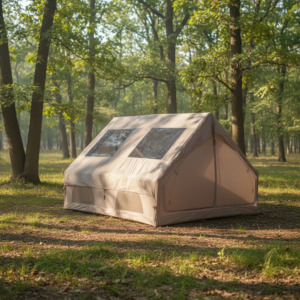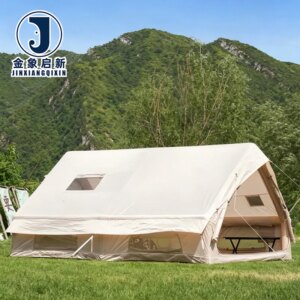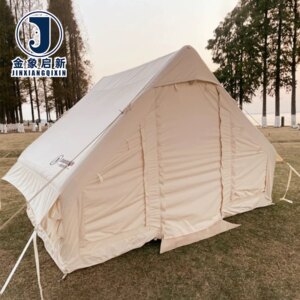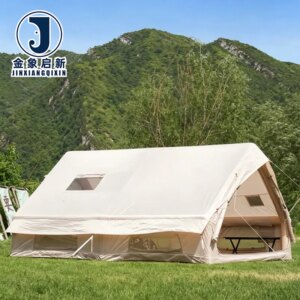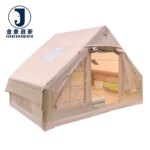
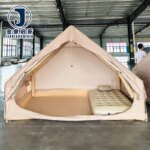
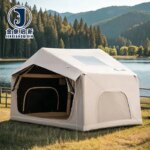
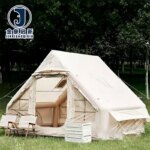
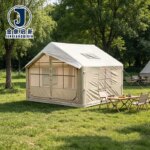
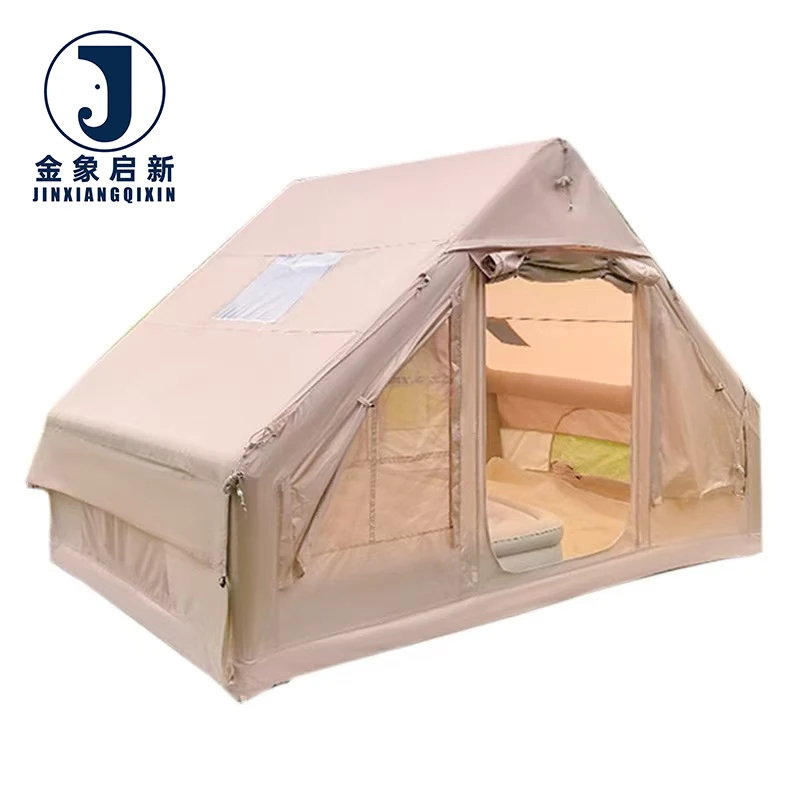
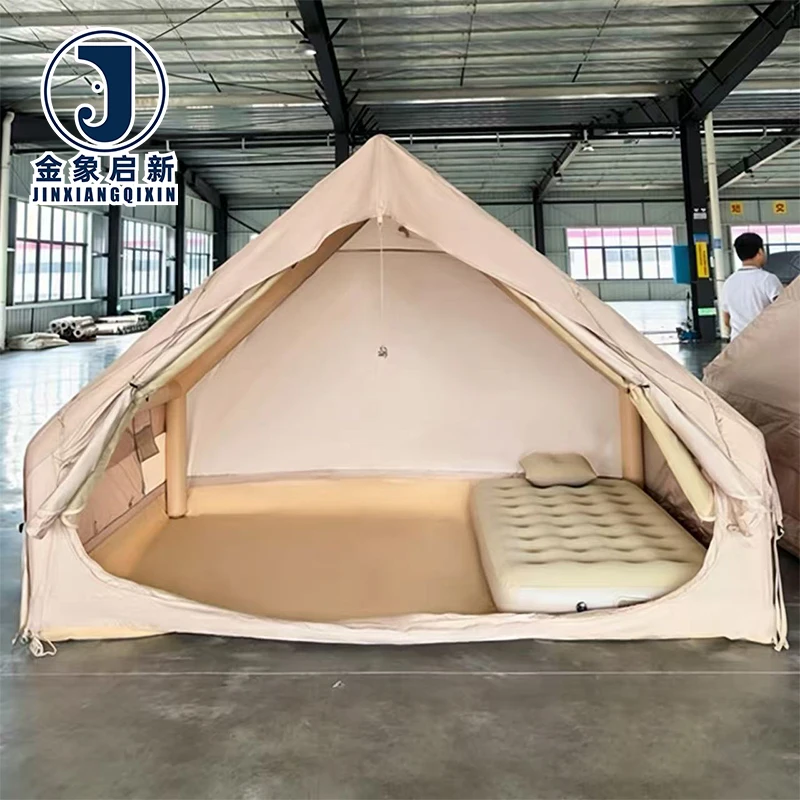
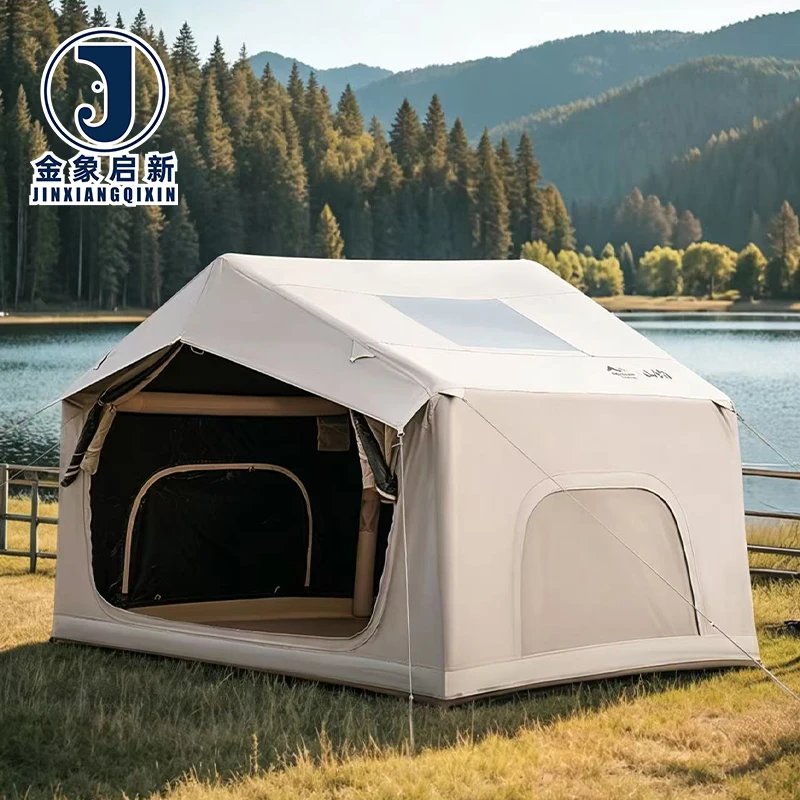
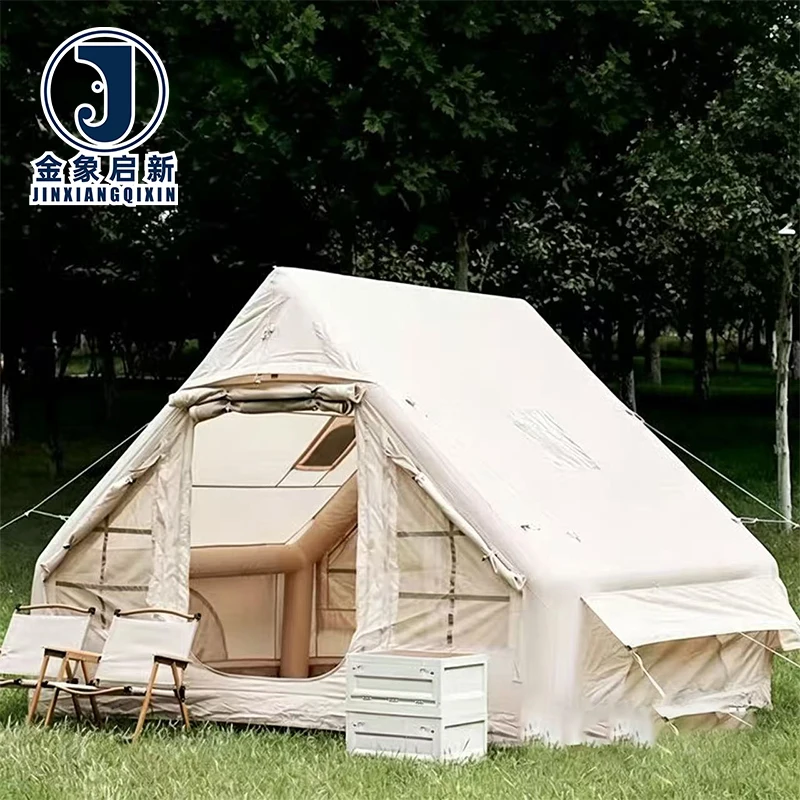
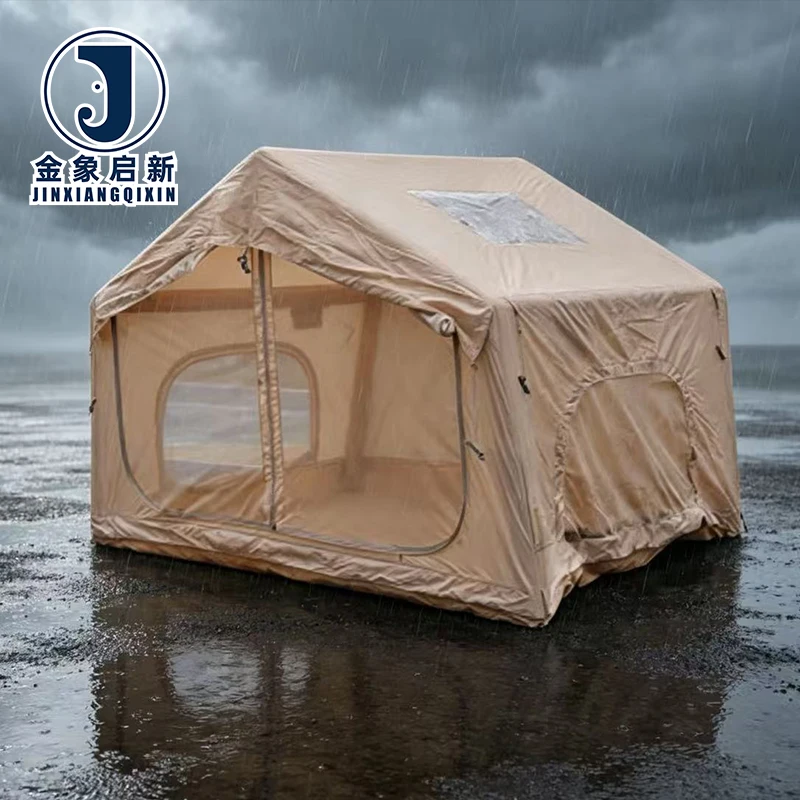
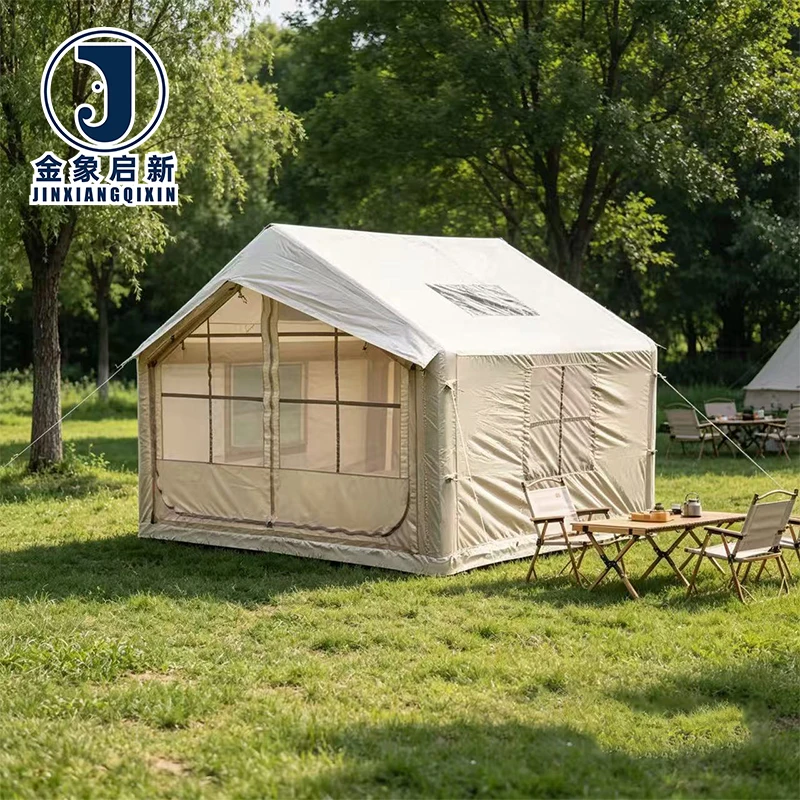
Batch-Verified Coating Weight — Every roll undergoes full-process inspection to confirm the PVC coating mass matches the specification before it reaches your fabrication floor.
Technical Specifications
| Parameter | Value |
|---|---|
| Product Type | Inflatable Tent |
| Core Material | PVC coated fabric |
| Waterproof Rating | ≥10,000mm water column |
| UV Resistance | 4000 hours accelerated aging |
| Tear Strength | ≥300N (test basis not stated in source) |
| Deployment Mechanism | Automatic opening, engineered for 500+ deployment cycles |
| Design Configuration | Four-season, single layer construction |
| Custom Sizing | Up to 5m length |
| Color Matching | Pantone codes |
| Customization Options | Logo printing, modified opening mechanisms, OEM & ODM |
| Standards | ISO9001, ISO14001, ISO45001, CE |
Application Suitability
| Application | Exposure & Requirement |
|---|---|
| Temporary site offices at construction projects | Continuous UV exposure, wind loading, daily foot traffic abrasion, rapid deployment and strike cycles |
| Equipment storage shelters for logistics operations | Permanent moisture contact, dust ingress prevention, structural stability under variable wind conditions |
| Mobile command posts for industrial events | Frequent inflation and deflation cycles, branding visibility requirements, multi-site transport handling |
| Emergency outdoor deployment shelters | Unpredictable weather exposure, minimal setup time demands, reliable waterproof integrity |
Why Inflatable Structure Fabric Certification Determines Site Access
Without verifiable fire-retardant and anti-static test documentation, inflatable structures fail compliance audits before they are even inflated on site.
Mining and tunnelling contractors regularly face work stoppages when ventilation-adjacent inflatable shelters arrive without the fire classification the site safety officer requires. The fabric may perform adequately in shelter conditions, but a missing certificate means the structure cannot be deployed. [NEED_CITE: fire classification requirements for temporary structures in mining environments] This gap between material capability and paperwork availability causes project delays that cost more than the fabric itself.
Ventilation-Adjacent Shelter Compliance in Controlled Environments
Inflatable tents positioned near ventilation ductwork in mining, aviation maintenance, or tunnelling operations must meet the same fire-retardant and anti-static standards as the ducting itself. The inflatable structure fabric certified for these environments carries documentation that traces each batch to its test results. Confirm the specific fire classification your site safety plan requires before specifying the material grade.
Deployment Cycle Durability Under Industrial Frequency
Consumer-grade inflatable tents are designed for seasonal camping trips. Industrial applications demand structures that deploy and strike repeatedly across project phases. The automatic opening mechanism in this range is engineered for 500+ deployment cycles, addressing the maintenance burden that high-frequency commercial use imposes on quick-deploy shelters. [NEED_CITE: fatigue testing standards for inflatable structure deployment mechanisms]
How Coating Weight and Base Fabric Interact to Define Real Strength
Tear strength in PVC coated fabric is not a function of coating thickness alone. The base fabric denier and weave density establish the structural skeleton, while the coating adds mass, waterproof integrity, and surface protection. A ≥300N tear strength reading reflects the combined behaviour of both layers under load. Specifying a heavier coating over a lighter base fabric can increase GSM without improving tear resistance — the coating cracks and delaminates before the base yarns reach their breaking point. The waterproof rating of ≥10,000mm water column confirms coating continuity and adhesion quality across the fabric surface, which directly affects how the material behaves when an inflatable structure is pressurised and subjected to wind loading.
The Hidden Cost of Specifying Inflatable Fabric Without Batch Documentation
When inflatable structure fabric arrives without batch-specific test certificates, the buyer faces a difficult choice: deploy the material and accept the compliance risk, or hold the shipment and delay the project. Colour variation between production batches compounds this problem — two shelters inflated side by side at an industrial event display visible shade differences that undermine professional presentation. [NEED_CITE: batch-to-batch colour consistency standards for coated technical textiles] Weld seam integrity also varies when coating formulation shifts between batches without documentation, causing seams to fail under inflation pressure before the fabric body reaches its rated performance.
Why Fabrication Partners Choose This Production Facility
Three full production lines and 36 sets of professional processing equipment support consistent output volume for inflatable structure fabric certified to ISO9001, ISO14001, ISO45001, and CE standards. The 10-person R&D team handles material selection, custom sizing up to 5m length, Pantone colour matching, and pattern printing — developing samples within days rather than weeks for urgent project timelines. Dedicated QA and QC staff conduct a seven-stage inspection covering raw material tensile testing, cut precision, seam integrity, pressure retention analysis, hardware checks, dimension measurement, and packaging compliance. Every batch ships with documentation that ties the physical material to its test results, eliminating the gap between quoted specification and delivered product.
Documentation & Verification
- Material specification sheet confirming PVC coating weight and base fabric construction per batch
- Batch-specific quality certificate detailing waterproof, UV, and tear strength test results
- ISO9001, ISO14001, ISO45001, and CE certification documents included with each shipment
- Pre-shipment inspection record covering seven-stage quality verification process
- Technical documentation available in English, Spanish, and French for global site compliance
Fabrication, Handling & Storage
- Heat welding parameters must match the PVC coating thickness to prevent seam delamination under inflation pressure
- Store rolls flat on pallets to avoid permanent creasing that compromises waterproof coating continuity
- Inflate structures gradually in cold conditions to prevent PVC stiffening and stress cracking at fold lines
- Use mild detergent for cleaning to preserve the UV-resistant treatment across repeated deployment cycles
- Repair field punctures with compatible PVC adhesive patches applied to clean, dry fabric surfaces
- Plan cutting layouts around the maximum 5m custom sizing dimension to minimise material waste
What We Need to Quote Your Inflatable Structure Project
Provide the deployment environment and any fire-retardant or anti-static classification your site safety plan mandates. Confirm whether you require finished inflatable structures with automatic opening mechanisms or fabric rolls for your own fabrication. Include target Pantone colours, logo artwork if applicable, and estimated annual volume so we can confirm lead time and sample availability.
Frequently Asked Questions
Q: What fire-retardant or anti-static certifications are available for inflatable structure fabric?
A: The fabric range supports fire-retardant and anti-static grades suitable for ventilation-adjacent applications in mining, aviation, and construction environments. The specific certification available depends on the grade selected — confirm the fire classification your site safety plan requires, and we will match the appropriate material grade with its corresponding test documentation.
Q: How is UV resistance tested and what is the accelerated aging basis?
A: UV resistance is validated through 4000 hours of accelerated aging testing. This protocol simulates extended outdoor exposure to confirm the PVC coating and base fabric maintain structural integrity and colour stability. Batch-specific test results are included in the quality certificate that ships with each order for your compliance records.
Q: What custom sizing and Pantone colour matching options are available?
A: Custom sizing extends up to 5m length, with Pantone code colour matching and logo printing available for branding requirements. The R&D team develops digital prototypes and physical samples before production, allowing you to verify dimensions, colour accuracy, and print quality before committing to bulk manufacturing.
Q: How does the seven-stage inspection process ensure batch-to-batch consistency?
A: Every production batch passes through raw material testing, cut precision verification, seam integrity checks, pressure retention analysis, hardware inspection, dimension measurement, and packaging compliance review. This systematic process catches coating weight deviations, colour drift, and seam weaknesses before shipment, ensuring each batch matches the quoted specification.
Q: What documentation ships with each order for site compliance audits?
A: Each shipment includes a batch-specific quality certificate with waterproof, UV, and tear strength test results, ISO and CE certification documents, a material specification sheet, and a pre-shipment inspection record. Technical documentation is available in English, Spanish, and French to support compliance audits across international project sites.