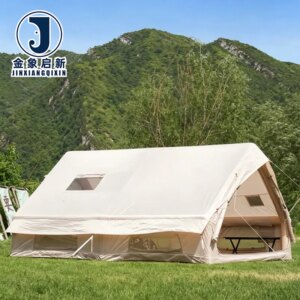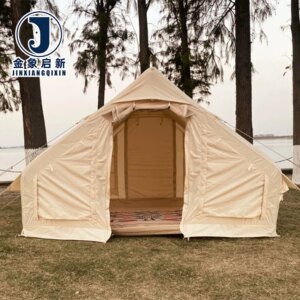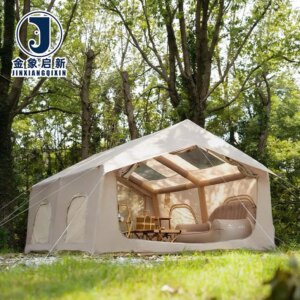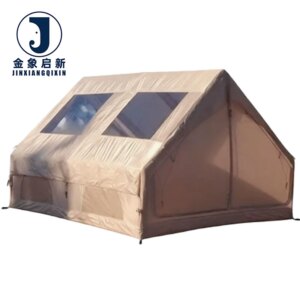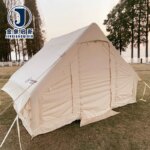
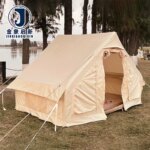
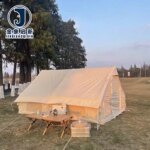
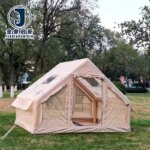
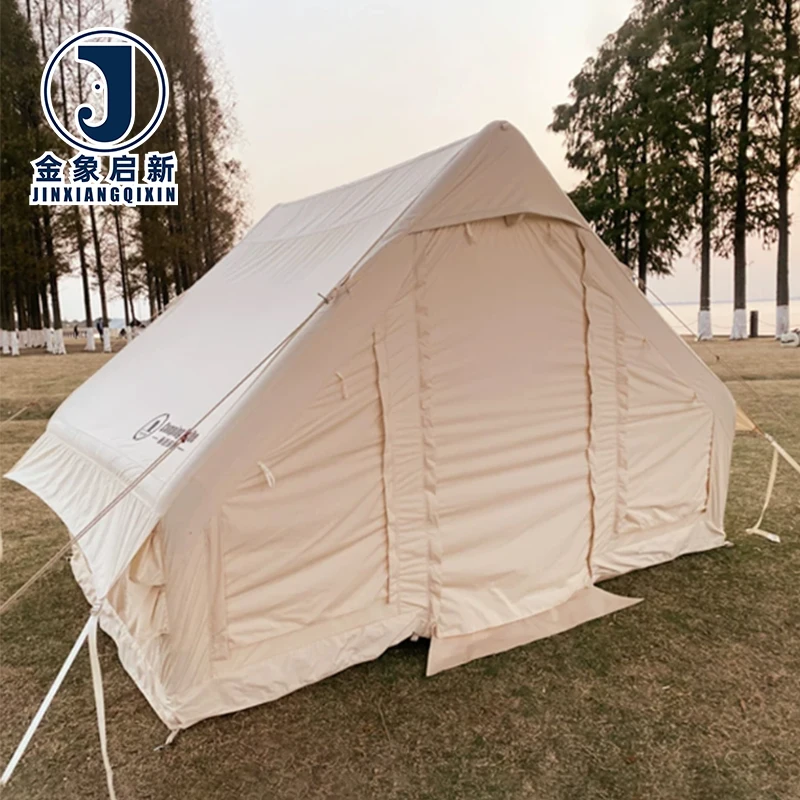
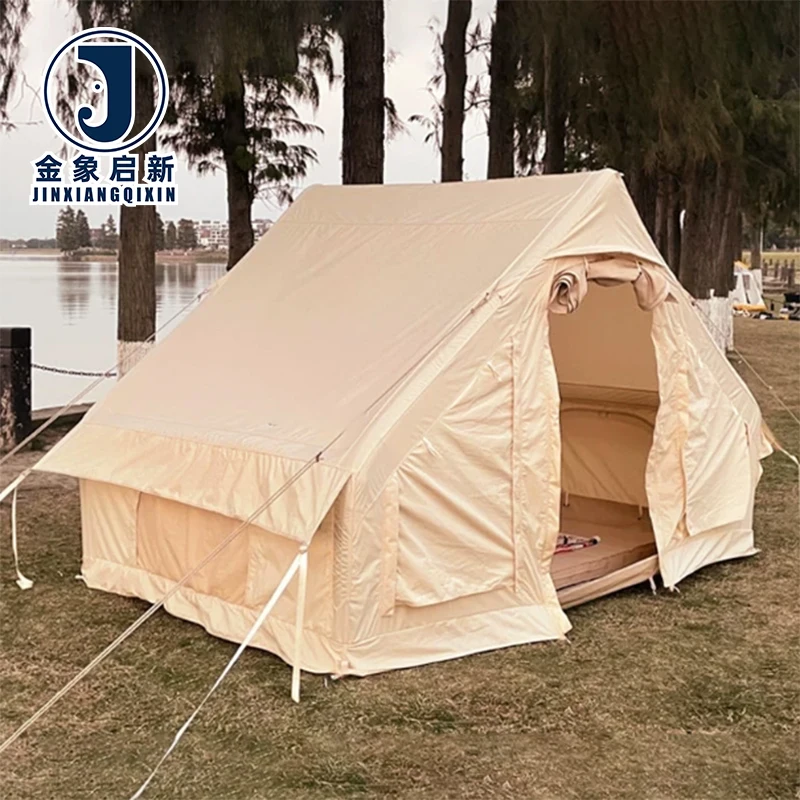
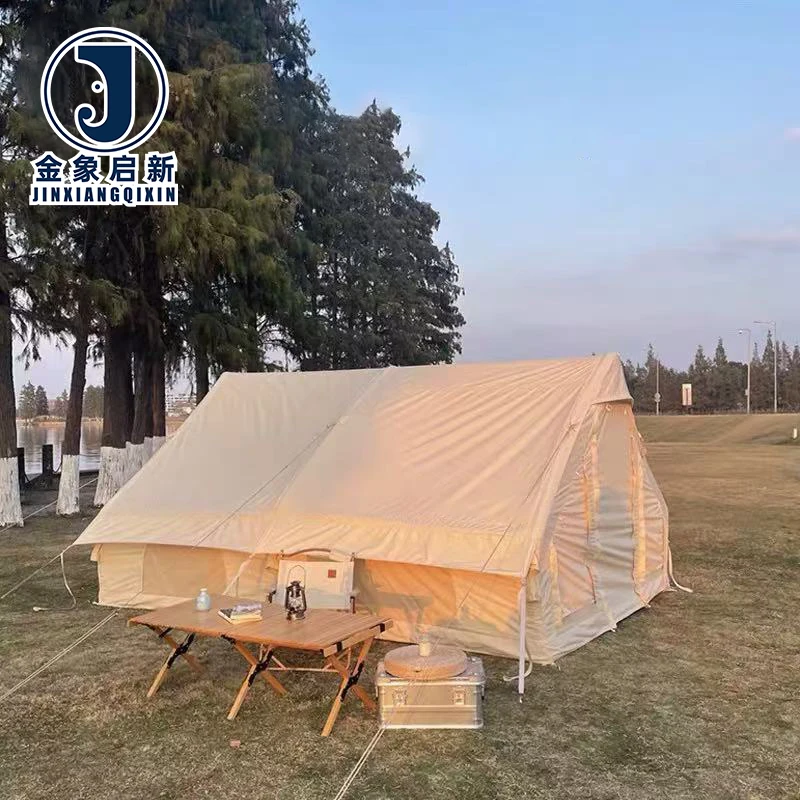
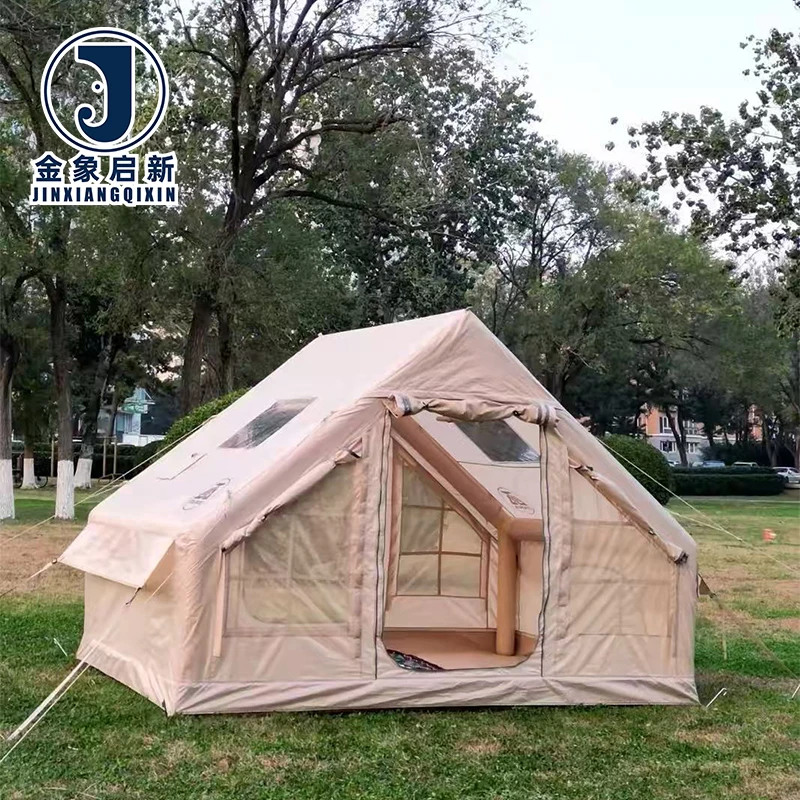
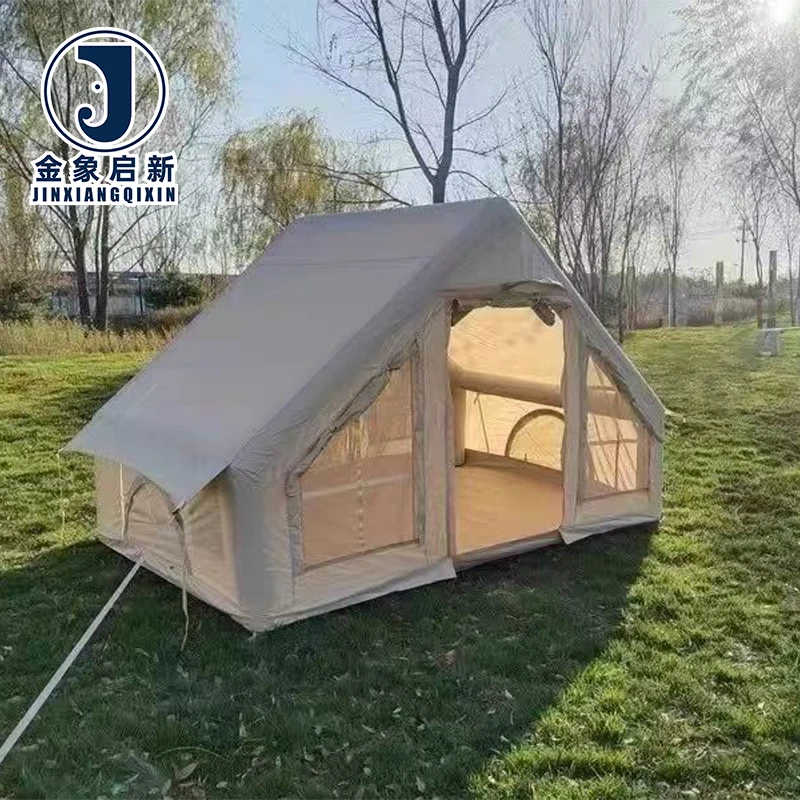
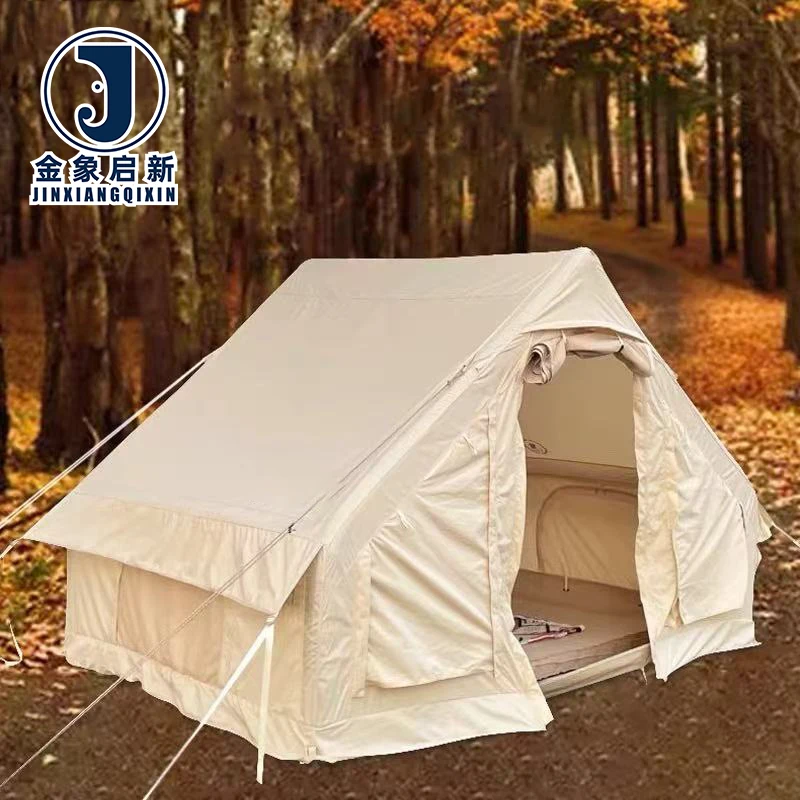
Certified inflatable tent fabric — developed with verified fire-retardant and anti-static grades for mining and tunnelling contractors who cannot afford a compliance gap on site.
Technical Specifications
| Parameter | Value |
|---|---|
| Product Type | Inflatable Tent Fabric |
| Core Material | UV Water-resistant PVC Fabric |
| Product Form | Inflatable structure with single layer design |
| Key Performance | Waterproof, UV-resistant, Tear-resistant |
| Tear Strength | >300N warp and weft (test basis not stated) |
| UV Treatment | 90% UV protection after 500 hours accelerated weathering |
| Wind Load Resistance | up to 12m/s |
| Airtightness | Maintains pressure for 72 hours |
| Fabric Thickness Range | 0.3mm to 0.8mm |
| Color Options | Khaki (custom Pantone matches available) |
| Standards | ISO 9001, ISO 14001, ISO 45001, CE |
Application Suitability
| Application | Exposure & Requirement |
|---|---|
| Mining and tunnelling temporary shelters | Underground moisture, dust, mechanical impact, strict fire safety compliance |
| Aviation maintenance inflatable enclosures | Constant internal pressure, chemical exposure from fluids, wind load on apron |
| Specialist event membrane structures | Year-round UV exposure, crowd safety fire codes, rapid deployment and strike |
| Construction site command centres | Heavy weather, site vehicle proximity, extended outdoor standing |
Why Inflatable Tent Fabric Fire Retardant Certification Closes the Compliance Gap Before Dispatch
Documentation must match the site safety plan, or the structure never leaves the ground.
Inflatable tent fabric fire retardant / anti-static / certified specifications are frequently requested but rarely backed by verifiable test reports that align with local mining or aviation safety codes. When a membrane structure arrives on a tunnelling project without the correct fire classification documentation, the entire deployment halts [NEED_CITE: fire safety compliance for temporary membrane structures in underground construction]. The cost is not just the delayed project timeline; it is the idle crew, the standing equipment rental, and the missed completion milestone. We supply the test reports and certification copies with the shipment so the site safety officer can clear the structure before inflation begins.
Engineered for Constant Internal Pressure
Inflatable tent fabric fire retardant / anti-static / certified solutions must hold air pressure continuously, as a drop in internal pressure leads directly to structural sag and potential collapse. Our single-layer inflatable structure fabric is tested to maintain inflation pressure for 72 hours without monitoring or top-up. This airtightness is verified on the seam lines where thermal welding creates the air beam channels. For mining and tunnelling shelters that operate around the clock, this tested retention period provides a substantial buffer between routine pressure checks.
Meeting the Fire Codes That Gate Your Project
The difference between a structure that passes site inspection and one that gets rejected usually comes down to a single fire classification document. Our inflatable tent fabric fire retardant grades are developed to align with the compliance frameworks required in aviation hangars, underground mining zones, and public event spaces [NEED_CITE: fire classification standards for temporary inflatable structures per regional building codes]. The R&D team works from your target market’s specific fire code backward to the coating formulation, rather than applying a generic treatment and hoping it passes. Anti-static grades are available for environments where airborne combustible dust presents an ignition risk.
How Coating Weight and Base Fabric Interact in Inflatable Structures
The relationship between PVC coating weight and base fabric denier determines how an inflatable membrane behaves under wind load and internal pressure simultaneously. A heavier coating on a low-denier base fabric may resist puncture but will crack at the fold points during packing and transport. Conversely, a high-denier base with insufficient coating weight leaves the yarn structure exposed to moisture ingress and UV degradation. The tear strength exceeding 300N in both warp and weft directions provides a baseline for structural integrity when the membrane flexes under a 12m/s wind load [NEED_CITE: tear strength test methods for coated technical textiles]. The single-layer design reduces overall membrane weight, which directly lowers the inflation pressure required to achieve full structural rigidity. Thermal welding behaviour changes across the 0.3mm to 0.8mm thickness range, so weld temperature and dwell time must be set for the specific gauge being fabricated.
The Hidden Cost of Specifying Without Test Data
A fire-retardant claim on a quotation means nothing when the site safety officer asks for the test certificate and none exists. We have seen inflatable structures turned away at mine site gates because the fabric supplier provided a generic material safety data sheet instead of a fire classification report specific to the batch shipped. Colour variation between rolls in the same order becomes highly visible once the membrane panels are welded side by side on an event structure. Welded seams failing before the fabric body tears is another consequence of incorrect thermal welding parameters for the specific coating thickness. These failures do not show up in the sample approval stage; they appear under field conditions where the structure is fully inflated and loaded.
Why Specialist Structure Contractors Source Here
The 10-person R&D team develops inflatable membrane solutions from your site compliance requirements backward to the coating formulation, not from a stock catalogue forward. Three full production lines and 36 sets of professional equipment provide the capacity to fulfil large-volume orders for multi-site deployment without splitting production across different machines. Every roll undergoes a 12-point inspection before dispatch, covering coating adhesion, seam integrity, and airtightness verification. Samples for custom thickness, Pantone colour, and structural dimensions are developed within 7 business days so you can run weld tests and pressure trials before committing to the full order. The 98% on-time delivery rate means your site mobilisation schedule holds.
Documentation & Verification
- Material specification sheet stating base fabric, PVC coating type, and treatment grade with matching test report
- Fire-retardant and anti-static certification copies aligned to site compliance requirements
- Pre-shipment inspection record covering 12-point QA/QC including airtightness and seam integrity
- Certificate of origin and MSDS supporting customs clearance and internal compliance reviews
- Roll packing list with batch traceability for multi-site deployment tracking
Fabrication, Handling & Storage
- Set thermal weld temperature and dwell time to match the specific 0.3mm to 0.8mm fabric thickness ordered
- Store rolls horizontally on padded racks to prevent permanent creasing in the single-layer PVC membrane
- Use compatible PVC-based repair patches and solvent cement matching the coating chemistry for field repairs
- Allow membrane to reach ambient temperature before inflation when deploying in cold conditions to avoid coating brittleness
- Cut patterns with allowance for thermal weld seam width to maintain structural airtightness at every joint
What We Need to Quote Your Inflatable Structure Project
Send us the target market and specific fire or anti-static compliance codes your site requires, along with the structural dimensions and expected wind load conditions. Confirm whether you need rolls for your own fabrication line or finished inflatable panels with welded seams and valve fittings. If custom Pantone colour or printed branding is part of the project brief, include the colour references and artwork files so the R&D team can develop a matched sample for your approval before production begins.
Frequently Asked Questions
Q: Which fire-retardant grades are available and how do they map to our local building codes?
A: Fire-retardant grades are formulated to align with specific regional compliance frameworks. Provide your target market and the applicable fire classification standard, and the R&D team will confirm the matching grade and supply the corresponding test report with your shipment.
Q: How does anti-static treatment work for mining and tunnelling applications?
A: Anti-static grades are developed for environments where combustible dust or gas presents an ignition risk. The treatment reduces surface resistivity to prevent static charge accumulation on the membrane. Confirm the specific resistivity threshold your site safety plan requires so we can match the formulation.
Q: What is the basis for the UV resistance claim on this inflatable tent fabric?
A: The fabric maintains 90% UV protection after 500 hours of accelerated weathering testing. This data provides a controlled comparison baseline. For projected outdoor service life in your specific climate zone, request the detailed weathering report and cross-reference with your local UV index data.
Q: Can we order custom dimensions and what is the minimum for a production run?
A: Custom structural dimensions, fabric thickness between 0.3mm and 0.8mm, and Pantone colour matches are all available through OEM and ODM channels. Sample development takes 7 business days. Contact us with your structural drawings and volume requirement to confirm the production minimum for your specification.
Q: What should fabricators know about thermal welding this single-layer PVC membrane?
A: Weld temperature, pressure, and dwell time must be calibrated to the specific fabric thickness in the 0.3mm to 0.8mm range. Incorrect parameters cause seam failure before the fabric body reaches its tear limit. Request the recommended welding parameters for your ordered gauge before starting production.