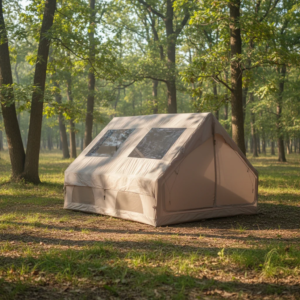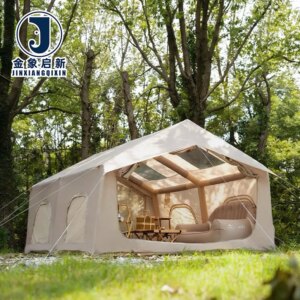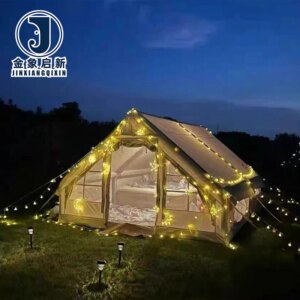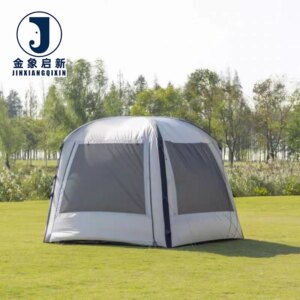
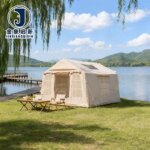

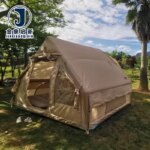
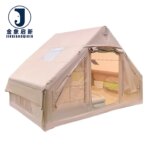
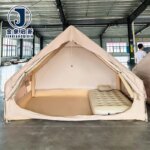
Proven Process Control — nearly 30 years of coating expertise applied to every batch of inflatable tent fabric we produce, verified by dedicated QA staff before dispatch.
Technical Specifications
| Parameter | Value |
|---|---|
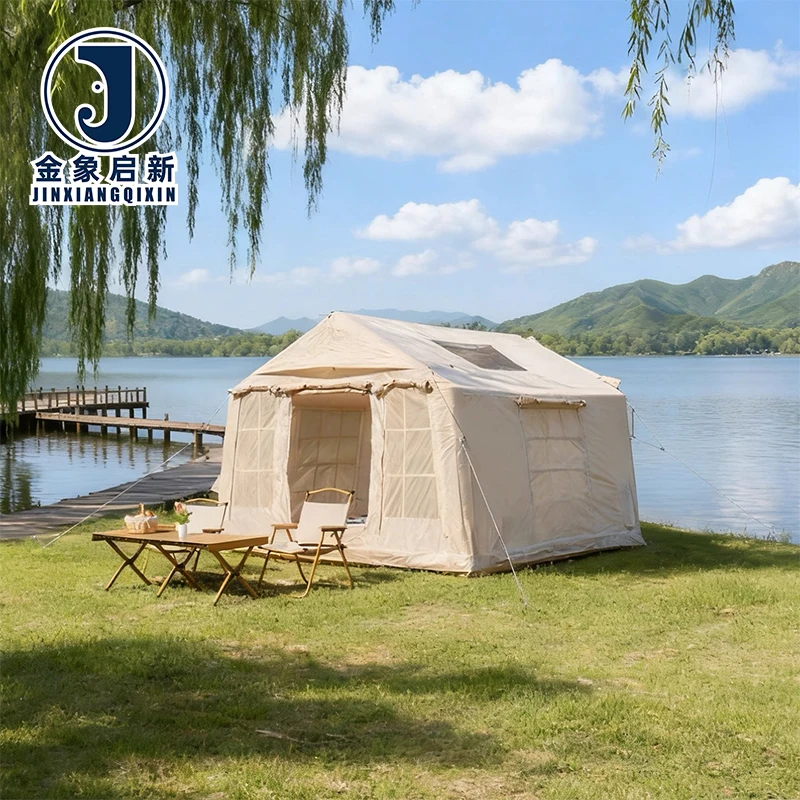
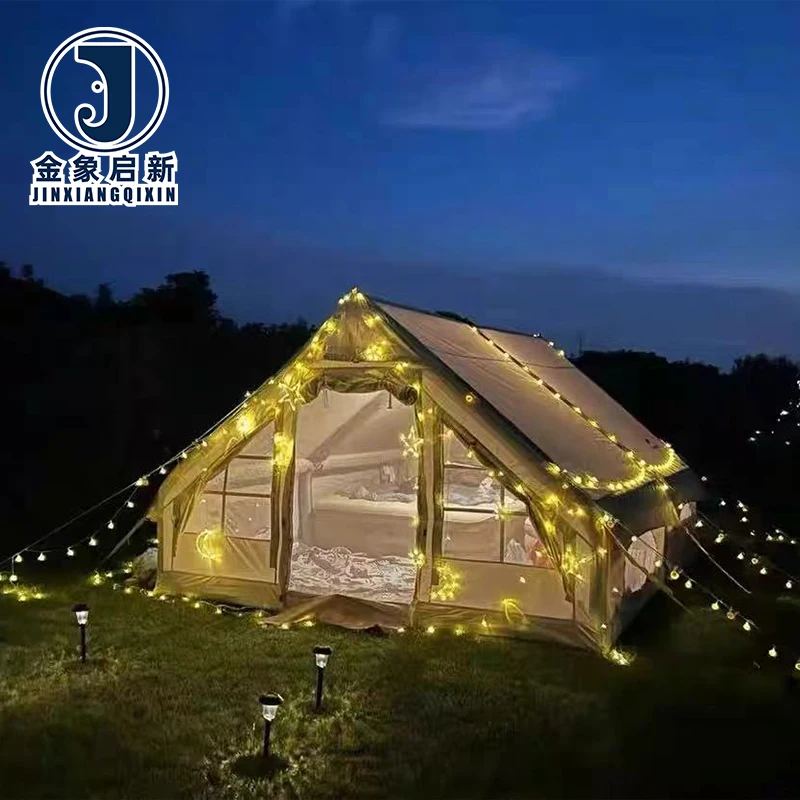
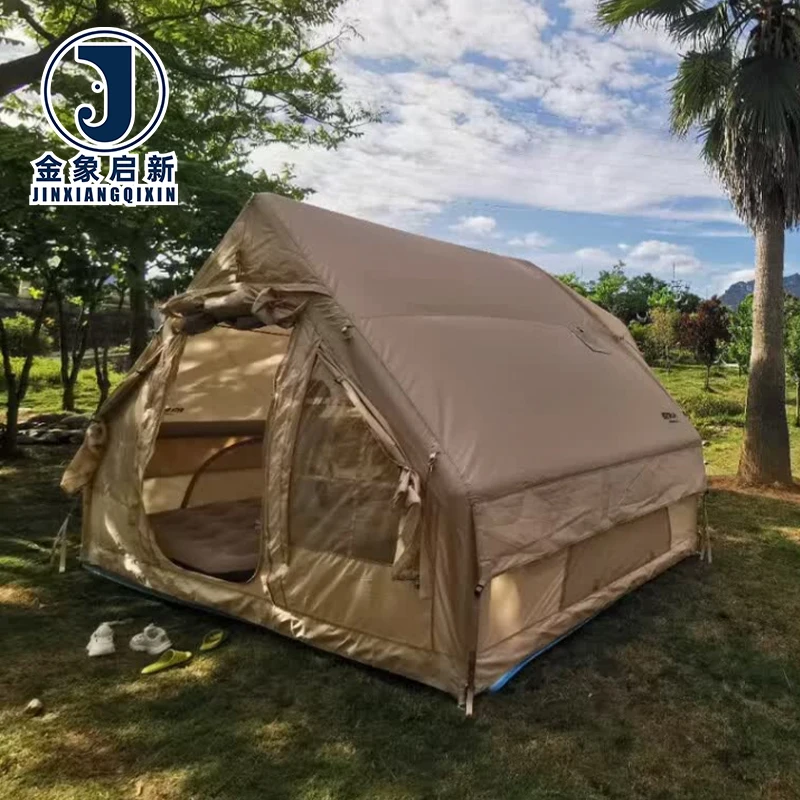
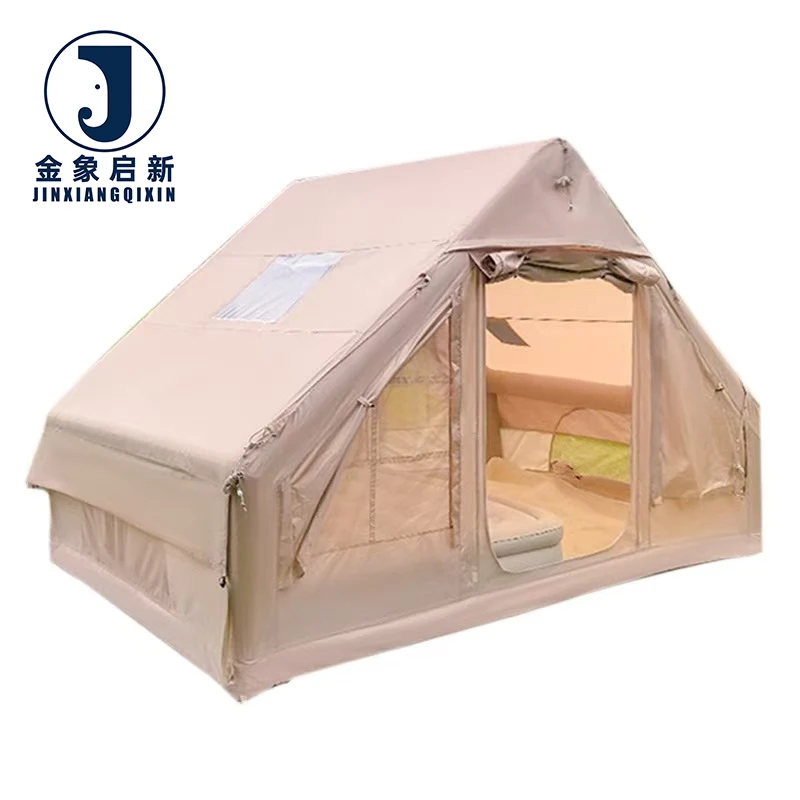
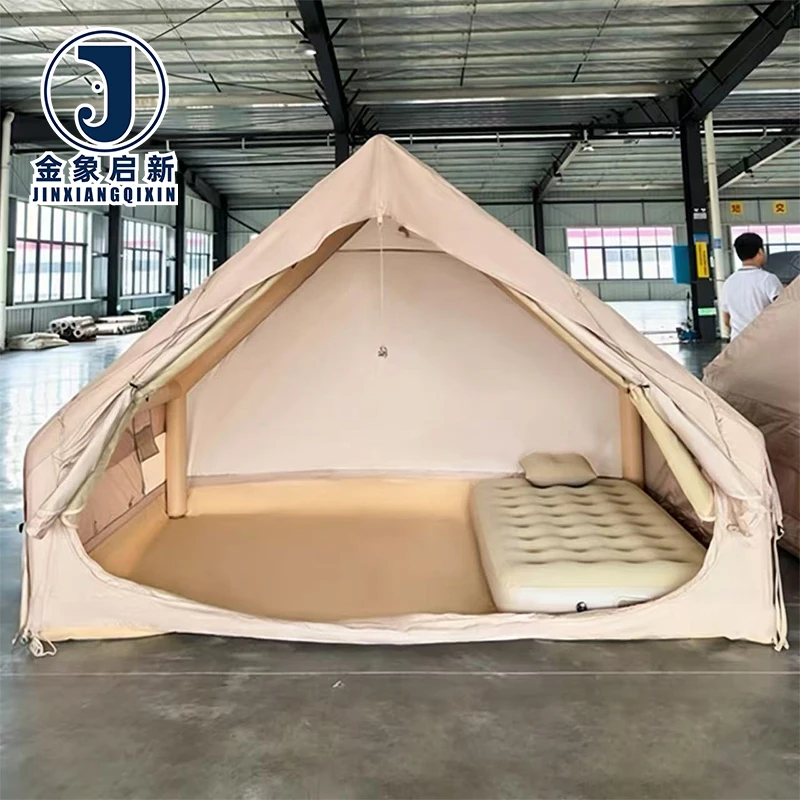
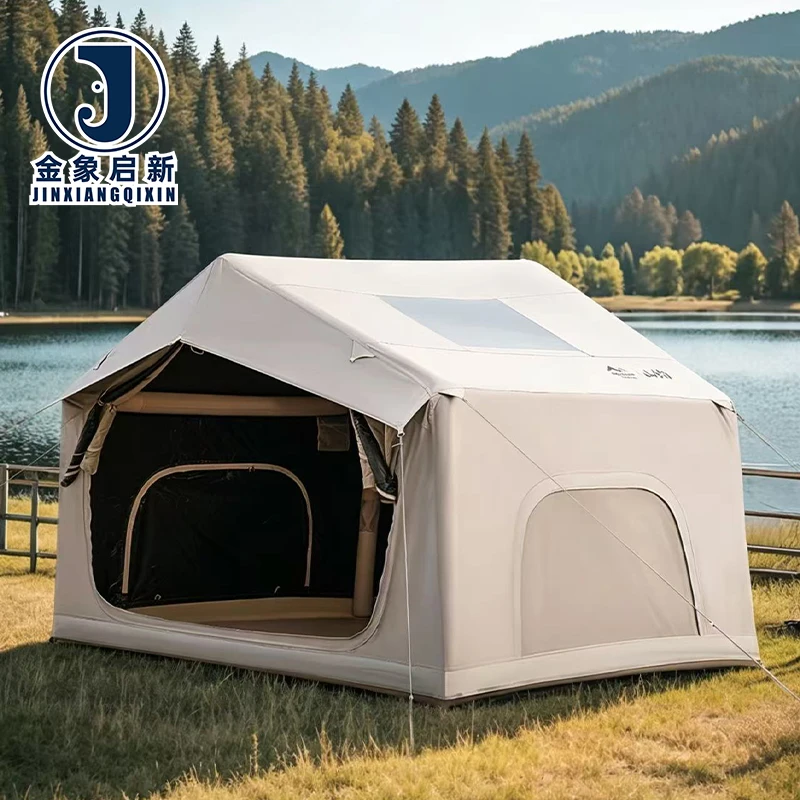
| Product Type | Inflatable Tent |
| Core Material | PVC tarpaulin |
| Capacity | 6-8 Person |
| Construction | Single layer |
| Season Rating | Four-season |
| Opening Mechanism | Quick automatic opening (inflatable) |
| Key Features | Waterproof, UV-resistant, tear-resistant, fire-retardant, anti-static |
| Customization Service | OEM & ODM, sample customization, pattern printing |
| Standards | ISO9001, ISO14001, ISO45001, CE |
Note: Fire-retardant and anti-static grades available — confirm the specific certification required for your market and project.
Application Suitability
| Application | Exposure & Requirement |
|---|---|
| Event and exhibition inflatable domes | High foot traffic, rapid inflation cycles, UV exposure during multi-day outdoor use |
| Mining and tunnelling ventilation-adjacent shelters | Dust-laden air, compliance documentation for fire-retardant and anti-static performance |
| Emergency and disaster relief deployment shelters | All-weather exposure, rapid deployment requirement, storage under varied temperature conditions |
| Specialist camping product lines (OEM/ODM) | Year-round seasonal inventory, brand-consistent colour matching, traceable batch certification |
| Aviation ground-support inflatable structures | Regulatory compliance, static discharge control, material traceability for audit |
Why Certified Fire-Retardant Inflatable Tent Fabric Matters More Than a Generic "FR" Label
Many inflatable structure projects stall at the inspection stage because the fabric supplier provided a generic flame-retardant claim without the test report the local authority actually requires. Our Inflatable tent fabric fire retardant anti-static certified supply chain delivers documentation that aligns with the grade your site demands — not a blanket statement on a data sheet.
Specialist structure contractors frequently encounter situations where the material arrives, the installation proceeds, and only then does the site safety officer request the specific test standard. When the certificate does not match the jurisdiction’s accepted framework, the entire structure must come down. That rework cost dwarfs the material price difference [NEED_CITE: fire classification standards for temporary structures vary by jurisdiction]. Confirming the fire-retardant grade and anti-static standard before production begins is the single most effective way to avoid project delays on inflatable and membrane structures.
Meeting Site Compliance Without Last-Minute Surprises
Mining and aviation sites enforce strict material standards, and inflatable structures are no exception. The Inflatable tent fabric fire retardant anti-static certified documentation we supply traces every roll to its production batch, so when an auditor asks for the fire classification report, you can produce it without calling the factory. Our 10-person R&D team reviews your project specification before sampling, flagging any mismatch between the requested treatment and the applicable standard.
From Material Selection to Finished Inflatable Shell
Inflatable structures demand airtight welds and dimensional stability under positive pressure. Our three full production lines and 36 sets of professional processing equipment allow us to control the coating weight, adhesion, and seam behaviour from base fabric through to finished product. When you source Inflatable tent fabric fire retardant anti-static certified material from a facility that controls every stage, you reduce the variable that causes most field failures — inconsistent coating thickness at the weld zone [NEED_CITE: coating adhesion and peel strength test methods for PVC-coated fabrics].
Understanding What the Specification Sheet Actually Tells You
The PVC tarpaulin core material used in this four-season inflatable tent provides waterproof and tear-resistant performance as a baseline. However, fire-retardant and anti-static properties depend on specific chemical formulations added during coating — they are not inherent to PVC itself. The single-layer construction must balance airtightness against total weight, since heavier fabric increases inflation pressure requirements and pack weight. UV-resistant treatment is applied at the coating stage; its effectiveness depends on the concentration and type of stabiliser used. We recommend requesting the test basis for any UV claim so you can match it to the expected service environment. Waterproof performance in inflatable structures also depends on weld integrity, not just the fabric surface — a coated fabric is only as waterproof as its seams.
What Happens When Inflatable Fabric Specs Are Chosen on Price Alone
A tent shell that passes the initial inflation test but fails after a season of thermal cycling reveals the gap between minimum viable specification and field-ready material. Coating weight that falls below what the base fabric demands leads to pinhole leaks along fold lines. Anti-static treatment applied as a surface dressing rather than integrated into the coating formulation will diminish after cleaning or abrasion, leaving the structure non-compliant at the next site audit [NEED_CITE: anti-static surface resistance measurement methods for coated technical textiles]. Fire-retardant grades that satisfy one market’s building code may not satisfy another’s temporary structure regulation, and discovering this after the fabric is cut and welded means starting over.
Why Specialist Contractors Source Their Inflatable Fabric Here
Our QA and QC staff inspect every production stage, not just the final roll, so coating weight and treatment distribution are verified before the fabric reaches the welding line. The 10-person R&D team develops samples within days, allowing you to test inflation behaviour and weld parameters before committing to a production run. Three full production lines mean we can schedule custom colour and print runs without delaying standard stock orders, keeping your project timeline intact. ISO9001, ISO14001, ISO45001 and CE frameworks govern our process, and every shipment carries the documentation to prove it. We have supplied inflatable and membrane structure fabric to contractors in over 20 countries, adapting formulations to meet local fire and safety codes.
Documentation & Verification
- Material specification sheet listing base fabric, coating type, and treatment formulation per order
- Fire-retardant test report matched to the grade confirmed during the quotation stage
- Anti-static surface resistance data included where the project specification requires it
- Pre-shipment inspection record with pressure and airtightness test data per batch
- ISO9001, ISO14001, ISO45001 and CE certificates included with every dispatch
- Batch traceability linking roll number to coating line and production date
Fabrication, Handling & Storage
- Heat-weld parameters must match the PVC coating formulation — request our recommended temperature and dwell time for this tarpaulin grade
- Store rolls upright on pallets to prevent flat-spot deformation of the coated PVC surface
- Inflate test each welded panel before final assembly to detect pinhole leaks early
- Use PVC-compatible cleaners only; solvent-based products may degrade the fire-retardant coating layer
- Allow fabric to acclimatise before welding in cold conditions to ensure consistent seam peel strength
- Pattern printing requires a surface compatibility check — request a print adhesion sample before full production
Before You Request a Quote
Tell us the deployment environment, the fire-retardant grade or anti-static standard your site requires, and the annual volume you anticipate. If you need custom colour matching or pattern printing, share the reference file or Pantone code. Specify whether you need roll stock for your own welding line or finished inflatable tent shells, and we will structure the quotation accordingly.
Frequently Asked Questions
Q: Which fire-retardant grades can be supplied for inflatable tent fabric?
A: We formulate fire-retardant treatments to match specific market requirements. During the quotation stage, our R&D team reviews your target jurisdiction’s accepted test standards and confirms the grade before sampling. A test report is provided with the shipment, linked to the production batch for traceability.
Q: How is anti-static performance verified before dispatch?
A: Anti-static surface resistance is measured during our in-process quality inspection. We provide the measurement data with the pre-shipment inspection record. If your project requires certification to a specific mining or aviation standard, confirm the reference during inquiry so we can arrange third-party testing.
Q: Can you match colour consistently across multiple inflatable tent orders?
A: Colour matching is controlled through our coating line with dedicated QA checks at every stage. We retain a reference sample from each approved batch, allowing repeat orders to be matched against the original. Production samples are available before contract commitment for buyer evaluation.
Q: What is the sample development process for custom inflatable structures?
A: Our 10-person R&D team develops material samples within days, incorporating your specified thickness, colour, and treatment requirements. Once approved, the sample formulation is locked into the production specification to ensure the bulk order matches exactly.
Q: Which documents are included with each shipment for customs and compliance?
A: Every shipment includes material specification sheets, applicable test reports, ISO and CE certificates, a packing list, and a certificate of origin. Additional customs or project-specific documentation can be arranged — confirm your requirements during the quotation stage.