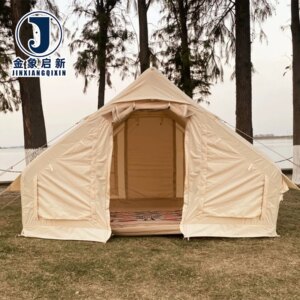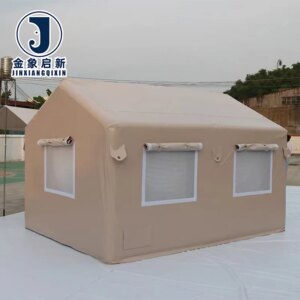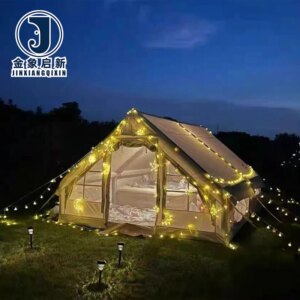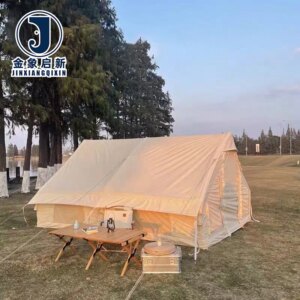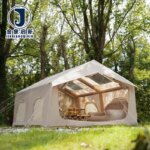
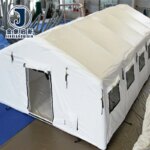
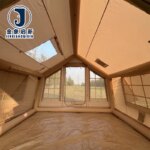
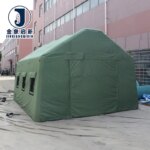
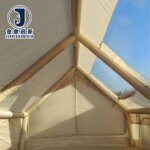
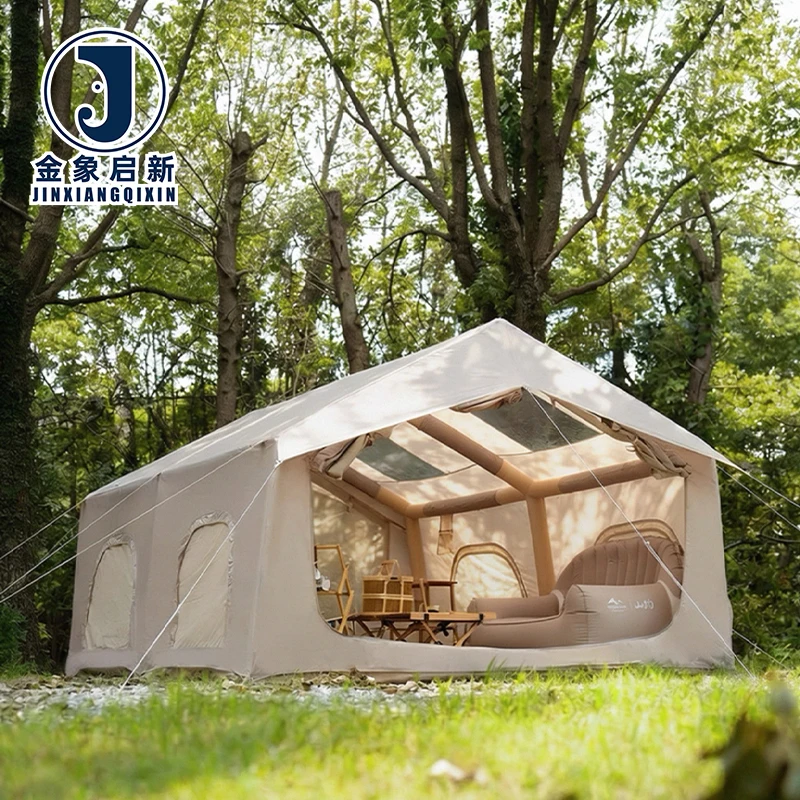
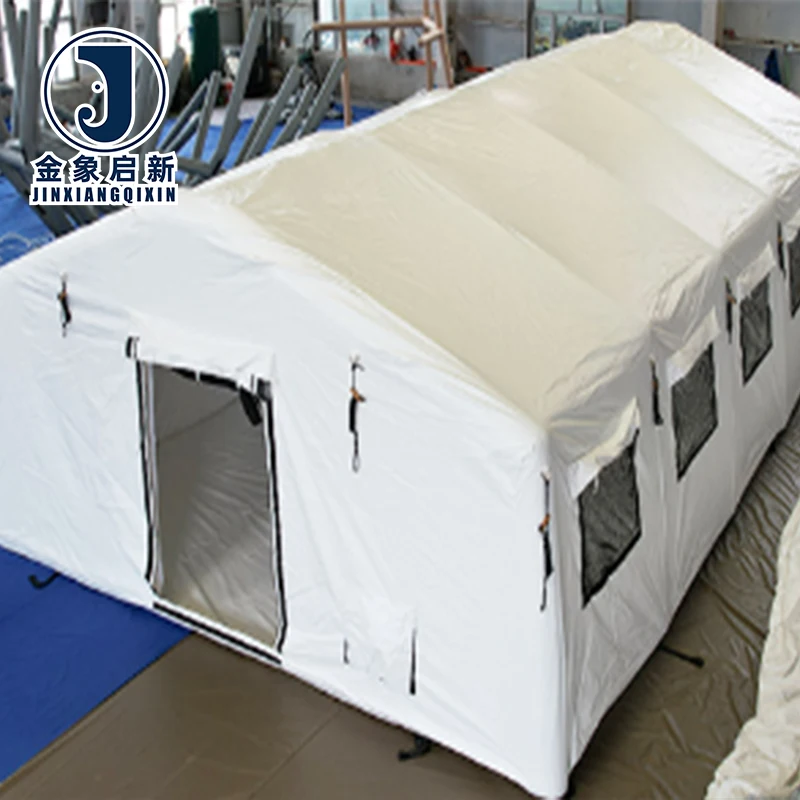
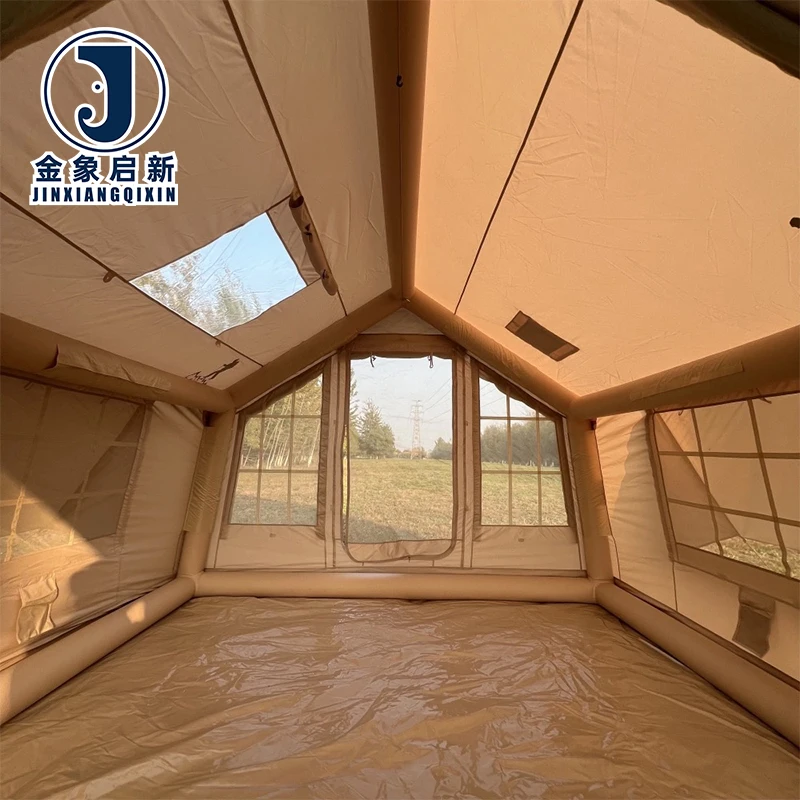
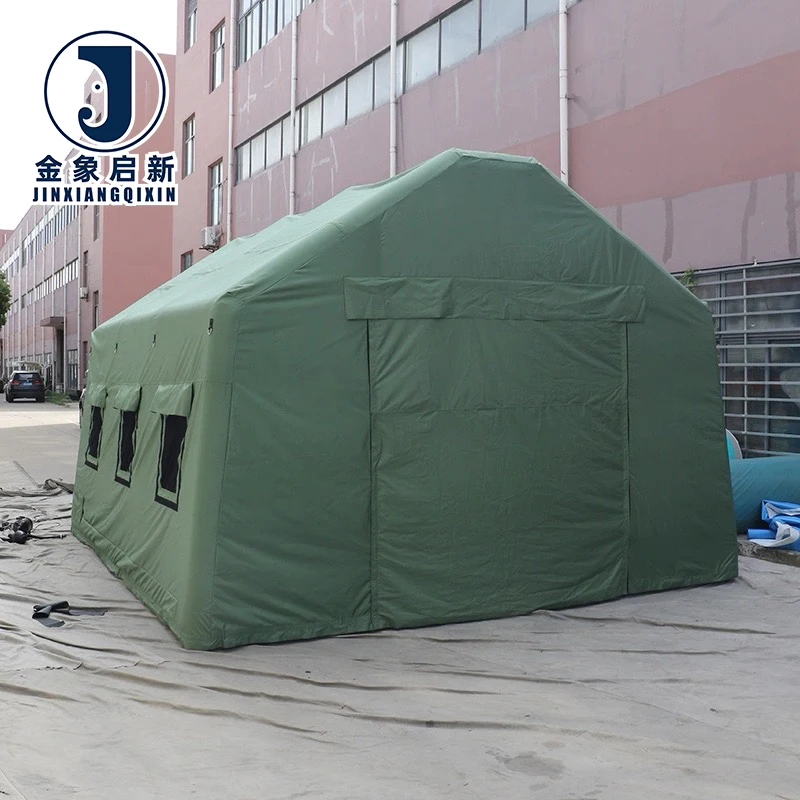
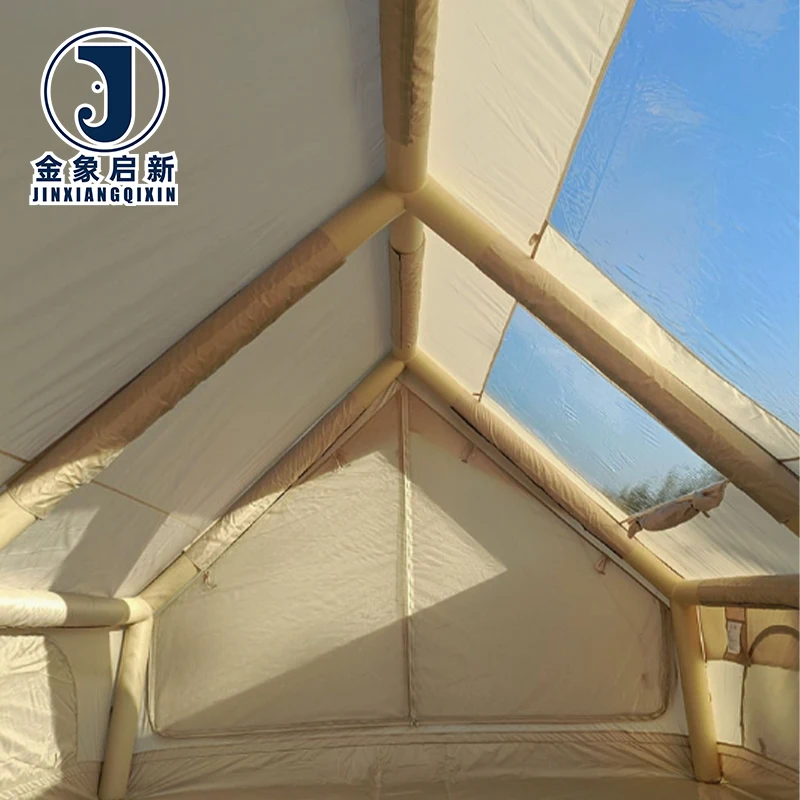
Proven Air-Beam Integrity — Every inflatable structure undergoes 24-hour pressure retention testing before dispatch, addressing the most common failure point in temporary commercial shelters.
Technical Specifications
| Parameter | Value |
|---|---|
| Product Type | Inflatable Tent |
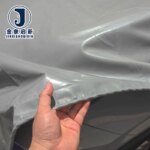
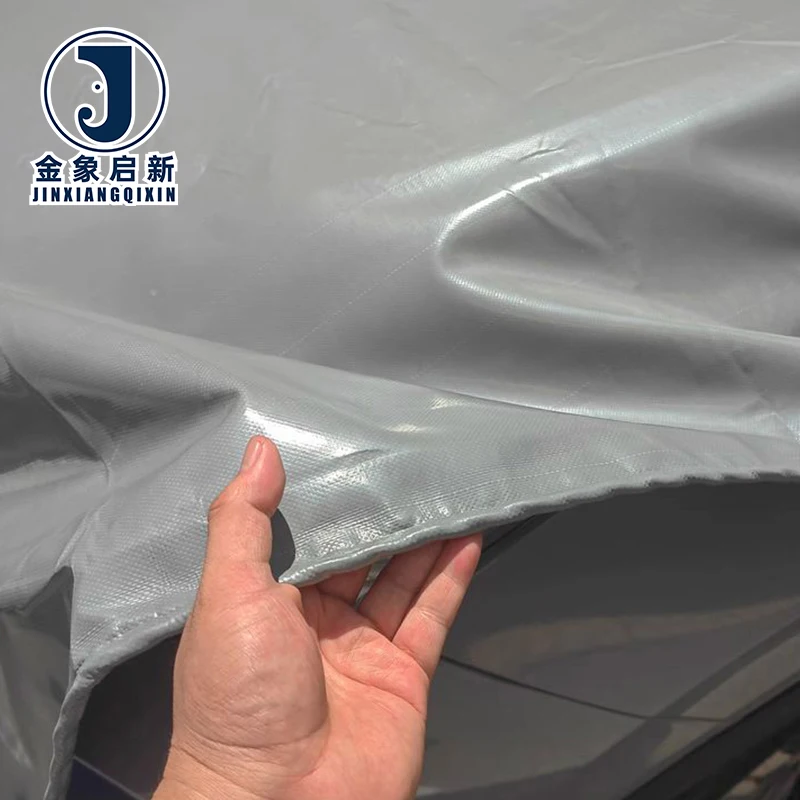
| Core Material | PVC tarpaulin |
| Construction | Single-layer |
| Key Performance | Waterproof, tear-resistant |
| UV Resistance | Available — confirm UV stabilizer grade required for your market |
| Tear Strength Reference | 300N per ISO 13934-1 (note: ISO 13934-1 is a tensile standard — verify tear test classification) |
| Temperature Range | -20°C to 60°C (validated through temperature cycling) |
| Production Lines | 3 full production lines |
| Processing Equipment | 36 sets of professional equipment |
| R&D Team | 10 technicians |
| Customization | OEM & ODM — dimensions, color, pattern printing, reinforcement placement |
| Pressure Retention Test | 24-hour continuous pressure retention before shipment |
| Sample Lead Time | 7-10 business days |
| Standards | ISO9001, ISO14001, ISO45001, CE |
Application Suitability
| Application | Exposure & Requirement |
|---|---|
| Commercial outdoor events & exhibitions | Rapid deployment, wind load on inflatable beams, UV exposure during multi-day outdoor use |
| Emergency response command centers | Immediate structural reliability, all-weather waterproof integrity, frequent relocations |
| Industrial site temporary facilities | Abrasion from site traffic, prolonged sun exposure, thermal fluctuation across seasons |
| Temporary exhibition spaces | Aesthetic surface consistency, structural stability in uncontrolled outdoor environments |
| Four-season outdoor shelter | Thermal cycling from sub-zero to high ambient heat, sustained air-beam pressure retention |
Why Air Retention Testing Separates Reliable Inflatable Fabric from Costly Failures
A fabric that holds air for an hour on the production floor can still collapse mid-event if the weld seams and coating adhesion have not been stress-validated over a sustained cycle.
Inflatable tent structures depend entirely on continuous internal pressure to maintain their shape and load-bearing capacity. When an inflatable beam loses pressure during a commercial event or an emergency deployment, the entire shelter becomes unusable — and the downtime cost far exceeds the fabric savings from a cheaper supplier. We have seen project timelines stall because air-beam leaks were only discovered after the structure was erected on site. [NEED_CITE: field failure rates for inflatable structures under sustained wind and thermal load]
Specifying custom inflatable structure PVC fabric from a source that validates pressure retention at the factory level shifts the risk away from the installation site and into controlled testing conditions.
Coating Adhesion and the Air-Tightness Requirement
The single-layer PVC tarpaulin construction used for inflatable tent applications demands exceptional bonding between the coating and the base fabric. Any delamination at the coating interface creates a pathway for air escape that compounds under pressure cycling. Our PVC inflatable tent fabric is produced on dedicated coating lines where adhesion is monitored throughout the run, ensuring the bond strength meets the demands of continuous inflation and deflation cycles. This level of process control is what enables the 24-hour pressure retention protocol to function as a meaningful gate rather than a formality.
Thermal Range Validation for Four-Season Deployment
An inflatable structure deployed in winter conditions faces fundamentally different material behaviour than one used in midsummer heat. The validated temperature range of -20°C to 60°C means the PVC compound remains flexible enough at sub-zero temperatures to resist brittle fracture at stress concentrations, while maintaining dimensional stability when ambient temperatures push toward the upper boundary. This thermal cycling validation is essential for contractors who deploy inflatable shelter systems across seasons without swapping fabric specifications. [NEED_CITE: PVC coating flexibility thresholds under thermal cycling for coated technical textiles]
What Tear Resistance and Tensile Values Actually Mean for Inflatable Beams
The cited 300N figure referenced against ISO 13934-1 is a tensile measurement, and buyers specifying inflatable structure PVC fabric should understand the distinction. Tensile strength governs how much direct pulling force the fabric can sustain before rupture — relevant at anchor points and tie-down locations. Tear resistance, governed by different test methods, determines how a small puncture or cut propagates across the fabric under load. For inflatable beams, both properties matter: tensile strength resists the hoop stress of inflation pressure, while tear resistance prevents a small abrasion from unzipping into a catastrophic beam failure. Neither value alone provides a complete picture of field performance.
The base fabric weave and denier work together with the PVC coating weight to produce the final composite strength. A heavier coating does not automatically produce higher tear resistance if the base fabric scrim has low yarn count in the fill direction.
The Hidden Cost of Skipping Fabric-Level Verification Before Bulk Commitment
When an inflatable tent project proceeds from sample approval straight to bulk production without verifying that the production fabric matches the sample in coating weight, colour consistency, and weld behaviour, the consequences surface at the worst possible time. A batch where colour shifts between rolls becomes visible once the inflatable beams are erected side by side at an event. Weld seams that performed acceptably on the sample may fail on production rolls if coating formulation varies between runs. [NEED_CITE: batch-to-batch coating consistency challenges in PVC coated fabric manufacturing] These are not theoretical concerns — they represent the most common procurement complaints from contractors who source inflatable tent fabric without requiring pre-shipment verification against agreed benchmarks.
Why Inflatable Structure Contractors Source From This Facility
The 10-person R&D team handles material selection and structural pattern development specific to inflatable and membrane applications, not generic tarpaulin conversions. Three full production lines with 36 sets of processing equipment provide the capacity to fulfill bulk inflatable fabric orders without compressing lead times to the point where quality checks are skipped. Every roll designated for inflatable structure use passes through a dedicated QA/QC inspection workflow that includes coating adhesion verification and surface consistency checks before packing. The sample programme delivers custom inflatable tent specifications — including dimensions, colour, pattern printing, and reinforcement placement — within 7-10 business days for validation before production commitment. OEM and ODM development capability means the fabric can be engineered around your specific beam diameter and inflation pressure requirements rather than adapted from a stock grade.
Documentation & Verification
- Batch-specific inspection report detailing coating adhesion and tensile test results per roll
- ISO9001, ISO14001, ISO45001, and CE certification documentation included with every shipment
- Certificate of analysis for raw PVC compound and coating additives available on request
- 24-hour pressure retention test record accompanying each inflatable structure dispatch
- Material specification sheet stating coating weight, base fabric construction, and colour reference
- Pre-shipment inspection record confirming dimensional accuracy against approved sample
Fabrication, Handling & Storage
- Hot-air welding parameters should be validated against the specific PVC coating formulation before production runs begin
- Reinforcement patches at high-stress beam junctions require compatible PVC adhesive for bond integrity
- Rolls must be stored upright on cores to prevent permanent creasing in the single-layer PVC construction
- Cold-weather deployment below -20°C risks surface cracking — allow material to acclimatize before inflation
- Surface cleaning with mild detergent preserves the coating without degrading the PVC plasticizer system
- Seam allowance in pattern cutting should account for the weld overlap zone to maintain beam geometry
Requesting a Specification Match for Your Inflatable Project
Provide the intended deployment environment, including typical wind exposure and temperature extremes, so the correct PVC compound and coating weight can be recommended. Specify whether you require finished inflatable structures with welded seams or roll stock for in-house fabrication. If your project involves branding or regulatory markings, include the pattern printing layout and colour references so we can confirm reproducibility within sample development timelines.
Frequently Asked Questions
Q: How is air tightness verified before inflatable fabric ships?
A: Every inflatable structure undergoes a continuous 24-hour pressure retention test before dispatch. This protocol simulates sustained inflation under controlled conditions, identifying weld seam leaks and coating micro-perforations that shorter tests would miss. The test record accompanies each shipment so buyers have documented proof of air-beam integrity verified at the factory level before the structure reaches site.
Q: What customization options exist for inflatable tent dimensions and appearance?
A: Our OEM and ODM programme covers custom dimensions, colour matching, pattern printing for branding or identification, and selective reinforcement placement at high-stress beam junctions. The 10-person R&D team develops samples reflecting your exact specifications within 7-10 business days, allowing full physical validation of material behaviour and weld compatibility before you commit to bulk production.
Q: Which certifications accompany inflatable PVC fabric shipments?
A: Each order ships with ISO9001, ISO14001, ISO45001, and CE certification documentation. These are provided as part of the standard dispatch package alongside the batch-specific quality inspection report and material specification sheet. International project compliance teams can reference these documents directly for procurement audits and site safety filings.
Q: How is colour and coating consistency maintained across large inflatable fabric orders?
A: Batch-to-batch consistency is controlled through dedicated QA and QC staff inspecting every production stage. Coating weight, colour reference, and surface finish are verified roll by roll against the approved sample standard. Pre-shipment inspection records document these checks, ensuring that multiple rolls deployed side by side at a commercial event present uniform appearance and identical welding behaviour.
Q: What does the sample development process involve for custom inflatable specifications?
A: Once application requirements are confirmed — including dimensions, inflation pressure, colour, and reinforcement needs — the R&D team produces a physical sample within 7-10 business days. This sample reflects your exact specification rather than a generic stock grade, allowing you to test weld compatibility, beam stiffness, and surface finish before authorizing full production.