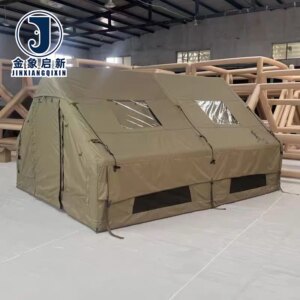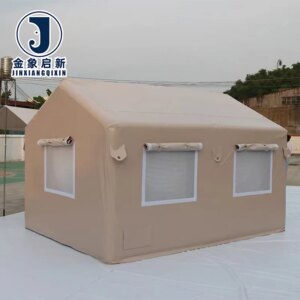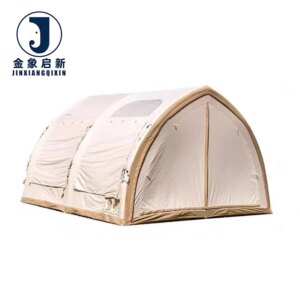

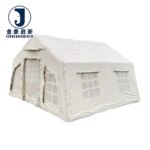
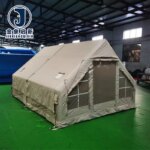
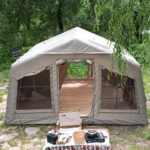

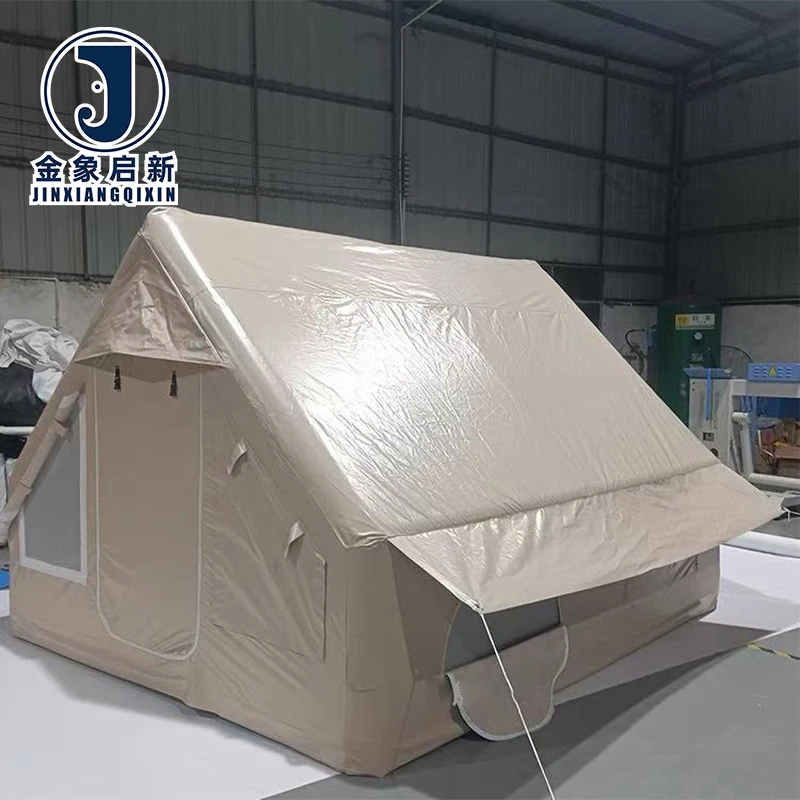
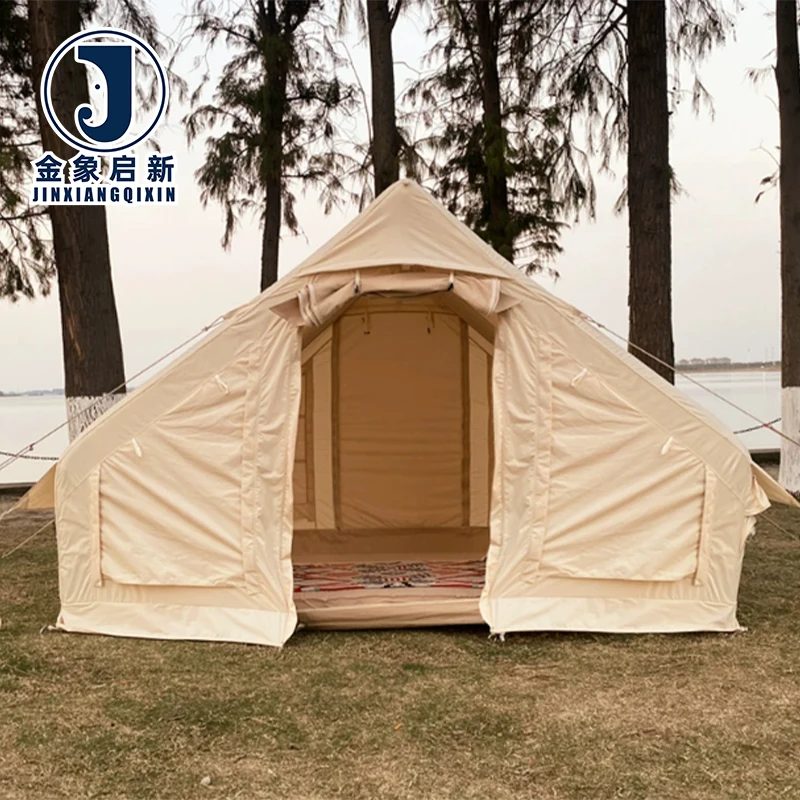
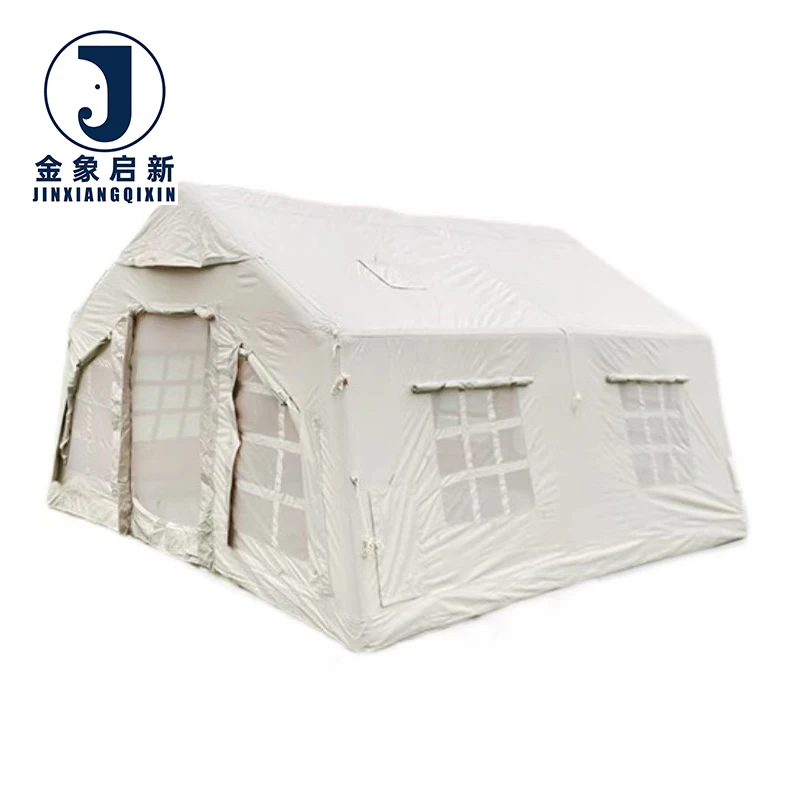
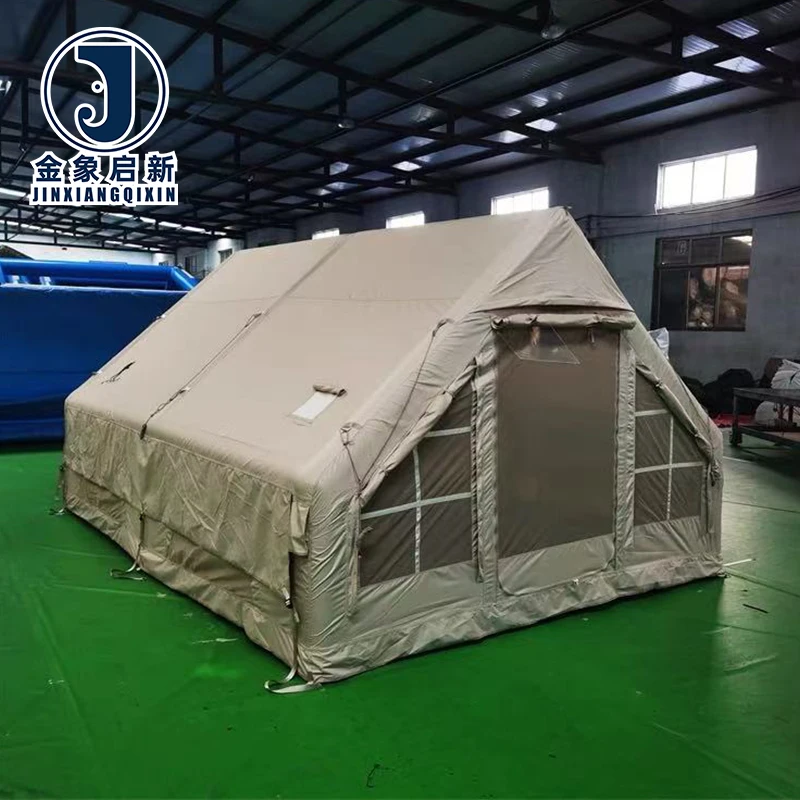


Technical Compliance Backed by Process Control — Every batch of fire-retardant and anti-static PVC inflatable tent fabric ships with traceable test documentation, verified against your site’s regulatory requirements before dispatch.
Technical Specifications
| Parameter | Value |
|---|---|
| Product Type | Inflatable Tent |
| Core Material | PVC tarpaulin |
| Waterproof | Yes |
| UV Treatment | UV-resistant (test basis not stated in source) |
| Flame Retardant | Fire-retardant (grade to be confirmed against target market standard) |
| Anti-Static | Anti-static (surface resistance or standard not confirmed) |
| Tear Resistance | Tear-resistant (test standard not stated in source) |
| Customization Service | OEM & ODM, sample customization, pattern printing |
| Standards | ISO9001, ISO14001, ISO45001, CE |
Application Suitability
| Application | Exposure & Requirement |
|---|---|
| Mining and tunnelling temporary shelters | Fire-retardant and anti-static compliance required for underground or hazardous zone deployment |
| Aviation ground support inflatable structures | Rapid deployment, dimensional stability under repeated inflation cycles, surface marking for identification |
| Large-scale outdoor event inflatable tents | Prolonged UV exposure, wind loading on seams, frequent assembly and teardown |
| Emergency response and disaster management | Quick automatic opening, all-weather waterproofing, portability under field conditions |
What "Fire-Retardant Inflatable Tent Fabric" Means Without a Certified Grade
Fire-retardant is a claim; a certified grade is proof your site inspector will accept.
Procurement teams sourcing inflatable structures for mining, aviation, or industrial event use frequently encounter fabric labelled "fire-retardant" that arrives without the specific test report the site safety officer requires. Inflatable tent fabric fire retardant compliance varies by region — DIN 4102 B1 in parts of Europe, NFPA 701 in North America, local building code classifications elsewhere. When the grade is absent from the shipment documentation, the structure cannot be erected on a regulated site, and the entire project stalls [NEED_CITE: fire classification standards for temporary membrane structures].
The consequence is not a minor paperwork delay. Crews standing by, equipment mobilised, and project timelines compressed while replacement material is sourced. This is why confirming the exact grade before production begins — and receiving the matched test report with the batch — is non-negotiable for inflatable tent fabric fire retardant applications in regulated environments.
Ventilation and Inflation Integrity in Technical Fabric
Inflatable tent envelopes demand material that holds air pressure consistently across the entire welded seam network. The PVC tarpaulin base used for these structures must maintain dimensional stability through repeated inflation and deflation cycles without seam creep or coating delamination at flex points. Inflatable tent fabric fire retardant specifications must account for the thermal behaviour of the coating during hot-air welding, as the weld temperature window narrows on treated formulations.
Fabric destined for mining and tunnelling shelters faces an additional constraint: anti-static performance is required to prevent electrostatic discharge in environments where combustible dust or gas may be present. The anti-static treatment must remain effective across the service life of the structure, not just on initial measurement.
Coating Formulation and Environmental Resistance
Extended outdoor deployment exposes inflatable structures to continuous UV radiation, thermal cycling, and moisture ingress at seam intersections. The UV-resistant coating formulation applied to this PVC tarpaulin is designed to slow polymer degradation under solar exposure, maintaining tensile and tear properties through a season of field use. Anti-static PVC inflatable tent fabric for aviation ground support enclosures must also resist aviation fuel splash and de-icing fluid contact without coating softening or surface tackiness developing [NEED_CITE: chemical resistance requirements for coated fabrics in aviation environments].
Waterproof performance across the full envelope depends as much on seam integrity as on the coated surface. Heat-welded joints on fire-retardant grades require precise temperature and dwell-time control, because overtreatment during welding can degrade the flame-retardant additives at the joint line itself.
Material Construction and Performance Drivers
The tear resistance of PVC tarpaulin used in inflatable structures is governed by the interplay between base fabric denier, weave density, and coating adhesion. A higher-denier yarn in the weft direction arrests tear propagation when a puncture occurs under wind load or site handling. The coating method — whether knife-over-roll, dip, or calender — determines how fully the PVC penetrates the weave and bonds to individual yarns, directly affecting peel strength at welded seams.
Fire-retardant formulations introduce mineral or halogenated additives into the PVC compound, which can stiffen the coating at low ambient temperatures. This affects handling during winter installation and the minimum inflation pressure needed to achieve full structural rigidity. Anti-static additives, typically conductive carbon or topical treatments, modify surface resistivity but must be compatible with the welding process to avoid weak joints. Glossy or matte surface finish options affect both cleanliness in the field and the adhesion of printed identification markings applied during fabrication.
The Cost of Specifying the Wrong Grade
When inflatable tent fabric arrives on a mining site without the fire-retardant grade the safety plan specifies, the structure cannot be commissioned. The delay compounds: crew accommodation is unavailable, shift schedules are disrupted, and alternative shelter must be arranged at short notice [NEED_CITE: procurement lead times for emergency replacement membrane fabric]. Anti-static performance that is claimed but unverified creates a different risk — the structure may pass initial inspection but fail a subsequent audit, requiring removal from a hazardous zone mid-operation.
Batch-to-batch colour variation across a multi-unit inflatable tent order becomes visible once structures are erected side by side at an event venue, triggering aesthetic rejection even when technical performance is acceptable. Weld failures that occur before the fabric itself degrades point to a mismatch between welding parameters and the specific coating formulation — a preventable failure when in-process QA verifies weld peel strength during production.
Why Source Inflatable Tent Fabric Through This Facility
Three dedicated production lines and 36 sets of professional processing equipment support bulk orders of inflatable tent fabric fire retardant grades with consistent coating weight and colour across every roll in the shipment. The 10-technician R&D team handles material selection for specific compliance environments, develops custom samples within days, and validates that the chosen fire-retardant or anti-static formulation matches the welding parameters your fabricator will use.
Dedicated QA/QC operates at every production stage, with full pre-shipment inspection of every roll before it leaves the facility. OEM and ODM customization extends to pattern printing, custom sizing, and layout configuration, with sample approval required before mass production proceeds. ISO9001, ISO14001, ISO45001, and CE documentation accompanies each batch for compliance audit trails.
Documentation & Verification
- Material specification sheet stating base fabric, coating type, and all performance treatments per roll
- Fire-retardant and anti-static test reports matched to the specific order batch number
- ISO9001, ISO14001, ISO45001, and CE certificates included for regulatory compliance audit
- Pre-shipment inspection record detailing coating weight and visual assessment for every roll
- Certificate of origin and customs documentation prepared for cross-border shipment
Fabrication, Handling & Storage
- Confirm welding temperature and dwell time against the fire-retardant formulation before full production
- Allow PVC tarpaulin rolls to acclimatise to workshop temperature before unrolling to prevent coating cracking
- Store rolls upright on pallets, avoiding horizontal stacking that creates permanent creases in the coating
- Use compatible PVC welding tape for field repairs, matching the anti-static treatment grade where required
- Verify printed pattern registration and colour consistency across rolls before cutting inflatable panels
- Plan panel layout to minimise weld seams crossing high-stress inflation zones on the structure
Preparing Your Enquiry for Technical Fabric Supply
Specify the fire-retardant classification and anti-static standard your site or jurisdiction mandates, along with the intended application environment and expected deployment duration. Provide the required roll width, total quantity, and any custom colour or pattern printing needs so that sample development can begin against your exact parameters. Indicate whether you require raw roll stock for your own fabrication facility or finished inflatable panels cut and welded to your design drawings.
Frequently Asked Questions
Q: What fire-retardant grade does the inflatable tent fabric carry and which standards does it meet?
A: The fabric is available in fire-retardant grades matched to regional standards including DIN 4102, NFPA 701, and local building code classifications. The specific grade required for your market must be confirmed at enquiry stage so that the correct formulation is applied and the matching test report ships with your batch.
Q: Is anti-static performance certified with a surface resistance test report?
A: Anti-static treatment is available for environments sensitive to electrostatic discharge, such as mining and aviation applications. A surface resistance test report is generated per batch to document compliance. Specify the required resistivity range or standard when placing your order so the correct treatment level is applied.
Q: How is batch-to-batch colour and coating consistency controlled on custom print orders?
A: In-process QA monitors coating weight and colour reference across every roll during production. For pattern printing orders, registration and colour density are verified before rolls are released. A pre-shipment inspection record accompanies the dispatch, documenting consistency across all rolls in the order.
Q: What is the sample development lead time for custom size and pattern requirements?
A: The R&D team develops samples for custom sizing, colour, and pattern printing within days of specification approval. Sample approval is required before mass production begins, ensuring the fire-retardant and anti-static formulations perform correctly with your intended welding and fabrication process.
Q: Which certifications and documents ship with each batch for site compliance verification?
A: Each shipment includes a material specification sheet, fire-retardant and anti-static test reports matched to the batch number, ISO9001, ISO14001, ISO45001, and CE certificates, a pre-shipment inspection record, certificate of origin, and full customs documentation for cross-border delivery.