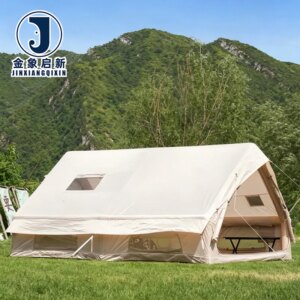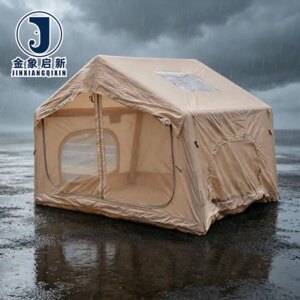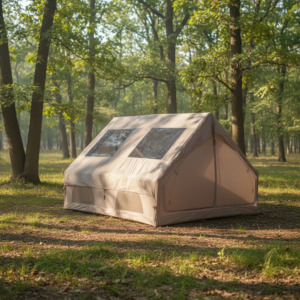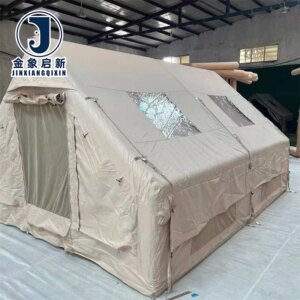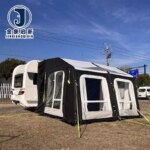

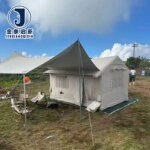
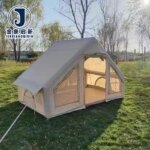
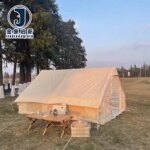
Proven Coated Fabric Expertise — Nearly three decades of PVC coating process control applied to inflatable shelter design, ensuring consistent material behavior across every production run.
Technical Specifications
| Parameter | Value |
|---|---|
| Product Type | Inflatable Tent |
| Core Material | PVC Tarpaulin |
| Product Form | Extended Type, Single Layer Construction |
| Water Resistance | Fully waterproof coated construction |
| UV Resistance | UV-resistant treatment (test basis not stated in source) |
| Tear Resistance | Tear-resistant construction |
| Customization Service | OEM & ODM (sample customization, pattern printing) |
| Quality System | Full-process quality inspection with dedicated QA & QC staff |
| Certifications | ISO9001, ISO14001, ISO45001, CE |
Application Suitability
| Application | Exposure & Requirement |
|---|---|
| Emergency response centers | Rapid deployment under severe weather, repeated inflation and deflation cycles, field handling abrasion |
| Mobile command posts for engineering projects | Prolonged outdoor siting, wind load on inflated structure, frequent relocation between sites |
| Temporary storage during disaster recovery | Continuous weather exposure, load-bearing membrane stress, interior climate sensitivity |
| Auxiliary workspace at remote industrial installations | UV and temperature extremes, dust and particulate ingress prevention, structural stability under inflation pressure |
| Mining and tunnelling site shelters | Compliance with site safety documentation, rugged ground contact, high-wind exposure in open terrain |
Why Compliance Documentation Gaps Undermine Inflatable Shelter Procurement
Certified manufacturing and a full documentation trail close the gap between what is specified and what actually arrives on site.
Procuring inflatable emergency shelters for disaster preparedness programs often involves strict site safety requirements. When the inflatable tent fabric manufacturer cannot supply verifiable test reports or certification documents, the entire batch faces rejection at the point of deployment. This is not a paperwork inconvenience — it halts emergency operations and forces last-minute sourcing at unfavorable terms. Buyers managing large-scale shelter stockpiles need every unit backed by traceable material data before it reaches the field. [NEED_CITE: ISO management system standards for manufactured emergency equipment]
Rapid Inflation Architecture for Time-Critical Deployment
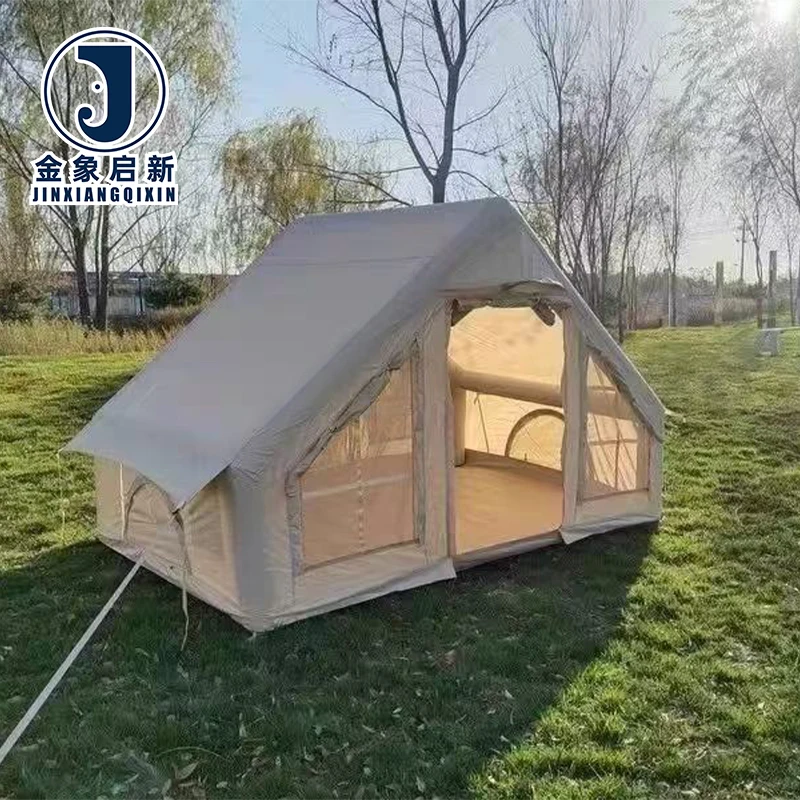
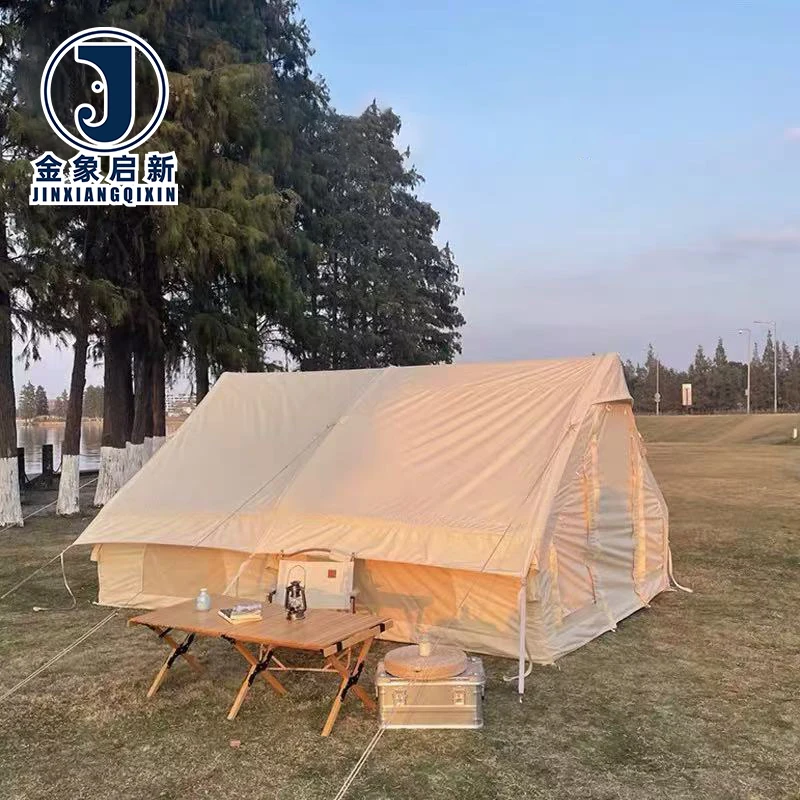
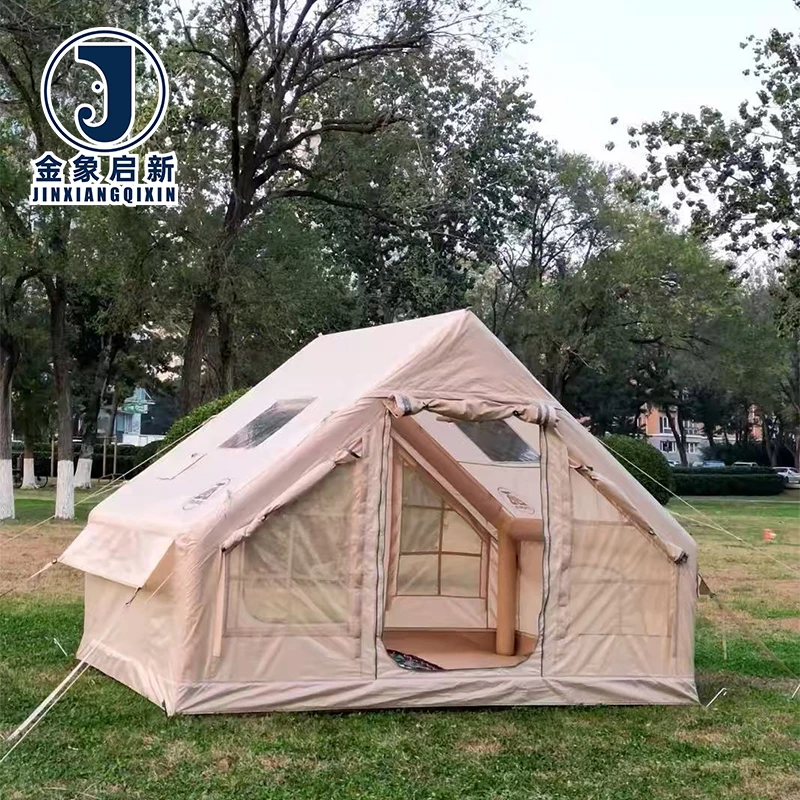
The extended type single layer construction of this PVC inflatable tent balances structural rigidity with reduced weight, enabling faster inflation cycles when minutes matter. In disaster relief scenarios where emergency crews must establish shelter before nightfall or incoming weather, the speed of automatic opening directly determines how many people are protected in the first critical hours. The single layer design also simplifies field repair — a puncture in one chamber does not compromise an inner layer.
Membrane Integrity Under Continuous Inflation Pressure
An inflatable shelter depends entirely on the air-holding integrity of its PVC tarpaulin membrane. The coated fabric must resist micro-porosity that develops under sustained internal pressure, particularly at heat-welded seams where the material has been thermally altered. This is where coated fabric manufacturing discipline separates a shelter that holds pressure through a multi-day storm from one that slowly deflates overnight. [NEED_CITE: coated fabric air retention testing methods for inflatable structures]
Understanding How PVC Coating Weight Influences Inflatable Performance
The relationship between PVC coating weight and base fabric denier determines how the inflatable tent membrane behaves under inflation pressure and external wind load. A heavier coating improves air retention and surface durability but adds mass that slows deployment and increases transport cost. The base fabric weave density governs how tear forces propagate — a tight warp-and-weft structure limits tear spread if the membrane is punctured by debris. Surface finish selection, whether glossy or matte, affects both field cleaning ease and the adhesion of printed identification markings used in emergency operations. UV-resistant treatment availability should be confirmed against the expected deployment duration and regional solar exposure levels — confirm the treatment grade required for your operating environment. Thermal welding parameters must match the specific coating formulation; mismatched heat input at seams remains a primary failure point in inflatable structures.
The Cost of Specifying Inflatable Fabric Without Verifying Coating Consistency
When PVC coating weight varies between production batches, inflatable shelters from the same purchase order can exhibit different inflation pressures, seam behaviors, and surface characteristics. This inconsistency forces field teams to adjust setup procedures for each unit, defeating the purpose of standardized emergency protocols. Weld failures often originate where the coating adhesion is weakest — typically at the point of greatest membrane flexure during wind gusts. Without batch-level inspection records, buyers discover these variations only after deployment, when replacement is no longer a simple logistics exercise. [NEED_CITE: coating adhesion test methods for PVC tarpaulin per ISO standards]
Why Technical Buyers Source Inflatable Shelter Fabric Here
Deep process control over PVC coating weight and adhesion, developed through nearly 30 years focused exclusively on coated fabric, means the membrane material arrives with predictable thermal welding behavior. Three full production lines and 36 sets of professional equipment support the volume demands of large-scale disaster preparedness programs without compressing lead times. A 10-technician R&D team handles custom sizing, pattern printing, and material selection for inflatable structures, developing samples within days rather than weeks. Dedicated QA and QC staff inspect every production stage, with 100 percent pre-shipment inspection ensuring each inflatable shelter unit meets the stated material specification before dispatch. The ISO9001, ISO14001, ISO45001, and CE certification framework provides the documentation structure that procurement teams require for compliance submission.
Documentation & Verification
- Material specification sheet stating PVC base fabric denier, coating type, and weight per unit area
- UV and performance test reports provided where applicable to confirm treatment grade
- ISO9001, ISO14001, ISO45001, and CE certificates included in shipment documentation package
- Batch-specific quality inspection report accompanying each inflatable shelter unit before dispatch
- Pre-shipment inspection record verifying inflation chamber integrity and seam strength
Fabrication, Handling & Storage
- Heat-weld seams at temperatures matched to the specific PVC coating formulation to prevent delamination at inflation flex points
- Store rolled inflatable tent fabric in dry conditions away from direct sunlight to preserve UV-resistant treatment effectiveness
- Inspect welded seams after each inflation cycle for early signs of coating separation at high-stress membrane junctions
- Clean PVC tarpaulin surfaces with mild detergent only, avoiding solvents that degrade the coating bond
- Avoid folding the single layer construction at sharp angles to prevent permanent crease marks in the coated surface
- Repair field punctures using compatible PVC patch material and heat-activated adhesive matching the base coating type
Preparing Your Inflatable Shelter Inquiry
Provide the intended deployment environment, expected duration of continuous inflation, and any site-specific fire safety or compliance requirements your project must meet. Specify the required shelter dimensions, quantity per batch, and whether pattern printing or identification markings are needed on the membrane surface. Indicate whether you require finished inflatable units or membrane fabric only for your own fabrication process. Confirming these details early allows the R&D team to develop an accurate sample and production timeline.
Frequently Asked Questions
Q: What fire-retardant or compliance certifications are available for inflatable shelter fabric?
A: The manufacturing facility holds ISO9001, ISO14001, ISO45001, and CE certifications, which accompany each shipment. Fire-retardant grades for PVC tarpaulin are available depending on your market requirements. Specify the fire classification standard applicable to your deployment region, and the technical team will confirm available grades and provide the corresponding test documentation with your order.
Q: How is batch-to-batch material consistency verified before shipment?
A: Every production run undergoes full-process quality inspection with dedicated QA and QC staff at each stage. A batch-specific inspection report accompanies each inflatable shelter unit, documenting coating weight verification and seam integrity results. The 100 percent pre-shipment inspection ensures that material characteristics remain consistent across all units within the same purchase order.
Q: What customization options are supported and what are the minimums?
A: OEM and ODM customization covers shelter dimensions, pattern printing, and material adjustments based on application requirements. The 10-technician R&D team develops samples within days for confirmation before production begins. Minimum quantities depend on the specific customization scope and current production scheduling — submit your requirements for a detailed quotation including lead time.
Q: What documentation accompanies each shipment for project compliance submission?
A: Each shipment includes a material specification sheet, applicable performance test reports, ISO and CE certificates, a batch-specific quality inspection record, and a pre-shipment inspection report. Certificate of origin and customs support documents are provided as needed. This documentation package supports compliance submission for government procurement and industrial site safety audits.
Q: How does the sample development and approval process work for custom inflatable structures?
A: Submit your application details, dimensions, and performance requirements through the inquiry process. The R&D team reviews specifications and develops a sample reflecting the proposed material, coating, and construction. Once you approve the sample, production proceeds with in-process quality checks at every stage, followed by 100 percent inspection before dispatch.