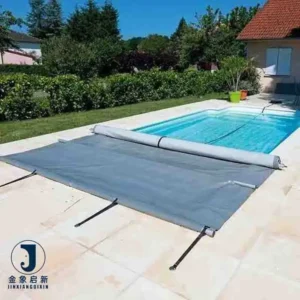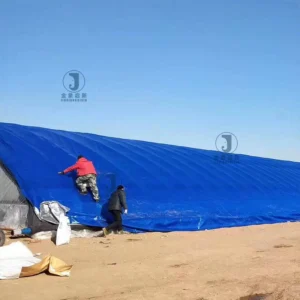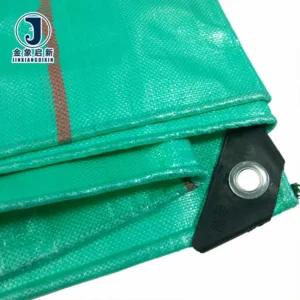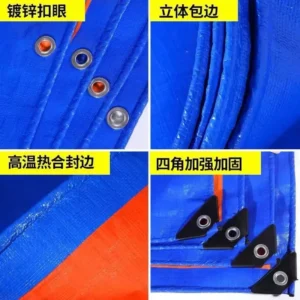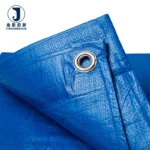
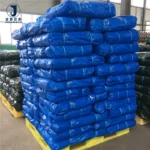

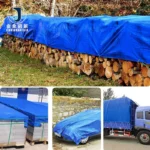
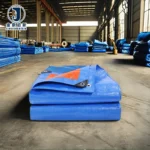
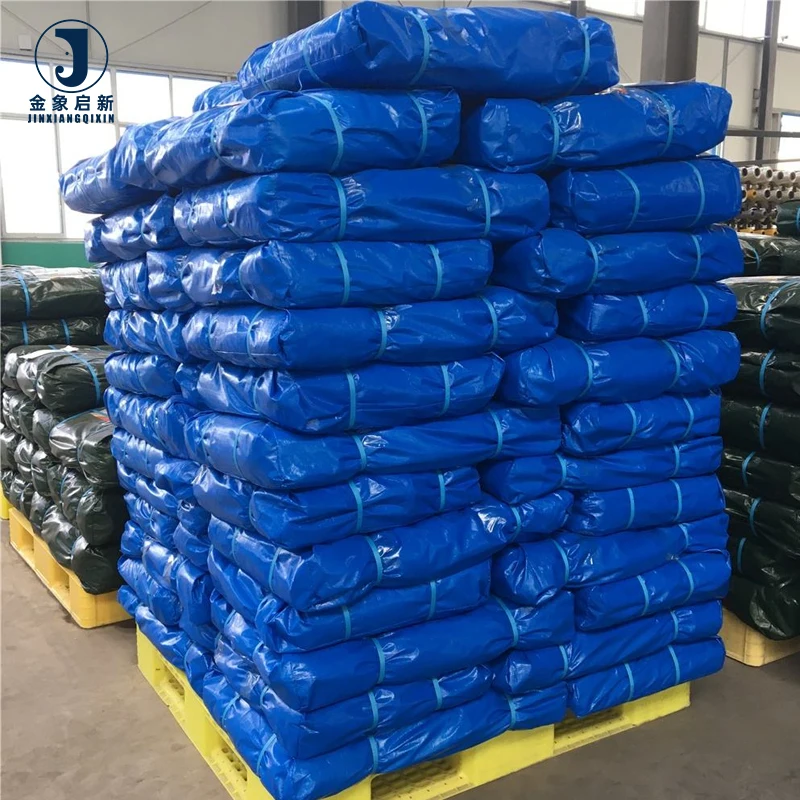
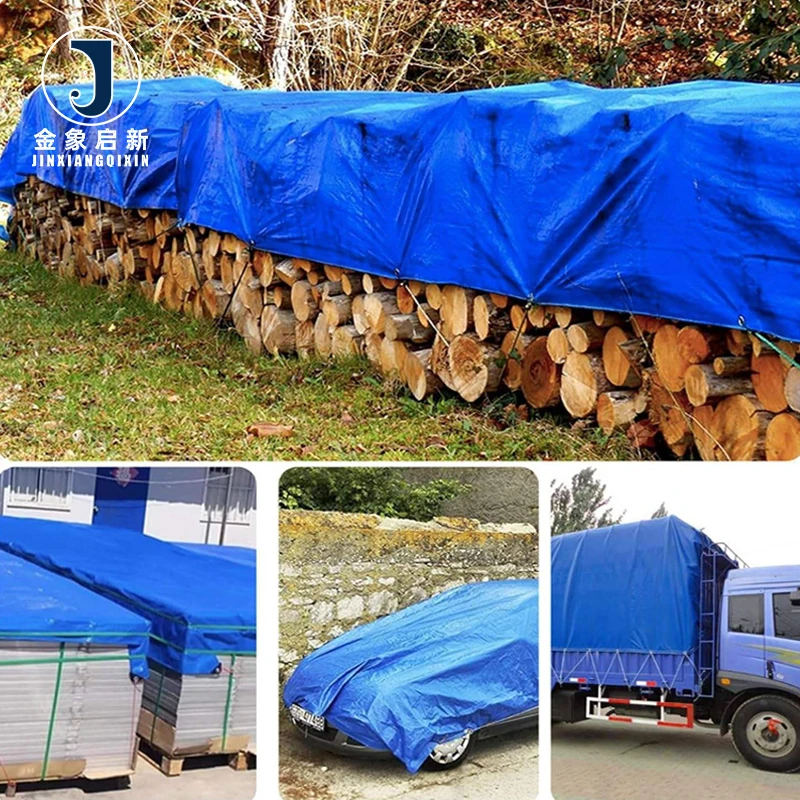
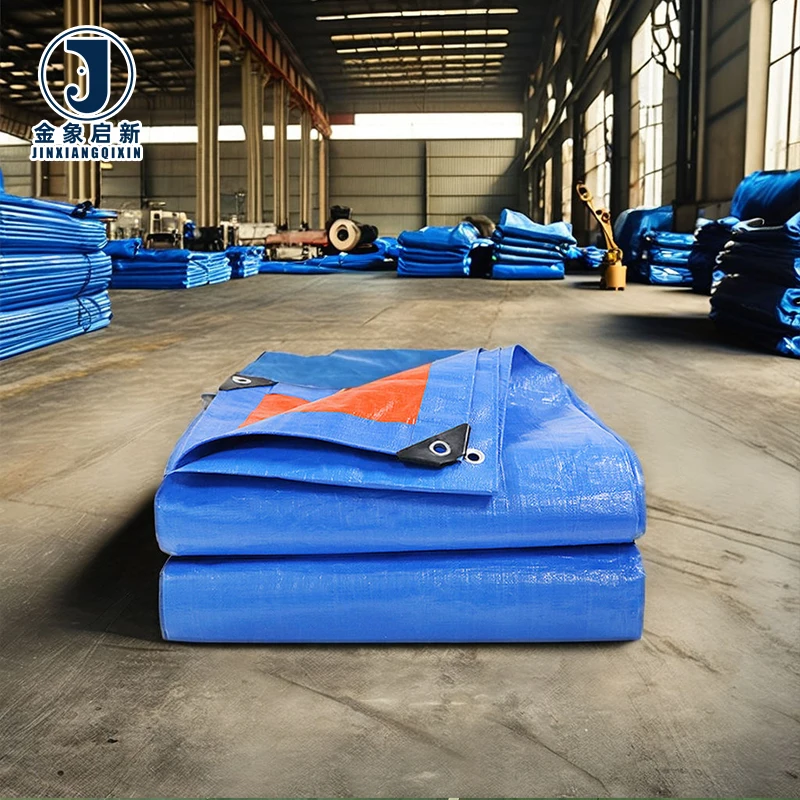
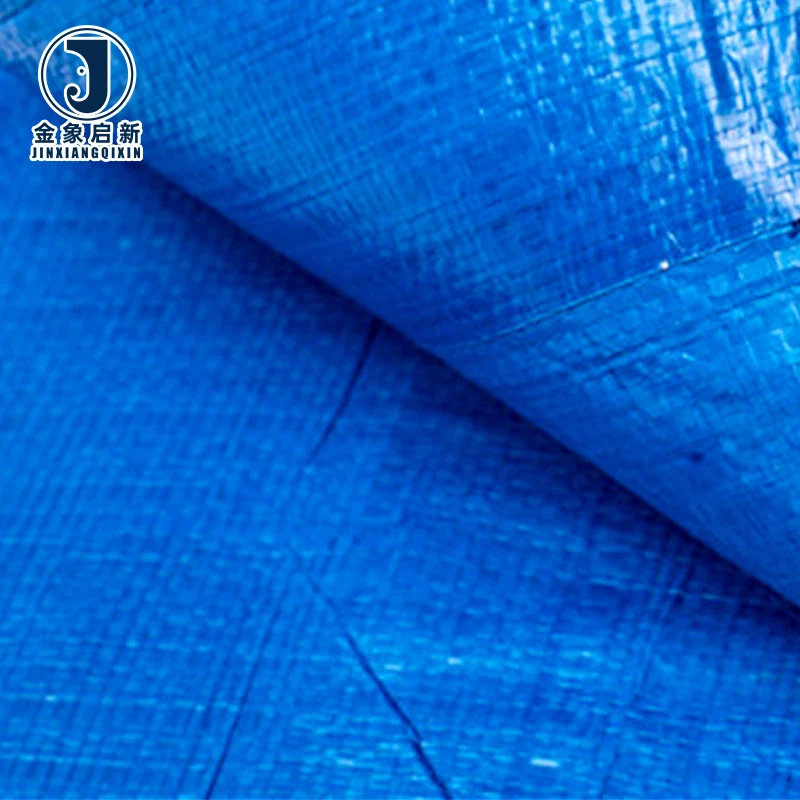
Coated Fabric Process Control — Three full production lines with 36 equipment sets maintain consistent coating weight and adhesion across every roll of PE Tarpaulin fire retardant / anti-static / certified fabric dispatched for ventilation and specialist structure use.
Technical Specifications
| Parameter | Value |
|---|---|
| Product Type | PE Tarpaulin |
| Material | Polyethylene |
| Coating Material | PE |
| Weight (GSM) | 40g~500g/m2 (range covers product family — confirm the grade for this item) |
| Lightweight Grade | 80-110 g/m² |
| Lightweight Thickness | 0.18-0.22 mm |
| Lightweight Mesh Count | 8×8 |
| Medium Grade | 120-150 g/m² |
| Medium Thickness | 0.22-0.28 mm |
| Medium Mesh Count | 10×10 |
| Heavy-duty Grade | 160-240 g/m² |
| Heavy-duty Thickness | 0.30-0.35 mm |
| Heavy-duty Mesh Count | 12×12 |
| Knitting Density Range | 5×5 to 20×20 |
| Eyelet Center to Center Spacing | 39.4 Inches |
| Waterproof Construction | Double waterproof surfaces |
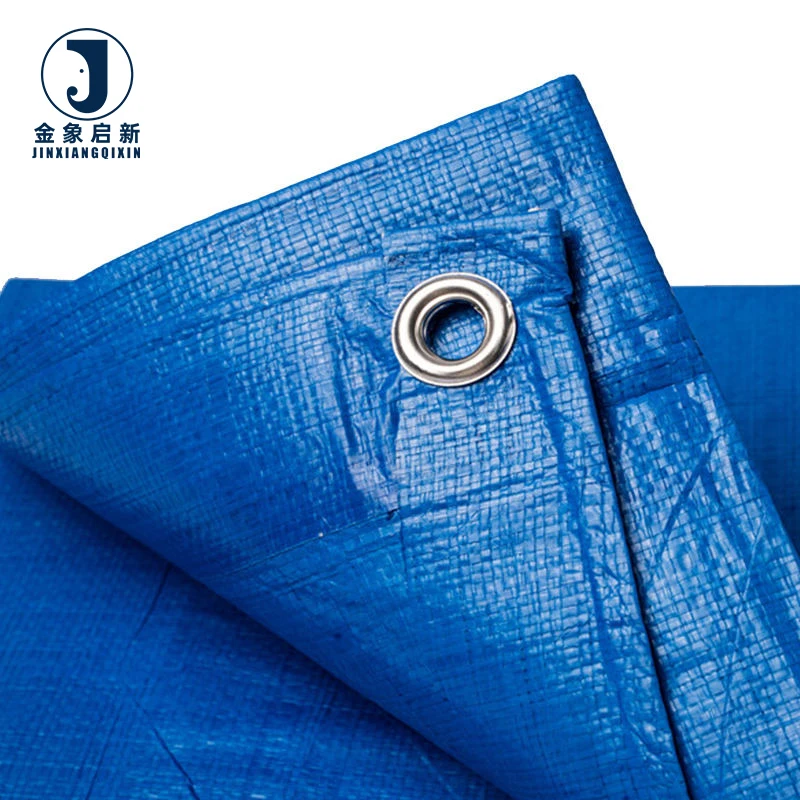
| Corner Treatment | Reinforced corner |
| Grommets | Reinforced rustproof grommets |
| Anti-Mildew | Stated |
| UV Treatment | Available (test basis not stated in source) |
| Color | Custom color |
| Size | Custom size |
| Printing | Custom printing supported |
| Standards | ISO, CE (per company certification) |
Application Suitability
| Application | Exposure & Requirement |
|---|---|
| Mining ventilation duct | Continuous airflow pressure, underground humidity, fire-retardant compliance mandated by site safety regulation |
| Tunnelling exhaust ducting | Abrasive particulate contact, confined-space flame safety, anti-static surface to prevent ignition |
| Aviation ground support inflatable structure | Wind load flexing, UV exposure on tarmac, membrane tension across welded seams |
| Construction site temporary enclosure | Weather exposure, mechanical contact from equipment, wind-driven rain |
| Specialist membrane structure | Long-term tension load, solar degradation, structural seam integrity under thermal cycling |
Why Fire-Retardant PE Tarpaulin Fails Certification Without Documented Grades
A flame-retardant claim without a test standard behind it holds no weight at the inspection gate.
Mining and tunnelling contractors regularly receive ventilation duct material labelled "fire retardant" that lacks the documentation a site safety officer requires before signing off installation. The consequence is not a delayed shipment — it is a refused delivery, an idle crew, and a procurement team scrambling for a replacement source mid-project. PE Tarpaulin fire retardant / anti-static / certified grades must arrive with test documentation matched to the compliance framework of the target market, not a generic statement on a commercial invoice. [NEED_CITE: mining ventilation fire safety compliance requirements by jurisdiction]
When anti-static properties are specified for underground use, the surface resistance value must correspond to the certification standard the site operates under. Without that documented link, the duct material passes no audit regardless of its actual performance in the field.
Matching Weave Density to Airflow and Structural Demand
The knitting density range from 5×5 to 20×20 determines how the base fabric distributes tension across its surface and how it responds to the internal pressure of a ventilation duct. A tighter weave resists billowing and maintains duct shape under high-volume airflow, while a looser construction allows the material to flex around bends and transitions without concentrating stress at fold points. Selecting the correct density for PE Tarpaulin fire retardant / anti-static / certified applications requires matching the duct diameter and fan pressure to the base fabric structure before coating weight enters the conversation.
Coating Behaviour Under Ventilation Duct Operating Conditions
Double waterproof surfaces serve a secondary function in duct applications: they seal the woven base fabric against moisture-laden airstreams that would otherwise degrade the yarn from within. Reinforced corners and rustproof grommets anchor the duct at connection flanges and suspension points, where cyclic loading from fan start-stop cycles concentrates mechanical fatigue. The PE coating must maintain adhesion to the base fabric through these repeated pressure pulses, a property governed by coating process control rather than coating thickness alone. [NEED_CITE: coated fabric adhesion test methods for industrial ventilation applications]
Reading GSM, Mesh Count and Tensile Data Together
A lightweight 80-110 g/m² grade with 8×8 mesh delivers meridian tensile strength in the 300-500 N/5cm range — adequate for low-pressure duct runs and temporary enclosures where the fabric sees minimal sustained tension. Moving to the heavy-duty 160-240 g/m² grade at 12×12 mesh lifts meridian tensile values to 900-1200 N/5cm, a shift driven by both the heavier yarn and the denser weave distributing load across more intersection points. GSM alone does not predict tear propagation resistance; a 150 g/m² fabric with 10×10 mesh may outperform a heavier fabric with a looser weave if the yarn denier and coating penetration are optimised for rip resistance. The relationship between knitting density and coating weight determines whether a puncture stays local or propagates into a full panel failure.
The Cost of Undocumented Material in Specialist Applications
Ventilation duct supplied without the fire-retardant or anti-static certification the site requires forces a complete removal and replacement cycle — labour, downtime, and re-inspection costs that dwarf the material price difference between a documented and undocumented source. Colour variation between rolls in the same shipment becomes visible once duct sections are installed side by side on a membrane structure, triggering aesthetic rejection on projects where appearance matters. Welded seams that fail before the fabric does concentrate repair costs at exactly the points the duct flexes most, where access is poorest and re-welding is most difficult. [NEED_CITE: coated fabric weld failure analysis at flex points in ventilation duct installations]
Production Capability Applied to Technical Fabric
Three full production lines and 36 sets of professional equipment provide the capacity to fulfil bulk ventilation duct orders on mining and construction timelines, where a delayed shipment idles an entire excavation face. A 10-person R&D team develops samples within days when a project specifies a non-standard width, colour, or fire-retardant grade that falls outside the stock range. Dedicated QA/QC at every production stage with 100% pre-shipment inspection catches GSM drift and coating adhesion issues before rolls leave the facility, not after they arrive at a remote mine site. The coating process control developed over nearly 30 years of PE and PVC fabric production translates directly to consistent weld performance when the material is fabricated into duct sections on site. [NEED_CITE: ISO quality management documentation for coated textile manufacturing]
Documentation & Verification
- Material specification sheet stating GSM, base fabric type, coating composition, and colour reference for each roll
- Test report for flame-retardant and anti-static grades where applicable, matched to the standard specified on your purchase order
- ISO and CE certificates with certificate of origin and customs documentation for cross-border shipments
- Pre-shipment inspection record confirming weight, colour, and surface quality consistency across the full order
- Roll packing list detailing individual roll dimensions, weight, and batch traceability codes
Fabrication, Handling & Storage
- Heat-weld PE Tarpaulin fire retardant / anti-static / certified grades using temperature and dwell settings confirmed against the specific coating formulation supplied
- Position reinforced rustproof grommets at suspension and flange-anchor points to distribute cyclic fan-load stress across the reinforced corner zones
- Store rolls horizontally on a flat, shaded surface to prevent permanent creasing in the 0.18-0.35 mm thickness range
- Allow cold-transported rolls to reach ambient temperature before unrolling to avoid coating cracking on the heavier 160-240 g/m² grades
- Use mild detergent and soft brush for field cleaning; avoid solvent-based cleaners that may compromise the anti-mildew treatment
- Plan duct panel cutting layout to minimise transverse welds, using the custom size capability to order panels matched to duct section length
What to Include in Your Enquiry
Provide the ventilation duct diameter, fan static pressure, and the fire-retardant or anti-static certification standard your site operates under. Specify the roll width and length you require, or confirm whether you need pre-cut panels sized to your duct sections. If the project demands a specific colour or printed identification marking, include the RAL or Pantone reference so we can develop a sample for your approval before production begins.
Frequently Asked Questions
Q: What fire-retardant grade should I specify for underground mining ventilation duct?
A: The required grade depends on the mining jurisdiction and the specific safety standard enforced at your site. We supply PE Tarpaulin fire retardant / anti-static / certified grades with test documentation matched to the standard you specify on your enquiry. Confirm the applicable regulation with your site safety officer before ordering.
Q: How is anti-static surface resistance verified before shipment?
A: Anti-static properties are tested and documented according to the certification standard referenced on your purchase order. The test report accompanies the shipment documentation package. We recommend stating the target surface resistance range and the applicable mining or aviation standard at the enquiry stage.
Q: How do you confirm the GSM matches what was quoted?
A: Every roll undergoes weight verification as part of our 100% pre-shipment inspection process. The actual GSM is recorded and compared against the specification stated on your quotation. The pre-shipment inspection record included with your documentation confirms the result for each roll dispatched.
Q: What is the lead time for custom width or fire-retardant grades?
A: Lead times vary depending on the specific grade, width, and fire-retardant treatment required. Custom specifications outside the stock range typically require sample development and approval before bulk production begins. We provide a confirmed lead time at the quotation stage once your application requirements are defined.
Q: Can I request a sample before committing to a full production order?
A: Yes. Our R&D team develops samples within days for custom weight grades, colours, and treatment requirements. The sample allows you to verify weld behaviour, surface finish, and documentation format before authorising bulk production for your project.