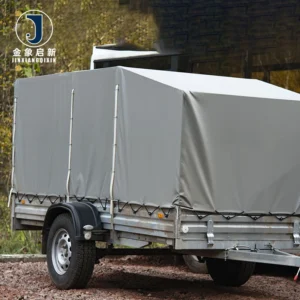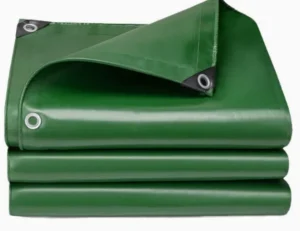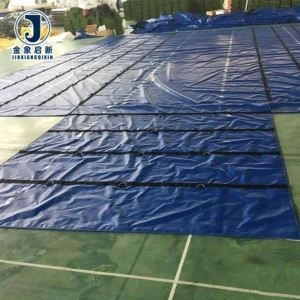

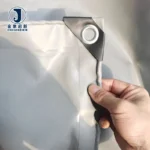
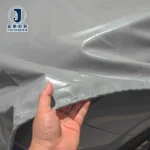
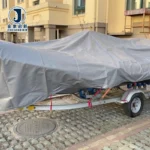
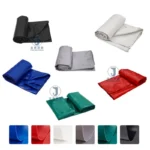
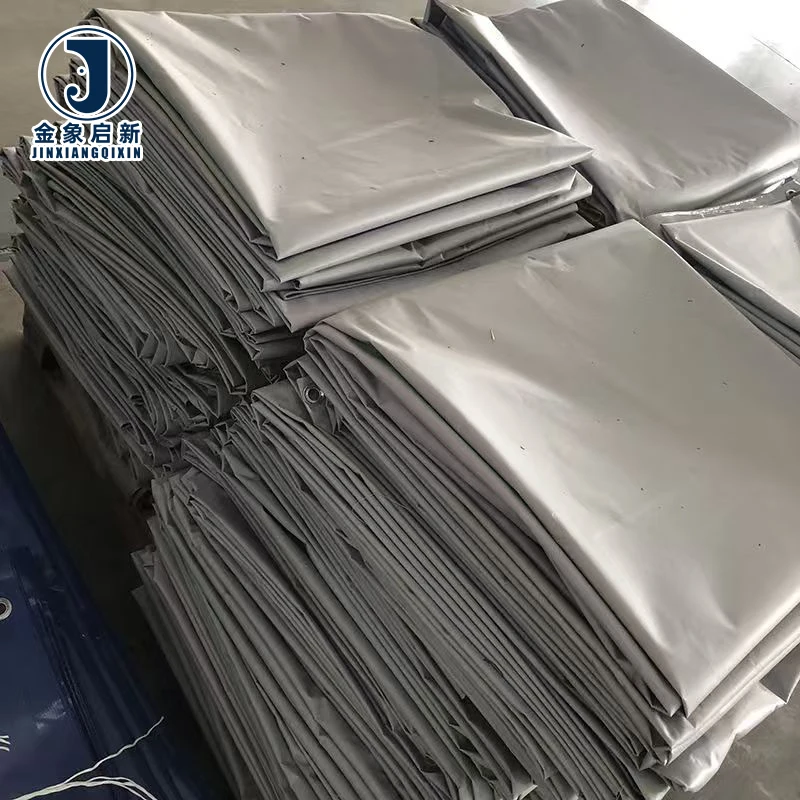
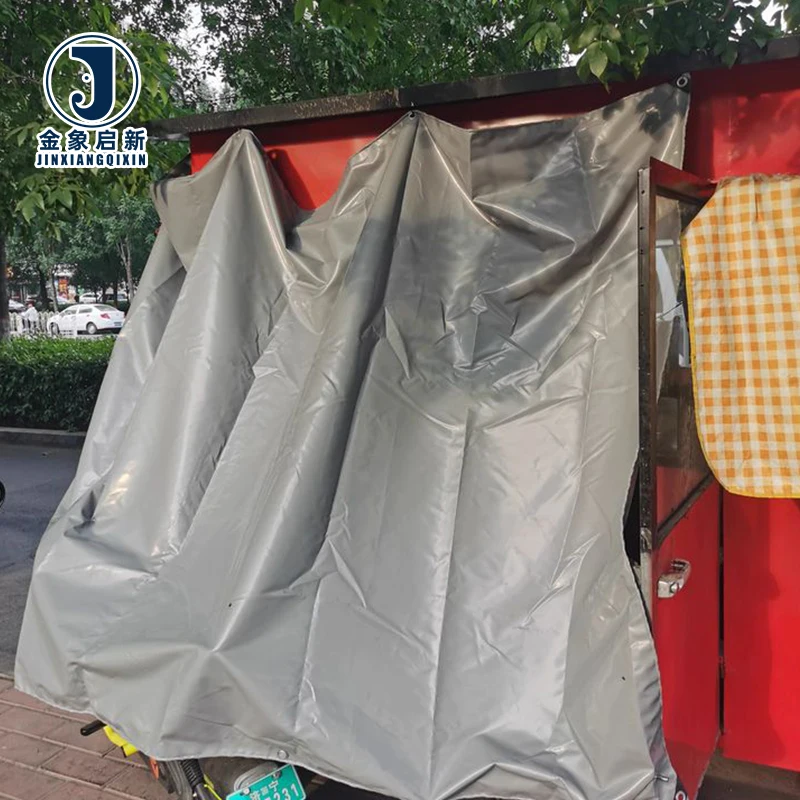
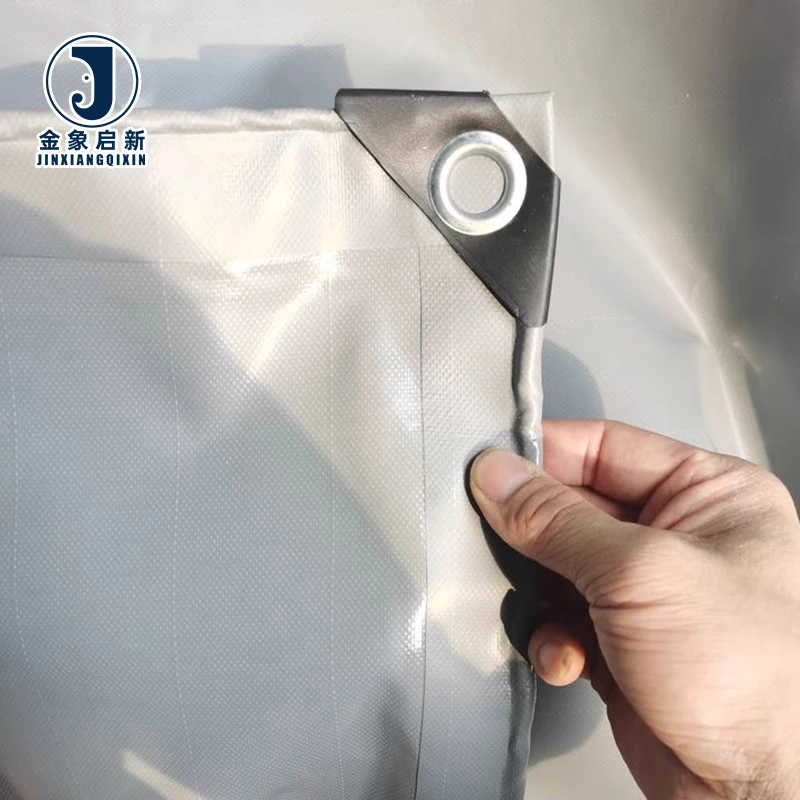
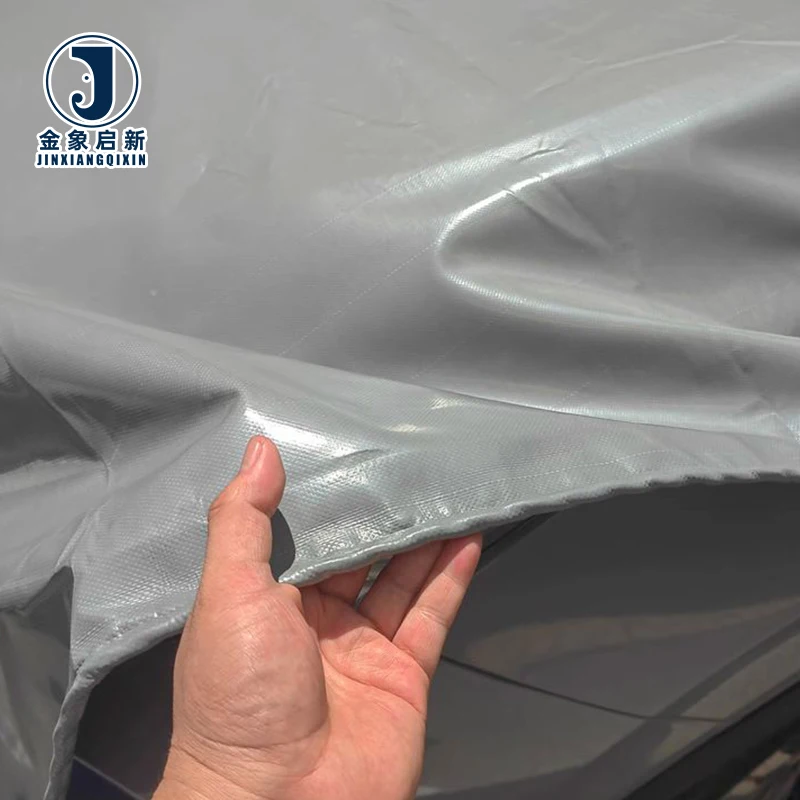
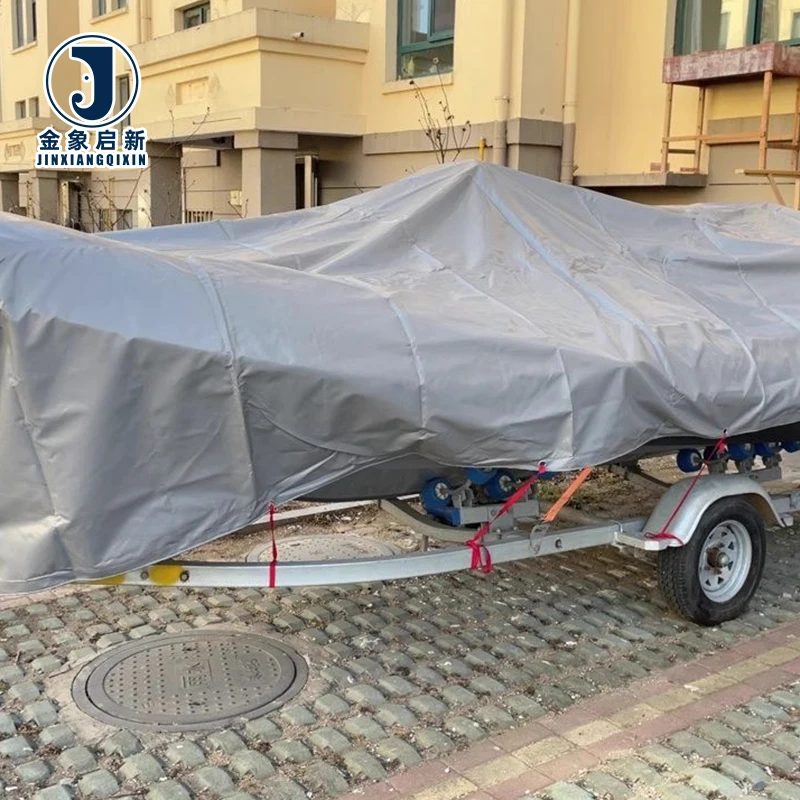
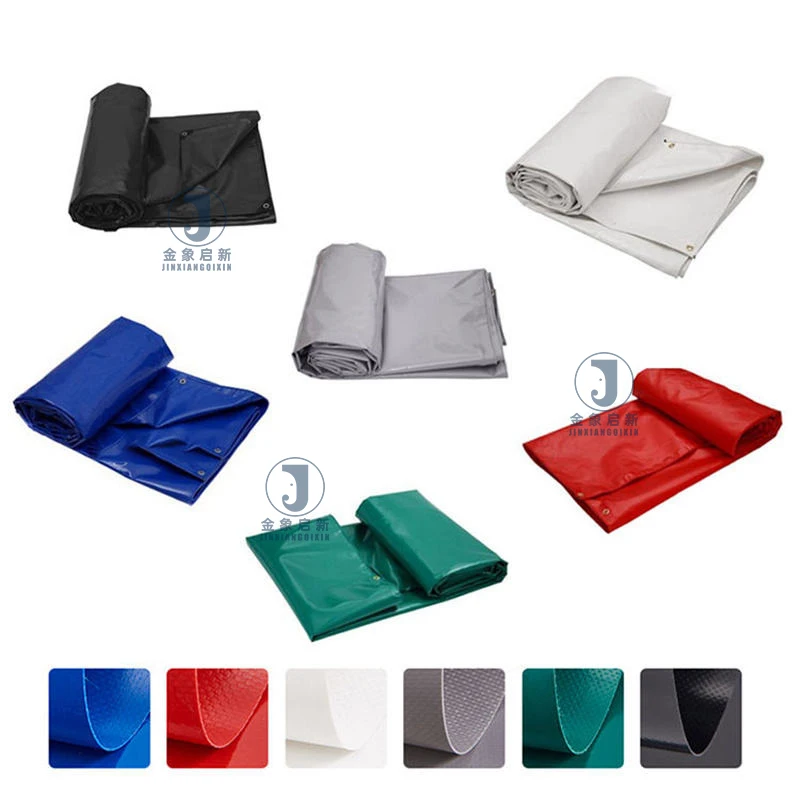
Process Control at Scale — Every roll of Custom PVC Coated Fabric 650gsm with Eyelets – Anti-Static Grade undergoes stage-by-stage QA verification across all three production lines before dispatch.
Technical Specifications
| Parameter | Value |
|---|---|
| Product Type | PVC Coated Fabric |
| Material | 100% high toughness polyester yarn with PVC coating |
| Coating Technology | Lamination technology and hot melt coating technology |
| Weight | 650 GSM |
| Size | 12m x 12m |
| Edge Details | With eyelets |
| Waterproof | Yes |
| Cold Resistant | Cold resistant cracking |
| Anti-Mildew | Mold proof |
| Flame Retardant | Available in flame retardant grades — confirm the grade required for your market |
| Anti-Static | Available as a special treatment — confirm surface resistance or standard required |
| Anti-UV | Available as a treatment — request test basis before production |
| Welding Tear Strength | Excellent welding tear strength (no test standard stated) |
| Certification | ISO and CE (specific certificate numbers not stated) |
| Printing Option | Custom printing accepted |
Application Suitability
| Application | Exposure & Requirement |
|---|---|
| Truck side curtain and flatbed tarpaulin | Constant flexing at hinge points, road debris abrasion, UV exposure, wind load tension |
| Industrial ventilation duct fabrication | Internal airflow abrasion, static charge accumulation, fire safety compliance in confined spaces |
| Tensioned membrane structures | Permanent UV exposure, wind uplift load, high-frequency welded seam integrity |
| Heavy equipment and pipe canopy covers | Mechanical puncture risk, water ingress, long-term outdoor weathering |
Why Stated GSM Does Not Guarantee Material Integrity on Arrival
The PVC coated fabric 650gsm you specify on a purchase order can arrive measurably lighter when coating weight is not independently controlled from base fabric construction. Coating weight and base yarn denier must be verified as a combined system, not assumed from a single GSM figure.
Buyers regularly receive rolls where the stated gsm reflects a theoretical target rather than the actual coated weight measured post-production. This gap opens when coating thickness drifts during the lamination pass or when the base fabric knitting density varies between batches. For industrial applications like ventilation ducts and truck curtains, the consequence is a material that fails earlier at stress points and weld seams than expected. [NEED_CITE: tensile and tear test methods for coated fabrics per ISO 1421]
Lamination and Hot Melt Coating Adhesion Mechanics
The dual-method coating process used for this Custom PVC Coated Fabric 650gsm with Eyelets – Anti-Static Grade combines lamination with hot melt application. Lamination bonds the PVC film to the polyester base under heat and pressure, producing a uniform coating layer that resists delamination during flexing. Hot melt coating adds a secondary bonding pass that improves adhesion at the yarn intersection points. Together, these methods produce a PVC coated fabric 650gsm that maintains coating integrity when the material is folded, welded, or subjected to repeated mechanical stress at tie-down points.
Base Fabric Construction and Load-Bearing Behaviour
The 100% high toughness polyester yarn base fabric provides the structural backbone of this material. The knitting density and yarn denier determine how load transfers across the warp and weft directions when the fabric is tensioned over a load or inflated as a duct. A denser knit pattern distributes stress more evenly across adjacent yarns, reducing the risk of a single broken yarn propagating into a full tear. For applications such as truck trailer covers and tensioned structures, this base fabric construction directly governs how the material behaves under sustained wind load and dynamic road vibration. [NEED_CITE: relationship between base fabric denier and tear propagation in coated textiles]
Reading the Specification Sheet Beyond the GSM Number
A 650 GSM rating places this material in the medium-to-heavy duty range for PVC coated fabrics used in transport and industrial applications. The total gsm is the sum of the base fabric weight and the PVC coating weight on both sides. A heavier coating does not automatically mean higher tensile strength — it may simply add thickness without contributing to load-bearing capacity. The lamination and hot melt coating technology ensures that the PVC penetrates the base fabric structure rather than sitting as a surface layer, which improves the bond strength and reduces the chance of coating flaking after prolonged UV exposure or repeated folding.
The cold resistant cracking property is relevant for fleets and construction sites operating in low-temperature environments where standard PVC compounds become brittle. Anti-static treatment, when specified, addresses static charge accumulation inside ventilation ducts or over truck loads carrying combustible materials. Flame retardant grades are available, but the specific standard — whether DIN 4102 B1, NFPA 701, or M2 — must be confirmed against the compliance requirements of the destination market before production begins.
What Happens When Coating Weight and Seam Design Are Misaligned
When the PVC coating is too thin relative to the mechanical load at flex points, the coating cracks before the base fabric reaches its tensile limit. The reverse is also problematic — an overly thick coating on a lighter base fabric creates a stiff material that resists folding and concentrates stress at welded seams. In both cases, the failure initiates at the weld line rather than in the body of the fabric. For truck side curtains that flex every time the trailer rounds a corner, or ventilation ducts that pulse with airflow pressure changes, the seam is the most loaded point in the entire assembly. [NEED_CITE: common failure modes in PVC coated fabric welded seams under cyclic loading]
Procurement Advantages Backed by Process Evidence
Dedicated QA/QC operates at every production stage for this material, with 100% inspection before shipment — coating weight is measured per roll, not assumed from line settings. The 10-person R&D team handles material selection, custom sizing, and sample development, allowing specification adjustments before bulk production commits. Three full production lines and 36 sets of professional equipment support bulk volume with maintained consistency across rolls in the same order. Near 30 years of focused coated fabric production provides the process control depth needed to hold coating weight and adhesion within tolerance across long production runs. Samples are developed within days for custom requirements, giving buyers a physical reference to validate before the main order enters production.
Documentation & Verification
- Material specification sheet stating confirmed 650 GSM, base fabric yarn denier, and lamination plus hot melt coating method
- Test report for flame retardant grade or anti-static surface resistance when applicable to your market compliance
- Pre-shipment inspection record with per-sheet weight verification against the stated 650 GSM
- ISO and CE certificates and certificate of origin provided with dispatch documentation
- Roll or sheet packing list with batch reference traceable to production line and date
Fabrication, Handling & Storage
- High-frequency welding parameters should be tested on sample pieces of the 650 GSM material to optimise temperature and dwell time for seam strength
- Eyelet placement along the 12m x 12m sheet edges requires reinforced hem tape to distribute tie-down load beyond the eyelet ring itself
- Store PVC coated fabric rolls upright on a flat surface to prevent permanent creasing in the lamination coating layer
- Unfold the material in temperatures above freezing to avoid cold cracking at fold lines during initial installation
- Clean with mild soap and water; avoid solvent-based cleaners that can degrade the PVC coating surface and anti-static treatment
Preparing Your Material Inquiry
Provide the specific application environment — whether this PVC coated fabric 650gsm will be used for truck side curtains, ventilation duct fabrication, or tensioned structures — along with the mechanical and environmental loads it must withstand. Specify any fire safety or anti-static compliance standards required by your destination market so the correct treatment grade is selected. Confirm whether you need finished 12m x 12m sheets with eyelets or roll stock in custom widths for your own fabrication line, and whether sample approval is required before bulk production.
Frequently Asked Questions
Q: How is the 650 GSM weight verified before shipment?
A: Each sheet or roll is weighed during the pre-shipment inspection stage. The measured weight is compared against the stated 650 GSM specification, and the result is recorded in the inspection report provided with your dispatch documentation. Any deviation outside tolerance is flagged before the material leaves the facility.
Q: Which flame retardant standards can this PVC coated fabric meet?
A: Flame retardant grades are available as a special coating treatment. The specific standard — such as DIN 4102, NFPA 701, or M2 — must be requested at inquiry stage so the correct additive formulation is applied. A test report for the specified grade is provided upon request before production begins.
Q: How does the lamination coating affect high-frequency welding performance?
A: The lamination and hot melt coating method produces a PVC surface that bonds consistently under high-frequency welding. The coating penetrates the base fabric rather than sitting on top, which improves seam adhesion at flex points. Welding parameters should be validated on sample material to optimise seam strength for your specific duct or curtain design.
Q: What anti-static treatment options are available for ventilation duct applications?
A: Anti-static treatment can be incorporated into the PVC coating formulation. The surface resistance level and the test standard applicable to your project must be specified at inquiry stage. This ensures the correct additive concentration is used and that a matching test report accompanies your shipment documentation.