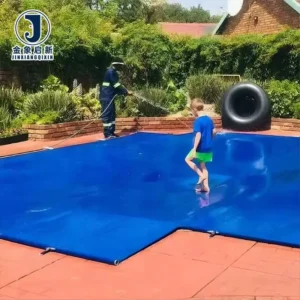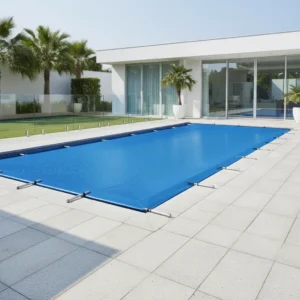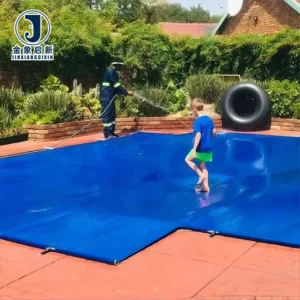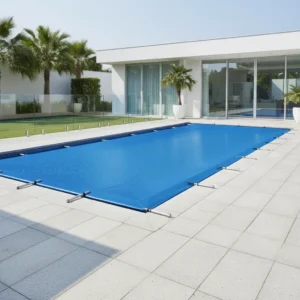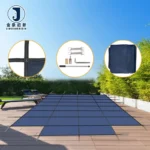

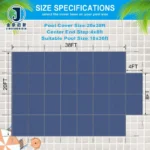

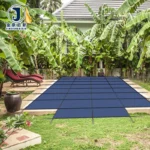
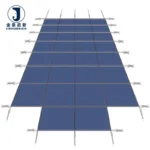
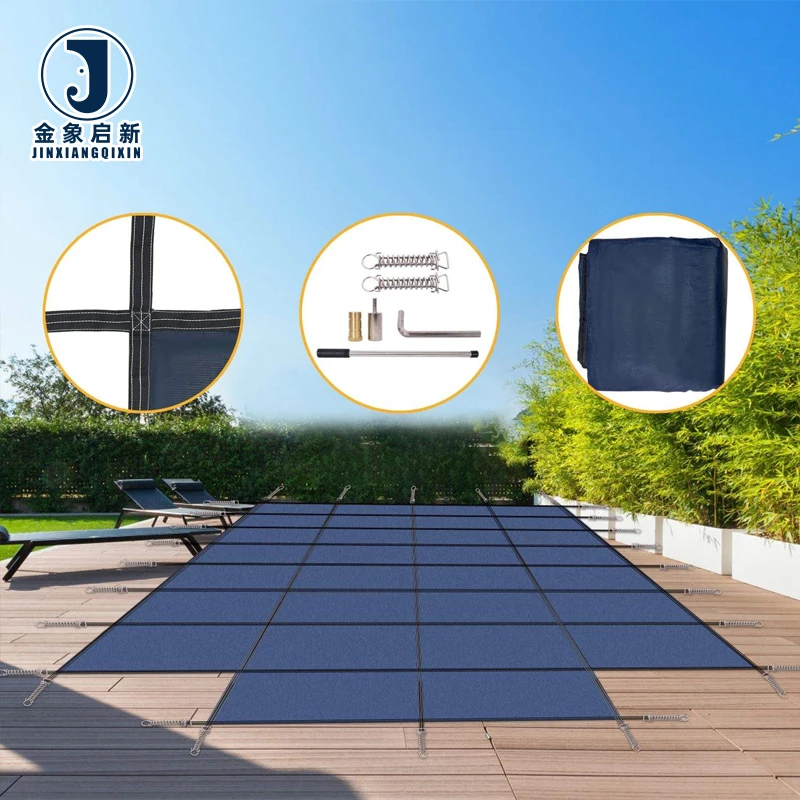
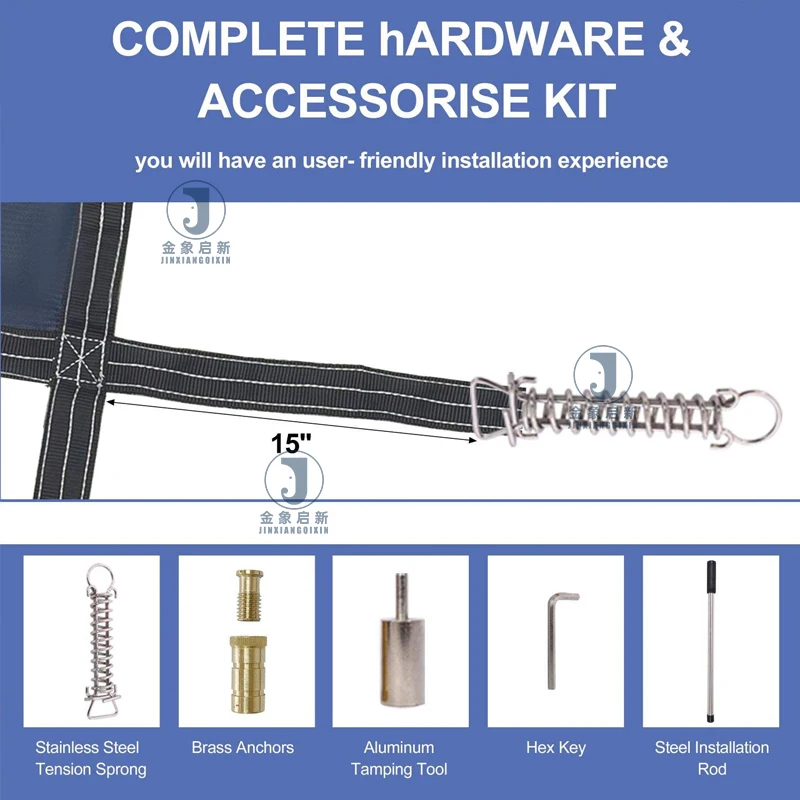
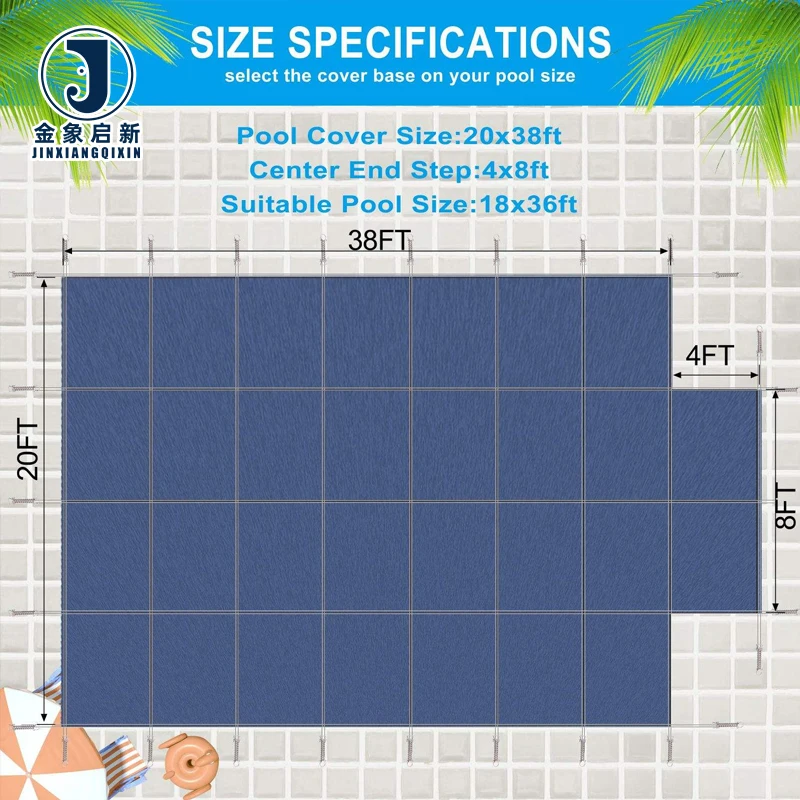
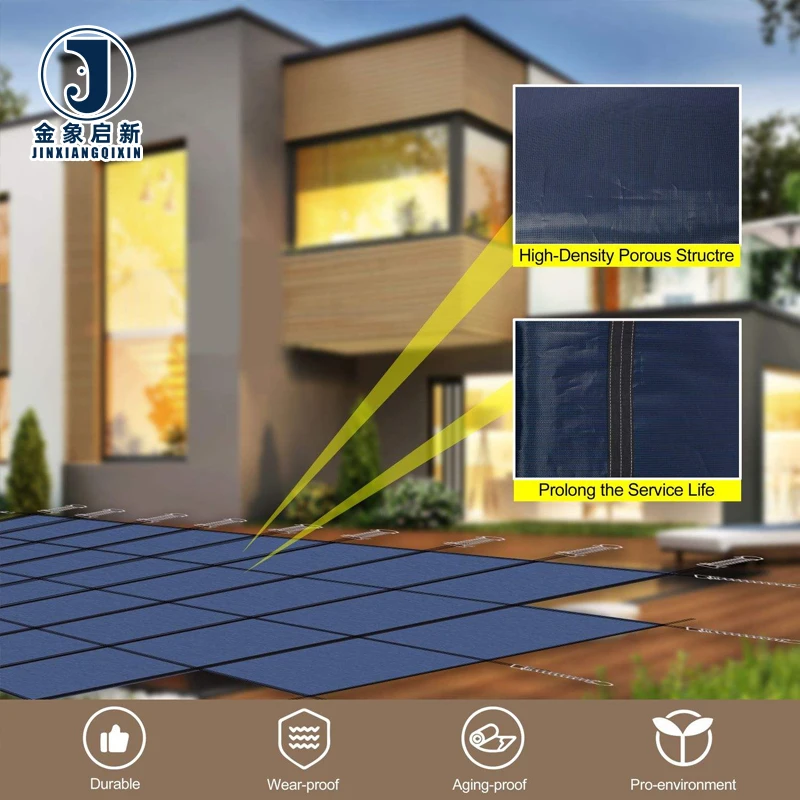
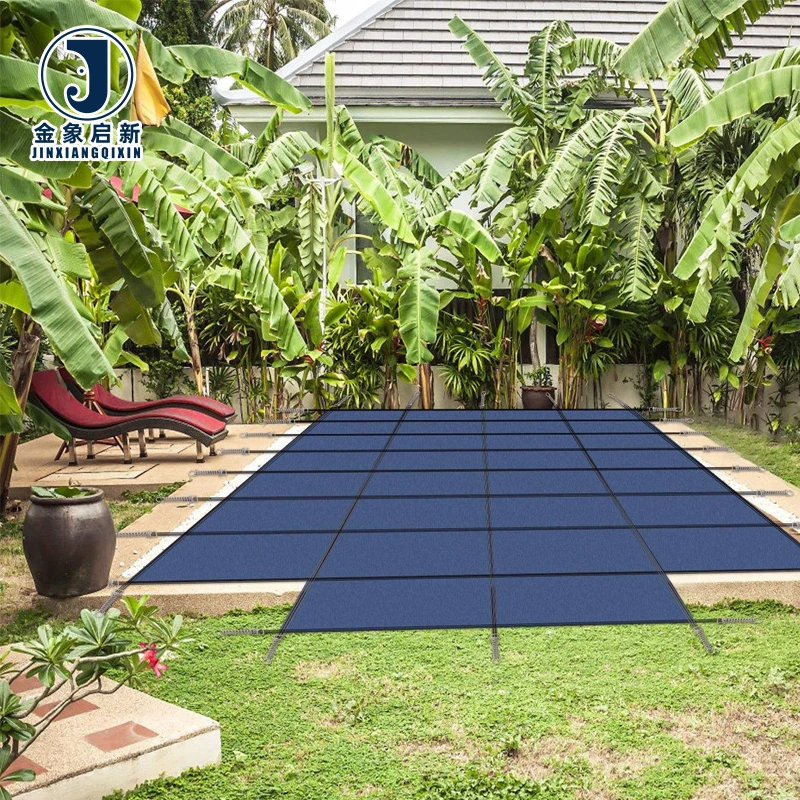
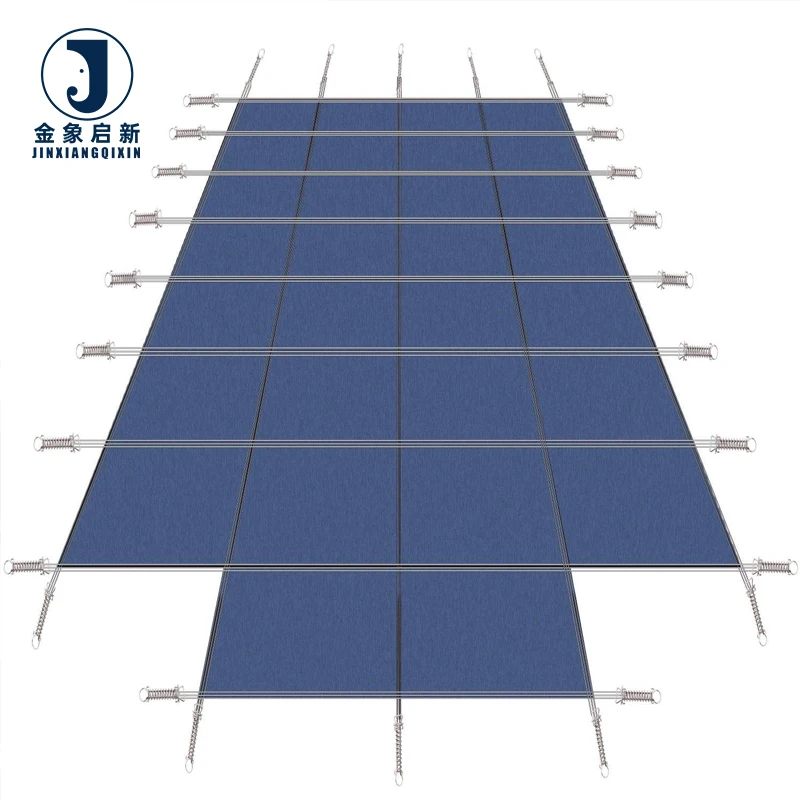
Coating Weight Traceability — every roll dispatched with a measured GSM record matched against the quoted PVC pool cover specification, preventing the gap between quotation and arrival that causes project rework.
Technical Specifications
| Parameter | Value |
|---|---|
| Product Type | PVC Coated Pool Cover |
| Base Fabric | High tenacity polyester mesh |
| Coating | PVC (Laminated / Hot-melt coating) |
| Weight Options | 350gsm / 420gsm / 500gsm / 550gsm / 600gsm / 750gsm |
| Thickness Options | 0.32mm / 0.35mm / 0.4mm / 0.45mm / 0.5mm / 0.65mm |
| Roll Width | 2.0m / 2.1m |
| Roll Length | 75m (2.0m width) / 50m (2.1m width) |
| Colour Range | Blue / Red / Yellow / Light blue / Grey (custom colours available) |
| Finish | Custom finish per specification |
| Key Features | Waterproof, cold crack resistance, anti-mildew; flame retardant and anti-static treatment available in grades to be confirmed per project requirement |
| Weld Strength | High tearing strength for heat-welded seams |
| Certifications | ISO, CE |
Application Suitability
| Application | Exposure & Requirement |
|---|---|
| Inground pool winter safety cover | Debris load, snow accumulation, freeze-thaw cycling, mesh drainage requirement |
| Hotel and commercial pool enclosure | Frequent removal and refit, UV exposure, chemical splash from pool treatment |
| Aquaculture tank and fish pond liner | Continuous water immersion, bio-fouling, puncture risk from substrate |
| Inflatable and membrane pool structure | Tensioned fabric, wind load, air pressure differential, welded seam integrity |
What Certified Grade Actually Means for a PVC Coated Pool Cover
A fire-retardant or anti-static claim without a named test standard is a liability, not a specification.
Pool covers installed in commercial venues, hospitality sites and public facilities must meet the fire classification demanded by the local authority having jurisdiction. When the material data sheet states "flame retardant" without citing DIN 4102, NFPA 701 or the equivalent regional standard, the installer carries the compliance risk — not the supplier. The same applies to anti-static treatment in environments where dust or combustible atmospheres are present [NEED_CITE: fire classification standards for tensioned fabric structures in commercial recreation]. Sourcing PVC coated pool cover material without verified documentation means the cover may pass a visual inspection but fail the site safety audit.
Coating Adhesion and the Weld Line Problem
The most common failure point on a tensioned pool cover is not the fabric field but the heat-welded seam where panels join. Laminated and hot-melt coating technologies both aim to lock the PVC layer to the polyester base, but they behave differently under repeated flex. Hot-melt coating drives the PVC into the mesh interstices under heat and pressure, producing a bond that resists peel forces at the weld edge. When a PVC coated pool cover is tensioned over an inground pool and subjected to snow load or wind uplift, the seam sees cyclic stress that a poorly bonded coating will delaminate from long before the base fabric reaches its tensile limit.
Treatment Grades and Site Compliance Documentation
Flame retardant and anti-static treatments are available across the product range, but the grade must be matched to the compliance standard your project specifies before production begins. A commercial hotel pool in the EU may require classification to a specific EN standard, while a mining-site containment pool may demand anti-static certification aligned with site safety protocols. Confirming the grade at enquiry stage — and receiving the corresponding test report with the shipment — removes the gap between what was quoted and what the site inspector accepts [NEED_CITE: test method standards for flame retardant coated fabrics].
Reading GSM, Thickness and Base Fabric Together
Weight in GSM and total thickness are often treated as proxies for strength, but on a PVC coated pool cover they only tell part of the story. The high tenacity polyester yarn denier and the mesh weave density determine how load transfers through the base fabric, while the coating weight contributes waterproofing, UV screening mass and weld surface area. A 550gsm fabric with a dense base weave may outperform a 650gsm fabric built on a looser mesh when the load concentrates at an eyelet or corner patch. Thickness correlates with puncture resistance against sharp substrate edges in pond liner use, but excessive coating thickness on a light base mesh adds weight without proportional tear gain. Specifiers should request the base fabric denier and pick count alongside GSM to evaluate the construction as a system [NEED_CITE: tensile and tear test methods for coated fabrics per ISO 1421].
The Hidden Cost of Specifying on Price per Square Metre Alone
When a PVC coated pool cover is sourced on unit cost without verifying GSM on arrival, the material that shows up can be lighter than the sample approved at quotation stage. The cover installs correctly and holds through the first season, but by the second winter the lighter coating offers less UV mass and the thinner fabric flexes more at the weld, accelerating seam fatigue. For commercial pools where cover replacement means draining, cleaning and re-commissioning, the labour cost of a premature change-out exceeds the material saving many times over. Colour variation between rolls in the same order is a related risk — visible once panels are welded side by side on a large hotel pool — and only pre-shipment roll-by-roll inspection catches it before dispatch [NEED_CITE: colour consistency measurement methods for coated fabric batches].
Why Technical Buyers Source This Fabric Here
Process control over coating weight and adhesion is maintained across three full production lines with dedicated QA at every stage, meaning the GSM stated on the quotation is the GSM measured on the roll before it ships. A ten-person R&D team handles material selection, custom sizing and sample development, allowing a PVC coated pool cover specification to be validated with a physical sample before bulk commitment. One hundred percent pre-shipment inspection covers weight, colour and surface integrity roll by roll, not by batch sampling. Documentation — material data sheets, test reports for flame retardant and anti-static grades where specified, ISO and CE certificates — ships with the consignment. Custom widths, colours and cut sizes are supported with sample turnaround measured in days, not weeks.
Documentation & Verification
- Material specification sheet stating exact GSM, base fabric denier, coating weight and treatment type for each roll
- Test report for flame retardant or anti-static grade, matched to the compliance standard nominated at enquiry
- Pre-shipment inspection record with per-roll GSM and colour verification before dispatch
- ISO and CE certificates included in the shipping documentation package
- Roll packing list with net weight, dimensions and roll count for customs clearance
Fabrication, Handling & Storage
- Heat-weld at temperatures matched to the PVC coating method — laminated and hot-melt grades respond differently to hot air settings
- Reinforce corner patches and eyelet zones with additional ply, as the high tenacity mesh carries point loads differently than the field
- Store rolls horizontally on a flat rack to prevent creasing through the full 0.32mm to 0.65mm thickness range
- Unroll in ambient temperatures above the cold crack threshold to avoid coating fracture during handling
- Clean with neutral pH detergent to preserve the anti-mildew treatment on the PVC surface
Starting a Technical Enquiry
Provide the pool dimensions, cover type (safety cover, winter cover or membrane enclosure) and the environmental loads the fabric will see — snow, wind uplift, chemical exposure. State the fire classification or anti-static standard your site requires so the correct treatment grade can be confirmed before sampling. Indicate whether you need rolls in standard 2.0m or 2.1m widths, or custom cut panels with specific hem and reinforcement requirements, and the annual volume you are planning against.
Frequently Asked Questions
Q: How is GSM verified on arrival against the quotation?
A: Every roll is weighed and measured during pre-shipment inspection, and the recorded GSM is compared against the quoted specification. The inspection record ships with the documentation package so you can cross-check on receipt. If a discrepancy is found before dispatch, the roll is held and reworked or replaced before it leaves the facility.
Q: Which fire-retardant and anti-static certifications can be supplied?
A: Flame retardant and anti-static treatments are available in grades matched to your project standard. Specify the classification required — such as a named DIN, EN or NFPA standard — at enquiry stage so the correct formulation is applied and the corresponding test report is included with your shipment.
Q: How is colour consistency controlled across multiple rolls?
A: Rolls within the same production batch are compared side by side under controlled lighting before packing. Any roll showing a visible shade deviation from the approved reference is pulled and re-coated. This roll-by-roll check is recorded in the pre-shipment inspection report you receive with the consignment.
Q: What is the difference between laminated and hot-melt coating?
A: Laminated coating bonds a pre-formed PVC film to the polyester mesh under heat and pressure, while hot-melt coating drives molten PVC directly into the mesh interstices. Hot-melt generally produces higher peel strength at welded seams, making it the preferred choice for pool covers where seam integrity under cyclic tension is critical.
Q: What are the lead times for custom widths and cut sizes?
A: Custom colours and non-standard widths require a production run with typical multi-week lead times depending on volume and treatment specification. A sample is produced and shipped for approval before bulk commitment. Standard roll widths of 2.0m and 2.1m in stocked colours can ship on shorter timelines subject to inventory.