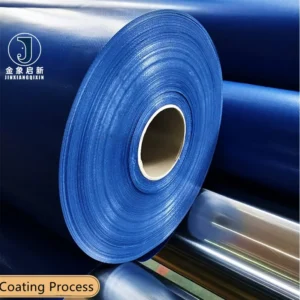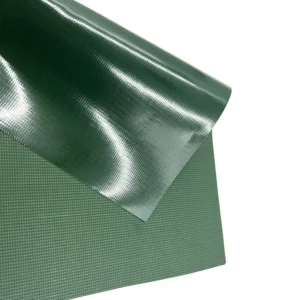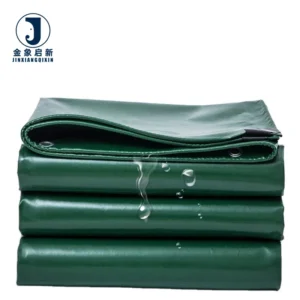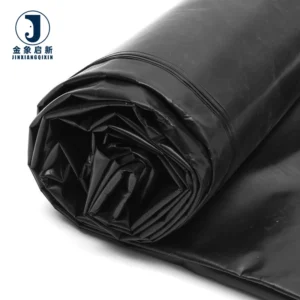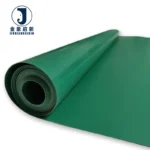


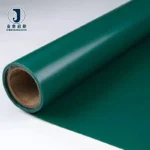
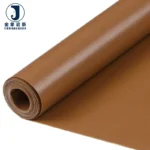
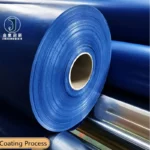
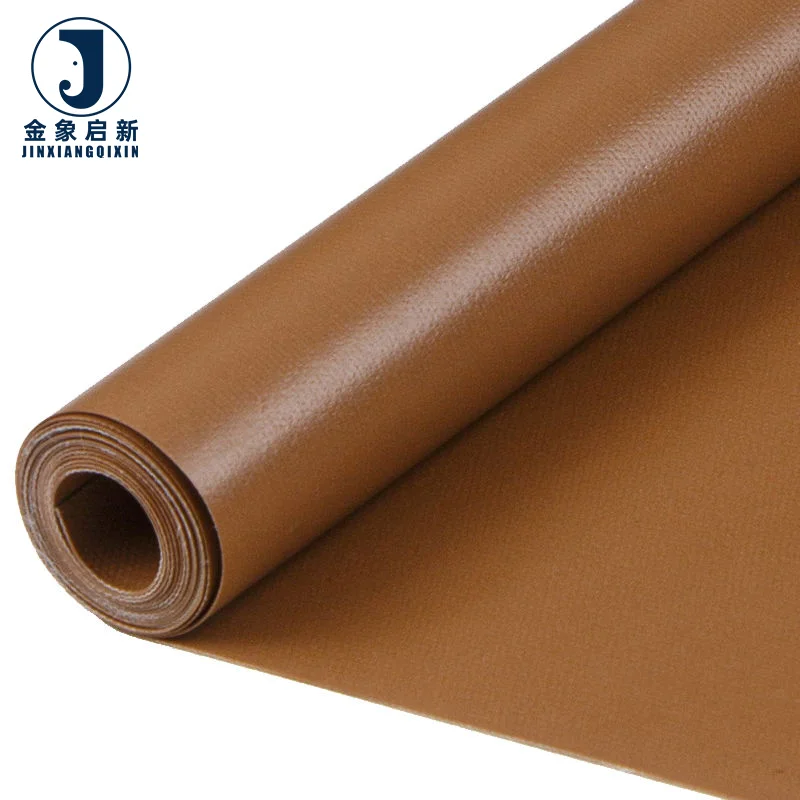
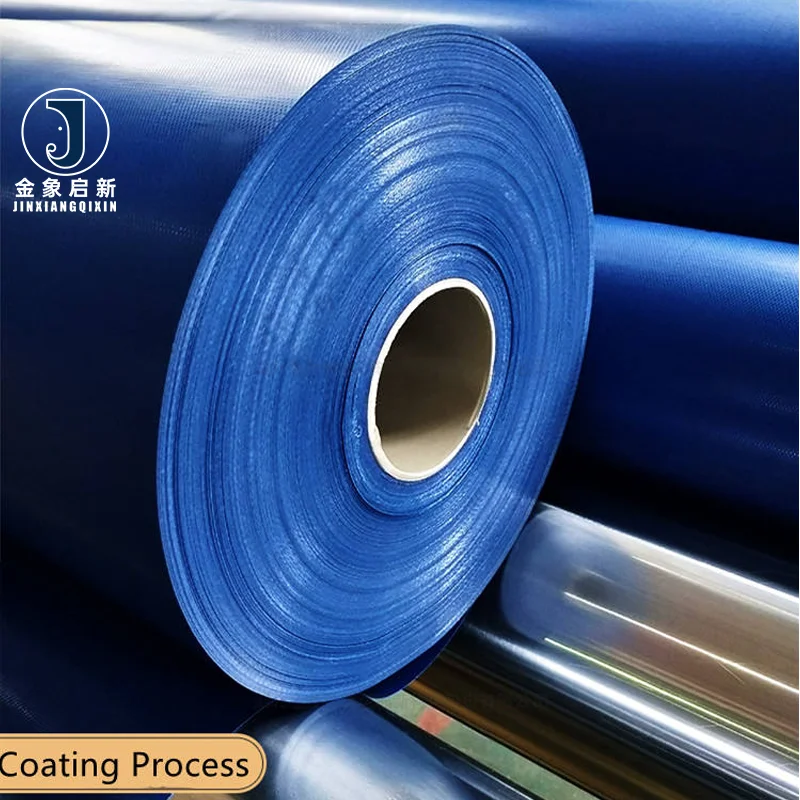
Deep Coating Process Control — verified GSM from 350 to 900 with matched base fabric denier and tensile data, supported by nearly 30 years of specialist coated fabric production and full compliance documentation for industrial air duct and ventilation environments.
Technical Specifications
| Parameter | Value |
|---|---|
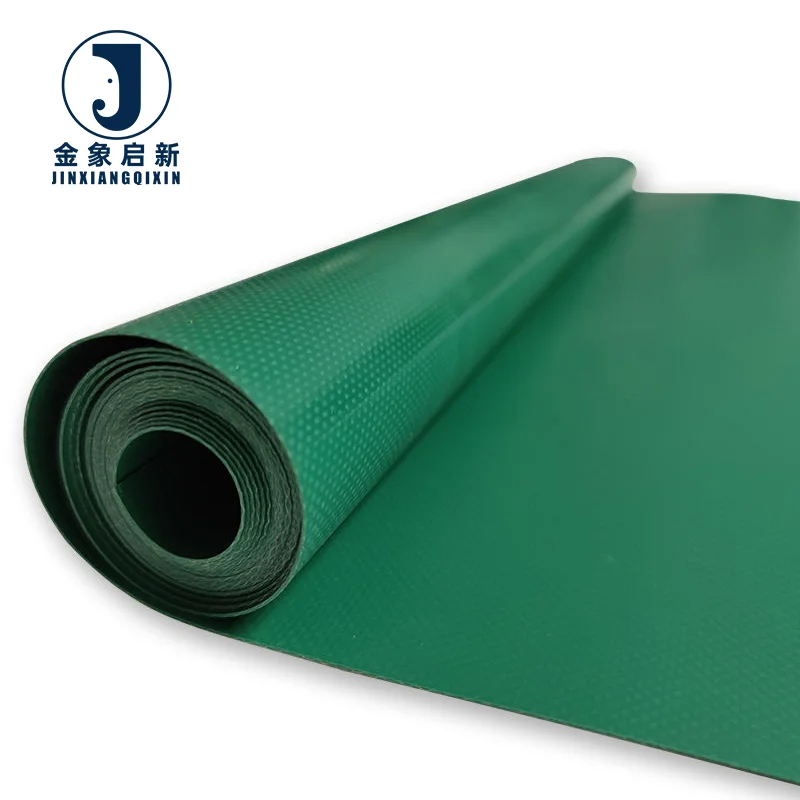
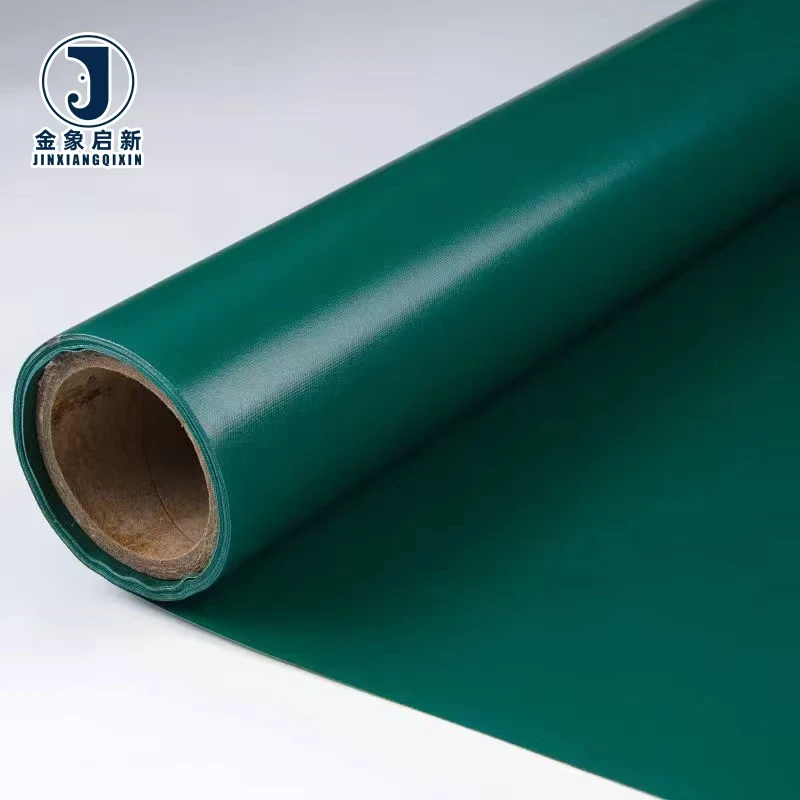
| Product Type | PVC Coated Tarpaulin Roll |
| Material | PVC Coated Polyester Base Fabric |
| Yarn Count Options | 500D×840D / 500D×1000D / 1000D×1000D / 1000D×1300D / 1300D×1300D / 1000D×2000D |
| Density Options | 20×20 / 30×19 / 30×15 |
| Weight (GSM) Range | 350, 400, 420, 500, 600, 650, 750, 900 |
| Thickness Range | 0.29 mm to 0.65 mm |
| Tensile Strength (Warp) | 1,650 N to 3,900 N |
| Tensile Strength (Weft) | 1,600 N to 3,500 N |
| Edge Finishing | High-temperature heat-sealed seamless edge wrapping with 5 mm rope reinforcement |
| Grommets | 3 cm enlarged aluminum alloy buttonhole |
| Corner Treatment | Reinforced corners on all sides |
| Flame Retardant | Available in flame retardant grades — confirm the grade required for your market |
| Anti-UV | Available with anti-UV treatment — confirm test basis required |
| Waterproof Performance | Fully waterproof coated construction |
| Key Features | Water resistant, waterproof, flame retardant (grade on request), anti-UV (grade on request) |
| Customisation | Size, hole spacing, colour, brand printing |
| Certification | ISO, CE |
Application Suitability
| Application | Exposure & Requirement |
|---|---|
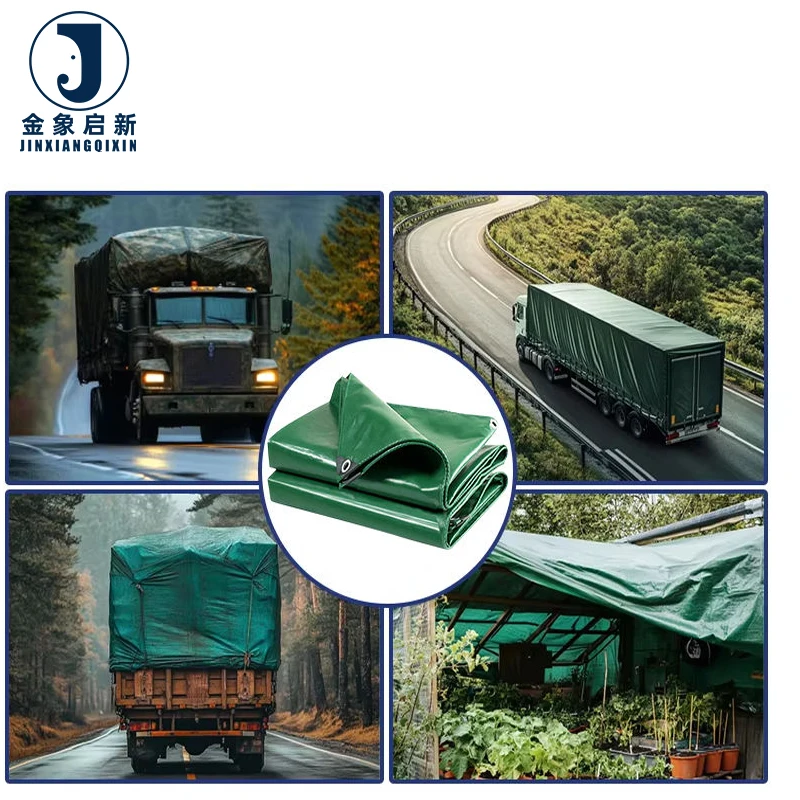
| Mining & Tunnelling Ventilation Duct | Continuous airflow, abrasive dust, underground fire code compliance, anti-static requirement |
| Aviation Ground Ventilation | Jet blast exposure, strict fire-retardant certification, rapid deployment and collapse |
| Inflatable & Membrane Structures | Biaxial tension loading, UV exposure, heat-welded seam integrity over large panels |
| Specialist Industrial Covers | High mechanical stress, chemical splash, abrasion at fold lines and tie-down points |
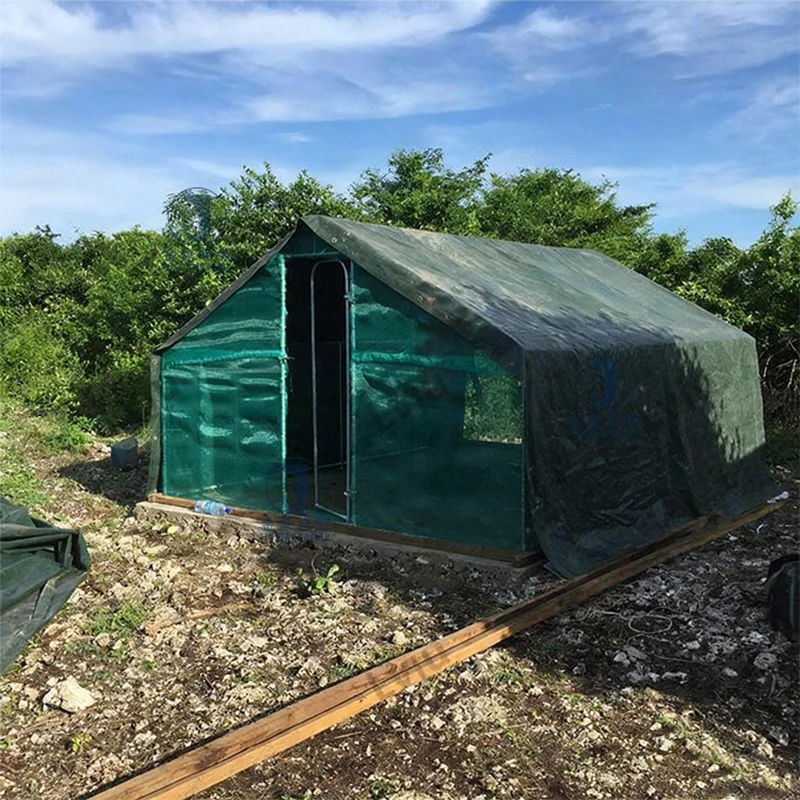
| Construction Site Containment | Wind load, scaffolding abrasion, temporary weather barrier, fire safety on site |
Why Fire Code Compliance Starts at the Roll Level, Not the Finished Duct
Every roll must ship with a test report that matches the flame retardant grade specified on the quotation — no grade, no installation approval.
Ventilation duct in mining and aviation environments faces immediate inspection against site-specific fire codes. Fabric supplied without the correct certification fails at the first audit, halting operations and triggering costly replacement. PVC coated tarpaulin roll stock destined for duct fabrication must carry documentation tied to the exact grade — whether M2, B1, NFPA 701, or DIN 4102 — verified before it leaves the factory. [NEED_CITE: DIN 4102 fire classification for building materials]
Coating Weight and Adhesion: The Foundation of Duct Performance
Ventilation ducts operate under constant internal pressure, flexing with every fan cycle. The PVC coating must bond to the polyester base fabric with sufficient adhesion to prevent delamination at the weld line. Our PVC coated tarpaulin roll stock is produced with deep process control over coating weight, ensuring the stated GSM is what arrives on your cutting table. Base fabric denier selection — from 500D×840D for lighter duct applications to 1300D×1300D for heavy-duty mining ventilation — determines the structural backbone of the finished duct.
Anti-Static Requirements for Underground and Aviation Environments
Mining and tunnelling ventilation demands anti-static fabric to prevent spark ignition in combustible atmospheres. Aviation ground-support ducts face similar electrostatic discharge risks near fuel-handling zones. Anti-static treatment is available for PVC coated tarpaulin roll orders destined for these environments — surface resistance values and test certification must be confirmed at inquiry stage to match your project’s regulatory framework. [NEED_CITE: anti-static requirements for underground ventilation materials]
How GSM, Denier, and Density Interact in Ventilation Fabric
Selecting ventilation duct fabric based on GSM alone misses the structural picture. A 650 GSM roll woven at 20×20 density with 1000D×1300D yarn delivers different tensile behaviour than a 650 GSM roll at 30×19 density with 500D×1000D yarn — the denser weave concentrates more yarn crossings per unit area, affecting tear propagation resistance and weld surface texture. Thickness ranges from 0.29 mm for lightweight duct sections to 0.65 mm for heavy-duty mining panels, directly correlating with the GSM and base fabric construction. Tensile strength on the warp axis spans from 1,650 N to 3,900 N depending on denier selection, defining how much internal pressure and mechanical load the finished duct can sustain before deformation.
What Happens When the Roll Specification Does Not Match the Site Requirement
A ventilation duct installed underground without the mandated flame retardant certification forces a complete teardown once the inspector checks the paperwork. Duct fabric that arrives lighter than the quoted GSM stretches and deforms under negative pressure, collapsing the airflow cross-section. PVC coated tarpaulin roll batches with inconsistent coating adhesion fail at the heat-welded seam — the fabric survives but the joint peels apart under cyclic loading. [NEED_CITE: tensile and tear test methods for coated fabrics per ISO 1421]
Why Fabricators Choose This Roll Stock
Three full production lines with 36 sets of professional equipment maintain batch-to-batch consistency across large-volume orders. A dedicated 10-person R&D team handles material selection, custom width, and sample development within days for non-standard requirements. Every roll undergoes 100% inspection before shipment with roll-level QA data recorded against the material specification sheet. Nearly 30 years of focused coated fabric production provides process knowledge that directly translates to reliable coating adhesion and accurate GSM delivery. ISO and CE certification underpins the documentation package shipped with every dispatch.
Documentation & Verification
- Material specification sheet stating exact GSM, base fabric denier, and coating type for every roll
- Flame retardant and anti-UV test reports matched to the grade specified at order confirmation
- Pre-shipment inspection record with roll-level quality data before container loading
- ISO and CE certificates included with every dispatch package
- Certificate of origin and customs documentation prepared for international shipment
Fabrication, Handling & Storage
- Heat-weld at temperatures suited to the specific GSM and coating thickness to ensure full seam adhesion
- Store rolls upright on pallets to prevent flat-spot deformation of the PVC coating surface
- Allow cold-stored rolls to acclimatise before unrolling to avoid cracking at low-temperature brittle point
- Plan panel cutting layout to minimise offcut waste from the specified roll width
- Use compatible PVC-based repair patches and solvent cement for on-site duct damage repair
Before You Enquire: What We Need to Know
Provide your target ventilation duct diameter, operating pressure range, and the fire-retardant or anti-static standard your site mandates. Specify the roll width that suits your fabrication equipment and the annual volume you anticipate. If custom colour or brand printing is required, share Pantone references and artwork at inquiry stage so we can confirm feasibility and sample lead time.
Frequently Asked Questions
Q: Which flame retardant grades are available for ventilation duct fabrication?
A: We supply PVC coated tarpaulin roll stock in flame retardant grades aligned with standards including M2, B1, NFPA 701, and DIN 4102. Specify the fire code your project requires at inquiry stage so we can match the treatment and provide the corresponding test report with your shipment.
Q: How is anti-static certification verified for mining ventilation applications?
A: Anti-static treatment is applied during the coating process and verified through surface resistance testing. The test report documenting the measured resistance values ships with your roll documentation. Confirm your site’s required surface resistance range before order placement.
Q: How do you guarantee the GSM on each roll matches the quotation?
A: Every roll is measured during the 100% pre-shipment inspection, with coating weight recorded against the stated GSM on the material specification sheet. Rolls that fall outside tolerance are held back. The inspection data is available for review before dispatch.
Q: What roll widths and lengths are available for duct panel cutting?
A: Custom width and length options are available to match your fabrication table and panel cutting pattern. Share your required dimensions and duct diameter at inquiry stage, and our R&D team will develop a sample confirming the specification within days.
Q: Is this fabric compatible with hot air welding for duct construction?
A: Yes. The PVC coating formulation supports hot air welding, and the heat-sealed edge finishing provides a consistent welding surface. Coating adhesion is controlled during production to ensure weld strength meets or exceeds the base fabric tensile capacity.