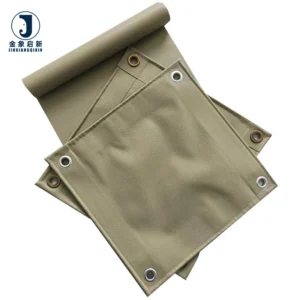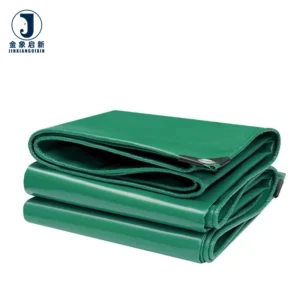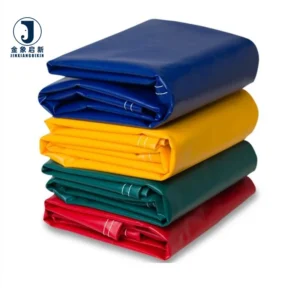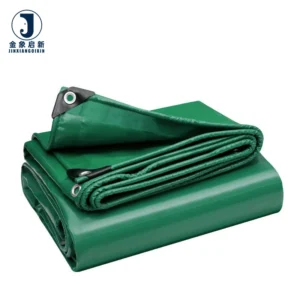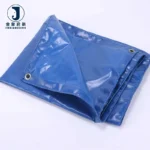
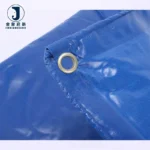
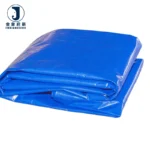
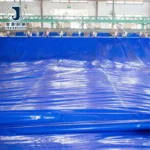
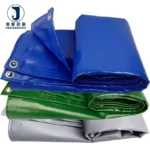
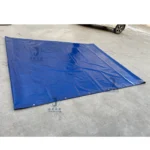
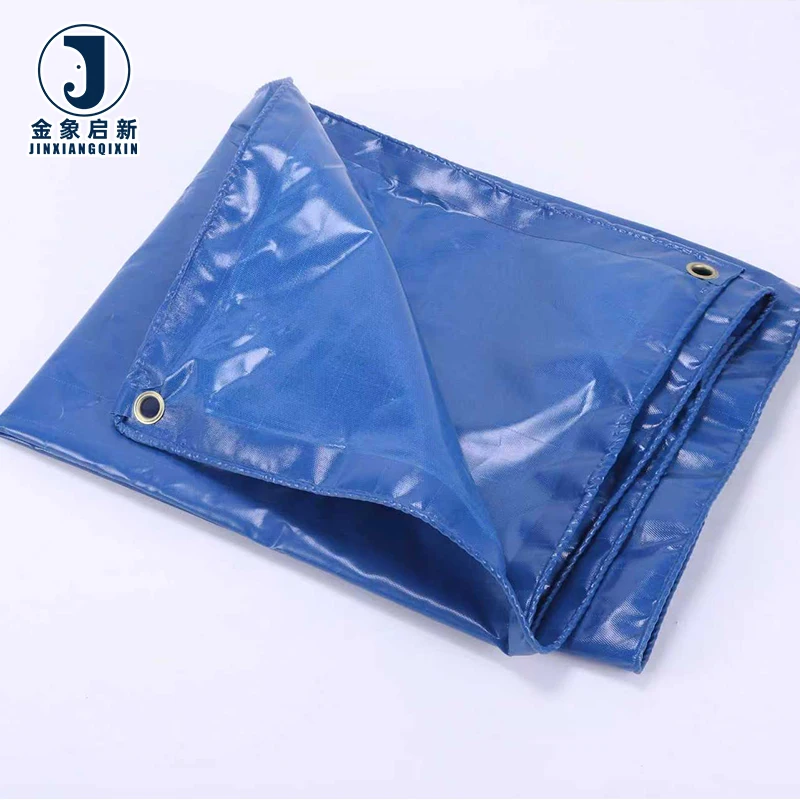
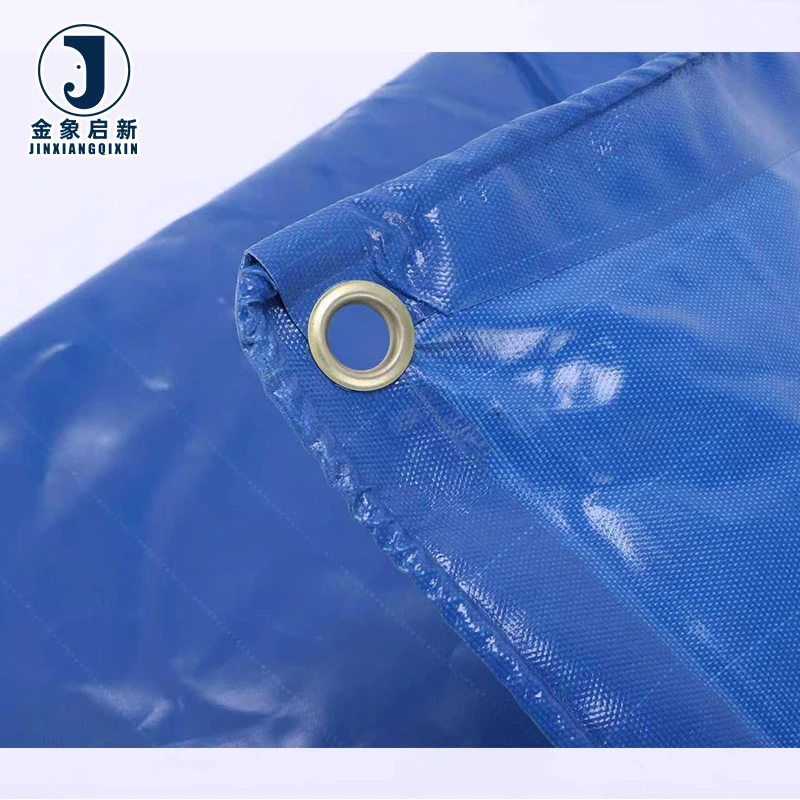
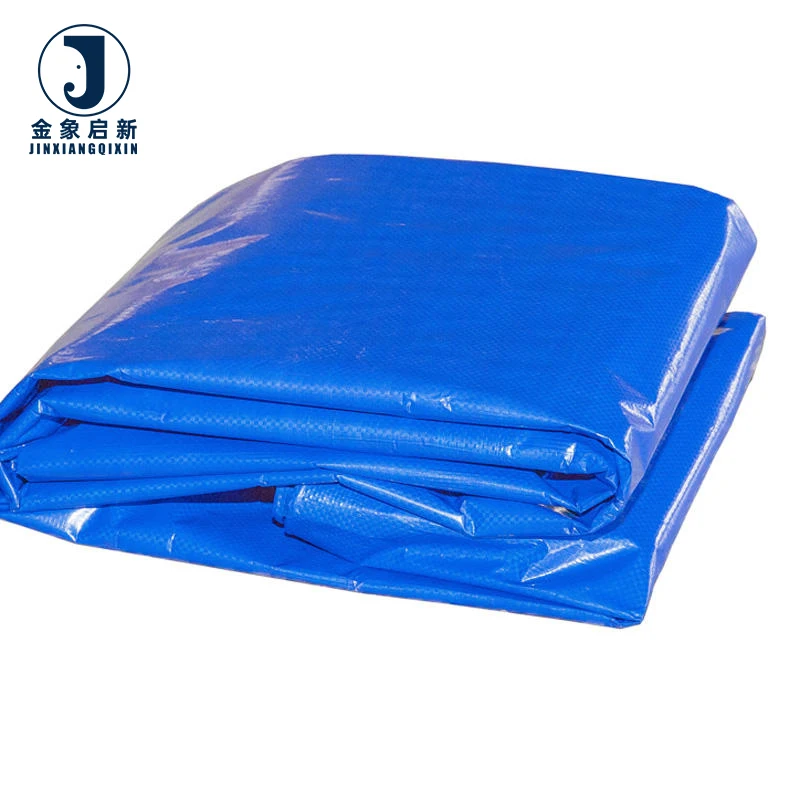
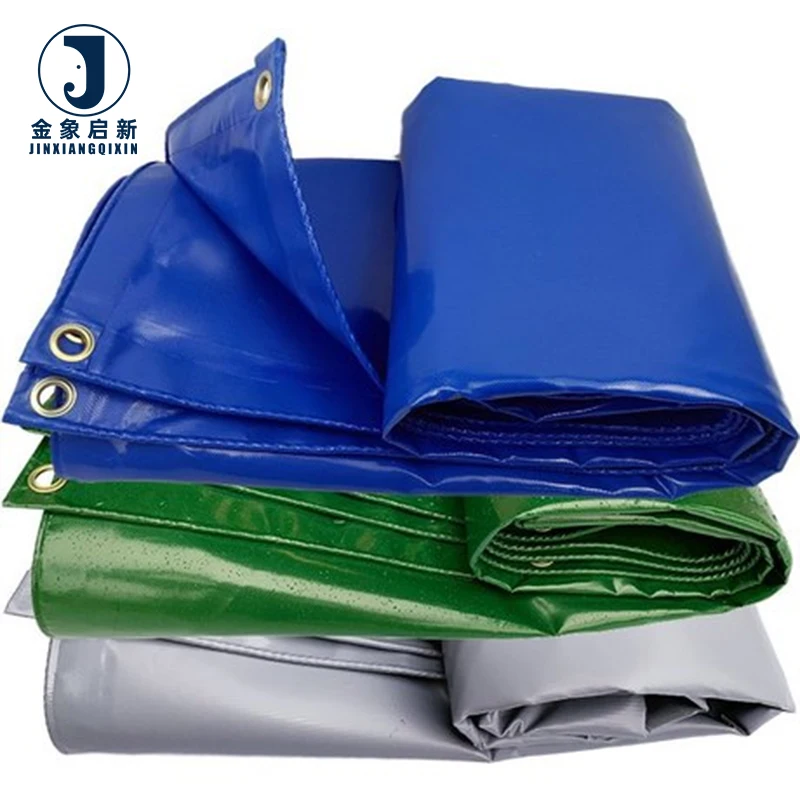
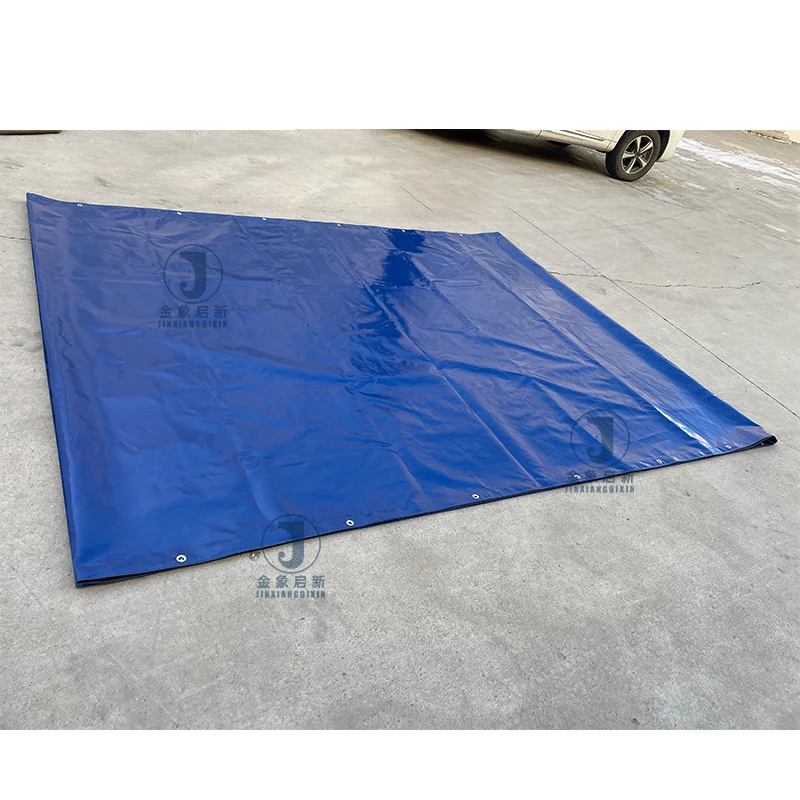
Deep Process Control Over Coated Fabric — Nearly 30 years focused on coating weight and adhesion ensures this PVC Coated Tarpaulin fire retardant meets industrial ventilation and specialist structure demands.
Technical Specifications
| Parameter | Value |
|---|---|
| Product Type | PVC Coated Tarpaulin |
| Base Fabric | Polyester |
| Yarn Count | 500D-500D |
| Coating Material | PVC (Double-Sided) |
| Weight Range | 450-900 g/m² |
| Flame Retardant | Available (confirm grade required for your market) |
| Anti-UV Treatment | Available (verify test basis for your exposure requirement) |
| Surface Characteristics | Smooth, leather-like texture |
| Repairability | Hot air weldable |
| Certifications | ISO, CE |
Application Suitability
| Application | Exposure & Requirement |
|---|---|
| Mining Ventilation Ducts | High dust, confined spaces, strict fire safety compliance |
| Aviation Hangar Structures | Large span, wind load, documented flame-retardant ratings |
| Tunnelling Air Control | Constant abrasion, moisture, underground safety standards |
| Inflatable Membrane Roofs | Tensile stress, weather exposure, long-term sealing |
| Temporary Industrial Shelters | Rapid deployment, weather resistance, equipment protection |
What "Flame Retardant" Means Without a Test Standard Attached
A claim without a certificate is a liability on your site.
Specifying a fire-retardant fabric for underground mining or aviation hangars requires more than a supplier’s assurance. Many technical buyers receive PVC coated tarpaulin fire retardant material only to discover the test report cites a standard irrelevant to their local building code or mine safety regulation. We clarify the certification scope — whether M2, B1, NFPA 701, or DIN 4102 — before you commit to a production run, ensuring the documentation matches your compliance filing [NEED_CITE: fire classification standards for technical textiles in confined environments].
Ventilation Duct Compliance Starts at the Specification Stage
When contractors order industrial air duct fabric, the primary concern is airflow efficiency paired with fire safety. A PVC coated tarpaulin fire retardant grade must withstand not just ignition but also the heat generated by friction and equipment proximity. The 500D-500D polyester base provides the dimensional stability required for spiral ducting or brattice cloth installations where the fabric is under constant tension.
Structural Integrity for Membrane and Inflatable Applications
For architects and fabricators building inflatable structures or temporary halls, the coating adhesion is as critical as the base fabric strength. Double-sided PVC coating ensures that when the material is heat-welded, the seam strength approaches the tensile strength of the fabric itself. This prevents delamination under the cyclic loading typical of pressurized membrane roofs [NEED_CITE: seam strength requirements for architectural membrane structures].
Decoding the 500D-500D Weave and GSM Relationship
The 500D-500D yarn count indicates a specific density of the polyester base, which dictates how the PVC coating locks into the weave. A heavier GSM (450-900 g/m²) in this configuration does not just mean "thicker"; it implies a higher coating weight that fills the interstices of the yarn, creating a fully sealed barrier against moisture and gases. However, tensile strength is a function of the yarn count and weave density, not just the total weight. A lighter fabric with a tighter weave may outperform a heavier, loosely woven alternative in tear resistance, making the specification sheet essential for engineering calculations.
The Hidden Cost of Unverified Fire Ratings in Underground Works
Procuring ventilation ducts for tunnelling projects without verifying the specific flame-retardant grade often leads to site shutdowns. Inspectors require documentation that matches the regional safety standard exactly. If the PVC coated tarpaulin fire retardant material supplied lacks the specific M2 or DIN 4102 certificate, the entire installation may need to be stripped and replaced. This causes project delays far exceeding the material cost [NEED_CITE: common causes of compliance failure in underground ventilation procurement].
Why Technical Buyers Source This Fabric Here
- Specialised Ventilation Focus: We understand the difference between general-purpose tarpaulins and the specific fire-retardant and anti-static requirements for mining and aviation ducts.
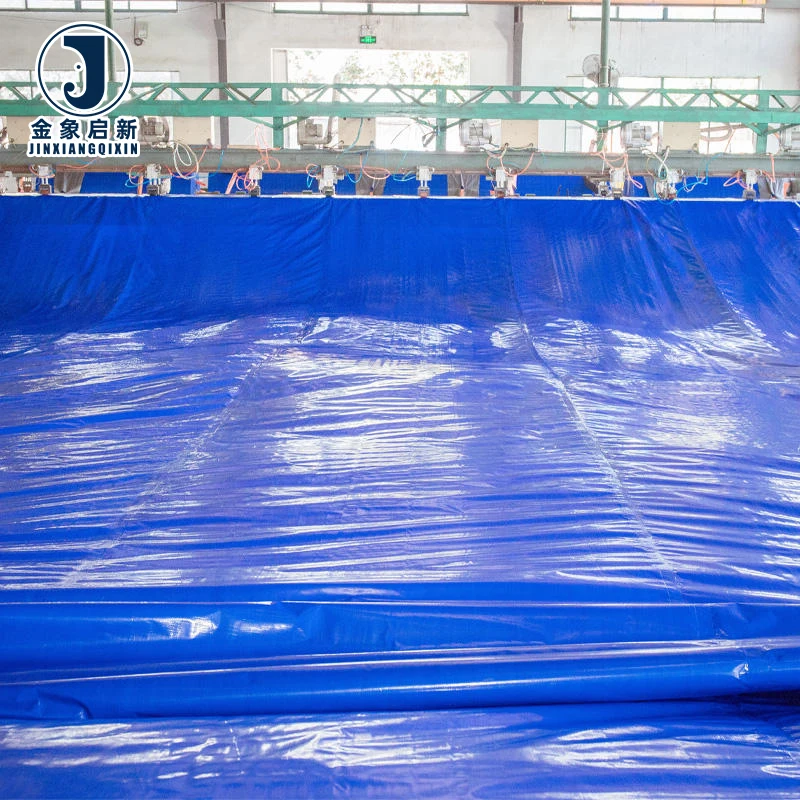
- Coating Adhesion Control: Our production lines maintain strict control over the PVC coating weight, ensuring the 450-900 g/m² range is consistent across the entire roll length.
- Technical R&D Support: Our 10-person R&D team assists with material selection for complex membrane structures, verifying that the 500D base fabric meets your structural load calculations.
- Full Documentation Package: Every shipment includes a material specification sheet, pre-shipment inspection record, and the specific test reports relevant to your project’s safety standards.
- Fabrication-Friendly Supply: We supply rolls with consistent tension and flat lay, essential for automated cutting tables and high-frequency welding machines used in duct fabrication.
Documentation & Verification
- Material specification sheet stating 500D base fabric denier and exact coating weight.
- Fire-retardant test report citing the specific standard (M2 / B1 / NFPA 701) applicable to your site.
- Pre-shipment inspection record confirming coating consistency and visual quality.
- Certificate of origin and customs support for international technical textile shipments.
Fabrication, Handling & Storage
- Use hot air welding at temperatures suitable for double-sided PVC coating to ensure full seam fusion.
- Store rolls horizontally on racking to prevent permanent creasing of the smooth leather-like surface.
- Verify the 450-900 g/m² weight range matches your structural load calculations before cutting.
- Clean the smooth surface with mild detergents; avoid solvents that may degrade the PVC plasticizers.
- Allow rolls to acclimatize to workshop temperature before unrolling to prevent stiffness or coating damage.
Specifying Your Technical Fabric Requirement
To ensure we recommend the correct PVC coated tarpaulin fire retardant grade for your project, please provide the specific fire safety standard required by your local authority (e.g., DIN 4102, NFPA 701). Include your target GSM within the 450-900 g/m² range, the required roll width for your fabrication equipment, and whether anti-static treatment is needed for underground applications. Samples can be developed for welding trials.
Frequently Asked Questions
Q: Which fire-retardant standard does your PVC tarpaulin meet for mining or aviation use?
A: We offer grades compliant with major international standards such as DIN 4102, NFPA 701, and M2. However, compliance varies by specific product batch and treatment. Please provide your local regulatory requirement so we can confirm if our current stock or a custom production run matches the certification you need for site approval.
Q: Can you supply the test report for anti-UV and flame-retardant treatments?
A: Yes, we provide test reports for both treatments upon request. It is critical to note that the test basis must be verified against your specific exposure environment. We will supply the documentation citing the exact standard used, allowing your engineering team to validate its suitability for your project’s lifespan and environmental conditions.
Q: What base fabric denier and coating weight options are available for duct fabrication?
A: This product features a 500D-500D polyester base fabric, offering excellent dimensional stability for spiral and longitudinal ducts. The PVC coating weight is adjustable within the 450-900 g/m² total weight range. We can provide a specification sheet detailing the exact base fabric weight versus coating weight to assist with your structural and airflow engineering.
Q: Do you provide anti-static PVC fabric for underground ventilation applications?
A: We can supply anti-static treated PVC fabric designed for underground mining environments where dust explosion risks are a concern. This requires a specific production run to ensure the surface resistivity meets mining safety regulations. Please specify the required surface resistivity range in your inquiry.
Q: How do you ensure batch-to-batch consistency on custom technical fabric orders?
A: Our facility operates with dedicated QA/QC at every production stage. We control the coating formulation and application process across our three full production lines to ensure that GSM, colour, and fire-retardant performance remain consistent from the first roll to the last. Pre-shipment inspection records are provided to verify this consistency.