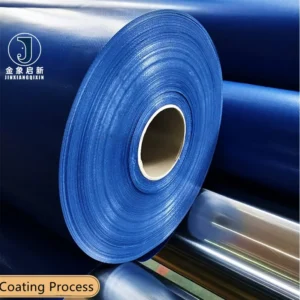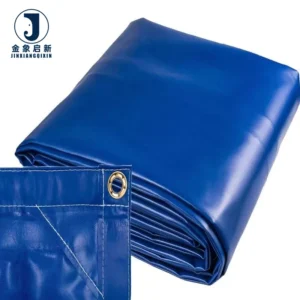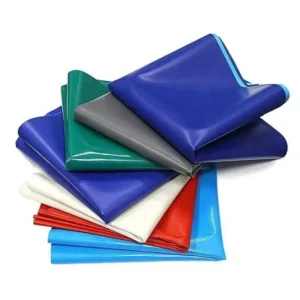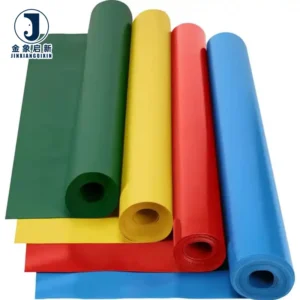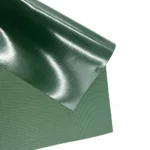

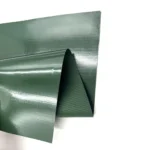


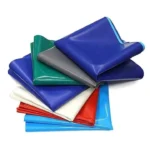
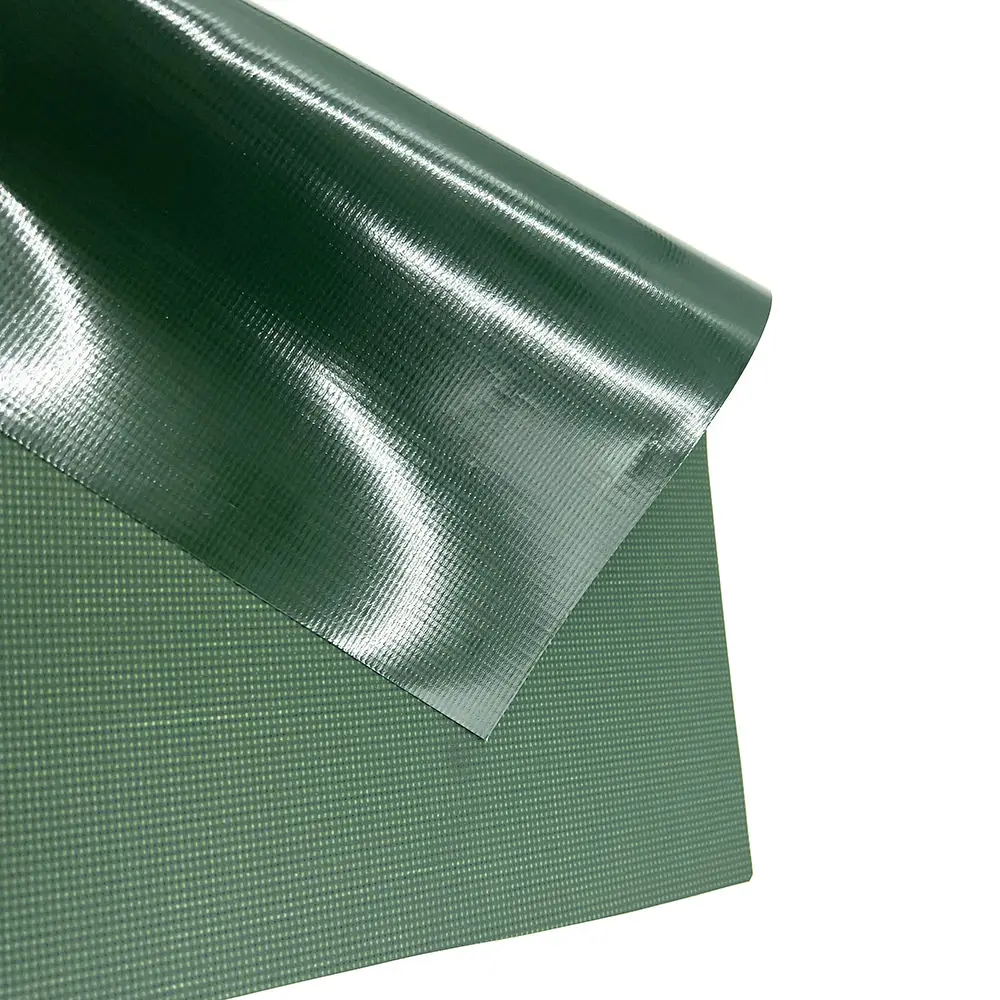
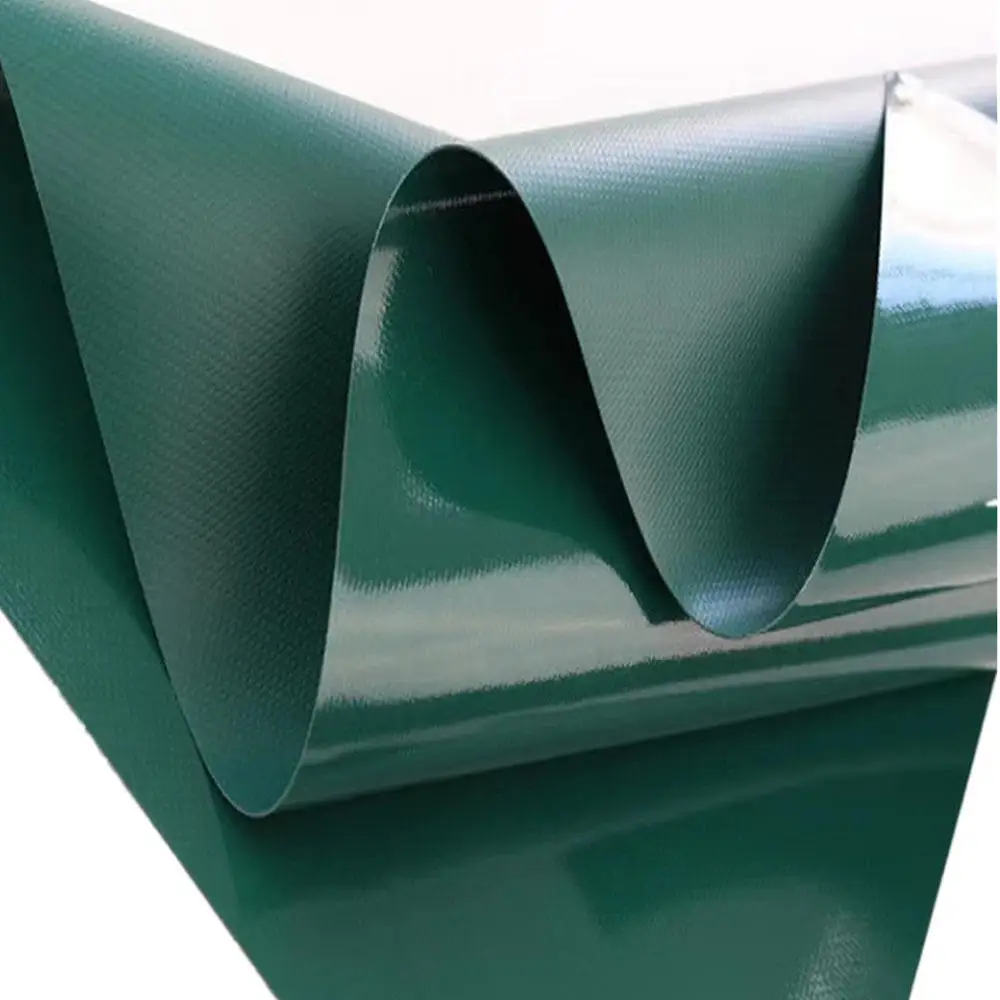
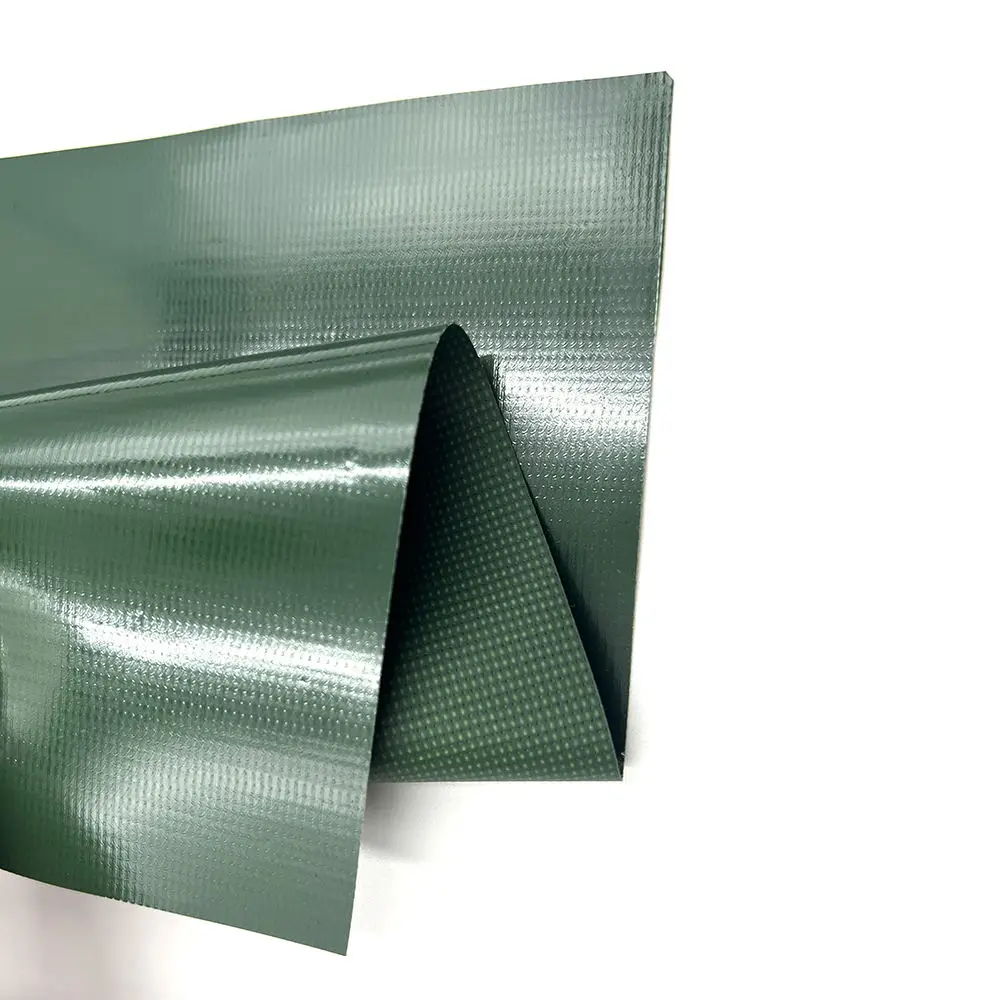
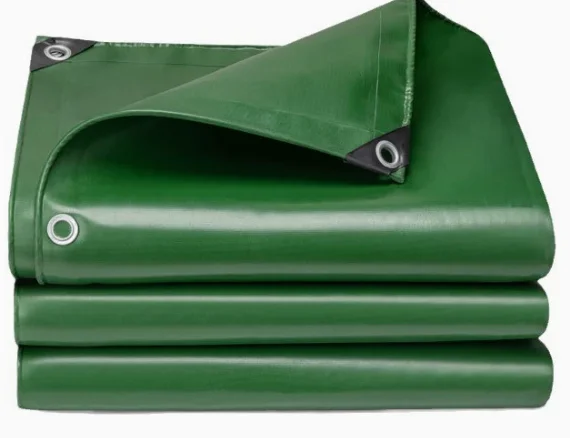
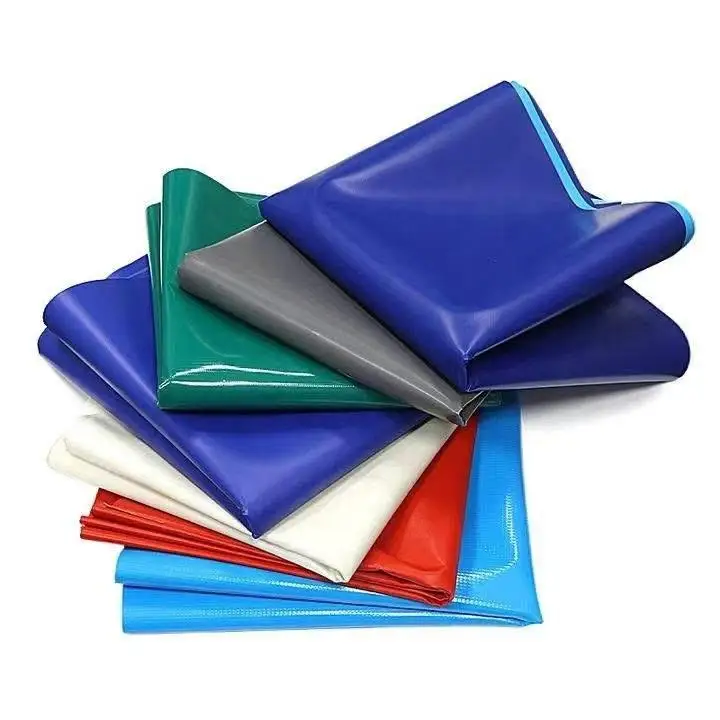
Deep Coating Adhesion Control — Our knife coating process builds a unified PVC layer that resists delamination under structural tension, verified through peel strength checks on every production run.
Technical Specifications
| Parameter | Value |
|---|---|
| Product Type | PVC Knife Coated Tarpaulin Roll |
| Coating Method | Knife Coated |
| Coating Material | PVC |
| Color | Green |
| Flame Retardant Grade | Available in multiple grades — confirm required standard (e.g., M2, B1, NFPA 701, DIN 4102) |
| UV Treatment | Available — test basis to be confirmed per project specification |
| Anti-Mildew | Mildew proof treatment applied |
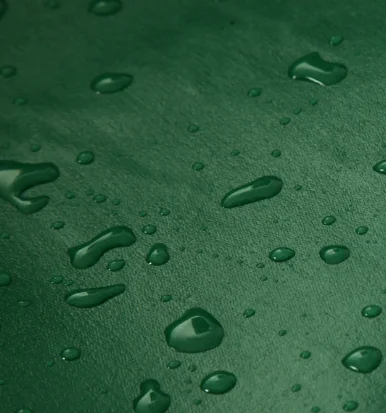
| Surface Finish | Self-cleaning |
| Welding Compatibility | HF, Hot Air, Sewing |
| Temperature Resistance | High temperature and cold resistant — operating range to be specified |
| Tensile Strength | Excellent — test standard to be confirmed |
| Tear Strength | Excellent — test standard to be confirmed |
| Adhesion / Peel Strength | Excellent — test standard to be confirmed |
| Chemical Resistance | Oil, stain, acid and alkali resistant |
| Waterproof Construction | Yes |
| Certifications | ISO, CE |
Application Suitability
| Application | Exposure & Requirement |
|---|---|
| Tensile and membrane structures | Continuous structural tension, UV exposure, wind load cycling, long-term weathering |
| Airport hangars and aviation covers | Fuel and chemical splash, wide-span tension, strict fire safety compliance |
| Stadium architectural roofs | Large format panels, public occupancy fire codes, self-cleaning requirement |
| Portable storage structures | Repeated assembly and teardown, abrasion at frame contact points |
| Shade systems and shading canopies | Direct solar exposure, thermal expansion, colour consistency across panels |
| Mining and tunnelling ventilation ducts | Underground fire safety mandates, anti-static requirements, abrasive dust |
| Truck cover fabric | Road debris impact, flex fatigue at tie-down points, weather exposure |
What "Fire-Rated" Really Means When the Certificate Does Not Match the Site
A flame retardant claim without a matching test standard is a compliance risk, not a material property.
When a tensile structure or ventilation duct arrives on site, the inspector asks for a test report tied to a specific standard — DIN 4102, NFPA 701, or M2 — not a generic statement on a data sheet. PVC Knife Coated Tarpaulin fire retardant certified documentation must align with the jurisdiction’s building code or mining regulation. Fabricators have had entire membrane installations rejected because the supplied certificate referenced a standard the local authority does not recognise. [NEED_CITE: fire classification standards for architectural membrane structures]
Matching the Standard to the Structure
Every jurisdiction specifies its own fire performance framework. A stadium canopy in Germany requires B1 per DIN 4102, while the same PVC knife coated tarpaulin deployed in a North American airport hangar may need to satisfy NFPA 701. Our material specification sheet states the exact grade and the test standard it was measured against, so your compliance documentation matches what is physically installed. We supply PVC Knife Coated Tarpaulin fire retardant certified to the grade your project demands, confirmed before production begins.
Weld Integrity Under Structural Load
Large-format tensile panels transfer stress through every welded seam. A joint that fails before the fabric itself compromises the entire structure. Our knife coated construction supports HF, hot air and sewing fabrication, giving membrane fabricators the flexibility to choose the joining method that best suits their panel geometry and load path. [NEED_CITE: tensile and tear test methods for coated fabrics per ISO 1421]
Reading the Specifications That Actually Matter
GSM alone tells you how much material is on the roll, not how it will perform under tension. Tensile and tear strength depend on the base fabric denier and weave density working together with the coating weight. A heavier PVC knife coated tarpaulin with a loosely woven base may tear more easily than a lighter grade built on a high-density polyester scrim. Knife coating forces PVC into the weave interstices, creating mechanical adhesion that outperforms laminated alternatives in peel strength — a critical factor when welded seams carry structural loads. The self-cleaning surface finish reduces dirt accumulation on stadium roofs and hangar canopies, cutting maintenance intervals without requiring additional coatings. Anti-mildew treatment protects stored rolls and installed fabric in humid environments where biological growth degrades both appearance and coating integrity. Chemical resistance to oils, acids and alkalis makes this PVC Knife Coated Tarpaulin fire retardant certified material suitable for aviation and industrial settings where fluid exposure is routine. [NEED_CITE: knife coating adhesion mechanisms for PVC coated polyester fabrics]
The Cost of Getting the Specification Wrong
When a membrane structure contractor installs fabric with an unverified flame retardant grade, the building authority can halt occupancy until compliant documentation is produced — delaying project handover and triggering penalty clauses. Colour variation between rolls in a single tensile canopy becomes visible once panels are tensioned side by side, forcing a costly panel replacement. Welded seams that separate under load typically indicate a mismatch between the welding temperature, dwell time and the specific PVC formulation on the roll, not a defect in the fabric itself. [NEED_CITE: common failure modes in architectural membrane installations]
Why Fabricators Source This Grade Here
Three full production lines with 36 sets of professional equipment allow us to run custom widths and fire retardant grades without delaying standard stock orders. A dedicated 10-person R&D team develops sample panels within days so you can confirm colour, weld parameters and surface finish before committing to a full production run. Every roll undergoes 100% inspection before dispatch, with coating weight and adhesion verified against the material specification sheet. ISO and CE documentation ships with every consignment, eliminating last-minute certificate requests when the site inspector arrives. We have supplied coated fabric to technical buyers in over 20 countries for nearly 30 years, building process control that holds batch-to-batch consistency across repeat orders.
Documentation & Verification
- Material specification sheet stating GSM, base fabric denier, coating weight and flame retardant grade with the applicable test standard
- Pre-shipment inspection record confirming 100% roll-by-roll QC check before container loading
- Fire retardant test report matched to M2, B1, NFPA 701 or DIN 4102 as specified on the purchase order
- ISO and CE certificates included in the shipment documentation package
- Certificate of origin and customs support documents for destination-country import clearance
Fabrication, Handling & Storage
- HF and hot air welding parameters should be calibrated to the specific knife coated PVC formulation on each roll before production seams are committed
- Store rolls horizontally on a flat surface to prevent permanent creasing in the PVC coating layer
- Self-cleaning surface finish tolerates mild detergent cleaning — avoid solvent-based cleaners that degrade the plasticiser in the coating
- Allow cold-stored rolls to reach ambient temperature before unrolling to prevent coating micro-cracking at low-flex points
- Plan panel cutting layout to maximise fabric yield from the roll width and reduce the number of structural weld seams
Request a Specification Match for Your Project
Tell us the tensile or ventilation application, the fire safety standard your jurisdiction mandates, and the panel dimensions or roll width you need. We will return a material specification sheet with the matching grade, test report reference and sample lead time so you can verify weld compatibility and colour before placing a production order.
Frequently Asked Questions
Q: Which flame retardant standard does my project require, and how do you document it?
A: The required standard depends on your jurisdiction and application — common ones include B1 per DIN 4102 for European buildings, NFPA 701 for North American public structures, and M2 for French regulations. We supply a test report referencing the exact standard, included with your shipment documentation package.
Q: What anti-static certification is available for mining ventilation duct fabric?
A: Anti-static treatment is available for underground mining and tunnelling duct applications. Surface resistance values and the applicable test standard are stated on the material specification sheet, which ships with every roll to support site safety audits and compliance verification.
Q: Which welding method works best for membrane structure panels?
A: HF welding delivers the strongest seams for high-load tensile panels, while hot air welding suits curved or complex geometries. Sewing is used where mechanical fastening is preferred. We recommend running weld tests on the sample we supply before full panel fabrication.
Q: Can I order custom widths and roll lengths for large-format tensile panels?
A: Yes. Custom width and roll length configurations are available to minimise off-cuts and reduce the number of field welds on large tensile structures. Minimum order quantities and lead times depend on the specific width and fire retardant grade requested.
Q: How do I verify the GSM matches what was quoted when the rolls arrive?
A: Every roll is checked against the stated GSM during our pre-shipment inspection, and the inspection record is included in your documentation package. We recommend cutting a measured sample from the roll end on arrival and weighing it to cross-check against the specification sheet.