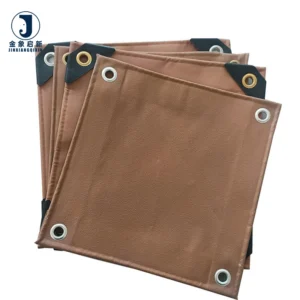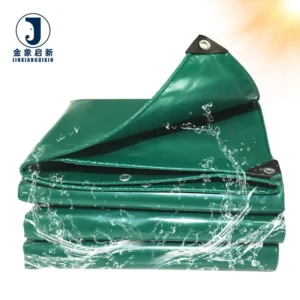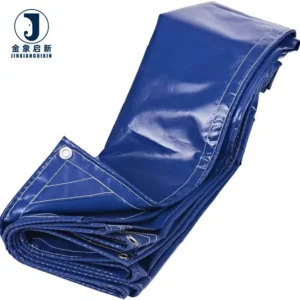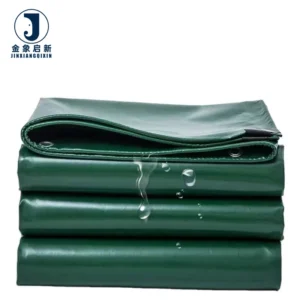
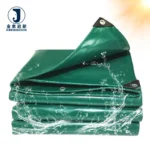
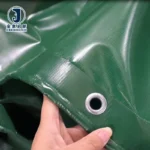
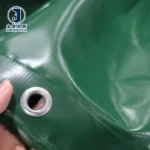
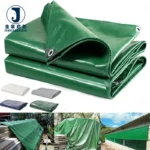
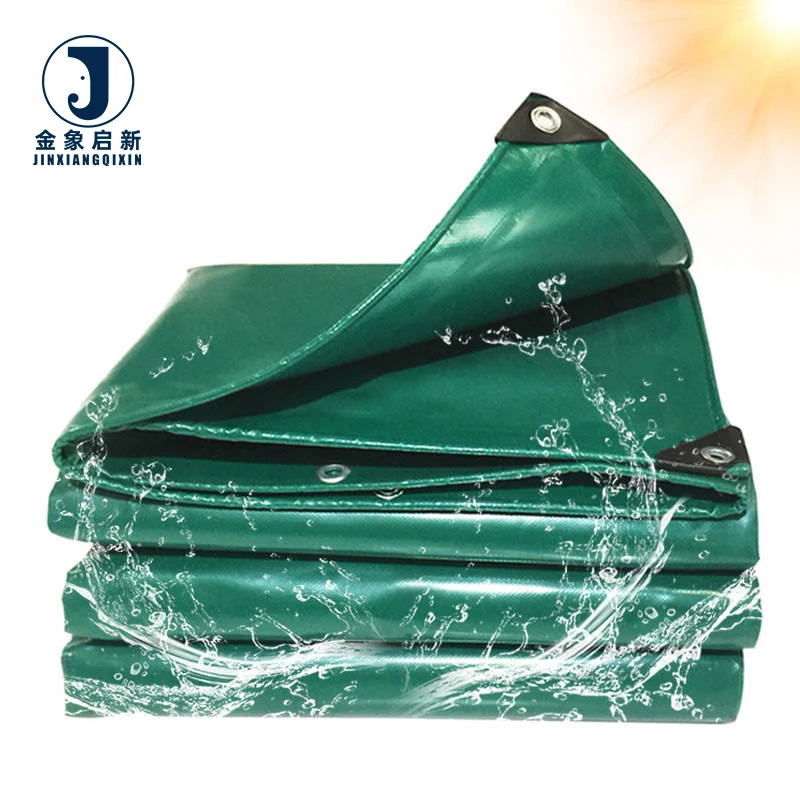
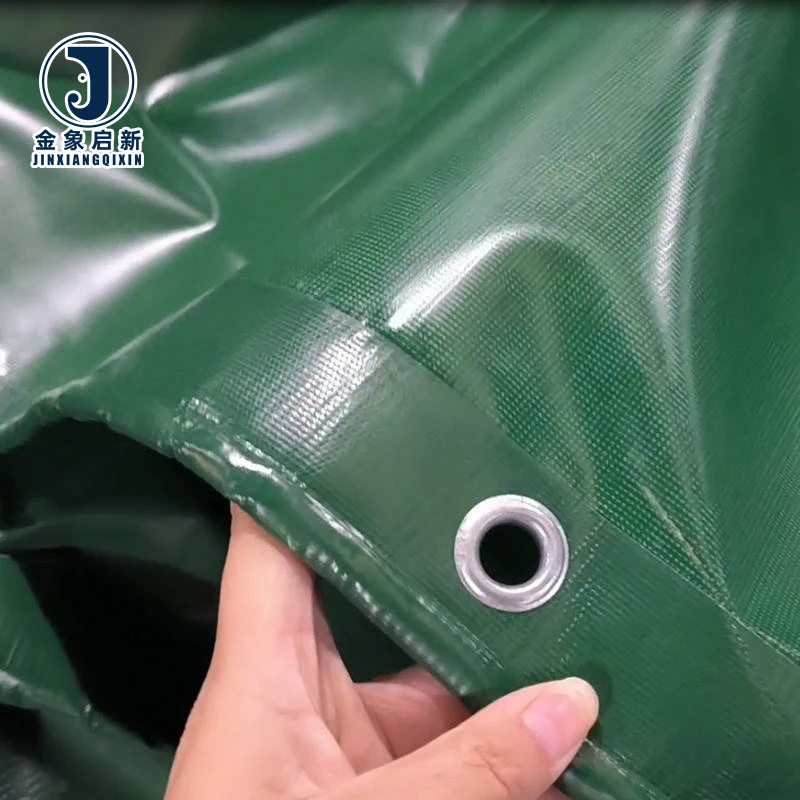
Proven Coating Expertise — Nearly 30 years focused on PVC coated fabric with deep process control over coating weight and adhesion, ensuring every roll of industrial ventilation fabric meets the fire and static compliance your site demands.
Technical Specifications
| Parameter | Value |
|---|---|
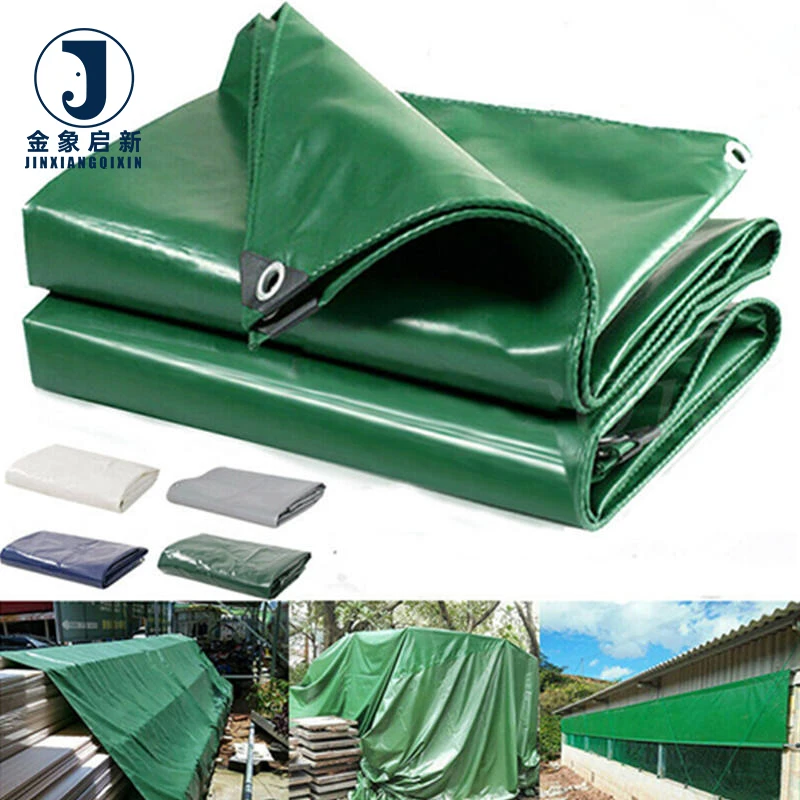
| Product Type | PVC Coated Tarpaulin |
| Coating Material | PVC Vinyl |
| Base Fabric | Woven Fabric |
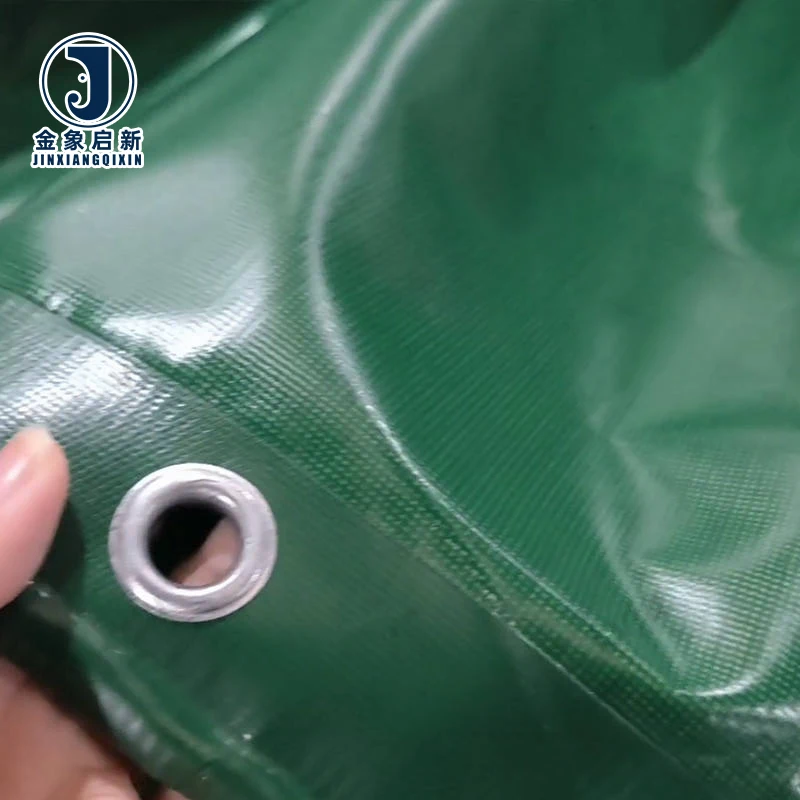
| Weight | At least 450 GSM |
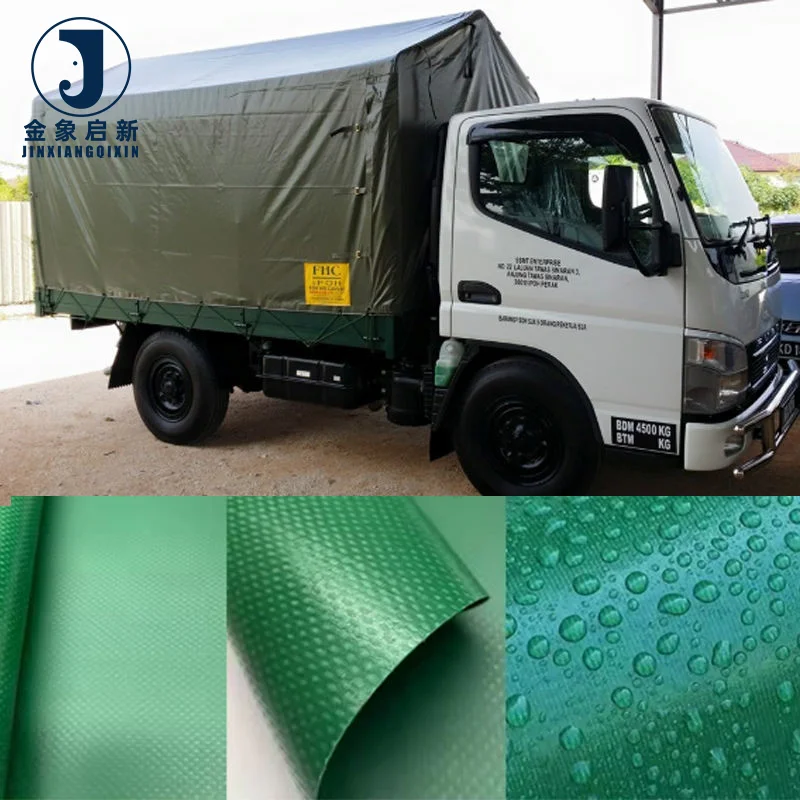
| Waterproof | Yes |
| Assembly State | Roll or Cut Size |
| Fire Retardant Grade | Available in flame retardant grades — confirm the grade required for your market |
| Anti-Static Rating | Available with anti-static treatment — confirm the surface resistance standard for your site |
Application Suitability
| Application | Exposure & Requirement |
|---|---|
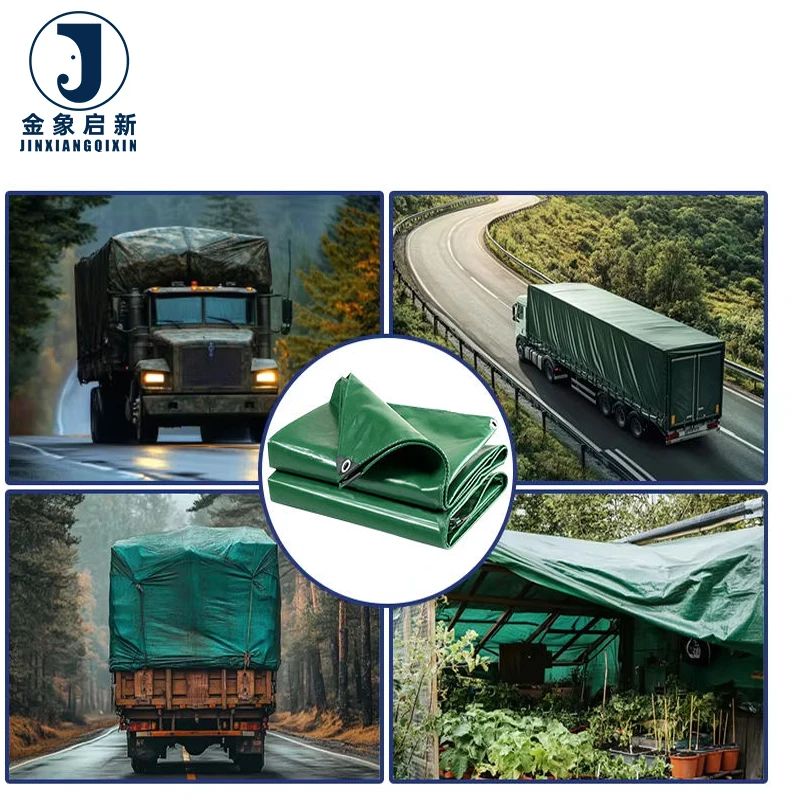
| Mine and tunnel ventilation ducts | Continuous airflow, abrasive dust loading, mandatory fire-retardant and anti-static compliance underground |
| Aviation maintenance facility ducts | Fuel vapour proximity, requirement for certified flame-retardant fabric in enclosed hangar environments |
| Inflatable and membrane structures | Permanent tensile load, wind-induced flex cycling, UV and weather exposure on external surfaces |
| Temporary industrial enclosures | Welding spark proximity, chemical dust, requirement for rapid deployment and tear resistance |
What "Certified" Means When the Duct Fabric Arrives Without the Test Report
A ventilation duct is only as compliant as the documentation that ships with it.
Sourcing PVC coated fabric for underground or enclosed-space ventilation often involves specifying fire-retardant and anti-static properties at the inquiry stage. Yet when the rolls arrive on site, the accompanying paperwork sometimes lacks the specific test report or certification the safety auditor requires. The fabric may perform adequately in a generic sense, but without a verifiable grade tied to the relevant standard — whether DIN 4102, NFPA 701 or a local mining regulation — the installation cannot be signed off. This delays commissioning, forces re-inspection and, in the worst cases, requires the duct to be stripped and replaced. [NEED_CITE: fire classification standards for flexible ventilation duct materials in underground mining]
Ventilation Duct Fabric Must Carry More Than Air
Mine and tunnel ventilation systems place PVC coated tarpaulin under sustained mechanical and environmental stress. The woven base fabric must resist the pulsating pressure of forced air while the PVC vinyl coating maintains adhesion through thousands of flex cycles. In underground applications, the presence of combustible gases and fine particulate means the fabric must also meet site-specific fire-retardant and anti-static requirements — not as an optional extra, but as a non-negotiable condition of entry. Specifying PVC coated fabric fire retardant and anti-static grades at the inquiry stage prevents costly compliance failures once the duct is installed and operational.
Matching the Coating to the Compliance Environment
Not every ventilation environment demands the same level of fire and static protection. A surface-level construction site may accept a self-extinguishing grade, while a deep-level coal mine will mandate a specific anti-static surface resistance alongside a certified flame-retardant classification. The PVC vinyl coating formulation can be adjusted during manufacturing to incorporate the required additives, but this must be confirmed before production begins. Our 10-person R&D team reviews your target market’s regulatory framework and recommends the appropriate treatment package, ensuring the PVC coated tarpaulin you receive matches the compliance documentation your safety officer needs to review. [NEED_CITE: anti-static surface resistance thresholds for mining ventilation fabric per regional regulation]
How Weight, Weave and Coating Interact in Duct Fabric
The stated weight of at least 450 GSM provides a baseline for material density, but in ventilation duct applications the relationship between base fabric construction and coating adhesion matters more than GSM alone. A tightly woven base fabric with adequate denier in both warp and weft directions resists tear propagation when the duct is dragged along a tunnel floor or flexed at a junction point. The PVC vinyl coating must penetrate the weave sufficiently to bond with the yarn, not merely sit on the surface, so that heat-welded seams hold their integrity under positive air pressure. When these three elements — weave density, coating penetration and total weight — are properly balanced, the resulting PVC coated fabric delivers consistent performance across long duct runs without delamination at the weld lines.
When the Specification Does Not Match the Site Reality
Specifying a standard-grade PVC coated tarpaulin for a ventilation duct that will operate in a fire-regulated zone is a common procurement misstep. The fabric may look identical to a certified grade, cut and weld the same way, and perform well mechanically — yet fail the site safety audit because the required test report was never requested at the quotation stage. Similarly, omitting anti-static treatment for a duct that will carry dust-laden air in a combustible environment creates a charge-accumulation risk that is invisible until an incident occurs. These specification gaps are typically discovered only during commissioning, when replacement lead times and project delays compound the initial oversight. [NEED_CITE: consequences of non-certified ventilation duct material in underground construction]
Why Source Ventilation Fabric Through This Facility
Three full production lines and 36 sets of professional equipment give us the capacity to supply large-diameter, long-run ventilation duct fabric in consistent quality across multiple container loads. The 10-person R&D team handles material selection and treatment formulation, matching PVC vinyl coating chemistry to your specific fire-retardant and anti-static requirements before production starts. Dedicated QA and QC personnel inspect every roll at each production stage, with 100% inspection before shipment to confirm that weight, coating adhesion and treatment performance match the agreed specification. Samples for custom duct fabric requirements are developed within days, allowing you to validate heat-weld parameters and seam strength before committing to full production volume.
Documentation & Verification
- Material specification sheet confirming GSM, base fabric type and PVC vinyl coating weight for each roll
- Fire-retardant test report aligned to the grade specified for your target market
- Anti-static surface resistance measurement recorded per batch where treatment is applied
- Pre-shipment inspection record verifying roll-to-roll consistency before dispatch
- ISO and CE certificates included with every shipment for customs and site audit purposes
Fabrication, Handling & Storage
- Heat-weld at temperatures suited to PVC vinyl coating on woven base fabric to achieve full seam fusion without burning through the 450 GSM material
- Allow rolled stock to acclimatise to ambient temperature before unrolling to prevent creasing in cold-stored PVC coated tarpaulin
- Store rolls upright on end caps to avoid flat-spotting and permanent deformation of the woven base fabric structure
- Use compatible PVC-based repair patches for field repairs on duct seams to maintain fire-retardant continuity across the joint
- Plan duct panel cutting layouts to minimise off-cuts from standard roll widths and reduce heat-welded seam count in high-stress zones
What We Need to Move Your Enquiry Forward
Provide the ventilation environment — underground mine, tunnel, aviation hangar or temporary structure — along with the specific fire-retardant classification and anti-static standard your site mandates. Confirm the required duct diameter, total linear metres and whether you need roll stock or finished fabricated duct sections. If colour coding or printed identification is required for different air circuits, include those details so we can incorporate them at the sample development stage.
Frequently Asked Questions
Q: Which fire-retardant grades are available for ventilation duct fabric?
A: We formulate PVC vinyl coating to meet grades such as M2, B1 per DIN 4102, or NFPA 701 depending on your market. Confirm the specific standard your site safety plan references, and our R&D team will match the formulation and provide the corresponding test report with your shipment.
Q: How is anti-static performance verified before dispatch?
A: Where anti-static treatment is specified, surface resistance is measured per batch during production. The recorded value is included in the pre-shipment inspection documentation so your site safety officer can verify compliance against the threshold required by your mining or tunnel regulation.
Q: Can heat-welded seams match the strength of the base PVC coated fabric?
A: Properly executed heat welding on our woven-base PVC coated tarpaulin fuses the vinyl coating across the seam, creating a bond that resists separation under duct flexing and positive pressure. We recommend weld testing on pre-production samples to confirm temperature and speed settings for your fabrication equipment.
Q: How do you ensure fire and static performance is consistent across multiple rolls?
A: Every production batch undergoes 100% inspection, with coating weight, treatment dosage and adhesion checked at each stage. Rolls from the same order are cross-referenced in the pre-shipment inspection record to confirm that fire-retardant and anti-static properties remain within specification throughout the entire shipment.