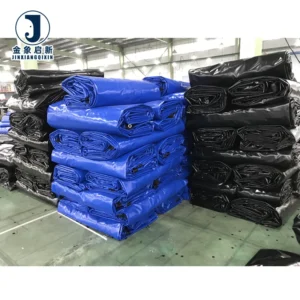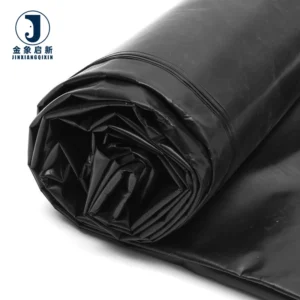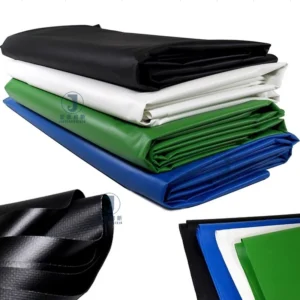




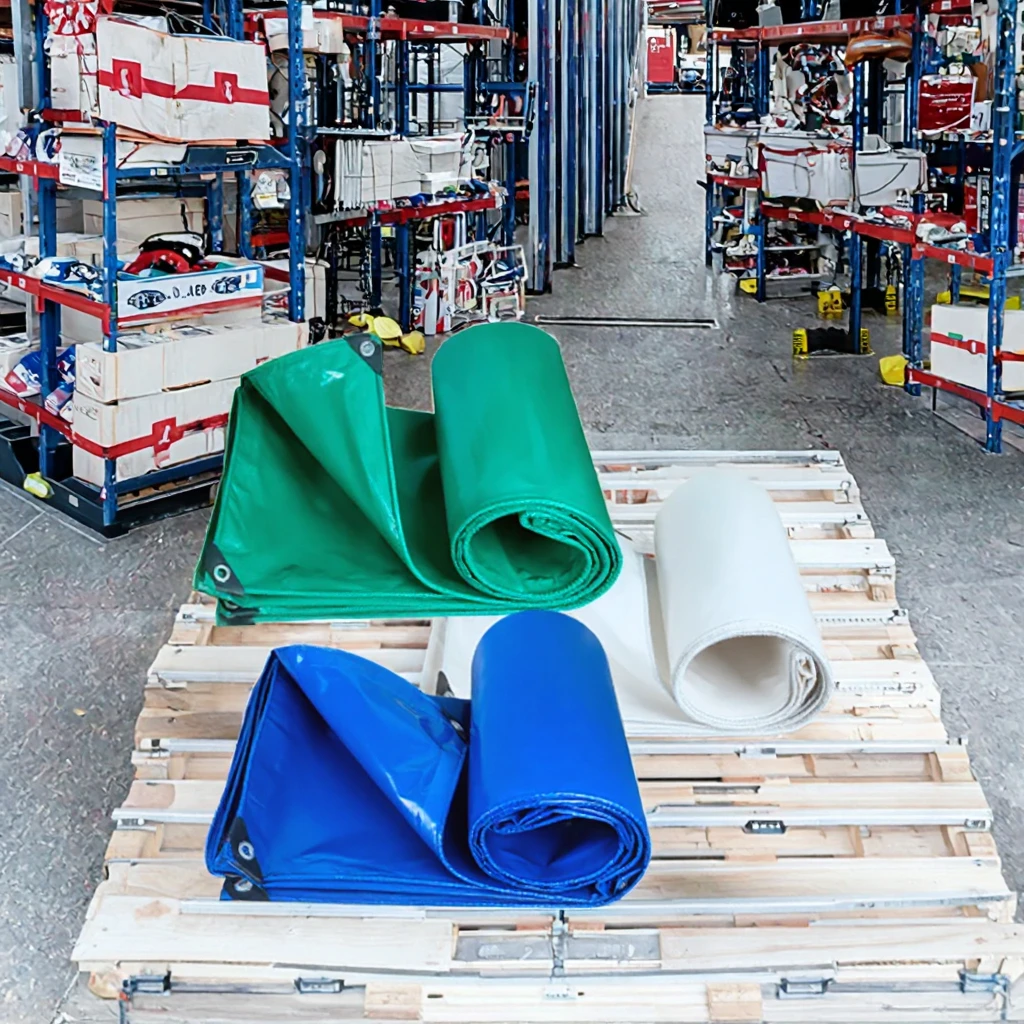

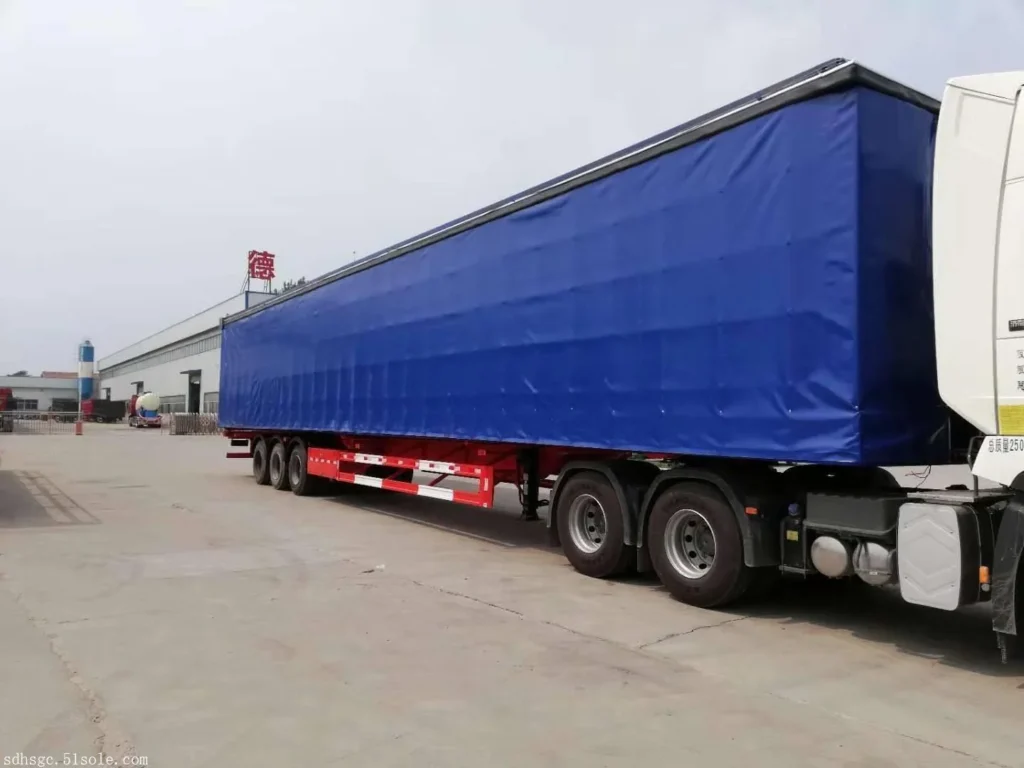
Proven Coating Expertise — Nearly three decades of focused production on coated technical fabrics, with dedicated QA at every stage ensuring roll-to-roll consistency for industrial air duct and specialist structure applications.
Technical Specifications
| Parameter | Value |
|---|---|
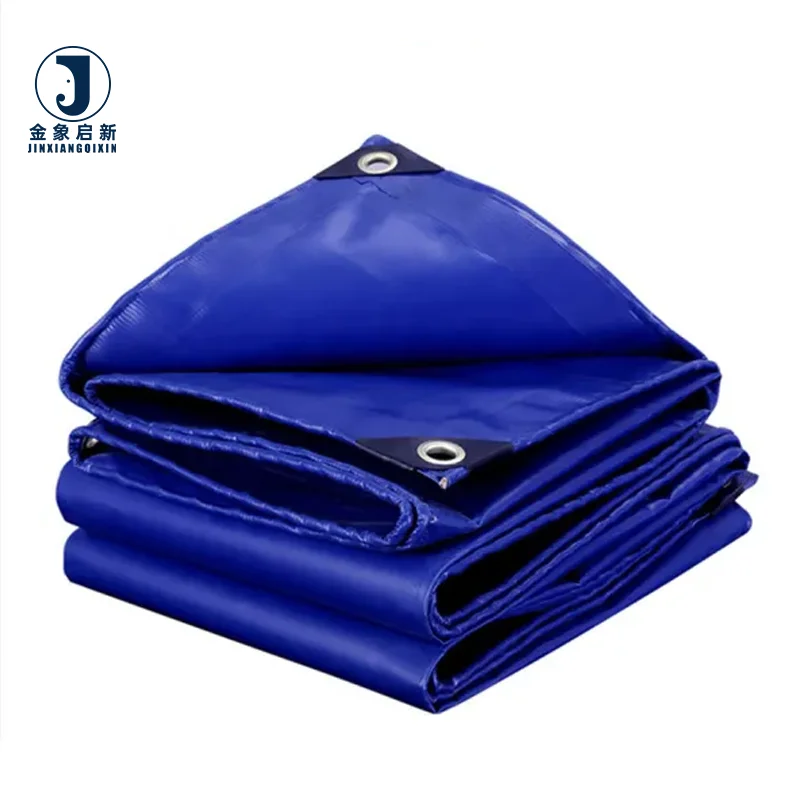
| Product Type | PVC Coated Tarpaulin Roll |
| Coating Material | PVC |
| Base Fabric | High-strength polyester mesh fabric |
| Weight (GSM) | 250GSM / 300GSM / 400GSM / 450GSM / 500GSM / 500GSM enforced / 560GSM / 600GSM / 650GSM / 680GSM / 950GSM / 1000GSM |
| Total Thickness | 0.32mm / 0.35mm / 0.4mm / 0.45mm / 0.5mm / 0.65mm |
| Base Fabric Denier | 500D×500D / 500D×1000D / 840D×840D / 1000D×1000D / 2000D×2000D |
| Mesh Count | 20×20 / 18×25 / 30×17 / 18×18 / 23×24 / 15×15 / 30×30 |
| Coating Method | Laminated technology & Hot-melt Coating technology |
| Roll Width | 2m / 2.1m |
| Roll Length | 75m / 50m |
| Color | Blue / Red / Yellow / Light blue / Grey (Customized) |
| Key Features | Waterproof, Cold Crack Resistance, Anti-Mildew, Anti-Static treatment |
| Flame Retardant Grade | Available in flame retardant grades — confirm the grade required for your project (grade not stated in source) |
| UV Treatment | Available with anti-UV treatment — confirm the test basis required for your market (test basis not stated in source) |
| Standards | ISO, CE |
Application Suitability
| Application | Exposure & Requirement |
|---|---|
| Membrane and inflatable structures | Sustained tension, wind load, UV exposure, airtight weld integrity |
| Ventilation duct outer jackets (mining & tunnelling) | Continuous airflow friction, underground humidity, mandatory fire-retardant and anti-static compliance |
| Liquid storage tank containment | Constant water contact, hydrostatic pressure, puncture resistance from substrate |
| Breed farm waste transport covers | Chemical exposure from organic waste, repeated folding and tie-down abrasion |
| Specialist temporary enclosures | Rapid deployment, repeated assembly cycles, weather shielding in remote sites |
When a Flame-Retardant Claim Has No Grade Behind It
A ventilation duct installed underground without a certified fire classification is a liability, not a safety measure.
Specifying a PVC Coated Tarpaulin Roll for mining or tunnelling ventilation requires a clear flame-retardant grade backed by a recognised test standard. Too often, fabric arrives on site with only a generic "flame retardant" label and no test report to satisfy the safety officer or the compliance audit [NEED_CITE: fire classification standards for underground ventilation duct materials]. Without a stated grade, the fabric cannot be approved for use in regulated environments, causing project delays and potential rejection at the inspection stage.
Selecting the Right Base Fabric for Technical Structures
The denier and weave density of the polyester base fabric directly determine how a coated fabric behaves under tension and at the weld line. A 2000D×2000D base with a tight mesh count provides the tensile foundation needed for large-span membrane structures where the fabric must hold shape under sustained load. For inflatable structures that undergo repeated inflation cycles, the adhesion between coating and base fabric — governed by the hot-melt or laminated coating process — becomes the critical failure point to monitor.
Anti-Static and Fire Compliance in Underground Applications
Underground mining and tunnelling environments demand fabrics that control static discharge and meet specific fire-resistance thresholds. This PVC Coated Tarpaulin Roll range includes anti-static treatment options, though the surface resistance value and applicable standard should be confirmed for each grade before procurement [NEED_CITE: anti-static test methods for coated fabrics in underground ventilation]. Pairing the correct anti-static treatment with a verified flame-retardant grade ensures the fabricated duct or enclosure passes on-site compliance checks without rework or replacement.
How GSM, Denier, and Coating Method Interact
GSM alone does not define the mechanical performance of a coated fabric — it is the combination of base fabric denier, mesh count, and coating weight that produces the final tensile and tear values. A 650GSM roll built on a 1000D×1000D base will behave very differently from a 650GSM roll on a 500D×500D base, even though the scale reads the same. The laminated and hot-melt coating technologies used here influence peel strength and heat-seal behaviour: hot-melt coating typically yields higher adhesion between the PVC layer and the polyester mesh, which matters when fabricated ducts experience internal pressure cycling or when membrane panels are joined by hot-air welding. Width options of 2m and 2.1m affect panel layout efficiency, determining how many weld seams are needed to cover a given structure and where those seams fall relative to the highest stress zones.
The Hidden Cost of Specifying on Price Per Kilogram
Choosing a coated fabric based on unit cost rather than verified material properties leads to predictable field failures. Rolls that arrive lighter than the quoted GSM produce duct jackets that split at the circumferential weld under airflow vibration. Anti-static treatment that lacks a supporting test report means the entire duct run fails the pre-commissioning spark test, forcing removal and replacement underground — an operation far more expensive than the fabric itself [NEED_CITE: cost impact of ventilation duct replacement in active tunnelling operations]. Colour inconsistency between rolls may seem cosmetic until adjacent membrane panels on a visible structure show a clear shade difference in daylight.
Why Source This PVC Coated Tarpaulin Roll Here
Three full production lines and 36 sets of professional coating equipment support volume orders with consistent output across every roll in a batch. A 10-person R&D team handles material selection, sample development, and custom specification work — critical when a mining contractor needs a specific anti-static and flame-retardant combination verified before production begins. Every roll undergoes in-process QA checkpoints and 100% pre-shipment inspection, with weight and colour checked against the material specification sheet before packing. Samples for custom requirements are typically developed within days, allowing fabricators to run weld tests and confirm adhesion before committing to a full order.
Documentation & Verification
- Material specification sheet stating GSM, base fabric denier, mesh count, and coating method per roll
- Test reports for flame-retardant and anti-UV grades where applicable, referencing the specific standard
- ISO and CE certificates available for project compliance documentation
- Pre-shipment inspection record verifying roll weight and colour against the purchase specification
- Certificate of origin and detailed roll packing list for customs clearance
Fabrication, Handling & Storage
- Hot-air welding temperature and speed should be adjusted per GSM — heavier grades require higher heat input for full seam fusion
- Store rolls horizontally on racking to prevent flat-spot deformation on the outer coating layers
- Allow cold-stored rolls to acclimatise before unrolling to avoid coating crack at low temperature
- Anti-static treated surfaces require compatible cleaners that do not strip the conductive finish
- Plan panel cutting layout around the 2m or 2.1m roll width to minimise weld seam count in high-stress zones
- Anti-mildew treated grades should be stored in ventilated conditions to preserve the treatment through the storage period
Start a Technical Specification Enquiry
Provide the intended application — whether ventilation duct, membrane structure, or specialist enclosure — along with the fire-retardant grade and anti-static standard your site requires. Specify the preferred GSM range, base fabric denier, and whether you need rolls or finished fabricated panels. If your project demands batch colour consistency or custom width, include the total linear metre requirement so production can be planned in a single run.
Frequently Asked Questions
Q: How is GSM verified on arrival — do you support third-party roll weight inspection?
A: Each roll is weighed and recorded during the pre-shipment inspection against the stated GSM on the material specification sheet. We support and cooperate with third-party inspection agencies appointed by the buyer. The inspection record accompanies the shipment documentation, giving you a traceable weight verification from our facility to your receiving dock.
Q: What flame-retardant grades are available and which standards do they meet?
A: Flame-retardant formulations are available across this PVC Coated Tarpaulin Roll range, but the specific grade must be confirmed at the enquiry stage to match your project standard — whether a national mining regulation or a building code requirement. Request the applicable test report for your grade before placing the order, and our R&D team will supply the supporting documentation.
Q: What is the test basis for anti-static treatment — can surface resistance be certified per roll?
A: Anti-static treatment is applied during the coating process for grades destined for underground or controlled-environment use. The surface resistance value and test method should be confirmed against your site specification before production. We provide test data for the specific anti-static grade produced, and samples can be supplied for independent lab verification.
Q: How do you control colour consistency across multiple rolls in the same order?
A: Colour reference is confirmed with a pre-production sample before bulk coating begins. During production, each roll is checked at QA checkpoints against the approved reference under controlled lighting. Rolls within a single production run are batched together, and the pre-shipment inspection record documents the colour check per roll to prevent visible shade variation after fabrication.
Q: What documentation is provided for customs and site compliance?
A: Every shipment includes a roll packing list, certificate of origin, material specification sheet, and ISO and CE certificates. Where flame-retardant or anti-static grades are supplied, the corresponding test reports are included. These documents support both customs clearance and on-site compliance audits for regulated installations such as underground ventilation systems.