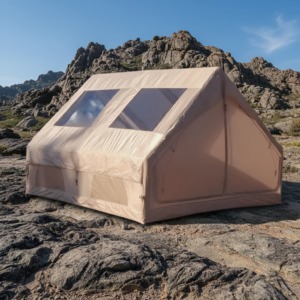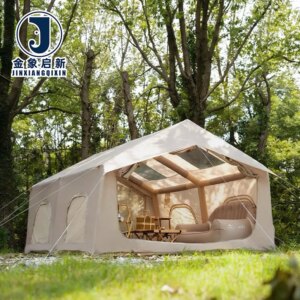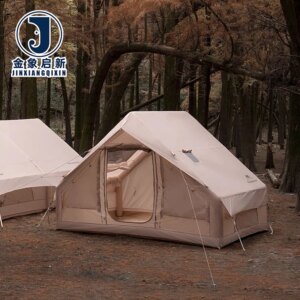
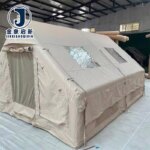
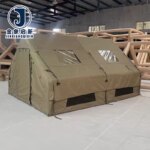
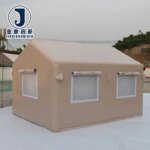
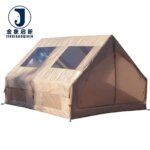
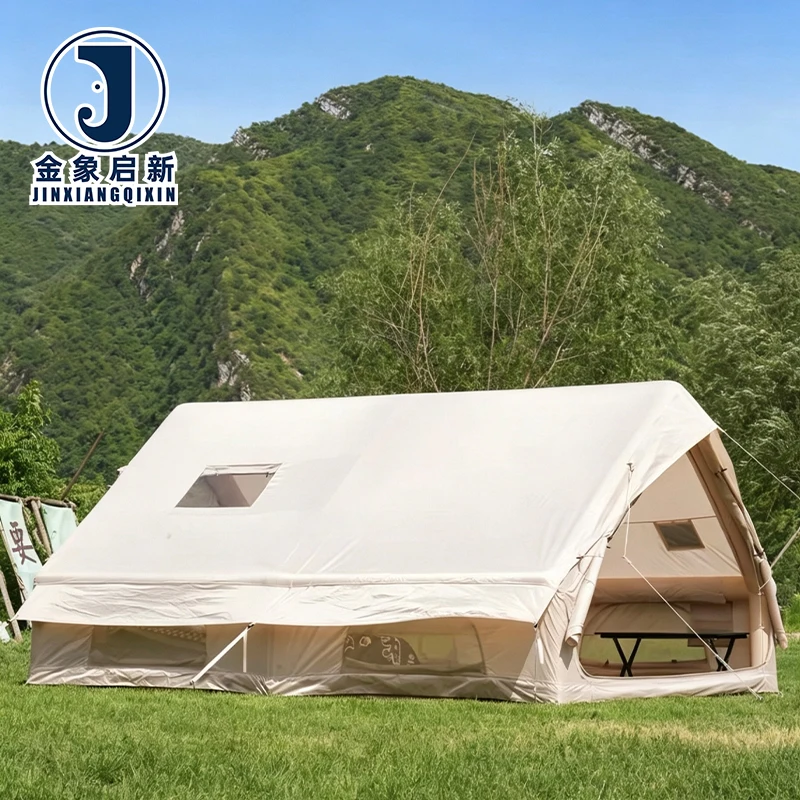
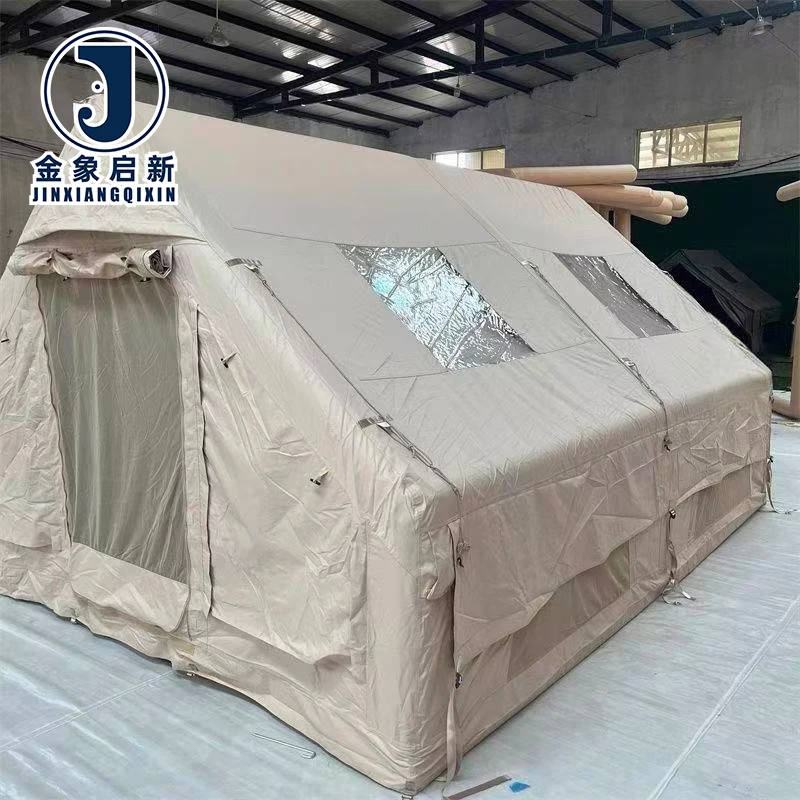
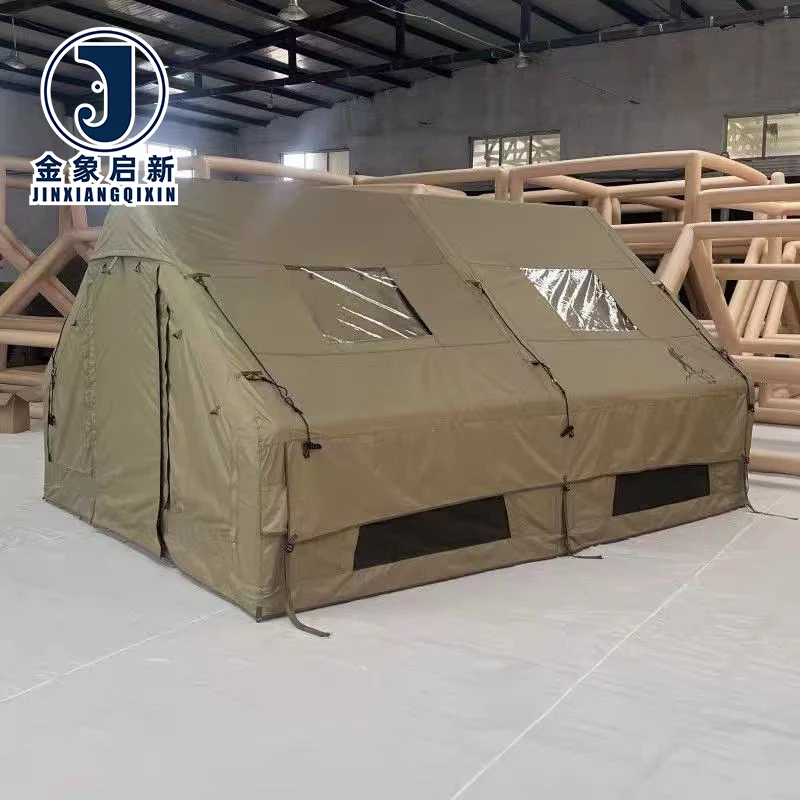
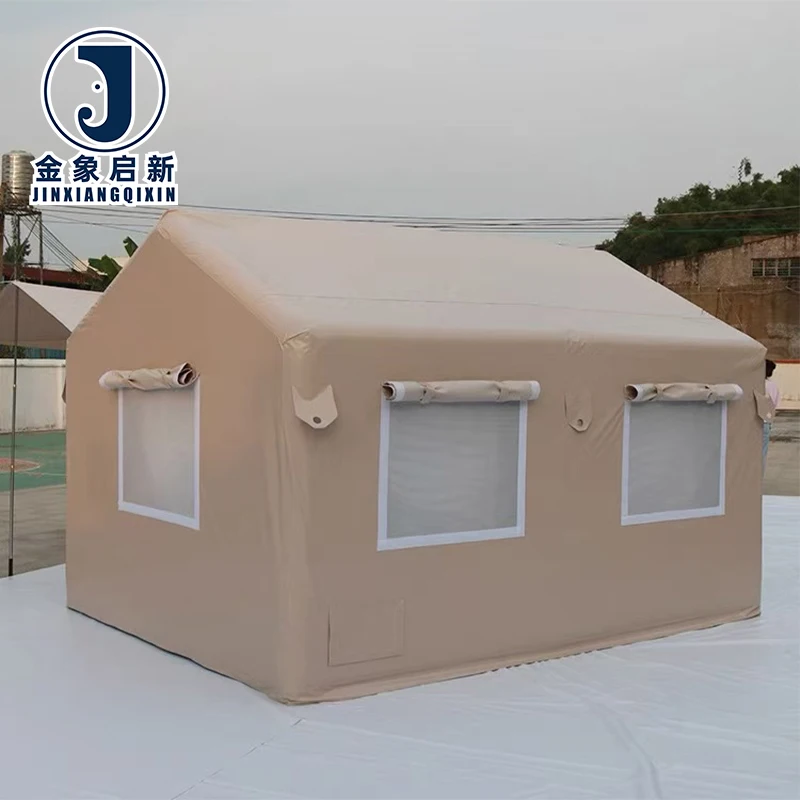
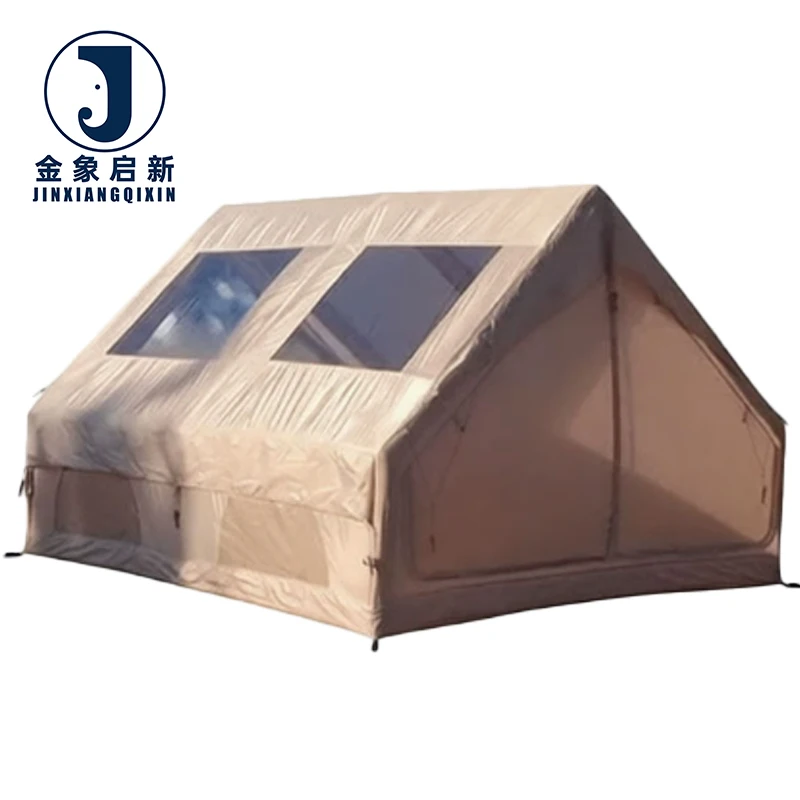
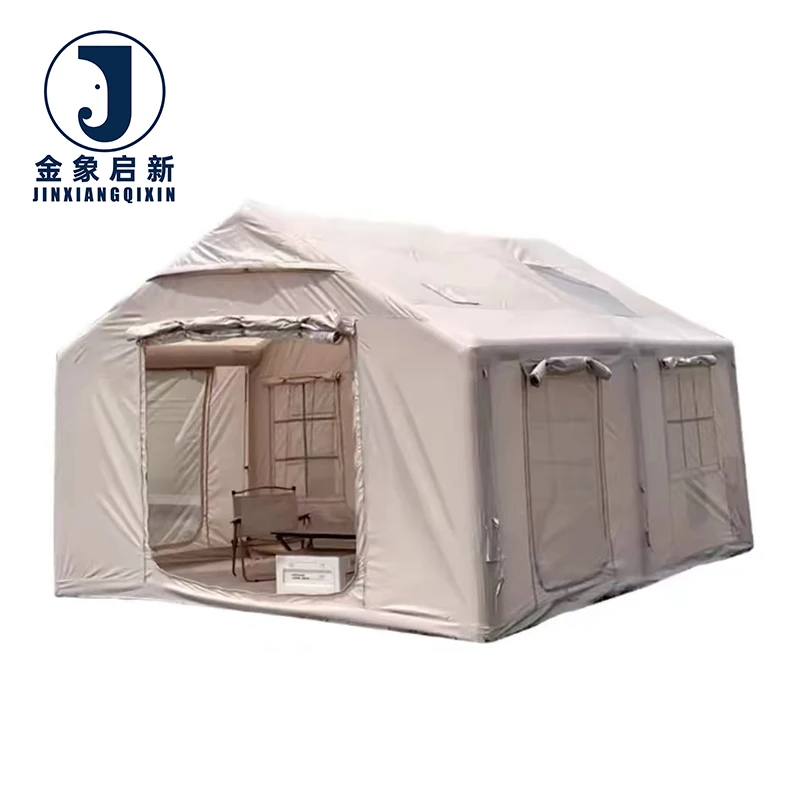
Deep process control over coating weight and adhesion — every batch of inflatable tent fabric we ship carries a verified material specification sheet and a 24-hour inflation test record, ensuring that airtightness and structural stability are proven before the roll leaves the facility.
Technical Specifications
| Parameter | Value |
|---|---|
| Product Type | Inflatable Tent |
| Core Material | PVC Tarpaulin |
| Fire-retardant Standard | EN 13501-1 |
| Waterproof Rating | 3000mm water column |
| Anti-Static Treatment | Available — confirm surface resistance standard required for your project |
| UV Treatment | Available — test basis to be confirmed per order |
| Thickness Tolerance | ±2% |
| Raw Material Standard | GB/T 5761-2006 (virgin PVC resin) |
| Capacity | 8-10 Person |
| Deployment System | Quick automatic opening |
| Season Rating | Four-season |
| Customization | OEM & ODM — size, Pantone color, logo printing, door/window configuration |
| Quality Testing | 24-hour inflation test for airtightness and structural stability |
| Certifications | ISO9001, ISO14001, ISO45001, CE, EN 13501-1 |
Application Suitability
| Application | Exposure & Requirement |
|---|---|
| Mining and tunnelling temporary shelters | Confined site, mandatory fire-retardant compliance, high abrasion from equipment movement, rapid deployment and collapse cycles |
| Commercial expedition base camps | Extended UV and weather exposure, repeated inflation and deflation, colour consistency across multiple units for brand identity |
| Remote project site workforce housing | Anti-static environment near sensitive equipment, sustained inflation over weeks, thermal insulation demands in extreme climates |
| Adventure tourism inflatable structures | High guest turnover, frequent cleaning with chemical agents, visible branding and colour requirements, safety audit documentation |
| Event management rapid-deploy facilities | Short setup windows, multi-site reuse, wind load on large membrane surfaces, regulatory fire compliance at public venues |
Why Inflatable Structures Fail Site Audits Without Documented Flame Retardancy
The inflatable tent fabric must carry a named fire-retardant grade with a test certificate — not just a claim.
When a mining contractor or event organiser specifies a temporary inflatable shelter, the site safety officer does not accept "flame retardant" as a description. They need the standard number, the test date, and the batch reference. A fabric that Inflatable Tent Fabric fire retardant certified to EN 13501-1 ships with documentation that satisfies most European and international site audit frameworks, whereas a generic claim stalls the approval process and delays deployment [NEED_CITE: EN 13501-1 classification of construction products and building elements]. Structures supplied without matching paperwork are often rejected at the gate, forcing the buyer to source replacement material under emergency lead times and inflated costs.
Coating Integrity and Air Retention Over Sustained Inflation
The virgin PVC resin specified under GB/T 5761-2006 provides a consistent polymer base for the coating layer, which directly governs how well the fabric holds air under continuous internal pressure. Inflatable structures depend on the membrane maintaining tension without micro-leaks developing at the coating-to-yarn interface. When the raw material standard is controlled at the resin stage, the resulting coated fabric shows fewer pinholes and more uniform adhesion across the full roll width. This consistency matters for commercial deployments where multiple units must perform identically across a season of use.
Seam Behaviour at Inflation Flex Points
Every inflatable tent has zones where the membrane bends sharply — typically around beam junctions, door frames, and anchor points. The welded seam in these areas must flex repeatedly without delaminating from the base fabric. Our Inflatable Tent Fabric fire retardant certified production process controls coating weight and adhesion at each stage, so the heat-welded bond reaches a peel strength that matches the fabric’s own tear resistance. A seam that fails before the membrane itself is a design and process failure, not a material failure, and it shows up most often at the points where internal pressure concentrates stress [NEED_CITE: peel strength test methods for coated fabrics].
Reading the Specification Sheet Beyond Thickness
The ±2% thickness tolerance reflects a controlled coating application process, but thickness alone does not predict how the Inflatable Tent Fabric fire retardant certified material will behave under load. Tensile strength and tear resistance depend on the base fabric denier and weave density working together with the coating weight. A thicker coating on a low-denier base may resist abrasion well but tear easily along the warp, while a thinner coating on a high-density weave may show the opposite pattern. The raw material standard GB/T 5761-2006 ensures the PVC compound itself is consistent, so variations in mechanical performance come from the fabric construction choices — choices that should match the specific inflation pressure and wind load the finished structure will face.
The Cost of Specifying Without a Test Report
Buyers who approve a sample based on hand feel and visual appearance, without requesting the batch-specific fire-retardant and anti-static test report, expose their project to late-stage rejection. A structure that passes initial installation may fail the compliance audit weeks later when the safety inspector asks for documentation that was never supplied. The remediation cost — dismantling, sourcing compliant replacement fabric, re-fabrication, and re-deployment — far exceeds the time and sampling cost of verifying the grade before the order is placed [NEED_CITE: site safety audit requirements for temporary structures in mining and events]. Anti-static performance, where required near sensitive instrumentation, must also be verified with a surface resistance measurement rather than assumed from a product description.
Procurement Verification Built Into Every Order
Our 10-person R&D team handles material selection and sample development for each project, so the fabric specification is matched to the actual inflation pressure, climate, and compliance framework before production begins. Three full production lines and 36 sets of professional equipment provide the capacity to deliver bulk orders on schedule without compressing the QA window. Every batch undergoes full-process inspection with 100% pre-shipment review, and the 24-hour inflation test on each unit is recorded and shipped with the order documentation. Thickness is verified against the ±2% tolerance, and the Inflatable Tent Fabric fire retardant certified material carries EN 13501-1 documentation for regulatory submission. OEM and ODM customization — including Pantone colour matching, logo printing, and door or window configuration — is developed through a sample approval stage so the buyer confirms performance and appearance before the production run.
Documentation & Verification
- Material specification sheet stating PVC grade, coating type, and EN 13501-1 fire-retardant classification per batch
- Anti-static surface resistance test report where anti-static treatment is specified for the order
- 24-hour inflation test record verifying airtightness and structural stability of each unit before dispatch
- ISO9001, ISO14001, ISO45001, and CE certificates available for project regulatory submission
- Batch quality inspection report covering thickness within ±2% tolerance, tensile, and tear values
Fabrication, Handling & Storage
- Heat-weld seams using temperature and dwell time matched to the PVC coating thickness to achieve full peel strength at beam junctions
- Reinforce anchor and tie-down points with additional PVC patches bonded to the coated surface before stress loads are applied
- Store rolls upright on pallets in a dry, shaded area to prevent compression creases that become visible after inflation
- Allow cold-stored fabric to reach ambient temperature before unrolling to avoid cracking the PVC coating at low temperatures
- Clean the coated surface with mild detergent and soft cloth; avoid solvent-based cleaners that can degrade the PVC top finish
- Repair minor punctures with compatible PVC patch kits, ensuring the Inflatable Tent Fabric fire retardant certified surface is clean and dry before bonding
Preparing Your Inquiry
To match the right fabric construction to your inflatable structure, we need to know the target inflation pressure, the compliance framework your site requires — particularly the fire-retardant grade and whether anti-static treatment is mandatory — and the expected deployment climate. Provide your required dimensions, door and window configuration, colour or branding needs, and whether you require finished units or roll stock for your own fabrication line. Sample development is available so you can verify material performance, weld behaviour, and colour accuracy before committing to a production order.
Frequently Asked Questions
Q: What fire-retardant grade does the inflatable fabric carry and does it meet my local site requirements?
A: The fabric is certified to EN 13501-1, which is widely accepted across European, Middle Eastern, and Asia-Pacific mining, tunnelling, and event site frameworks. If your local authority requires a different classification such as NFPA 701 or DIN 4102 B1, raise this at inquiry stage so we can confirm availability and provide the matching test documentation with your order.
Q: How is anti-static performance verified and what surface resistance standard applies?
A: Anti-static treatment is applied and tested per order. The surface resistance value is measured and recorded in the batch inspection report. Specify the surface resistance range your project requires — typically expressed in ohms per square — and we will confirm the achievable grade and supply the test certificate with shipment documentation.
Q: Can the inflatable structure fabric be customized in size, colour, and door or window configuration?
A: Full OEM and ODM customization is available, including Pantone colour matching, logo or pattern printing, and bespoke door, window, and valve placements. A sample is produced for your approval before the full production run, so dimensions, colour accuracy, and weld details are confirmed against your project specification.
Q: What documentation ships with the order for compliance audits and project approvals?
A: Each order includes a material specification sheet, EN 13501-1 fire-retardant certificate, batch inspection report covering thickness and mechanical values, 24-hour inflation test record, and ISO or CE certificates. Additional documents such as certificate of origin or customs paperwork are provided on request to support your import and site approval process.