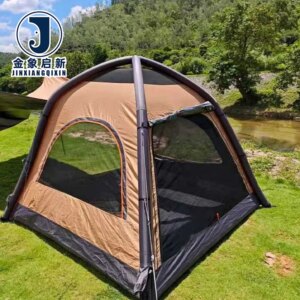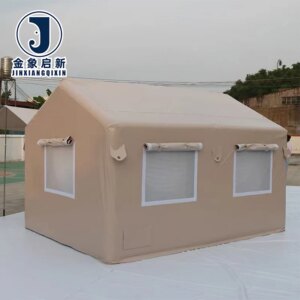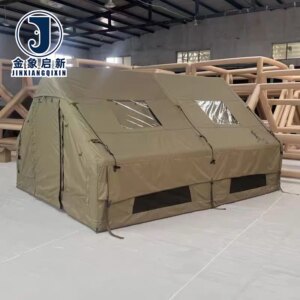



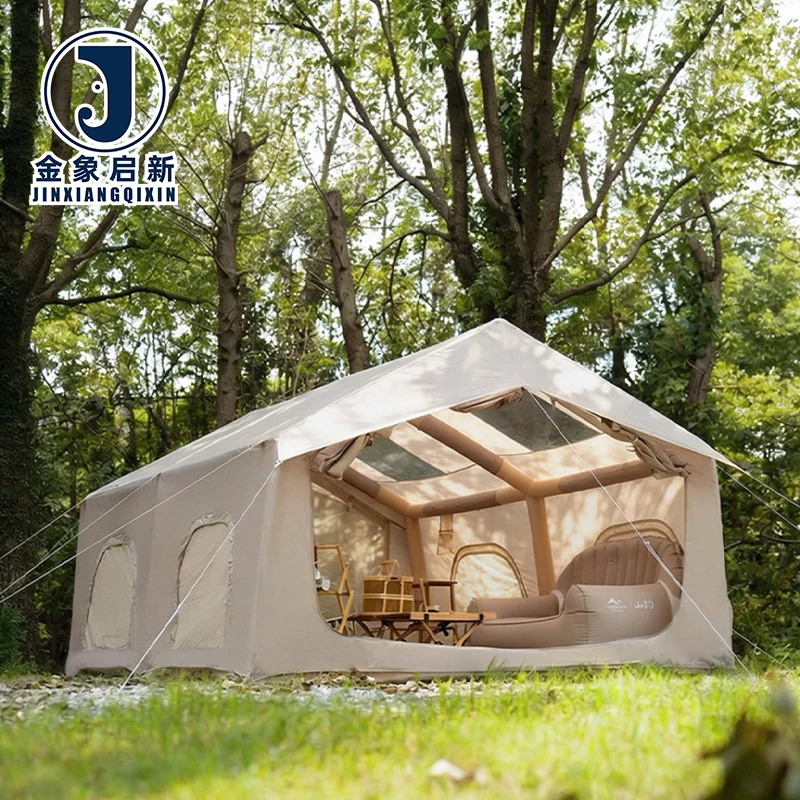



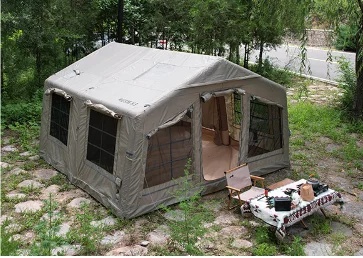
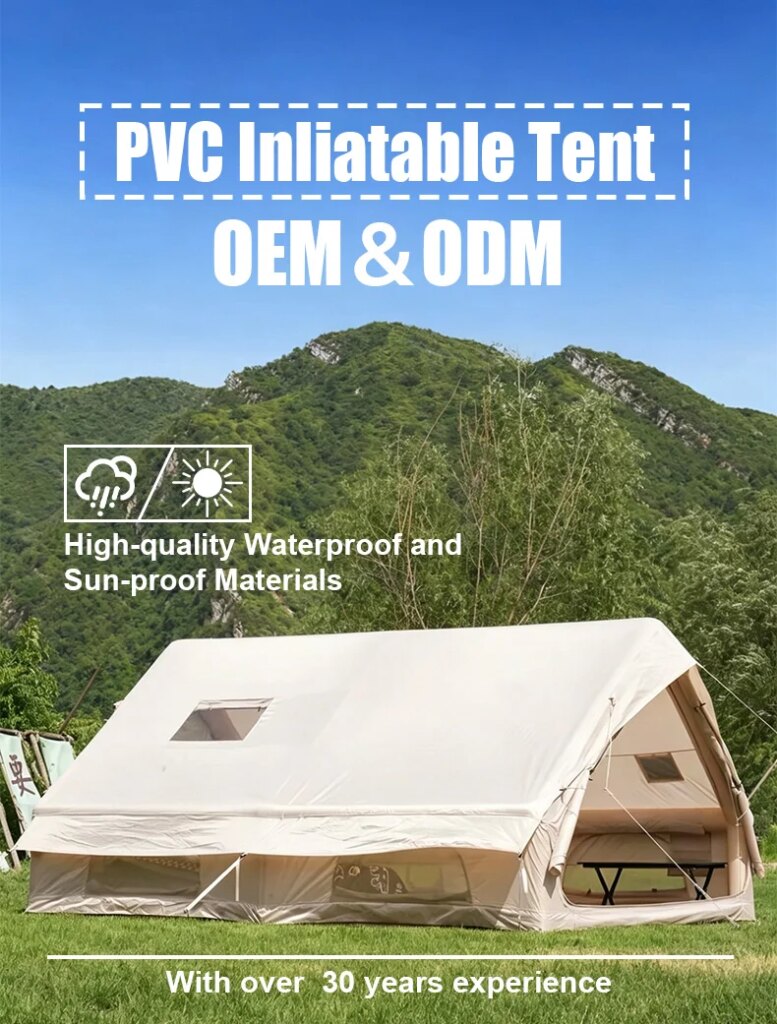
Coated fabric process control — deep expertise in PVC coating weight and adhesion ensures fire-retardant and anti-static inflatable tent fabric meets documented safety standards before leaving the production line.
Technical Specifications
| Parameter | Value |
|---|---|
| Product Type | Inflatable Tent Fabric |
| Core Material | PVC Tarpaulin |
| Product Forms | Single Layer Inflatable Tent |
| Key Performance | Waterproof, UV-resistant, Tear-resistant |
| Fire-Retardant | Available in fire-retardant grades — confirm the grade required for your market |
| Anti-Static | Available with anti-static treatment — confirm surface resistance standard required |
| Customization | Sample customization, pattern printing, OEM & ODM services |
| Production Facility | 9,180 m² with 3 full production lines |
| Processing Equipment | 36 sets of professional equipment |
| R&D Capability | 10 technicians |
| Standards | ISO9001, ISO14001, ISO45001, CE |
Application Suitability
| Application | Exposure & Requirement |
|---|---|
| Mining & tunnelling temporary shelters | Fire-retardant and anti-static compliance mandatory; dust, confined ventilation, ignition sources |
| Aviation emergency response structures | Rapid deployment, certified flame performance, outdoor weather exposure |
| Disaster relief command centers | Waterproofing, UV exposure, repeated inflation and deflation cycles |
| Equipment maintenance shelters in remote locations | Wind loading, temperature extremes, transport abrasion during logistics |
| Infrastructure inspection field stations | Quick assembly, tear resistance during handling, extended outdoor exposure |
What Fire-Retardant Certification Actually Means on a Worksite
Inflatable tent fabric fire retardant certified documentation must match the regulatory framework of your specific site, not just a generic claim on a data sheet.
Procurement teams sourcing inflatable structures for mining, tunnelling or aviation environments frequently receive fabric labelled "fire retardant" without an accompanying test report tied to the batch number. On-site safety officers then reject the material during inspection, halting deployment and triggering costly re-procurement cycles. The gap between a supplier’s marketing language and a verifiable test certificate is where most compliance failures originate [NEED_CITE: fire-retardant classification standards for temporary industrial structures]. When the inflatable tent fabric fire retardant certified status cannot be proven with traceable documentation per roll, the entire procurement lot becomes a liability rather than an asset.
Compliance Alignment for Mining and Tunnelling Contractors
Temporary inflatable shelters deployed underground or near excavation faces must satisfy strict fire safety protocols that vary by jurisdiction. The inflatable tent fabric fire retardant certified specification needs to reference the exact classification standard enforced by the site operator or regional mining authority. We supply test reports matched to batch and order numbers so that compliance verification at the site gate proceeds without ambiguity.
Anti-Static Performance in Sensitive Environments
Environments where flammable gases, fine particulate dust or sensitive electronic instrumentation are present demand fabric with controlled surface resistance. Anti-static treatment for PVC inflatable structures reduces the risk of static discharge accumulation across the membrane surface [NEED_CITE: anti-static surface resistance testing methods for industrial textiles]. Confirm the specific resistance range or standard your project mandates before sample approval so that the formulation can be matched precisely.
Understanding How PVC Coating Formulation Dictates Field Performance
The behaviour of an inflatable membrane under real conditions is governed by the interaction between base fabric construction and coating formulation, not by any single parameter in isolation. Base fabric denier and weave density establish the tensile and tear foundation, while the PVC coating compound — its plasticiser system, filler loading and additive package — determines flexibility, weldability and environmental resistance. Fire-retardant additives must be compounded into the coating at precise ratios to achieve consistent flame performance without compromising tensile properties or heat-seal integrity. UV stabilisers function at the molecular level within the coating matrix, and their effectiveness depends on uniform dispersion during the coating process rather than a surface-level application. The thickness of the coating layer relative to the base fabric affects both the overall weight and the material’s response to repeated inflation and deflation cycles — too thin a coating risks micro-cracking at fold points, while excessive coating weight adds dead load without proportional strength gain [NEED_CITE: relationship between coating weight and mechanical properties in PVC tarpaulins].
The Cost of Overlooking Certification Traceability
When fire-retardant or anti-static claims cannot be traced back to a specific production batch, the consequences extend beyond paperwork. Site inspectors who discover missing or mismatched test certificates can order the immediate removal of deployed structures, forcing emergency re-sourcing under compressed timelines. Welded seams on inflatable structures concentrate stress at exactly the points where inflation pressure and wind loading interact, and if the coating formulation varies between batches, weld parameters that worked on the sample may fail on production material [NEED_CITE: weld strength testing protocols for PVC coated fabrics]. Batch-to-batch inconsistency in coating chemistry also shifts the thermal window for heat sealing, meaning fabricators must re-calibrate equipment for every new delivery — a hidden cost that erodes project margins.
Why Procurement Teams Source Inflatable Structure Fabric Here
Process control over PVC coating formulation ensures that fire-retardant and anti-static additives are compounded at verified ratios before the coating is applied to the base fabric. Three full production lines and 36 sets of professional equipment provide the capacity to fulfil multi-container orders while maintaining coating consistency across every roll. A 10-technician R&D team develops custom formulations, sample panels and specification documentation tailored to inflatable membrane and ventilation duct applications. Dedicated QA/QC personnel conduct in-process checks at every production stage and perform full pre-shipment inspection against the confirmed material specification sheet. ISO9001, ISO14001, ISO45001 and CE certifications are maintained as active management systems, not static wall decorations.
Documentation & Verification
- Material specification sheet stating PVC coating type, base fabric construction, and performance properties with certification references
- Fire-retardant and anti-static test reports issued per batch, matched to order number for full traceability
- ISO9001, ISO14001, ISO45001 and CE certificates included in shipment documentation package
- Pre-shipment inspection record confirming coating weight, colour consistency, and dimensional accuracy per roll
- Certificate of origin and customs documentation prepared for destination-country import requirements
Fabrication, Handling & Storage
- Heat-seal temperature and dwell time must be calibrated to the specific PVC coating compound used on this inflatable membrane fabric
- Store rolls upright in a dry, shaded environment to prevent compression marks on the PVC coating surface
- Allow cold-stored rolls to acclimatise to ambient temperature before unrolling to avoid coating brittleness during handling
- Use compatible PVC adhesive and patch material from the same coating family for field repairs on inflatable structures
- Avoid dragging rolls across abrasive surfaces during warehouse handling to protect the outer coating layer
Preparing Your Specification Enquiry
To ensure the inflatable tent fabric fire retardant certified proposal matches your project requirements, provide the deployment environment and applicable safety regulations, the dimensional specifications and annual volume forecast, and any colour, pattern printing or branding requirements. Indicate whether you need roll stock for your own fabrication facility or finished inflatable tent units, and whether sample panels are required for weld parameter validation before full production commences.
Frequently Asked Questions
Q: What fire-retardant grades are available for inflatable tent fabric used in mining applications?
A: Fire-retardant grades are formulated to align with regional mining and tunnelling safety regulations. Confirm the specific classification standard required by your site authority during the enquiry stage so that the correct additive package is compounded into the PVC coating. Test reports are issued per batch with full traceability to your order number.
Q: How is anti-static surface resistance verified on PVC inflatable structure fabric?
A: Anti-static treatment is applied during the coating process and verified against the applicable compliance standard you specify. Request the test method reference and acceptable resistance range for your operational environment when submitting your enquiry, so that sample panels can be produced and measured before bulk production is authorised.
Q: Can custom dimensions and pattern printing be applied to large-scale inflatable tent orders?
A: Custom sizing, colour matching and pattern printing are handled by the 10-technician R&D team through a structured sample approval process. Samples are developed within days for review, and once approved, production proceeds across the full order quantity with in-process QA checks to maintain consistency from first roll to last.
Q: How is batch-to-batch consistency maintained across multi-container inflatable fabric orders?
A: Coating formulation is locked after sample approval and replicated under controlled parameters on dedicated production lines. QA personnel conduct checks at every stage, and pre-shipment inspection verifies coating weight, colour, and dimensional accuracy per roll. Inspection records accompany each shipment for procurement traceability.