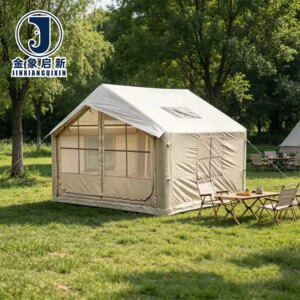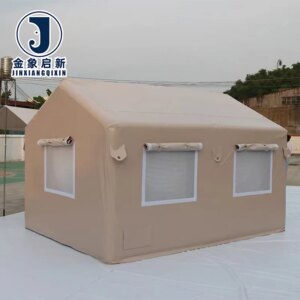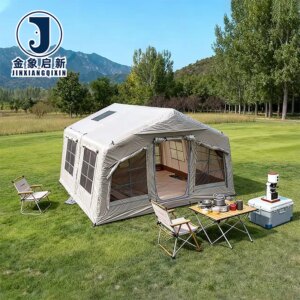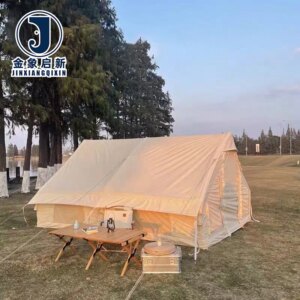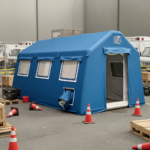
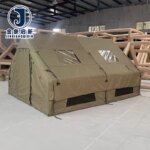
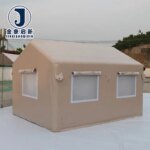
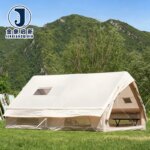
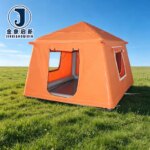
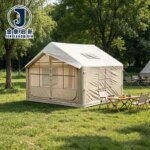
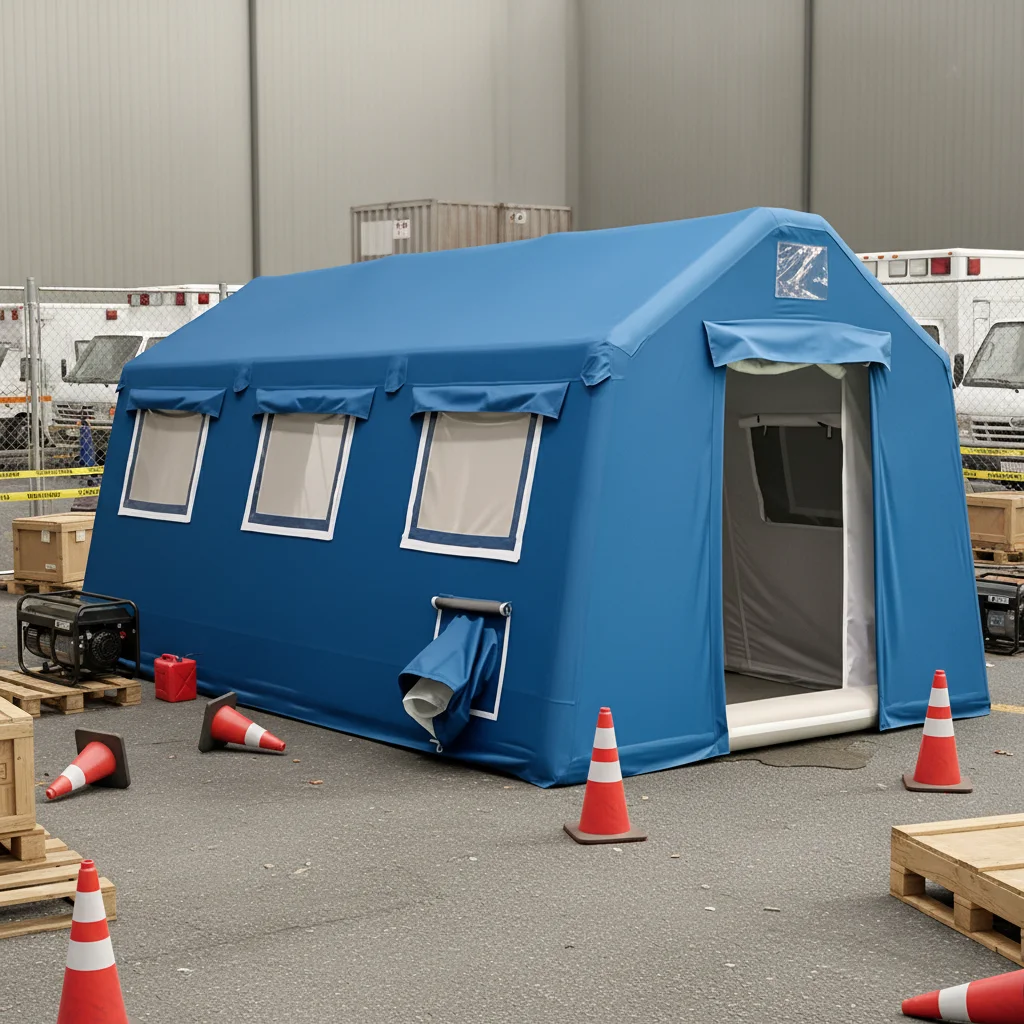
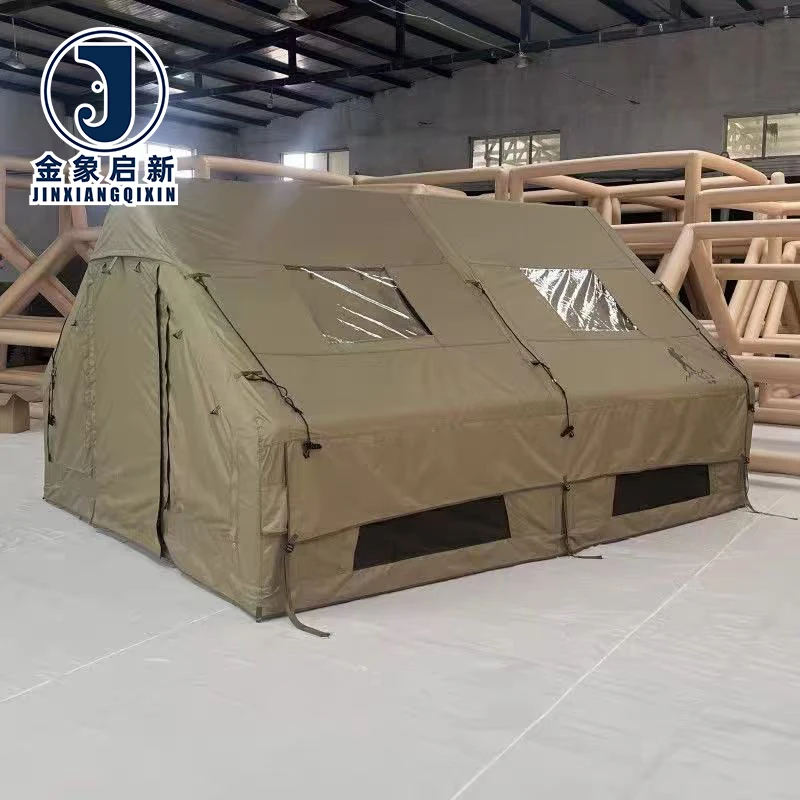
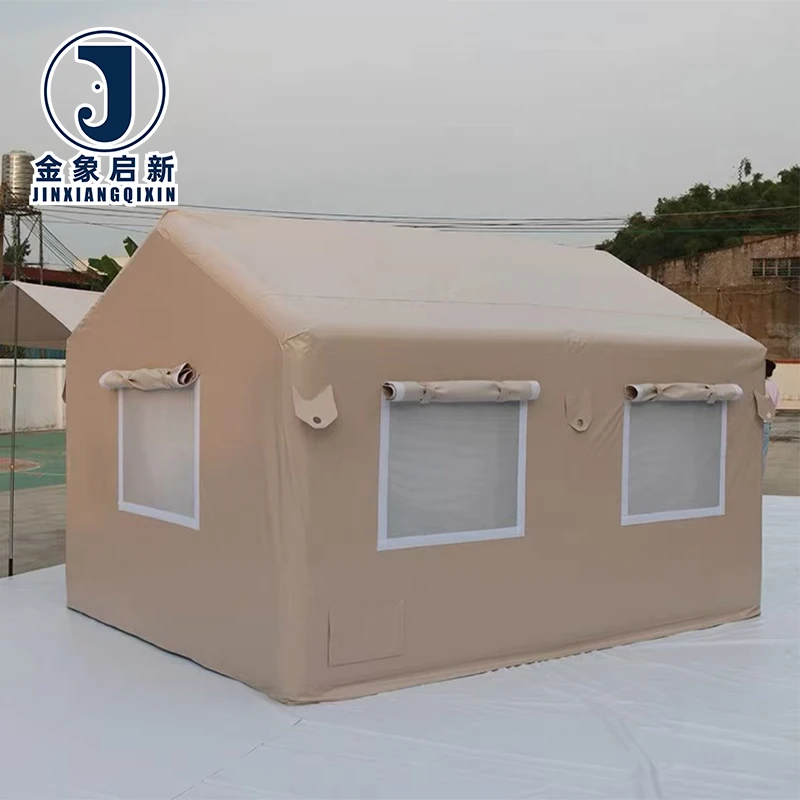
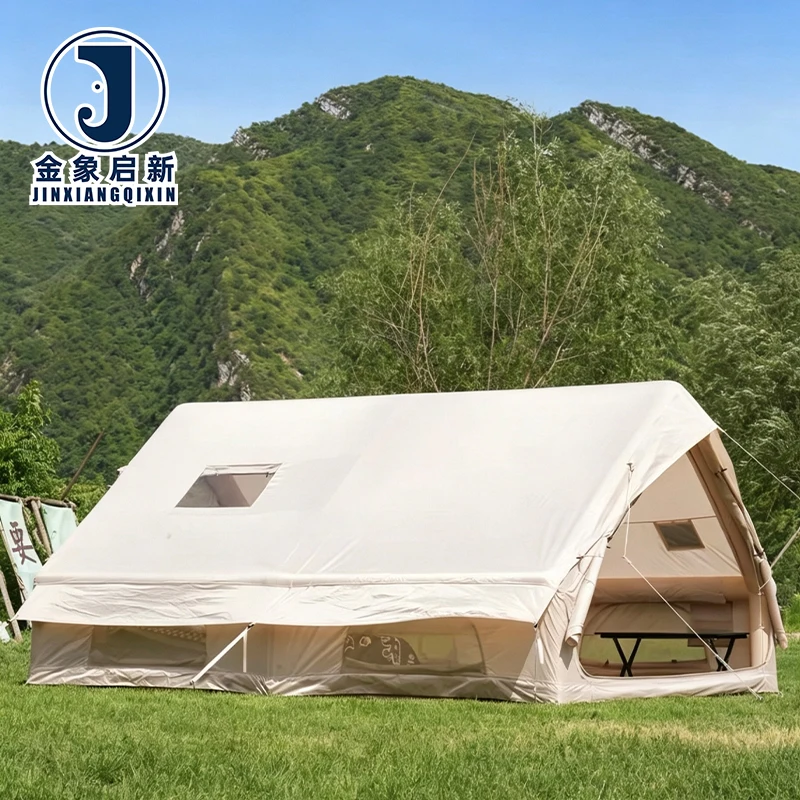
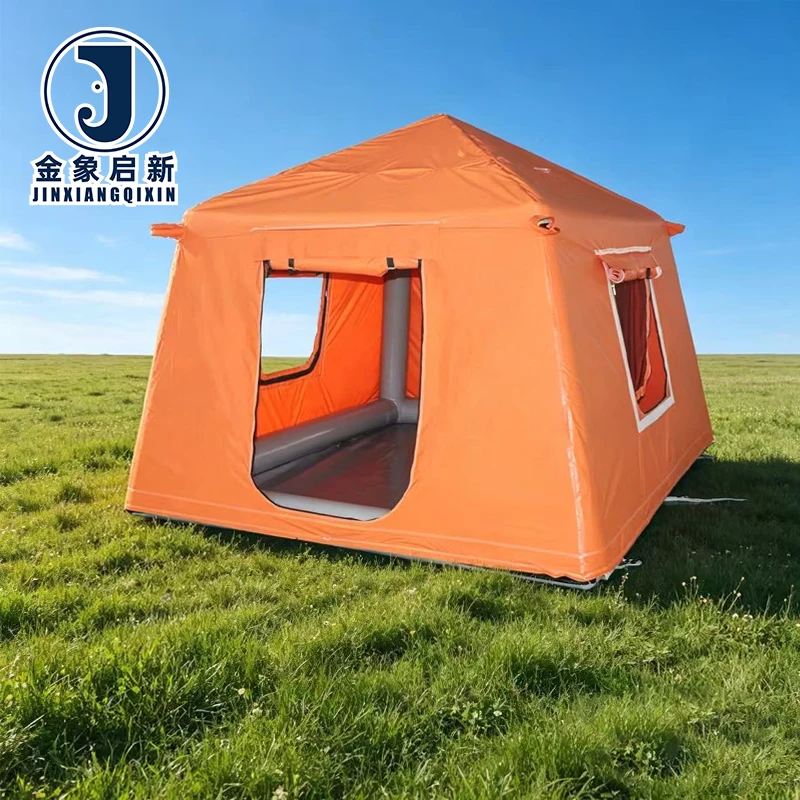
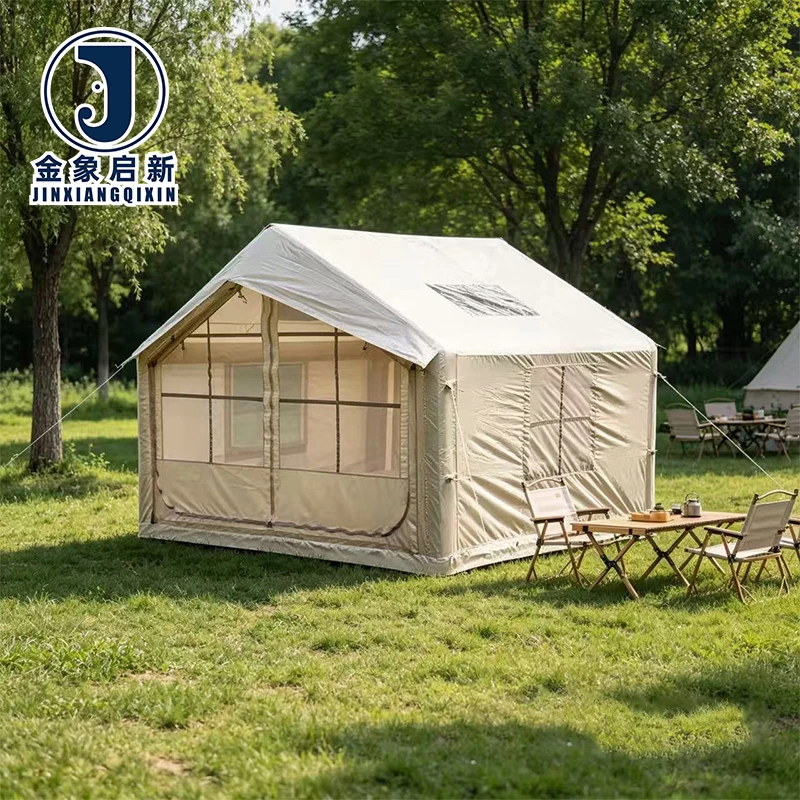
Coating process control — every roll of PVC knife-coated fabric undergoes strict full-process inspection with dedicated QA and QC staff verifying adhesion, weight, and seam integrity before leaving the facility.
Technical Specifications
| Parameter | Value |
|---|---|
| Product Type | Inflatable Tent |
| Core Material | PVC tarpaulin (PVC knife-coated fabric) |
| Product Forms | Quick automatic opening, single layer construction, extended type |
| Waterproofing | Fully waterproof coated construction with waterproof seam technology |
| Flame Retardant | Fire-retardant properties stated — confirm the applicable grade (e.g., M2, B1, NFPA 701) for your market |
| UV Resistance | UV-resistant coating — test method or exposure duration not stated; request test data for your deployment climate |
| Key Features | Tear-resistant, four-season functionality, quick automatic opening mechanism |
| Customization | OEM & ODM customization, sample customization, pattern printing |
| Air Pressure Retention | Minimum 24-hour retention test before dispatch |
| Environmental Testing | Temperature cycling and UV exposure simulation |
| Certifications | ISO9001, ISO14001, ISO45001, CE |
Application Suitability
| Application | Exposure & Requirement |
|---|---|
| Emergency response command centers | Rapid deployment, all-weather exposure, immediate operational readiness, certified fire safety for occupied shelters |
| Temporary storage during disaster recovery | Prolonged outdoor standing, rain and wind loads, equipment and inventory protection via waterproof seams |
| Mobile field operations bases | Repeated inflation and deflation cycles, ground abrasion, UV exposure in open terrain |
| Infrastructure maintenance shelters | Year-round deployment across diverse climates, wind load resistance, structural stability under repeated use |
| Mining and tunnelling temporary shelters | Compliance with site safety regulations, fire-retardant documentation, potential anti-static requirements |
Why "Fire-Retardant" Without a Test Report Creates a Compliance Gap on Site
Inflatable tent fabric claimed as fire-retardant is useless at the inspection checkpoint if no test report backs the claim.
Mining sites, aviation facilities, and disaster relief staging areas each enforce distinct fire safety standards. A shelter that arrives without documented flame-retardant grade fails the site safety audit before it is ever inflated. Purchasing teams then face the choice of rejecting the shipment or requesting emergency re-testing at their own cost — both of which delay critical operations [NEED_CITE: fire classification standards for temporary structures in industrial sites].
The specification sheet must name the exact standard — B1 per DIN 4102, NFPA 701, or M2 — so the safety officer can cross-reference it against site requirements before the tent leaves the factory.
Knife-Coated Construction and Structural Integrity Under Inflation Pressure
PVC knife-coated fabric forms the structural envelope of every inflatable shelter we produce. The coating is applied directly to the base fabric under controlled tension, producing a bond that resists delamination during repeated inflation and deflation cycles. This matters because an inflatable tent’s air beams flex continuously under wind load and temperature-driven pressure changes.
When specifying Inflatable Tent Fabric, the coating method determines how the material behaves at weld lines and stress concentrations. Knife coating delivers consistent thickness across the fabric surface, which directly affects how reliably hot-air welding produces airtight seams.
Air Pressure Retention and Seam Performance in Field Conditions
Every inflatable shelter we dispatch undergoes a minimum 24-hour air pressure retention test. This is not a spot check — it runs continuously to verify that welded seams hold pressure under sustained load. Seam strength is evaluated using standardized tensile testing equipment before the shelter is approved for packing.
Waterproof seam technology eliminates leakage paths that would otherwise compromise both structural rigidity and interior dryness. In disaster relief scenarios where the shelter houses sensitive equipment or serves as a medical command post, seam failure is not an inconvenience — it is a mission-critical breakdown [NEED_CITE: seam failure modes in inflatable structures under cyclic loading].
How Base Fabric and Coating Weight Interact to Determine Real-World Durability
The tensile and tear performance of PVC inflatable tent material depends on two variables working together: the base fabric denier and weave density, and the coating weight applied during knife coating. A high-density base fabric with insufficient coating will resist tearing but allow water ingress at the weave intersections. A heavily coated fabric on a low-density base may feel substantial but will tear easily along the warp or weft when punctured.
Fire-retardant treatment interacts with the coating chemistry — some additives reduce low-temperature flexibility, which matters when the shelter is deployed in cold climates. UV-resistant additives are compounded into the coating layer; their effectiveness depends on concentration and dispersion uniformity, which is why test data specific to the production batch should accompany every shipment. The environmental simulation testing we run — including temperature cycling and UV exposure — provides an initial indication of how the material will perform, but long-term field data varies by climate zone.
The Hidden Cost of Skipping Batch-Level Verification
When inflatable shelter fabric arrives on site without a batch inspection report, the procurement team has no way to confirm whether the material matches the quotation specification. We have seen shelters fail pre-deployment safety audits because the fire-retardant certificate referenced a different product batch or a different material entirely.
Colour variation between rolls in the same order becomes visible once multiple shelters are inflated side by side at a staging area. Welded seams that were not tested for pressure retention may hold during a brief factory check but leak within hours under real wind loads. Each of these failures traces back to insufficient documentation and verification at the point of dispatch [NEED_CITE: quality documentation requirements for technical textiles in emergency procurement].
Why Technical Buyers Source Inflatable Shelter Fabric Here
Our 10-person R&D team handles material selection, pattern printing, custom sizing, and sample development specifically for inflatable and membrane structures — not generic tarpaulin work.
Three full production lines and 36 sets of professional processing equipment support batch capacity that meets project timelines without sacrificing the coating consistency inflatable structures demand.
Dedicated QA and QC staff inspect every production stage, with 100% pre-shipment inspection and documented air pressure retention testing that technical buyers can review before release.
Samples for custom requirements — including specific fire-retardant grades, dimensions, and access configurations — are developed within days, not weeks, so approval cycles stay short.
ISO9001, ISO14001, ISO45001, and CE certifications are maintained and available per batch, providing the audit trail that regulated sites require for temporary structure compliance.
Documentation & Verification
- Batch inspection report detailing PVC coating weight, base fabric specification, and performance test results per shipment
- Fire-retardant grade test report matching the standard required by your site — confirm grade before ordering
- ISO9001, ISO14001, ISO45001, and CE certificates supplied per batch for regulatory audit trails
- Air pressure retention test record documenting minimum 24-hour hold for each inflatable unit before dispatch
- Raw material certificates and production process documentation available on request for compliance validation
Fabrication, Handling & Storage
- Hot-air welding parameters must match the PVC knife-coated fabric thickness to achieve airtight seams without scorching the coating surface
- Store rolled inflatable tent material on pallets in a dry, shaded area to prevent compression marks on the coated surface
- Avoid dragging the PVC tarpaulin across abrasive ground during deployment to protect the knife-coated outer layer
- Clean with mild detergent only — solvent-based cleaners can degrade the UV-resistant and fire-retardant additives in the coating
- Inspect welded seams before each re-deployment cycle; re-weld any section showing delamination or air leakage
What to Include in Your Enquiry
Provide the intended application environment and climate conditions so we can recommend the appropriate PVC knife-coated fabric grade and confirm UV-resistant and fire-retardant suitability. Specify any fire safety standards your site enforces — such as M2, B1, or NFPA 701 — so the correct grade is tested and documented before production. Include required dimensions, access configurations, and whether you need finished inflatable units or fabric only, along with your colour and pattern printing requirements.
Frequently Asked Questions
Q: What fire-retardant standard does the inflatable tent fabric meet, and is the test report included with shipment?
A: The material is described as having fire-retardant properties meeting industrial safety standards, but the specific grade depends on your market requirement. Confirm the applicable standard — such as M2, B1, or NFPA 701 — before ordering. We supply the matching test report with every shipment once the grade is confirmed and tested against your specification.
Q: What UV test method or exposure duration backs the UV-resistant claim for extended outdoor deployment?
A: UV-resistant coating is applied during the knife-coating process, and environmental simulation testing includes UV exposure. However, the specific test method and exposure hours are not stated on the standard specification sheet. Request the UV test data for your production batch and share your deployment climate so we can assess suitability for your expected outdoor duration.
Q: Can the inflatable shelter fabric be supplied with anti-static treatment and certification for mining or tunnelling environments?
A: Anti-static treatment is available as a customization option. Mining and tunnelling sites often require documented anti-static performance alongside fire-retardant certification. Provide your site’s specific compliance requirements during the enquiry stage so the correct treatment is applied and the appropriate test report is generated before dispatch.
Q: How are seams welded and tested to ensure air pressure retention and structural integrity under load?
A: Seams are hot-air welded using parameters calibrated to the PVC knife-coated fabric specification. Each inflatable unit undergoes a minimum 24-hour air pressure retention test, and seam strength is evaluated using standardized tensile testing equipment. This dual verification confirms that welds hold under sustained pressure before the shelter is approved for packing and dispatch.
Q: What OEM and ODM customization options are available, and what are the sample and production lead times?
A: Customization covers dimensions, colour, pattern printing, access configurations, and fire-retardant or anti-static treatment grades. Our 10-person R&D team develops samples within days for custom requirements. Production lead times depend on order volume and specification complexity — confirm your timeline during the quotation stage so we align capacity to your project schedule.