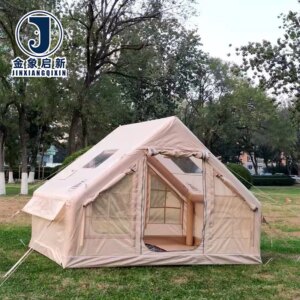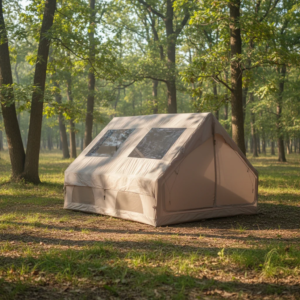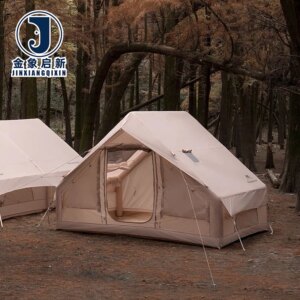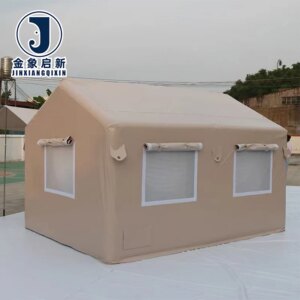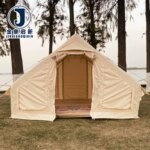
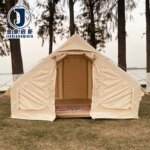
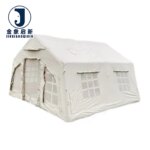
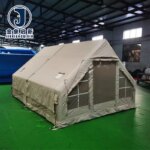

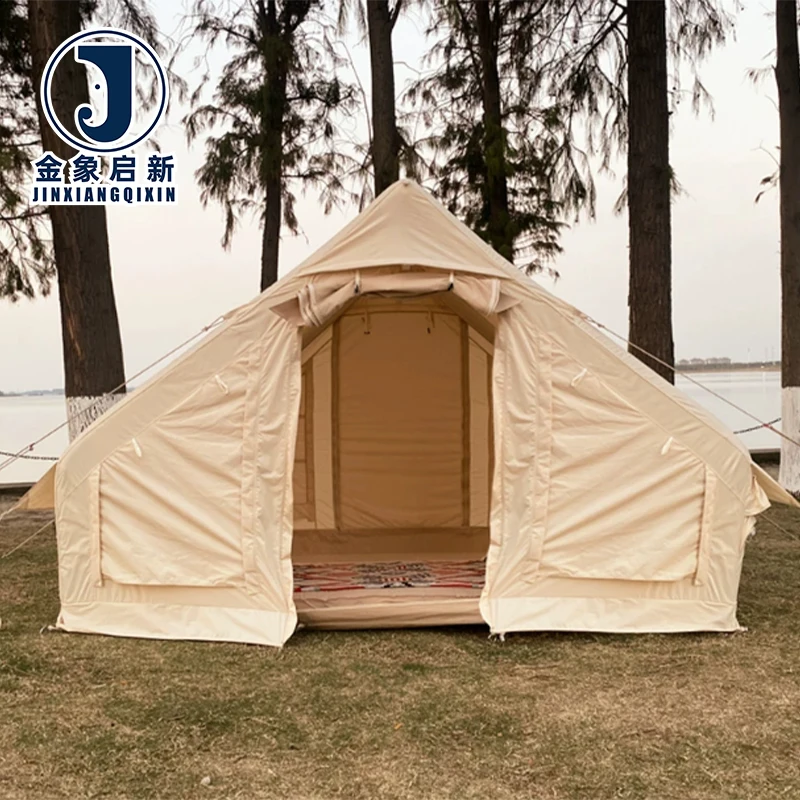
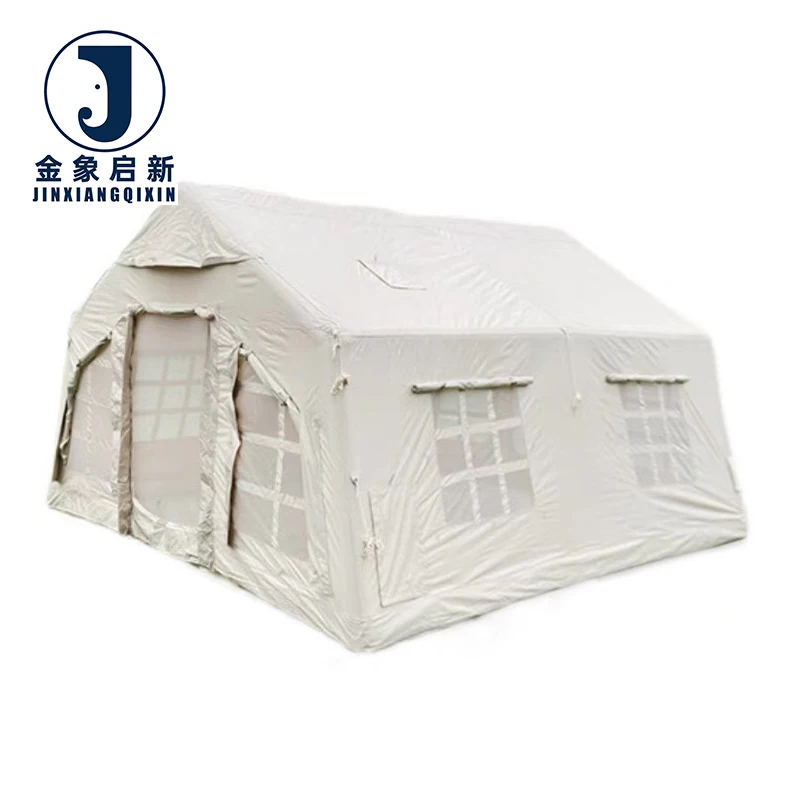
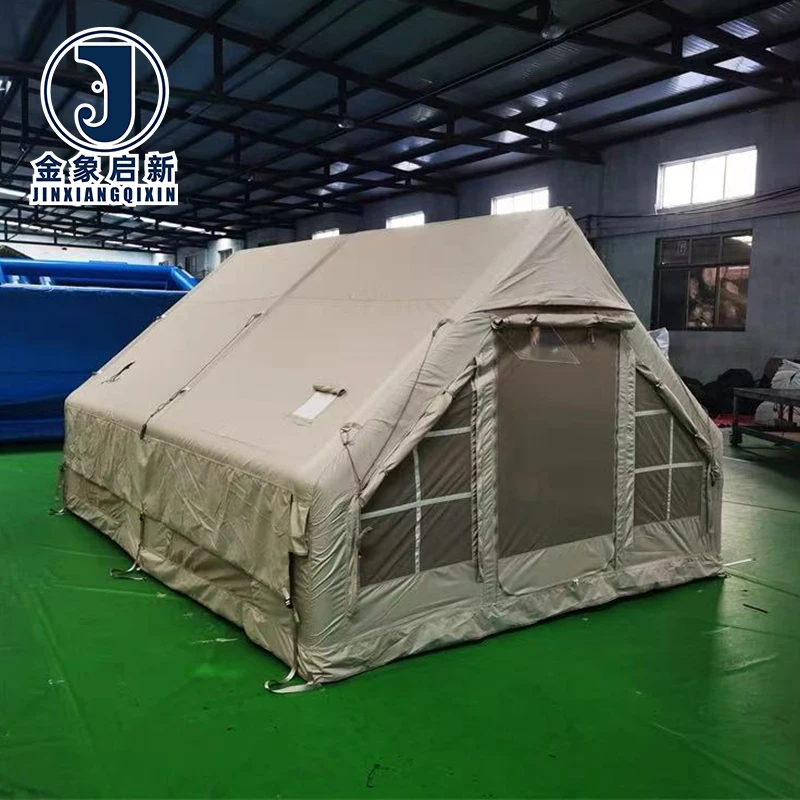
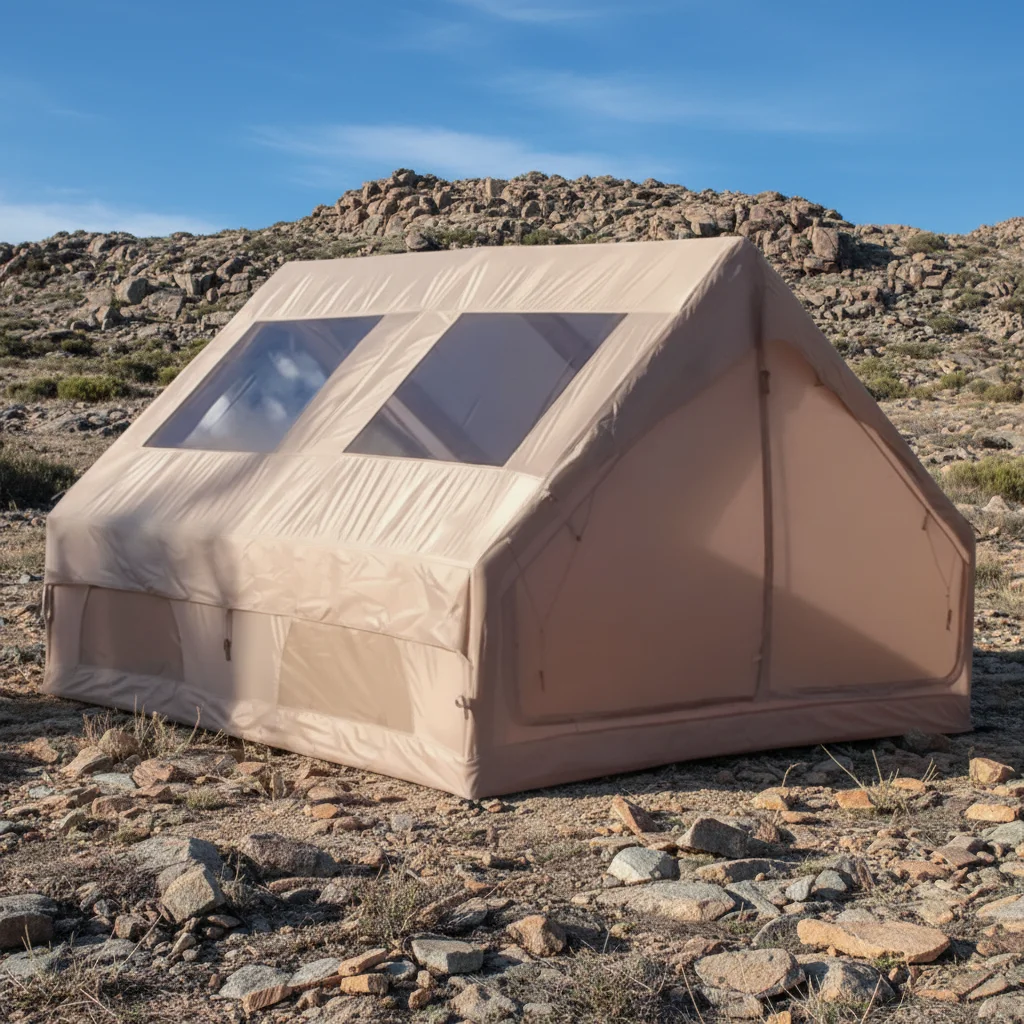
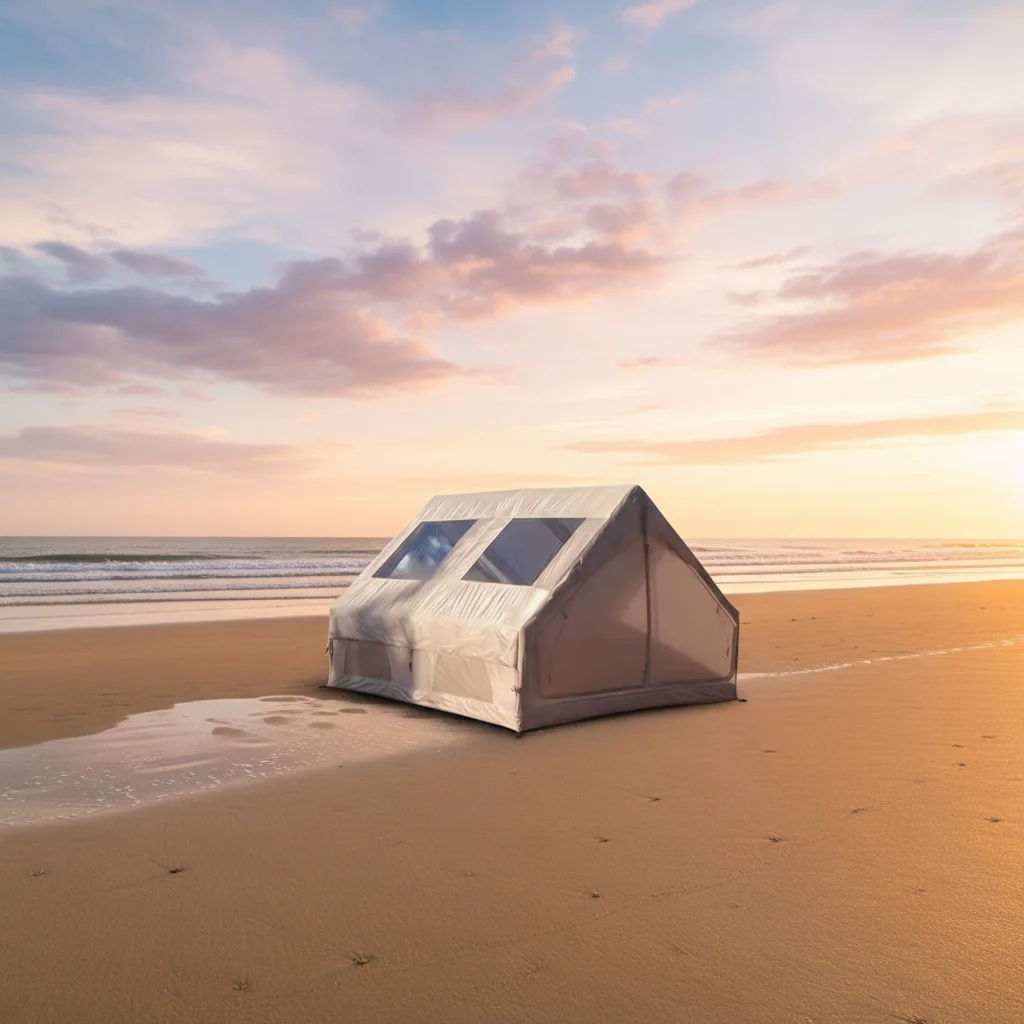
Deep Coating Process Control — our PVC inflatable tent fabric maintains consistent adhesion and treatment uniformity across every production run, verified through stage-gate QA protocols specific to inflatable structure requirements.
Technical Specifications
| Parameter | Value |
|---|---|
| Product Type | Inflatable Tent |
| Core Material | PVC Tarpaulin |
| Waterproof | Yes (grade not stated in source) |
| UV-resistant | Yes (test basis not stated in source) |
| Tear-resistant | Yes (grade not stated in source) |
| Flame Retardant | Yes (grade not stated in source) |
| Anti-static | Yes (standard not confirmed in source) |
| Product Forms | Inflatable structure with automatic opening mechanism |
| Season Rating | 4-Season |
| Customization | OEM & ODM: sample customization, pattern printing, material selection, product design |
| Certifications | ISO9001, ISO14001, ISO45001, CE |
| R&D Team | 10 technicians |
| Production Lines | 3 full production lines |
Application Suitability
| Application | Exposure & Requirement |
|---|---|
| Commercial camping operations | Continuous seasonal weather exposure, frequent inflation-deflation cycles, guest safety compliance |
| Mining and tunnelling temporary shelters | Dust-laden environments, potential ignition sources, strict site fire safety regulations |
| Industrial field accommodations | Extended outdoor deployment, wind loading on inflated surfaces, temperature fluctuation across seasons |
| Aviation equipment enclosures | Static discharge risk around sensitive electronics, controlled environment requirements |
| Outdoor gear manufacturing | Batch consistency across production runs, weldability for complex inflatable geometries, brand-specific colour matching |
What "Fire-Retardant Inflatable Tent Fabric" Actually Means on a Mine Site
Certification paperwork must match the material batch that arrives at your gate — not a generic lab sample from two years ago.
Mining and tunnelling contractors regularly specify inflatable shelters for underground or surface operations, only to discover at site inspection that the fabric delivered carries no traceable fire-retardant documentation. The inflatable tent fabric fire retardant anti-static certified requirement is not a marketing checkbox; it is a compliance gate that determines whether your structure is permitted to operate. When documentation is missing or mismatched, entire deployments stall until replacement material arrives. [NEED_CITE: mine site fire safety compliance standards for temporary structures]
Inflatable Geometry Demands Predictable Weld Behaviour
Inflatable tent structures rely entirely on heat-welded seams to hold air pressure. Unlike stitched tarpaulins where thread carries some load, an inflatable chamber fails at the weld long before the PVC inflatable tent fabric body tears. Our coating formulation is engineered to deliver consistent melt behaviour across the roll width, so weld temperature and dwell time remain stable from the first seam to the last. This predictability matters when your fabrication team is producing hundreds of linear metres of sealed seams per unit.
Surface Treatment and Long-Term Exposure [NEED_CITE: accelerated weathering protocols for coated technical textiles]
Outdoor inflatable structures face UV radiation, thermal cycling, and moisture ingress simultaneously. The UV-resistant treatment applied to our PVC tarpaulin core is designed to slow surface degradation under continuous sun exposure, while the anti-static treatment addresses environments where particulate accumulation or ignition risk demands controlled surface resistivity. We supply test documentation referencing the applicable standard for each batch — confirm the specific grade required for your deployment environment before committing to volume.
Reading the Specification Sheet Beyond Weight
Coated fabric buyers often anchor decisions on GSM alone, but an inflatable tent’s structural integrity depends on the interaction between base fabric denier, weave density, and coating adhesion. A heavier coating does not automatically deliver higher tear strength if the base fabric is loosely woven. Our specification sheets state the base fabric construction alongside coating weight so you can assess the full performance profile. The relationship between these parameters determines how the material behaves when an inflated chamber flexes under wind load or when a seam is stressed during rapid deflation.
The Cost of Specifying Blind
When a procurement team orders inflatable tent material without verifying fire-retardant grade against their site’s actual fire safety classification, the consequence is not a minor paperwork correction — it is a full work stoppage. We have seen contractors forced to dismantle deployed structures and wait for replacement fabric that carries the correct certification. Batch-specific test reports eliminate this risk. Similarly, anti-static performance that is claimed but unverified can disqualify a structure from aviation or explosive-atmosphere environments where surface resistivity is audited. [NEED_CITE: regulatory consequences of non-compliant temporary structures in industrial zones]
Why Fabricators Source Inflatable Material Here
Our 10-person R&D team handles material selection and structural design validation specifically for inflatable geometries — not just flat tarpaulin cutting patterns. Three full production lines with 36 sets of professional processing equipment support volume runs where roll-to-roll colour and coating consistency are non-negotiable for multi-unit deployments. Dedicated QA/QC inspection at every production stage, with 100% pre-shipment verification, means the roll you receive matches the specification sheet you approved. Sample development within days allows you to validate weld parameters, inflation behaviour, and colour match before mass production commitment.
Documentation & Verification
- Material specification sheet stating PVC coating type, base fabric construction, and treatment references per roll
- Fire-retardant and anti-static test reports issued against the specific production batch
- ISO9001, ISO14001, ISO45001, and CE certificates included in shipment documentation package
- Pre-shipment inspection record documenting dimensional and visual checks before dispatch
- Certificate of origin and customs documentation prepared for cross-border shipment
Fabrication, Handling & Storage
- Weld temperature profiles should be established on sample pieces from the actual production batch before full fabrication begins
- Store PVC inflatable tent rolls upright on cores to prevent flat-spot deformation that affects inflation symmetry
- Avoid folding inflated structures along the same crease line repeatedly to reduce coating fatigue at stress points
- Use PVC-compatible cleaning agents only; solvent-based cleaners can degrade the surface treatment layer
- Repair minor punctures with matching PVC patches heat-welded at controlled temperature to maintain chamber integrity
Preparing Your Enquiry
To specify the right PVC inflatable tent fabric for your project, share your deployment environment — including altitude, temperature range, and whether the structure will be permanently inflated or cycled frequently. Provide the fire-retardant classification and anti-static standard your site or market requires so we can match available grades. Indicate whether you need raw roll stock for your own fabrication line or finished cut-and-welded components.
Frequently Asked Questions
Q: What fire-retardant grades are available for inflatable tent fabric?
A: We offer PVC inflatable tent fabric with fire-retardant treatment applied during coating. The specific grade available must be confirmed against your target market’s fire safety classification — share your required standard and we will provide the matching batch test report with your shipment documentation.
Q: Is anti-static treatment suitable for mining compliance?
A: Anti-static treatment is available on our inflatable structure fabric for environments requiring controlled surface resistivity. Provide your site’s applicable anti-static standard so we can verify compliance and supply the corresponding test documentation with your order.
Q: What is the minimum order for custom-sized inflatable tent panels?
A: Minimum order quantities depend on the custom width, colour, and print complexity you require. Share your panel dimensions and annual volume estimate so we can confirm production minimums and lead time for your specific configuration.
Q: Can the fabric be heat-welded for complex inflatable chambers?
A: Yes, our PVC tarpaulin core is designed for heat-welded seam construction used in inflatable structures. We recommend running weld parameter trials on sample material from your production batch to establish optimal temperature and dwell time before full fabrication.
Q: How does 4-season rating affect fabric performance in cold climates?
A: The 4-season designation indicates the inflatable tent fabric is engineered to perform across temperature ranges encountered in all seasons. PVC naturally stiffens in extreme cold — confirm your lowest expected operating temperature so we can advise on material suitability.