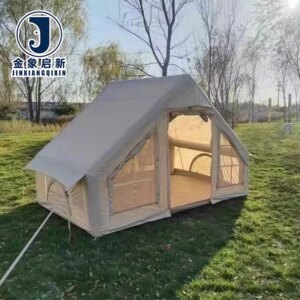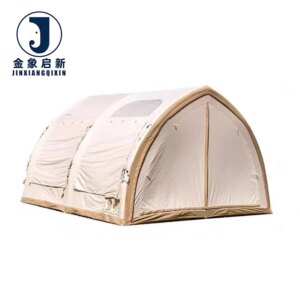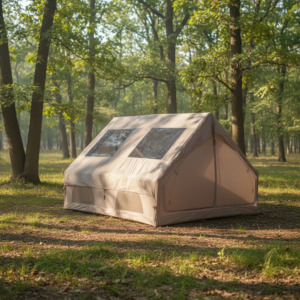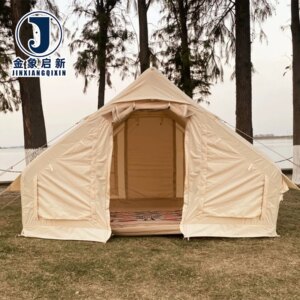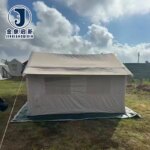
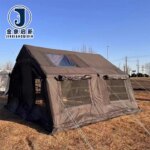
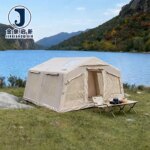
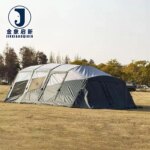
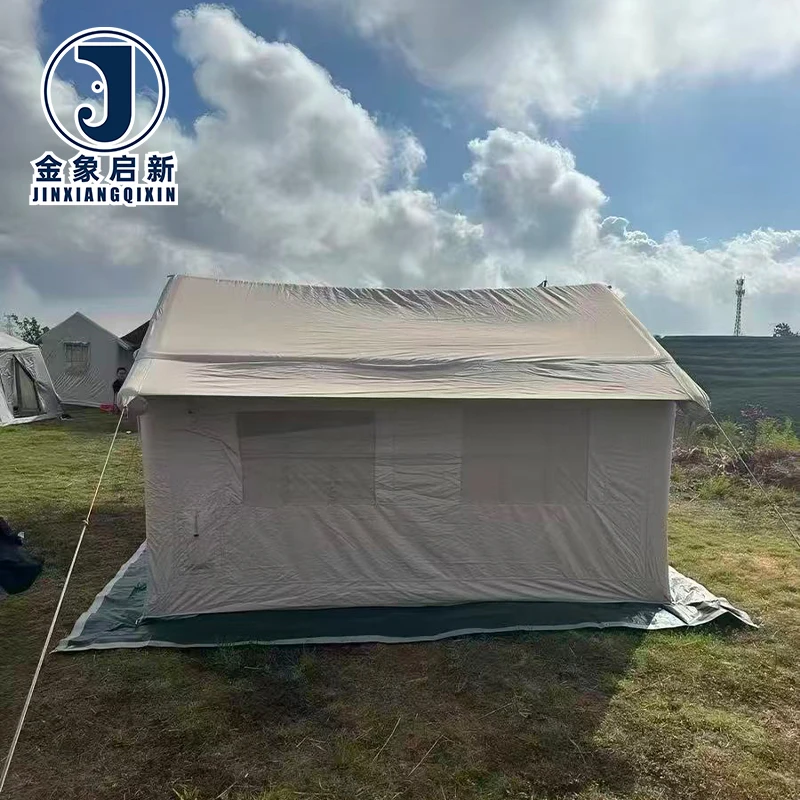
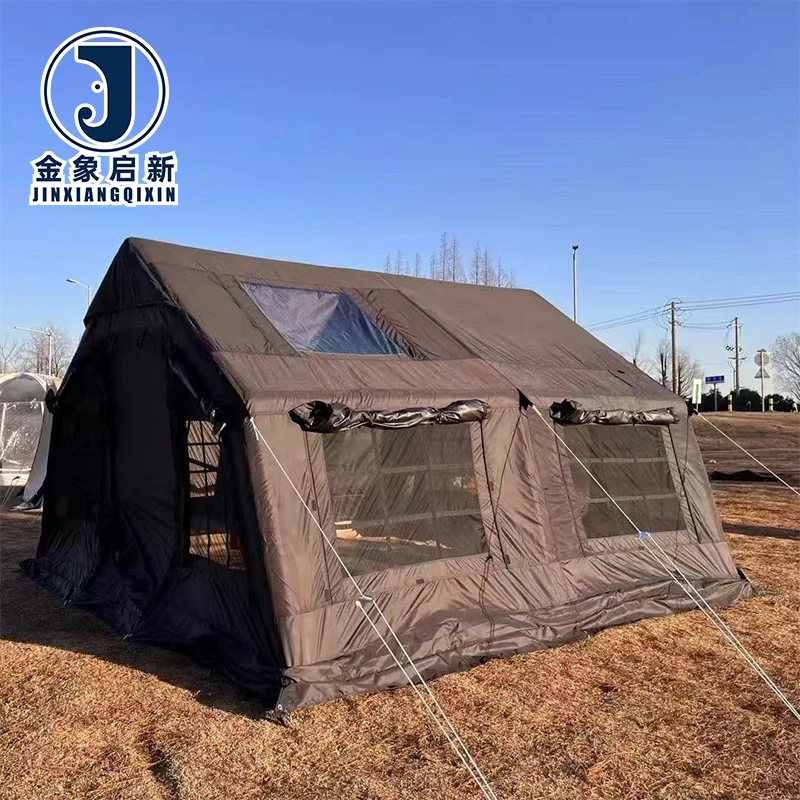
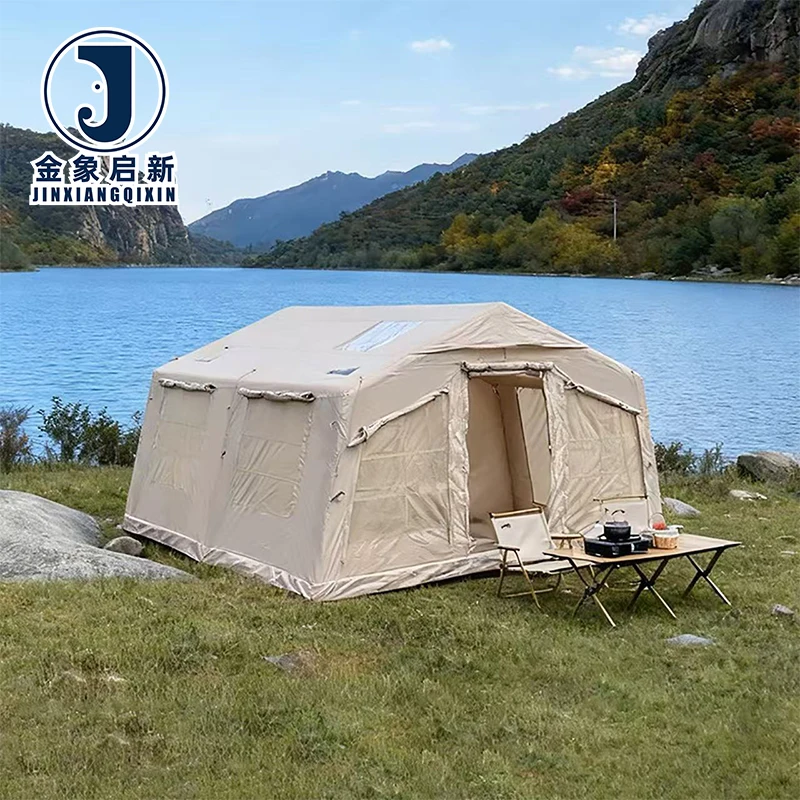
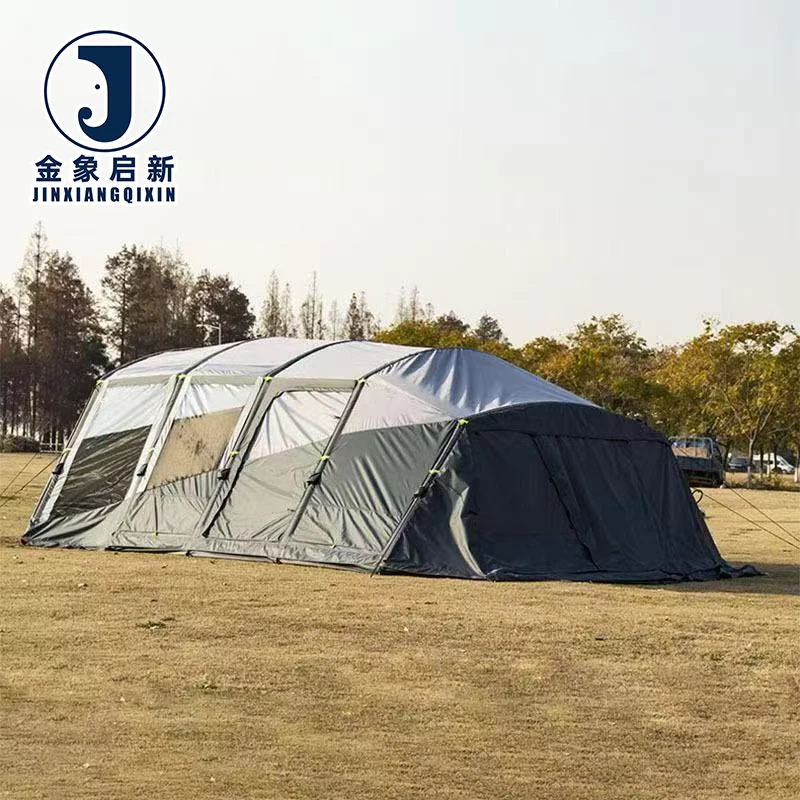
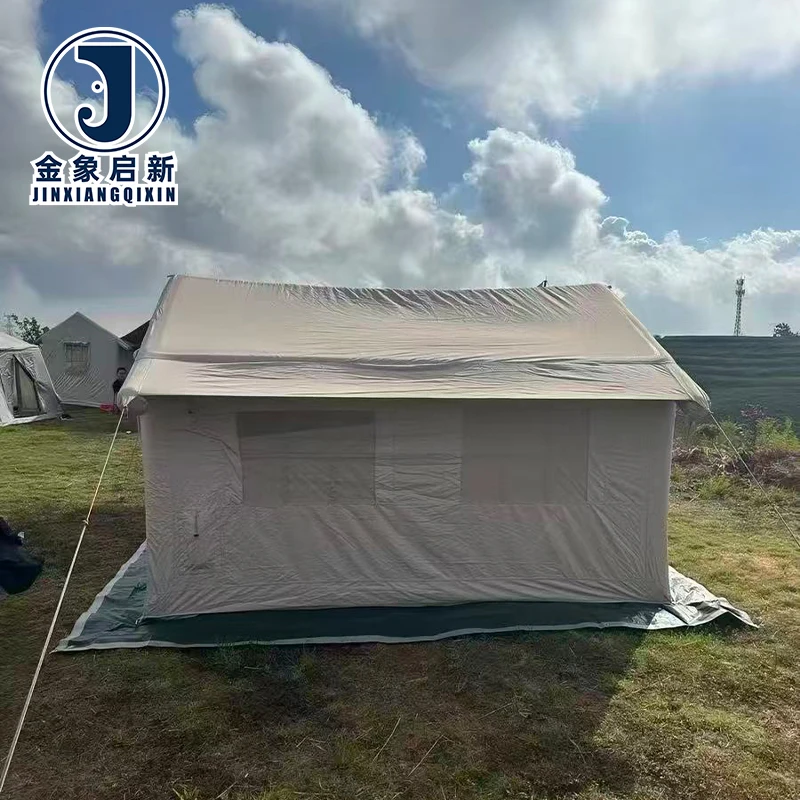
Production Consistency Control — batch-to-batch dimensional tolerance held to ±2cm across 36 sets of professional processing equipment, verified before every inflatable tent ships.
Technical Specifications
| Parameter | Value |
|---|---|
| Product Type | Inflatable Tent |
| Core Material | Oxford Waterproof Fabric |
| Waterproof Rating | ≥10,000mm H₂O |
| UV Treatment | UPF 50+ (test basis not stated in source) |
| Temperature Range | -30°C to 70°C |
| Tensile Strength | ≥300N/5cm (standard not stated in source) |
| Tear Strength | ≥150N (standard not stated in source) |
| Waterproof Durability Test | 5000 cycles of water pressure testing |
| Dimension Tolerance | ±2cm |
| Material Thickness Tolerance | ±0.1mm |
| Key Features | Automatic opening, four-season design, single layer construction, extended type |
| Customization | OEM & ODM, sample customization, pattern printing |
| Certifications | ISO9001, ISO14001, ISO45001, CE |
Application Suitability
| Application | Exposure & Requirement |
|---|---|
| Construction site temporary shelter | Wind load, rain exposure, repeated inflation cycles, crew traffic abrasion |
| Mobile storage for logistics operations | UV exposure during outdoor staging, moisture ingress risk, rapid deployment demand |
| Disaster relief emergency structure | Extreme temperature swing, water contact, fast assembly without specialist tools |
| Mining and tunnelling ventilation-adjacent structure | Fire-retardant compliance requirements, dust accumulation, confined-site access |
| Outdoor industrial events and remote workspace | Sun exposure, ground moisture, single-day setup and teardown |
What "Inflatable Tent" Compliance Really Means on a Worksite
An inflatable tent without verified fire-retardant or anti-static certification cannot legally enter many mining, aviation, or tunnelling sites.
Project managers often discover at the gate that the documentation does not match the site safety officer’s checklist. The fabric may perform adequately in the field, but without the correct test certificate, the entire structure is turned away — and the project timeline slips. Procurement teams sourcing an Inflatable Tent manufacturer custom build must request the specific compliance grade before production begins, not after delivery [NEED_CITE: fire-retardant classification systems for temporary industrial structures]. The gap between "flame retardant treated" and "certified to the standard your site requires" is where most compliance failures originate.
Air Beam Integrity and the Coated Fabric Behind It
The inflatable chamber walls carry the entire structural load once pressurised. Oxford waterproof fabric with a waterproof rating of ≥10,000mm H₂O forms the barrier that keeps the beams rigid under wind load and internal pressure. When the coating adhesion is inconsistent, micro-delamination appears at the seam overlap — the exact point where air pressure concentrates during inflation. Our Inflatable Tent manufacturer custom capability addresses this by controlling coating weight and adhesion at every stage of the three full production lines.
Deployment Speed Under Real Site Conditions
Automatic opening mechanisms reduce the gap between unloading and operational readiness. On a disaster relief site or a remote mining camp, the difference between a structure that inflates with a standard air pump and one that requires manual pole assembly changes how quickly personnel are sheltered. The four-season design covering -30°C to 70°C means the same inflatable tent unit can remain in service whether deployed in a winter construction shutdown or a summer logistics staging area. Fabric stiffness at the lower boundary of the temperature range is a critical factor — coated Oxford fabric that becomes brittle below its rated minimum will crack at the fold line during inflation [NEED_CITE: low-temperature flexibility testing for coated technical textiles].
Reading the Specification Sheet Beyond the Headline Numbers
Tensile strength of ≥300N/5cm and tear strength of ≥150N describe how the base fabric resists pulling forces and how it stops a small puncture from propagating into a structural failure. These two values must be evaluated together: high tensile strength with low tear resistance means the fabric stretches well but a nick from a sharp tool on-site can unzip across a beam wall. The waterproof durability rating of 5000 water pressure cycles indicates how the coating maintains integrity through repeated inflation and deflation, which directly correlates to how many deployment cycles the inflatable tent can survive before re-proofing or replacement becomes necessary. Material thickness tolerance of ±0.1mm ensures that wall stiffness remains predictable across every panel, so the structure inflates symmetrically rather than leaning toward a thinner section.
The Cost of Skipping Batch Verification
When colour shifts between production batches, two inflatable tents deployed side by side on the same site look mismatched — a problem that surfaces only after installation and is extremely expensive to remedy. Thickness variation beyond ±0.1mm causes uneven beam rigidity, leading the structure to deform under wind load in a way that the design calculations never anticipated. Welded seams on inflatable chambers fail first when the heat-seal temperature was set for a slightly different coating formulation, a risk that increases when production moves between runs without recalibration [NEED_CITE: heat-seal parameter control in coated fabric welding for inflatable structures]. These failures are preventable through in-process quality checks at every production stage.
Why Procurement Teams Source Inflatable Fabric Here
Nearly three decades of coated fabric process control means the coating weight and adhesion parameters for inflatable tent materials are not guessed — they are set from accumulated production data. Three full production lines and 36 sets of professional processing equipment give the capacity to run bulk orders while holding dimensional tolerance to ±2cm. A 10-person R&D team handles material selection and sample development, producing pre-production samples within days so you can verify fabric hand-feel, inflation behaviour, and seam strength before committing to the full order. One hundred percent pre-shipment inspection catches coating defects, dimensional drift, and colour inconsistency before the goods leave the facility.
Documentation & Verification
- Material specification sheet stating Oxford fabric composition, waterproof rating, and temperature range per batch
- Batch-specific quality inspection report with waterproof performance and structural integrity test data
- Third-party performance test certificates available on request for specialised compliance requirements
- Pre-production sample sign-off record confirming dimensions, colour, and inflation behaviour before mass production
- ISO and CE certificates covering the inflatable tent production scope
Fabrication, Handling & Storage
- Heat-seal temperature must match the Oxford waterproof fabric coating formulation to prevent seam delamination at beam joints
- Store rolled inflatable tent panels flat or on wide-diameter cores to avoid permanent crease marks in the coated surface
- Inflation testing after fabrication confirms beam wall stiffness falls within the ±0.1mm material thickness tolerance
- Use compatible cleaning agents only — aggressive solvents degrade the waterproof coating rated at ≥10,000mm H₂O
- Repair minor punctures with matching Oxford fabric patches and heat-activated adhesive compatible with the coating chemistry
Starting Your Inflatable Tent Specification
Provide the intended deployment environment — indoor warehouse staging, open-site construction, or remote mining camp — along with the compliance standards your site safety officer requires. Specify whether you need finished inflatable tent units or roll fabric for your own fabrication line, and include target dimensions and colour references. If fire-retardant or anti-static grades are mandated by your project, state the exact standard so we can confirm available grades and supply matching test documentation.
Frequently Asked Questions
Q: How is batch-to-batch consistency verified before shipment?
A: Every production batch undergoes 100 percent pre-shipment inspection covering dimensional tolerance against the ±2cm specification, material thickness within ±0.1mm, and visual colour matching across all units in the order. Inspection records are compiled per batch and shipped with the documentation package so you can trace each inflatable tent back to its production run.
Q: What fire-retardant or anti-static grades are available for mining and aviation compliance?
A: Fire-retardant and anti-static treatments are available in multiple grades — confirm the specific standard required by your site safety regulations before sampling. Our R&D team can develop fabric samples treated to your stated grade and arrange third-party testing to generate the compliance certificate your project demands.
Q: How does the OEM/ODM sample development process work from inquiry to approval?
A: Share your application requirements, target dimensions, and any compliance standards needed. The 10-person R&D team develops a pre-production sample within days, covering fabric selection, inflation behaviour, and seam construction. You review and approve the sample before mass production begins on any of the three production lines.
Q: What custom dimensions, colours and pattern printing options are supported?
A: Custom sizing, colour matching, and pattern printing are all supported through our OEM and ODM service. Dimension tolerance is held to ±2cm across the 36-set processing line, and colour consistency is verified batch by batch to prevent visible variation when multiple inflatable tent units are deployed together on one site.
Q: Which ISO and CE certifications cover the inflatable tent product line?
A: Production is covered under ISO9001, ISO14001, ISO45001, and CE certification. These certificates document the quality management, environmental management, occupational health and safety systems in place across the facility. Copies are included in the documentation package with every shipment for your compliance records.