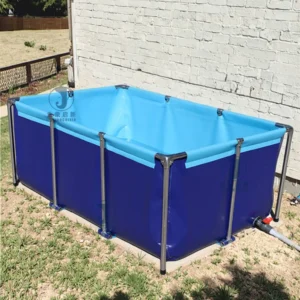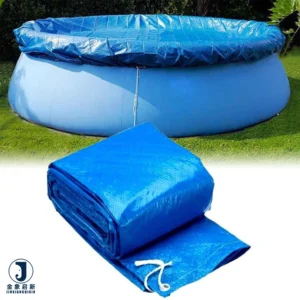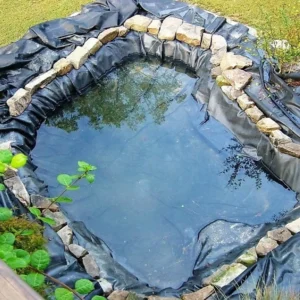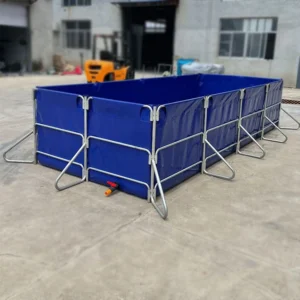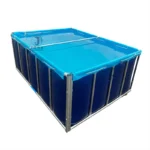
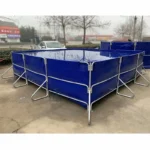
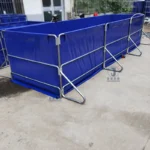

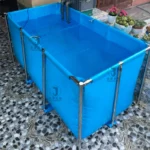
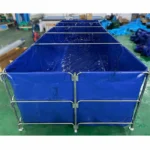
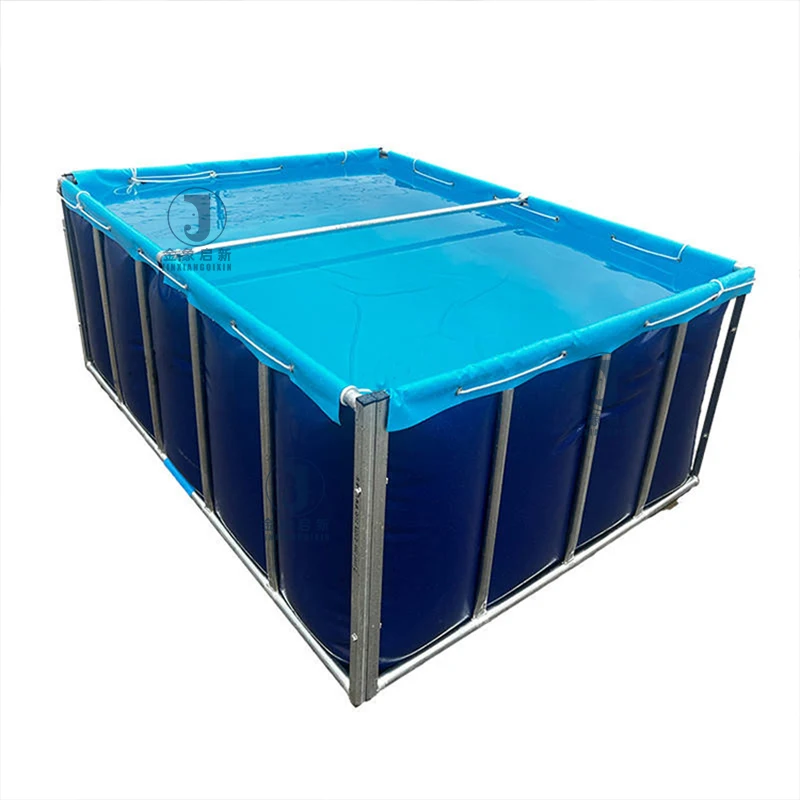
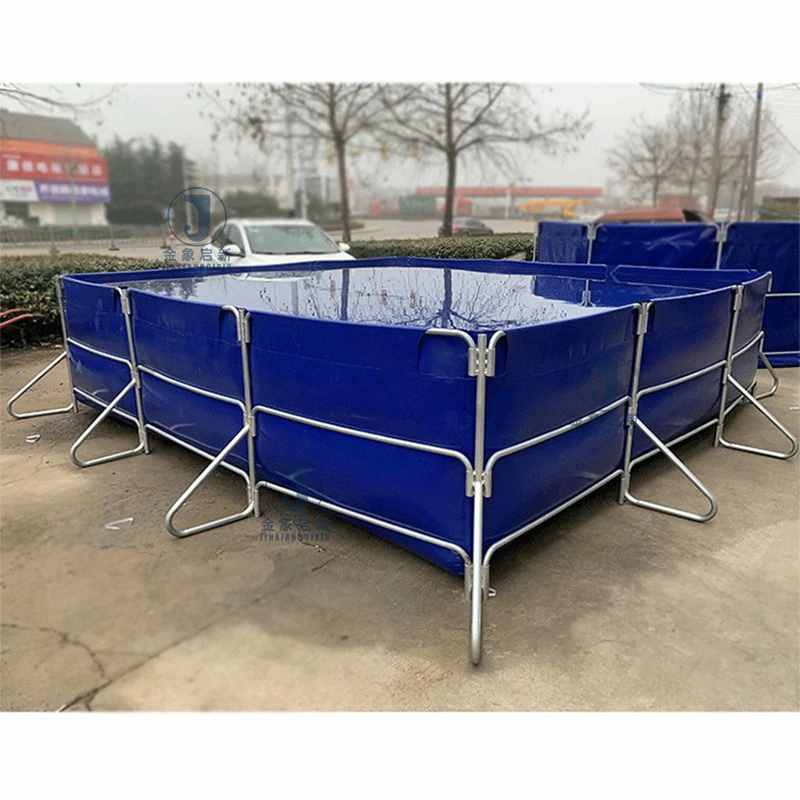
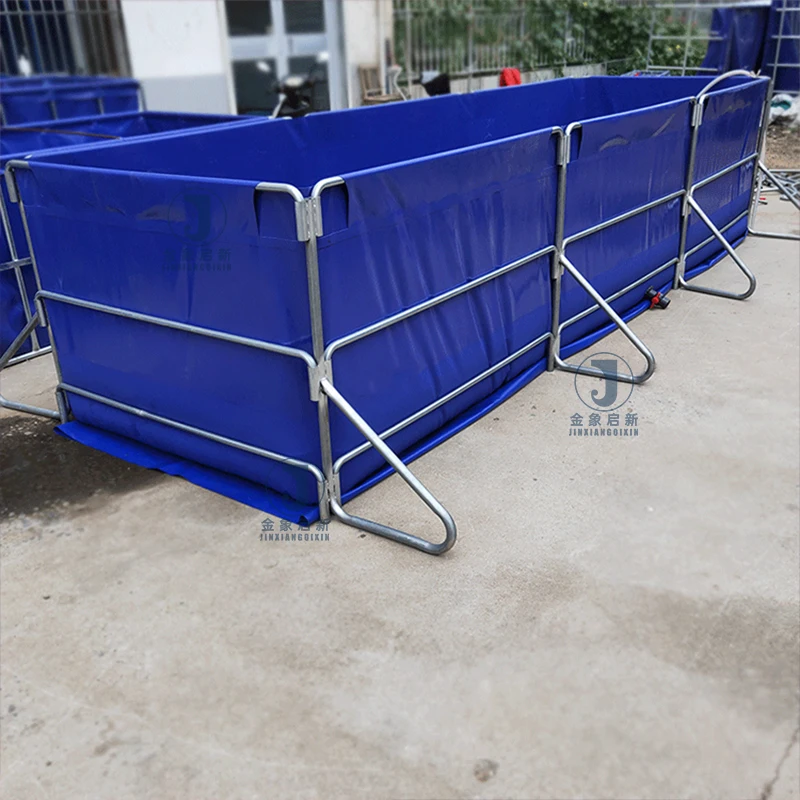
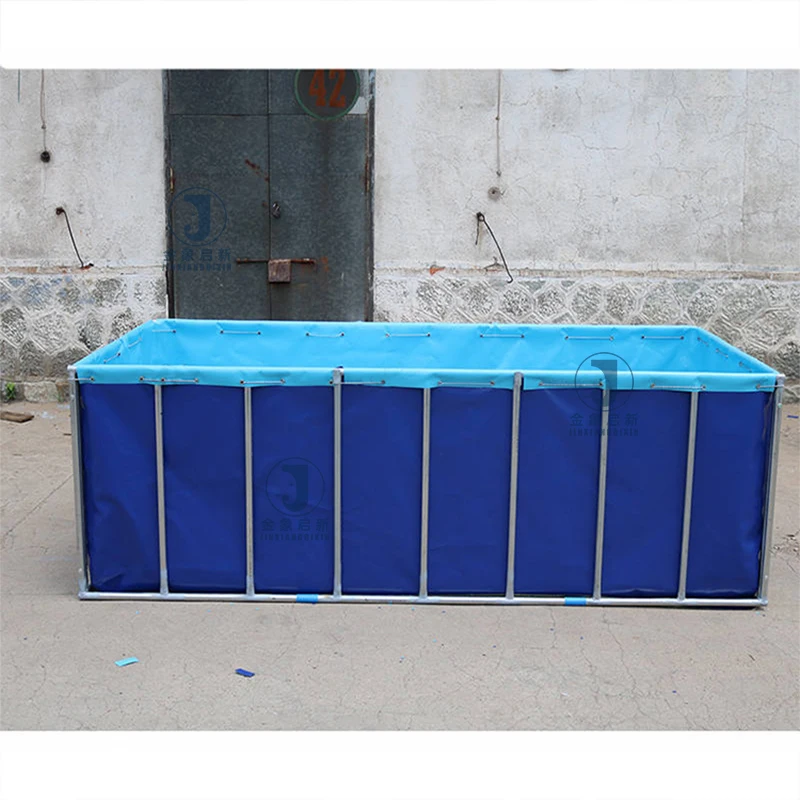
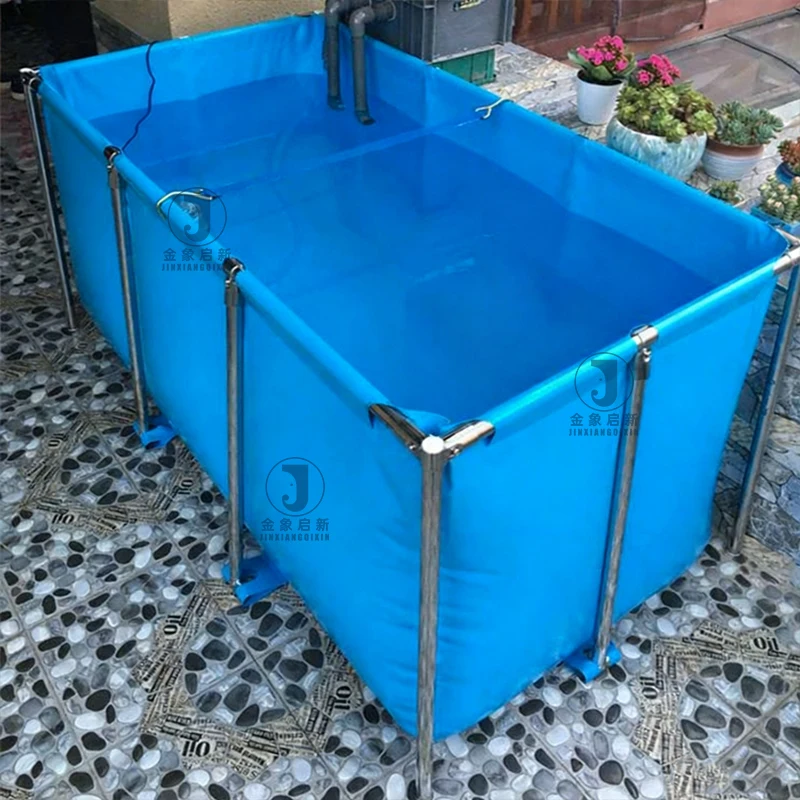
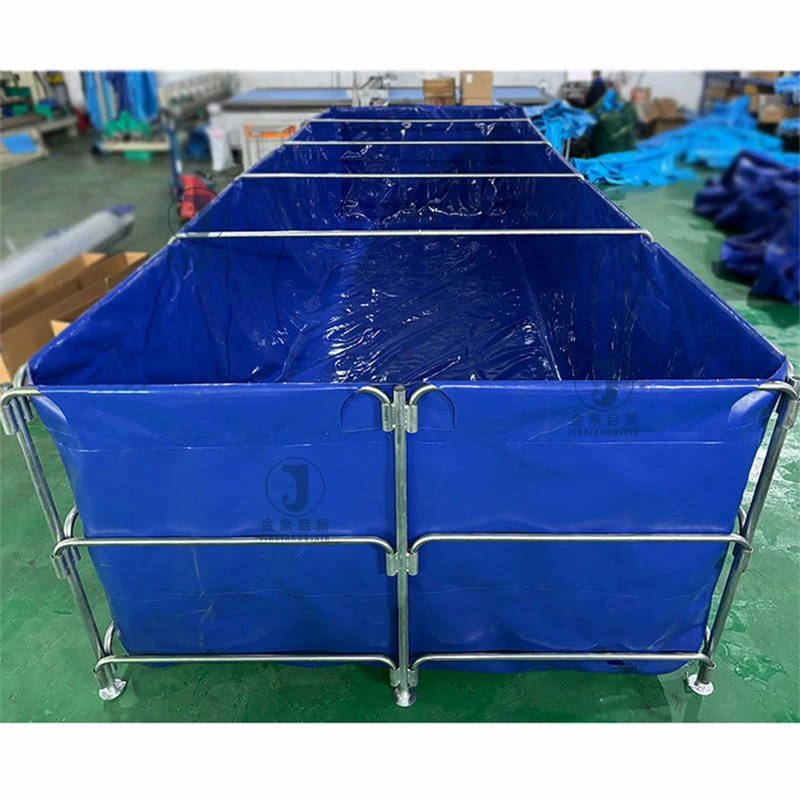
Laminated adhesion control — Hot-melt coating technology ensures consistent bond strength between PVC coating and polyester mesh, verified at every production stage for pond and containment liner applications.
Technical Specifications
| Parameter | Value |
|---|---|
| Product Type | PVC Tarpaulin for Fish Pond |
| Material | PVC + High-strength polyester mesh fabric |
| Coating Method | Laminated Technology / Hot-melt Coating Technology |
| Weight (GSM) | 350gsm / 420gsm / 500gsm / 550gsm / 600gsm / 750gsm (range covers product family — confirm the grade for this item) |
| Total Thickness | 0.32mm / 0.35mm / 0.4mm / 0.45mm / 0.5mm / 0.65mm (range covers product family — confirm the grade for this item) |
| Color | Blue / Red / Yellow / Light blue / Grey (Customized) |
| Roll Size | 2m width × 75m length / 2.1m width × 50m length |
| Finish Product Size | Custom items as per customer’s needs or sold by inventory |
| Special Treatments | Flame retardant (grade not stated — confirm required standard), Anti-static (certification details on request), Anti-cold, Anti-mildew |
| Flame Retardant | Available as special treatment — confirm the grade required for your market |
| Anti-Static | Available — certification details on request |
| Key Features | High tenacity polyester yarns, outstanding tearing strength for welding, cold crack resistance, anti-mildew, waterproof, sunproof (test basis not stated in source), color fastness |
| Standards | ISO, CE |
Application Suitability
| Application | Exposure & Requirement |
|---|---|
| Above-ground fish ponds and tanks | Permanent water immersion, hydrostatic pressure, biological growth, puncture from substrate and tools |
| Aquaculture reservoir liners | Long-term water containment, soil chemistry contact, periodic cleaning chemicals, UV exposure in uncovered sections |
| Metal-frame swimming pools | Structural load at frame contact points, chlorine or saltwater exposure, repeated seasonal assembly stress |
| Specialist water containment structures | Fire-retardant or anti-static compliance on-site, variable temperature exposure, mechanical abrasion at edges |
What "Fire-Retardant" Means Without a Grade Behind It
A PVC fish pond liner listed as fire-retardant on a quotation but shipped without a test certificate is not fire-retardant for compliance purposes. Specifying the exact standard your site requires — before production — is the only way to ensure the liner passes inspection.
Facilities subject to fire safety audits need documentation matching the authority having jurisdiction, not a generic claim. A liner installed in an enclosed aquaculture building may require a different classification than one deployed in an open-field reservoir. Ordering without confirming the applicable standard means accepting the risk of rejection at handover [NEED_CITE: fire classification standards for building materials and temporary structures]. The cost of replacing installed liner far exceeds the effort of requesting the test report upfront.
Coating Bond Integrity for Water Containment
Laminated and hot-melt coating technology produces a PVC fish pond liner where the coating layer is thermally bonded to the high-strength polyester mesh base fabric. This adhesion method matters for pond applications because the liner operates under continuous hydrostatic pressure. Delamination between coating and base fabric creates pathways for water to migrate through the material, undermining the containment function. Hot-melt lamination provides consistent coating weight distribution across the full roll width, which supports uniform weld quality when panels are joined on site.
Weld Strength and Seam Reliability
Pond liner panels must be welded together to cover large containment areas, and the weld line is often the first point of failure under load. The outstanding tearing strength for welding specified in this PVC coated fabric means the material can withstand heat welding without degrading the polyester base yarn structure at the seam. When the PVC coating and base fabric separate at a weld — rather than tearing through the body of the fabric — the seam fails before the liner reaches its rated capacity [NEED_CITE: tensile and tear test methods for coated fabrics per ISO 1421]. Weld parameter settings must match the specific GSM grade and coating thickness to avoid this outcome.
Reading GSM and Thickness Together for Pond Selection
Weight and thickness interact to determine how a liner performs under containment load. A 350gsm grade at 0.32mm suits temporary or light-duty pond installations where puncture risk is managed by substrate preparation. Higher grades in the 550gsm to 750gsm range with corresponding thickness up to 0.65mm provide greater resistance to mechanical damage from rocks, roots, and equipment traffic during installation. The polyester mesh denier and weave density determine tear propagation resistance — two liners at the same GSM can perform differently if the base fabric construction differs. Selecting the right grade depends on the substrate condition, water depth, and whether the liner will be buried, exposed, or supported by a frame structure.
The Cost of Underspecifying a Containment Liner
A pond liner specified on GSM alone — without confirming base fabric density, coating adhesion method, or treatment certifications — introduces failure points that appear after installation. Coating that is lighter than the quoted grade allows water permeation and algae penetration into the mesh. Anti-mildew treatment claimed without a test basis leaves the liner vulnerable to biological degradation in warm aquaculture environments. Flame retardant grades that do not match site compliance requirements result in failed inspections and project delays. Colour variation between rolls in the same order becomes visible once panels are welded side by side in a lined reservoir [NEED_CITE: batch consistency standards for coated fabric production]. Each of these issues traces back to incomplete specification at the inquiry stage.
Procurement Advantages from a Coated Fabric Specialist
Material specification sheets for this PVC fish pond liner fabric state the exact GSM, base fabric construction, coating type, and colour reference for each roll before it ships. In-process quality checks at every production stage catch coating weight variation and adhesion faults before the roll reaches final inspection. The 10-person R&D team develops samples within days when custom dimensions or treatment grades are required, allowing verification before full production runs. One hundred percent pre-shipment inspection ensures the roll count, weight, and documentation match the purchase order. Laminated and hot-melt coating equipment across three production lines supports volume orders with consistent coating bond quality from first roll to last.
Documentation & Verification
- Weight verification per roll against the stated GSM before dispatch
- Test report for fire-retardant grade matching the standard your site requires
- Anti-static certification documentation provided on request for compliant grades
- Material specification sheet stating GSM, base fabric, coating method, and colour reference
- ISO and CE certificates included with shipment documentation
- Pre-shipment inspection record confirming roll count and coating quality
Fabrication, Handling & Storage
- Heat weld parameters must match the specific GSM grade and 0.32mm–0.65mm thickness range to prevent coating delamination at seams
- Cut edges on custom-finished pond liners should be sealed to prevent water ingress into the polyester mesh core
- Store rolls horizontally on pallets to prevent permanent creasing in the PVC coating layer
- Deploy liner in ambient temperatures above the cold crack resistance threshold to avoid coating fracture during unrolling
- Clean with mild detergent only — harsh solvents degrade the PVC surface finish and compromise colour fastness
- Plan panel layout to minimize weld joints across the high-strength polyester mesh, reducing seam-related failure points
Specifying Your Pond Liner Order
Provide the containment application, water depth, and substrate conditions so the correct GSM and thickness grade can be recommended. State the fire-retardant or anti-static standard your site requires, along with any certification documentation needed for inspection. Confirm roll width preference, total linear meters, and whether you need inventory sizes or custom-cut panels. Specify colour requirements and indicate if multiple rolls must match for a single installation.
Frequently Asked Questions
Q: How is the fire-retardant grade verified and which standards does it meet?
A: Fire-retardant treatment is available as a special option for this PVC fish pond liner fabric. The specific grade and test standard must be confirmed at inquiry stage to match your local compliance requirements. We supply test documentation with each treated order. Specify the standard your site inspector or authority having jurisdiction requires before production begins.
Q: What test basis supports the anti-static treatment claim for pond and containment use?
A: Anti-static treatment is available upon request with certification details provided per order. For aquaculture or specialist containment sites where static discharge is a compliance concern, confirm the applicable standard at inquiry. Test documentation accompanies shipment for treated grades, allowing verification against your site requirements before installation.
Q: How do I select the right GSM and thickness for my pond or pool application?
A: Selection depends on water depth, substrate condition, and installation method. Lighter grades suit temporary installations with prepared substrates. Heavier grades with greater thickness resist puncture from rocky or uneven ground and withstand mechanical stress during frame assembly. Provide your application details so the appropriate weight and thickness combination can be recommended from the available range.
Q: How do you ensure color consistency and coating adhesion across multiple rolls?
A: Every roll undergoes in-process quality checks during coating and lamination, with one hundred percent inspection before dispatch. Colour reference and coating bond quality are recorded on the material specification sheet for each roll. State at inquiry if all rolls in your order must match for a single visible installation, and we configure the production batch accordingly.
Q: Can custom dimensions be produced, and what are the minimums and lead times?
A: Custom-cut pond liner panels are produced to your specified dimensions alongside standard roll stock. The R&D team develops samples within days for custom requirements to confirm fit and material performance before full production. Minimum quantities and lead times vary by colour, treatment, and panel complexity. Confirm your required dimensions and annual volume at inquiry for a production schedule.