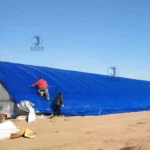
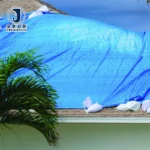
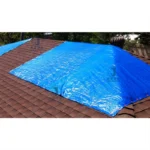
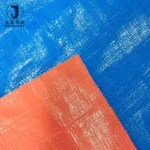

Bulk roll consistency — Three full production lines and 36 sets of equipment maintain batch-to-batch GSM and colour uniformity across HDPE woven PE tarpaulin roll output.
Technical Specifications
| Parameter | Value |
|---|---|
| Product Type | PE Tarpaulin |
| Coating Material | HDPE weaving with LDPE lamination on both sides |
| Weight (GSM) | 50gr/m2 ~ 220gr/m2 (confirm the grade for this item) |
| Mesh Count | 6×6, 6×7, 7×7, 7×8, 8×8, 9×9, 8×10, 10×10, 12×12, 14×14, 14×16 |
| Total Thickness | 0.2-0.4mm / 8 mil-16 mil / Custom |
| Roll Width | 6ft, 8ft, 10ft, 12ft, 2m, 4m, 6m |
| Roll Length | 100 yards, 100 meters, or custom |
| Finished Sizes | 2x2m to 8x10m (and imperial equivalents) |
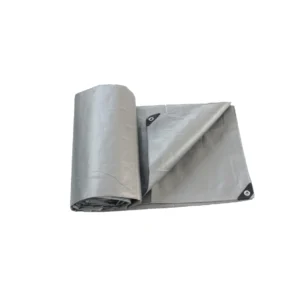
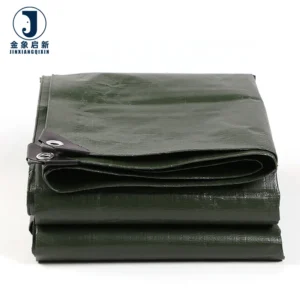
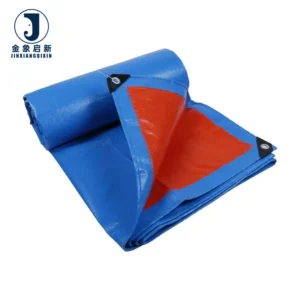
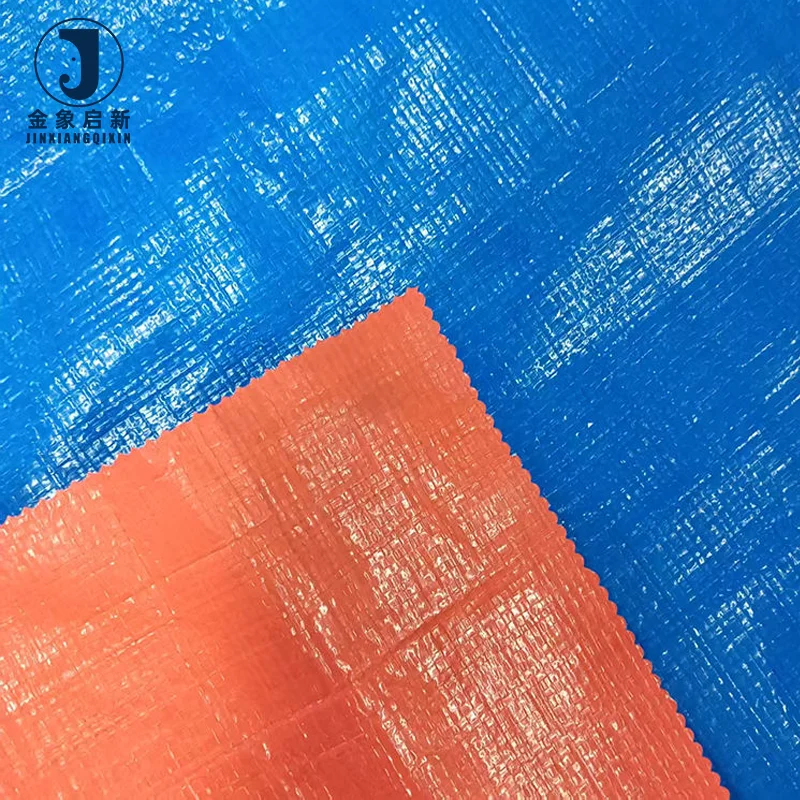
| Color | Blue, Blue/Orange, Green, Grey, Black, Clear, Grey/Green, Orange, or custom |
| UV Treatment | Available (test basis not stated in source) |
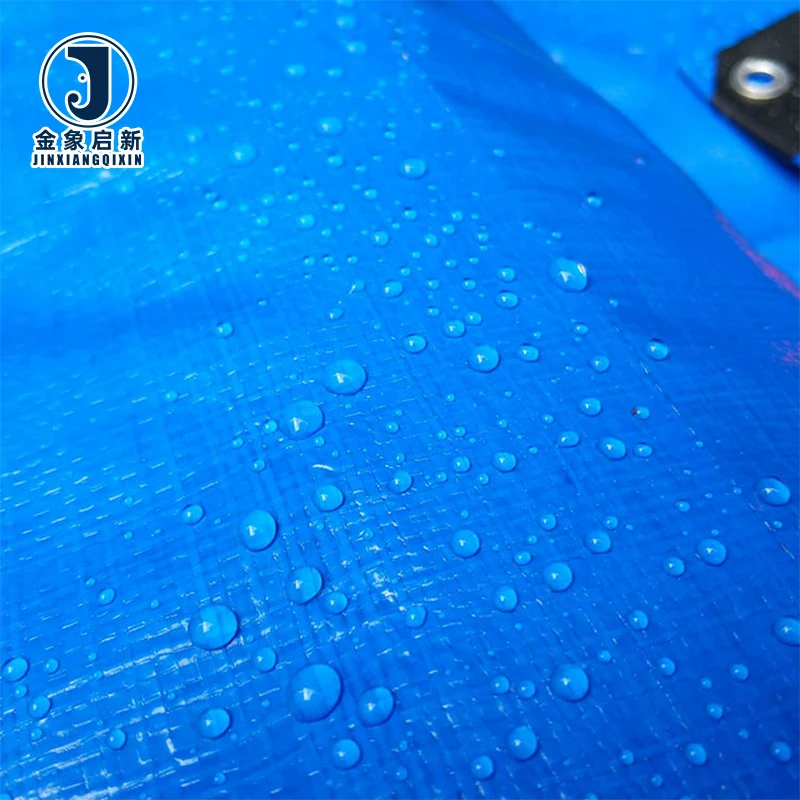
| Key Features | Waterproof, washable, tear resistant, mildew proof, anti-aging |
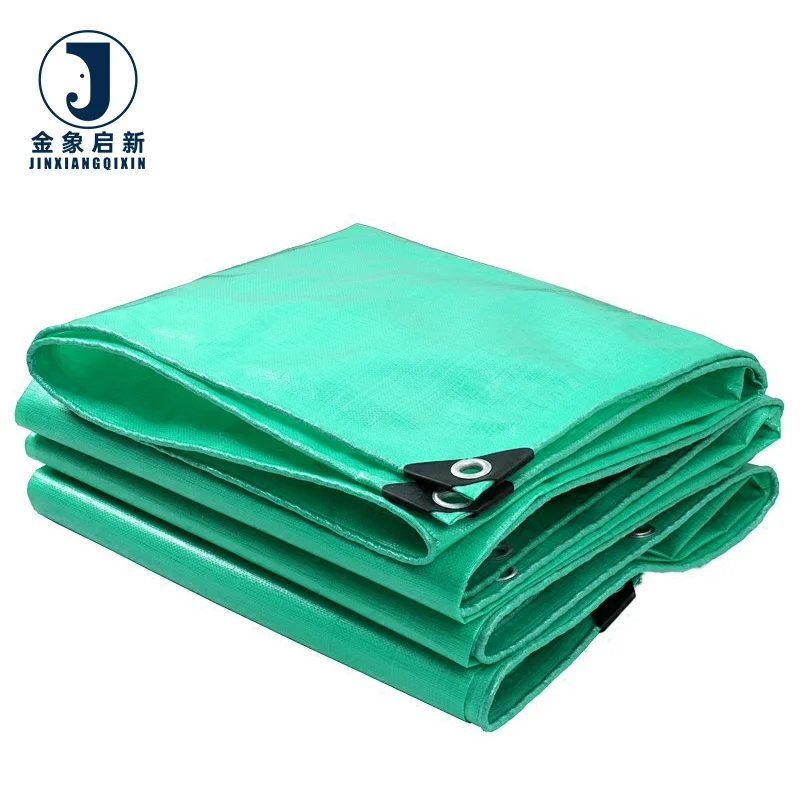
| Hem | All four edges reinforced with PP rope |
| Eyelet Options | Galvanized eyelets every 3ft or 1 meter interval, reinforced plastic corners |
| Printing Option | Custom brand printing available |
Application Suitability
| Application | Exposure & Requirement |
|---|---|
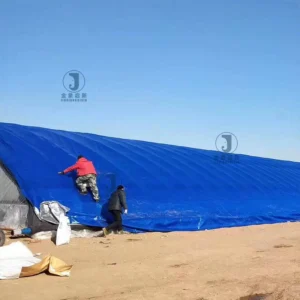
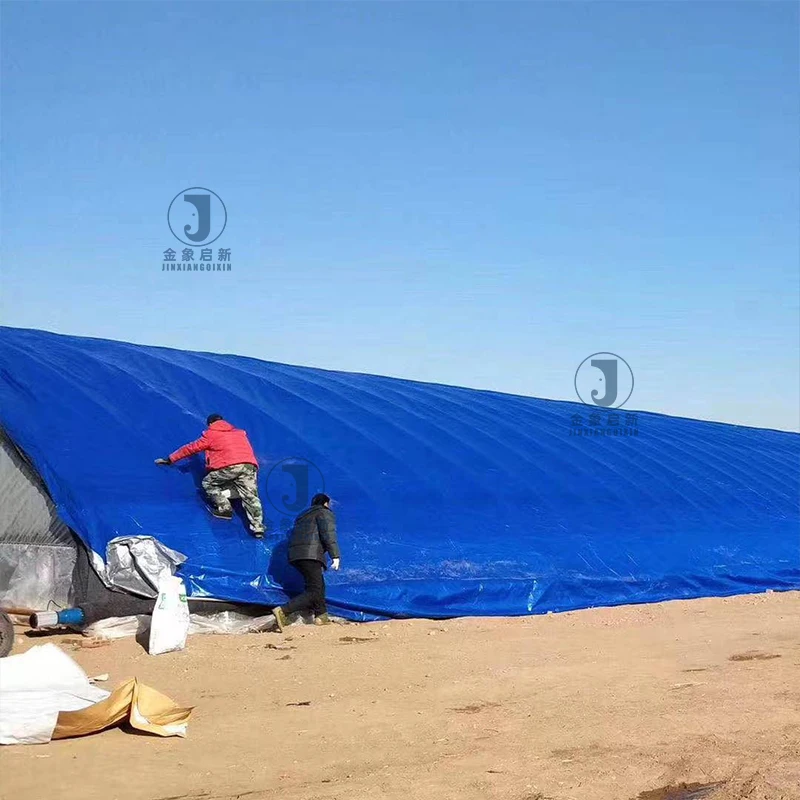
| Industrial Tent & Event Structure | High wind load, prolonged sun exposure, frequent assembly and disassembly requiring fold durability and stable seam integrity |
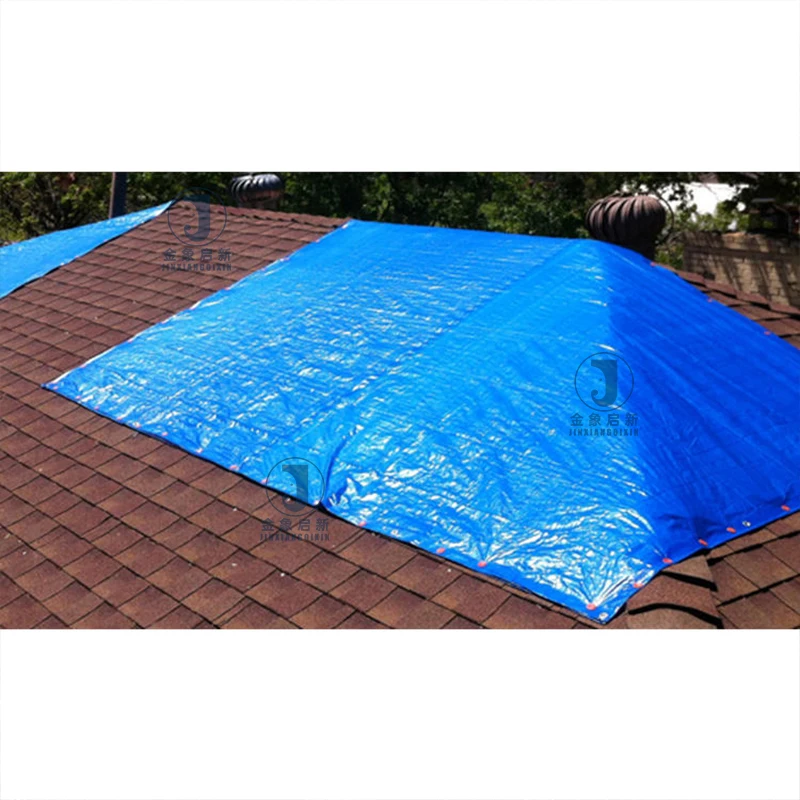
| Temporary Warehouse & Storage Cover | Rain ingress prevention, dust exclusion, UV degradation resistance for medium-term outdoor deployment |
| Construction Site Enclosure | Scaffolding wrap, wind barrier, debris containment — requires tear resistance against sharp-edge contact and tie-down stress |
| Agricultural Stockpile Cover | Hay, timber and crop protection against moisture and UV, needing lightweight handling and adequate water runoff |
| Truck & Trailer Load Cover | Road abrasion, constant vibration and flexing, tie-down eyelet pull-out resistance at high-stress corners |
Why Bulk PE Tarpaulin Roll Buyers Lose Money on Weight Discrepancies
Every roll must be weighed against the quoted GSM before it leaves the factory floor.
Quotation sheets often state a target weight, yet the material arriving at your warehouse runs lighter than agreed. When a container of PE tarpaulin roll stock arrives 10–15 percent below specification, your downstream customers notice the difference in hand feel, tear resistance, and service life. One shortfall can reject an entire shipment. [NEED_CITE:] Pre-shipment inspection with roll-by-roll weight verification is the only reliable way to close this gap.
Weave Density Tiers Mapped to End-Use Demands
Selecting the correct mesh count prevents both over-specifying and under-specifying. A 6×6 weave delivers a lighter, more flexible sheet suited to short-term agricultural cover, while a 14×14 or 14×16 mesh provides the denser base fabric required for industrial tent structures exposed to sustained wind load. Eight weave density options allow you to match the exact PE tarpaulin aftermarket supplier grade to the mechanical demands of each project without carrying unnecessary inventory weight.
Double-Side LDPE Lamination and Waterproof Integrity
The HDPE woven base receives LDPE lamination on both faces, sealing the weave intersections against moisture penetration. This double-side coating also contributes to mildew resistance and provides a smoother surface that sheds dirt during washing. For industrial tent applications where interior dryness is non-negotiable, the lamination continuity across the full roll width eliminates the pinhole leakage paths that single-side coated fabrics commonly exhibit. [NEED_CITE:]
How GSM, Mesh Count and Thickness Interact
GSM alone does not predict fabric strength. A 120gr/m2 sheet woven at 10×10 will behave differently under tensile load than the same weight spread across a looser 8×8 weave — the tighter mesh concentrates more yarn at each intersection, improving tear propagation resistance. Thickness, measured here from 0.2mm to 0.4mm, reflects total lamination build-up and influences stiffness and fold memory. When specifying PE tarpaulin roll for structural tent use, request the weave density alongside GSM so you can compare fabrics on a like-for-like basis rather than weight alone.
The Hidden Cost of Batch Colour Variation
Colour consistency across rolls matters the moment sheets are installed side by side on a tent or scaffolding wrap. A shade difference visible from ten metres away signals uneven pigment dispersion during the LDPE lamination stage, and it triggers rejection at the job site. Buyers who do not lock a colour reference and demand a pre-shipment comparison panel often discover the problem only after container unloading, when re-ordering matching stock is already weeks away. [NEED_CITE:]
Production Capacity That Matches Bulk Order Cadence
Three full production lines and 36 sets of professional equipment support continuous PE tarpaulin roll output, reducing the risk of part-shipment delays on large container orders. A dedicated 10-person R&D team handles custom width, colour matching and brand printing development within days rather than weeks. Every production stage carries dedicated QA/QC checkpoints, culminating in 100 percent inspection before dispatch — a discipline built over nearly 30 years of coated fabric focus. Container loading plans are prepared per order, specifying tonnage by roll, bale or carton method to maximise payload in 20-foot and 40-foot containers.
Documentation & Verification
- Material specification sheet stating exact GSM, base fabric weave density and LDPE coating weight per roll
- Pre-shipment inspection record with roll-by-roll weight verification against purchase order tolerance
- Roll packing list with container loading plan by packing method for 20’GP and 40’HQ
- UV test report provided where UV treatment is specified — confirm the test basis for your market
- Certificate of origin and customs documentation prepared per destination country requirements
Fabrication, Handling & Storage
- Heat-seal LDPE lamination surfaces using temperature settings suited to the 0.2–0.4mm total thickness range
- PP rope reinforced hems distribute tie-down load; position galvanized eyelets at corners to prevent pull-out
- Store PE tarpaulin roll stock on hard paper tubes upright to avoid flat-spot creases across the width
- Avoid dragging finished sheets over abrasive surfaces; the LDPE coating resists water but can scuff on rough concrete
- Clean with mild detergent and soft brush; solvent-based cleaners may degrade the LDPE lamination bond over time
What to Include in Your Inquiry
Specify the end-use environment, expected wind load and duration of deployment so we can recommend the appropriate weave density and GSM band. Indicate whether you require roll stock or finished cut-to-size sheets with eyelets, and provide your target roll width, colour reference and any brand printing requirements. If your market mandates UV or flame-retardant compliance, state the test standard your local authority requires so we can confirm availability and documentation.
Frequently Asked Questions
Q: How is GSM verified on each roll before shipment?
A: Every roll is weighed on calibrated scales during pre-shipment inspection. The measured GSM is recorded against the purchase order specification on the inspection report, which ships with the consignment. Rolls falling outside the agreed tolerance are held and re-processed before dispatch.
Q: What is the relationship between weave density and GSM grade?
A: Tighter mesh counts such as 12×12 or 14×14 require more HDPE yarn per square metre, driving the GSM upward. Higher density improves tear propagation resistance but also increases roll weight and stiffness. We map each of the eight weave tiers to a corresponding GSM band so you can select the right balance.
Q: How is batch colour consistency maintained across multiple rolls?
A: Pigment is compounded into the LDPE lamination resin before extrusion, and colour panels from each production run are compared under standardised lighting against the approved reference. Rolls showing visible shade deviation are segregated before packing to prevent mismatched panels on site.
Q: Which packing method maximises container capacity?
A: Roll packing on hard paper tubes suits automated downstream cutting lines, while bale packing of folded finished sheets yields the highest tonnage per container. We provide a loading plan showing expected tonnage for 20-foot and 40-foot containers by each packing method before you confirm the order.