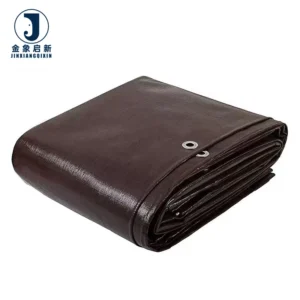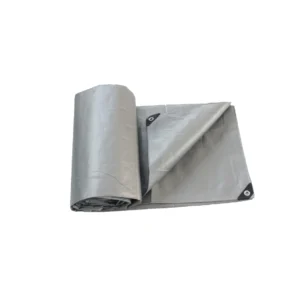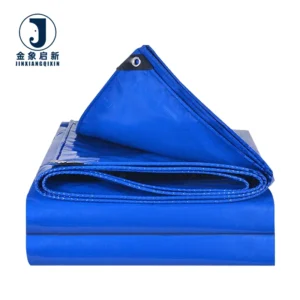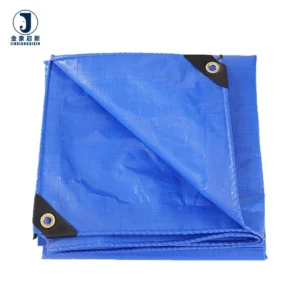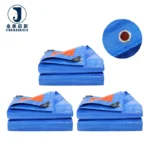

Verified GSM Traceability — Every PE tarpaulin roll ships with a pre-shipment inspection record documenting actual coating weight and base fabric density, eliminating the gap between quotation claims and delivered material.
Technical Specifications
| Parameter | Value |
|---|---|
| Product Type | PE Tarpaulin |
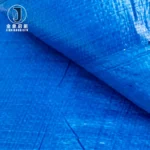
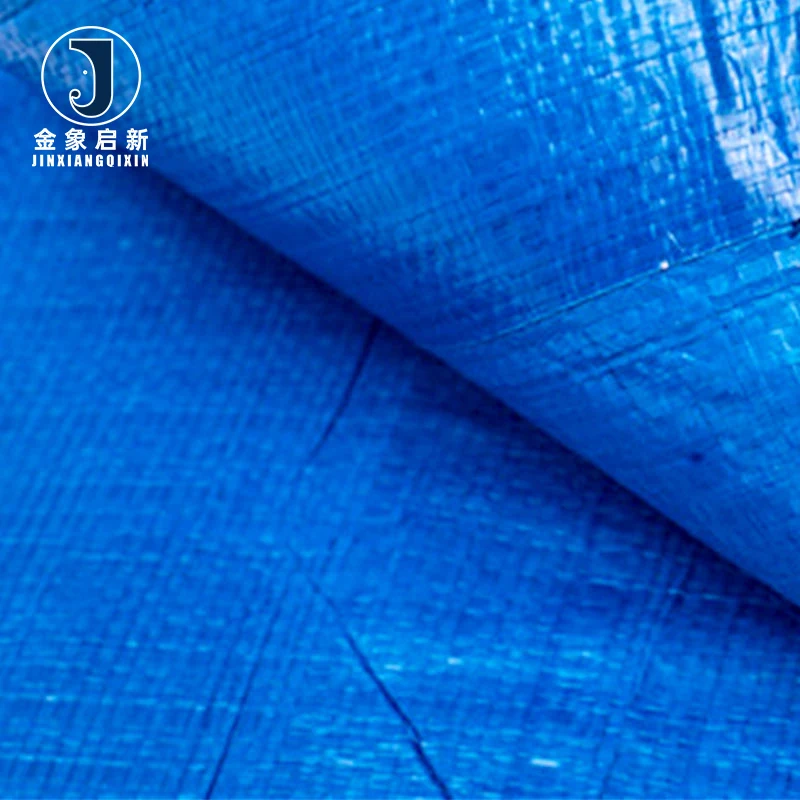
| Base Fabric | HDPE weaving |
| Coating Material | LDPE lamination on both sides |
| Lightweight Grade Weight | 80-110 g/m² |
| Lightweight Grade Thickness | 0.18-0.22 mm |
| Lightweight Grade Knitting Density | 8×8 |
| Lightweight Grade Tensile Strength | Meridian 300-500 / Latitude 250-450 N/5cm (test standard not stated in source) |
| Medium Grade Weight | 120-150 g/m² |
| Medium Grade Thickness | 0.22-0.28 mm |
| Medium Grade Knitting Density | 10×10 |
| Medium Grade Tensile Strength | Meridian 500-800 / Latitude 400-700 N/5cm (test standard not stated in source) |
| Heavy-Duty Grade Weight | 160-240 g/m² |
| Heavy-Duty Grade Thickness | 0.30-0.35 mm |
| Heavy-Duty Grade Knitting Density | 12×12 |
| Heavy-Duty Grade Tensile Strength | Meridian 900-1200 / Latitude 700-1000 N/5cm (test standard not stated in source) |
| Roll Width Options | 6ft, 8ft, 10ft, 12ft / 2m, 4m, 6m |
| Roll Length Options | 100 yards, 100 meters, or custom |
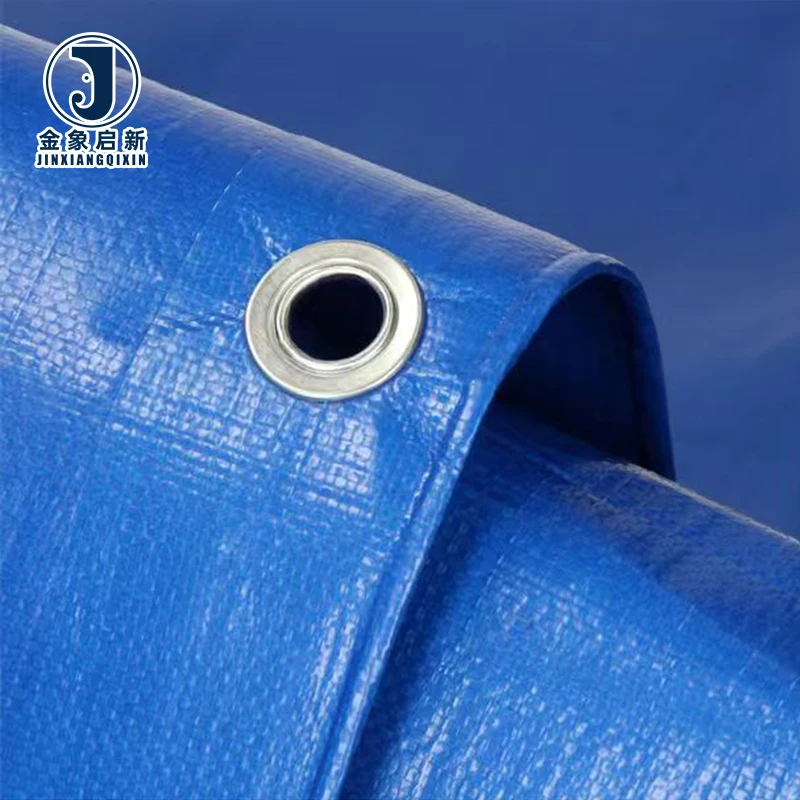
| Finished Edge | All four edges reinforced with PP rope in hem |
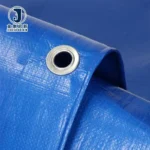
| Eyelet Options | Galvanized eyelets every 3ft or 1 meter interval |
| Corner Reinforcement | Reinforced plastic corners |
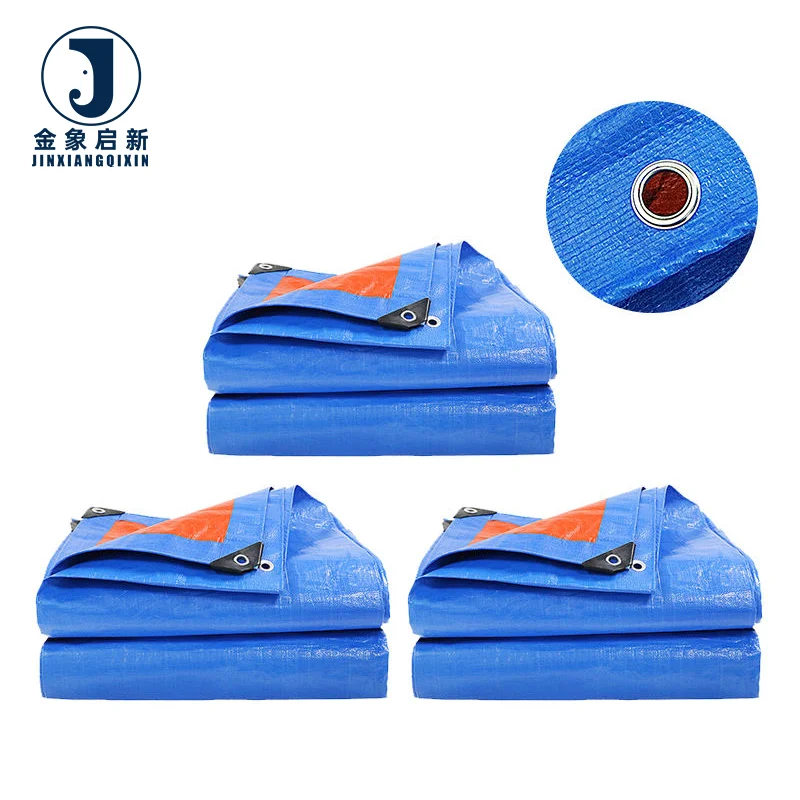
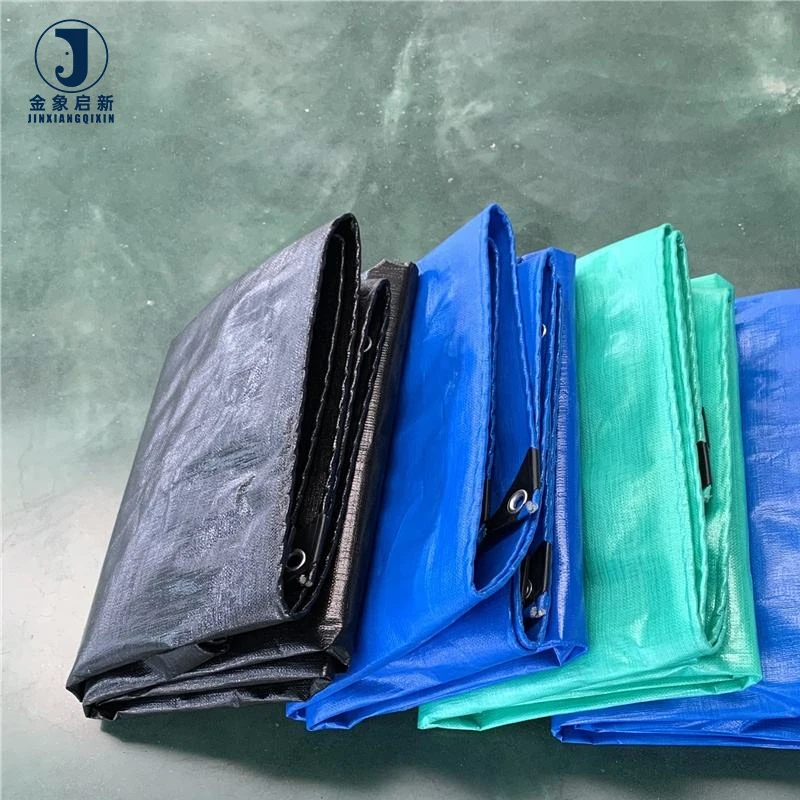
| Color Options | Blue, Blue/Orange, Green, Grey, Black, Clear, Grey/Green, Orange, or custom |
| UV Treatment | Available (test basis to be confirmed per order) |
| Waterproof | Yes |
| Mildew Proof | Yes |
| Anti-Aging | Yes |
| Printing Option | Custom printing accepted |
| Standards | ISO and CE certified production |
Application Suitability
| Application | Exposure & Requirement |
|---|---|
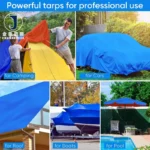
| Mining site equipment covers | Continuous outdoor exposure, abrasive dust, heavy wind loading, requirement for verified GSM documentation on regulated sites |
| Tunnelling material stockpile covers | Moisture ingress prevention, UV exposure over extended storage periods, compliance with site ventilation and fire safety protocols |
| Aviation ground support covers | Static dissipation requirements, chemical exposure from hydraulic fluids and de-icing agents, strict compliance documentation |
| Agricultural pond and reservoir lining | Permanent water contact, soil chemistry interaction, puncture resistance during installation |
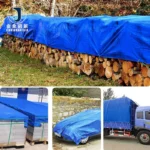
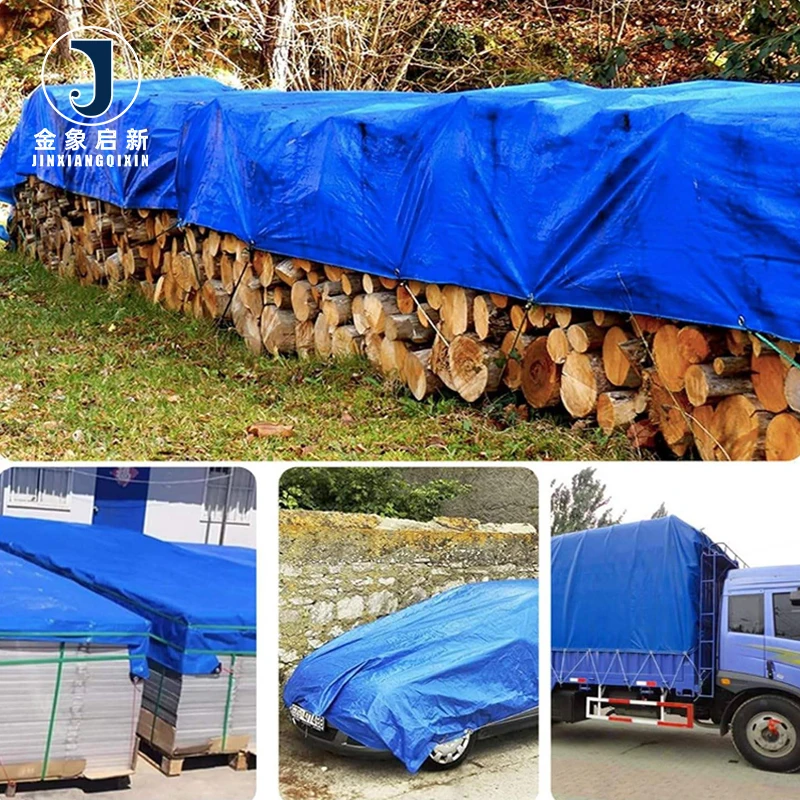
| Transport fleet truck tarpaulins | Road abrasion at flex points, tie-down stress at eyelets, weather exposure during transit |
Why Documented Tensile Data Matters More Than GSM for PE Tarpaulin
A heavier roll is not automatically a stronger roll — knitting density and yarn denier determine how load transfers through the fabric.
When sourcing PE tarpaulin for industrial or specialist applications, buyers often rely on GSM as the sole indicator of durability. The problem surfaces when a 160 g/m² roll with an open 8×8 weave tears under wind load while a 140 g/m² roll with a tight 12×12 knit holds firm. Without tensile data tied to a specific test method, the quoted weight tells you nothing about how the fabric behaves at the tie-down points or along the hem where stress concentrates. [NEED_CITE: tensile and tear test methods for coated fabrics per ISO 1421]
The gap widens further when flame retardant or anti-static properties are claimed without a matching certification. A mining contractor who specifies PE tarpaulin for a regulated site needs the fire classification documented on paper, not stated as a marketing claim. Every grade in this range — from the 80-110 g/m² lightweight to the 160-240 g/m² heavy-duty — is produced with documented knitting density and tensile strength figures so you can match the material to the actual mechanical load, not just the weight.
HDPE Weave Structure and Load Distribution
The base fabric uses HDPE weaving in three distinct knitting densities — 8×8, 10×10, and 12×12 — each paired with a corresponding GSM tier. A tighter weave distributes point loads across more yarn intersections, reducing the risk of tear propagation when the fabric is tensioned over an irregular load or anchored at widely spaced eyelets. For PE tarpaulin used in mining or tunnelling applications where wind gusts create cyclical loading, the 12×12 heavy-duty grade offers the most stable platform.
Dual-Side LDPE Lamination and Coating Integrity
Both sides of the HDPE base receive LDPE lamination, creating a fully encapsulated structure that prevents moisture penetration through the fabric face. This dual-side approach also means the surface properties remain consistent regardless of which side faces the weather. The lamination bond between the LDPE coating and the HDPE weave determines whether the layers delaminate under repeated flexing — a critical factor for truck tarpaulin applications where the fabric folds and unfolds daily. [NEED_CITE: coating adhesion test methods for laminated fabrics]
Reading the Specification Sheet Correctly
Three parameters interact to define real-world performance: knitting density determines the number of load-bearing intersections per square inch; GSM captures the total mass of base fabric plus coating; and tensile strength figures show how much force the composite structure withstands before failure. A 120-150 g/m² medium grade at 10×10 density delivers meridian tensile values of 500-800 N/5cm, while the heavy-duty 160-240 g/m² at 12×12 reaches 900-1200 N/5cm in the meridian direction. The jump between grades is not linear — it reflects both added material and structural geometry changes. Selecting the right grade requires knowing the peak load the fabric will encounter, not simply choosing the heaviest option available.
The Hidden Cost of Specification Mismatch
When a PE tarpaulin is specified by GSM alone and the delivered fabric matches the weight but uses a looser weave, the tensile strength falls below what the application demands. The failure rarely appears during initial installation — it emerges weeks later at the eyelets or along welded seams where stress concentrates. In regulated environments such as mining or aviation sites, specifying a flame retardant grade without confirming the test basis means the material may fail compliance inspection, forcing a complete replacement mid-project. Batch-to-batch colour inconsistency across rolls in the same order compounds the problem when covers are installed side by side on visible stockpiles, creating a patchwork appearance that signals poor procurement control. [NEED_CITE: common failure modes in coated fabric installations]
Procurement Verification at Every Stage
This PE tarpaulin range is produced on dedicated lines with in-process quality checks at the weaving, lamination, and finishing stages. The 10-person R&D team handles material selection and sample development, ensuring the grade you approve is the grade that ships. A 100% pre-shipment inspection covers GSM verification, colour consistency across rolls, and edge reinforcement integrity before any dispatch occurs. Production capacity across three full lines supports volume orders without sacrificing the documentation trail that regulated sites demand. Each roll is traceable to its production batch, with specification data recorded against the purchase order.
Documentation & Verification
- Material specification sheet stating exact GSM, knitting density, and LDPE coating weight per roll
- UV treatment test report provided where applicable, with test basis confirmed per order
- Pre-shipment inspection record documenting 100% check results before dispatch
- ISO and CE certificates included with every shipment
- Certificate of origin and customs documentation prepared per destination country requirements
- Packing list detailing roll count, dimensions, and net weight per package
Fabrication, Handling & Storage
- Heat welding parameters vary by LDPE lamination thickness — confirm temperature settings for the 0.18-0.35 mm range before production
- Galvanized eyelets at 3ft or 1-meter intervals require reinforcement patches in heavy-duty grades above 160 g/m²
- Store PE tarpaulin rolls horizontally on padded supports to prevent permanent creasing across the HDPE weave
- Deploy folded tarpaulins above 5°C to avoid LDPE lamination cracking at fold lines in cold conditions
- Clean surfaces with mild detergent only — solvents can degrade the LDPE coating bond
- Finished sizes up to 8×10m ship folded; inspect PP rope hems and reinforced plastic corners upon receipt
Requesting a Specification Match
Provide the application environment, expected mechanical load, and any site-specific compliance requirements such as fire classification or anti-static standards. Specify whether you need rolls in stock widths or finished cut sizes with custom eyelet spacing and edge reinforcement. Colour and printing requirements should be confirmed with a physical sample before production begins, particularly for orders spanning multiple batches.
Frequently Asked Questions
Q: How is GSM verified on arrival and what documentation accompanies each roll?
A: Every PE tarpaulin roll undergoes 100% pre-shipment inspection with actual GSM recorded against the purchase order. A material specification sheet detailing base fabric density, coating weight, and knitting density ships with the order. The pre-shipment inspection record is included in the documentation package so you can cross-reference delivered material against the quoted specification before installation.
Q: What UV test basis supports the anti-UV claim, and can it be matched to project specifications?
A: UV treatment is available across all GSM grades, but the test basis must be confirmed per order to match your project requirements. We provide a test report documenting the treatment level when specified. For mining or aviation sites with specific UV exposure standards, share the target requirement during inquiry so the correct formulation is applied and documented.
Q: What fire-retardant or anti-static certifications are available for regulated environments?
A: Flame retardant and anti-static grades are available — confirm the specific classification required for your market and site. PE tarpaulin intended for mining, tunnelling, or aviation applications must meet local fire safety regulations, and the applicable test basis should be stated at the inquiry stage so the correct grade is produced and certified.
Q: How is batch-to-batch colour consistency controlled across rolls in the same order?
A: Colour consistency is checked during the 100% pre-shipment inspection across all rolls in an order. Custom colours and printed branding are matched against an approved sample before production runs. For large orders spanning multiple batches, we recommend approving a production sample from each batch before full dispatch to ensure visual uniformity when tarpaulins are installed side by side.
Q: What custom sizing and edge reinforcement options are available for finished tarpaulins?
A: Finished sizes range from 2×2m to 8×10m and beyond, with all four edges reinforced using PP rope in the hem. Galvanized eyelets are spaced at 3ft or 1-meter intervals as specified, and reinforced plastic corners are fitted at stress points. Custom eyelet spacing, additional reinforcement patches, and specific hem treatments can be configured based on the tie-down system your application requires.