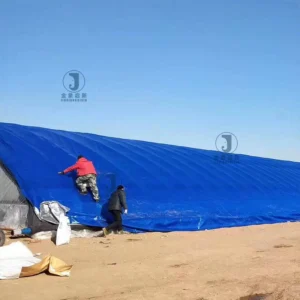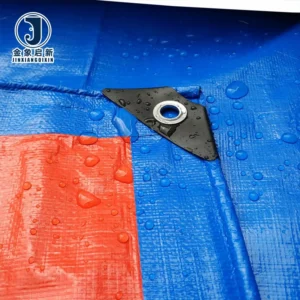
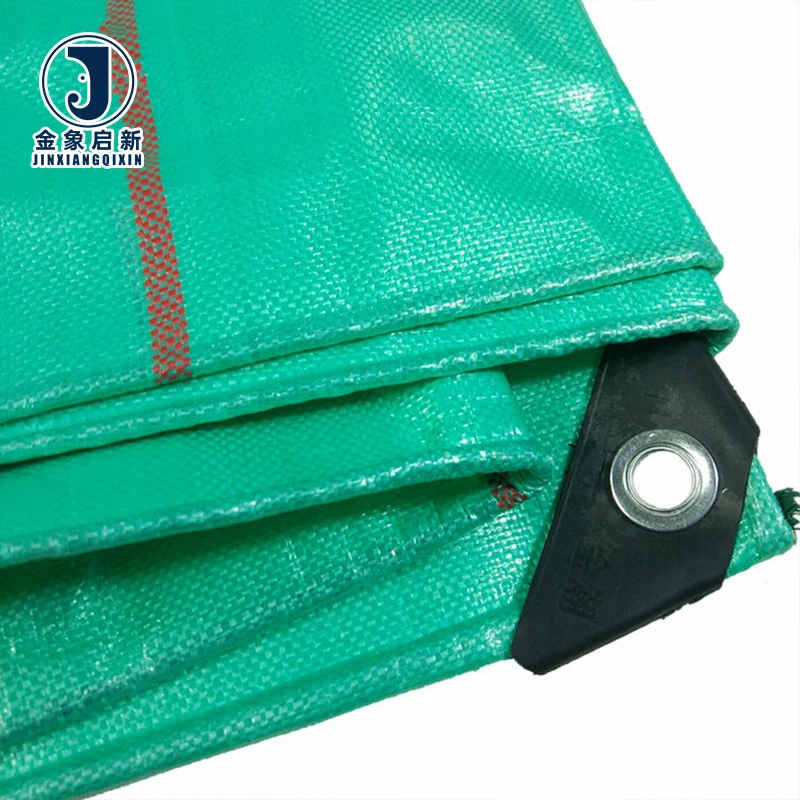
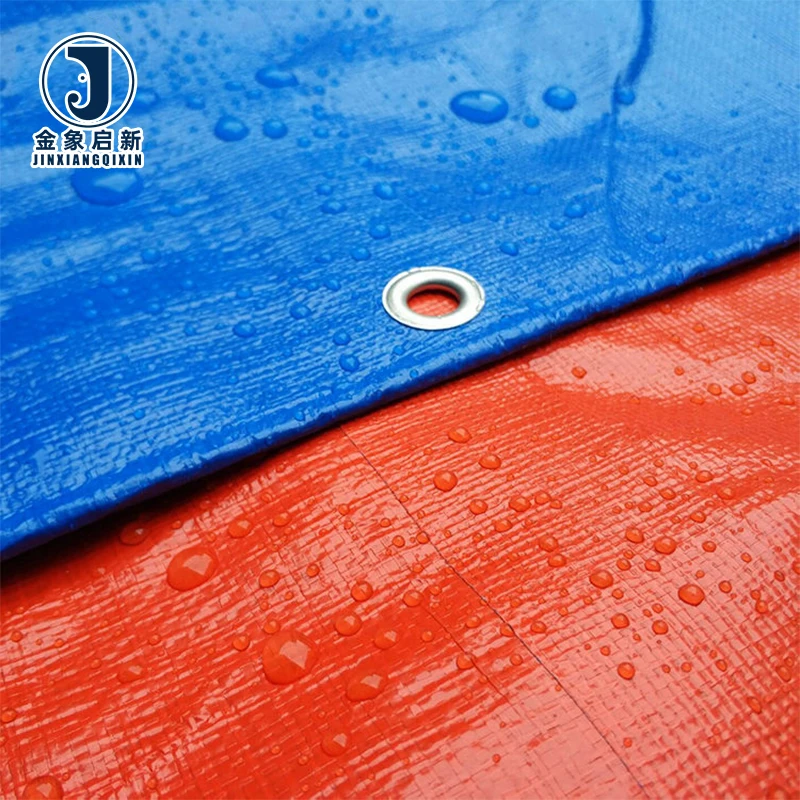
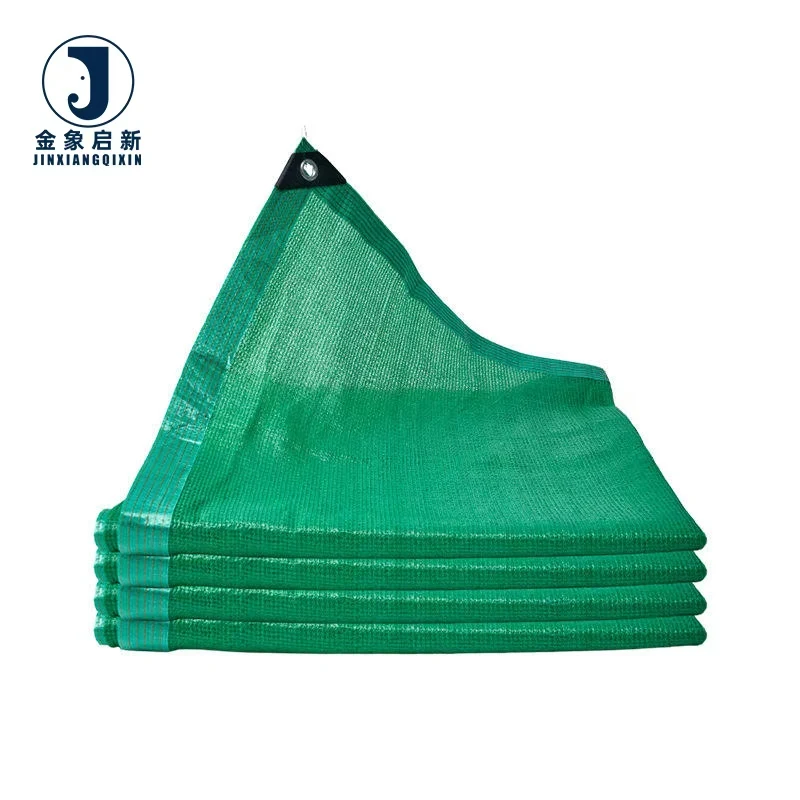

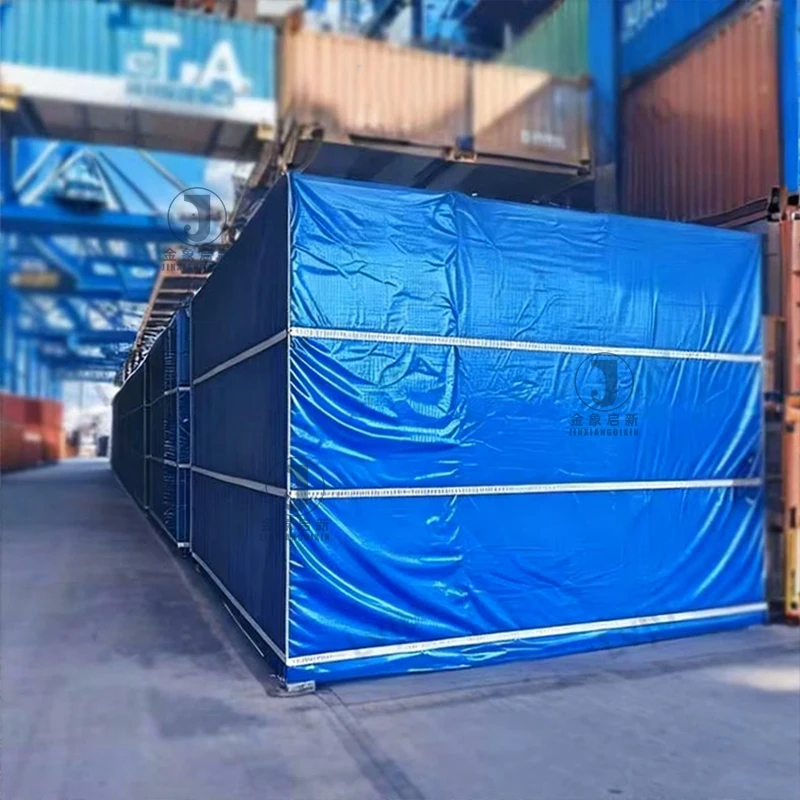
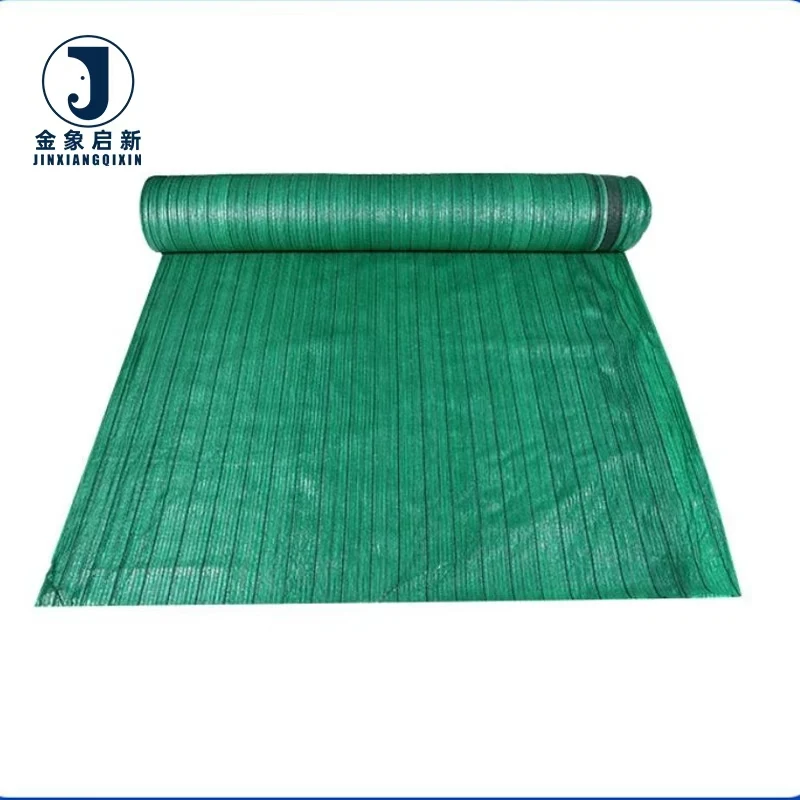
Proven Process Control — Nearly 30 years focused on coated fabric production with dedicated QA at every stage, ensuring each roll of PE tarpaulin meets the weave density, GSM, and treatment specifications stated on the quotation before it leaves the facility.
Technical Specifications
| Parameter | Value |
|---|---|
| Product Type | PE Tarpaulin |
| Material | HDPE weaving with LDPE lamination on both sides |
| GSM Range | 50gr/m² ~ 220gr/m² |
| Thickness | 0.2-0.4mm / 8 mil-16 mil |
| Weave Density Options | 6×6, 6×7, 7×7, 7×8, 8×8, 9×9, 8×10, 10×10, 12×12, 14×14, 14×16 |
| Roll Width | 6ft, 8ft, 10ft, 12ft or 2m, 4m, 6m |
| Roll Length | 100 yards, 100 meters, or as per buyer’s wish |
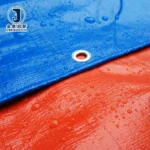
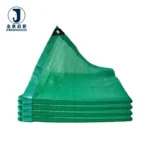
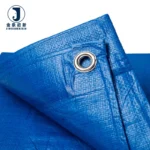
| Color Options | Blue, Blue/Orange, Green, Grey, Black, Clear, Grey/Green, Orange, or custom color |
| UV Treatment | Available (test basis not stated — confirm the standard required for your market) |
| Edge Reinforcement | PP rope in hem on all four edges (finished tarpaulin) |
| Eyelets | Galvanized, every 3ft or 1 meter (finished tarpaulin) |
| Corner Reinforcement | Reinforced plastic corners (finished tarpaulin) |
| Key Features | Waterproof, washable, tear resistant, mildew proof, anti-aging |
| Fire-Retardant Grades | Available — confirm the grade and test standard required for your application |
| Anti-Static Treatment | Available — confirm surface resistance value and test standard |
Application Suitability
| Application | Exposure & Requirement |
|---|---|
| Mining ventilation duct | Continuous airflow, dust accumulation, fire-retardant and anti-static compliance underground |
| Tunnelling duct fabrication | Abrasion from particulate-laden air, confined-space fire safety requirements |
| Aviation ground support ducting | Temporary containment, fuel-proximity anti-static requirements, frequent deployment and pack-down |
| Inflatable and membrane structures | Wind load, UV exposure, weld integrity at stress points, air retention |
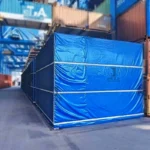
| Industrial truck and equipment covers | Road splash, UV exposure, tie-down abrasion at eyelet points |
| Agricultural crop and timber covers | Rain ingress, mildew in humid storage, UV degradation over seasonal exposure |
What Happens When the Ventilation Duct Fails Its Fire Inspection Underground
The fabric must carry documented fire-retardant and anti-static grades matched to the specific mine or tunnel regulation — not a generic claim.
Ventilation duct installed in an underground environment faces immediate scrutiny from safety inspectors. If the PE tarpaulin fire retardant rating cannot be traced to a recognized test standard, the entire run gets pulled and replaced at significant cost and downtime. Anti-static performance is equally critical in explosive atmosphere zones where surface charge buildup can ignite airborne dust or gas. Buyers who accepted supplier assurances without demanding test documentation have faced site shutdowns and re-procurement cycles that delay project timelines by weeks. [NEED_CITE: fire-retardant and anti-static requirements for underground mining ventilation per regional safety codes]
Weave Density as the Foundation for Duct and Membrane Performance
The base fabric of this PE tarpaulin fire retardant grade material is HDPE woven in densities ranging from 6×6 to 14×16, directly determining tensile behaviour and airflow resistance in duct applications. Lower density weaves at lighter GSM suit temporary containment where flexibility and pack-down weight matter. Higher density weaves at heavier GSM provide the dimensional stability needed for long-run ventilation duct that must resist ballooning and collapse under differential pressure. The LDPE lamination on both sides locks the weave in place and provides the air barrier that makes the fabric functional for duct and inflatable structure use.
Selecting Fire-Retardant and Anti-Static Grades for Regulated Environments
Fire-retardant and anti-static treatments are available for this PE tarpaulin product range, but the specific grade must be confirmed against the regulation governing the end-use site. Mining operations in different jurisdictions reference different test standards — some require the fabric to self-extinguish within a specified distance, others measure afterflame time. Anti-static performance is measured by surface resistance value, and the threshold varies depending on whether the duct runs in a zone classified for combustible dust or flammable gas. Specifying the correct grade at inquiry stage avoids the situation where material arrives on site and fails the inspector’s checklist. [NEED_CITE: test methods for anti-static and fire-retardant performance in coated fabric for ventilation duct use]
How Weave, Lamination, and Thickness Interact in Practice
Three parameters govern the functional behaviour of this HDPE/LDPE PE tarpaulin: weave density sets the mechanical skeleton, lamination weight determines the air and water barrier, and overall thickness reflects the combined construction. A 14×16 weave at the upper GSM range produces a stiff, heavy fabric suited to permanent duct runs that must resist collapse and abrasion. A 7×7 weave at the lower GSM range produces a flexible, lighter fabric suited to temporary inflatable structures where deployment speed and pack-down weight are priorities. The 0.2-0.4mm thickness range accommodates both ends of this spectrum, and the custom option allows specification outside standard tiers when a project engineer requires a precise balance of flexibility and air retention.
The Cost of Specifying the Wrong Grade for the Application
Ordering a standard-grade PE tarpaulin for a duct application that requires certified fire-retardant and anti-static performance leads to a binary outcome at inspection: pass or replace. Replacement means the original material is written off, the new material incurs expedited freight, and the project timeline absorbs the gap. In inflatable membrane structures, specifying a GSM too low for the wind-load calculation results in panels that stretch beyond recovery at attachment points, requiring field patches or full panel swaps. Colour inconsistency between rolls on a visible membrane façade forces a selective rehang that disrupts the installation sequence. These outcomes are avoidable when the specification is locked at inquiry and verified before dispatch. [NEED_CITE: common causes of coated fabric failure in ventilation duct and membrane structure installations]
Why Sourcing PE Tarpaulin Through Jinxiang Reduces Specification Risk
Three full production lines and 36 sets of professional equipment support bulk roll output with consistent weave density and lamination weight across the order. The 10-person R&D team develops samples within days when a custom width, colour, or treatment combination is required for a specific duct or membrane project. Dedicated QA/QC runs at every production stage, with 100% inspection before shipment verifying GSM, weave count, and treatment presence against the agreed specification. Roll widths up to 6m allow long continuous duct panels that reduce the number of welded seams in the field, which is where most failures originate. Material specification sheets, test reports, and certificates ship with every dispatch so documentation is never the reason a duct installation fails inspection.
Documentation & Verification
- Material specification sheet stating exact GSM, weave density, and base fabric construction per roll
- Fire-retardant test report referencing the applicable standard when a certified grade is ordered
- Anti-static surface resistance measurement included on pre-shipment inspection record
- ISO and CE certificates supplied with dispatch documentation package
- Roll packing list with weight and dimension check for container load planning
- Certificate of origin and customs documentation prepared for destination market
Fabrication, Handling & Storage
- Heat-weld seams at temperatures matched to LDPE lamination thickness to avoid burn-through on lighter GSM grades
- Reinforce eyelet and tie-down points with additional fabric patches on finished tarpaulin covers subject to dynamic load
- Store rolls upright on pallets to prevent flat-spot deformation of the HDPE weave core
- Allow cold-stored rolls to reach ambient temperature before unrolling to prevent LDPE lamination cracking
- Use mild detergent for cleaning; avoid solvent-based agents that attack the LDPE coating surface
- Plan cut layouts on 6m-wide rolls to minimize offcut waste on large membrane and duct panels
Before You Send the Inquiry
Provide the ventilation duct diameter, run length, and the fire-retardant or anti-static standard your site inspector requires so we can match the correct treatment grade to the fabric. Specify the roll width that minimizes field seams on your duct or membrane panel layout, along with the annual volume to confirm production scheduling. If the end use involves inflatable or membrane structures, share the wind-load calculation or air-pressure specification so we can recommend the appropriate weave density and GSM from the available range.
Frequently Asked Questions
Q: What fire-retardant grades are available for PE tarpaulin used in mining ventilation ducts, and which test standards apply?
A: Fire-retardant grades are available and must be confirmed per order against the specific regulation your mine or tunnel references. Different jurisdictions require different test standards for afterflame time and self-extinguishing distance. State the standard at inquiry so the correct treatment is applied and documented on the material specification sheet and pre-shipment inspection record.
Q: How is anti-static performance measured and certified for use in explosive atmosphere environments?
A: Anti-static performance is evaluated by surface resistance measurement, with the acceptable threshold depending on whether the duct operates in a combustible dust or flammable gas zone. Confirm the required resistance value and test standard when placing the order. The measured value is recorded on the pre-shipment inspection documentation that accompanies the shipment.
Q: Which weave density and GSM should be specified for inflatable structure membrane versus ventilation duct wall?
A: Inflatable membrane panels generally use a moderate weave density that balances flexibility for deployment with sufficient tensile strength for air retention. Ventilation duct walls benefit from higher weave density for dimensional stability under continuous airflow. The R&D team reviews your application parameters and recommends the appropriate density and GSM tier from the available range.
Q: What is the maximum roll width and how does it affect duct fabrication seam count?
A: Rolls are available up to 6m wide, which allows large-diameter duct sections to be fabricated from fewer panels. Fewer longitudinal seams mean fewer potential failure points under airflow pressure and less field welding time. Specify the roll width that matches your duct circumference to optimize seam layout.
Q: How do you ensure GSM and coating weight consistency across rolls in a bulk ventilation duct order?
A: Every roll passes through dedicated QA/QC with 100% pre-shipment inspection. GSM, weave density, and lamination weight are verified against the quotation specification before dispatch. The inspection record travels with the shipment so the receiving team can cross-reference the documented values on arrival.