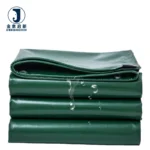
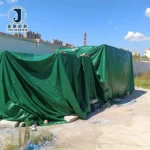
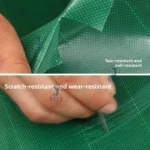

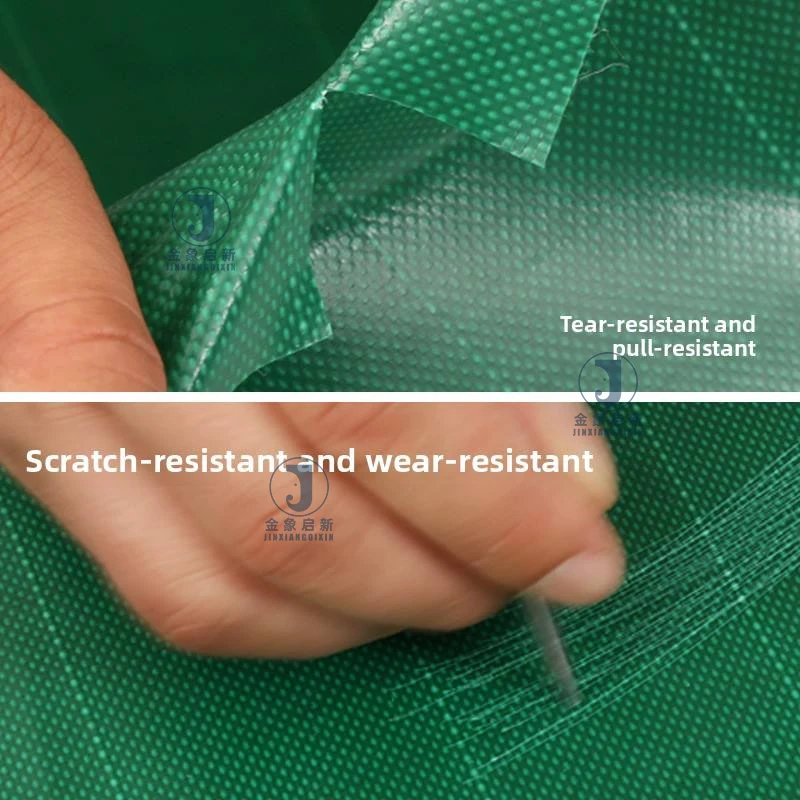
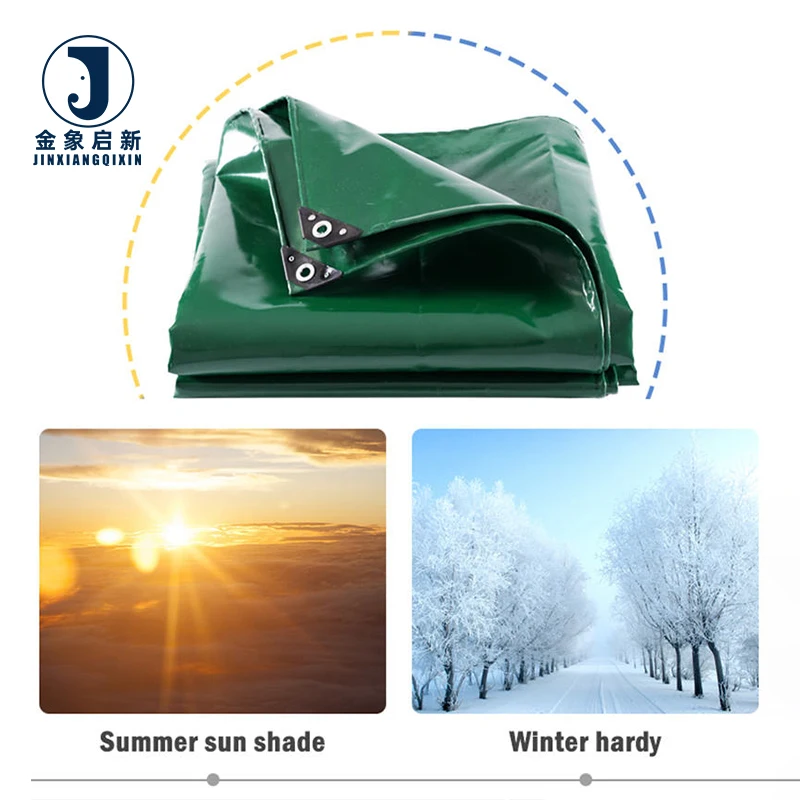
Consistent Roll-to-Roll Quality — Every production run of this industrial ventilation and specialist structure fabric undergoes 100% pre-shipment inspection, with coating weight, surface finish, and colour verified roll by roll before dispatch.
Technical Specifications
| Parameter | Value |
|---|---|
| Product Type | PVC Coated Tarpaulin Roll |
| Coating Material | PVC |
| Construction | Double-faced |
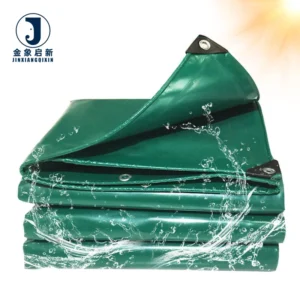
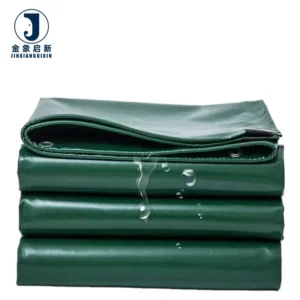
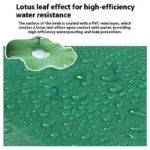
| Water Resistance | Water resistant with mildew protection (grade not stated in source) |
| UV Treatment | Anti-UV treatment available (test basis not stated in source) |
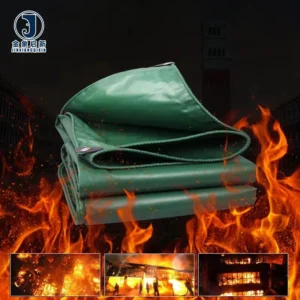
| Flame Retardant | Flame retardant grades available — confirm the grade required for your market (e.g., M2 / B1 / NFPA 701 / DIN 4102) |
| Anti-Static | Available upon specification — surface resistance to be confirmed per project standard |
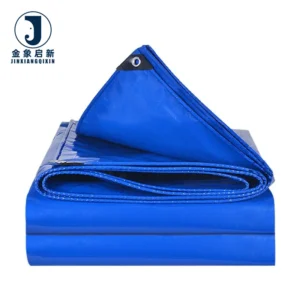
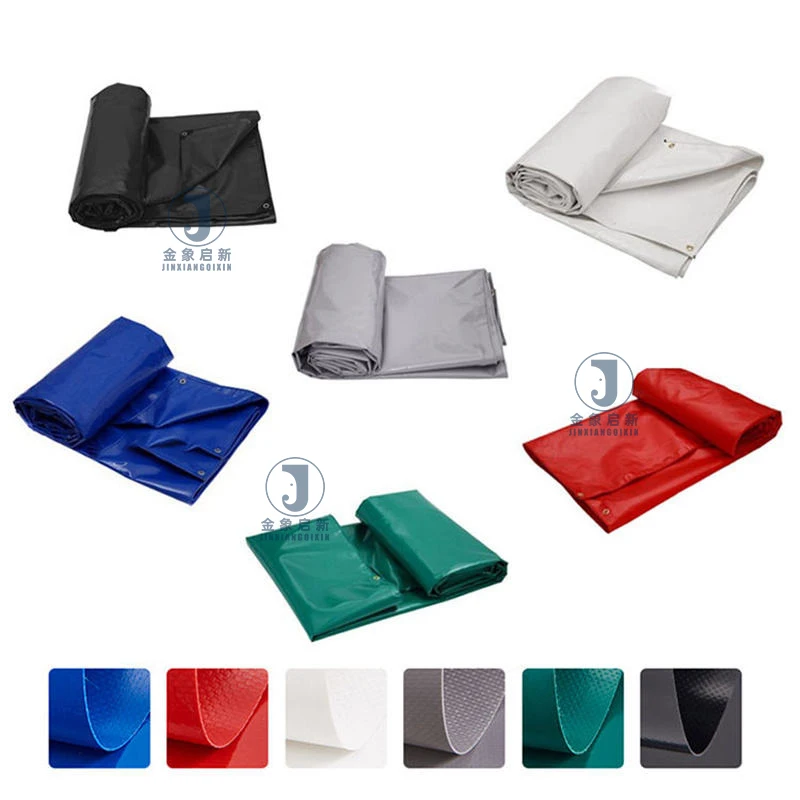
| Color Options | Multiple colors available |
| Product Format | Roll / sheet |
Application Suitability
| Application | Exposure & Requirement |
|---|---|
| Mining and tunnelling ventilation duct | Continuous airflow, underground humidity, mandatory fire-retardant and anti-static compliance |
| Aviation ground support air duct | Fuel-rich tarmac environment, frequent handling, flame-retardant specification required |
| Inflatable and membrane structures | Sustained air pressure, UV exposure, seam integrity under tension, weather resistance |
| Temporary industrial enclosures | Wind load, rain ingress, rapid deployment and teardown cycles |
What "Flame Retardant" Means Without a Grade Behind It
Specifying PVC coated tarpaulin fire retardant without naming the grade is a compliance gap waiting to happen on site.
Procurement teams regularly receive fabric labelled "flame retardant" only to discover during site inspection that the test certificate references a standard their local authority does not recognise. A mining ventilation duct in Australia requires a different classification than a temporary event structure in France, and the coating formulation for each is distinct. [NEED_CITE: common fire classification frameworks for flexible coated fabrics across international markets] When the PVC coated tarpaulin fire retardant grade is not locked down at the quotation stage, the entire roll shipment may fail acceptance — costing weeks of downtime and full return freight.
Ventilation Duct Compliance Starts at the Fabric Specification
Mining and tunnelling ventilation ducts operate in environments where both fire propagation and static discharge are regulated hazards. The PVC coated tarpaulin fire retardant treatment must match the specific standard enforced on that project — whether M2, B1 per DIN 4102, NFPA 701, or another regional framework. Anti-static properties add a second layer: surface resistivity must fall within the range mandated by the mine safety authority. Both treatments are available in this fabric range, but the exact grade and test method must be confirmed during specification so that the correct test report ships with your order. [NEED_CITE: anti-static surface resistance requirements for underground ventilation ductwork]
Membrane and Inflatable Structure Demands
Inflatable buildings and tensioned membrane roofs place unusual demands on coated fabric. The material must hold air pressure across welded seams while resisting UV degradation over extended outdoor exposure. Double-faced construction provides uniform coating coverage on both surfaces, reducing the risk of differential ageing that can cause one face to chalk or embrittle before the other. For temporary event structures and semi-permanent industrial covers, the PVC coated tarpaulin fire retardant grade often determines whether the local building authority will issue a permit at all — making the test report as critical as the fabric itself.
Reading the Specification Sheet Correctly
GSM alone does not define how a coated fabric will perform in a duct or membrane application. The base fabric denier and weave density determine tensile and tear behaviour, while the coating weight and adhesion method govern weld strength and long-term flexibility. A knife-over-roll coating process typically produces higher coating adhesion than lamination, which matters when heat-welded seams carry structural load. Surface finish — glossy or matte — affects both cleanability and the adhesion of printed markings or signage applied after fabrication. Understanding these relationships lets you match the material to the mechanical and regulatory demands of your specific project rather than selecting on weight alone. [NEED_CITE: coating methods and their influence on peel strength for PVC coated fabrics per ISO 1421]
The Hidden Cost of Specification Errors
When a ventilation duct is fabricated from material whose flame-retardant certificate does not match the site standard, the entire installation may be rejected during the first safety audit — forcing removal and replacement under deadline pressure. Colour inconsistency between rolls in the same shipment becomes immediately visible once panels are joined side by side on a membrane structure, requiring selective replacement that disrupts the project schedule. Welded seams that fail before the fabric body does typically trace back to coating adhesion that was not matched to the welding temperature and dwell time used on the shop floor. [NEED_CITE: common failure modes in heat-welded PVC coated fabric seams under flex load] Each of these issues originates in the specification and verification stage, not on the production line.
Why Source This Fabric Here
Deep process control over PVC coating weight and adhesion across three dedicated production lines ensures that roll-to-roll consistency is maintained throughout your order. A 10-person R&D team handles material selection, custom width and length requirements, and sample development — typically turning around custom samples within days rather than weeks. Every roll undergoes inspection at each production stage, with 100% pre-shipment verification covering coating weight, colour, and surface quality. The facility holds ISO and CE certification, and full documentation packages accompany each dispatch, including the specific test reports your project specification demands. Anti-static and flame-retardant formulations are produced to order, so the grade you specify at inquiry is the grade reflected on the certificate that ships with your goods.
Documentation & Verification
- Material specification sheet stating base fabric denier, coating weight, and treatment type
- Test report for the exact flame-retardant grade required by your project standard
- Anti-static surface resistance test report where duct specification mandates it
- Pre-shipment inspection record with roll-by-roll weight and colour verification
- Certificate of origin and customs documentation for cross-border shipment
Fabrication, Handling & Storage
- Heat-weld PVC coated tarpaulin fire retardant seams at temperatures matched to the coating adhesion profile — request weld parameter guidance
- Reinforce eyelet zones and tie-down points with additional fabric patches to distribute load across the double-faced coating
- Store rolls upright on a flat surface to prevent permanent creasing of the PVC coating layer
- Allow cold-stored rolls to reach ambient temperature before unrolling to avoid coating cracking
- Use mild detergent for cleaning; avoid solvents that may degrade the flame-retardant or anti-static treatment
- Plan cutting layouts to maximise yield from the available roll width and minimise welded join lines
Before You Enquire
Share the ventilation duct diameter, length, and airflow requirement, or the membrane structure dimensions and expected wind load. Confirm the fire-retardant standard your local authority enforces and whether anti-static certification is mandatory. Specify the roll width, colour, and whether you require finished fabricated panels or raw roll stock for your own shop.
Frequently Asked Questions
Q: Which flame-retardant grades can be supplied with this PVC coated tarpaulin fire retardant fabric?
A: Flame-retardant treatment is available in grades aligned to standards such as M2, B1 per DIN 4102, NFPA 701, and others. The specific grade must be confirmed at the inquiry stage so the correct formulation is produced and the matching test report ships with your order. Contact our team with your target market standard for a recommendation.
Q: Is anti-static treatment available for mining ventilation duct applications?
A: Yes, anti-static treatment can be applied to meet surface resistance requirements for underground mining and tunnelling ducts. The required resistivity range depends on the regulatory authority governing your project. Provide your specification at inquiry so the correct treatment is matched and tested before dispatch.
Q: How is colour consistency maintained across multiple rolls in a single order?
A: Each production run undergoes colour verification against the approved reference before packing. Rolls within the same order are checked side by side during pre-shipment inspection to ensure no visible variation exists between adjacent panels once fabricated and installed on site.
Q: Can I order custom widths without high minimum quantities?
A: Custom widths and lengths are available, and the R&D team develops samples for approval before full production. Minimum order requirements depend on the specific width, colour, and treatment combination. Submit your dimensions and volume requirement for a quotation with lead time.
Q: What test reports ship with a flame-retardant and anti-static order?
A: Your shipment includes a material specification sheet, the flame-retardant test report matching your specified grade, an anti-static surface resistance report where applicable, ISO and CE certificates, and a pre-shipment inspection record documenting roll-by-roll verification results.