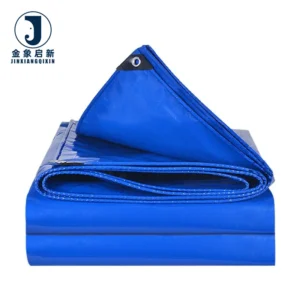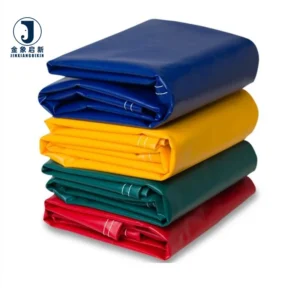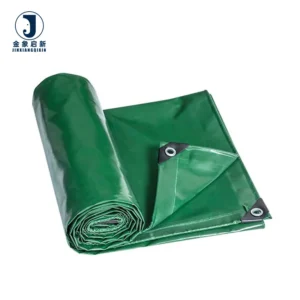
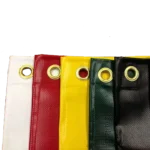


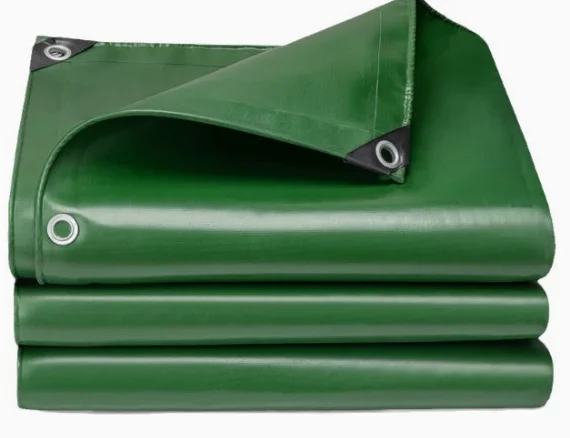
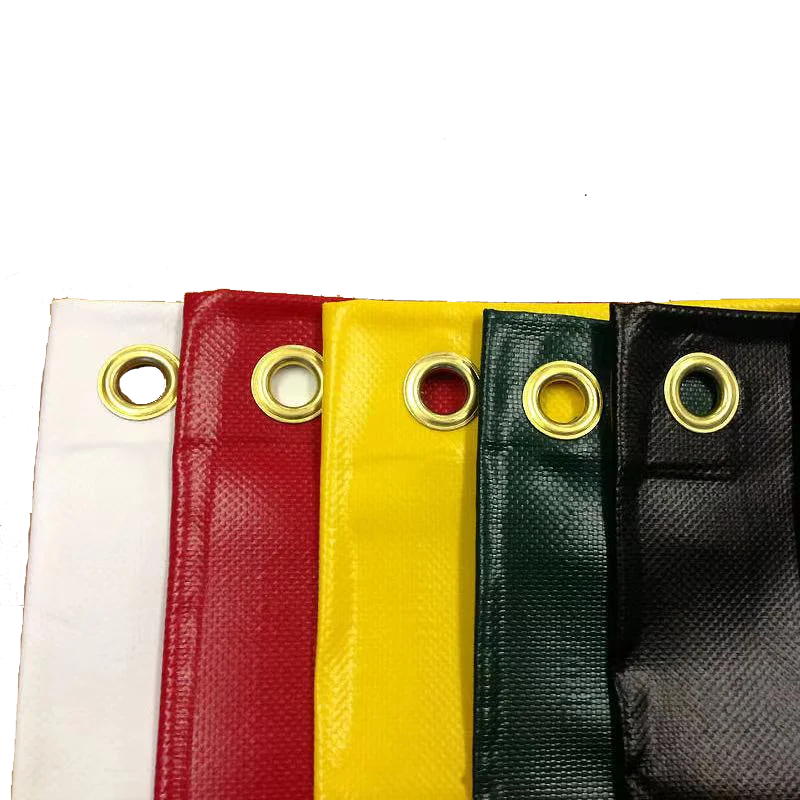
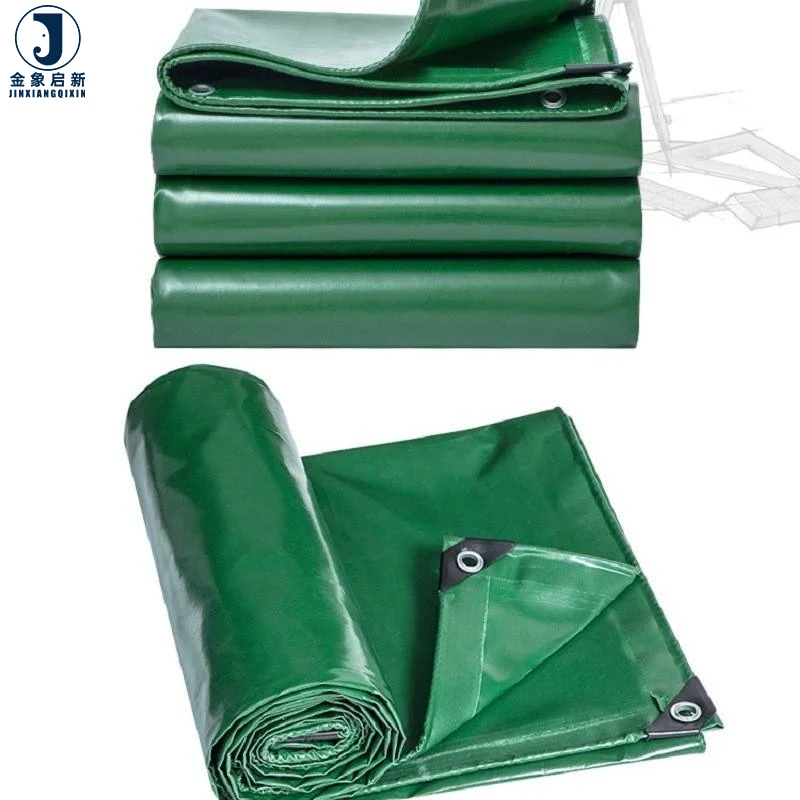
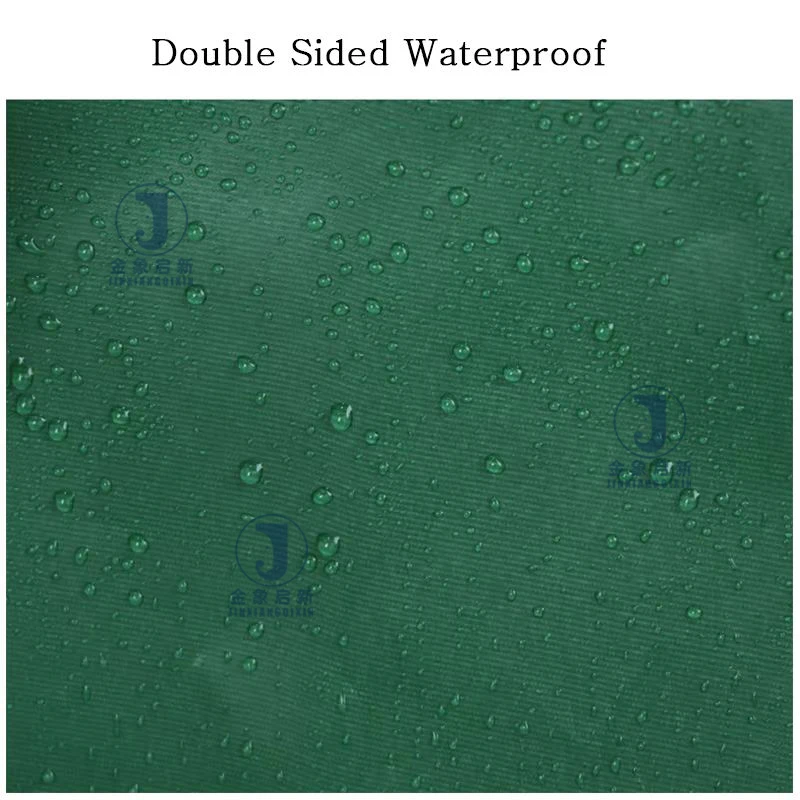
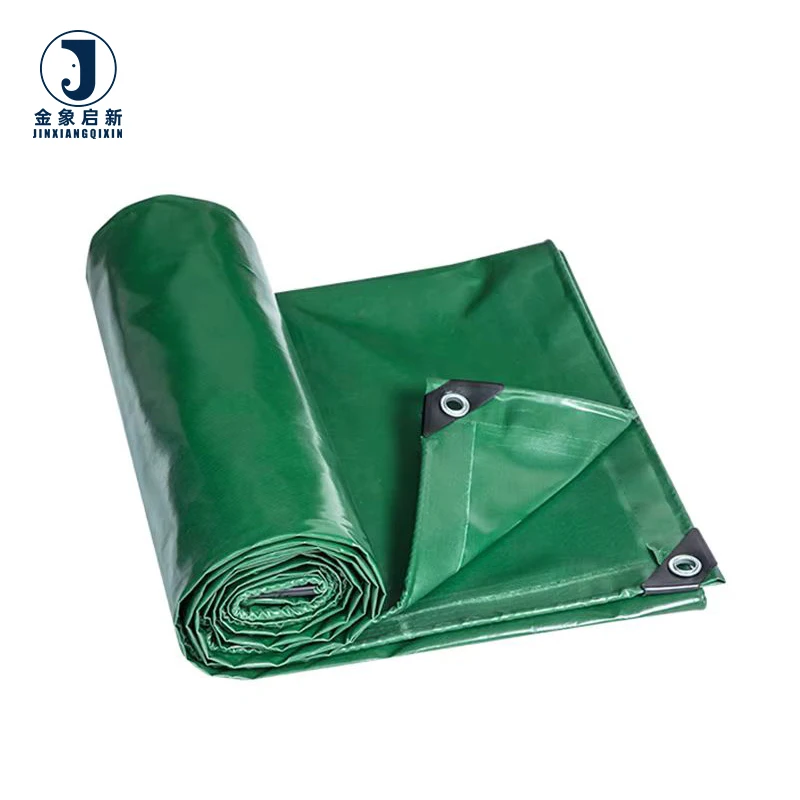
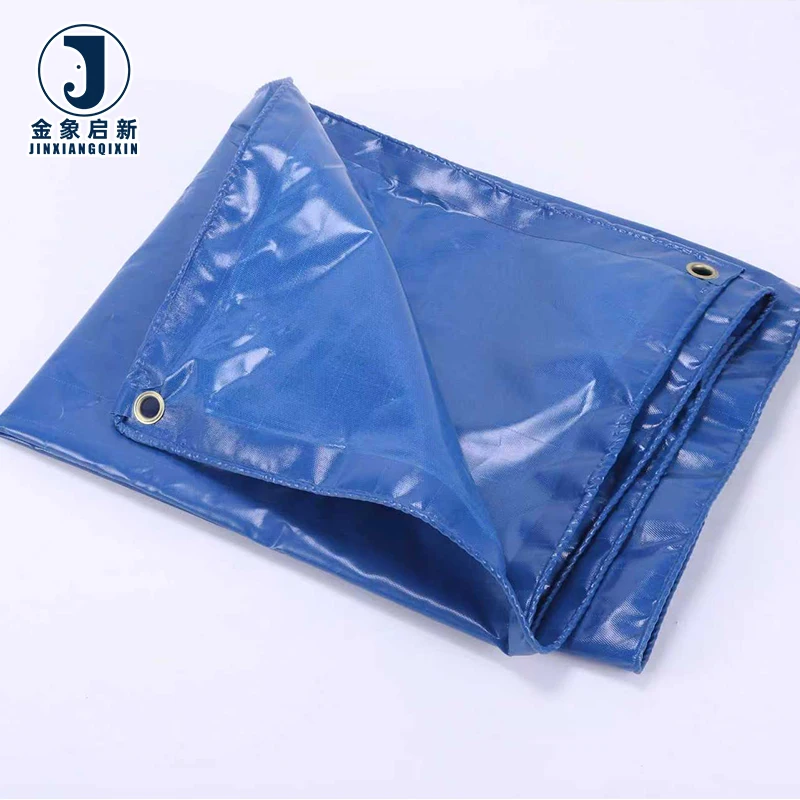
Process-Controlled Coating — every roll of PVC coated fabric undergoes in-stage adhesion and weight checks on three dedicated production lines before release.
Technical Specifications
| Parameter | Value |
|---|---|
| Product Type | PVC Coated Tarpaulin Roll |
| Material | PVC vinyl coated woven fabric |
| Weight | At least 450 g/m² |
| Base Fabric | Woven |
| Waterproof Rating | Yes |
| Fire-Retardant Grade | Available in flame retardant grades — confirm the grade required for your market |
| Anti-Static Performance | Available on request — verify surface resistance standard for your application |
| Custom Dimensions | Available per project specification |
| Standards on File | ISO, CE |
Application Suitability
| Application | Exposure & Requirement |
|---|---|
| Mining and tunnelling ventilation duct | Continuous airflow, high humidity, mandatory fire-retardant and anti-static compliance on site |
| Aviation temporary ventilation systems | Jet blast proximity, rapid deployment and teardown, strict material certification for airside use |
| Membrane and inflatable structures | Biaxial tension, UV and weather exposure, welded seam integrity at stress concentrations |
| Construction site ventilation enclosures | Dust and debris impact, frequent repositioning, abrasion at contact points |
Why Compliance Documentation Matters More Than the Data Sheet for PVC Coated Fabric
A data sheet lists what the material can do; a test report proves it did it on the batch you received.
Ventilation duct projects in mining, tunnelling and aviation do not fail because the PVC coated fabric lacked strength. They stall at site inspection because the paperwork does not match the specification the safety officer signed off on. Procurement teams regularly face a choice between waiting for corrected documentation and absorbing the cost of idle crews underground. [NEED_CITE: fire classification and anti-static requirements for underground ventilation materials] When fabric arrives without a traceable test report tied to the shipped roll, the entire duct installation can be rejected regardless of how well the material actually performs.
Ventilation Duct Fabric Under Continuous Negative Pressure
Industrial ventilation ducts operate under sustained negative or positive pressure, meaning the PVC coated fabric is constantly loaded in tension across its entire surface. Unlike a static cover that only sees wind gusts, a duct membrane must hold shape for the full project duration without creeping or relaxing at the welded seams. The woven base fabric carries the structural load while the PVC coating seals the weave and provides the waterproof barrier against humid intake air. Any inconsistency in coating adhesion shows up first at the longitudinal weld, where peel strength directly governs service life.
Anti-Static and Fire-Retardant Verification Underground
In coal mining and hard-rock tunnelling, ventilation duct material must meet both fire-retardant and anti-static requirements simultaneously. A single test report covering only one property leaves a gap that site inspectors will flag. We supply matched documentation so that the flame-retardant grade and surface resistance value both reference the same production batch. This is where PVC coated fabric for specialist applications diverges from general-purpose tarpaulin: the compliance trail is as critical as the physical roll. [NEED_CITE: anti-static surface resistance measurement for flexible duct materials]
Reading the Weight and Weave Together
Stating a GSM figure without the base fabric denier and weave density gives an incomplete picture. A 450 g/m² fabric woven from high-denier yarns at lower thread count will tear differently from the same weight woven with finer yarns at higher density. For duct fabrication, tear propagation resistance matters more than pure tensile strength because a small puncture near a welded seam can unzip under continuous airflow load. The PVC coating method also affects how the fabric behaves during high-frequency welding: knife-over-roll coating typically delivers higher peel strength at the weld line than lamination, which directly influences how long a duct lasts before seam failure.
When the Wrong Specification Reaches the Site
Fabricators who select duct material based on GSM alone often discover at commissioning that the fire-retardant grade does not match the jurisdiction’s mining safety code. The duct passes a visual inspection but fails the burn test, forcing a complete strip-out and re-hang while tunnelling crews stand idle. [NEED_CITE: consequences of non-compliant ventilation duct material in underground projects] Similarly, an anti-static value that was measured on a different coating formulation than the one actually shipped will not satisfy the site safety officer reviewing the documentation pack. These failures are not material defects; they are specification-to-documentation mismatches that compound project delay.
What We Bring to Technical Fabric Procurement
Our ten-person R&D team handles material selection and sample development for ventilation duct and membrane structure projects, matching base fabric construction and coating formulation to your airflow and compliance requirements. Three full production lines and thirty-six sets of professional equipment allow us to run dedicated batches for fire-retardant or anti-static PVC coated fabric without cross-contamination from standard grades. Every roll goes through dedicated QA and QC checkpoints at each production stage, finishing with a full pre-shipment inspection that verifies weight, coating adhesion and colour against your purchase order. ISO and CE certified documentation accompanies dispatch, and samples for custom requirements are typically developed within days so you can confirm weld parameters before committing to a full production run.
Documentation & Verification
- Material specification sheet stating GSM, base fabric denier, coating method and weight for each roll
- Fire-retardant test report matched to the grade specified for your mining or aviation project
- Anti-static surface resistance result referencing the same batch as the shipped fabric
- ISO and CE certificates included in the shipment documentation pack
- Pre-shipment inspection record confirming weight and coating adhesion against the quotation
Fabrication, Handling & Storage
- High-frequency weld parameters should be tested on a sample of the 450 g/m² fabric before full production to confirm peel strength at the seam
- Store rolls horizontally on pallets in a shaded area to prevent flat-spotting on the PVC coating surface
- Allow cold-stored rolls to reach ambient temperature before unrolling to avoid coating crack at low-flex points
- Use compatible PVC-based repair patches for field repairs on duct sections to maintain fire-retardant continuity at the patch edge
- Cut patterns should account for the woven base fabric grain direction to minimise stretch bias in long duct sections
Project Specification and Enquiry Guidance
To move from enquiry to sample, share the ventilation duct diameter and length, the fire-retardant grade your site requires, and whether anti-static compliance is mandatory for the installation environment. Let us know if you need the PVC coated fabric supplied as roll stock for your own fabrication line or if you require pre-welded duct sections. Colour, custom width and any project-specific marking can be confirmed at the sampling stage.
Frequently Asked Questions
Q: What fire-retardant grade and test standard can be supplied for mining ventilation duct fabric?
A: We supply PVC coated fabric in flame-retardant grades matched to the standard required by your mining jurisdiction. The specific grade and test method are confirmed during the enquiry stage, and the corresponding test report references the same production batch as the shipped rolls. Provide your site safety specification so we can align the grade accordingly.
Q: How is anti-static performance verified and what surface resistance standard applies?
A: Anti-static performance is measured on the finished PVC coated fabric using the surface resistance method applicable to your project standard. The result is documented in a test report that accompanies shipment. Confirm the required resistance range with your site safety officer before ordering so we match the correct coating formulation.
Q: Can the PVC coated fabric be supplied with certified airflow and duct construction compatibility?
A: Yes. The fabric specification includes coating weight and base fabric data relevant to duct fabrication. We work with your engineering team to confirm that the material’s flex behaviour and weld characteristics suit your duct construction method, and we provide sample lengths for your own airflow and pressure testing before bulk production.
Q: How do you ensure GSM and coating weight match the quotation on arrival?
A: Every roll is weighed and inspected during our pre-shipment QA process. The inspection record documents actual GSM against the quoted value and is included in your shipment paperwork. If a discrepancy is found before dispatch, the roll is held and corrected before it leaves the factory.
Q: What compliance documentation accompanies shipment for aviation or tunnelling projects?
A: Each shipment includes a material specification sheet, fire-retardant and anti-static test reports where applicable, ISO and CE certificates, a pre-shipment inspection record and a certificate of origin. Additional project-specific documentation can be prepared during the order confirmation stage based on your site requirements.