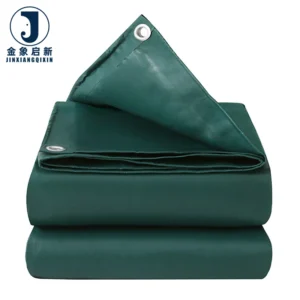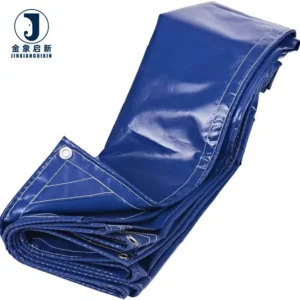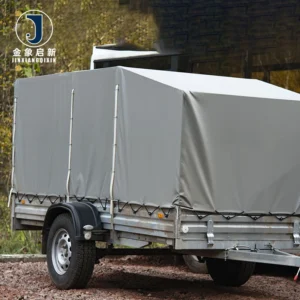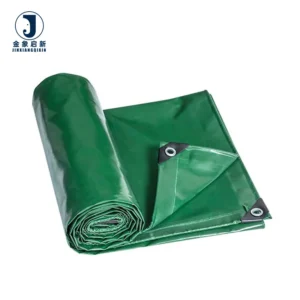
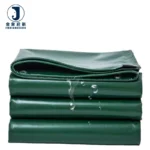
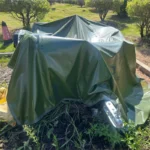
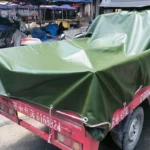
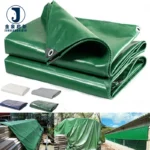
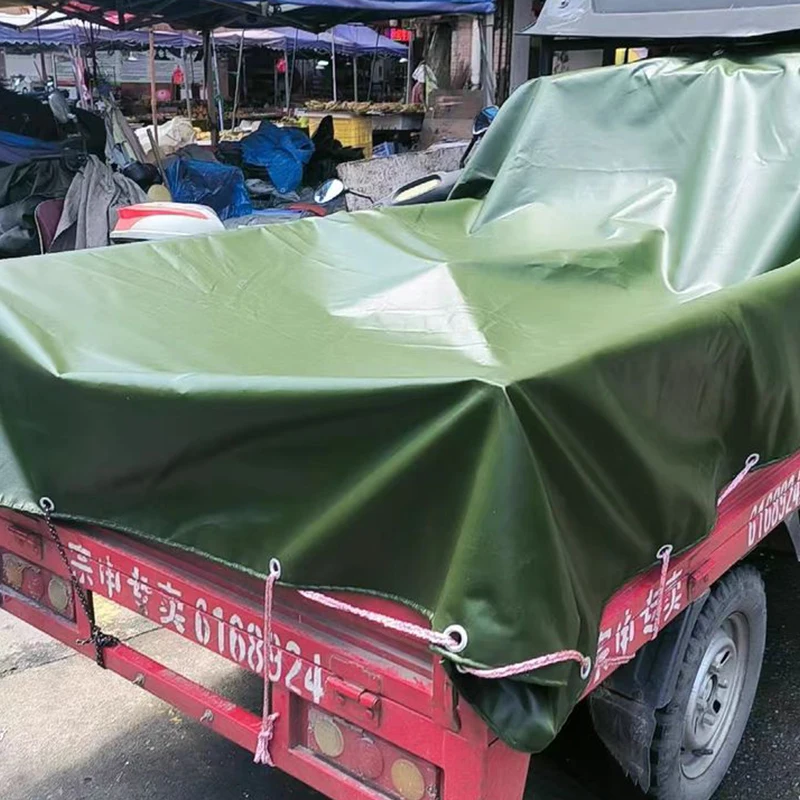
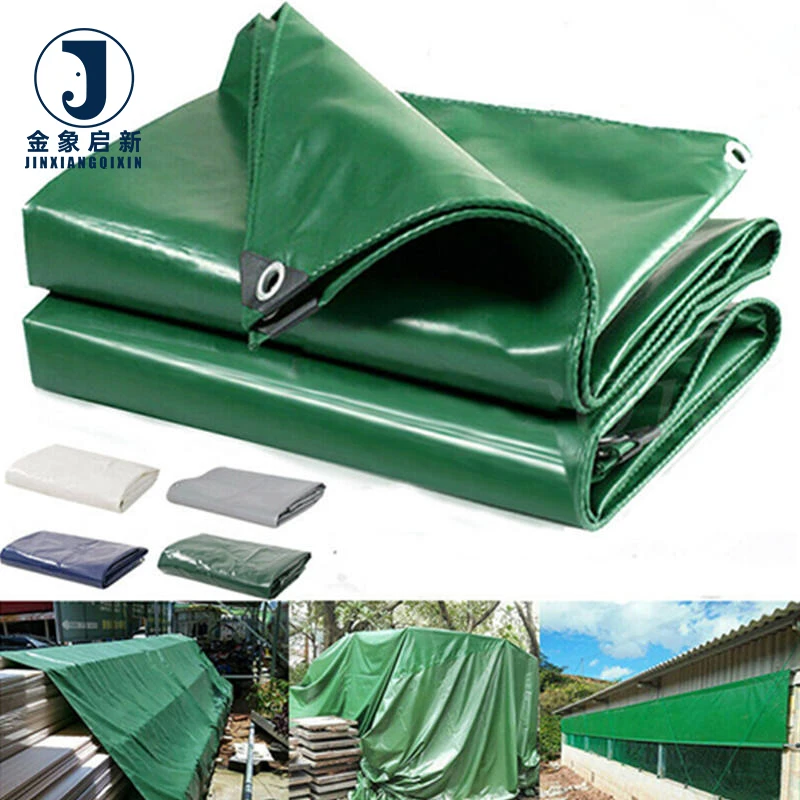
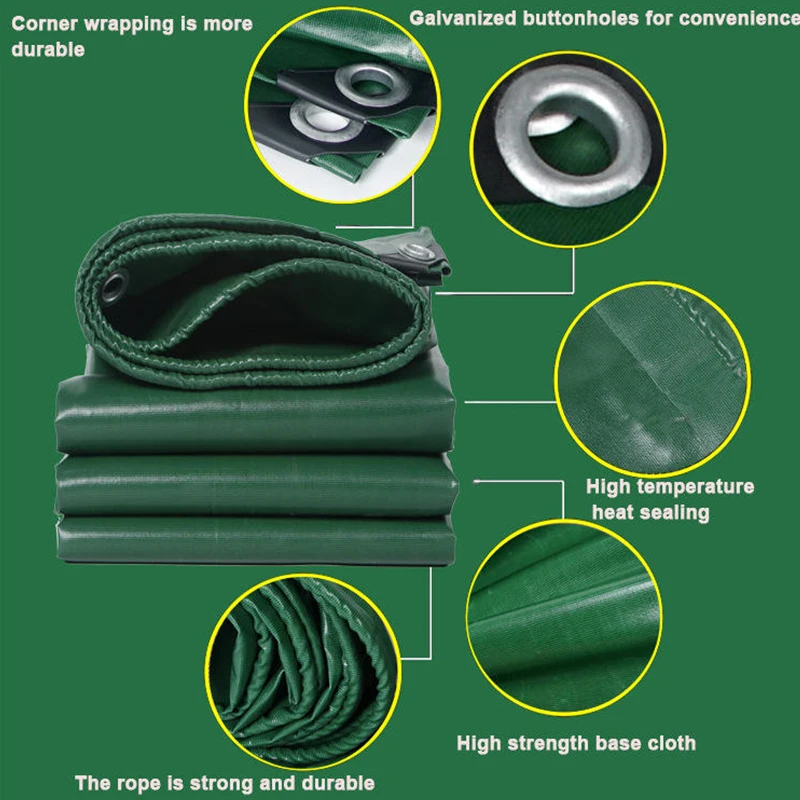
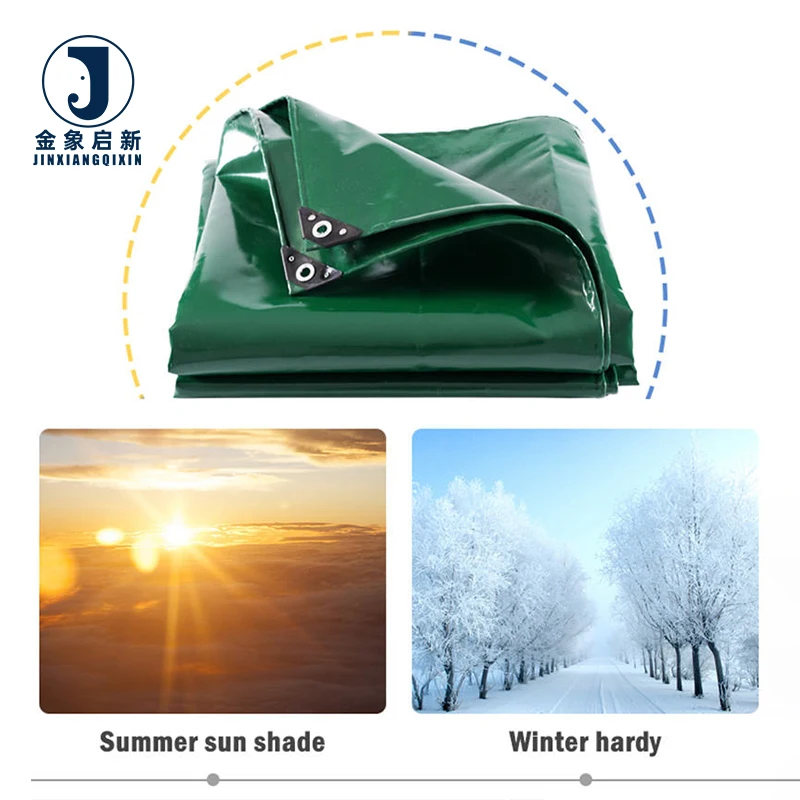
Nearly Three Decades of Technical Fabric Focus — Our production lines have processed PVC coated fabric specifically for ventilation duct and specialist structure applications, backed by documented fire-retardant and anti-static test results with every batch.
Technical Specifications
| Parameter | Value |
|---|---|
| Product Type | PVC Coated Tarpaulin |
| Base Fabric Denier | 200DX300D, 500DX500D, 840DX840D, 1000DX1000D |
| Coating Material | PVC |
| Weight Range | 250gsm–1500gsm (confirm grade for your application) |
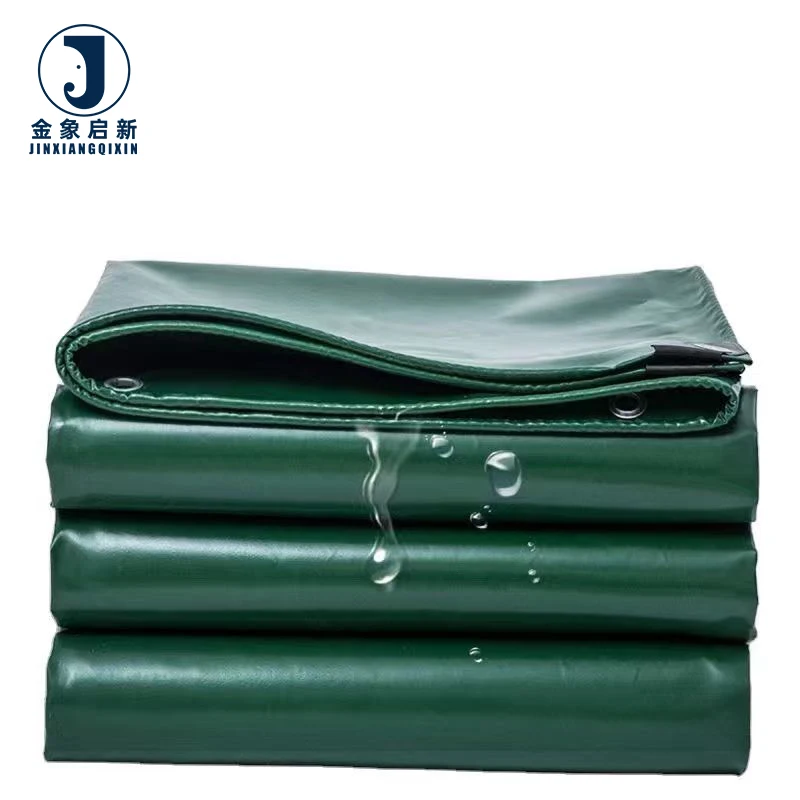
| Finish | Glossy or matte |
| Color Options | Blue, yellow, black, green, white, and custom colors |
| Size Options | 3x4m, 6x8m, 8x10m, 10x12m or custom dimensions |
| Temperature Range | -15°C to 70°C |
| Flame Retardant | FR treated (grade not stated — confirm the grade required for your market) |
| UV Treatment | Customized (test basis not stated — request verification report) |
| Anti-Fungal | Treated |
| Waterproof | Yes |
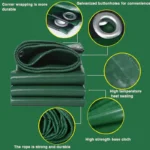
| Key Features | Rain-resistant, tear-resistant, abrasion resistant, good flexibility, strong coating adhesion, eco-friendly |
| OEM/ODM | Accepted |
| Standards | ISO, CE (specific test reports available upon confirmation) |
Application Suitability
| Application | Exposure & Requirement |
|---|---|
| Mining & tunnelling ventilation ducts | Continuous airflow pressure, underground moisture, mandatory fire-retardant compliance, mechanical abrasion from rock dust |
| Aviation ground support ducting | Anti-static surface requirements, fuel-rich environment proximity, temperature fluctuation on tarmac |
| Membrane and inflatable structures | Sustained tensile load, wind uplift, UV exposure, certified flame retardant fabric for public assembly |
| Temporary industrial enclosures | Chemical dust exposure, frequent installation and removal cycles, weather sealing at panel joints |
What Happens When Ventilation Duct Arrives Without the Certification Your Site Demands
A fire-retardant claim without a named grade is not compliance — it is a liability waiting for the next site audit.
Mining and tunnelling operations specify ventilation duct material against jurisdictional fire codes. When the delivered fabric carries no test report tied to a recognised standard, the entire installation can be rejected at inspection, halting production until replacement material arrives. [NEED_CITE: jurisdictional fire safety standards for underground ventilation materials]
We see procurement teams receive duct fabric labelled simply as "flame retardant" with no supporting documentation. Site safety officers then demand either a test certificate matching their regulatory framework or a full material swap. The PVC coated tarpaulin for industrial ventilation and technical fabric applications must carry verifiable test results before it leaves the factory.
Duct Construction Demands More Than Fabric Weight
When selecting PVC coated tarpaulin for ventilation systems, base fabric denier matters as much as coating weight. A 500DX500D base provides adequate tensile strength for medium-diameter ducts in standard mining conditions, while 1000DX1000D handles high-pressure airflow in long-run tunnelling applications. The coating must bond fully to the base weave to prevent delamination under sustained internal pressure.
Fire-Retardant and Anti-Static Requirements Are Not Interchangeable
Mining ventilation standards focus on flame spread and self-extinguishing behaviour, while aviation ground support environments prioritise surface resistivity to prevent static discharge near fuel systems. Each application requires its own test methodology and grading reference. [NEED_CITE: anti-static surface resistance testing methodology for coated fabrics] A single fabric may satisfy one requirement while failing the other, making it essential to specify both parameters independently for your PVC coated tarpaulin order.
How Base Fabric and Coating Weight Interact in Technical Applications
The denier of the base fabric determines the mechanical skeleton — higher denier yarns resist tear propagation when a puncture starts at a weld point or a rock impact. Coating weight, expressed in GSM, controls waterproofing integrity, flexibility at low temperatures, and the material’s ability to hold a heat-welded seam without blistering. A 200DX300D base with heavy coating may feel substantial but will tear more easily than a 1000DX1000D base at moderate coating weight. For duct fabrication, the relationship between these two parameters dictates how the material behaves when folded, welded, and suspended under load across long tunnel runs. Temperature range also plays a role: at -15°C the PVC coating stiffens, and any impact on a rigid duct section can cause cracking if the base fabric lacks sufficient tear resistance to arrest the damage. [NEED_CITE: relationship between base fabric denier and tear strength in PVC coated fabrics]
When the Wrong Specification Reaches the Tunnel Face
A ventilation duct fabricated from material with insufficient fire-retardant grading will pass initial installation but fail the next scheduled safety inspection, forcing removal and replacement under time pressure. Fabricators who accept "flame retardant" without a named grade discover the compliance gap only when the site auditor requests documentation. [NEED_CITE: consequences of non-compliant ventilation materials in mining operations] Colour inconsistency between rolls also creates visible banding when duct sections are joined underground, signalling poor batch control to any inspector reviewing the installation.
Why Technical Buyers Source This PVC Coated Tarpaulin Through Our Process
Our R&D team works directly with duct fabricators to match base fabric denier and coating weight to specific diameter and pressure requirements, producing samples within days for weld testing before bulk commitment. Every production run passes through dedicated QA checkpoints that verify coating adhesion, dimensional accuracy, and treatment performance before the material is released for shipment.
We maintain full documentation traceability — material specification sheets, test reports for fire-retardant and anti-static properties, and pre-shipment inspection records ship with every order. Three production lines give us capacity to fulfil large-volume duct fabric orders while keeping batch consistency tight across rolls. Our experience spanning nearly three decades in coated fabric means process control is embedded in the production routine, not added as an afterthought.
Documentation & Verification
- Material specification sheet stating exact GSM, base fabric denier, and coating weight for each roll
- Fire-retardant test report with named grade matching your jurisdictional requirement
- Anti-static surface resistance certificate where aviation or explosive atmosphere standards apply
- Pre-shipment inspection record confirming dimensional accuracy and weld integrity
- Certificate of origin and customs documentation for international project sites
Fabrication, Handling & Storage
- Heat-weld seams at temperatures matched to the specific coating weight to avoid blistering on heavier GSM grades
- Store rolls upright on pallets to prevent compression creasing that weakens the PVC coating at fold lines
- Allow cold-stored rolls to acclimatise above 10°C before unrolling to prevent coating crack at -15°C threshold
- Use compatible PVC adhesive patches for field repairs on duct sections, matching coating weight for bond strength
- Plan cutting layout to minimise cross-duct seams, positioning welded joints away from high-flex suspension points
What We Need to Quote Your Duct Fabric Correctly
Provide the duct diameter, section length, and the fire-retardant or anti-static grade your project specification mandates. Include the base fabric denier preference if your engineering team has already calculated tensile requirements, or describe the operating conditions so we can recommend the appropriate construction. Let us know whether you need rolls for your own fabrication line or finished duct sections with welded seams.
Frequently Asked Questions
Q: Which fire-retardant grade applies to my mining or tunnelling ventilation project?
A: The required grade depends on your jurisdiction and whether the operation is underground or surface-level. Common frameworks include DIN 4102, NFPA 701, and regional mining safety codes. Share your site specification with us and we will match the treatment and provide the corresponding test report for your safety audit.
Q: How is anti-static performance measured on PVC coated ventilation fabric?
A: Anti-static properties are assessed by measuring surface electrical resistance. Aviation and explosive atmosphere applications require specific resistance thresholds to prevent static discharge. We can supply fabric treated to meet your stated requirement and provide measurement documentation for your compliance records.
Q: Can you produce custom duct diameters and section lengths?
A: Yes. Our production lines handle custom widths and our fabrication team cuts and welds to your specified diameter and length. Each welded seam is inspected for integrity before dispatch, and we provide samples for your own testing before committing to full production volume.
Q: What documentation ships with each order for site inspection purposes?
A: Every order includes a material specification sheet, applicable fire-retardant or anti-static test reports, pre-shipment inspection records, and standard export documentation. We prepare the full package to match your site compliance requirements before the material leaves our facility.
Q: Does the temperature range affect duct performance in deep underground or high-altitude sites?
A: The material is rated from -15°C to 70°C. In deep underground applications, ambient temperatures typically remain stable within this range. At high altitude or in cold-climate surface installations, the lower boundary becomes relevant — we recommend discussing your specific operating conditions so we can confirm suitability.