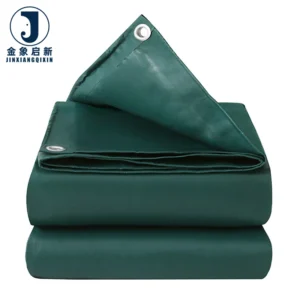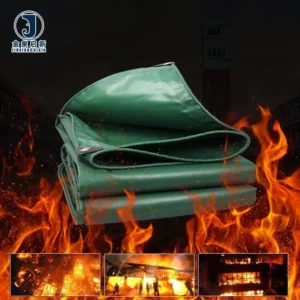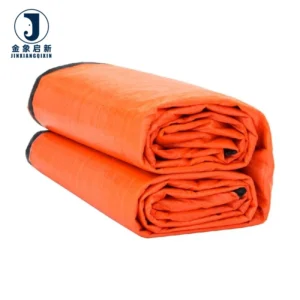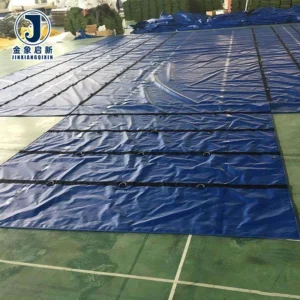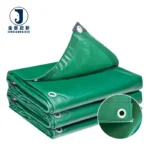
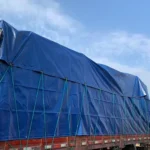
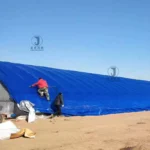
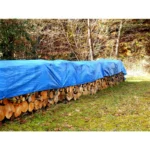
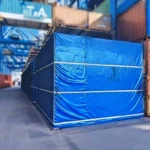
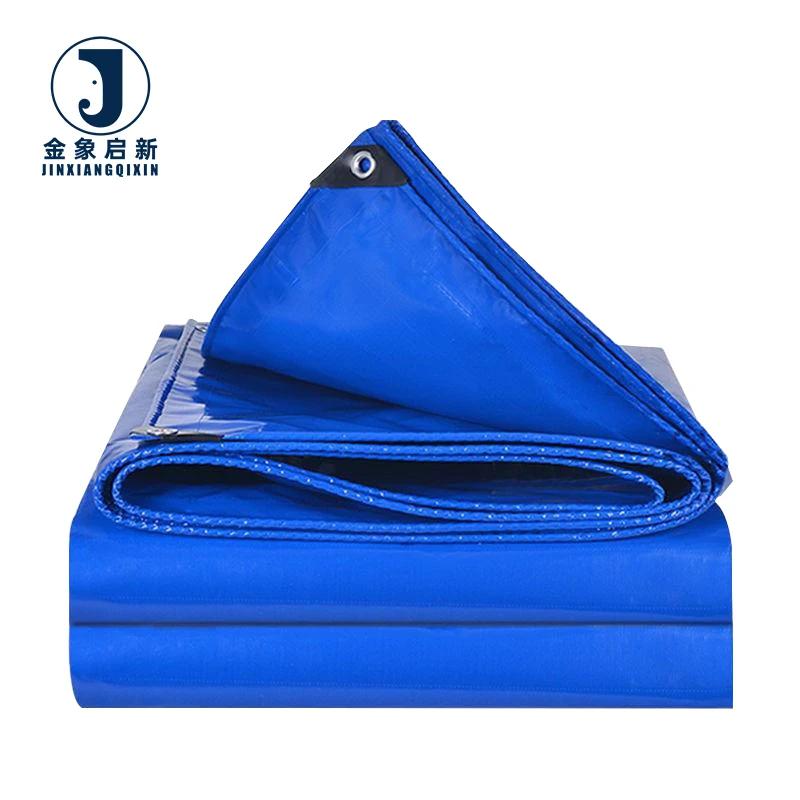
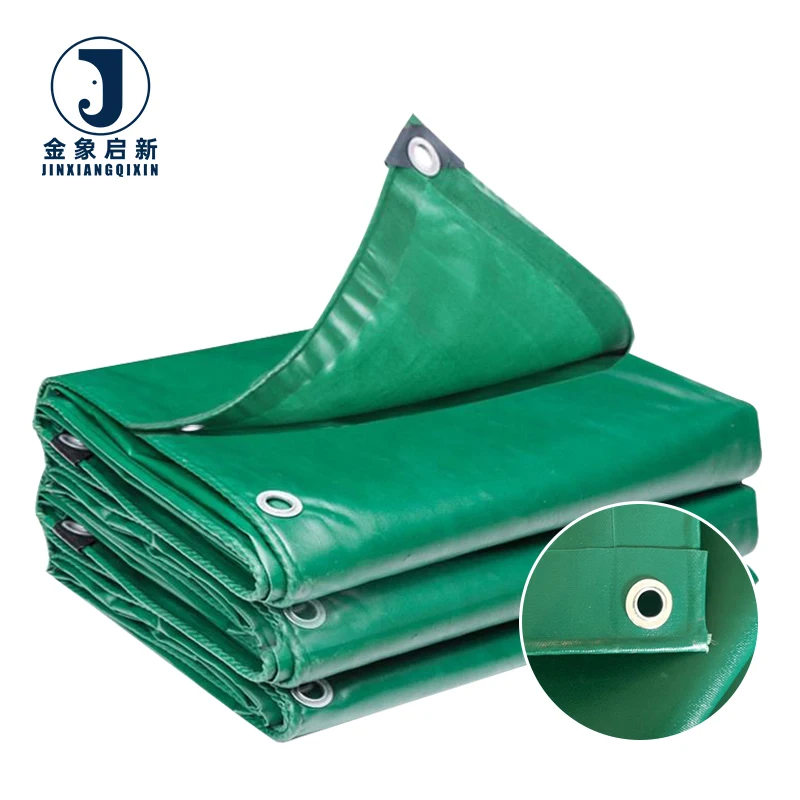
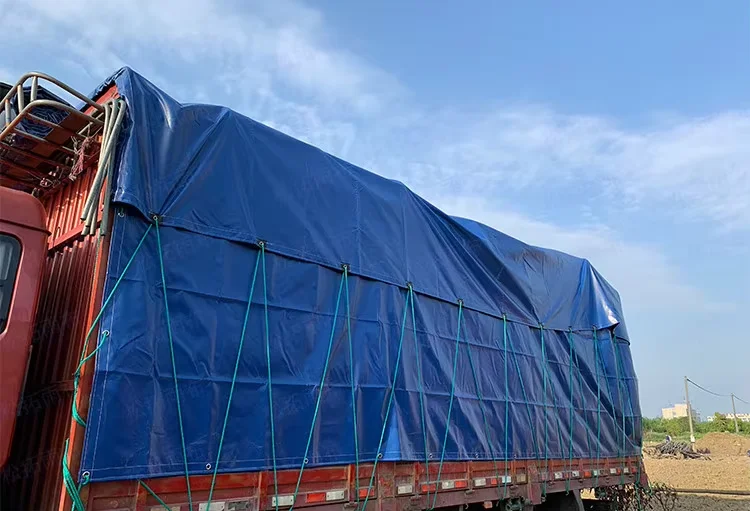
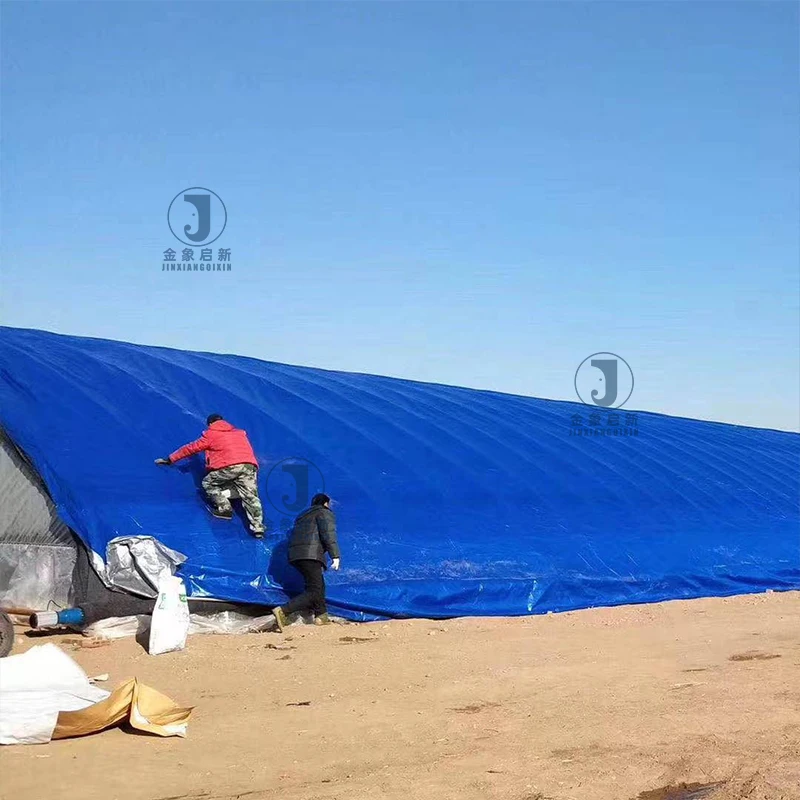
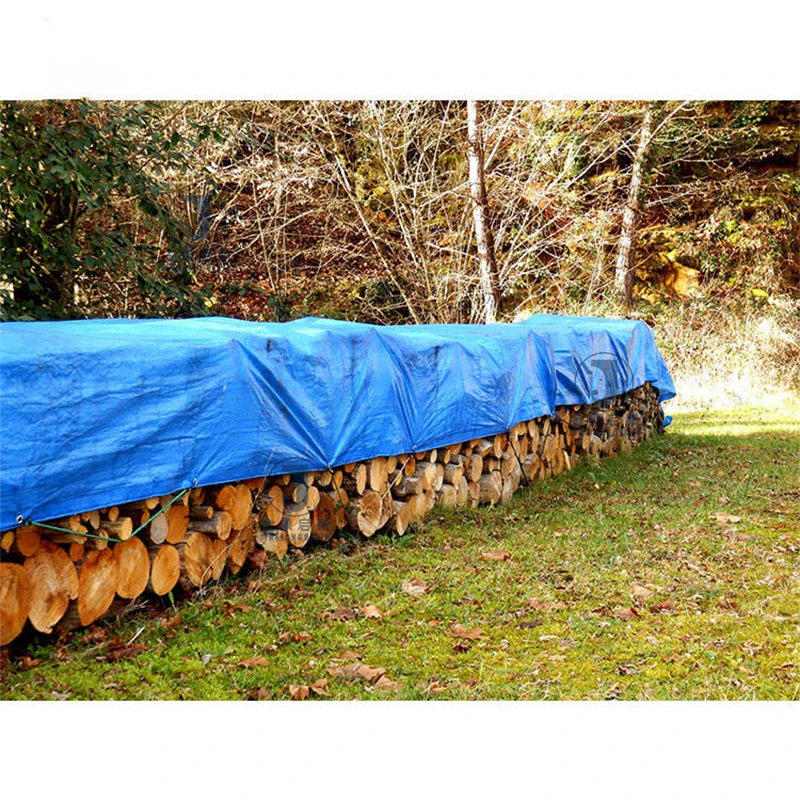
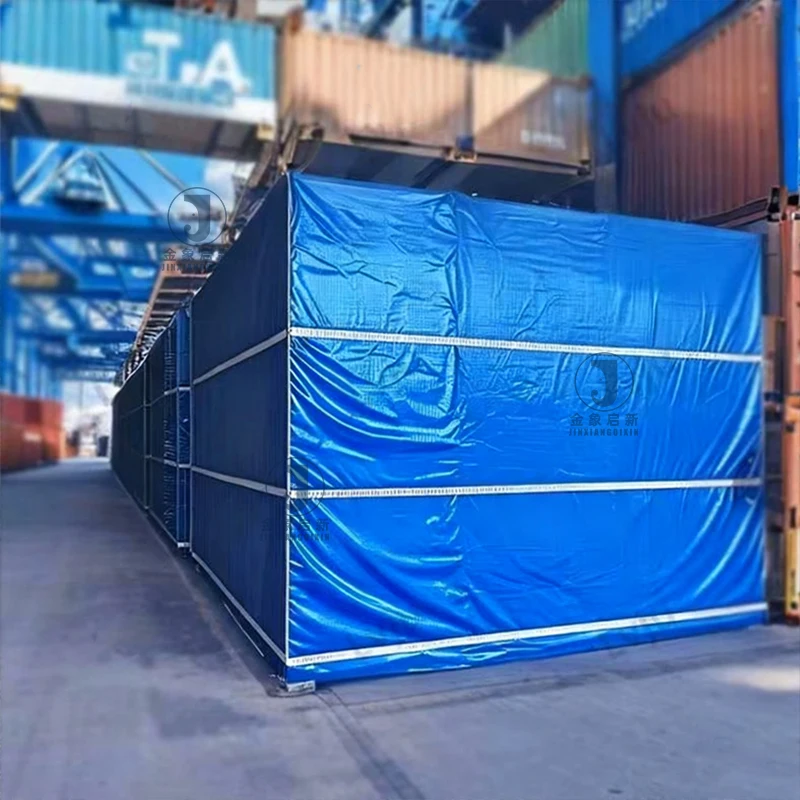
Process Control at the Coating Head — Consistent PVC adhesion and coating weight across every roll, maintained by 36 sets of professional equipment and in-line quality checks before the fabric leaves the line.
Technical Specifications
| Parameter | Value |
|---|---|
| Product Type | PVC Coated Tarpaulin |
| Coating Material | PVC |
| Weight Options | 700gsm / 850gsm / 900gsm (confirm grade for your application) |
| Flame Retardant | Available in flame retardant grades — confirm the grade required for your market (M2 / B1 / NFPA 701 / DIN 4102) |
| Anti-Static | Available with anti-static treatment — confirm surface resistance requirement for your jurisdiction |
| Anti-Cold | Available |
| Anti-Mildew | Available |
| Waterproof | Yes |
| Weather Resistance | 1–3 years outdoor life assurance (test basis not stated in source) |
| Surface Finish | Custom PVC coated canvas |
| Application Form | Truck cargo cover / roll stock |
Application Suitability
| Application | Exposure & Requirement |
|---|---|
| Truck cargo covering | Road debris impact, constant UV exposure, wind flap fatigue, tie-down abrasion at contact points |
| Mining and tunnelling ventilation duct | Underground particulate, fire risk, static discharge hazard, continuous airflow flexing |
| Aviation ground support ducting | Flame-retardant compliance on tarmac, fuel proximity, rapid deployment and pack-down cycles |
| Inflatable and membrane structures | Sustained internal pressure load, UV and weather exposure, welded seam integrity under tension |
| Construction site equipment covering | Prolonged outdoor staging, moisture ingress, wind uplift, forklift and crane contact damage |
What "Fire Retardant" Means Without a Grade Behind It
A PVC coated tarpaulin fire retardant claim on a quotation is meaningless unless it names the test standard and the classification achieved. Mining and tunnelling sites routinely reject ventilation duct fabric that arrives without a traceable test report citing M2, B1, NFPA 701, or DIN 4102 — the fabric may pass a simple burn test but fail the site safety audit that actually governs installation approval [NEED_CITE: DIN 4102 fire classification for building materials]. Specify the exact fire-retardant standard your jurisdiction requires and request the corresponding test report before production begins.
The gap between "treated" and "certified" is where projects stall. A fabric can carry a flame-retardant additive yet fall short of the self-extinguishing time or char length the standard demands. Anti-static claims face the same verification problem — surface resistance must be measured and documented to the threshold your site safety officer requires, not simply stated as a product feature.
Coating Weight, Base Fabric and the Strength Relationship
The GSM figure on a PVC coated tarpaulin quotation combines base fabric weight and PVC coating weight into a single number, yet it is the base fabric denier and weave density that primarily govern tensile and tear performance. Two fabrics rated at 850gsm can behave very differently under load if one uses a heavier coating to compensate for a lighter base cloth. Requesting the base fabric specification alongside the GSM allows you to compare structural strength rather than total weight alone.
Fire-Retardant and Anti-Static Treatment Verification
Flame-retardant grades are available across the 700gsm, 850gsm, and 900gsm range for this PVC coated tarpaulin. The critical step is matching the treatment to the standard enforced at your site — M2 for French markets, B1 under DIN 4102 for German-influenced specifications, NFPA 701 for North American jurisdictions. Anti-static treatment follows a separate verification path: surface resistance values must be measured and reported to demonstrate compliance with mining and tunnelling safety thresholds [NEED_CITE: surface resistance measurement methods for anti-static coated fabrics in mining ventilation]. Without these documents, the fabric cannot be cleared for installation regardless of its actual performance.
Reading the Specification Sheet Beyond GSM
Coating method determines how the PVC bonds to the polyester base fabric and directly affects weld behaviour during fabrication. A knife-over-roll coating process typically produces a smoother surface with higher coating adhesion, which translates to stronger heat-welded seams — essential for ventilation duct sections that flex under continuous airflow. Glossy and matte surface options influence dirt retention and cleaning frequency in exposed applications; a glossy finish sheds particulate more readily in underground mining environments, while matte surfaces reduce glare in above-ground membrane structures. The available anti-cold and anti-mildew treatments address specific exposure conditions: low-temperature flexibility prevents cracking in winter transit or high-altitude tunnelling, while anti-mildew additives protect fabric stored in humid staging areas or deployed in tropical climates.
The Hidden Cost of Skipping Pre-Shipment Verification
Accepting a roll delivery without verifying GSM against the quoted specification is one of the most common sources of dispute in coated fabric procurement. Material that arrives lighter than agreed may still look correct on the roll, but the deficit shows up as premature abrasion at high-wear zones and reduced tear propagation resistance once the cover or duct is in service. Colour variation between rolls in the same order becomes visible only when panels are installed side by side, forcing rework that costs far more than a pre-shipment inspection would have. Welded seams that fail before the fabric does almost always trace back to coating formulation inconsistencies or incorrect heat-weld parameters — problems that in-process QA is designed to catch before the material is shipped [NEED_CITE: weld seam strength testing for PVC coated fabrics].
Why Source This PVC Coated Tarpaulin Through Jinxiang
Three full production lines and 36 sets of professional equipment support bulk output while maintaining the coating consistency that ventilation duct and membrane structure fabricators depend on. A 10-person R&D team handles material selection and sample development, producing test samples within days so you can verify fire-retardant grade, anti-static performance, and weld behaviour before committing to a production run. Dedicated QA and QC checkpoints at every production stage — from base fabric inspection through coating, curing, and final winding — ensure that the roll you receive matches the specification sheet. Nearly 30 years of focused coated fabric production provides the process depth needed to adjust formulation and weight to meet jurisdiction-specific compliance requirements without trial-and-error delays.
Documentation & Verification
- Material specification sheet stating confirmed GSM, base fabric denier, weave density, and all applied treatment grades
- Flame-retardant test report citing the specific standard (M2 / B1 / NFPA 701 / DIN 4102) required for your site
- Anti-static surface resistance test data where mining or tunnelling compliance is required
- 100% pre-shipment inspection record confirming roll count, weight verification, and visual quality
- Certificate of origin and customs documentation package for international dispatch
Fabrication, Handling & Storage
- Heat-weld parameters must be adjusted to the confirmed GSM grade — 900gsm fabric requires higher dwell time than 700gsm to achieve full coating fusion at the seam
- Store rolls upright on pallets in a dry, ventilated area to prevent flat-spot deformation of the PVC coating layer
- Allow cold-stored rolls to reach ambient temperature before unrolling to avoid coating crack in anti-cold treated grades
- Use PVC-compatible cleaning agents only; solvent-based cleaners can degrade the coating surface and compromise flame-retardant additives
- Reinforce tie-down contact zones with additional PVC patches to distribute point loads across the base fabric weave
- Plan cutting layouts to minimise cross-grain seams, which are inherently weaker than warp-direction welds on coated canvas
Before You Request a Quote
Provide the specific application — ventilation duct, truck cargo cover, or membrane structure — along with the fire-retardant and anti-static standards enforced at your project site. Indicate the GSM grade you require from the 700gsm, 850gsm, or 900gsm options, the roll width and total quantity, and whether you need fabric only or finished cut-and-welded panels. Confirming these details up front allows us to match the correct coating formulation and treatment package to your compliance and performance requirements.
Frequently Asked Questions
Q: Which fire-retardant standard applies to my market and how is it verified?
A: The required standard depends on your jurisdiction — M2 is common in France, B1 under DIN 4102 in Germany, and NFPA 701 in North America. We supply a test report citing the specific standard with each shipment. Confirm the standard your site safety officer requires before production so the correct treatment grade is applied and documented.
Q: How is anti-static performance measured for mining duct applications?
A: Anti-static performance is measured by surface resistance testing, with acceptable thresholds set by the mining authority governing your site. We provide surface resistance test data with the shipment documentation. Share your required resistance value during the inquiry stage so the treatment can be formulated and verified before the production run begins.
Q: What GSM grade should I choose for ventilation duct versus membrane structure?
A: Ventilation ducts typically use lighter grades like 700gsm for flexibility during pack-down and deployment, while membrane structures often specify 850gsm or 900gsm for sustained tensile load resistance. The choice also depends on fire-retardant grade compatibility. Request a material sample in your target GSM to evaluate weld behaviour and drape before committing to a full order.
Q: How do you ensure welded seams hold in duct and structure applications?
A: Weld integrity depends on coating formulation consistency, correct heat and dwell settings, and base fabric alignment. Our in-process QA checks coating adhesion and weld strength during production. We recommend conducting test welds on the sample material we provide so your fabrication team can calibrate equipment settings to the specific coating grade before the main production run.
Q: What documentation arrives with each shipment for site compliance audits?
A: Each dispatch includes a material specification sheet, flame-retardant and anti-static test reports where applicable, a pre-shipment inspection record confirming weight and visual quality, a roll packing list, and certificate of origin. These documents are prepared to satisfy site safety audits and can be formatted to match your project documentation requirements.