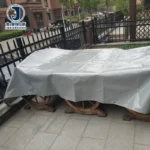
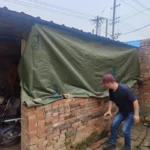
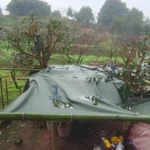
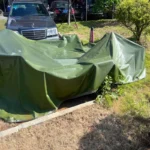
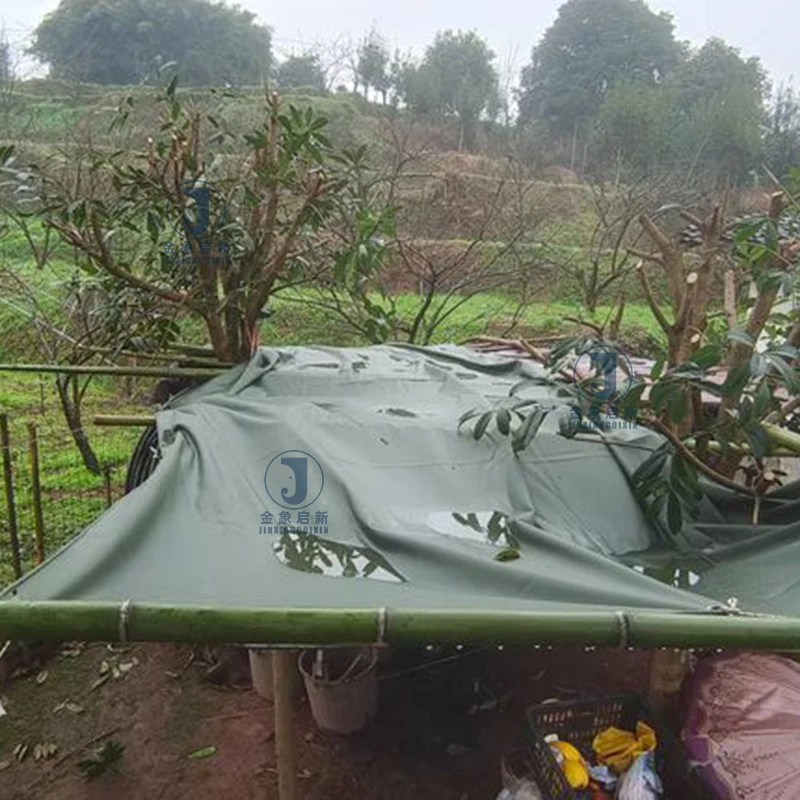
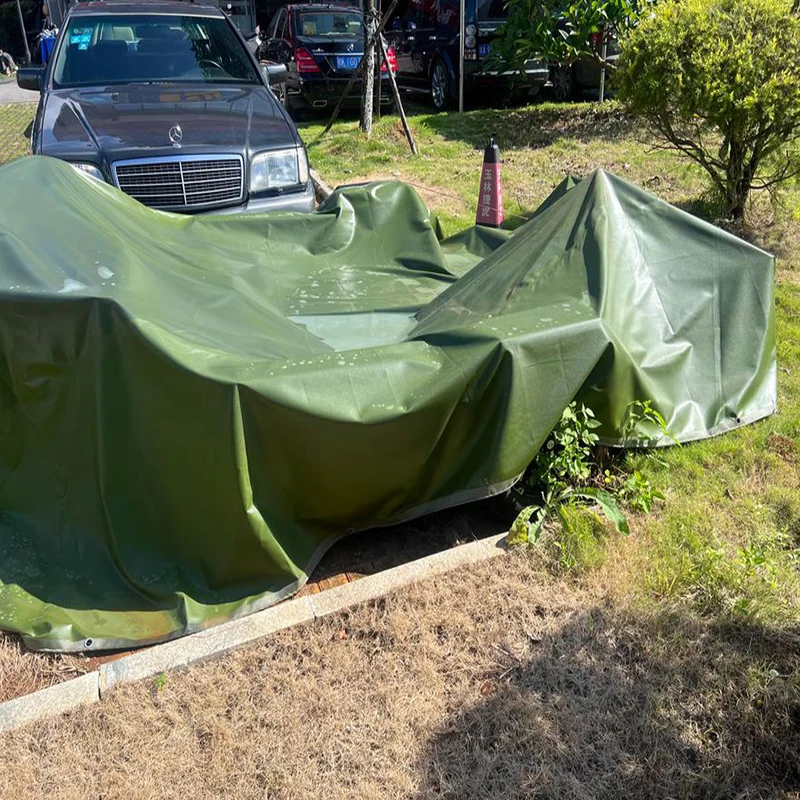
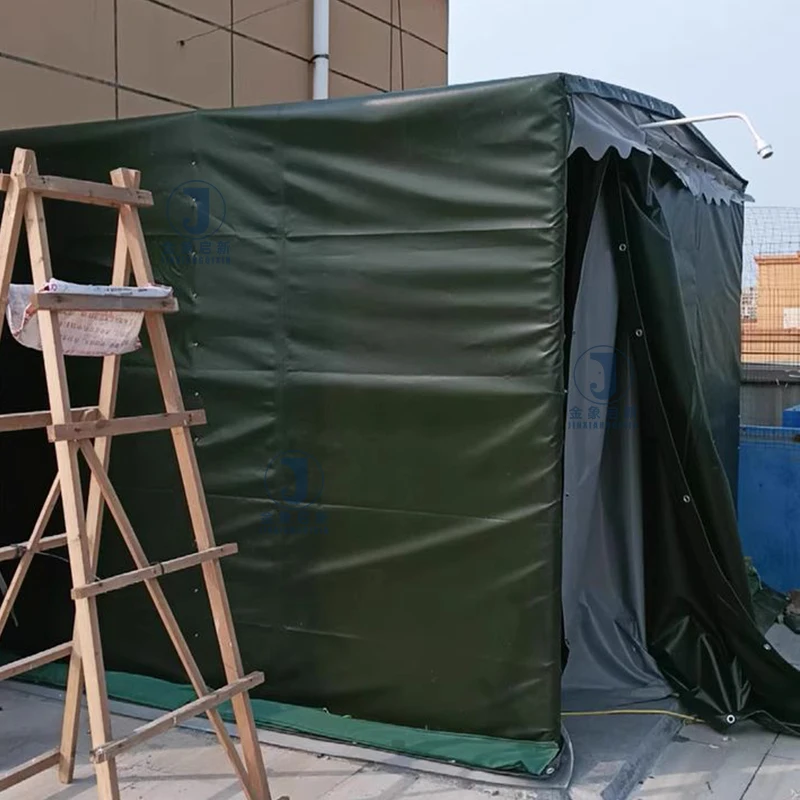
Deep Process Control Over Coated Fabric — Nearly 30 years of focused PVC coating expertise delivering consistent weight, adhesion and anti-static treatment for agricultural and specialist structure applications.
Technical Specifications
| Parameter | Value |
|---|---|
| Product Type | PVC Coated Tarpaulin |
| Coating Material | PVC |
| Base Fabric | Warp Knitted |
| Waterproof | Yes |
| Anti-Static | Claimed (test basis not stated — confirm required standard) |
| Tear Resistance | Claimed (test basis not stated — confirm required standard) |
| Flame Retardant | Available in flame retardant grades — confirm the grade required for your market |
| UV Treatment | Available — confirm test basis applicable to your market |
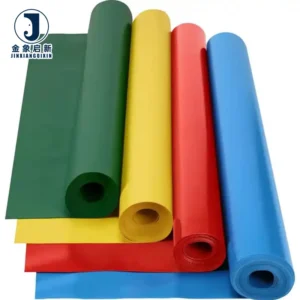
| Color | Customizable colors |
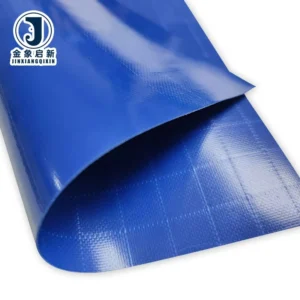
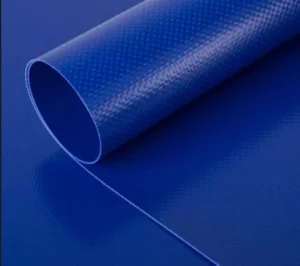
| Style | Plain woven / warp knitted |
| Certification | ISO, CE |
Application Suitability
| Application | Exposure & Requirement |
|---|---|
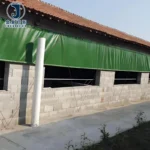
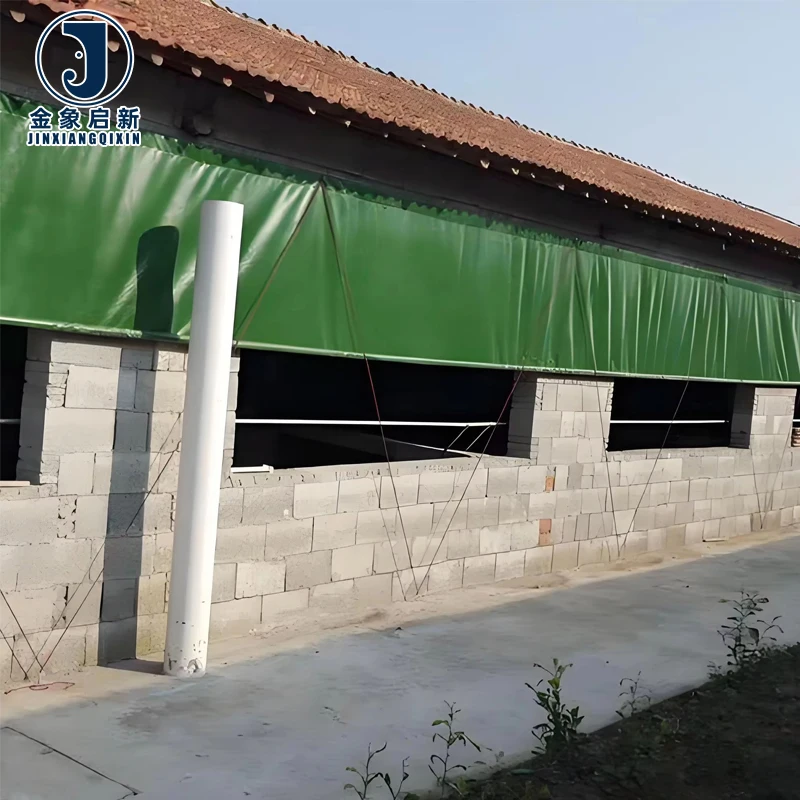
| Poultry and broiler farm side-wall covers | Continuous moisture, ammonia-rich atmosphere, dust accumulation requiring waterproof and anti-static membrane |
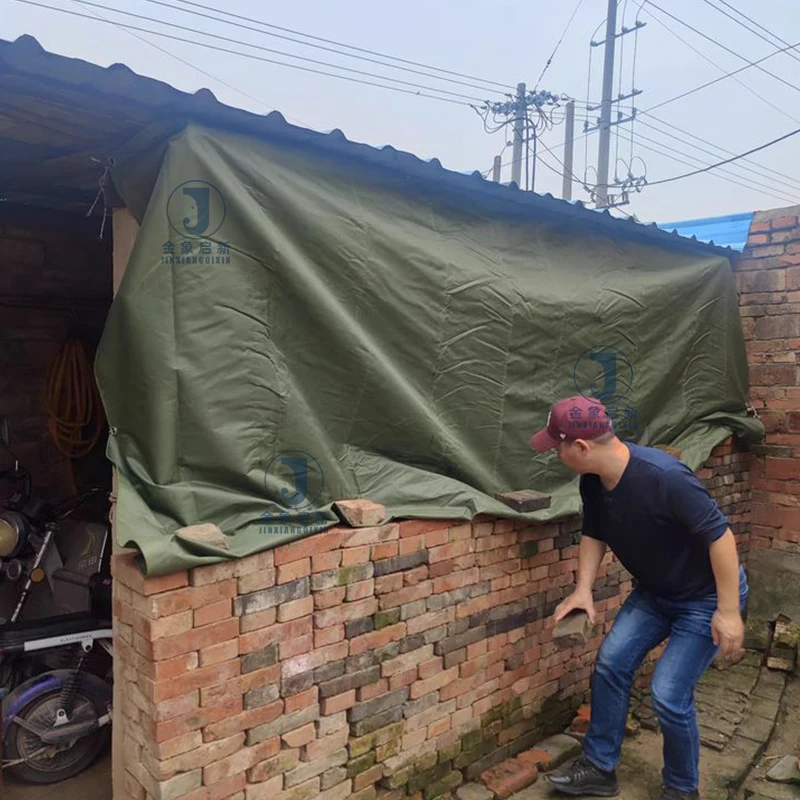
| Pig and sheep shelter enclosures | Year-round rain and wind exposure, mechanical stress from animal contact and frame flex |
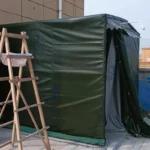
| Agricultural tent and temporary livestock housing | Rapid deployment and dismantling, seasonal UV exposure, wind load on large-span structures |
| Inflatable farm structure membrane | Internal air pressure, flex fatigue at inflation points, waterproof seal integrity |
Why Specifying the Wrong Anti-Static Grade Halts Your Farm Inspection
A farm cover without verified anti-static documentation is a compliance gap, not a fabric problem.
Poultry and enclosed livestock operations generate significant dust in confined spaces. Static discharge on unverified tarpaulin surfaces can pose ignition risks or disturb sensitive livestock environments. When an inspector requests the anti-static test report and the supplier cannot provide one, the entire structure fails approval — regardless of how well the fabric performs in other areas. [NEED_CITE: anti-static surface resistance testing standards for agricultural membranes]. Procurement teams routinely discover this gap at the inspection stage, after the cover is already installed, making remediation expensive and disruptive.
Moisture Barrier Integrity Across Livestock Environments
Poultry farms and enclosed livestock shelters operate under persistent moisture conditions from rainfall, condensation and washdown cycles. The PVC coated tarpaulin for agricultural enclosures must maintain a continuous waterproof barrier across the full installed surface, including welded seams. Warp knitted base fabric supports dimensional stability when the membrane is tensioned over frames, preventing the coating from micro-cracking at stress points. This construction approach addresses the flexing that occurs as structures respond to wind load and thermal expansion during seasonal temperature shifts.
Static Control in Dust-Prone Enclosed Structures
Anti-static treatment becomes critical when PVC tarpaulin is installed in enclosed agricultural buildings where feed dust and organic particulate accumulate on interior surfaces. Without verified surface resistance control, static buildup can attract excessive dust to the membrane, reducing light transmission and creating conditions that complicate cleaning routines. Buyers specifying PVC coated tarpaulin for poultry farm applications should request a test report that documents surface resistance values against a recognized standard applicable to their local agricultural building code. [NEED_CITE: surface resistance measurement methods for coated technical textiles]. Confirming this parameter before production prevents costly fabric replacement after installation.
How Base Fabric Construction and Coating Weight Interact
Warp knitted base fabric distributes mechanical stress across multiple yarn paths rather than along single warp or weft lines, which changes how the material responds to puncture and tear propagation. When a sharp object or frame edge contacts the fabric, the knitted structure limits the damage zone by engaging adjacent loops. The PVC coating weight, measured in GSM, determines the thickness of the waterproof barrier and contributes to overall stiffness, but coating weight alone does not define tear performance. A lighter coating on a denser warp knitted base may outperform a heavier coating on an open-weave fabric in tear resistance. Coating adhesion to the base fabric — controlled by the coating process parameters — determines whether the PVC layer delaminates under flex fatigue, which is the failure mode most commonly seen at welded seams in agricultural tent structures. Surface finish, whether glossy or matte, affects how dust and biological residue adhere to the membrane during service.
The Hidden Cost of Unverified Material Claims
When a quotation states anti-static or flame retardant properties without supporting test documentation, the buyer assumes compliance risk. Agricultural structures that fail inspection due to undocumented membrane properties require full re-covering — not patch repair — because the installed fabric cannot be retroactively certified. [NEED_CITE: agricultural building membrane compliance requirements for enclosed livestock structures]. Color variation between rolls ordered for the same facility becomes visible once panels are installed side by side on a large barn or poultry house, forcing selective replacement or acceptance of an inconsistent appearance. Welded seams that fail before the fabric itself tears typically indicate a mismatch between the heat welding parameters and the actual coating composition, which is why pre-shipment seam testing against the specified welding method matters before the rolls leave the factory.
Why Source Agricultural Membrane Through This Process
Coating weight and adhesion are controlled at every stage through a dedicated QA/QC process, ensuring the PVC layer bonds consistently to the warp knitted base across the entire roll length. Three full production lines with specialized coating equipment support volume orders for multi-building farm projects without splitting production across incompatible machines. A dedicated R&D team develops samples within days when custom color or anti-static treatment levels must be confirmed before bulk production commits. Every roll undergoes full inspection before dispatch, with documented verification of weight, coating integrity and seam test samples — not random batch checks. ISO and CE certified production processes provide the documentation trail that agricultural structure inspectors require when reviewing membrane compliance.
Documentation & Verification
- Material specification sheet stating GSM, base fabric type and PVC coating composition per roll
- Anti-static test report documenting surface resistance — confirm standard before ordering
- Flame retardant grade certificate aligned with your local agricultural building code requirements
- Pre-shipment inspection record confirming waterproof integrity and welded seam strength
- Certificate of origin and customs documentation for cross-border agricultural project shipments
- Roll packing list with batch traceability for color consistency verification across multi-roll orders
Fabrication, Handling & Storage
- Heat welding parameters must match the PVC coating composition — request the recommended temperature and dwell time for this warp knitted grade
- Store rolls upright on pallets to prevent compression marks on the PVC coating surface
- Unroll in ambient temperature conditions to avoid brittle handling damage in cold weather
- Clean installed farm covers with mild detergent — avoid solvent-based cleaners that degrade the anti-static treatment
- Repair field punctures with compatible PVC patches using the same heat welding method as the original seams
- Plan panel cutting layout to minimize offcuts, as custom-width rolls reduce seam count on large-span agricultural tents
What We Need to Prepare Your Quotation
Provide the structure type — poultry enclosure, livestock shelter or agricultural tent — along with the environmental exposure conditions at your site, including wind load expectations and dust concentration levels. Confirm the anti-static standard or surface resistance value required by your local agricultural building code so we can match the treatment formulation. Specify the roll width, color reference and total meterage needed for your project, and indicate whether you require sample rolls for welding parameter validation before bulk production begins.
Frequently Asked Questions
Q: What anti-static standard does this PVC tarpaulin meet, and can a test report be supplied?
A: Anti-static treatment is available for this warp knitted PVC coated fabric, but the specific standard must be confirmed at inquiry stage. We provide a test report documenting surface resistance values with every qualifying shipment. Share your local agricultural building code requirement so we can match the correct formulation before production.
Q: Is flame retardant certification available for agricultural structure compliance?
A: Flame retardant grades are available for this PVC coated tarpaulin range, with certification provided upon confirmation of the grade required by your market. Different regions enforce different building membrane standards for livestock structures. Specify your target compliance framework during inquiry so we produce and test to the correct classification.
Q: How is GSM verified on arrival — what documentation supports the quoted weight?
A: Every roll is weighed and inspected against the stated GSM before dispatch, and the pre-shipment inspection record documents these findings. The material specification sheet included with your shipment states the target coating weight and base fabric construction. This trail allows your receiving team to cross-check the documentation against physical measurements on arrival.
Q: What base fabric construction is recommended for agricultural tent structures under wind load?
A: Warp knitted base fabric is generally preferred for agricultural tent applications because it limits tear propagation by distributing stress across multiple yarn loops rather than along single weave lines. This construction suits structures that flex under wind load and thermal movement. Confirm your structural load calculations with our technical team before finalizing the base fabric specification.
Q: Can custom width and roll length be produced for large-span farm cover installations?
A: Custom widths and roll lengths are available for agricultural projects requiring large-span coverage with minimal on-site welding. Lead times depend on the color and treatment specification. Requesting custom dimensions reduces the number of field-welded seams on your structure, which improves waterproof integrity and installation speed.