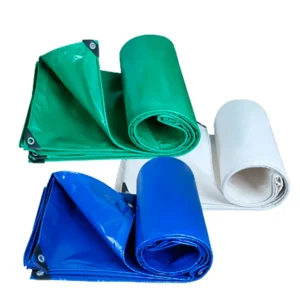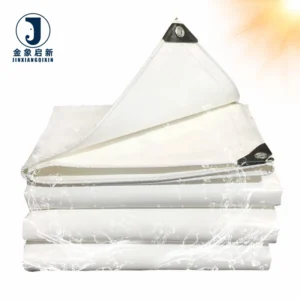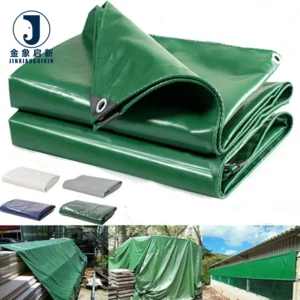
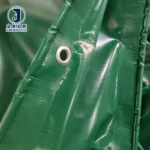
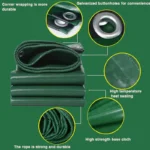

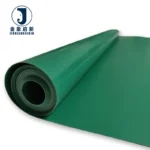
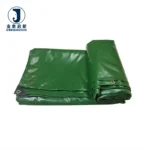

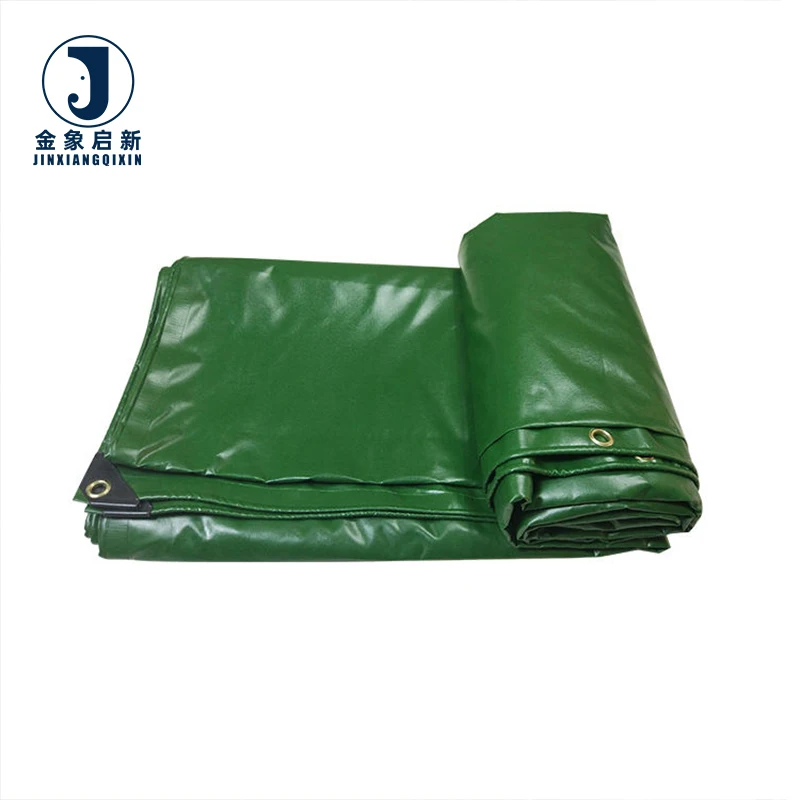
Roll-to-roll consistency — every production run of this PVC knife-coated fabric undergoes in-process weight and colour checks on all three lines before a single roll is cleared for dispatch.
Technical Specifications
| Parameter | Value |
|---|---|
| Product Type | PVC Knife-Coated Fabric |
| Coating Material | PVC |
| Base Fabric Denier | 500D (medium), 1000D (heavy-duty), 500D–2000D (super heavy) |
| Total Thickness | 0.35–0.45 mm (medium) / 0.70–1.0 mm (heavy-duty) / 1.2–1.5 mm (super heavy) |
| Weight (GSM) | 400–500 (medium) / 700–1000 (heavy-duty) / 1100–1500 (super heavy) |
| Tensile Strength (warp/weft) | 1500–2000 / 1200–1800 N/5cm (medium) (test basis not stated in source) |
| Tensile Strength (warp/weft) | 2000–2500 / 1800–2200 N/5cm (heavy-duty) (test basis not stated in source) |
| Tensile Strength (warp/weft) | 2500–3000 / 2200–2800 N/5cm (super heavy) (test basis not stated in source) |
| Waterproof Rating | Waterproof (rating not stated in source) |
| Anti-Mildew | Mildew proof and anti-aging (test basis not stated in source) |
| UV Treatment | Available — confirm the grade required for your market |
| Fire-Retardant / Anti-Static | Available in fire-retardant and anti-static grades — confirm the standard required for your project |
| Roll Width Options | 2m, 4m, 6m (6ft, 8ft, 10ft, 12ft) |
| Roll Length Options | 100 yards, 100 meters, or custom |
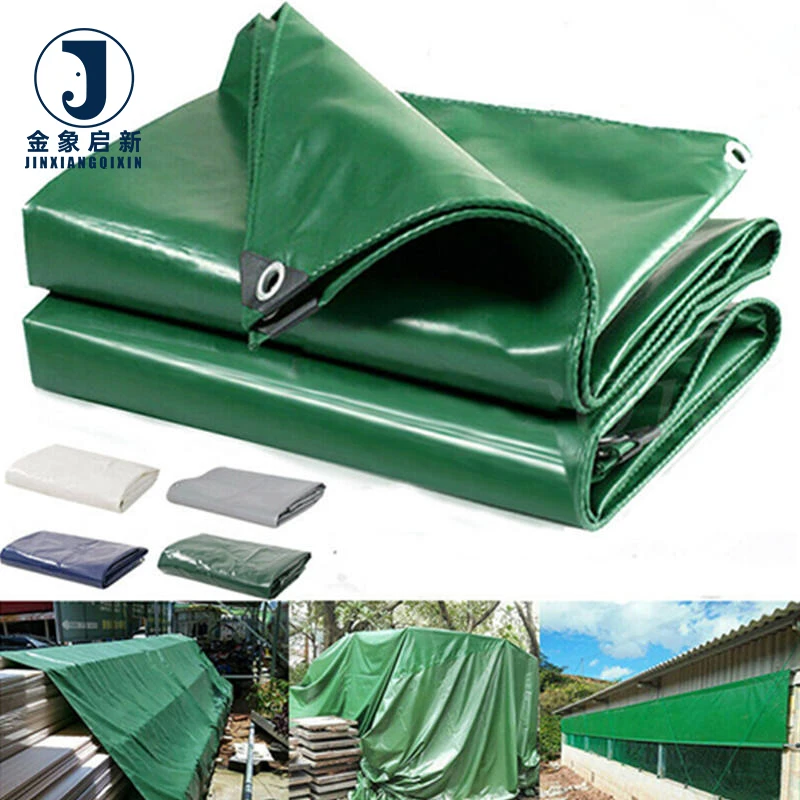
| Colour Options | Blue, Blue/Orange, Green, Grey, Black, Clear, Grey/Green, Orange, or custom |
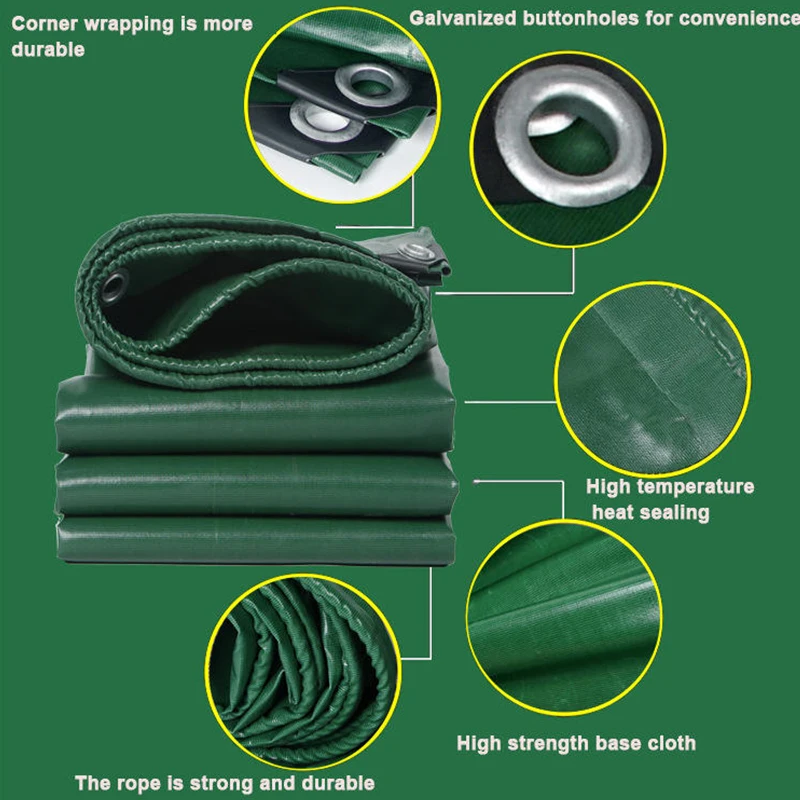
| Edge & Eyelet Options | PP rope reinforced hem, galvanized eyelets every 3ft or 1m, reinforced plastic corners |
| Certifications | ISO, CE |
Application Suitability
| Application | Exposure & Requirement |
|---|---|
| Mining and tunnelling ventilation ducts | Continuous airflow, underground humidity, strict fire-retardant and anti-static compliance on site |
| Tensioned membrane structures | Long-term tensile load, wind uplift, UV exposure, architectural appearance standards |
| Inflatable and temporary structures | Repeated inflation cycles, internal air pressure stress, rapid deployment and packing |
| Aviation ventilation systems | Confined-space airflow, regulatory fire classification, low smoke emission requirements |
| Industrial pipe canopy covers | Permanent outdoor weather, chemical exposure from process piping, mechanical abrasion from wind-blown debris |
What Certified Fire-Retardant and Anti-Static Really Means for Your Ventilation Duct
A flame-retardant claim on a quotation is worthless unless it is backed by a test report referencing the standard your site inspector will check.
Mining and tunnelling contractors regularly face a situation where the PVC coated tarpaulin fire retardant or anti-static fabric arrives on site, and the safety officer asks for the test certificate — only to discover none was supplied, or the report references a standard that does not match local regulation. This is not a paperwork inconvenience. It halts installation, triggers a rejection, and forces a re-order under time pressure. [NEED_CITE: mine ventilation duct fire safety standards and compliance documentation]
The PVC knife-coated fabric described here is available in fire-retardant and anti-static grades, but the specific grade must be matched to the compliance framework your project mandates. State the standard at inquiry stage so the correct formulation and test documentation are prepared before production begins.
Matching Fabric Grade to Airflow and Structural Load
Ventilation duct diameter and operating static pressure determine the tensile load on the fabric. For smaller-diameter auxiliary ducts in development headings, medium-duty grades in the 400–500 GSM range provide adequate strength while keeping weight manageable for hanging and repositioning. Main intake ducts in deep-level mining, where duct diameters are larger and operating pressures higher, require heavy-duty or super-heavy grades to resist bursting at the seam and maintain shape under sustained negative pressure. Selecting the wrong PVC knife-coated fabric tier leads to duct collapse mid-shift, stopping airflow to the working face.
Anti-Static Surface Resistance for Underground Compliance
In environments where combustible dust or flammable gases are present, static charge accumulation on duct surfaces introduces an ignition risk that goes beyond fire-retardant chemistry. Anti-static treatment alters the surface resistivity of the coated fabric, allowing charge dissipation before it reaches dangerous levels. The specific surface resistance value your operation requires depends on the regulatory framework governing your site — request the test report that corresponds to your standard. [NEED_CITE: anti-static surface resistance test methods for coated fabrics in mining ventilation]
Reading the Specification Sheet Beyond GSM
Weight per square metre is only one part of the performance picture. A 900 GSM fabric woven from 500D yarn will behave differently under tensile load than a 900 GSM fabric woven from 1000D yarn, because the base fabric construction — denier, thread count, and weave density — governs how force distributes across the material. The knife-coating process used for this PVC coated tarpaulin fire retardant range penetrates and encapsulates the base fabric rather than sitting as a surface film, which directly influences peel strength and the behaviour of the material at heat-welded seams. When evaluating options, request the full material specification sheet showing base fabric denier, coating weight, and total GSM as separate line items so you can compare constructions accurately rather than relying on weight alone. [NEED_CITE: tensile and tear test methods for coated fabrics per ISO 1421]
The Cost of Specifying Without Documentation
Ventilation duct fabric that lacks the fire-retardant or anti-static certification the site requires does not merely delay a single installation — it cascades into project-wide consequences. A rejected duct run means re-procurement under compressed timelines, expedited freight charges, and idle crews waiting underground for replacement material. Batch-to-batch colour variation across rolls in a membrane structure order becomes visible once panels are installed side by side, forcing partial dismantling and panel replacement. Welded seams that fail before the fabric does, typically at the flex point where the duct bends around a corner, create air leaks that reduce effective airflow volume and force the fan to work harder, increasing energy consumption and accelerating fan wear. [NEED_CITE: common failure modes in industrial ventilation duct installations]
Why Source This PVC Coated Tarpaulin Fire Retardant Fabric Here
Deep process control over coating weight and adhesion across three full production lines means that the GSM and fire-retardant formulation stated on the quotation are the same values measured at pre-shipment inspection — roll by roll, not as a batch average.
A dedicated 10-person R&D team handles material selection for specialised applications, from matching a membrane structure architect’s colour reference to formulating a duct fabric that meets a specific mining regulation’s anti-static threshold.
Every roll is inspected at each production stage, with a 100% pre-shipment check covering weight, colour consistency, and seam integrity before dispatch — not a spot-check on a sample pulled from the batch.
Custom roll widths up to 6 metres and lengths beyond standard 100-metre rolls are supported without prohibitive minimums, reducing the number of field welds required on large membrane panels.
Full documentation packages — material specification sheets, test reports matched to your stated standard, certificates of origin, and customs paperwork — ship with the consignment rather than being requested after the container has already left the port.
Documentation & Verification
- Material specification sheet stating exact GSM, base fabric denier, coating method, and colour reference for every roll in the shipment
- Fire-retardant and anti-static test reports referencing the specific standard stated at order confirmation
- 100% pre-shipment inspection record with roll-by-roll weight and visual verification
- ISO and CE certificates included as standard documentation with every consignment
- Certificate of origin and customs support documents prepared before dispatch
- Roll packing list detailing individual roll dimensions, weights, and batch numbers
Fabrication, Handling & Storage
- Heat-weld parameters must be adjusted for the specific GSM grade — super-heavy 1100–1500 GSM rolls require higher temperature and longer dwell time than medium-duty stock
- Galvanized eyelets spaced every 1 metre on PP rope reinforced hems distribute tie-down load across the coated edge without tearing through the fabric
- Store rolls upright on pallets in a dry, shaded area to prevent flat-spotting and surface adhesion between adjacent layers of the PVC coating
- Allow cold-stored rolls to reach ambient temperature before unrolling to prevent cracking of the PVC coating at the fold line
- Cut membrane panels from 6m-wide rolls to minimise the number of heat-welded field seams required on large tensioned structures
- Clean with mild detergent and soft brush only — abrasive cleaners will damage the surface treatment and reduce anti-static performance
How to Structure Your Enquiry
To receive an accurate specification recommendation, provide the application type — ventilation duct, membrane structure, or inflatable — along with the operating environment and any fire-retardant or anti-static standard your site mandates. Specify the required roll width, total linear metres, and colour reference so that production can be planned against current raw material availability. If you need finished panels with welded seams and eyelets rather than raw rolls, include dimensional drawings or a cutting schedule so the fabrication team can assess weld line placement and material utilisation before quoting.
Frequently Asked Questions
Q: What fire-retardant grade and certification can you provide for mining and tunnelling ventilation duct fabric?
A: Fire-retardant treatment is available in multiple grades. State the specific standard your site requires — for example, the regulation referenced in your mine’s safety management plan — at the enquiry stage. The production team will formulate to that grade and include the matching test report with the shipment. Different jurisdictions mandate different classification systems, so early specification avoids costly re-orders.
Q: How do you verify anti-static surface resistance and which standard does it meet?
A: Anti-static treatment modifies the surface resistivity of the PVC coating. The test method and pass/fail threshold depend on the regulatory framework governing your operation. Request documentation for the specific standard at enquiry so the correct formulation is applied and tested before your rolls enter production.
Q: What GSM and denier should I specify for a tensioned membrane structure versus an inflatable application?
A: Tensioned membrane structures typically require super-heavy grades with higher warp tensile strength to sustain long-term pre-stress, while inflatable applications prioritise tear resistance and repeated flex durability. Provide your structural engineer’s load calculations so the R&D team can recommend the appropriate denier and weight combination.
Q: Can you supply custom roll widths and lengths for large membrane structure panels, and what is the minimum order?
A: Roll widths up to 6 metres and custom lengths are available, reducing the number of field welds on large panels. Minimum order quantities vary by colour and treatment specification. Confirm your required width and total linear metres at enquiry for an accurate lead time and production schedule.
Q: How do you ensure batch-to-batch colour and coating weight consistency across multiple rolls in one order?
A: In-process quality checks on coating weight and colour are performed on every roll across all three production lines. A 100% pre-shipment inspection verifies roll-by-roll consistency before dispatch. If your project demands panels from a single production batch, state this requirement at order confirmation so production can be scheduled accordingly.