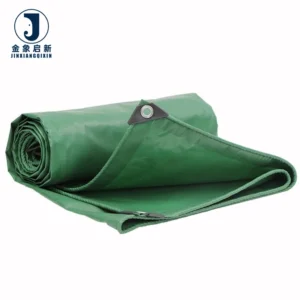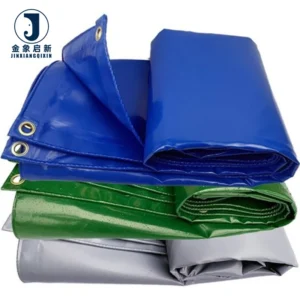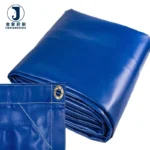
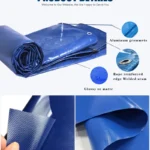
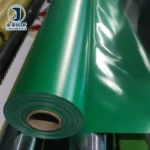
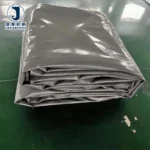
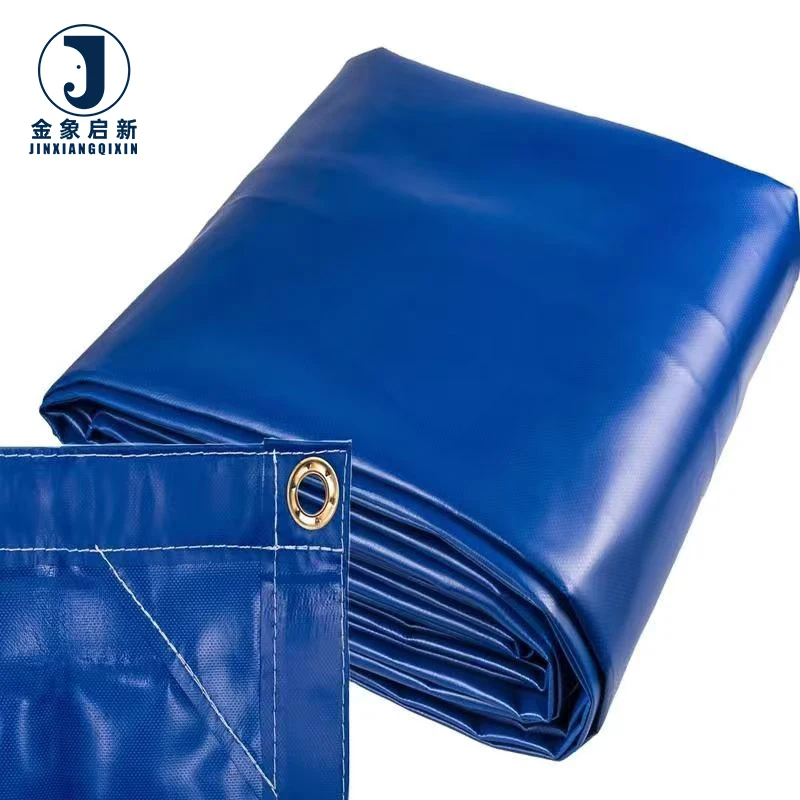
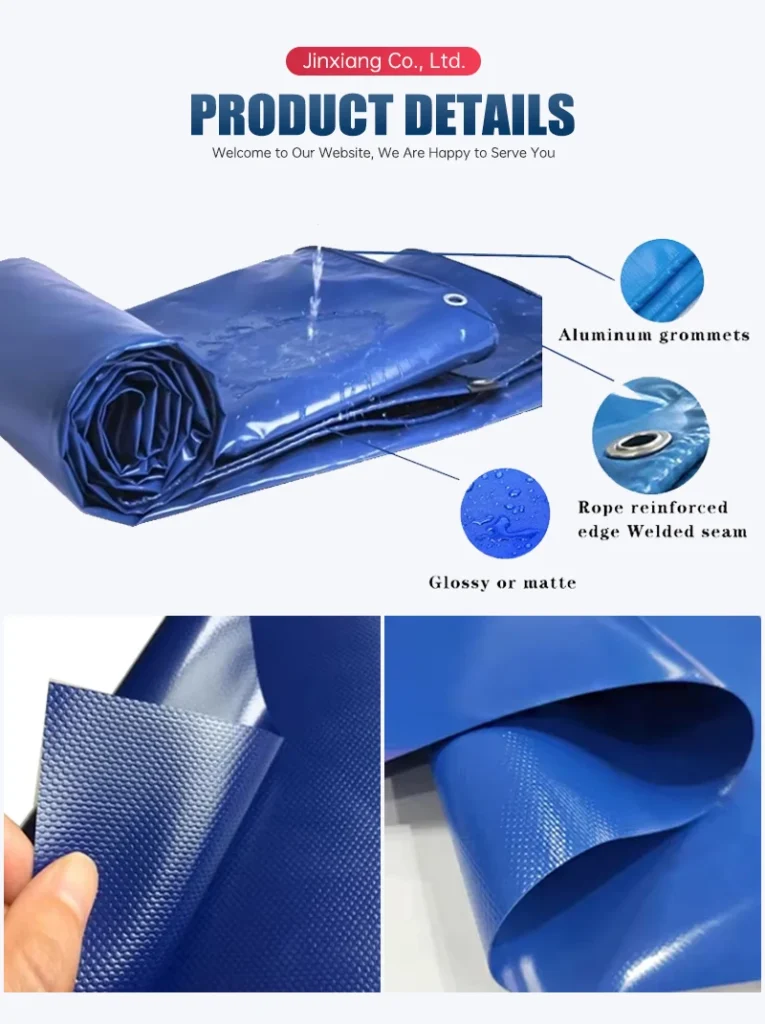
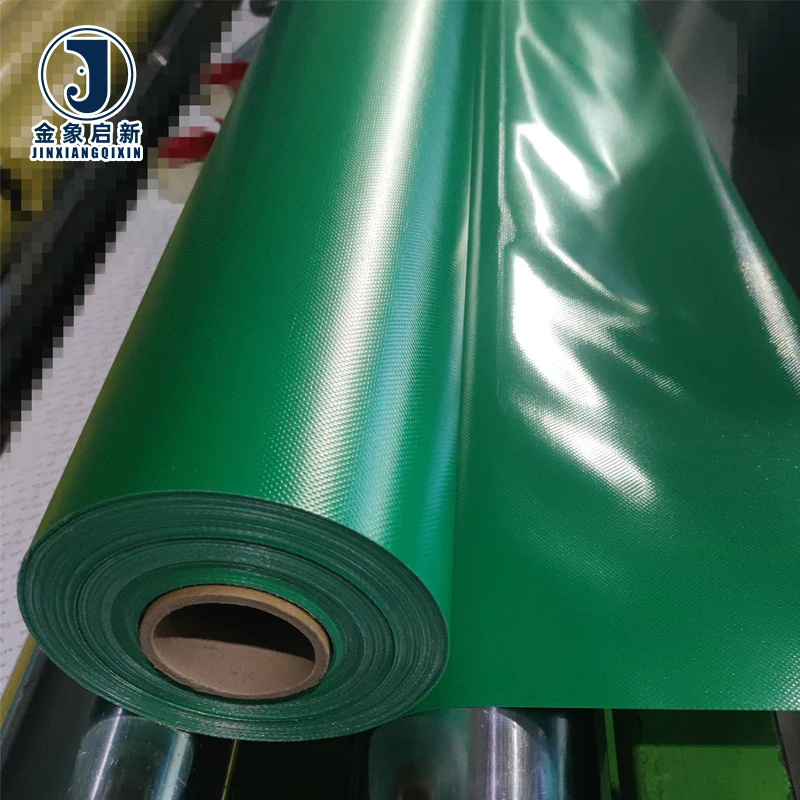
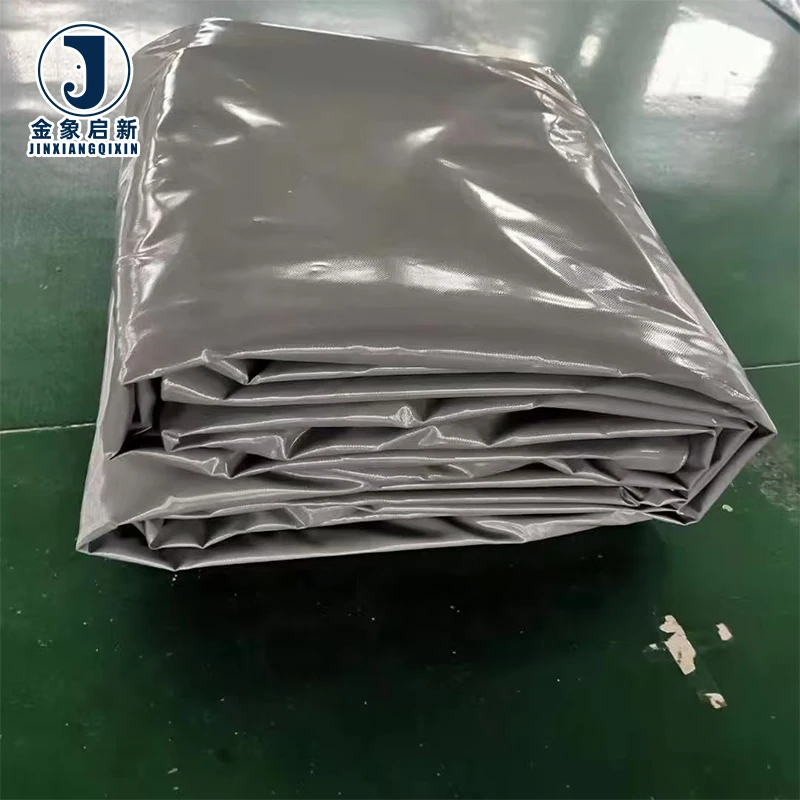
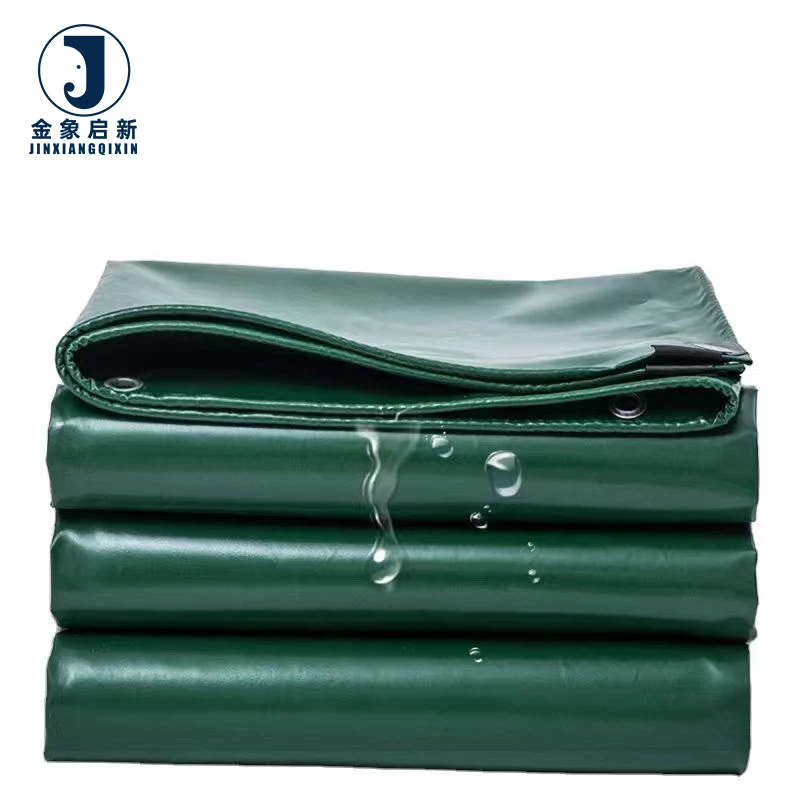
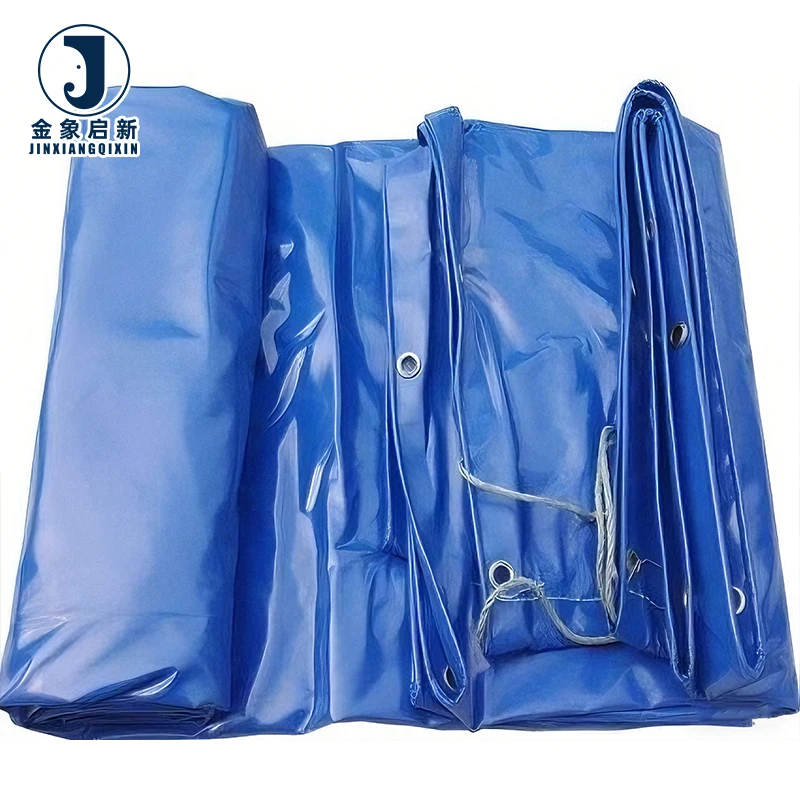
Coating Weight Control — Deep process oversight across three production lines ensures the PVC coating weight and adhesion meet specification on every roll, verified before dispatch rather than assumed from the quotation.
Technical Specifications
| Parameter | Value |
|---|---|
| Product Type | PVC Tarpaulin Roll |
| Weight (GSM) | 500 to 800 g/m² |
| Coating Material | PVC coated polyester fabric |
| Waterproof Rating | Anti-permeable ≥20 KPa |
| Flame Retardant | ≤10 seconds (grade not stated — confirm required standard) |
| Low-Temperature Flexibility | Not fractured at -30°C |
| Seam Method | Heat combined with high-frequency welding |
| Chemical Resistance | Acid, alkali and brine corrosion |
| Anti-Mildew | Stated (grade not stated — confirm target requirement) |
| Certifications | ISO, CE |
Application Suitability
| Application | Exposure & Requirement |
|---|---|
| Mining ventilation duct | Continuous positive and negative pressure, underground moisture, fire-retardant compliance |
| Tunnelling exhaust systems | High humidity, chemical-laden air, restricted-space installation |
| Aviation ground support ducting | Fuel vapour proximity, anti-static compliance, rapid deployment and retraction |
| Inflatable specialist structures | Cyclic inflation stress, wind loading, UV exposure during extended outdoor siting |
| Membrane roof and enclosure | Sustained tension, thermal expansion cycles, weather exposure |
Why Supplying Ventilation Duct Without a Fire Certificate Is a Liability, Not a Saving
A duct without a test report matching your site’s required standard is a duct that cannot legally be installed.
Mining and tunnelling projects specify fire-retardant and anti-static ventilation duct for clear reasons: underground environments concentrate combustible dust and flammable gases, and any ignition source can propagate through fabric that does not self-extinguish. Yet suppliers routinely ship PVC coated tarpaulin with a flame retardant claim on the invoice and no supporting test documentation. The result is a material that sits in the yard until the site safety officer rejects it, delaying the project and forcing a re-order under pressure [NEED_CITE: underground ventilation fire classification standards by jurisdiction].
Fire-Retardant and Anti-Static Compliance Starts at the Specification Stage
Ventilation duct in mining, tunnelling and aviation environments must meet fire-retardant standards that vary by jurisdiction — M2 in France, B1 under DIN 4102 in Germany, NFPA 701 in the United States, or local mining regulations in Australia and South Africa. The PVC coated tarpaulin fire retardant / anti-static / certified range is formulated to meet these requirements, but the correct grade must be confirmed before production begins. A generic "flame retardant" label on a quotation does not satisfy a site inspector who needs a test report referencing a specific standard [NEED_CITE: DIN 4102 fire classification for building materials].
Anti-Static Surface Resistance for Hazardous Atmospheres
In coal mining and certain chemical processing environments, static charge accumulation on duct surfaces creates a spark risk that fire retardancy alone does not address. Anti-static treatment is specified as a surface resistance value, and the test method and acceptable range differ between national mining codes. When sourcing PVC coated tarpaulin fire retardant / anti-static / certified fabric for these applications, the enquiry must state the target surface resistance so the correct additive loading is applied during coating.
Reading the Specification Sheet for Duct Fabric
The weight of 500 to 800 g/m² determines the fabric’s handling characteristics and pressure-holding capacity, but it does not act alone. Base fabric denier and weave density govern tensile and tear strength — two rolls at the same GSM can perform very differently if one uses a higher-denier yarn in a tighter weave. The PVC coating method, whether knife-over-roll or dip-coating, controls the coating-to-fabric adhesion and therefore the peel strength at heat-welded seams, which is critical when a duct flexes under cyclic fan pressure. Low-temperature flexibility at -30°C means the coating will not embrittle and crack in cold-environment tunnelling or high-altitude mining sites, preserving the air-tight integrity of the duct. Chemical resistance to acid, alkali and brine extends service intervals where mine water or process atmospheres would otherwise degrade untreated fabric [NEED_CITE: tensile and tear test methods for coated fabrics per ISO 1421].
The Hidden Cost of Specifying Duct Fabric on Price Alone
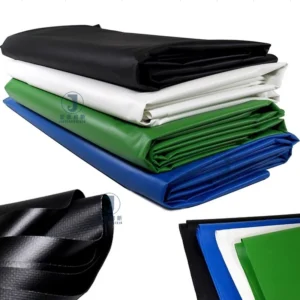
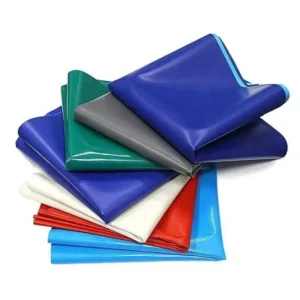
When ventilation duct is sourced on unit price without verifying fire-retardant grade or anti-static compliance, the first consequence usually appears at the site inspection, not during installation. A rejected duct means the ventilation system cannot be commissioned, idling the face and burning shift costs while replacement material is sourced on emergency lead times. Colour and surface finish inconsistencies between rolls may seem cosmetic, but on a visible membrane structure or inflatable enclosure they signal uneven coating weight, which correlates with inconsistent weld strength and premature seam failure at flex points [NEED_CITE: coated fabric seam failure modes under cyclic loading].
Why Sourcing Duct Fabric Through Jinan Jinxiang Works for Specialist Projects
Three full production lines and 36 sets of professional equipment give the factory the capacity to hold delivery schedules on bulk duct orders without sacrificing batch consistency. A dedicated 10-person R&D team develops material formulations matched to specific fire-retardant and anti-static requirements, producing samples within days rather than weeks. Every roll passes through stage-by-stage QA with 100% pre-shipment inspection, meaning GSM, coating weight and surface treatment are verified before the material leaves the facility — not assumed from a production ticket. Nearly three decades of focused coated fabric production translates into process knowledge that shows up in repeatable weld behaviour and predictable material performance on site.
Documentation & Verification
- Material specification sheet stating exact GSM, base fabric denier, coating weight and treatment details
- Fire-retardant test report referencing the specific standard required for your project (M2 / B1 / NFPA 701 / DIN 4102)
- Anti-static surface resistance test data matched to mining or hazardous environment regulations
- Pre-shipment inspection record with 100% QA coverage and roll-by-roll weight verification
- ISO and CE certificates accompanying each shipment for customs and compliance purposes
Fabrication, Handling & Storage
- Heat combined with high-frequency welding parameters must be matched to the 500 to 800 g/m² coating weight for full seam fusion
- Anti-permeable rating ≥20 KPa demands continuous weld lines without pinholes at duct joints and branch connections
- Rolls stored flat or upright on core, never stacked horizontally, to prevent coating compression marks that weaken at fold lines
- Low-temperature flexibility to -30°C allows cold-climate transport, but rolls must be unrolled above 5°C for fabrication
- Chemical resistance to acid, alkali and brine permits on-site cleaning with mild detergents; avoid solvent-based cleaners on PVC coating
Specifying Your Ventilation Duct or Structure Project
Provide the target fire-retardant standard and any anti-static surface resistance requirement so the correct PVC coated tarpaulin fire retardant / anti-static / certified grade is selected. Confirm the required width, roll length and colour, and whether you need raw roll stock or finished duct sections fabricated to your drawings. Share annual volume estimates and destination country so compliance documentation is prepared alongside the material specification.
Frequently Asked Questions
Q: Which flame retardant grade does this PVC coated tarpaulin meet?
A: The fabric is formulated with flame retardant achieving ≤10 seconds extinction time, but the specific grade — M2, B1 per DIN 4102, NFPA 701 or another standard — must be confirmed for your market before production. Provide your project specification and we will supply a test report matching the required classification.
Q: How is anti-static surface resistance verified for mining duct compliance?
A: Anti-static treatment is applied during coating and verified by surface resistance testing per the standard your mining authority requires. Share the target resistance range from your site regulations, and the test report will be included with the shipment documentation to support your compliance submission.
Q: How is GSM verified to ensure roll-to-roll consistency?
A: Every roll undergoes weight verification during pre-shipment inspection against the stated GSM on the material specification sheet. The inspection record ships with your order, giving you documented confirmation that each roll meets the quoted weight before it reaches your fabrication facility.
Q: What seam method ensures duct integrity under positive and negative pressure?
A: Heat combined with high-frequency welding fuses the PVC coating layers across the full seam width, creating a bond that matches or exceeds the parent fabric strength. This method prevents delamination at flex points where ducts expand and contract under cyclic fan operation, maintaining air-tight performance.