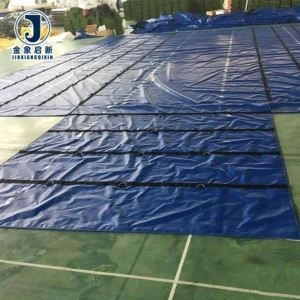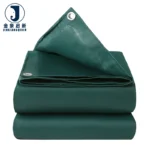



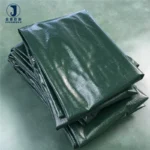
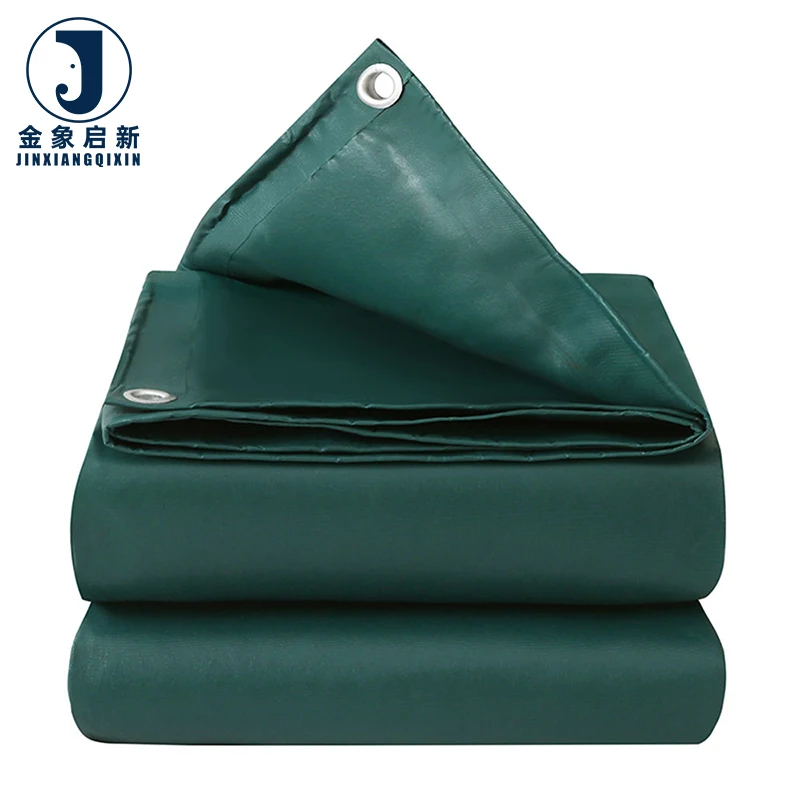

Technical Process Control — nearly three decades focused on coated fabric production with documented coating weight, adhesion and colour consistency checks across every roll leaving the facility.
Technical Specifications
| Parameter | Value |
|---|---|
| Product Type | PVC Coated Tarpaulin |
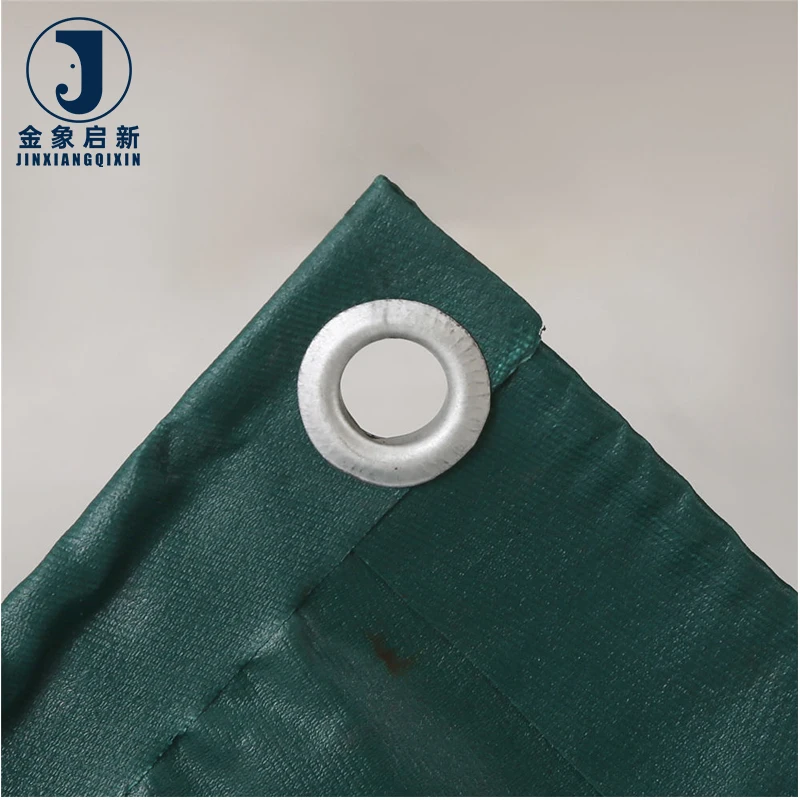
| Material | PVC + High-strength polyester mesh fabric |
| Coating Method | Laminated technology & Hot-melt Coating technology |
| Weight (GSM) | 350gsm / 420gsm / 500gsm / 550gsm / 600gsm / 750gsm |
| Total Thickness | 0.32mm / 0.35mm / 0.4mm / 0.45mm / 0.5mm / 0.65mm |
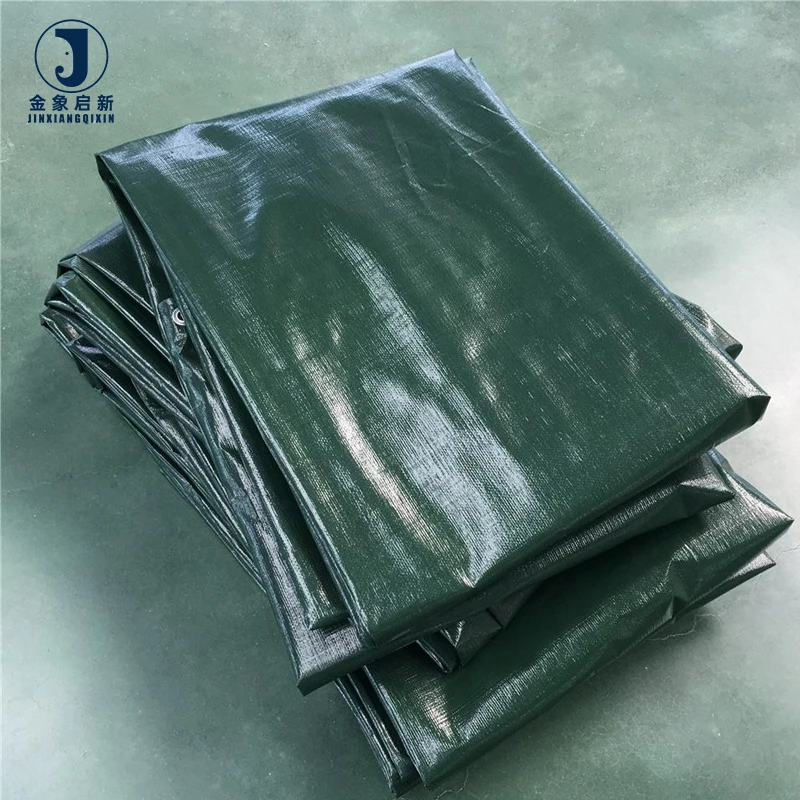
| Roll Width | 2m / 2.1m |
| Roll Length | 75m (for 2m width) / 50m (for 2.1m width) |
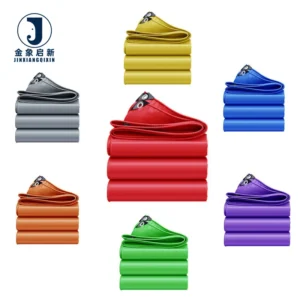
| Color | Blue / Red / Yellow / Light blue / Grey (Customized) |
| Key Features | Waterproof, Anti-mildew, Anti-static, Cold crack resistance |
| Flame Retardant | Available as special treatment (grade not stated in source) |
| UV Treatment | Sunproof claimed (test basis not stated in source) |
| Service Life | 3-7 years under normal circumstances |
| Standards | ISO, CE |
Application Suitability
| Application | Exposure & Requirement |
|---|---|
| Mining and tunnelling ventilation ducts | Continuous airflow, underground humidity, mandatory fire-retardant and anti-static compliance |
| Construction site enclosures | Wind loading, scaffold abrasion, UV and rain exposure, flame retardant site regulations |
| Refinery and plant maintenance covers | Chemical-laden atmosphere, static discharge risk, hot work proximity |
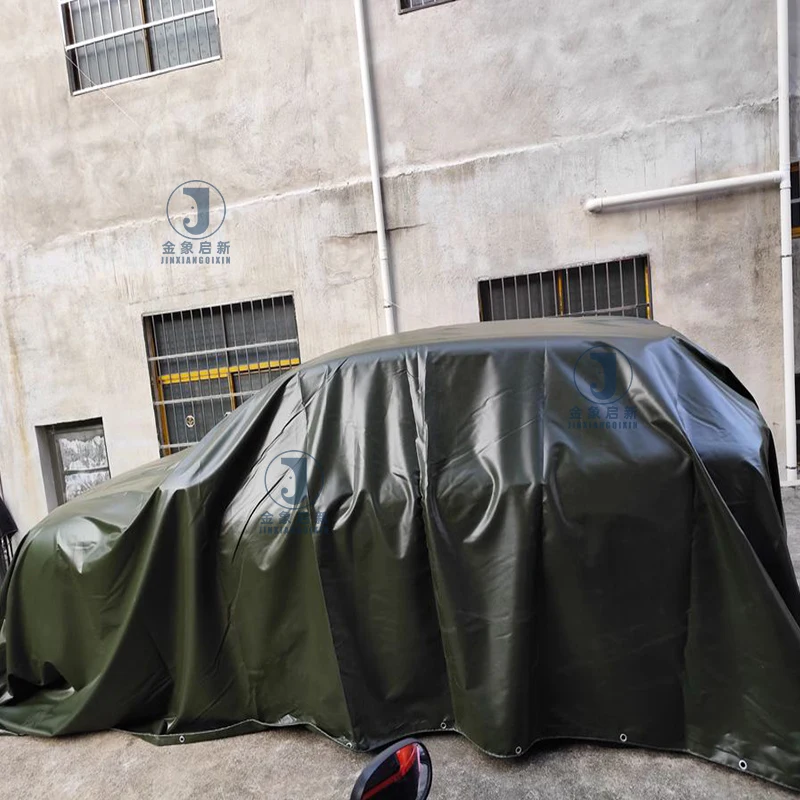
| Temporary industrial tarp covers | Repeated deployment and folding, mechanical abrasion, moisture ingress |
| Membrane and inflatable structures | Tensile loading at anchor points, UV exposure, weld integrity under air pressure |
| Truck awning and side curtain fabric | Road vibration, flex fatigue at tie-down points, weather and UV exposure |
What "Flame Retardant" Means Without a Grade Behind It
A PVC coated tarpaulin fire retardant claim is only as reliable as the test report that backs it.
Site safety officers and project engineers increasingly reject fabric deliveries that carry a flame retardant label without a matching classification. Mining ventilation ducts, construction enclosures and refinery covers each operate under different fire safety regimes, and a generic claim does not satisfy the inspection checklist. When the delivered PVC coated tarpaulin fire retardant documentation lacks a traceable grade, the entire batch can be held at the gate — delaying installation and exposing the contractor to compliance risk. [NEED_CITE: DIN 4102 fire classification for building materials]
Hot-Melt Coating and Weld Integrity at Flex Points
Ventilation ducts and site enclosures place sustained stress on welded seams. The hot-melt coating technology used in this PVC coated tarpaulin fabric drives deeper adhesion between the PVC layer and the high-tenacity polyester mesh, producing a bond that resists delamination when the fabric flexes under air pressure or wind load. Laminated coating is also available for applications where a smoother surface finish is prioritised.
Anti-Static Treatment for Underground and Refinery Environments
Mining and tunnelling projects routinely specify anti-static fabric to prevent charge accumulation in duct systems. This PVC coated tarpaulin is available with anti-static treatment; surface resistance values should be confirmed against your project specification before production begins. Pairing anti-static treatment with flame retardant grades provides a dual-compliance fabric suitable for environments where both properties are mandated.
Reading GSM and Thickness Together
GSM alone does not define strength. A 550gsm fabric with a dense base weave may outperform a 600gsm fabric built on a looser mesh. The six weight options — from 350gsm at 0.32mm to 750gsm at 0.65mm — span applications from lightweight temporary covers to heavy-duty ventilation duct and enclosure panels. Selecting the correct grade requires matching both tensile demand and fabrication method, since heavier weights need higher heat input during welding and heavier-duty sewing machines for stitched seams. [NEED_CITE: tensile and tear test methods for coated fabrics per ISO 1421]
The Cost of Specifying on Weight Alone
Choosing a PVC coated tarpaulin based solely on GSM leaves critical variables uncontrolled. A lighter-coated fabric may arrive below the quoted weight, failing the receiving inspection and forcing a reorder that delays the project timeline. Flame retardant treatment added as an afterthought — rather than engineered into the coating formulation — can compromise adhesion and reduce weld strength. Colour variation between rolls in the same shipment becomes visible once panels are installed side by side, requiring selective replacement that inflates both material and labour cost. [NEED_CITE: coated fabric batch consistency and colour fastness standards]
Why Source This Fabric Through Jinxiang
Three full production lines and 36 sets of professional equipment support bulk roll output with maintained coating consistency across the run. A dedicated ten-person R&D team handles material selection and sample development, producing samples within days for custom width, colour or treatment requirements. Quality assurance checkpoints at every production stage — followed by 100% pre-shipment inspection — catch weight deviation, colour drift and coating defects before rolls are packed. ISO and CE certifications are maintained and shipped as part of the documentation package.
Documentation & Verification
- Material specification sheet stating GSM, base fabric type, coating method and colour reference per roll
- Test report for flame retardant grade where applicable, matched to target market requirements
- Anti-static surface resistance documentation when treatment is specified
- ISO and CE certificates included in the shipment documentation package
- Pre-shipment inspection record confirming weight, colour and dimensions against the purchase order
Fabrication, Handling & Storage
- Hot-melt coated grades require adjusted heat settings at weld seams to achieve full adhesion without scorching the PVC surface
- Roll width of 2m or 2.1m determines panel layout and seam count for large-area enclosures and duct sections
- Store rolls upright on end caps to prevent flat-spot deformation on the outer wrap layers
- Cold crack resistance allows deployment in low temperatures, but unroll gradually to avoid crease damage
- Anti-mildew treatment reduces biological growth during storage, though rolls should remain in dry, ventilated conditions
Preparing Your Specification Enquiry
To match the correct GSM grade, coating method and treatment package to your project, please share the application environment, relevant fire safety or anti-static standards, required roll width and estimated annual volume. If finished panels with welded seams or specific edge treatments are needed, provide dimensional drawings so that fabrication requirements can be confirmed before production.
Frequently Asked Questions
Q: How can I verify the flame retardant grade meets my local fire safety code?
A: Request a test report for the specific flame retardant grade applied to your batch. Different markets require different classifications, so confirm the standard your project references — such as DIN 4102 or NFPA 701 — and ask for documentation showing the fabric meets that exact grade before production is scheduled.
Q: What anti-static surface resistance can be achieved for mining ventilation ducts?
A: Anti-static treatment is available as a special option. The achievable surface resistance range depends on the treatment formulation and the GSM grade selected. Provide your project specification or site safety standard so the correct formulation can be matched and documented before the production run begins.
Q: How is GSM verified to ensure the delivered fabric matches the quotation?
A: Every roll undergoes weight verification during pre-shipment inspection. The inspection record, included with shipment documentation, confirms the measured GSM against the agreed specification. This prevents the common issue of material arriving lighter than quoted.
Q: What roll dimensions are available, and how do they affect duct fabrication?
A: Rolls are produced at 2m width by 75m length or 2.1m width by 50m length. The chosen width determines how many longitudinal welds are needed for a given duct diameter, while roll length affects the number of circumferential joins. Specify the target duct dimensions so the most efficient roll size can be selected.
Q: What is the difference between hot-melt and laminated coating for weld performance?
A: Hot-melt coating bonds the PVC directly into the polyester mesh under heat, producing higher adhesion and stronger weld seams. Laminated coating applies a pre-formed PVC film to the mesh, yielding a smoother surface. Hot-melt is generally preferred for applications where weld integrity under flex load is critical.