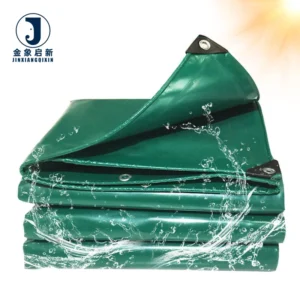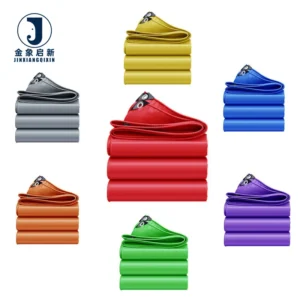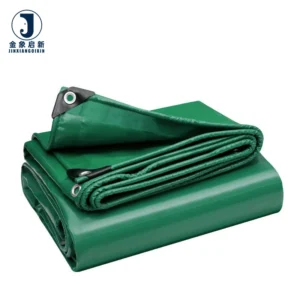
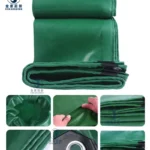

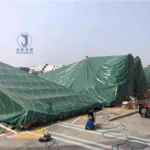
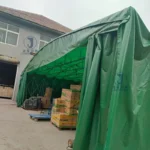
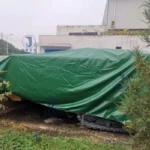
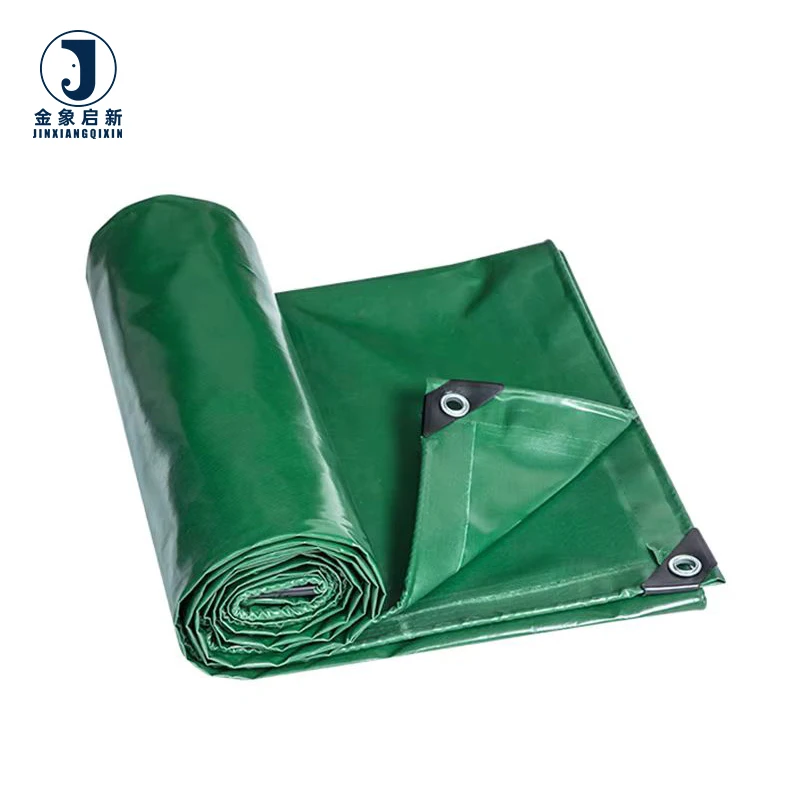
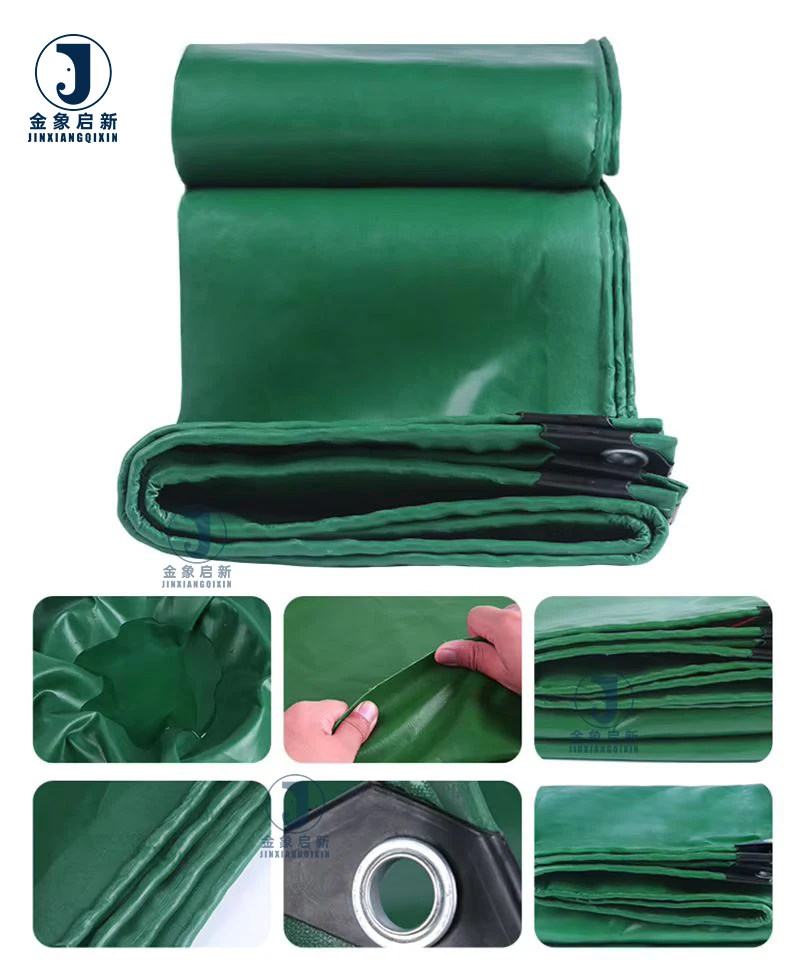
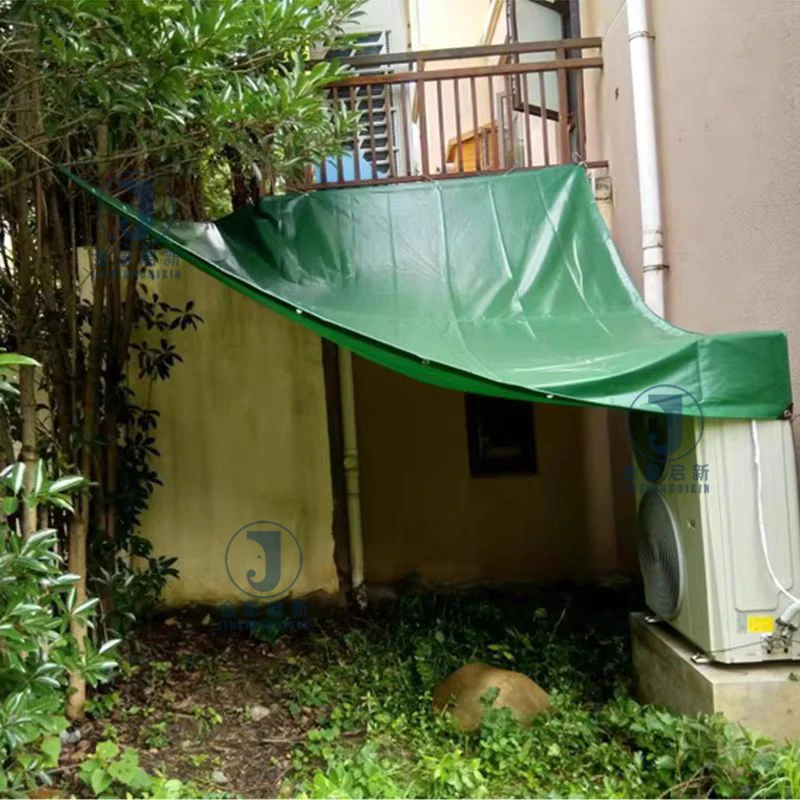
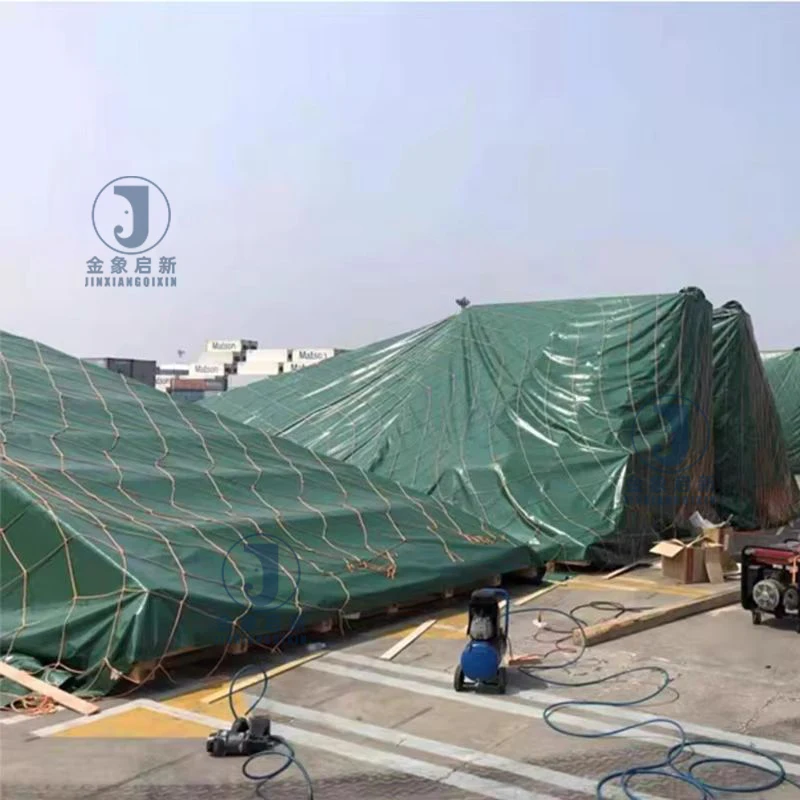

Proven Process Control — Nearly 30 years focused on coated fabric production, with dedicated QA/QC at every stage ensuring fire-retardant and anti-static treatments are verified by test documentation, not just quotation claims.
Technical Specifications
| Parameter | Value |
|---|---|
| Product Type | PVC Coated Tarpaulin |
| Material | High-Strength PVC Vinyl |
| Weight | At least 450 g/m² |
| Weave Type | Woven Fabric |
| Water Resistance | Waterproof |
| Tear Resistance | Durable and resistant to tearing |
| Wear Resistance | Durable and resistant to wear and tear |
| Fire Retardant Grade | Available in flame retardant grades — confirm the grade required for your market |
| UV Treatment | Available with UV stabilisation — test basis to be confirmed per order |
| Anti-Static | Available with anti-static treatment — certification level to be specified |
| Standards | ISO, CE certified manufacturing |
Application Suitability
| Application | Exposure & Requirement |
|---|---|
| Mining and tunnelling equipment covers | Continuous underground moisture, abrasion from rock contact, mandatory fire-retardant compliance for enclosed environments |
| Aviation ventilation duct structures | Airflow-induced flexing, static charge accumulation risk, anti-static specification mandated by site safety protocols |
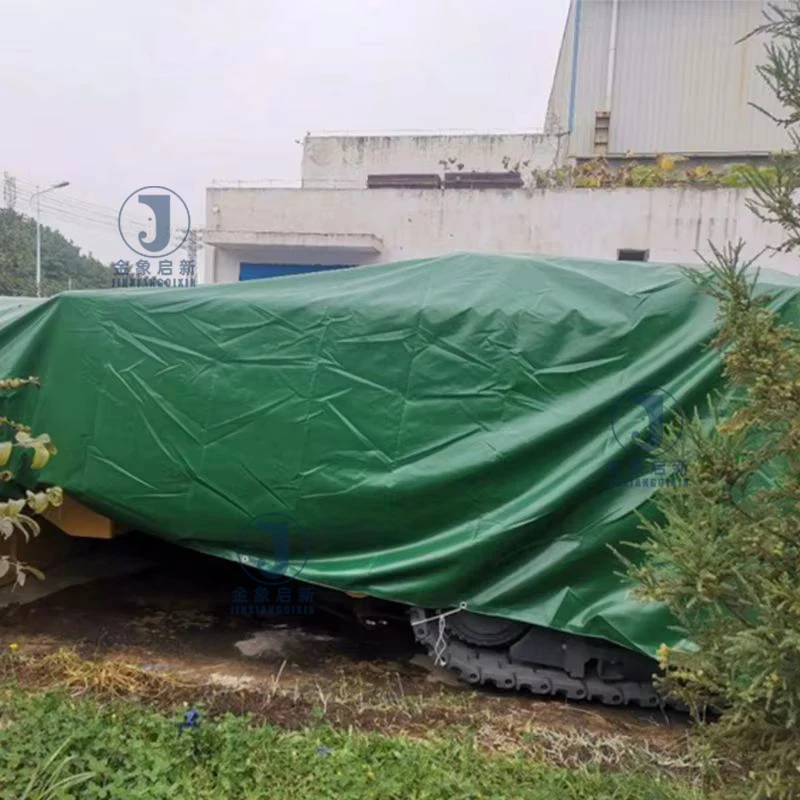
| Industrial outdoor storage covers | Rain, snow and UV exposure over extended periods, mechanical handling stress during deployment and removal |
| Construction site structure enclosures | Wind loading, scaffold contact abrasion, temporary weather protection requiring rapid installation and takedown |
Why "Fire Retardant" Without a Certified Grade Creates Site Risk
A flame retardant claim unsupported by a test report is a compliance gap waiting to be found during inspection.
Mining and tunnelling contractors specify ventilation duct and cover fabric with fire-retardant requirements written into site safety plans. When the PVC coated tarpaulin arrives without documentation traceable to a recognised standard such as DIN 4102 or NFPA 701, the site safety officer has grounds to reject the entire shipment. This is not a theoretical concern — fabric supplied without the fire-retardant or anti-static certification the site requires is one of the most frequent reasons for material rejection at industrial project gates [NEED_CITE: DIN 4102 fire classification for building materials]. The cost of replacement fabric is secondary to the project delay caused by waiting for a compliant resupply.
Coating Integrity Under Continuous Industrial Exposure
The PVC vinyl coating on this woven base fabric provides a continuous waterproof barrier against rain, snow and environmental moisture encountered in outdoor industrial settings. For mining and construction applications where covers remain deployed through seasonal weather cycles, coating adhesion to the base fabric determines whether the material survives repeated handling without delamination at stress points. Our production process maintains coating weight consistency across the full roll length, which matters when a single cover spans several metres and any thin spot becomes a water ingress path.
Anti-Static Specification for Regulated Environments
In aviation maintenance hangars and underground mining operations, static charge accumulation on fabric surfaces presents a documented ignition risk. Anti-static treatment for PVC coated tarpaulin must be specified at the inquiry stage so the correct additive package is incorporated during coating [NEED_CITE: anti-static testing standards for industrial fabrics in hazardous environments]. The treatment level required differs between surface resistivity targets for aviation ducting and the more stringent requirements for underground mining ventilation, so confirming the applicable standard before production avoids delivering fabric that fails site acceptance testing.
Reading the Specification Sheet Beyond GSM
The stated weight of at least 450 g/m² reflects the combined mass of woven base fabric and PVC coating, but GSM alone does not predict how the material behaves under load. Tensile and tear performance depend on base fabric denier and weave density working together with coating adhesion — a heavier coating on a loosely woven base will not outperform a balanced construction at lower GSM. For buyers specifying material properties rather than generic product categories, requesting the base fabric construction details alongside the GSM figure provides a more complete picture of expected field performance [NEED_CITE: tensile and tear test methods for coated fabrics per ISO 1421]. The coating method also influences heat welding behaviour, which directly affects seam integrity when fabricators join panels to create large covers or duct sections.
The Hidden Cost of Undocumented Treatment Claims
When anti-UV or flame-retardant treatment is stated on a quotation but arrives without a supporting test report, the buyer carries the entire compliance risk. A mining contractor who installs ventilation duct without verifiable fire-retardant documentation faces shutdown orders from site safety auditors, with replacement costs compounded by project timeline penalties [NEED_CITE: fire safety compliance requirements for underground mining ventilation materials]. Similarly, covers deployed outdoors without confirmed UV stabilisation data may show surface degradation well before the expected service interval, forcing unplanned replacement purchases and eroding confidence in the supply relationship. These outcomes trace back to a single gap: treatment claims made without traceable test evidence at the point of delivery.
Why Technical Buyers Source This Fabric Here
Deep process control over coating weight and adhesion, developed across nearly 30 years of focused coated fabric production, ensures that the PVC vinyl layer performs consistently from the first metre to the last on every roll.
Three full production lines and 36 sets of professional equipment support bulk capacity with reliable scheduling, so project timelines are not compromised by manufacturing bottlenecks.
A 10-person R&D team handles material selection and sample development for custom requirements, producing samples within days when fire-retardant or anti-static treatment must be validated before full production commitment.
Dedicated QA/QC operates at every production stage with 100% inspection before shipment, catching weight deviations and treatment inconsistencies before they reach the buyer’s site.
ISO and CE certified manufacturing underpins the documentation package that accompanies every dispatch, supporting regulatory submissions at destination without requiring the buyer to chase missing paperwork.
Documentation & Verification
- Material specification sheet stating GSM, base fabric construction and PVC coating composition for each order
- Test report for flame-retardant grades where applicable, traceable to recognised standards per market requirement
- 100% pre-shipment inspection record confirming weight and treatment compliance on every roll
- ISO and CE certificates available to support regulatory documentation at destination
- Roll packing list with individual roll identification for site receiving verification
Fabrication, Handling & Storage
- Heat welding parameters should be adjusted to the at least 450 g/m² weight to achieve full seam fusion without base fabric distortion
- Store rolls horizontally on pallets to prevent permanent creasing in the woven PVC vinyl structure
- Allow cold-stored rolls to reach ambient temperature before unrolling to avoid coating surface cracking
- Use compatible PVC solvent cement for field repairs on punctures or cuts in the coated surface
- Plan panel cutting layout to minimise offcuts, accounting for the roll width and required overlap at welded seams
What to Include in Your Inquiry
Provide the specific application environment and any fire-retardant or anti-static standards mandated by your site safety plan or local regulatory authority. Confirm the required roll width, linear metre quantity per colour, and whether you need the PVC coated tarpaulin supplied as roll stock or as finished fabricated covers with welded seams and edge reinforcement. If your project requires pre-production samples for treatment verification testing, state this at the inquiry stage so sample development can proceed in parallel with specification confirmation.
Frequently Asked Questions
Q: What fire-retardant grades are available and which markets do they cover?
A: Flame retardant treatment is available in multiple grade categories, with the specific grade matched to your market’s regulatory framework. Common classification systems include DIN 4102 B1 for European construction applications, NFPA 701 for North American temporary structures, and M2 for French market requirements. State the applicable standard at inquiry so the correct formulation is specified and tested before production.
Q: How is anti-static performance measured and certified for mining or aviation environments?
A: Anti-static performance is assessed through surface resistivity measurement, with acceptable thresholds varying between aviation maintenance environments and underground mining operations. The required test method and pass/fail criteria should be confirmed from your site safety specification, and test documentation is prepared against that standard to accompany the shipment for site acceptance verification.
Q: How do you verify GSM on arrival matches the quoted specification?
A: Every roll undergoes weight verification as part of the 100% pre-shipment inspection process, with results recorded against the stated at least 450 g/m² specification. The inspection record accompanies the shipment, allowing your receiving team to cross-reference the documented values. Independent sample testing at your end provides additional confirmation if required by your procurement protocol.
Q: Can you supply test reports for UV resistance and flame retardancy before shipment?
A: Yes, test reports for applicable treatments are prepared during or immediately after production and included with the dispatch documentation package. For custom treatment specifications, test samples can be produced during the sample approval stage so results are available before full production begins, avoiding delays at the shipment verification stage.
Q: What is the lead time and minimum order for custom treatment on this fabric?
A: Lead times for custom fire-retardant or anti-static treatment depend on the specific grade required and current production scheduling. Minimum order quantities apply to custom treatment runs due to the dedicated coating formulation changeover involved. Confirm your treatment specification and required volume at inquiry stage for an accurate production timeline and minimum confirmation.