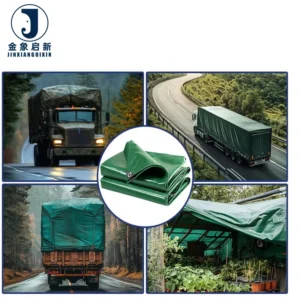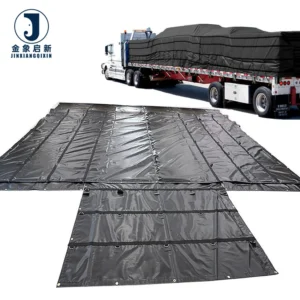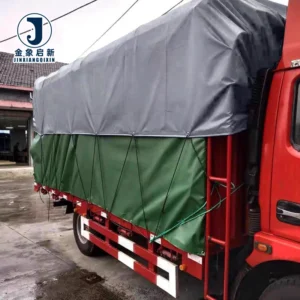

Proven Coating Adhesion Control — nearly three decades of PVC knife-coat process refinement ensures the coating-to-fabric bond on every flatbed lumber tarpaulin withstands repeated tie-down tension without delamination.
Technical Specifications
| Parameter | Value |
|---|---|
| Product Type | PVC Truck Cover |
| Base Fabric | 1000 × 1000D woven polyester |
| Mesh Count | 20 × 20 / 18 × 18 |
| Coating Method | PVC knife coat |
| Weight Options | 610 gsm (18 oz) / 16 oz / 14 oz |
| Thickness Range | 0.35–1.5 mm (varies by grade) |
| Tensile Strength | Warp 1500–3000 N/5cm, Weft 1200–2800 N/5cm (varies by grade) |
| Temperature Range | -35 to 70 °C |
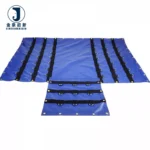
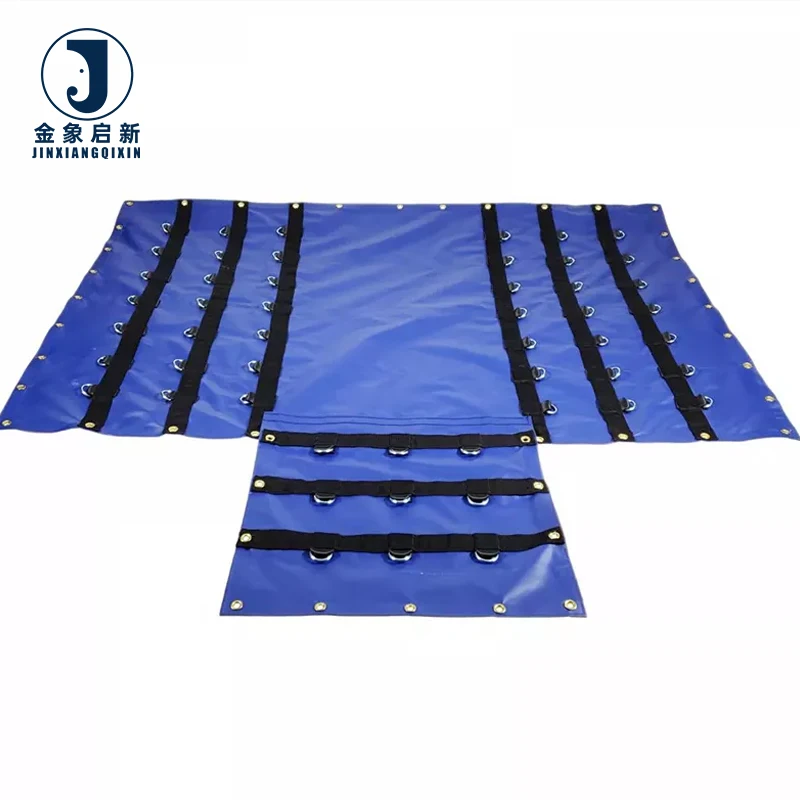
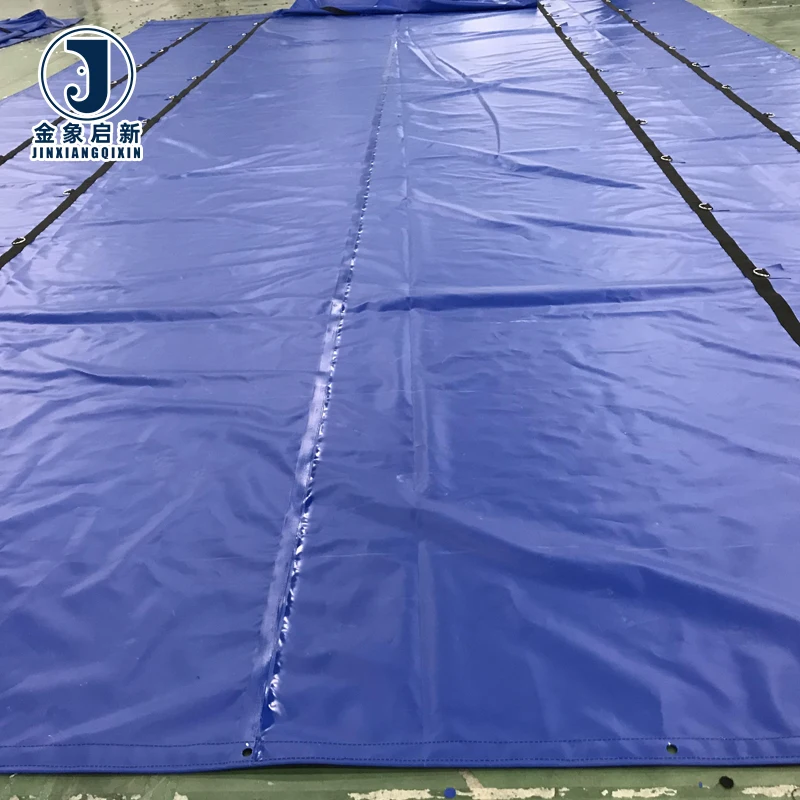
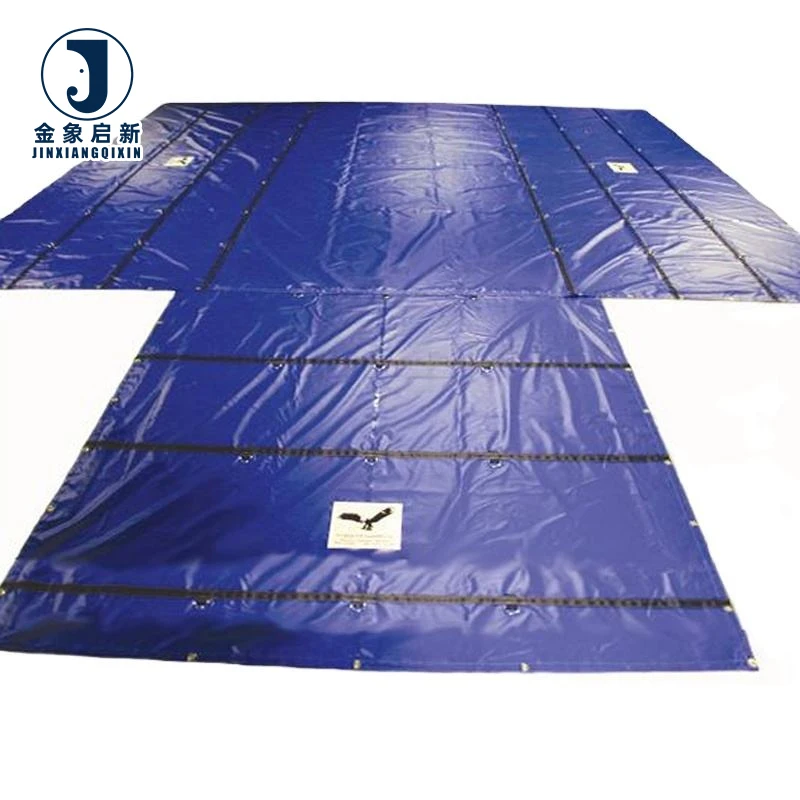
| Standard Size | 24′ × 27′ with 8 ft drop |
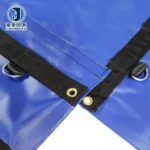
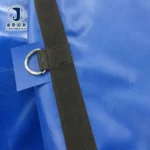
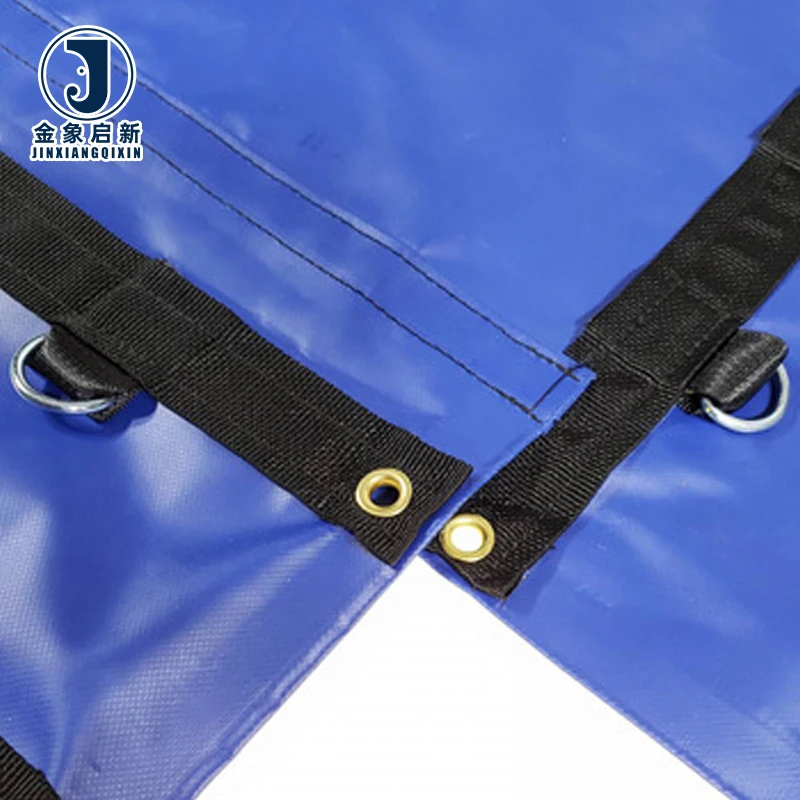
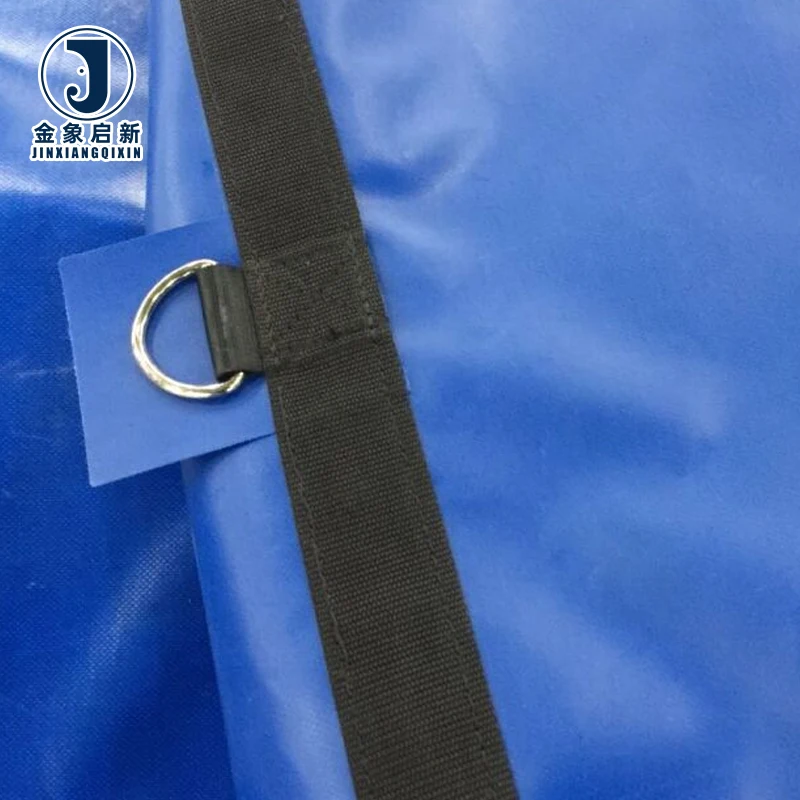
| D-Ring Configuration | 3 rows on 6′ and 8′ drops; 2 rows on 4′ drops |
| Tail Flap | Equipped on 6′ and 8′ drop configurations |
| Surface Treatment | Acid-resistant, waterproof |
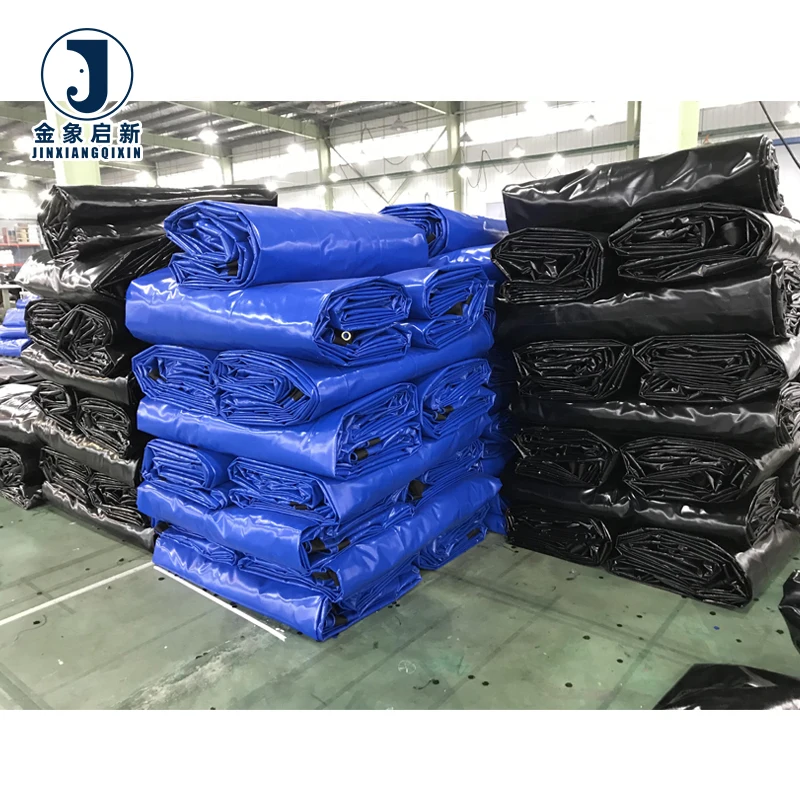
| Color Options | Black / Blue (custom colors available) |
| Certification | ISO, CE |
Application Suitability
| Application | Exposure & Requirement |
|---|---|
| Flatbed lumber transport | Continuous wind load, road debris impact, UV exposure, rain ingress at seams |
| Stacked timber and wall panels | High point-load abrasion from sharp edges, tie-down strap compression |
| Construction staging yard covers | Chemical and acid splash risk, prolonged ground contact, puncture from rebar or fasteners |
| Industrial material logistics | Forklift handling stress, repeated fold-unfold cycles at D-ring zones |
Why Coating Weight Verification Matters More Than Quoted GSM for PVC Lumber Tarpaulin
A quoted GSM figure without a corresponding test report tells you nothing about the fabric you will actually receive.
The PVC lumber tarpaulin aftermarket supplier market is full of quotations that state 610 gsm but ship material measurably lighter on arrival [NEED_CITE: pre-shipment weight verification methods for coated fabrics]. When coating weight falls short, the first consequence is reduced abrasion resistance at the flex points where D-rings transfer tie-down load into the fabric. The second is lower adhesion between the PVC layer and the 1000D base — once the coating begins to separate under road vibration, moisture reaches the polyester yarn and tensile strength degrades from the inside out. This is why we treat every roll leaving our facility as a verification event, not a batch assumption.
Knife-Coat Adhesion and the 1000 × 1000D Base Fabric Platform
The 1000 × 1000D woven polyester base provides a high-denier structural platform that directly determines how much tensile load the fabric can carry before yarn breakage occurs. With a PVC lumber tarpaulin for flatbed transport, the knife-coat process forces PVC compound into the interstices of this weave under controlled pressure and temperature, creating a mechanical bond that resists delamination far more effectively than simple lamination. This bond is what keeps the coating attached at the D-ring reinforcement rows where tie-down straps concentrate stress into small fabric areas.
Coating Weight, Tensile Performance, and Why They Must Be Read Together
A 610 gsm coating applied to a 20 × 20 mesh base will behave differently from the same weight on an 18 × 18 mesh — the denser weave distributes load across more yarn crossover points, reducing the chance of a single yarn failure propagating into a tear. Technical buyers specifying PVC lumber tarpaulin aftermarket supplier products should always request both the GSM reading and the base fabric construction data on the same specification sheet [NEED_CITE: relationship between mesh count and tear propagation in PVC coated polyester]. Without both values, you are evaluating only half the performance picture.
How Denier, Coating Thickness, and Temperature Range Interact on the Road
The 0.35–1.5 mm thickness range across the product family reflects different coating build-ups, each suited to distinct load profiles. Heavier coatings improve puncture resistance against sharp timber edges but add stiffness that affects how the tarp folds and drapes over irregular loads. The -35 to 70 °C operating range means the PVC compound remains flexible enough in winter conditions to avoid brittle cracking at fold lines, while resisting softening and tackiness during summer transport on exposed asphalt routes. Selecting the correct grade — 14 oz, 16 oz, or 18 oz — depends on the specific cargo geometry and seasonal route conditions rather than defaulting to the heaviest option available.
What Happens When Specifications Are Assumed Rather Than Verified
When a flatbed operator receives a lumber tarp that is lighter than quoted, the failure sequence is predictable. The coating wears through at abrasion points first — typically along the bottom edge where the tarp contacts the trailer deck and at the D-ring rows where strap hardware rubs during transit. Once the base fabric is exposed, water wicks into the polyester yarn and weakens it from within [NEED_CITE: moisture ingress effects on polyester tensile strength in coated fabrics]. A separate but equally costly issue arises when batch-to-batch colour variation becomes visible across a fleet of tarps, forcing replacements that should not have been necessary if roll-to-roll consistency had been controlled at the coating stage.
Why Technical Buyers Source This PVC Lumber Tarpaulin Aftermarket Supplier Here
Three full production lines and 36 sets of professional equipment provide the capacity to hold delivery schedules on bulk PVC truck cover orders without sacrificing process control at the coating head. The 10-person R&D team handles material selection, custom sizing, and sample development, so a flatbed operator can confirm D-ring placement against their specific trailer model before committing to a production run. Every piece undergoes 100% pre-shipment inspection rather than statistical sampling, meaning the GSM, colour, and seam integrity of each tarpaulin is checked individually. Samples for custom requirements are developed within days, allowing side-by-side comparison against incumbent covers before the order is placed. The QA/QC protocol runs through every production stage — base fabric inspection, coating weight monitoring, curing temperature control, and final dimensional verification — so that the documentation accompanying your shipment reflects measured data, not batch averages.
Documentation & Verification
- Material specification sheet stating actual GSM, base fabric denier, and coating method for the PVC lumber tarpaulin
- UV and acid-resistance test report available for the specific grade ordered
- Pre-shipment inspection record covering weight, colour, and D-ring placement per piece
- Roll packing list with piece-level identification for traceability
- ISO and CE certificates accompanying the full documentation package
- Certificate of origin and customs documentation for cross-border shipment
Fabrication, Handling & Storage
- Heat-weld seams using temperature and dwell time settings calibrated to the PVC knife-coat thickness of the selected grade
- Reinforce D-ring attachment points with additional PVC patches matched to the 610 gsm or selected weight grade
- Store rolls or folded tarps flat to avoid permanent crease marks in the PVC coating layer
- Avoid deploying the tarp below -35 °C where the PVC compound approaches its cold-flex limit
- Clean with mild detergent only — solvents can degrade the acid-resistant surface treatment
- Repair minor punctures with PVC-compatible adhesive patches applied to clean, dry coating surfaces
Requesting a Specification Match for Your Flatbed Operation
Provide the trailer dimensions and cargo profile so we can confirm whether the standard 24′ × 27′ with 8 ft drop suits your load, or whether a custom cut with adjusted D-ring positioning is required. Specify the grade — 14 oz, 16 oz, or 18 oz — based on your typical cargo abrasion level, and note any flame-retardant or anti-static requirements your site or jurisdiction mandates. If colour consistency across a fleet order is critical, request production samples for approval before the full run proceeds.
Frequently Asked Questions
Q: How is the 610 gsm coating weight verified and can I receive a test report before shipment?
A: Each roll is weighed and measured during the 100% pre-shipment inspection process. The inspection record states the actual GSM alongside the quoted value so you can confirm alignment before the shipment leaves our facility. A material specification sheet with the measured coating weight and base fabric denier ships with the documentation package.
Q: What is the difference between 18 oz, 16 oz, and 14 oz grades and which suits my load profile?
A: The 18 oz (610 gsm) grade offers maximum abrasion and puncture resistance for sharp-edged lumber and heavy construction materials. The 16 oz grade balances weight savings with durable protection for general flatbed loads. The 14 oz grade suits lighter cargo or seasonal use where reduced tarp weight improves handling efficiency during daily tie-down and removal.
Q: Can the tarp be custom-cut to fit a specific trailer model rather than a generic flat size?
A: Yes. Our R&D team develops custom-sized PVC lumber tarpaulin samples within days, with D-ring rows and tail flap dimensions configured to your trailer’s tie-down rail positions. Provide the trailer model and deck dimensions so we can engineer the reinforcement layout to match your strap configuration rather than forcing a generic cover to adapt.
Q: Are flame-retardant or anti-static grades available for this PVC fabric with certified test results?
A: Flame-retardant and anti-static treatments are available in specific grades. Confirm the classification or standard required by your market — such as a regional building material fire rating or mine-site safety specification — so we can supply the corresponding test report with your shipment documentation.
Q: How do you control colour consistency across multiple tarps in the same order?
A: Colour is controlled at the PVC compounding stage and verified during in-process QA at each production step. The pre-shipment inspection includes a visual colour check across all pieces in the order, documented in the inspection record. For fleet orders where visible consistency is essential, we recommend requesting production samples for side-by-side approval before the full quantity is completed.