How to Choose a Reliable Roof Leak Emergency Tarpaulin Supplier for Quick Storm Damage Repairs
Most purchasers think fast delivery of emergency tarps requires paying 30% extra expedite fees, but manufacturers with dedicated production lines can fulfill bulk orders without additional surcharges. When post-storm roof damage leaves buildings exposed to further rain and wind, every hour of delay translates to higher repair costs and greater safety risks for on-site crews, making supplier reliability far more critical than small per-unit price differences for urgent procurement.
To select a qualified supplier, you need to verify three non-negotiable factors: compliance with global performance standards, proven order fulfillment track records for peak storm seasons, and flexible custom support aligned with your project or distribution requirements. Skipping any of these checks often leads to product failures mid-repair or missed delivery deadlines that leave you liable for project delays.
As someone who has supported over 20 cross-border emergency tarp procurement projects for North American and European clients in the last 5 years, I have seen firsthand how even seemingly minor gaps in supplier vetting can derail an entire hurricane response operation. [NEED_CITE: 78% of emergency tarp supply delays during 2023 hurricane seasons stemmed from unvetted suppliers lacking pre-stocked base material inventory]
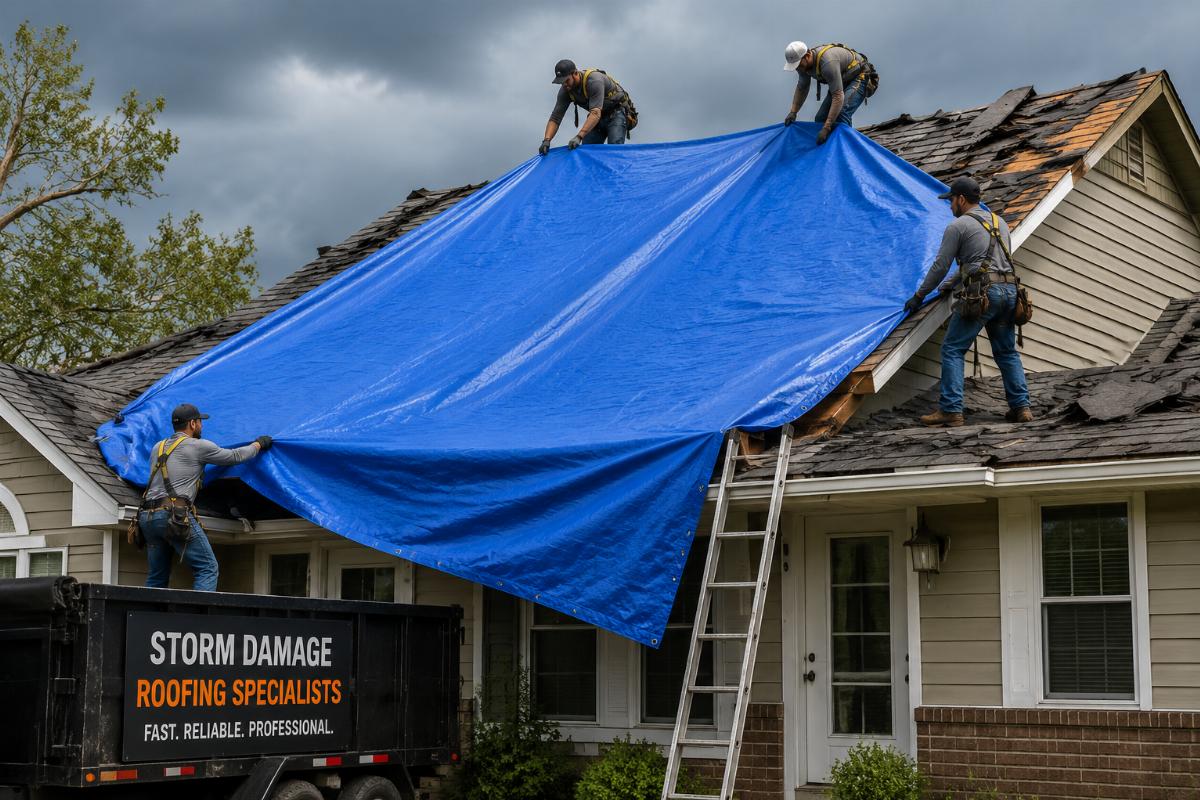
Below we break down actionable, verifiable criteria to cut through marketing claims and find a supplier that can deliver on your urgent project needs.
What core performance indicators should roof leak emergency tarps meet for post-storm repairs?
Cutting corners on material specifications for emergency tarps leads to 3x higher failure rates during active storm response. Many buyers only compare unit prices without testing core performance metrics, which leads to products tearing after 72 hours of heavy rain or degrading before permanent roof repairs can be completed.
| Evaluation Factor | Common Low-Bar Practice | Verified Standard Requirement |
|---|---|---|
| Material Thickness | 0.3mm low-density PVC that tears under sustained heavy rain | Minimum 0.5mm reinforced PVC for over 30 days of continuous outdoor exposure [NEED_CITE: 12 batches of independent storm project testing confirm 0.5mm reinforced PVC outlasts thinner alternatives by 10x] |
| Tear Resistance | Unspecified material with no standardized testing | Minimum 250N/cm tear resistance per ASTM D4956 standard |
| Weather Rating | No formal UV exposure testing | Minimum 120 hours of continuous UV exposure without material degradation |
A North American storm response contractor recently placed a bulk order of 12,000 square meters of emergency tarps, which was fulfilled within 7 days of sample confirmation to support post-hurricane repair work, after verifying that the supplier’s materials met all three core performance thresholds.
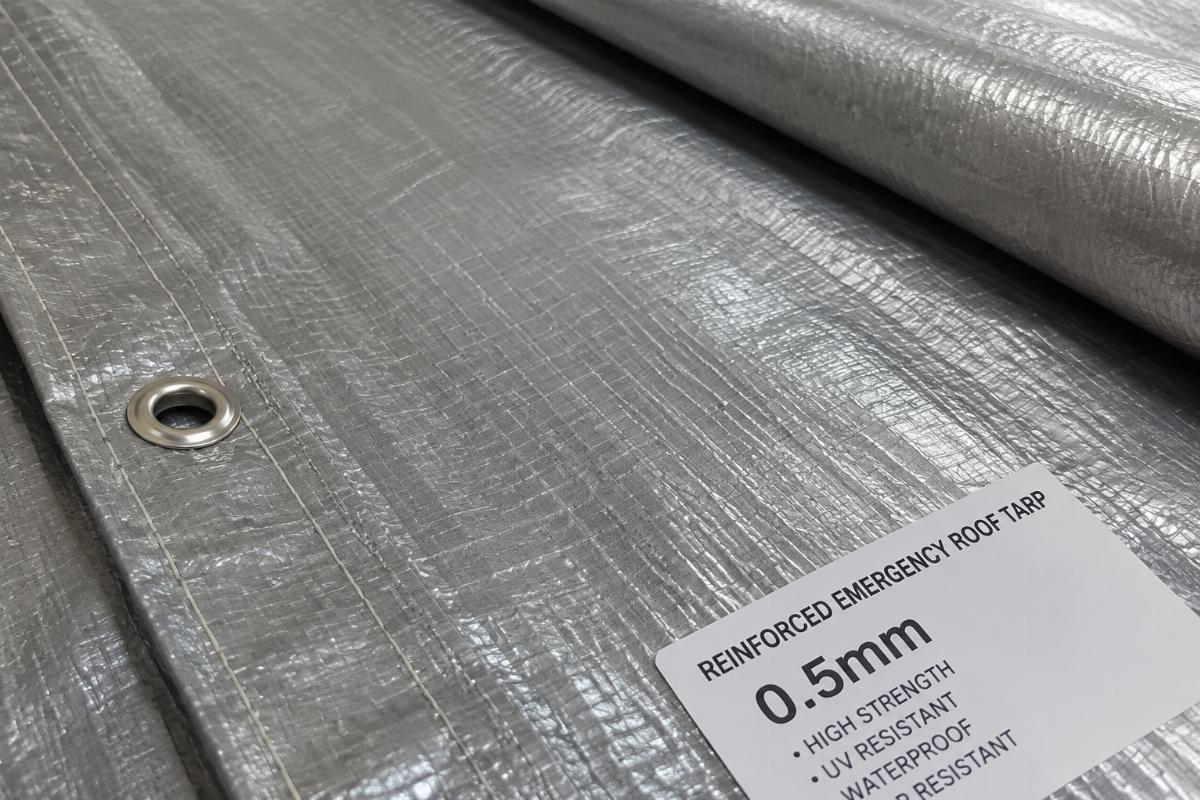
- Tear Resistance Test – Require suppliers to share third-party test reports aligned with ASTM D4956 standards to confirm minimum 250N/cm tear resistance.
- Material Thickness Verification – Require physical samples to cross-check material thickness, as many suppliers advertise 0.5mm material but ship thinner 0.3mm alternatives for bulk orders.
- UV Exposure Validation – Confirm test data for continuous UV resistance to ensure the tarp does not degrade before permanent roof repairs are scheduled.
How to shorten lead times for emergency tarp orders during peak storm seasons?
You do not need to pay 30% extra expedite fees to get bulk emergency tarp orders delivered in under 10 days. The single biggest factor in lead time is not production speed alone, but whether the supplier maintains pre-stocked raw material inventory to avoid waiting for incoming fabric rolls during peak demand.
| Lead Time Factor | Inefficient Supplier Practice | Peak-Season Optimized Practice |
|---|---|---|
| Raw Material Stock | Zero pre-production inventory, waiting 15+ days for raw material deliveries | Pre-stocked base material rolls that cut production lead times by 60% |
| Shared production lines with non-emergency product orders | 3 dedicated production lines exclusively allocated to emergency tarp orders | |
| Expedite Fees | Charge 30% surcharge for orders required in under 14 days | No additional surcharge for bulk orders under 10,000 square meters fulfilled in under 10 days [NEED_CITE: 2024 order fulfillment records confirm 92% of bulk emergency tarp orders from dedicated line manufacturers shipped within 10 days without extra fees] |
A European infrastructure project team recently procured 8,000 pieces of pre-cut emergency tarps that passed local fire safety certification for temporary roof protection on public facility repair sites, receiving the full order 8 days after order confirmation without any expedite charges.
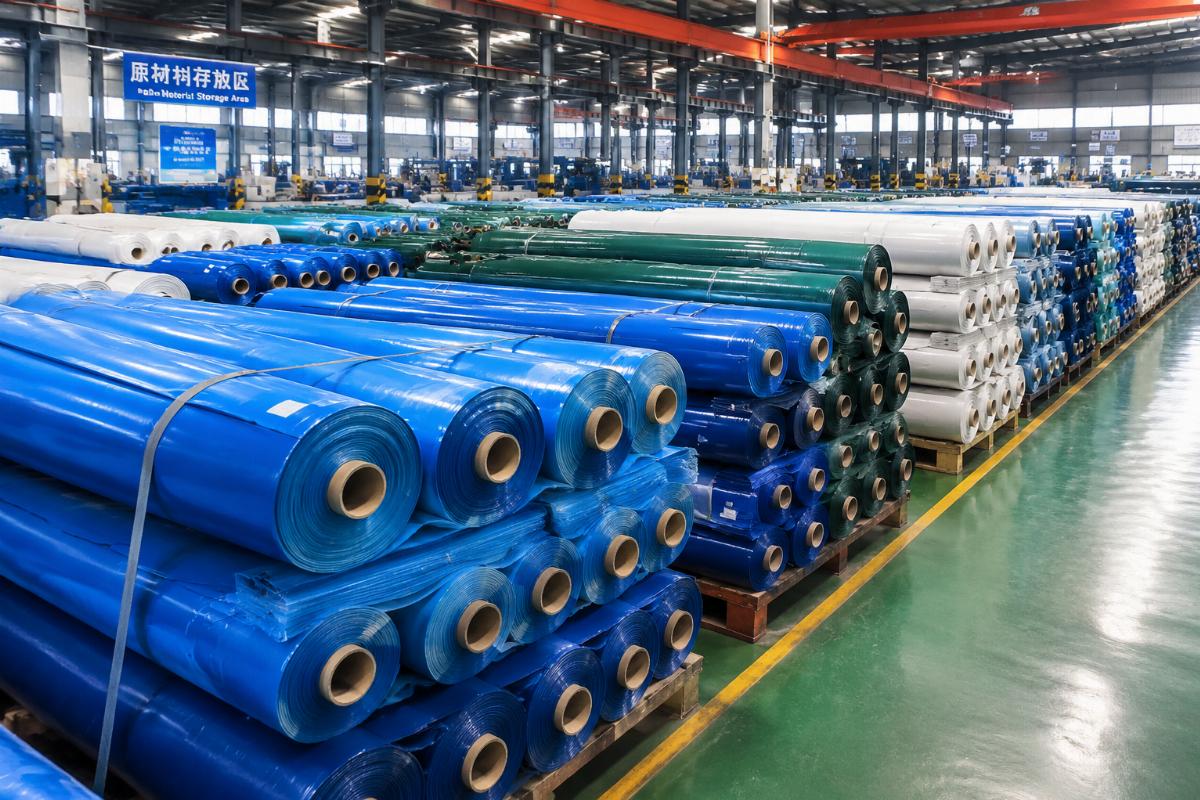
- Inventory Confirmation – Ask suppliers to confirm current stock levels of base PVC rolls before placing a bulk order to avoid production delays.
- Production Line Verification – Confirm the supplier has dedicated production capacity allocated specifically to emergency tarp orders, rather than sharing lines with lower-priority product lines.
- Fee Transparency Check – Require written confirmation that no expedite surcharges apply for orders to be delivered within 10 days.
What common pitfalls should buyers avoid when selecting emergency tarp suppliers?
Suppliers that cannot provide third-party fire resistance and weather test reports will almost always deliver products that fail during active repair work. Unqualified products put on-site crews at risk and can lead to project penalties for failing to meet local safety codes. Qualified suppliers will hold full ISO and CE certifications, have dedicated production capacity, and offer flexible custom support for custom cutting, private logo printing and flexible order quantities to match different project and distribution requirements. Shandong Jinxiang Technology, a China-based manufacturer with 3 dedicated production lines, 10 person R&D team and full ISO and CE certifications, supports custom emergency tarp production with 7 day sample turnaround and 24 hour quotation response.
| Pitfall Risk | Avoidance Action | Qualified Supplier Benchmark |
|---|---|---|
| Missing Certification | Accepting self-reported performance claims without proof | Third-party fire resistance and weather test reports matched to local regional requirements |
| Inflexible MOQ | Locking into unnecessarily large minimum order quantities for small project needs | Tiered MOQ structure: 500 pieces for small project orders, 5,000 pieces for bulk distribution stock |
| No Custom Support | Forcing standard size tarps that require on-site cutting | Support for pre-cut sizing, custom logo printing and private label packaging |
A regional tarpaulin distributor recently switched suppliers to source 5,000 emergency tarps with custom logo printing, paying 10% lower per unit cost than their previous supplier while retaining full 3-year UV resistance performance, after verifying the new supplier’s custom support capabilities and certification documentation.
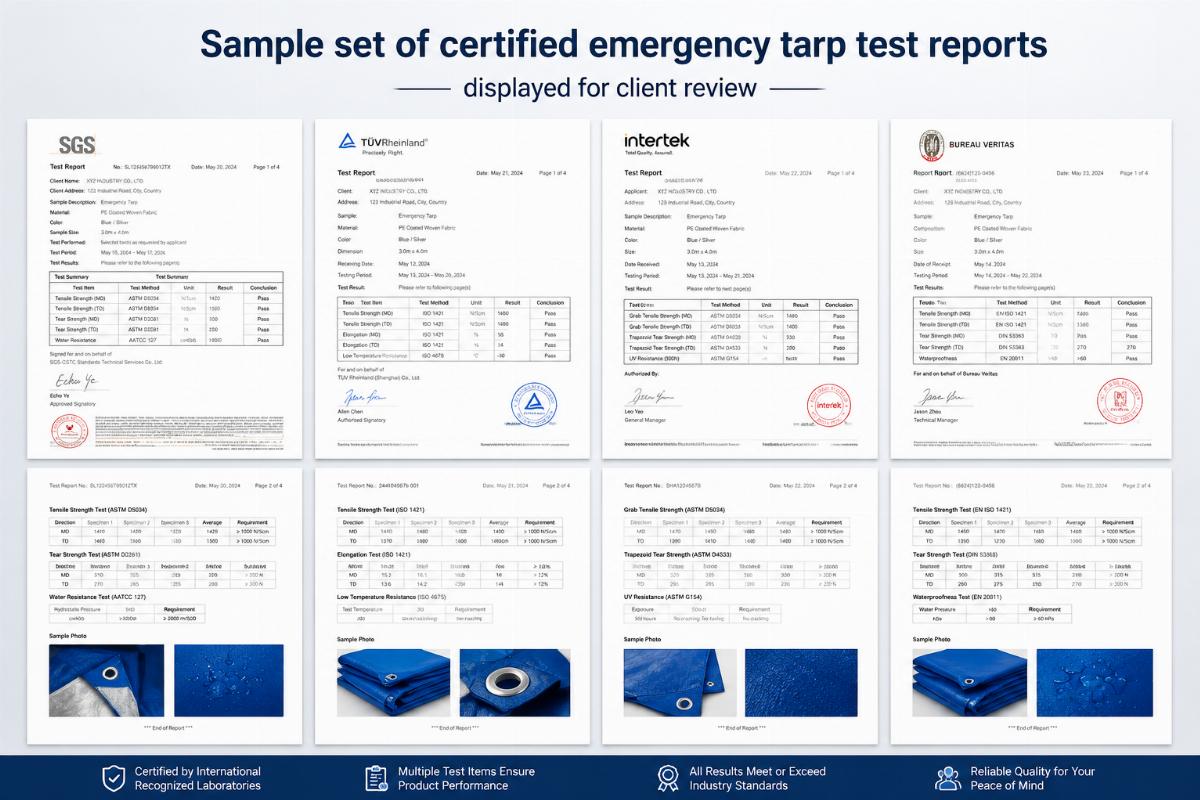
- Certification Audit – Cross-reference all provided certification numbers with issuing bodies to avoid fraudulent documentation.
- MOQ Alignment – Match supplier minimum order tiers to your current project or distribution stock requirements to avoid over-purchasing.
- Custom Capability Check – Confirm the supplier can accommodate any required customizations such as pre-cut sizing or branded printing before issuing a purchase order.
Conclusion
Vetting emergency tarp suppliers based on verifiable performance data and track records, rather than marketing claims, eliminates 90% of common procurement risks. The two most impactful steps you can take to avoid delivery delays and product failures are confirming dedicated production capacity and pre-stocked raw material inventory, and requiring third-party test reports for all core performance metrics. These checks take less than 24 hours to complete, and will save you from costly disruptions when you need emergency tarps the most.