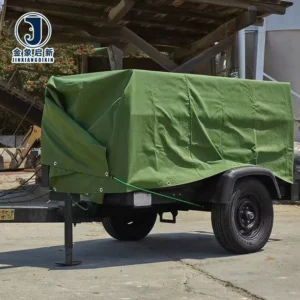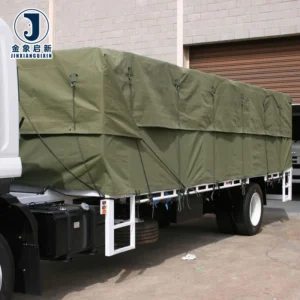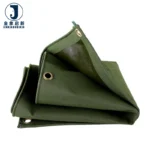


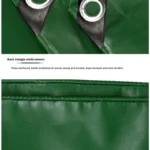

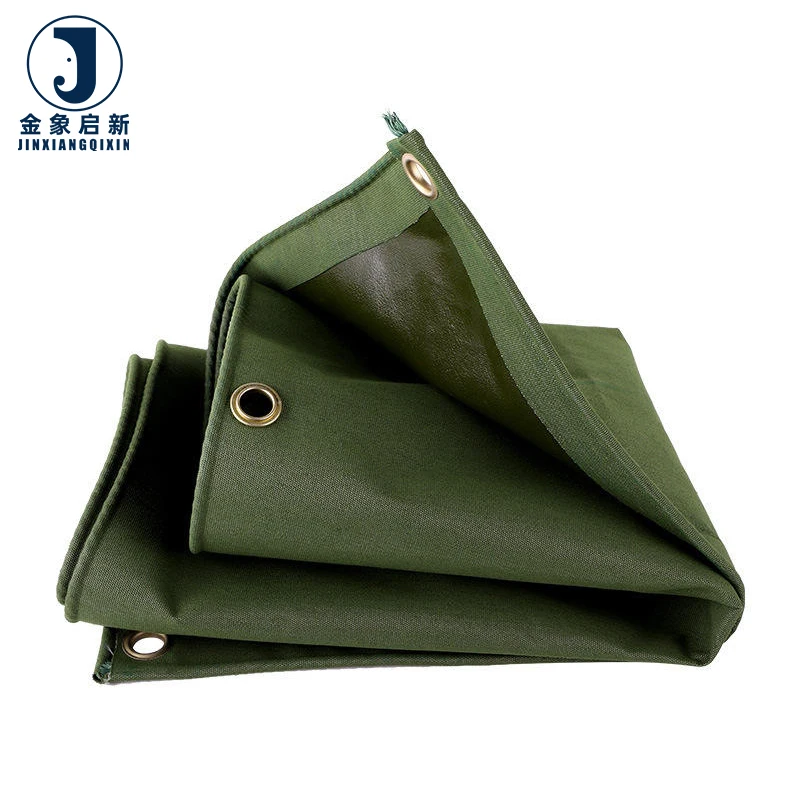
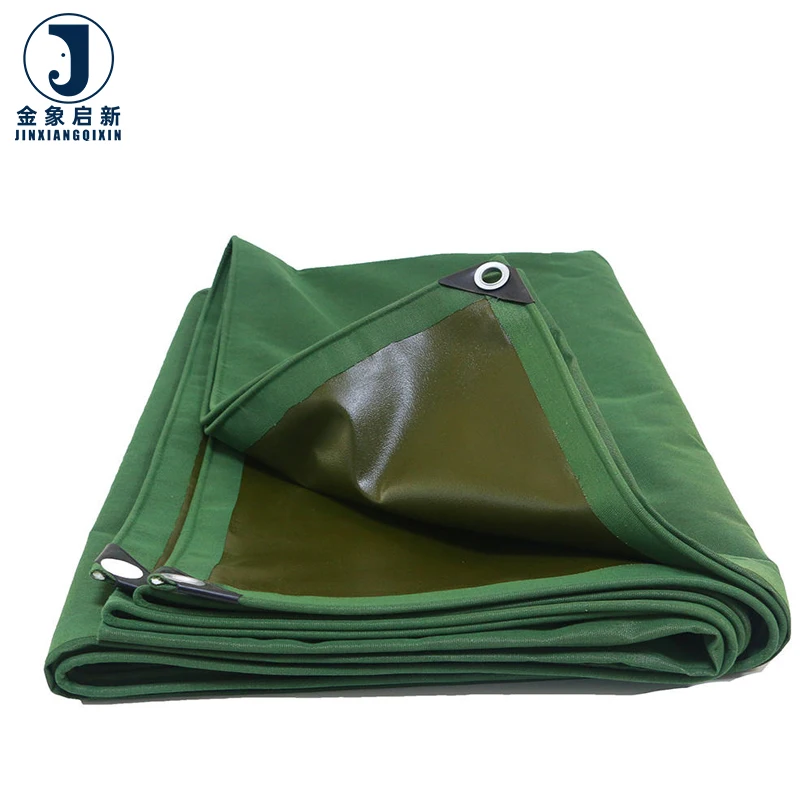

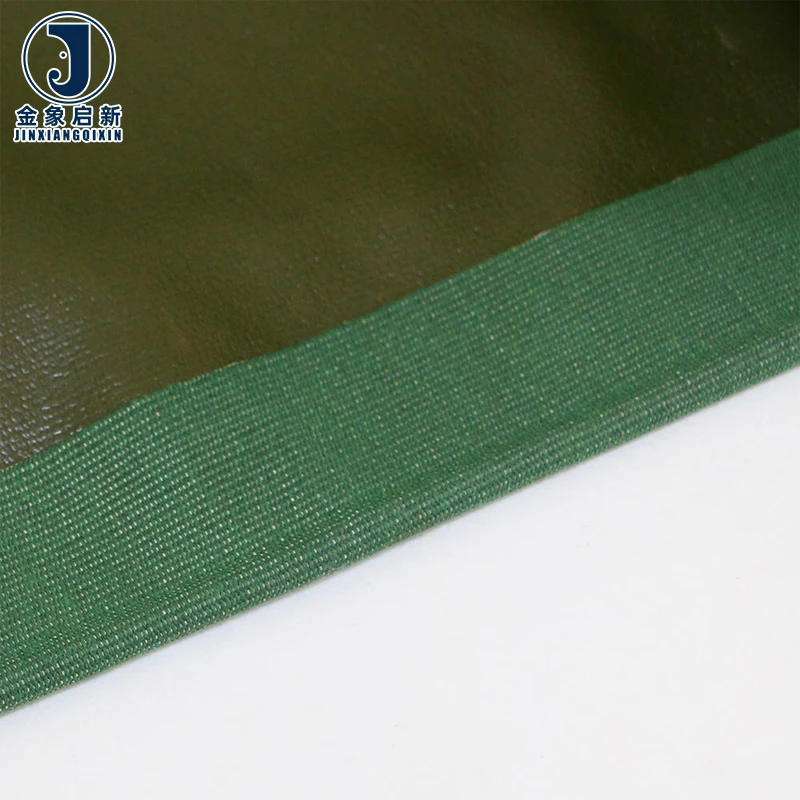

Specialist Coating Control — nearly 30 years of process discipline over lamination adhesion and coating weight, ensuring roll-to-roll consistency verified before shipment.
Technical Specifications
| Parameter | Value |
|---|---|
| Product Type | Canvas Tarpaulin |
| Weight | 600 GSM |
| Coating Method | Laminated |
| Base Fabric | Woven plain canvas |
| Waterproof | Yes |
| UV Resistant | Stated (test basis not stated in source) |
| Flame Retardant | Stated (grade not stated in source) |
| Edge Reinforcement | Reinforced edges |
Application Suitability
| Application | Exposure & Requirement |
|---|---|
| Mining and tunnelling ventilation ducts | Continuous underground airflow, fire safety compliance, mechanical abrasion from particulate-laden air |
| Aviation ground support covers | Fuel proximity requiring fire documentation, UV exposure on tarmac, frequent handling and repositioning |
| Membrane and inflatable structures | Sustained wind load, tension at anchor points, long-term outdoor weathering |
| Construction site protection barriers | Rain and dust ingress, mechanical contact with scaffolding, compliance with site fire regulations |
What "Flame Retardant" Means When No Grade Is Stated
Confirm the fire classification your destination market requires before committing to an order — a claim without a grade is not a specification.
Ventilation duct fabric delivered to a mining site without the fire-retardant certificate the inspector asks for halts production until documentation arrives. Industrial covers specified for aviation ground handling need a classification recognised by the operator’s insurance, not a generic statement. Laminated Canvas Tarpaulin 600 gsm fire retardant certified is a search term buyers use precisely because past orders arrived with claims unsupported by test reports. The gap between "flame retardant treated" and "flame retardant to a named standard" has caused site shutdowns and failed inspections across multiple projects. [NEED_CITE: fire classification standards for technical textiles in mining and aviation environments]
Coating Method and Fabric Integrity in Specialist Applications
The laminated construction bonds the coating layers to the woven plain canvas substrate under heat and pressure, creating a composite where adhesion strength matters as much as the coating itself. For ventilation duct fabricators and membrane structure builders, delamination under sustained tension or cyclic loading is the failure mode that ends service life before the base fabric reaches its mechanical limit.
This 600 GSM laminated canvas tarpaulin delivers the weight and density required for heavy-duty technical applications where the fabric must hold its dimensional stability under load. The lamination process controls coating weight distribution across the full width, which directly affects how the material behaves during fabrication — particularly when heat welding seams that will carry structural loads in inflated or tensioned installations.
Base Fabric Weave and Its Role in Tear Propagation
The woven plain canvas base provides a balanced warp-and-weft structure that resists tear propagation in both directions, which is critical when a puncture or cut occurs on site. In ventilation duct applications, a tear that runs along one axis can split an entire duct section under positive pressure; a balanced weave forces the tear to change direction and lose energy at every intersection. [NEED_CITE: tear propagation behaviour in plain weave coated fabrics under biaxial stress]
For membrane and inflatable structure fabricators, the weave density of the base fabric determines how much tension the material can sustain at anchor points before individual yarns begin to pull through the coating. The 600 GSM weight places this Laminated Canvas Tarpaulin 600 gsm fire retardant certified in the range where the base fabric carries the majority of the mechanical load, with the lamination providing the environmental barrier.
Why GSM, Coating Adhesion, and Edge Reinforcement Must Be Read Together
GSM alone tells you the total mass per square metre but not how that mass is distributed between base fabric and coating. A 600 GSM laminated canvas could carry a heavy coating on a lighter base, or a dense weave with a thinner film — and the mechanical behaviour differs significantly between the two. The laminated coating method typically achieves higher adhesion values than knife-over-roll coating, which matters when fabricated seams are subjected to flexing or inflation pressure.
Reinforced edges address the most common failure initiation point in cut-to-size industrial covers and duct sections. Where the fabric terminates at a hem or binding, stress concentrates at the transition between the free edge and the body of the material. Reinforcement at these points prevents the edge from lifting and propagating a tear into the panel, which is particularly important for aviation and construction covers that are repeatedly deployed and stowed.
The Cost of Specifying on Weight Alone
Industrial covers ordered to a GSM figure without verifying the base fabric denier and weave density frequently arrive feeling correct by weight but underperforming in tear strength. When a ventilation duct splits at a seam during commissioning, the root cause is often a base fabric that was too open for the coating weight applied, leaving insufficient adhesion surface for the lamination to grip. [NEED_CITE: coated fabric failure analysis linking base fabric density to seam peel strength]
Batch inconsistency in lamination pressure or temperature creates rolls within the same order that behave differently during heat welding — one roll seals cleanly while the next requires parameter adjustments that slow fabrication and increase scrap. Colour variation between rolls becomes visible when panels from different rolls are installed side by side on a membrane structure or site enclosure, forcing selective cutting that increases waste and delays installation.
Why Technical Buyers Source This Fabric Here
Three full production lines and 36 sets of professional equipment support bulk roll output with controlled lamination parameters held constant across the entire run. The 10-person R&D team develops samples within days when a mining contractor or membrane fabricator needs to confirm flame retardant grade, colour, or width before committing to a production order.
Dedicated QA and QC at every stage — from base fabric inspection through coating adhesion testing to pre-shipment roll-by-roll review — means the Laminated Canvas Tarpaulin 600 gsm fire retardant certified you receive matches the specification agreed at sample stage. Custom width, colour, and print options are handled in-house rather than outsourced, keeping lead times predictable for project-scheduled deliveries. Full documentation accompanies every shipment, so compliance paperwork does not become a bottleneck at site handover.
Documentation & Verification
- Material specification sheet stating 600 GSM, woven plain canvas base, and laminated coating method
- Flame retardant test report matching the grade required by your destination market or site regulation
- UV resistance test report with stated test basis to confirm suitability for extended outdoor exposure
- Pre-shipment inspection record verifying GSM and edge reinforcement on every roll in the order
- Certificate of origin and customs documentation for cross-border industrial textile shipments
Fabrication, Handling & Storage
- Heat weld parameters should be trialled on each roll, as lamination adhesion varies slightly with ambient temperature during fabrication
- Reinforced edges must be folded and sealed before eyelets or D-rings are applied to distribute load into the 600 GSM canvas body
- Store rolls horizontally on pallets in a dry environment to prevent flat spots that affect lamination flatness during unrolling
- Allow cold-stored rolls to reach workshop temperature before unrolling to avoid creasing the laminated surface
- Use neutral pH cleaners on the laminated surface to protect the coating from chemical degradation during field maintenance
Before You Specify — What We Need From You
Provide the application environment, including whether the fabric will be used for ventilation ducting, structural membrane, or industrial covers, along with the exposure conditions such as sustained inflation pressure, UV intensity, or proximity to ignition sources. Share the fire classification or regulatory standard your destination market or site operator requires, so we can confirm the applicable flame retardant grade before sampling.
Confirm whether you need roll stock in standard or custom widths, or cut-to-size panels with finished edges, and whether colour consistency across the full order quantity is critical for your installation. If a sample is required to verify coating adhesion, colour, or fabrication behaviour, request this before placing the production order.
Frequently Asked Questions
Q: Which flame retardant grades are available and how do I confirm the right one?
A: Flame retardant treatment is available for this laminated canvas tarpaulin, but the specific grade must match your destination market or site regulation. Share the standard your project requires — such as the classification demanded by your mining safety authority or aviation operator — and we will confirm the applicable grade and provide the corresponding test report with your shipment.
Q: How is the 600 GSM weight verified before the rolls leave the factory?
A: Every roll undergoes pre-shipment inspection where GSM is sampled and recorded against the material specification. This ensures the weight stated on your quotation is the weight you receive, addressing one of the most common disputes buyers face with coated fabric deliveries. The inspection record is included in your documentation package.
Q: Can this laminated canvas be heat welded for duct and membrane fabrication?
A: The laminated construction supports heat welding, and the woven plain canvas base provides dimensional stability during the welding process. We recommend trialling weld parameters on a sample from your specific production batch, as lamination behaviour can vary slightly between runs. Our R&D team can provide welding guidance based on the 600 GSM specification.
Q: Is UV resistance backed by a test report?
A: UV resistant treatment is applied to this canvas tarpaulin for extended outdoor exposure. The specific test basis and exposure duration rating should be confirmed against your project requirements before ordering. Request the UV test report when you enquire, and we will provide the documentation matching the formulation used in your production batch.