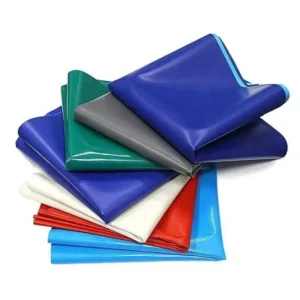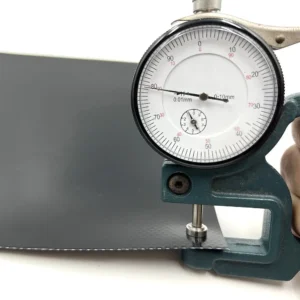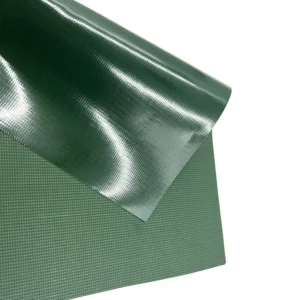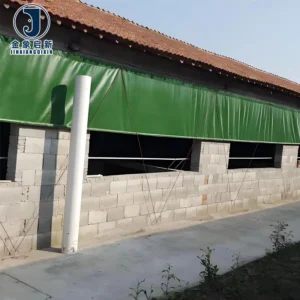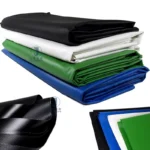
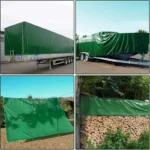
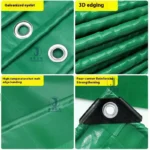
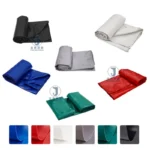

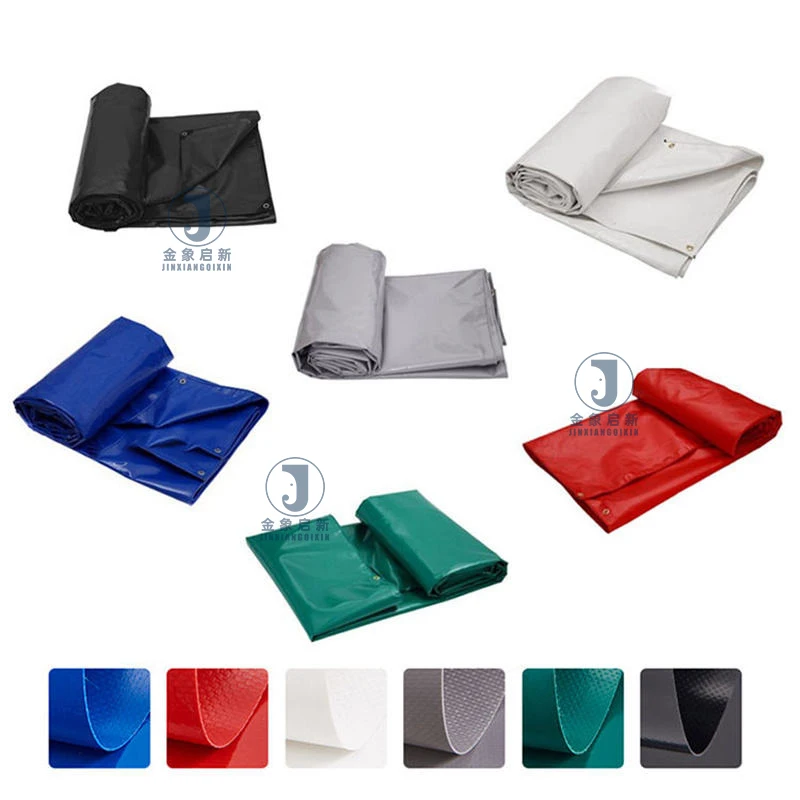
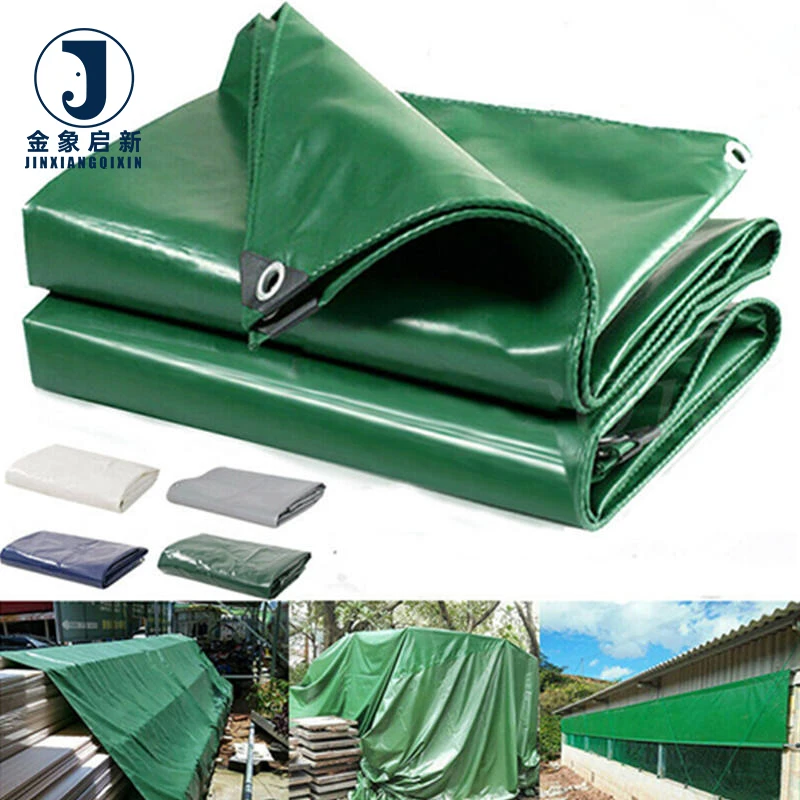
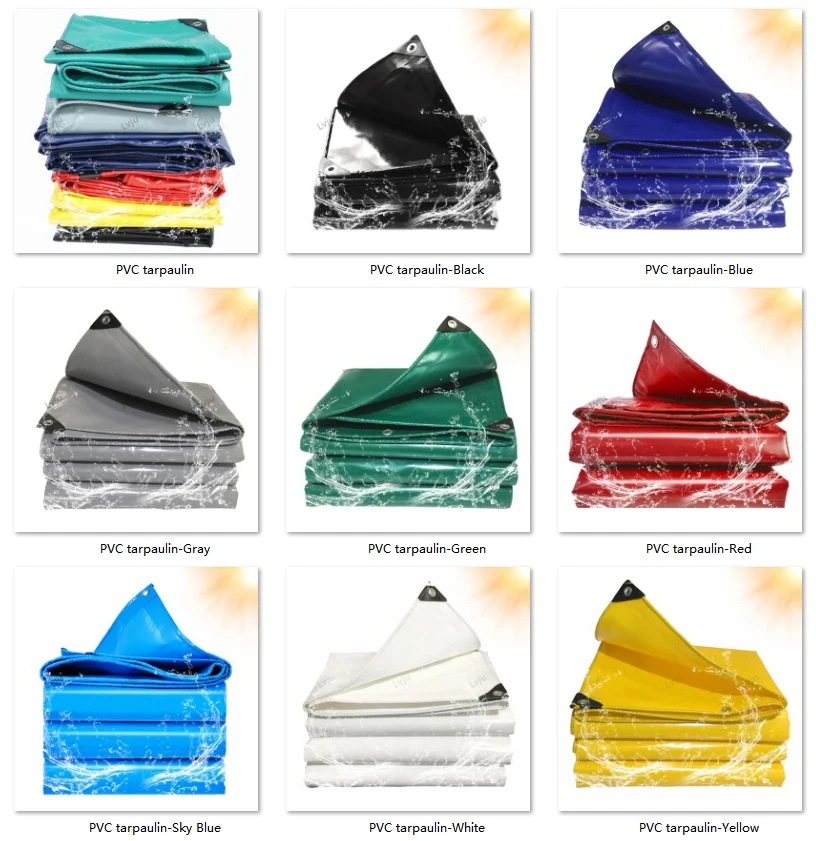
Coating Weight Control — Every 650 gsm roll is verified at the coating head and again at pre-shipment inspection to match the quoted weight, supported by roll-by-roll documentation.
Technical Specifications
| Parameter | Value |
|---|---|
| Specification | PVC Coated Tarpaulin Roll 650gsm |
| Product Type | PVC Tarpaulin Roll |
| Base Fabric | 100% high tenacity polyester yarns |
| Coating Material | PVC |
| Coating Method | Laminated technology & Hot-melt Coating technology |
| Weight | 650 gsm |
| Flame Retardant | Treatment available (grade not stated in source — confirm the grade required for your market) |
| Anti-Static | Treatment available (standard/resistance not stated in source — request test report) |
| Cold Crack Resistance | Available |
| Anti-Mildew | Treated |
| Waterproof | Fully waterproof coated construction |
| Color Fastness | High color fastness (test basis not stated in source) |
| Outdoor Life | Extended outdoor exposure rating |
| Printing Compatibility | Digital printing compatible |
| Standards | ISO, CE (company certified) |
Application Suitability
| Application | Exposure & Requirement |
|---|---|
| Fire-retardant ventilation duct | Continuous airflow, mine dust, mandatory fire classification compliance |
| Anti-static mining duct | Explosive atmosphere, static discharge prevention, site safety audit |
| Membrane structure fabric | Tensile loading, wind uplift, long-term weather exposure |
| Inflatable structure fabric | Repeated inflation cycles, internal pressure, flex fatigue |
| Aviation ground support duct | Jet blast proximity, fuel vapor exposure, strict fire codes |
| Construction ventilation | Abrasive dust, mechanical damage risk, temporary install and removal |
Why "Fire Retardant" Without a Certified Grade Is a Compliance Risk
A duct or membrane that fails site inspection because the flame retardant certificate does not match the specification costs far more than the fabric itself.
Ventilation duct and membrane structure contractors regularly face a situation where the supplier claims fire-retardant treatment but cannot produce a test report aligned with the project’s required standard — M2, B1, or NFPA 701. The 650 gsm PVC coated tarpaulin roll is offered with flame-retardant treatment options, and the correct approach is to specify the grade your site or market demands before production begins. [NEED_CITE: fire classification standards for coated fabrics in mining and construction ventilation]. Without this alignment, material arrives on site, installation proceeds, and the safety officer rejects the entire run because the paperwork does not reference the correct test method.
Coating Adhesion and Weld Integrity for Duct Fabrication
The laminated and hot-melt coating technology used on this PVC coated tarpaulin roll 650 gsm fire retardant anti-static grade produces a bond between the PVC layer and the polyester base that resists delamination under the flex cycles a ventilation duct endures. When a duct section bends around a tunnel curve or flexes under fan startup pressure, the coating must stay bonded to the yarn structure. Hot-melt coating penetrates the base fabric rather than sitting on the surface, which also supports consistent hot-weld seam strength along duct joins. [NEED_CITE: hot-melt versus knife-over coating adhesion behavior in technical textiles].
Anti-Static Treatment and Explosive Atmosphere Compliance
In mining and tunnelling environments, static charge accumulation on duct surfaces presents an ignition hazard. The anti-static treatment option for this roll addresses surface resistivity, but the specific resistance value and test standard must be confirmed against your site safety plan. Different jurisdictions reference different thresholds for acceptable surface resistance in explosive atmospheres, and supplying a PVC coated tarpaulin roll 650 gsm fire retardant anti-static variant without matching documentation creates audit exposure for the contractor. Request the test report before committing to a production run.
Understanding Weight, Base Fabric, and Coating as a System
The 650 gsm weight of this roll results from the combined mass of the high-tenacity polyester base fabric and the PVC coating applied through both laminated and hot-melt processes. Weight alone does not determine tensile or tear performance — the denier of the polyester yarns and the weave density of the base fabric define the structural skeleton, while the coating adds abrasion protection and waterproofing. A 650 gsm roll built on a loosely woven base with heavy coating may show good weight on the scale but underperform in tear propagation resistance compared to a roll where the base fabric carries more of the total mass. Laminated coating tends to produce a thicker film layer, which increases stiffness and may affect how the fabric drapes and folds during duct fabrication, whereas hot-melt penetration yields a more flexible hand with strong internal adhesion.
Specification Mismatch and the Cost of Rework on Site
When ventilation duct is fabricated from material whose fire-retardant grade does not match the project specification, the entire installation may need removal and replacement — not just the fabric, but the hanging hardware, joinery, and any connected ductwork sections. Similarly, if batch-to-batch color variation appears across rolls used in a visible membrane structure, the contractor faces either aesthetic acceptance or complete panel replacement. Anti-static treatment that lacks a supporting test report means the safety audit cannot close, and work stops until compliant material arrives. [NEED_CITE: rework cost multipliers for specification non-compliance in technical fabric installations]. These consequences compound quickly because duct and membrane projects operate on tight construction schedules where delays cascade across trades.
Production Capability Behind This Roll
Three full production lines and 36 sets of professional equipment support the consistent output of this PVC coated tarpaulin roll across volume orders, meaning lead times remain predictable for contractors planning installation windows. A 10-person R&D team handles material selection and sample development when your project requires a specific fire-retardant grade or anti-static threshold, producing samples within days rather than weeks. Dedicated QA/QC inspection at every production stage — from coating weight verification to final roll winding — catches deviations before material leaves the facility. The 9,180 m² production facility in Jinan operates with ISO and CE certification systems in place, and pre-shipment inspection covers 100% of rolls against the purchase specification. Custom widths are available with defined lead times rather than open-ended delays. [NEED_CITE: quality control checkpoints in PVC coated fabric production].
Documentation & Verification
- Material specification sheet confirming 650 gsm weight, polyester base fabric, and laminated plus hot-melt coating method
- Fire-retardant test report matching the grade specified for your mining, aviation, or construction project
- Anti-static surface resistance test report aligned with your site explosive atmosphere requirements
- Pre-shipment inspection record with roll-by-roll weight and visual verification
- ISO and CE certificates with certificate of origin for customs clearance
- Roll packing list with batch traceability for multi-roll duct or membrane orders
Fabrication, Handling & Storage
- Hot-weld parameters should account for the laminated PVC coating thickness to achieve full seam fusion on this 650 gsm roll
- Store rolls upright on pallets to prevent flat-spot deformation of the high-tenacity polyester base fabric
- Allow cold-stored rolls to reach ambient temperature before unrolling to protect the anti-cold treated PVC coating
- Use compatible PVC solvent cements for patch repairs that match the hot-melt coating chemistry
- Plan cutting layouts to maximize yield from the roll width and minimize offcuts on duct fabrication
Request the Right Specification for Your Project
Specify the fire-retardant grade your site safety plan or local building code requires — whether M2, B1, NFPA 701, or another standard — so the correct treatment is applied during production. Confirm whether anti-static treatment is needed and provide the surface resistance threshold from your explosive atmosphere risk assessment. Indicate your required roll width, total linear meterage, and whether you need the material as roll stock or in pre-cut panels for your duct or membrane fabrication workflow.
Frequently Asked Questions
Q: What fire-retardant grades are available for this 650 gsm roll and which standards can be tested?
A: Flame-retardant treatment is available for this roll, and the specific grade — such as M2, B1, or NFPA 701 — must be confirmed based on your project requirements. Request the applicable test report before production begins to ensure the grade matches your mining, aviation, or construction specification. Our team will advise on achievable grades once your standard is identified.
Q: How is the anti-static surface resistance value verified and which test standard applies?
A: Anti-static treatment is available as an option, and the surface resistance value depends on the treatment formulation applied. The relevant test standard varies by jurisdiction and application environment. Provide your site safety plan requirements, and we will supply a test report referencing the correct measurement method and resistance threshold for your explosive atmosphere compliance.
Q: How do you verify the 650 gsm weight on every roll before shipment?
A: Each roll undergoes weight verification during pre-shipment inspection, measured against the stated 650 gsm specification. The inspection record documents the result roll by roll. This ensures the coating weight and base fabric combination meets the quoted GSM, addressing a common concern where material arrives lighter than the purchase order stated.
Q: What are the hot-welding considerations for laminated and hot-melt coated PVC fabric?
A: The dual coating technology affects weld behavior — hot-melt coating penetrates the base fabric, supporting strong internal bond at the seam, while the laminated layer provides surface thickness for fusion. Weld temperature, dwell time, and pressure should be calibrated to this construction. Request sample material to establish your machine settings before full production.
Q: How is color consistency maintained across multiple rolls for large membrane structures?
A: Batch-to-batch color control is managed through defined pigment formulations and in-process QA checks at the coating stage. For membrane projects where rolls are installed side by side, we recommend ordering the full requirement in a single production batch. Pre-shipment inspection includes visual color comparison across all rolls in the order.