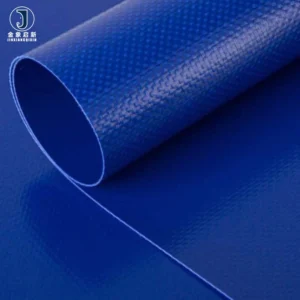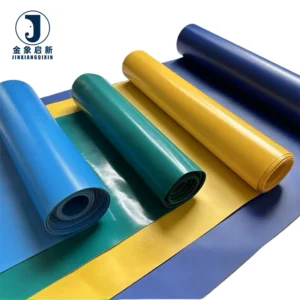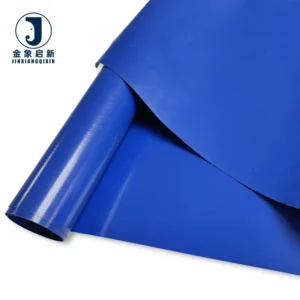
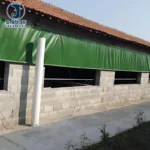
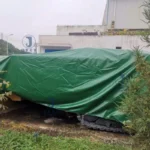

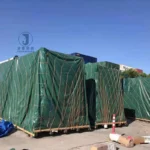

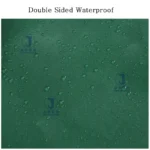
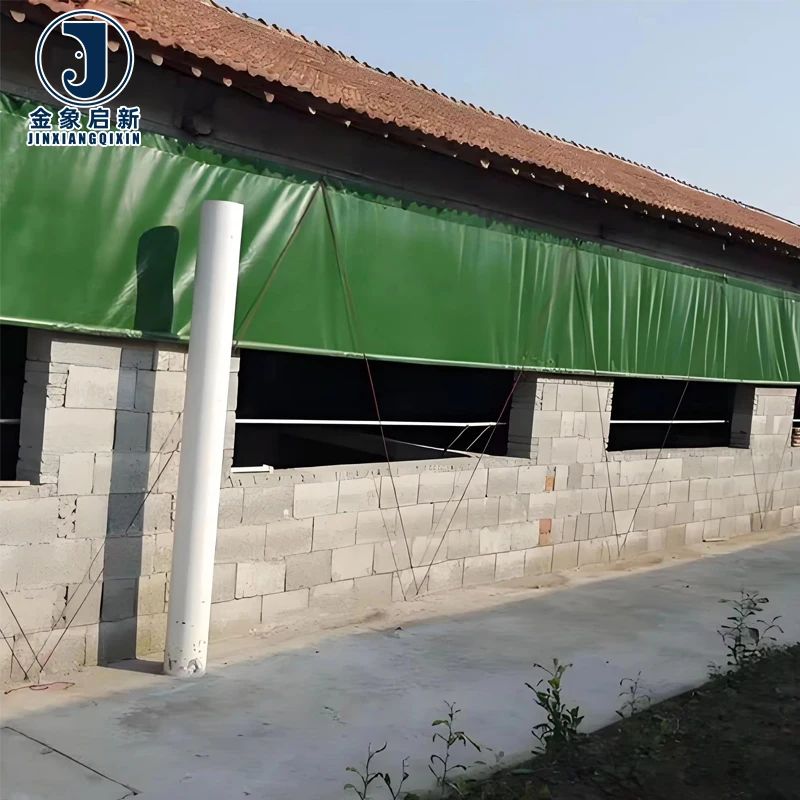
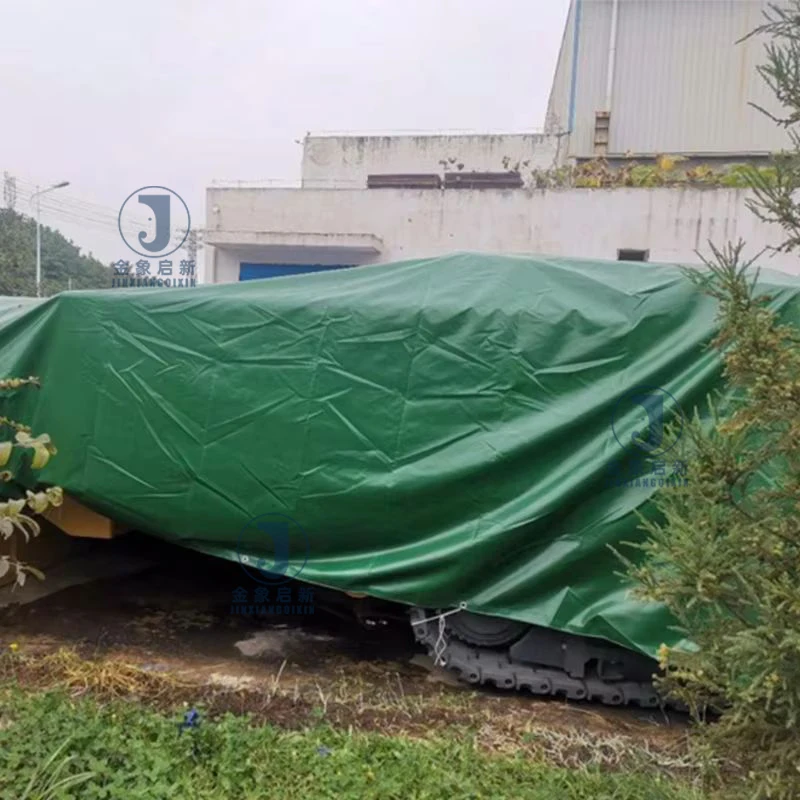

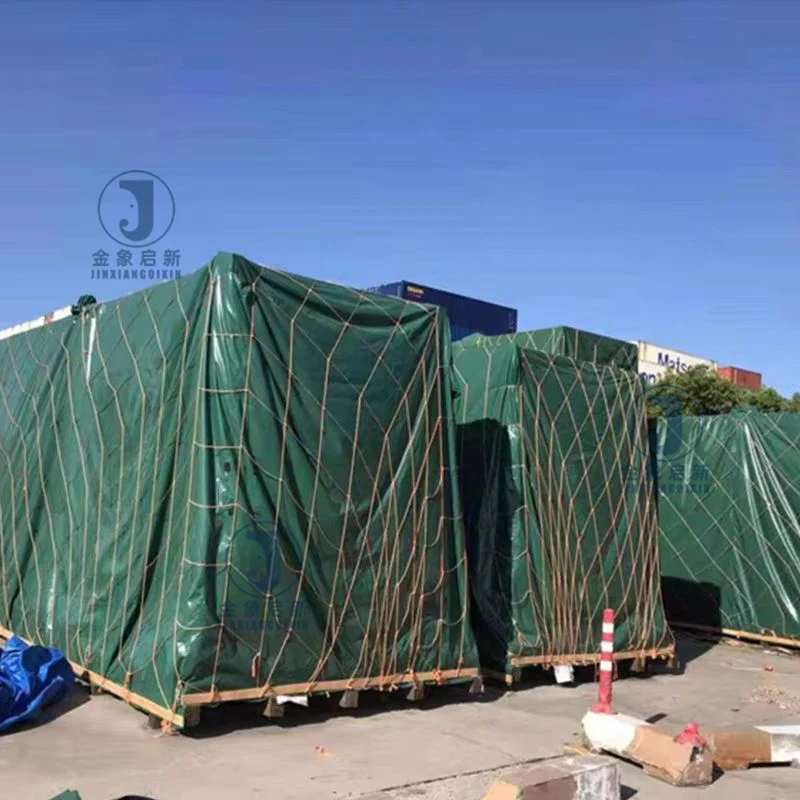
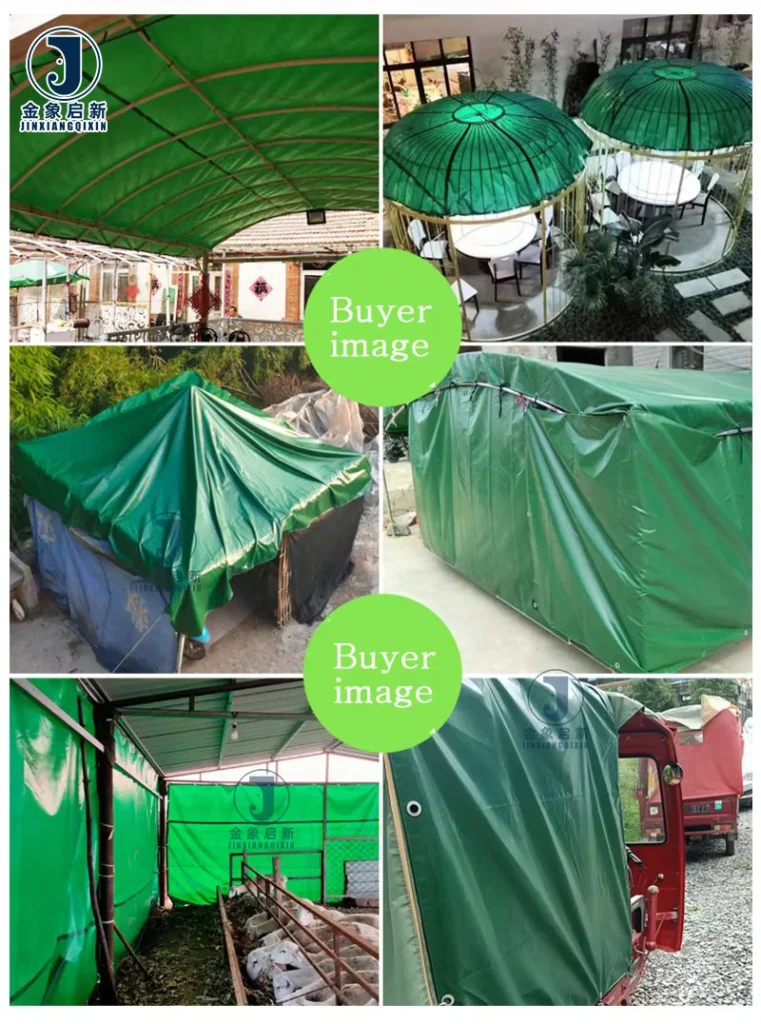
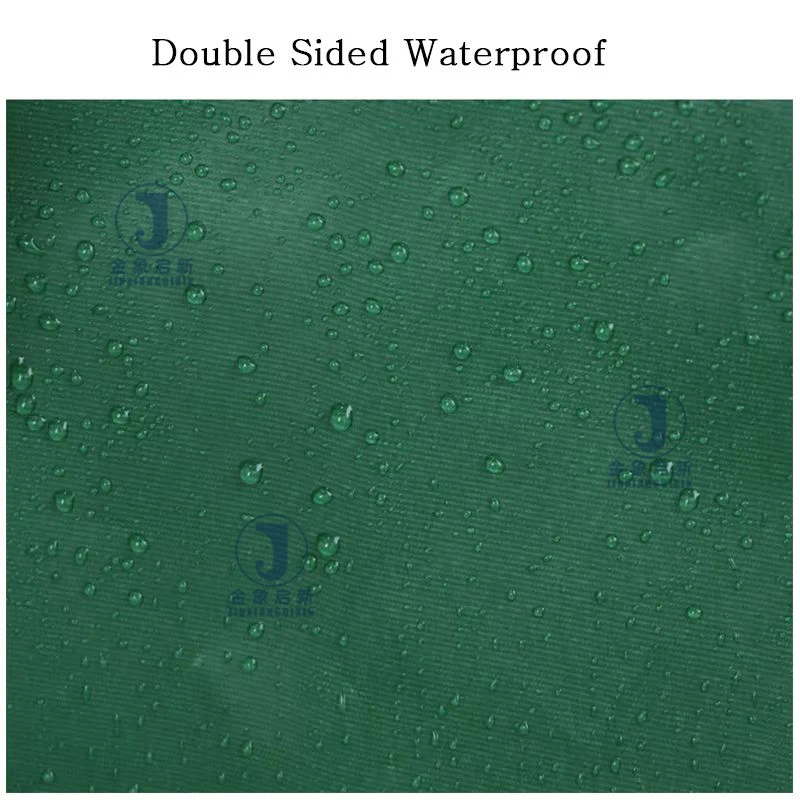
Proven Coating Process Control — nearly three decades focused on PVC coated fabric, with dedicated QA at every production stage ensuring roll-to-roll consistency for farm cover applications.
Technical Specifications
| Parameter | Value |
|---|---|
| Product Type | PVC Coated Tarpaulin Roll |
| Coating Material | PVC |
| Base Fabric | Warp Knitted |
| Weave Style | Plain |
| Surface Finish | Plain |
| Waterproof | Yes |
| Anti-Static | Available (grade and test basis not stated in source — confirm required level) |
| Tear Resistant | Yes (test basis not stated in source) |
| Color | Customizable per order |
| Weight (GSM) | To be confirmed per application requirement |
| Flame Retardant | Available in flame retardant grades — confirm the grade required for your market |
| UV Treatment | Available — confirm treatment level for your exposure conditions |
Application Suitability
| Application | Exposure & Requirement |
|---|---|
| Poultry and broiler house side-wall covers | Continuous humidity, ammonia exposure, temperature fluctuation, wind load on tensioned fabric |
| Pig and livestock shelter enclosures | Direct animal contact, abrasion at fixings, rain and moisture ingress prevention |
| Agricultural tent and temporary farm structures | UV exposure, seasonal assembly and teardown, structural wind load |
| Sheep and cattle barn roof covers | Condensation drip, prolonged weathering, thermal expansion and contraction |
Why Anti-Static Claims Without Test Data Cost You at Audit Time
PVC coated tarpaulin fire retardant anti-static certified documentation must match the specification before the material reaches your site — otherwise the cover fails inspection, not the structure.
Farm environments with enclosed poultry housing generate dry, dusty atmospheres where static charge accumulates on synthetic surfaces. When a supplier claims anti-static treatment without providing a measurable surface resistance value or test report, the buyer carries the compliance risk. The same pattern applies to flame retardant grades: a certificate that names a standard but does not reference the specific roll batch leaves you exposed during a site audit [NEED_CITE: ISO test methods for anti-static and flame retardant coated fabrics]. Procurement teams reviewing PVC coated tarpaulin fire retardant anti-static certified options should request test documentation tied to the actual production batch before confirming the order.
Warp Knitted Base Fabric and Dimensional Stability Under Tension
The warp knitted construction provides multi-axial yarn interlocking that resists stretch distortion when the PVC coated tarpaulin roll is tensioned across a poultry house frame. Plain weave within the knitted structure balances yarn density in both directions, distributing wind load evenly across the panel. This base fabric choice matters most during seasonal storms when gust loading concentrates at corner fixings. A stable base fabric prevents the coating from micro-cracking at stress points where the material flexes repeatedly.
Waterproof Coating Continuity for Livestock Environments
PVC coating applied to the warp knitted base creates a continuous barrier that prevents moisture penetration through the fabric body. In broiler and pig housing, interior humidity combines with external rainfall to challenge any discontinuity in the coated surface. The coating also resists ammonia and organic acids present in livestock environments, reducing surface degradation over successive breeding cycles. Custom color options allow farms to match existing structures or differentiate buildings by function [NEED_CITE: chemical resistance of PVC coatings in agricultural atmospheres].
Reading the Specification Sheet Beyond GSM
Weight per square metre alone does not determine how the fabric performs on a farm structure. The base fabric denier and stitch density govern tensile and tear resistance, while the coating weight and adhesion method determine peel strength and heat-weldability. A lighter fabric with a tightly knitted high-denier base can outperform a heavier material with a loosely constructed scrim. Coating application method — whether knife-over-roll, dip, or calender — affects surface uniformity and the reliability of welded seams during fabrication. Buyers specifying PVC coated tarpaulin fire retardant anti-static certified grades should evaluate the full construction, not a single number [NEED_CITE: relationship between base fabric construction and coated fabric tensile performance].
The Hidden Cost of Specifying by Price Per Roll
Roll-to-roll color variation becomes visible only after multiple panels are installed side by side on a single farm building, forcing selective replacement or an entire re-cover. Welded seams that fail before the fabric itself tears typically trace back to inconsistent coating thickness or incorrect heat-weld parameters at the fabricator, not the material grade. Anti-static treatment that was claimed but never tested surfaces during a compliance inspection, shutting down operations until replacement fabric arrives [NEED_CITE: common failure modes in agricultural tarpaulin installations]. These scenarios share a root cause: specification decisions made on quotation data that was never verified against physical samples or test reports.
Sourcing Backed by Process Control, Not Promises
Three full production lines and 36 sets of professional equipment support consistent output volume across custom widths and colors, reducing the lead-time risk that delays farm construction schedules. A 10-person R&D team handles material selection and sample development, producing trial rolls within days so you can verify weight, color, and anti-static treatment before committing to production volume. Dedicated QA inspection at every production stage — from base fabric receipt through coating, curing, and winding — catches GSM deviation and coating defects before the roll leaves the facility. Full customization in width, length, and color means you order the exact panel dimensions your farm structure requires, minimizing on-site cutting and welded seam count. ISO and CE certified production processes provide a traceable quality framework that supports your own compliance documentation requirements.
Documentation & Verification
- Material specification sheet stating confirmed GSM, base fabric denier, and PVC coating weight per roll
- Anti-static and flame retardant test reports referencing the specific production batch where applicable
- ISO and CE certificates included in dispatch documentation for compliance audits
- Pre-shipment inspection record verifying color consistency and coating integrity across the order
- Roll packing list with individual roll dimensions and weights for receiving verification
- Certificate of origin and customs documentation for international shipments
Fabrication, Handling & Storage
- Heat-weld PVC coated tarpaulin roll panels using temperature and dwell settings matched to the confirmed coating weight
- Reinforce eyelet and tie-down points with additional PVC patches to distribute concentrated wind loads
- Store rolls upright on end-caps to prevent flat-spot deformation of the warp knitted base fabric
- Allow custom-width rolls to acclimatize before unrolling in cold conditions to avoid coating stiffness cracking
- Clean surfaces with pH-neutral detergent to preserve the PVC coating without softening the plasticizer system
- Repair minor punctures with compatible PVC adhesive patches matching the coating chemistry
What to Include With Your Inquiry
Provide the farm structure type, total cover area, and panel dimensions so we can recommend the appropriate base fabric construction and PVC coating weight. Specify whether anti-static or flame retardant certification is required for your local building code or insurer, including the standard reference. Confirm the color requirement and whether multiple rolls must match within a single shipment for visible panel continuity. Indicate whether you need rolls at full width or pre-cut panels with welded seams and reinforced edges ready for installation.
Frequently Asked Questions
Q: How is anti-static performance verified on the PVC coated tarpaulin roll upon delivery?
A: Anti-static treatment is confirmed through a test report referencing the production batch. The report documents surface resistance measurement according to the applicable standard. Request this documentation before shipment so you can verify compliance with your site requirements. If your application demands a specific resistance range, communicate this during the quotation stage so the correct treatment level is applied.
Q: Can I receive a test report for waterproof and tear-resistance claims?
A: Yes, test reports for waterproof performance and tear resistance are available upon request, referencing the applicable test method. These reports are batch-specific where required. Share your target market’s regulatory expectations during inquiry so we align the testing scope with your compliance needs before production begins.
Q: Will custom colors match across multiple rolls in the same shipment?
A: Roll-to-roll color consistency is controlled through in-process QA checks against the confirmed color reference. A pre-shipment inspection record documents the visual assessment across all rolls in your order. For structures where multiple panels sit side by side, we recommend requesting a sample panel for approval before full production proceeds.
Q: What information do I need to provide for custom width and length orders?
A: Provide the exact panel dimensions required for your farm structure, along with the total roll count or square metre coverage. Custom widths and lengths are produced on dedicated lines, so confirming dimensions early allows us to schedule production efficiently. Include any edge treatment or reinforcement requirements for your fixing system.
Q: How are welded seams handled to prevent failure at high-stress points?
A: Welded seams are produced using heat parameters matched to the specific PVC coating weight confirmed for your order. Seam integrity is checked during pre-shipment inspection. For high-stress areas such as corners and tie-down points, additional reinforcement patches can be specified during the sample development stage to ensure long-term durability under wind and load stress.